
Cannabinoids and opioid consumption in cancer pain: a systematic review and meta-analysis
Abstract
Background:
Opioids are the mainstay of cancer-related pain management but are limited by adverse effects and clinical complexity. Cannabinoids have been proposed as adjunctive, opioid-sparing agents, yet their impact on opioid consumption in cancer patients remains uncertain.
Methods:
This systematic review and meta-analysis was conducted according to PRISMA 2020 guidelines and registered in PROSPERO (CRD420251175971). Randomized and nonrandomized clinical studies involving adult cancer patients receiving opioids for pain and treated with cannabinoids were included. Outcomes comprised total opioid consumption, maintenance/background opioid dose, and breakthrough/rescue opioid use. Placebo-controlled comparisons were analyzed separately from within-group baseline changes. Risk of bias was assessed using RoB 2 and ROBINS-I, and certainty of evidence using GRADE.
Results:
Fifteen studies met inclusion criteria, with ten eligible for meta-analysis. Placebo-controlled analyses showed no significant differences between cannabinoids and placebo for total, maintenance, or breakthrough opioid use. Baseline-change analyses demonstrated heterogeneous and formulation-dependent effects, with modest reductions in maintenance opioid dose observed primarily in THC-predominant regimens, driven by isolated studies. Overall certainty of evidence was low due to heterogeneity and methodological limitations.
Conclusions:
Cannabinoids are not associated with consistent or clinically meaningful opioid-sparing effects in cancer pain under controlled conditions. Observed benefits in uncontrolled analyses are variable and not reliably reproduced. Cannabinoids should not be considered a dependable opioid-sparing strategy in cancer pain management.
Supplementary Information:
The online version contains supplementary material available at 10.1007/s00520-026-10856-y.
Article type: Research Article
Keywords: Cancer pain, Cannabinoids, Opioid consumption, Opioid-sparing, Systematic review, Meta-analysis
Affiliations: https://ror.org/03hd30t45grid.411038.f0000 0001 0685 1605Advanced Center for Research and Development in Experimental Medicine “Prof. Ostin C. Mungiu”, Grigore T. Popa University of Medicine and Pharmacy, 16 Universitatii Street, 700115 Iasi, Romania; https://ror.org/03hd30t45grid.411038.f0000 0001 0685 1605Medical Oncology-Radiotherapy Department, Grigore T, Popa University of Medicine and Pharmacy, 16 University Street, 700115 Iasi, Romania; https://ror.org/01g9ty582grid.11804.3c0000 0001 0942 9821Centre for Translational Medicine, Semmelweis University, 20 Baross Street, 1085 Budapest, Hungary; https://ror.org/006w57p51grid.489076.4Department of Medical Oncology, Regional Institute of Oncology, G-Ral M. Berthelot 9-11, 700483 Iasi, Romania; https://ror.org/03hd30t45grid.411038.f0000 0001 0685 1605Pharmacology and Algesiology, Grigore T. Popa University of Medicine and Pharmacy, 16 Universitatii Street, 700115 Iasi, Romania; Socola Institute of Psychiatry, 36 Bucium Street, 700282 Iasi, Romania
License: © The Author(s) 2026 CC BY 4.0 Open Access This article is licensed under a Creative Commons Attribution 4.0 International License, which permits use, sharing, adaptation, distribution and reproduction in any medium or format, as long as you give appropriate credit to the original author(s) and the source, provide a link to the Creative Commons licence, and indicate if changes were made. The images or other third party material in this article are included in the article’s Creative Commons licence, unless indicated otherwise in a credit line to the material. If material is not included in the article’s Creative Commons licence and your intended use is not permitted by statutory regulation or exceeds the permitted use, you will need to obtain permission directly from the copyright holder. To view a copy of this licence, visit http://creativecommons.org/licenses/by/4.0/.
Article links: DOI: 10.1007/s00520-026-10856-y | PubMed: 42262611 | PMC: PMC13249705
Relevance: Relevant: mentioned in keywords or abstract
Full text: PDF (2.5 MB)
Introduction
Cancer-related pain remains one of the most prevalent and distressing symptoms affecting patients, particularly in advanced stages of disease. Despite progress in oncologic treatments and supportive care, moderate-to-severe pain continues to be reported by approximately 40–60% of patients undergoing active cancer treatment and by more than 70% of those with advanced or metastatic disease [ref. 1]. Effective pain control is therefore a central component of comprehensive cancer care and a key determinant of quality of life.
Opioids remain the cornerstone of management for moderate to severe cancer-related pain and are recommended by international guidelines as first-line therapy when non-opioid measures are insufficient [ref. 2]. However, long-term opioid therapy is associated with substantial clinical challenges, including tolerance, opioid-induced hyperalgesia, constipation, nausea, sedation, endocrine dysfunction, cognitive impairment, and risk of dependence or misuse [ref. 3]. In patients with cancer, these adverse effects may exacerbate frailty, impair functional status, and complicate the delivery of anticancer therapies, leading to the so called “opioid use disorder” [ref. 4]. Consequently, there is a persistent clinical need for opioid-sparing strategies that can enhance analgesia while minimizing opioid exposure.
Cannabinoids have emerged as potential adjuvant agents in pain management due to their interaction with the endocannabinoid system, which plays a role in nociceptive modulation, inflammation, and affective components of pain [ref. 5]. Cannabinoid receptors (CB1R and CB2R) are expressed either throughout the central and peripheral nervous systems or in immune cells, and their activation has been shown to modulate neurotransmitter release and nociception signaling pathways relevant to pain processing [ref. 6]. Importantly, preclinical studies suggest functional interactions between cannabinoid and opioid systems, including receptor cross-talk and convergent intracellular signaling, raising the possibility that cannabinoids could interfere with opioid effects [ref. 7]
Although the preclinical research is abundant on positive effects of cannabinoids as adjuvants for opioids, early randomized trials suggested modest analgesic benefit of THC:CBD oromucosal spray in opioid-refractory cancer pain, but results were inconsistent and opioid dose reduction was rarely assessed as a primary outcome [ref. 8]. Evidence syntheses mirror these findings. Cancer-pain-specific reviews report low-certainty analgesic benefit with frequent adverse effects, particularly for THC-predominant products [ref. 9], while broader opioid-sparing reviews indicate that observational signals of opioid reduction are not consistently supported by randomized evidence [ref. 10]. Importantly, opioid outcomes have been inconsistently defined, often relying on uncontrolled pre-post comparisons without distinguishing placebo-controlled effects across opioid domains.
Given the central role of opioids in the management of cancer-related pain and the increasing clinical and patient-driven interest in cannabinoids as adjunctive treatments, a focused and methodologically rigorous synthesis examining opioid consumption outcomes in cancer patients is needed. Distinguishing whether cannabinoids are associated with true reductions in opioid requirements, rather than apparent changes arising from non-specific or uncontrolled influences, is critical for informing clinical practice, guiding evidence-based recommendations, and shaping future trial design.
Although previous reviews have reported opioid-related outcomes in cannabinoid studies, the specific question of opioid-sparing in opioid-treated cancer patients remains insufficiently resolved [ref. 9, ref. 10]. This issue should be treated differently than opioid reduction in broader chronic pain populations, because opioid use in cancer is influenced by disease progression, rescue medication policies, and palliative treatment goals. The present review addresses this gap through an updated cancer-specific synthesis that includes both randomized and observational evidence, incorporates recent evidence, and separates controlled treatment effects from within-group baseline changes across total opioid consumption, maintenance/background dose, and breakthrough opioid use.
Accordingly, the aim of this systematic review and meta-analysis is to evaluate the opioid-sparing effects of cannabinoids in adult cancer patients with persistent pain receiving opioid analgesics, by quantitatively synthesizing available evidence on opioid use.
Methods
Reporting standards and protocol registration
This systematic review and meta-analysis was performed and reported in accordance with the PRISMA 2020 statement (Supplementary Table 1 (S)) [ref. 11] and followed the methodological guidance outlined in the Cochrane Handbook for Systematic Reviews of Interventions [ref. 12]. The review was prospectively registered in the PROSPERO database (registration number CRD420251175971).
Eligibility criteria
We considered clinical studies involving adult patients (≥ 18 years) diagnosed with cancer and experiencing pain of any etiology (tumor-related, treatment-induced, or mixed) while receiving opioid analgesic therapy. Eligible interventions included any cannabinoid-based treatment administered alone or as an adjunct to opioids, encompassing phytocannabinoids (such as THC or CBD), synthetic cannabinoids (including dronabinol and nabilone), and combined or standardized cannabinoid formulations (e.g., nabiximols), irrespective of dose, route of administration, or treatment duration.
Eligible comparators included placebo or standard care without cannabinoids, as well as within-group baseline values in studies reporting pre-post changes in opioid consumption. Both randomized controlled trials and nonrandomized clinical studies (interventional or observational) were included. No restrictions were applied regarding language or year of publication. To be eligible, studies were required to report quantitative measures of opioid consumption, such as daily opioid dose (e.g., morphine milligram equivalents), cumulative opioid exposure, maintenance/background opioid dose, or breakthrough/rescue opioid use. Studies lacking extractable opioid consumption data were excluded.
Information sources
A comprehensive literature search was conducted on 24th October 2025 in PubMed, Embase (via Ovid), and the Cochrane Central Register of Controlled Trials (CENTRAL), covering all records from database inception to the most recent search update prior to data synthesis. No limits were imposed on language or publication date. In addition, manual reference list screening of included studies and relevant reviews was undertaken to identify additional eligible publications using citationchaser (Version 2.0, Stockholm Environment Institute, Sweden) [ref. 13]. When necessary, corresponding authors were contacted to clarify reported outcomes or to obtain missing numerical data. The detailed search key can be found in supplementary, Table 2 (S).
Selection process
Following duplicate removal using Endnote 20 (Clarivate, 2013), all identified records underwent independent title and abstract screening by at least two reviewers (IC-M, SC) using Rayyan (Version 1.0, Qatar Computing Research Institute (QCRI), Qatar) [ref. 14]. Articles deemed potentially eligible were retrieved in full and assessed independently against the predefined inclusion criteria. Cohen’s kappa coefficient (k) was calculated to measure inter-rate reliability after each selection step. Any disagreements during the screening or eligibility assessment process were resolved through discussion, with involvement of a senior reviewer (TA-S), when consensus could not be reached.
Data collection process
Data extraction was performed independently by two reviewers (IC-M, SC) using a standardized extraction template. Extracted variables included study design, sample size, characteristics of the cancer population, details of the cannabinoid intervention (compound, formulation, dose, and duration), comparator characteristics, opioid treatment context, and quantitative opioid consumption outcomes. Cannabinoid interventions were categorized into THC-predominant, CBD-predominant, or balanced THC:CBD combination groups where sufficient information was available. When outcome data required for meta-analysis were incomplete or unclear, attempts were made to obtain additional information directly from study authors.
Study risk of bias assessment and certainty of evidence
The methodological quality of included studies was evaluated independently by at least two reviewers. Randomized controlled trials were assessed using the Cochrane Risk of Bias 2 (RoB 2) tool [ref. 15], while nonrandomized studies were evaluated with the ROBINS-I instrument [ref. 16]. Disagreements in risk-of-bias judgments were resolved through discussion.
The certainty of evidence for each pooled clinical outcome was evaluated using the GRADE (Grading of Recommendations Assessment, Development and Evaluation) approach, and the GRADEpro tool (Version 3.2, McMaster University, Canada), considering risk of bias, inconsistency, indirectness, imprecision, and potential publication bias [ref. 17].
Synthesis methods
Where appropriate, data were pooled using random-effects meta-analysis, reflecting anticipated clinical and methodological heterogeneity across studies. For continuous opioid consumption outcomes, mean differences (MD) were calculated when outcomes were reported using the same measurement units, whereas standardized mean differences (SMD) were applied when different scales or units were used.
Clinical outcomes were synthesized separately based on the type of comparison reported, distinguishing between-group placebo-controlled analyses from within-group change-from-baseline analyses, which were analyzed independently to avoid conflating controlled treatment effects with uncontrolled temporal changes. Prespecified subgroup analyses were conducted according to cannabinoid formulation (THC-predominant, CBD-predominant, or balanced THC:CBD combinations) and opioid outcome domain (total opioid consumption, maintenance/background opioid dose, and breakthrough/rescue opioid use). Statistical heterogeneity was quantified using the I2 statistic, and subgroup differences were examined using standard interaction tests [ref. 18]. When quantitative synthesis was not feasible, findings were summarized using a structured narrative approach. All statistical analyses were calculated by R software using the meta5 package for basic meta-analysis calculations and plots, and the dmetar6 package for additional influential analysis calculations and plots.
Results
Characteristics of included studies
Fifteen articles met the inclusion criteria, however only ten were eligible for meta-analysis, due to non-poolable opioid consumption data, incomplete reporting, lack of variance measures, or outcome definitions that were not comparable across studies. These details are presented in Fig. 1. Among them, nine articles were RCTs [ref. 19–ref. 27], while six were observational [ref. 28–ref. 33] Patients received either THC-predominant drugs [ref. 19, ref. 27, ref. 29], CBD-predominant [ref. 23, ref. 27], or more often drugs with balanced THC:CBD formulations [ref. 19, ref. 20, ref. 22, ref. 24–ref. 26, ref. 28, ref. 30–ref. 34]. Most often the drug was delivered in an oromucosal spray [ref. 19–ref. 21, ref. 25, ref. 26, ref. 30] or oral oil [ref. 22, ref. 23, ref. 27], but others included all forms such as oral, inhalatory or topical [ref. 24, ref. 28, ref. 29, ref. 31–ref. 33]. Baseline characteristics of included studies is exposed in Table 1.
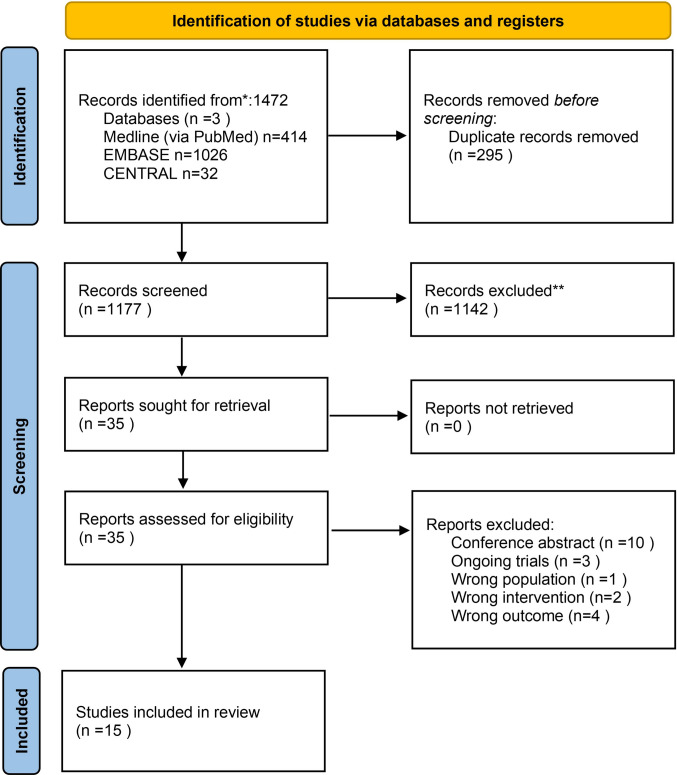
Table 1: Baseline characteristics table
| Author | Study duration (days) | No of centers involved | No of patients enrolled (intervention/control) | Age (mean ± SD) | Previous cannabinoid exposure (intervention/control) |
|---|---|---|---|---|---|
| Johnson et al. 2010 | 16 | 10 | 118/118 | 59.40 ± 12.10 | 6/7 |
| Portenoy et al. 2012 | 63 | 9 | 269/273 | 59 ± 12.3 | 11/6 |
| Clarke et al. 2022 | 30 | 1 | 25 | 55.9 ± 11.9 | 0 |
| Fallon et al. 2017 | 35 | 101 | 200/199 | 60 ± 11 | 4/0 |
| Good et al. 2020 | 14 | 1 | 21/18 | 57.7 ± 12.4 | 0/0 |
| Hardy et al. 2022 | 28 | 5 | 70/72 | 63.6 ± 14 | 0/0 |
| Zylla et al. 2021 | 84 | 1 | 15/15 | 57 ± 9 | 0/0 |
| Lichtman et al. 2018 | 35 | 114 | 199/198 | 59.2 ± 12 | 0/0 |
| Pitchard et al. 2019 | 84 | 1 | 22/61 | 48 ± 12.16 | 0/0 |
| Aprikian et al. 2023 | 21 | 1 | 197 | 57.6 ± 14.7 | 0 |
| Hardy et al. 2025 | 28 | 5 | 72/72 | 65 ± 3.6 | 0/0 |
| Bramness et al. 2021 | 10 | N/A | 607 | 52.9 ± 13.5 | 0 |
| Pawasarat et al. 2020 | 50 | 1 | 137/95 | 57 ± 14 | 0/0 |
| Sura et al. 2022 | 30 | 1 | 184 | 59.8 ± 12.73 | 13 |
| Webster et al. 2020 | 10 | 1 | 31 | 63 ± 2.4 | 31 |
Total opioid consumption
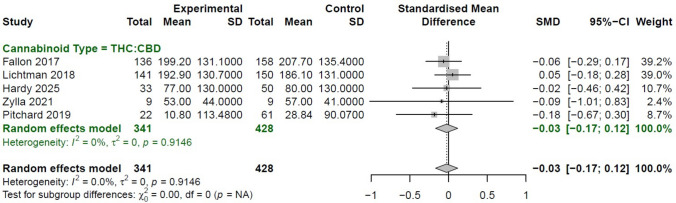
In placebo-controlled analyses, total daily opioid consumption did not differ significantly between cannabinoid-treated and placebo-treated participants. Five randomized controlled trials evaluating THC:CBD formulations [ref. 22, ref. 24, ref. 25, ref. 28, ref. 34], encompassing a total of 769 participants, were included. The pooled SMD was −0.03 (95% CI −0.17; 0.12), indicating no measurable reduction in opioid use associated with cannabinoid therapy, as exposed in Fig. 2.
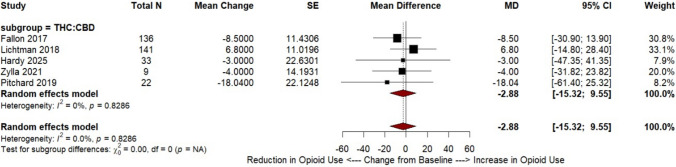
When total opioid consumption was assessed as change from baseline within cannabinoid-treated groups, a numerical reduction was observed, although this effect did not reach statistical significance. The pooled MD was −2.88 (95% CI −15.32; 9.55). Individual studies demonstrated variable baseline changes, ranging from modest reductions to slight increases in opioid use, and all confidence intervals overlapped zero. Results are presented in Fig. 3.
Maintenance opioid dose
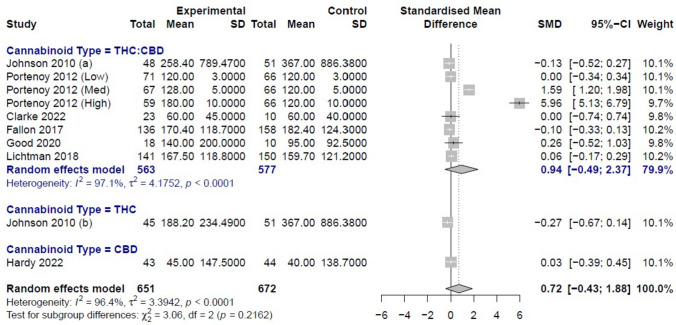
Placebo-controlled analyses of maintenance opioid dosing demonstrated substantial variability and no consistent evidence of opioid-sparing effects associated with cannabinoid use (Fig. 4). Seven randomized comparisons, stratified by cannabinoid formulation, were included [ref. 19, ref. 20, ref. 23, ref. 25–ref. 27, ref. 34]. The overall pooled effect was not clinically relevant, nor statistically significant (MD 0.72 (95% CI −0.43; 1.88) and was characterized by high heterogeneity (I2 = 96.4%, p < 0.0001), reflecting marked between-study variability. Subgroup analysis by cannabinoid type did not reveal statistically significant differences between balanced THC:CBD combinations, THC-predominant regimens, or CBD-predominant formulations (p = 0.216).
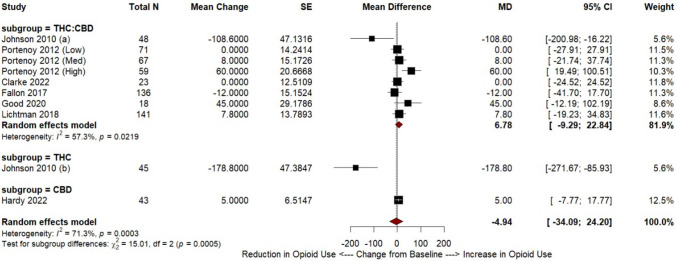
In contrast, baseline-change analyses of maintenance opioid dose revealed marked heterogeneity and statistically significant differences between cannabinoid subgroups (Fig. 5). Across all formulations, the pooled MD was −4.94 mg (95% CI −34.09; 24.20), with substantial heterogeneity (I2 = 71.3%). Importantly, the test for subgroup differences was statistically significant (p = 0.0005). THC-only interventions demonstrated pronounced baseline reductions in maintenance opioid dosing, driven predominantly by Johnson et al. trial [ref. 19] which reported a mean reduction of −178.8 (95% CI −271.7; −85.9). In contrast, THC:CBD combinations exhibited heterogeneous effects, with individual studies reporting both increases and decreases in opioid dose, resulting in a non-significant pooled estimate. CBD-only regimens showed minimal change from baseline, with a pooled MD of 5.0 (95% CI −7.77; 17.77).
Breakthrough opioid consumption
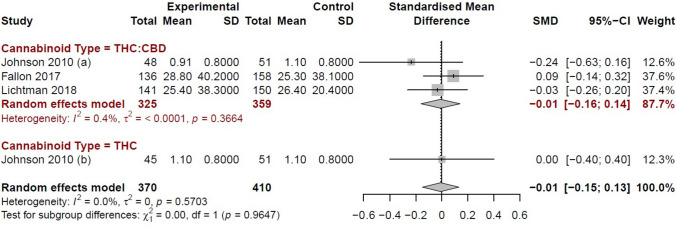
In placebo-controlled analyses, cannabinoid therapy was not associated with significant changes in breakthrough (rescue) opioid use. Three randomized trials assessing THC:CBD and THC-only formulations were included [ref. 19, ref. 25, ref. 34]. The pooled SMD ranged from −0.01 to −0.03, with all confidence intervals crossing zero. Between-study heterogeneity was minimal, and individual trial estimates demonstrated near-identical rescue opioid requirements in cannabinoid and placebo groups. No statistically significant subgroup differences by cannabinoid formulation were observed. Results are presented in Fig. 6.
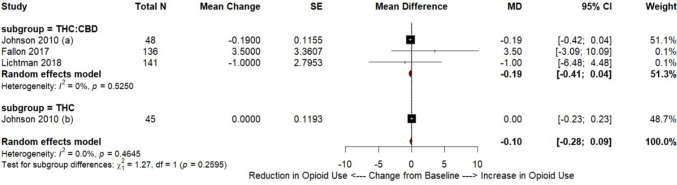
Baseline-anchored analyses similarly demonstrated no meaningful changes in breakthrough opioid use following cannabinoid administration (Fig. 7). For balanced THC:CBD formulations, the pooled MD was −0.19 (95% CI −0.41; 0.04), while THC-predominant regimens yielded a pooled MD of 0.00 (95% CI −0.23; 0.23). Across studies, rescue opioid use remained stable relative to baseline, indicating no detectable impact of cannabinoid therapy on episodic opioid requirements.
Risk of bias and certainty assessment
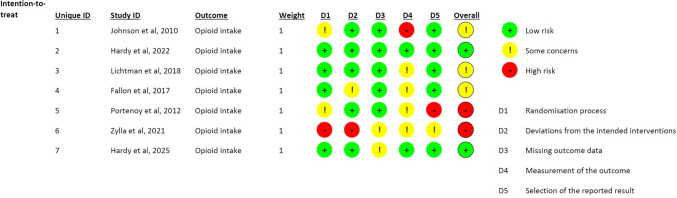
Across included trials, risk of bias of RCTs was generally low, with most domains showing adequate randomization, blinding, and outcome measurement. The main source of uncertainty was missing outcome data, reflecting attrition common in advanced cancer populations, while selective reporting was unlikely. Figure 8 presents the details.
Nonrandomized studies demonstrated variable risk of bias, with most domains rated as low or moderate risk. The primary sources of concern related to confounding and participant selection, reflecting the observational design and limited control over baseline opioid use and disease trajectory. In contrast, bias due to outcome measurement and reporting was generally low, suggesting that observed uncertainties are driven mainly by study design rather than selective reporting or outcome assessment, as exposed in Fig. 9.
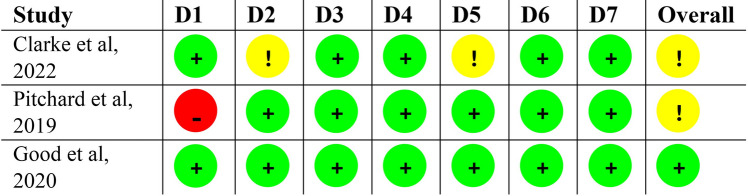
The certainty of evidence assessed with the GRADE tool was evaluated as low for all outcomes, mainly due to population heterogeneity and lack of uniformity in intervention administration, as seen in Supplementary Tables 3 (S).
Discussion
This meta-analysis evaluated whether adjunctive cannabinoids reduce opioid need of cancer patients while preserving optimal pain control, including analyses across total daily opioid dose, maintenance opioid dose, and breakthrough opioid use. Overall, cannabinoids were associated with limited benefits in cancer population, without consistent evidence of reduced opioid requirements. Across outcomes, effects on total, maintenance, and breakthrough opioid use were largely neutral, and findings were characterized by substantial variability and inconsistency, indicating that cannabinoids do not provide a reliable opioid-sparing advantage in cancer pain management.
Overall opioid consumption and the need for breakthrough analgesia remained largely unchanged, indicating that cannabinoids do not substantially modify background opioid exposure or episodic pain requiring rescue medication. Although modest reductions in opioid use were observed in selected settings, most notably for maintenance dosing and primarily with THC-based interventions, these effects were variable, formulation dependent, and not consistently reproduced across studies. Taken together, the findings suggest that any apparent opioid-sparing effects of cannabinoids are limited, heterogeneous, and context dependent, and do not support a robust or generalizable reduction in opioid use in cancer pain management.
However, opioid-sparing effect remains mechanistically plausible because endocannabinoid signaling intersects with central nociceptive modulation and may influence affective pain processing, sleep disruption, anxiety, and symptom appraisal [ref. 35]. However, cancer pain in opioid-treated populations is not a static phenotype: pain intensity and opioid requirements fluctuate with tumor progression, inflammatory burden, anticancer therapy, infections, and functional decline [ref. 36]. In advanced cancer, clinical priorities commonly emphasize comfort and stability over opioid minimization, and opioid titration is constrained by clinical urgency, adverse effects, and care setting [ref. 21]. Consequently, even if cannabinoids provide modest symptom benefit, such improvements may not translate into intentional opioid tapering, particularly within the short follow-up windows typical of cannabinoid RCTs. This clinical context plausibly contributes to the consistently null placebo-controlled effects for total dose and breakthrough opioid use, which integrate multiple downstream processes (opioid titration decisions, rescue policies, intercurrent therapies, and disease trajectory) that can dilute small treatment signals.
Importantly, several RCTs constrained the opioid dosing of the enrolled patients by protocol [ref. 19, ref. 20, ref. 25, ref. 34]. Background opioid doses were commonly required to remain stable throughout follow-up, and breakthrough opioid use was restricted by predefined limits, with excessive rescue use sometimes leading to patient exclusion. Under these conditions, potential cannabinoid-related benefits may have been attenuated or masked in opioid-consumption outcomes, since reductions in opioid requirements could not always be captured by trial design. In consequence, the neutral opioid-consumption findings may reflect, at least in part, restricted opportunity for opioid dose modification rather than the complete absence of cannabinoid-related clinical benefit.
The divergence between placebo-controlled comparisons and change-from-baseline analyses is methodologically expected and clinically informative. Baseline-change designs are intrinsically susceptible to regression to the mean, especially when patients enroll during high-symptom periods; subsequent improvement may occur independently of the intervention [ref. 37]. Expectancy effects may further contribute, as cannabinoids are associated with strong patient beliefs regarding analgesia and opioid substitution, potentially influencing self-management behaviors and symptom reporting; however, such effects are attenuated in blinded placebo-controlled trials [ref. 38]. In addition, opioid titration rules vary across studies, and permissive titration can generate large within-person opioid changes that are not attributable to treatment, inflating heterogeneity in baseline analyses and potentially contributing to the apparent THC-predominant signal in maintenance dosing. Finally, dose-limiting adverse effects may cap cannabinoid exposure, preventing consistent pharmacologic effects across trials and yielding small, inconsistent signals that do not persist under placebo control.
Cannabinoids are often associated with benefits for symptom palliation beyond analgesia. A recent systematic review and meta-analysis conducted by our group synthesized a broad evidence base and reported that cannabinoids were associated with improvements in pain and anxiety compared with baseline values [ref. 8]. Importantly, this review also emphasized safety trade-offs, particularly with THC-predominant formulations, reporting increased risks of psychiatric and neurological adverse effects [ref. 8]. These harms are clinically silent in opioid-treated cancer patients, who frequently have baseline vulnerability to sedation, cognitive impairment, delirium, falls, and polypharmacy interactions [ref. 39]. Moreover, tolerability constraints may limit cannabinoid dose escalation and thereby constrain any potential analgesic or opioid-sparing effects in practice. These opioid-focused findings help contextualize symptom-level results, indicating that while cannabinoids may be associated with within-patient improvements in pain or anxiety in uncontrolled analyses, such improvements do not consistently translate into reductions in opioid use under blinded conditions and may be limited by tolerability and adverse effects.
Clinically, opioid-sparing should not be pursued as an isolated objective in cancer pain management. In advanced cancer and end-of-life care, adequate symptom relief and quality of life remain the primary goals, and appropriately prescribed opioids continue to have a central role [ref. 40, ref. 41]. Therefore, adjunctive cannabinoids should not be introduced solely to reduce opioid dose, particularly given their own adverse-effect profile, as previously mentioned. Any opioid-sparing strategy should be considered clinically meaningful only if it reduces opioid exposure without worsening pain control, function, quality of life, or safety.
Our study’s findings are broadly aligned with prior systematic reviews and meta-analyses evaluating cannabinoids in cancer-related pain, particularly in underscoring that effects observed in uncontrolled or baseline-based analyses are often attenuated in placebo-controlled settings. Reviews focused specifically on cancer pain and have generally reported limited or uncertain analgesic benefit when cannabinoids are added to opioid therapy in rigorously controlled trials, suggesting that meaningful downstream reductions in opioid use are unlikely. In this context, the Cochrane review of cannabis-based medicines for adults with cancer pain emphasized both the low certainty of efficacy and the relevance of adverse effects, a pattern that is consistent with the absence of robust opioid-sparing effects observed across total, maintenance, and breakthrough opioid outcomes in controlled analyses [ref. 9].
Similar discrepancies between uncontrolled and randomized evidence have been described in broader chronic pain populations receiving prescribed opioids, where observational studies more frequently report reductions in opioid use, while randomized trials yield smaller, inconsistent, or null effects and are limited by substantial confounding. The article conducted by Noori et al.reflects a comparable structure within opioid-treated cancer pain, in which modest baseline changes, most apparent for maintenance dosing and largely confined to THC-based interventions, are not consistently reproduced in controlled comparisons [ref. 10]. The same trend was emphasized by Nielsen et al.where the analysis found no consistent evidence of opioid reduction in randomized controlled trials, despite more favorable signals in uncontrolled or observational data [ref. 42]
A key strength of this review is its focused assessment of opioid-sparing in opioid-treated cancer patients, distinguishing it from broader reviews of cannabinoids for cancer pain or chronic pain. We separately analyzed total opioid consumption, maintenance/background opioid dose, and breakthrough/rescue opioid use, rather than treating opioid use as a single outcome. We also distinguished placebo-controlled effects from within-group baseline changes, improving causal interpretation while contextualizing opioid trajectories over time. Also, subgrouping by cannabinoid formulation increased clinical interpretability given expected differences in efficacy and tolerability across THC-predominant, balanced THC:CBD, and CBD-predominant products.
The main limitations of this review reflect the nature of the available evidence, which is both heterogeneous and only partly aligned with the clinical question of opioid-sparing. From a clinical perspective, opioid-sparing requires more than a numerical reduction in opioid dose; it implies a sustained decrease in opioid exposure without deterioration in pain control, function, quality of life, or safety [ref. 43]. Most available studies were not designed around this composite clinical objective; instead, opioid consumption was often captured as a secondary or exploratory measure within trials primarily evaluating analgesic efficacy, symptom control, or tolerability.
This creates several interpretive challenges. First, opioid outcomes are highly dependent on protocol conditions, including baseline opioid optimization, allowing dose adjustments, rescue medication rules, tapering procedures, and follow-up duration. If opioid dosing is kept stable or rescue use is capped, a potential symptomatic benefit may not translate into measurable opioid reduction. Conversely, in uncontrolled studies, reductions in opioid use may reflect disease trajectory, regression to the mean, patient preference, clinician behavior, or expectancy effects rather than a true pharmacologic opioid-sparing effect. Second, the included populations vary widely in cancer type, disease stage, prognosis, baseline opioid exposure, and palliative care context, all of which influence whether opioid reduction is clinically appropriate or feasible. Third, cannabinoid interventions differ substantially in formulation, THC:CBD ratio, dose, route of administration, titration schedule, and tolerability profile, limiting the ability to identify whether any opioid-sparing signal is formulation-specific or patient-specific.
Patient-level variability represents another important source of uncertainty in opioid-specific outcomes. Opioid requirements in cancer pain are influenced not only by pain intensity, but also by duration of prior opioid therapy, opioid tolerance, cancer diagnosis and stage, pain mechanism, performance status, renal and hepatic function, concomitant analgesics or sedating medications, and exposure to anticancer treatments [ref. 44]. In addition, inter-individual differences in opioid pharmacokinetics and pharmacodynamics, including genetic variability affecting opioid metabolism and receptor sensitivity, may contribute to substantial variation in the dose required to achieve adequate analgesia [ref. 45]. These factors may obscure cannabinoid-related effects if they are not measured, balanced, or adjusted for in trial analyses.
These gaps have direct implications for clinical practice: the available evidence does not allow clinicians to reliably identify which patients, if any, are likely to reduce opioid requirements with cannabinoids, nor under what dosing strategy this could be achieved safely. Future research should therefore move from simply recording opioid consumption toward prospectively testing opioid-sparing strategies. Trials should define opioid reduction as a primary or key secondary endpoint, use standardized morphine-equivalent reporting, distinguish maintenance from breakthrough opioid use, incorporate prespecified tapering or opioid-adjustment algorithms, and evaluate whether opioid reductions occur without worsening pain, function, sleep, psychological distress, or adverse-event burden. RCTs and high-quality observational studies may also be useful, provided they carefully control baseline opioid dose, disease progression, anticancer treatment, performance status, and palliative care involvement. Such designs would better determine whether cannabinoids have a clinically meaningful opioid-sparing role, rather than merely showing whether opioid use changes over time. Until such evidence is available, cannabinoids should be viewed as potential adjunctive symptom-directed therapies rather than established opioid-sparing interventions in cancer pain management.
Conclusion
In this systematic review and meta-analysis, cannabinoids were not associated with consistent or clinically meaningful reductions in opioid use among cancer patients receiving opioid analgesics. While modest and context-specific signals of benefit were observed in selected settings, particularly for maintenance dosing, these effects were heterogeneous and not reliably reproduced in controlled analyses. Overall, the findings do not support cannabinoids as a dependable opioid-sparing strategy in cancer pain management, although a limited adjunctive role for symptom control in carefully selected patients cannot be excluded.
Supplementary Materials
References
- RAH Snijders, L Brom, M Theunissen, MHJ van den Beuken-van Everdingen. Update on prevalence of pain in patients with cancer 2022: a systematic literature review and meta-analysis. Cancers (Basel), 2023. [DOI | PubMed]
- SV Pasricha, M Tadrous, W Khuu, DN Juurlink, MM Mamdani, J Michael Paterson, T Gomes. Clinical indications associated with opioid initiation for pain management in Ontario, Canada: a population-based cohort study. Pain, 2018. [DOI | PubMed]
- 3.Benyamin R, Trescot AM, Datta S, Buenaventura R, Adlaka R, Sehgal N, Glaser SE, Vallejo R (2008) Opioid complications and side effects. Pain Physician 11(2Suppl):S105–S120
- 4.Lewis CES, Schutzer-Weissmann J, Farquhar-Smith P (2023) Opioid use disorder in cancer patients. 10.1097/SPC.0000000000000640
- SG Woodhams, DR Sagar, JJ Burston, V Chapman. The role of the endocannabinoid system in pain. Handb Exp Pharmacol, 2015. [DOI | PubMed]
- 6.Kendall DA, Yudowski GA (2017) Cannabinoid receptors in the central nervous system: their signaling and roles in disease. Front Cell Neurosci 10:294, 294. 10.3389/FNCEL.2016.00294
- JL Scavone, RC Sterling, EJ Van Bockstaele. Cannabinoid and opioid interactions: implications for opiate dependence and withdrawal. Neuroscience, 2013. [DOI | PubMed]
- I Creangă-Murariu, II Rezuș, R Karami, A Rancz, Á Zolcsák, MA Engh, M Obeidat, BI Tamba, P Hegyi, S Bunduc. Indications of cannabinoids for the palliation of cancer-associated symptoms: a systematic review and meta-analysis. Curr Oncol Rep, 2025. [DOI | PubMed]
- 9.Häuser W, Welsch P, Radbruch L, Fisher E, Bell RF, Moore RA (2023) Cannabis-Based Medicines and Medical Cannabis for Adults with Cancer Pain. Cochrane Database Syst Rev 6. 10.1002/14651858.CD014915.PUB2
- A Noori, A Miroshnychenko, Y Shergill, V Ashoorion, Y Rehman, RJ Couban, ND Buckley, L Thabane, M Bhandari, Gea Guyatt, DN Buckley. Opioid-sparing effects of medical cannabis or cannabinoids for chronic pain: a systematic review and meta-analysis of randomised and observational studies. BMJ Open, 2021. [DOI | PubMed]
- MJ Page, JE McKenzie, PM Bossuyt, I Boutron, TC Hoffmann, CD Mulrow, L Shamseer, JM Tetzlaff, EA Akl, SE Brennan. The PRISMA 2020 statement: an updated guideline for reporting systematic reviews. BMJ, 2021. [DOI | PubMed]
- M Cumpston, T Li, MJ Page, J Chandler, VA Welch, JP Higgins, J Thomas. Updated guidance for trusted systematic reviews: a new edition of the Cochrane handbook for systematic reviews of interventions. Cochrane Database Syst Rev, 2019. [DOI | PubMed]
- NR Haddaway, MJ Grainger, CT Gray. Citationchaser: a tool for transparent and efficient forward and backward citation chasing in systematic searching. Res Synth Methods, 2022. [DOI | PubMed]
- M Ouzzani, H Hammady, Z Fedorowicz, A Elmagarmid. Rayyan-a web and mobile app for systematic reviews. Syst Rev, 2016. [DOI | PubMed]
- JAC Sterne, J Savović, MJ Page, RG Elbers, NS Blencowe, I Boutron, CJ Cates, HY Cheng, MS Corbett, SM Eldridge. RoB 2: a revised tool for assessing risk of bias in randomised trials. BMJ, 2019. [DOI | PubMed]
- JA Sterne, MA Hernán, BC Reeves, J Savović, ND Berkman, M Viswanathan, D Henry, DG Altman, MT Ansari, I Boutron. ROBINS-I: a tool for assessing risk of bias in non-randomised studies of interventions. BMJ, 2016. [DOI | PubMed]
- G Guyatt, AD Oxman, EA Akl, R Kunz, G Vist, J Brozek, S Norris, Y Falck-Ytter, P Glasziou, H Debeer. GRADE guidelines: 1. Introduction-GRADE evidence profiles and summary of findings tables. J Clin Epidemiol, 2011. [DOI | PubMed]
- JPT Higgins, SG Thompson. Quantifying heterogeneity in a meta-analysis. Stat Med, 2002. [DOI | PubMed]
- JR Johnson, M Burnell-Nugent, D Lossignol, ED Ganae-Motan, R Potts, MT Fallon. Multicenter, double-blind, randomized, placebo-controlled, parallel-group study of the efficacy, safety, and tolerability of THC:CBD extract and THC extract in patients with intractable cancer-related pain. J Pain Symptom Manage, 2010. [DOI | PubMed]
- RK Portenoy, ED Ganae-Motan, S Allende, R Yanagihara, L Shaiova, S Weinstein, R McQuade, S Wright, MT Fallon. Nabiximols for opioid-treated cancer patients with poorly-controlled chronic pain: a randomized, placebo-controlled, graded-dose trial. J Pain, 2012. [DOI | PubMed]
- M Fallon, R Giusti, F Aielli, P Hoskin, R Rolke, M Sharma, CI Ripamonti. Management of cancer pain in adult patients: ESMO clinical practice guidelines. Ann Oncol, 2018. [DOI | PubMed]
- 22.Hardy JR, Greer RM, Pelecanos AM, Huggett GE, Kearney AM, Gurgenci TH, Good PD (2025) Medicinal cannabis for symptom control in advanced cancer: a double-blind, placebo-controlled, randomised clinical trial of 1:1 tetrahydrocannabinol and cannabidiol. Support Care Cancer 33:1. 10.1007/S00520-025-09763-5
- 23.Hardy J, Haywood A, Gogna G, Martin J, Yates P, Greer R, Good P (2020) Oral medicinal cannabinoids to relieve symptom burden in the palliative care of patients with advanced cancer: a double-blind, placebo-controlled, randomised clinical trial of efficacy and safety of 1:1 Delta-9-Tetrahydrocannabinol (THC) and Cannabidiol …. Trials 21. 10.1186/S13063-020-04541-6
- 24.Zylla DM, Eklund J, Gilmore G, Gavenda A, Guggisberg J, VazquezBenitez G, Pawloski PA, Arneson T, Richter S, Birnbaum Aea et al (2021) A randomized trial of medical cannabis in patients with Stage IV cancers to assess feasibility, dose requirements, impact on pain and opioid use, safety, and overall patient satisfaction. Support Care Cancer 29:7471–7478. 10.1007/S00520-021-06301-X
- AH Lichtman, EA Lux, R McQuade, S Rossetti, R Sanchez, W Sun, S Wright, E Kornyeyeva, MT Fallon. Results of a double-blind, randomized, placebo-controlled study of Nabiximols oromucosal spray as an adjunctive therapy in advanced cancer patients with chronic uncontrolled pain. J Pain Symptom Manage, 2018. [DOI | PubMed]
- S Clarke, BE Butcher, AJ McLachlan, JD Henson, D Rutolo, S Hall, L Vitetta. Pilot clinical and pharmacokinetic study of Δ9-Tetrahydrocannabinol (THC)/Cannabidiol (CBD) nanoparticle oro-buccal spray in patients with advanced cancer experiencing uncontrolled pain. PLoS ONE, 2022. [DOI | PubMed]
- PD Good, RM Greer, GE Huggett, JR Hardy. An open-label pilot study testing the feasibility of assessing total symptom burden in trials of cannabinoid medications in palliative care. J Palliat Med, 2020. [DOI | PubMed]
- ER Pritchard, L Dayer, J Belz, B Forseth, SE Harrington, JT Painter. Effect of cannabis on opioid use in patients with cancer receiving palliative care. J Am Pharm Assoc (2003), 2020. [DOI | PubMed]
- S Aprikian, P Kasvis, ML Vigano, Y Hachem, M Canac-Marquis, A Vigano. Medical cannabis is effective for cancer-related pain: Quebec Cannabis Registry results. BMJ Support Palliat Care, 2024. [DOI | PubMed]
- JG Bramness, V Hjellvik, A Stubhaug, S Skurtveit. Possible opioid-saving effect of cannabis-based medicine using individual-based data from the Norwegian prescription database. Basic Clin Pharmacol Toxicol, 2022. [DOI | PubMed]
- IM Pawasarat, EM Schultz, JC Frisby, S Mehta, MA Angelo, SS Hardy, TWB Kim. The efficacy of medical marijuana in the treatment of cancer-related pain. J Palliat Med, 2020. [DOI | PubMed]
- 32.Sura KT, Kohman L, Huang D, Pasniciuc SV (2022) Experience with medical marijuana for cancer patients in the palliative setting. Cureus 14. 10.7759/CUREUS.26406
- EM Webster, GS Yadav, S Gysler, B McNamara, J Black, J Tymon-Rosario, B Zeybek, C Han, CK Arkfeld, Vea Andikyan. Prescribed medical cannabis in women with gynecologic malignancies: a single-institution survey-based study. Gynecol Oncol Rep, 2020. [DOI | PubMed]
- MT Fallon, E Albert Lux, R McQuade, S Rossetti, R Sanchez, W Sun, S Wright, AH Lichtman, E Kornyeyeva. Sativex oromucosal spray as adjunctive therapy in advanced cancer patients with chronic pain unalleviated by optimized opioid therapy: Two double-blind, randomized, placebo-controlled Phase 3 studies. Br J Pain, 2017. [DOI | PubMed]
- B Le Foll. Opioid-sparing effects of cannabinoids: Myth or reality?. Prog Neuropsychopharmacol Biol Psychiatry, 2021. [DOI | PubMed]
- CJ Hayes, EE Krebs, J Brown, C Li, T Hudson, BC Martin. Association between pain intensity and discontinuing opioid therapy or transitioning to intermittent opioid therapy after initial long-term opioid therapy: a retrospective cohort study. J Pain, 2021. [DOI | PubMed]
- KM Cochrane, BA Williams, JAJ Fischer, KLI Samson, LX Pei, CD Karakochuk. Regression to the mean: a statistical phenomenon of worthy consideration in anemia research. Curr Dev Nutr, 2020. [DOI | PubMed]
- E Hoch, ND Volkow, CM Friemel, V Lorenzetti, TP Freeman, W Hall. Cannabis, cannabinoids and health: a review of evidence on risks and medical benefits. Eur Arch Psychiatry Clin Neurosci, 2024. [DOI | PubMed]
- MJ Geum, SH Yoo, SW Lee, M Hong, EH Jung, YJ Kim, B Kang. Impact of CNS medication burden and drug interactions on delirium in patients with advanced cancer: a multicenter prospective observational study.. Sci Rep, 2025. [DOI | PubMed]
- 40.(2018) WHO Guidelines for the Pharmacological and Radiotherapeutic Management of Cancer Pain in Adults and Adolescents. World Health Organisation
- 41.Creangă-Murariu I, Froicu EM, Scripcariu DV, Bacoanu G, Poroch M, Moscalu M, Tarniceriu CC, Alexa-Stratulat T, Poroch V (2025) Timing matters: a systematic review of early versus delayed palliative care in advanced cancer. Cancers (Basel) 17. 10.3390/CANCERS17152598/S1
- S Nielsen, L Picco, B Murnion, B Winters, J Matheson, M Graham, G Campbell, L Parvaresh, KE Khor, Bea Betz-Stablein. Opioid-sparing effect of cannabinoids for analgesia: an updated systematic review and meta-analysis of preclinical and clinical studies. Neuropsychopharmacology, 2022. [DOI | PubMed]
- JS Gewandter, SM Smith, RH Dworkin, DC Turk, TJ Gan, I Gilron, S Hertz, NP Katz, JD Markman, Sea Raja. Research approaches for evaluating opioid sparing in clinical trials of acute and chronic pain treatments: initiative on methods, measurement, and pain assessment in clinical trials recommendations. Pain, 2021. [DOI | PubMed]
- OA Omokore, IO Quadri, PJ Kingdom, IC Ogbuiyi-Chima, SE Meribole, TO Olayinka, S Ogunnoiki, S-O Precious, A Olaitan, N Chima-Ogbuiyi. Opioids in Cancer Pain Management: A Double-Edged Sword of Relief and Risk. Niger Med J, 2025. [DOI | PubMed]
- P Klepstad, T Fladvad, F Skorpen, K Bjordal, A Caraceni, O Dale, A Davies, M Kloke, S Lundström, Mea Maltoni. Influence from genetic variability on opioid use for cancer pain: a European genetic association study of 2294 cancer pain patients. Pain, 2011. [DOI | PubMed]