
Longitudinal neurocognitive trajectories in a large cohort of youth who use cannabis: combining self-report and toxicology
Abstract
Adolescents experience extensive neurocognitive development, with cannabis use potentially impacting developmental trajectories. Here, we comprehensively assess the influence of adolescent cannabis use onset on neurocognitive trajectories and consider how recent delta-9-tetrahydrocannabinol (THC) and cannabidiol (CBD) may influence neurocognition. We use the large, diverse longitudinal Adolescent Brain Cognitive Development (ABCD) Study dataset, combining self-reported substance use with objective toxicological tests (hair, urine, breath, oral fluid). Longitudinal mixed methods of the full cohort (n = 11,036, ages 9-17; 47% Female/53% Male) investigate time-varying cannabis onset on neurocognitive performance. Primary model covariates include sociodemographics, family history of substance use disorder, prenatal substance exposure, early psychopathology, other substance use, and nesting for participant ID, study site, and family ID. Secondarily, in participants with repeat toxicological hair testing (n = 645; 38% Female/62% Male) at ages 12-16, we consider the influence of THC v. CBD v. Controls. Primary models included false discovery rate corrections (FDR-p < .05) while secondary models were interpreted at p < .01. Cannabis group interacted with age to show altered neurocognitive trajectories across domains (immediate recall and delayed memory, processing speed, inhibitory control, visuospatial processing, language, and working memory; βs = -0.11- -0.52). Secondary models indicated hair-identified THC exposure*age predicted worse episodic memory than in Controls (β = -0.60, p = .007), with no difference between CBD exposed and Controls. Data suggest those who use cannabis show likely pre-existing better cognitive performance during late childhood, with reduced improvement or flattened trajectories over time. These neurocognitive trajectories in youth (ages 9-17) who initiate cannabis use were demonstrated after accounting for within-person change and numerous known confounds and improving accuracy in identifying cannabis use through incorporating toxicological measures. Continued monitoring of this cohort will clarify cannabinoid-cognition relationships into young adulthood, including the impact of timing of cannabis use initiation.
Article type: Research Article
Keywords: Human behaviour, Cognitive neuroscience
Affiliations: https://ror.org/0168r3w48grid.266100.30000 0001 2107 4242Department of Psychiatry, University of California, San Diego, La Jolla, CA USA; https://ror.org/0384j8v12grid.1013.30000 0004 1936 834XThe Matilda Centre for Research in Mental Health and Substance Use, The University of Sydney, Sydney, NSW Australia; https://ror.org/031q21x57grid.267468.90000 0001 0695 7223Department of Psychological & Brain Sciences, University of Wisconsin-Milwaukee, Milwaukee, WI USA; Huestis & Smith Toxicology, LLC, Fredericksburg, VA USA; https://ror.org/00hj8s172grid.21729.3f0000 0004 1936 8729Department of Psychiatry, Columbia University, New York, NY USA
License: © The Author(s) 2026 CC BY 4.0 Open Access This article is licensed under a Creative Commons Attribution 4.0 International License, which permits use, sharing, adaptation, distribution and reproduction in any medium or format, as long as you give appropriate credit to the original author(s) and the source, provide a link to the Creative Commons licence, and indicate if changes were made. The images or other third party material in this article are included in the article’s Creative Commons licence, unless indicated otherwise in a credit line to the material. If material is not included in the article’s Creative Commons licence and your intended use is not permitted by statutory regulation or exceeds the permitted use, you will need to obtain permission directly from the copyright holder. To view a copy of this licence, visit http://creativecommons.org/licenses/by/4.0/.
Article links: DOI: 10.1038/s41386-026-02395-1 | PubMed: 42002627 | PMC: PMC13255239
Relevance: Relevant: mentioned in keywords or abstract
Full text: PDF (1.2 MB)
Introduction
Over the past several decades, high rates of cannabis use in individuals ages 13–24 remained relatively stable [ref. 1], but the legal status of cannabis changed in many US states, the potency of the primary psychoactive cannabinoid delta-9-tetrahydrocannabinol (THC) increased [ref. 2], vaped inhalation increased, and public perception of risk decreased [ref. 3]. Critically, adolescents experience extensive brain and cognitive development [ref. 4–ref. 6], making adolescents particularly vulnerable to the influence of cannabis [ref. 7]. This includes within the endocannabinoid system, a neuromodulatory system critical to brain development (e.g., neural progenitor proliferation, neurogenesis) [ref. 7, ref. 8] and in which THC exerts its psychoactive effects. THC further influences dopaminergic, GABA, and glutamate activity across cortico-limbic regions, all which are key to healthy neurodevelopment during the neuroplastic period of adolescence [ref. 9]. Early longitudinal studies suggest neurocognitive deficits in select domains are associated with adolescent cannabis onset and escalation, such as poorer verbal learning and memory [ref. 10–ref. 16], visuospatial functioning [ref. 11, ref. 12, ref. 14, ref. 16], working memory [ref. 11, ref. 12, ref. 16, ref. 17], inhibition and attention [ref. 12, ref. 15, ref. 16, ref. 18], and psychomotor and processing speed [ref. 10, ref. 12, ref. 14, ref. 15]. However, these studies often do not fully account for important pre-substance use confounds (e.g., other substance use, family history, family factors, sociodemographics), include small sample sizes, or do not clearly identify the onset of cannabis use [ref. 17, ref. 19, ref. 20], and not all identify relative cognitive decrements [ref. 21].
Studies of adolescent cannabis use can also be limited by the accuracy of self-report, the primary method of identifying cannabis use in most studies. Recent studies comparing objective, toxicological measures with self-report in adolescents and young adults underestimated substance use prevalence by up to 60% [ref. 22], or mis-identified up to 9% of participants as “controls” when they actually used substances [ref. 23]. Therefore, research on the sensitive topic of substance use in teens may at times present with bias in self-report, which impedes identifying substance use consequences. On balance, toxicological testing may not identify low-level (e.g., one or several uses) or use outside of range of detection (e.g., >3 months for hair testing), thus necessitating querying self-reported substance use. Incorporating toxicological measures, including hair cannabinoids, with self-report may improve accuracy in characterizing cannabis-neurocognition relationships [ref. 24, ref. 25].
Accurate assessment of cannabis use histories is further complicated by the complexity of the plant that contains over 120 cannabinoids [ref. 26], with the most consistent evidence demonstrating repeated THC exposure is linked with changes in CB1 density and downstream cognitive functioning [ref. 27]. Adult evidence demonstrates that cannabidiol (CBD), a CB1 cannabinoid receptor allosteric modulator, may offer mitigating influence on cognitive performance [ref. 28, ref. 29] especially with chronic exposure [ref. 30], though this is not always found [ref. 31, ref. 32] and the impact on adolescents is unclear. Objective evidence of cannabinoid analyte concentration exposures may be more informative than relying on self-reported cannabis use episodes or potency, especially given individual differences in processing of cannabis due to genetics, rates of exposure, and other biological mechanisms [ref. 33–ref. 36], in addition to inconsistencies in self-reported use [ref. 23]. The literature on specific cannabinoid constituents as related to cognitive functioning in the developing brain is exceptionally limited [ref. 37, ref. 38], yet different cannabinoids may moderate clinical outcomes, as shown in studies considering psychopathology using hair samples in adolescents and young adults [ref. 25, ref. 39–ref. 41]. Thus, combining toxicological cannabinoid information with self-reported use may more accurately and thoroughly assess the impact of cannabis use onset on cognition and further investigate the influence of specific cannabinoid constituents (i.e., THC, CBD, the most studied cannabinoids) as potential explanatory mechanisms.
Here, we comprehensively assess the influence of adolescent cannabis use onset on neurocognitive trajectories. We probe potential mechanisms by investigating specific cannabinoid content through toxicological hair testing to examine whether use of certain cannabinoids may predict differential trajectories. Leveraging data from the Adolescent Brain Cognitive Development (ABCD) Study–a large and richly-characterized, multisite US cohort— we first identify those who initiated cannabis use through comprehensive substance use assessment, including self-report and multiple toxicological tests. We then conduct longitudinal mixed effect models to assess trajectories of neurocognitive performance in those who initiated cannabis use relative to those who did not. We hypothesize those who use cannabis will demonstrate restricted improvements and likely decline across cognitive domains, particularly in learning, memory, and working memory, based on prior longitudinal findings [ref. 10–ref. 17]. Second, follow-up analyses utilize robust cannabinoid content from hair to examine whether recent use of specific cannabinoid constituents (THC v. CBD v. Controls) differentially alter neurocognitive trajectories, expecting decreased cognitive performance across domains associated with THC [ref. 37, ref. 38], but not CBD [ref. 28, ref. 29]. Importantly, primary models covary for core confounds and primary and secondary models include within-person nesting to account for individual trajectories to account for developmental change across adolescence and neurocognition prior to cannabis use onset.
Methods
Participants
Participants were recruited at ages 9–10 in 2016–2018 via propensity-based school recruitment at 21 sites across the United States, resulting in a cohort of 11,868 [ref. 42, ref. 43], and followed for 10+ years. ABCD data release 6.0 contains data collected from September 1, 2016 to January 15, 2024, which includes complete annual data from Waves 0–5 and half of Wave 6. Figure 1 displays sample sizes for the present analyses.
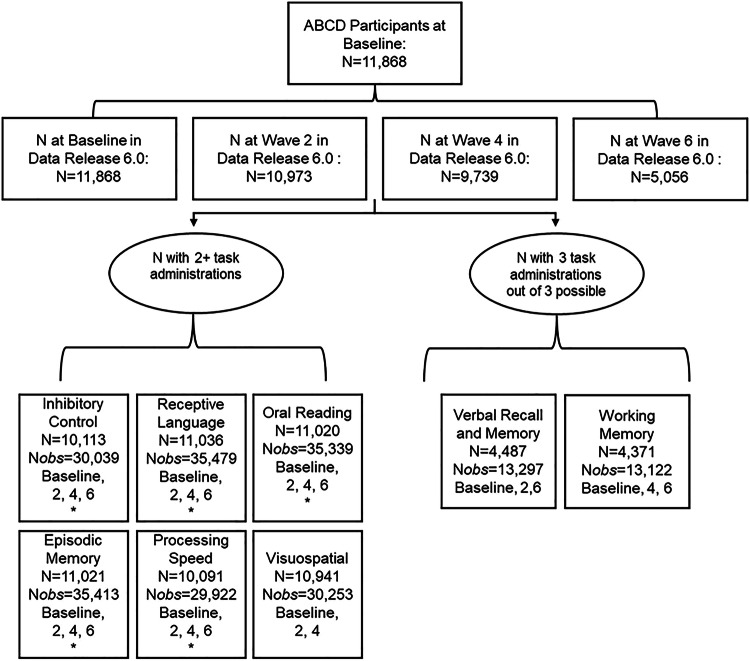
Eligible participants and their caregivers presented at their local site for enrollment and a Baseline session, with mid-year brief assessment and annual in-person visits each year thereafter. Annual sessions included biosample collection, self- and parent-report surveys, clinical mental health interview, and a semi-structured substance use interview [ref. 44–ref. 49]. On even years (Baseline, Wave 2, Wave 4, etc.) participants also completed a full neurocognitive battery. Starting Wave 3, all youth were told to remain substance-free 24 h prior to the session. Participants and their caregivers completed written informed assent and consent, respectively. All study protocols were completed consistent with the Declaration of Helsinki and approved through a single IRB at the University of California, San Diego.
Measures
Substance use measures
Self-reported substance use and timeline followback interview
Prior to querying substance use, research assistants (RAs) reminded participants of confidentiality, including that caregivers will not be informed of their responses to the substance use questions unless they report clear, imminent threat or harm or other state-mandated reporting requirements. Participants annually completed a substance use interview covering lifetime at Baseline and the past year (or since last visit) at annual follow-ups. When participants endorsed full standard substance use (1+ standard alcohol drink or any other substance use), RAs administered a Timeline Followback (TLFB) interview to collect detailed substance use patterns since their last visit (approximately past year) by each substance class [ref. 46, ref. 50]. A mid-year assessment was given at approximately the mid-point between study visits ( ~ 6 months) covering substance use since their last visit (binary reported yes/no).
Medicinal CBD use
Beginning at Wave 2, caregivers were asked, “Has your son/daughter used any CBD (or cannabidiol) products with your or your doctor’s permission, such as Epidiolex or other over the counter CBD product, in the past year?”. Youth participants and their caregivers were also asked whether they had used CBD within the past 24 h.
Oral Fluid Toxicology
An oral fluid drug screen was administered to ~5% randomly selected participants at Baseline and increased to all participants at Wave 6. Drug classes tested include amphetamines, benzodiazepines, methamphetamines, cocaine, cannabis (THC), and opioids. Oral fluid tests sensitively identify past 12–48 h of drug use, depending on the substance [ref. 48].
Urine toxicology
At Waves 4–6, participants completed a full drug urinalysis screening for amphetamines, barbiturates, buprenorphine, benzodiazepines, cannabinoids, cocaine, MDMA, methamphetamine, methadone, opioids, oxycodone, PCP, propoxyphene, tricyclics, and cannabis (THC). Depending on drug class and frequency/amount of drug used, urine can test positive up to a month after last use.
Hair toxicology
Hair was collected from all participants annually who were willing to give a sample and did not have a hair style that would be disrupted by collection (e.g., too short of hair; braids). Approximately 100 mg hair 1.5 cm from the root were collected from 3 to 4 regions around the crown of the participant’s head. Hair was securely packaged and stored until selected for testing, based on funding and prioritization of sample selection [ref. 23, ref. 51], with testing processes and cut-offs described in the Supplement. Hair samples provide on average a 3-month window of detection for substance use [ref. 24, ref. 52, ref. 53]. Hair testing for cannabis is sensitive for detecting moderate-to-heavy use [ref. 54] (using a minimum of twice a month on average [ref. 24]) and demonstrates excellent specificity in adolescents and young adults [ref. 24]. While some drugs may demonstrate altered binding and thus concentration of drug analytes in hair dependent on hair melanin, cannabinoids do not demonstrate this same relationship [ref. 55, ref. 56].
Predictors of interest include: (Aim 1) Any Lifetime Cannabis Use, combining all cannabis data (self-report, toxicological) into a binary variable, in which all participants are coded “Controls” until any use is identified via self-reported use exceeding a puff/taste or any positive cannabis toxicology, then subsequently coded “yes” for lifetime cannabis use. Mid-year interview substance use (e.g., Wave 4.5) was applied to the following study visit (e.g., Wave 5). In models, indicators of cannabis use were entered as time-varying predictors with a binary yes/no variable representing cannabis use at the wave with first-identified use and then carried forward for each subsequent wave.
(Aim 2) Hair Cannabinoids coded as “Controls” (no cannabinoids detected in hair), “THC Only” (THC/THCCOOH/∆8-THC detected only in hair), and “CBD + ” (CBD detected in hair, regardless of THC/THCCOOH/∆8-THC status) to assess the influence of recent, specific cannabinoids on neurocognition, consistent with prior work [ref. 29]; in these models, hair cannabinoid groups were time-varying at each wave. As less than monthly cannabis use is unlikely to be detected by hair testing, those who only experiment with use may be included as “Controls” when relying on hair cannabinoids alone.
Neurocognitive outcomes
Tasks selected for the present analyses include those given on even study years and administered at least three times between Baseline and Wave 6 (see Fig. 1 for task administration timing). Analyses were restricted to participants who completed at least two administrations of the same task across waves. For List Sort Working Memory and Rey Auditory Verbal Learning Test (RAVLT), data are only available for less than half of participants at Wave 6 and there were only three possible administrations across time. Therefore, all three administrations were required given it was not possible for a majority of participants to complete the task.
NIH toolbox [57]
Inhibitory control was assessed via the Flanker Inhibitory Control and Attention task, where participants were to press an arrow key matching the direction a stimulus arrow was pointing (range Standard Score[SS] = 41–117). For receptive language (Picture Vocabulary), participants listened to a word and matched it to one of four pictures (range SS = 22–126). For oral reading, participants read and pronounced a list of words (range SS = 59–180). In the List Sort Working Memory, participants ordered by size a list of animals and produce (range SS = 36–136). Pattern Comparison Processing Speed asked participants to quickly identify whether two pictures were identical (range SS = 30–174). Picture Sequencing Memory test assessed episodic memory via showing the participants a series of pictures, then asking them to sort the pictures in the same order as demonstrated (range SS = 74–138). Primary outcomes included uncorrected standard scores for each subtest, consistent with prior studies to ensure meaningful results of within-participant changes [ref. 58].
Little man task [59]
Participants were shown a “little man” holding a briefcase in various orientations to assess visuospatial processing and mental rotation. As the figure shifts (e.g., upside down; faces away from the participant), the participant must select whether the briefcase is in the man’s left or right hand. Total correct responses (range=0-32 correct items) were used as the primary visuospatial performance outcome.
RAVLT [60]
Verbal recall and memory were assessed through the RAVLT. Participants were read a list of words five times, followed by a distractor list, the original list, and then a long delay. Here, immediate verbal recall was assessed with number of correct Trial 1 responses (range=0–15 words) and memory was determined by number of correct responses after the long delay (range=0–15 words).
Covariates
Covariates included those previously associated with cannabis and behavioral outcomes [ref. 61]; variables are described in more detail in the Supplement. Covariate use within models is described in the Statistical Analyses.
Time-Invariant
Sociodemographic covariates
Baseline sociodemographic characteristics, as reported by the caregiver, were selected as covariates given their relevance to cognition and substance use: highest level of parental education attainment [ref. 62], biological sex of the participant as assigned at birth [ref. 63], and self-reported race and ethnicity [ref. 45] (a construct reflecting lived experience rather than biological categories [ref. 64]; included due to potential differences in rates of hair collection [ref. 65]). Family History of Substance Use. Caregivers reported whether any of the participant’s biological relatives had alcohol use problems (AUD) or, separately, substance use problems (SUD) [ref. 66]. Prenatal Substance Exposure. Caregivers reported whether the participant was exposed to any drug classes in utero, both before and after knowledge of the pregnancy [ref. 45]. Each drug class was coded as its own exposure (1/0, regardless of whether using before/after knowledge of pregnancy; see Supplement for details). Baseline Psychopathology. Caregivers completed the Childhood Behavior Checklist (CBCL), with age- and sex-normed t-scores subscales for Externalizing and Internalizing symptoms included as covariates, given youth psychopathology is often identified as a predictor of substance initiation [ref. 67].
Time-varying
Youth age at each Wave was included. Other Substance Use. Polysubstance use is common and may influence cognition [ref. 68, ref. 69]. Using the same identification method of lifetime substance exposure as described for cannabis use, binary (yes/no) time-varying lifetime alcohol use, nicotine use, and any other substance use variables were computed across all observations.
Analytic plan
ABCD Data Release 6.0 was used (10.82525/jy7n-g441). Analyses were conducted in R. Random intercepts for participant, family, and site were used. Models allowing random age slopes were evaluated but did not improve fit and produced convergence warnings; therefore, random intercept models were retained.
Aim 1: longitudinal influence of cannabis onset
Linear mixed effect models were run using lme4 package in R [ref. 70]. Neurocognitive task performance over time was predicted by lifetime cannabis use group status (CU group) interacting with age. Non-linear, quadratic models were examined for all cognitive measures; inclusion of age² terms did not improve model fit (all ΔAIC > 2; all p > 0.10). The one exception was for Picture Vocabulary, wherein the quadratic interaction was significant and improved fit. For parsimony, only linear models are presented here for all cognitive tasks with the Picture Vocabulary quadratic model presented in the Supplement.
Covariates of interest, often time-varying, were included in the full linear mixed effect models: lifetime alcohol use, lifetime nicotine use, lifetime other substance use, sex, and age. Additionally, for variables shown to be linked to cannabis group status and cognition which are more static in nature or potential confounds of no interest (i.e., prenatal exposure, family history of substance use disorder, baseline psychopathology, sociodemographic factors), an inverse propensity score was created to account for covariates while also reducing variable dimensionality (see Supplement for specific variables and Fig. S2 for evidence of balance). To estimate the inverse propensity score variable, a logistic regression was run, predicting lifetime cannabis exposure by all listed factors, clustering on site and family ID. The inverse of logistic regression values (their individual probability of exposure) were saved for each participant and included as a covariate in analyses.
Study site, family ID, and subject ID (to account for within-person change) were included as nested effects. FDR corrections were applied within models [ref. 71]. Standardized β were calculated using the MuMin package [ref. 72], acknowledging that ABCD is powered to detect very small effect sizes [ref. 73]. Estimated marginal means by age were extracted via the emmeans package [ref. 74]. 95% Wald confidence intervals are included. Interpretation of significance was set at FDR-p < 0.05 for primary models.
Aim 2: longitudinal influence of hair cannabinoids
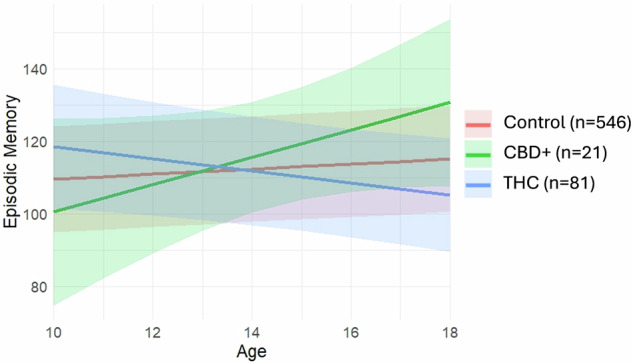
To specifically assess potential recent THC or CBD influence relative to no use, a subsample of the cohort was included in secondary longitudinal analyses. All participants with hair tested at Waves 2, 4, and 6 were included (n = 648). Time-varying groups by wave were then defined by hair cannabinoid content: no cannabinoids present (Controls n = 546); THC (identified by THC or THCCOOH; THC Only Group n = 81); and CBD (identified by confirmed CBD, regardless of whether THC/THCCOOH were present; CBD+ group n = 21), consistent with prior research [ref. 29]. Notably, n = 13 in the CBD+ group also had THC present in their hair sample and n < 10 participants with hair cannabinoids were both in the CBD and THC groups on altering years, though descriptively are included within the CBD group (Table S2). Mean performance by hair cannabinoid group and age are presented in Table S3.
Linear mixed effects models were run to predict cognitive performance by hair group*age. Analyses included tasks that were administered at the same waves as selected hair samples. Given limited prior research using novel repeat hair testing results and cognition and due to the smaller cell sizes, use of covariates were constrained to more sensitively assess potential cannabinoid relationships: sex assigned at birth and any other substance use (i.e., alcohol, nicotine, or any other substance combined) positive in hair. Models were nested for family ID and subject ID; study site was included as a fixed effect when convergence issues were identified. Interpretation of significance was set at p < 0.01 for hair cannabinoid models.
Results
Participant sociodemographic and substance use characteristics
Participants included the full ABCD cohort (see Table 1 for descriptives). Those who used cannabis by the Wave 6 follow-up differed from those who did not in sex (χ2 = 7.3, p = 0.007), race (χ2 = 62.9, p < 0.0001), and parental educational attainment (χ2 = 147.3, p < 0.0001). Mean group scores on externalizing and internalizing symptoms by wave are also presented in Table S3. Onset of cannabis use was most commonly identified by self-report (67%), followed by hair testing (22%), urine toxicology (21%), oral fluid testing (5%), and self-/parent-reported medicinal CBD use (3%; percentages not mutually exclusive) In other words, some participants were identified solely by self-report while others were identified through toxicological tests.
Table 1: Sociodemographics of groups.
| Characteristic | Category | Controls N = 9,664 | Cannabis Users N = 2,204 | |
|---|---|---|---|---|
| Sex | * | |||
| Female | 47% | 51% | ||
| Self-Reported Ethnicity | ||||
| Hispanic | 20% | 22% | ||
| Self-Reported Race | * | |||
| White | 67% | 53% | ||
| Black | 16% | 19% | ||
| Asian | 3% | <1% | ||
| American Indian/ Alaska Native | <1% | 1% | ||
| Native Hawaiian or Other Pacific Islander | <1% | <1% | ||
| More than one race | 10% | 13% | ||
| Other (unknown or not reported) | 4% | 4% | ||
| Parental Education | * | |||
| <High School | 5% | 7% | ||
| High School Diploma/GED | 9% | 12% | ||
| Some College | 24% | 33% | ||
| Bachelor’s | 26% | 22% | ||
| Graduate | 36% | 26% | ||
Data reflects Baseline sociodemographic characteristics of participants; * indicates p < 0.05 between group differences.
For secondary models, hair groups (THC, CBD, or Controls) differed by sex (χ2 = 12.4, p = 0.002), parental education (χ2 = 64.8, p < 0.0001), race (χ2 = 46.9, p < 0.0001), and ethnicity (χ2 = 13.1, p = 0.001), with descriptives included in Table S4.
Aim 1: primary neurocognitive models
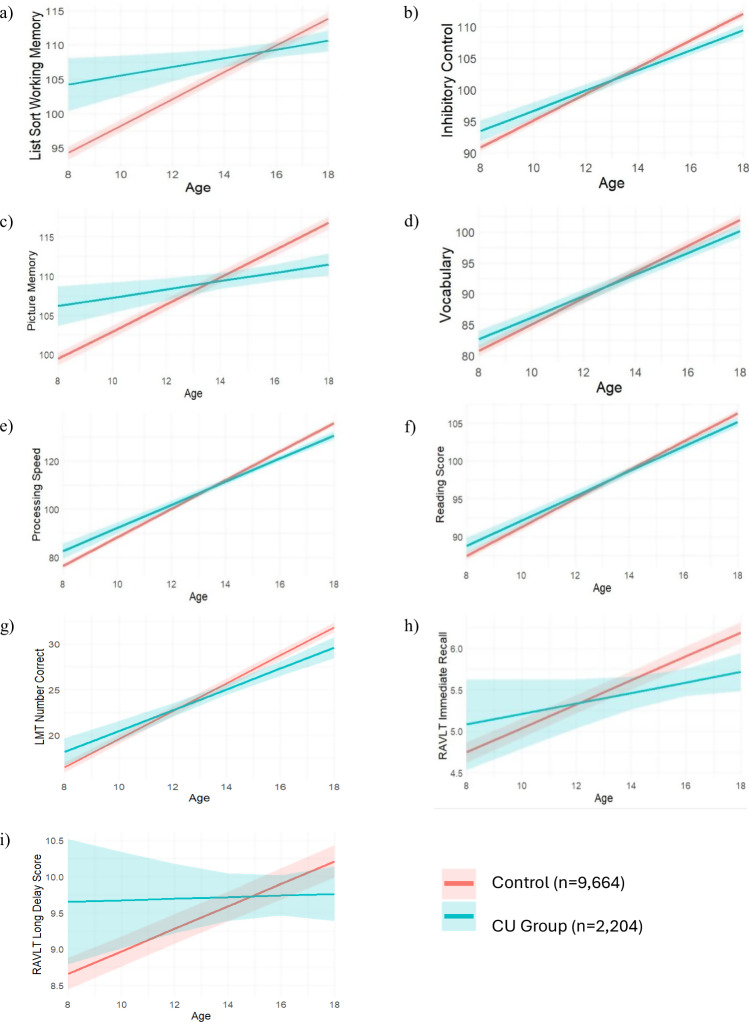
As aims were to investigate longitudinal trajectories of cognition, only the interaction between CU status and age are reported, though main effects were found across tasks (FDR-ps < 0.05). Full models are included in Table S5 and mean performances by group and age are in Table S6; mean group differences are presented at p < 0.05.
Working memory
Working memory performance exhibited a significant CU*age interaction with large effect size (β = −0.52, b = −1.32, 95%CI:-1.80,−0.84, p < 0.0001, FDR-p < 0.0001), such that CU participants did not demonstrate the same improvement in working memory with age as Controls. Review of estimated marginal means indicates groups differed from ages 9–14 with CU group demonstrating better performance (ps < .0001), whereas at 15–16 groups did not differ (Fig. 2a). At age 17, CU exhibited toward worse performance (p = .0001).
Inhibitory Control
Inhibitory control exhibited a significant CU*age interaction with small effect size (β = −0.21, b = −0.52, 95%CI:−0.73,−0.31, p < 0.0001, FDR-p < 0.0001; Fig. 2b). The CU group performed better at ages 9-10 (ps < 0.01) and 11 (p = 0.03), with the relationship flipping starting at age 14 (p = 0.03) through 15-17 (ps < 0.0001).
Episodic Memory
CU group interacted with age with medium effect size (β = -0.32, b = −1.20, 95%CI:-1.54,-0.86, p < 0.0001, FDR-p < 0.0001; Fig. 2c) in predicting episodic memory. At ages 9–13, CU demonstrated better episodic memory performance (ps < 0.01), no difference at ages 13-14, and worse performance than Controls at ages 15–17 (ps < 0.001).
Receptive language
There was an interaction of CU*age in receptive language with small effect size (β = -0.14, b = -0.36, 95%CI:−0.51,−0.21, p < 0.0001, FDR-p < 0.0001), with the CU group demonstrating less change over time (Fig. 2d). At ages 9–10, CU demonstrated better performance (ps < 0.01), with worse performance at ages 14 (p = 0.03) and 15+ (ps < 0.0001). Follow-up analyses indicated a quadratic relationship (CU*age2) predicting performance, which is detailed in the Supplement.
Processing speed
The interaction of CU*age (β = -0.24, b = -1.13, 95%CI:-1.53,-0.74, p < 0.0001, FDR-p < 0.0001) significantly predicted processing speed with small effect size, with Controls demonstrating greater improvement with age (Fig. 2e). At ages 9–12, CU demonstrated better processing speed (ps < 0.05), with no difference ages 13–14, and CU demonstrating worse performance than Controls at ages 15-17 (ps < 0.0001).
Oral reading
For oral reading, there was an interaction of CU*age with small effect size (β = -0.11, b = -0.25, 95%CI:−0.37,−0.12, p = 0.0001, FDR-p = 0.0003; Fig. 2f). CU group performed better at ages 9-11 (ps < 0.05) and worse than Controls at ages 15-17 (ps < 0.01).
Visuospatial
For predicting number correct on visuospatial performance, site was included as a fixed effect due to convergence issues. Results indicate a significant interaction between CU*age with small effect size (β = -0.16, b = -0.39, 95%CI:-0.63,-0.16, p = 0.001, FDR-p = 0.003), such that those in the CU group demonstrated lower number correct with age (Fig. 2g). While CU exhibited more correct responses than Controls at age 9 (p = 0.04) and no difference at ages 10–13, Controls had more correct responses at ages 15–17 (p < 0.0001).
Verbal recall and memory
CU group*age significantly interacted to predict immediate recall with small effect size (β = -0.21, b = -0.08, 95%CI:−0.15,−0.01, p = 0.02, FDR-p = 0.03; Fig. 2h). Groups did not differ from ages 9–14, though in ages 15–17 the CU group demonstrated worse performance than Controls (ps < 0.05). For long delay memory, there was also a significant interaction between CU*age (β = -0.21, b = -0.14, 95%CI:−0.25,−0.04, p = 0.008, FDR-p = 0.01; Fig. 2i), such that those in the CU group demonstrated less improvement over time. Groups differed from ages 9-11 with CU group demonstrating better performance (ps < 0.05), whereas at 12–16 there was no difference between groups, and at age 17 CU demonstrated worse performance (p = .02).
Aim 2: secondary hair analyses
After controlling for sex, other positive hair toxicology results, and site, and nesting for family ID and subject ID, THC Only group status*age significantly predicted episodic memory performance relative to Controls with large effect size (β = -0.60, b = -2.37, 95%CI:-4.08,-0.66, p = 0.007; n = 645, nobservations = 1885; see full models in Table S7). Higher scores reflect better episodic memory performance; thus, the negative THC*age interaction indicates a reduced rate of age-related improvement among THC-positive youth (Fig. 3). Estimated marginal means revealed that at ages 15–17, THC demonstrated worse episodic memory than Controls (ps = 0.04–0.001) and worse performance than CBD+ (ps = 0.02-008). CBD+ group and Controls were not significantly different. Given the relatively small CBD-positive subsample (n = 21), these analyses should be interpreted cautiously. For all other neurocognitive tasks (receptive language, processing speed, inhibitory control, and oral reading), no significant relationships were found between hair cannabinoid groups and performance.
Discussion
Findings support and extend prior work suggesting aberrant neurocognitive developmental trajectories in youth ages 9–17 who use cannabis, significantly extending the existing literature by including a comprehensive assessment of self-report and objective toxicological measures to accurately categorize cannabis use onset. Utilizing a prospective longitudinal design that considered pre-substance use confounding factors (i.e., sociodemographics, prenatal substance use history, family history of AUD/SUD, internalizing and externalizing symptoms) and controlled for comorbid substance use onset, we found that those who use cannabis actually show a slight cognitive advantage during late childhood, but demonstrate restricted improvement trajectories in immediate recall and delayed memory, processing speed, inhibitory control, visuospatial processing, language, and working memory over adolescence. Follow-up analyses considered a potential mechanism of altered trajectories through unique contributions of THC and CBD in analyzed in objective hair toxicology. Those with THC use exhibited declining trajectories in episodic memory relative to those without hair cannabinoids, whereas those with CBD did not differ from controls.
In the present study the cannabis use group demonstrated either restricted improvement or plateaued performance relative to non-using youth across cognitive domains. Longitudinal studies previously identified changes in those who initiated cannabis use in learning and memory [ref. 10–ref. 16, ref. 18], working memory [ref. 11, ref. 12, ref. 16, ref. 17], inhibition and attention [ref. 12, ref. 15, ref. 16, ref. 18] visuospatial functioning [ref. 11, ref. 12, ref. 14, ref. 16], and processing speed [ref. 10, ref. 12, ref. 14, ref. 15]. Here, those who use cannabis exhibited potential neurocognitive advantage in earlier years with a diminished positive slope over time. While on most tasks both groups demonstrated improvement over time as expected [ref. 58], those who used cannabis did not demonstrate the same rate of improvement. It may be that cannabis itself induces neurotoxicity which in turn impacts cognitive trajectories, or there may be a shared vulnerability for both cannabis use and reduced gains in cognition over time [ref. 75].
Other prior work within this cohort describes higher cognition being associated with substance use onset and cannabis specifically [ref. 76, ref. 77]. It may be that early maturation increases risk of using, and that these youth then demonstrate restricted age-typical cognitive improvement over time. Demonstrated cognitive trajectories may also reflect regression to the mean. Other analyses suggest family and environmental factors may most robustly predict substance initiation [ref. 76], and therefore broader consideration of such factors (e.g., personality traits, such as openness to experience [ref. 78, ref. 79]) should be considered in future analyses. Following this cohort into young adulthood can determine how variations in use trajectories, including escalation of use and cessation, influence cognition over time.
Secondary analyses indicate that youth who have objective evidence of recent THC, but not CBD, exposure in hair samples are likely to demonstrate worse episodic memory performance over time than those with no cannabinoids in their hair. Importantly, as hair cannabinoid testing identifies more frequent cannabis use than experimentation, these secondary models may also reflect more heavy cannabis use than the primary models. Findings align with prior hair cannabinoid results in adults [ref. 29], and are generally consistent with cross-sectional analyses of CBD hair cannabinoids in this cohort that did not reveal CBD-cognition relationships [ref. 25]. These data indicate a potential mechanism (THC) driving the displayed neurocognitive trajectories observed in the larger CU analyses, consistent with theorized processes [ref. 27, ref. 80]. THC, then, is likely particularly important for otherwise healthy adolescents to avoid or delay use. On balance, other data within this cohort indicated that even those who use CBD for medicinal reasons may be unintentionally exposed to THC [ref. 81], and product mislabeling is a known concern even in regulated markets [ref. 82–ref. 85]. Hair cannabinoid models also included far fewer participants and the sample size for the CBD group was low (n = 21), limiting power and interpretation. We caution that null findings in CBD models should not be interpreted as evidence of absence of association. Therefore, while CBD may be considered a harm reduction option for those regularly using cannabis in the context of mitigating THC-related consequences or cessation, the exact impact of CBD and the potential for contamination of CBD (including with THC) remain significant concerns for adolescent health.
Reasons for variation in findings between primary and secondary analyses warrant consideration. First, a smaller sample size with fewer waves of data incorporated may explain some discrepancy due to reduced power in hair cannabinoid models. In addition, modeling techniques were substantially different, including different cannabis use identification methods (comprehensive measures of any use in lifetime v. recent hair cannabinoid content alone) and different sets of covariates. Primary models may then reflect a more shared vulnerability for neurocognition that reflects both cannabis use and other confounds, while hair cannabinoid models may indicate a THC-specific vulnerability in episodic memory.
Small-to-large effect sizes were observed, comparable to prior research [ref. 86] and consistent with most data analyses of this size [ref. 73]. Importantly, given the sensitive sociodevelopmental period of adolescence, even modest effects may translate to clinically significant alterations [ref. 87, ref. 88]. For instance, relative decrements in learning and memory can impact standardized testing, grade advancement, and higher education opportunities in a highly competitive contemporary environment. Similarly, visuospatial, processing speed, and working memory skills are paramount to driving, an area where teens may already be at a disadvantage [ref. 89, ref. 90]. The impact of these altered neurocognitive trajectories may be meaningful in individual lives, particularly when individuals initiate use before age 16 [ref. 91], though further investigation to the real-world impact of such cannabis use is needed.
Findings are considered in light of strengths and limitations. Results here expand on the prior literature through several notable methodological improvements: (1) use of subjective (self-report) and objective (toxicological) cannabis use variables; (2) wide consideration of potential confounds, including prenatal history, family factors, sociodemographics, other substance use, and within-person change; and (3) a large cohort that was almost exclusively substance naïve at Baseline (ages 9–10) [ref. 92], with neurocognitive measures that predate cannabis exposure. On balance, secondary analyses of THC/CBD consisted of a smaller subsample, including a relatively small number of those with CBD in their hair. Motivations for cannabis and potentially CBD use are not known, though may include efforts to treat underlying symptoms (e.g., sleep, pain, anxiety) which may confound differences from healthy controls. Residual time-varying confounding cannot be excluded. Although false discovery rate correction was applied in primary models, testing across multiple outcomes and smaller subsamples increases risk of both Type I and Type II error. Oral fluid and urinalysis tests were not confirmed, though both demonstrate adequate specificity [ref. 24, ref. 36] and hair samples only positive for THC or CBD may be related to external contamination [ref. 93]; inclusion of toxicological measures here are still more likely to contribute to more accurate grouping rather than mis-categorizing someone as using cannabis when they do not. Hair samples were tested in two different laboratories with their own methods and LOD/LOQ/cutoffs, which increases noise in hair cannabinoid interpretation. While efforts were made to recruit a diverse cohort [ref. 42], there are still selection biases that may reduce generalizability. Participants included here are largely in the middle of adolescence and will undergo more neurocognitive development; early cannabis use (e.g., before age 16) is known to be particularly risky for adolescents [ref. 91] and future analyses of ABCD should include consideration of age of onset of regular use. Additional follow-up to consider trajectories of those who initiate cannabis use or continue to use in later adolescence, including modeling of frequency of use, are needed.
Conclusions
Adolescence marks a period of substantial development, but cannabis use may constrain one’s full cognitive developmental performance. Data here indicate novel restricted improvement and flattened neurocognitive trajectories in youth (ages 9–17) who initiate cannabis use, after accounting for within-person change and numerous known confounds and improving accuracy in cannabis groupings through incorporating toxicological measures. Unique analyses harnessing objective toxicology demonstrate that THC use may specifically relate to episodic memory performance over time during this developmental period. Findings support interventions aimed at delaying cannabis initiation during early adolescence and integrating neuroscience-informed psychoeducation about cognitive development during sensitive periods [ref. 94–ref. 96]. Continued monitoring of this cohort will clarify cannabinoid-cognition relationships into young adulthood, including the impact of timing of cannabis use initiation.
Supplementary Materials
References
- 1.Schulenberg JE, Johnston LD, O’Malley PM, Bachman JG, Miech RA, Patrick ME. Monitoring the Future national survey results on drug use, 1975–2017: volume II, college students and adults ages. 2018:454:19-55.
- MA ElSohly, S Chandra, M Radwan, CG Majumdar, JC Church. A comprehensive review of cannabis potency in the United States in the last decade. Biol Psychiatry Cogn Neurosci Neuroimaging, 2021. [PubMed]
- N Nguyen, LM Holmes, V Pravosud, BE Cohen, PM Ling. Changes in perceived harms of tobacco and cannabis and their correlations with use: a panel study of young adults 2014–20. Addict Behav, 2023. [DOI | PubMed]
- JN Giedd, A Raznahan, A Alexander-Bloch, E Schmitt, N Gogtay, JL Rapoport. Child psychiatry branch of the National Institute of Mental Health longitudinal structural magnetic resonance imaging study of human brain development. Neuropsychopharmacology, 2015. [DOI | PubMed]
- N Gogtay, JN Giedd, L Lusk, KM Hayashi, D Greenstein, AC Vaituzis. Dynamic mapping of human cortical development during childhood through early adulthood. PNAS, 2004. [DOI | PubMed]
- P Shaw, NJ Kabani, JP Lerch, K Eckstrand, R Lenroot, N Gogtay. Neurodevelopmental trajectories of the human cerebral cortex. J Neurosci, 2008. [DOI | PubMed]
- M Schneider. Puberty as a highly vulnerable developmental period for the consequences of cannabis exposure. Addict Biol, 2008. [DOI | PubMed]
- T Harkany, M Guzman, I Galve-Roperh, P Berghuis, LA Devi, K Mackie. The emerging functions of endocannabinoid signaling during CNS development. Trends Pharm Sci, 2007. [DOI | PubMed]
- KZ Peters, NE Zlebnik, JF Cheer. Cannabis exposure during adolescence: a uniquely sensitive period for neurobiological effects. Int Rev Neurobiol, 2022. [PubMed]
- TT Nguyen-Louie, N Castro, GE Matt, LM Squeglia, T Brumback, SF Tapert. Effects of emerging alcohol and marijuana use behaviors on adolescents’ neuropsychological functioning over four years. J Stud Alcohol Drugs, 2015. [DOI | PubMed]
- KL Hanson, KL Medina, CB Padula, SF Tapert, SA Brown. Impact of adolescent alcohol and drug use on neuropsychological functioning in young adulthood: 10-Year outcomes. J Child Adolesc Subst Abus, 2011. [DOI]
- J Jacobus, LM Squeglia, MA Infante, N Castro, T Brumback, AD Meruelo. Neuropsychological performance in adolescent marijuana users with co-occurring alcohol use: A three-year longitudinal study. Neuropsychology, 2015. [DOI | PubMed]
- MP Becker, PF Collins, A Schultz, S Urosevic, B Schmaling, M Luciana. Longitudinal changes in cognition in young adult cannabis users. J Clin Exp Neuropsychol, 2018. [DOI | PubMed]
- MH Meier, A Caspi, A Ambler, H Harrington, R Houts, RS Keefe. Persistent cannabis users show neuropsychological decline from childhood to midlife. Proc Natl Acad Sci USA, 2012. [DOI | PubMed]
- MH Meier, A Caspi, A R Knodt, W Hall, A Ambler, H Harrington. Long-term cannabis use and cognitive reserves and hippocampal volume in midlife. Am J Psychiatry, 2022. [DOI | PubMed]
- JG Morin, MH Afzali, J Bourque, SH Stewart, JR Séguin, M O’Leary-Barrett. A population-based analysis of the relationship between substance use and adolescent cognitive development. Am J Psychiatry, 2019. [DOI | PubMed]
- MH Meier, A Caspi, A Danese, HL Fisher, R Houts, L Arseneault. Associations between adolescent cannabis use and neuropsychological decline: a longitudinal co-twin control study. Addiction, 2018. [DOI | PubMed]
- 18.Janousch C, Grob U, Eggenberger L, Johnson-Ferguson L, Ribeaud D, Eisner M, et al. A fine-grained longitudinal study of adolescent cannabis use and its relation to cognitive performance in young adulthood. Int J Mental Health Addict. Springer, 2025.
- O Rogeberg. Correlations between cannabis use and IQ change in the Dunedin cohort are consistent with confounding from socioeconomic status. Proc Natl Acad Sci USA, 2013. [DOI | PubMed]
- PJ Conrod. Cannabis and brain health: what is next for developmental cohort studies?. Am J Psychiatry, 2022. [DOI | PubMed]
- LK Wendel, L Daedelow, J Kaminski, T Banaschewski, S Millenet, ALW Bokde. Residual effects of cannabis-use on neuropsychological functioning. Cogn Dev, 2021. [DOI]
- A Steinhoff, L Shanahan, L Bechtiger, J Zimmermann, D Ribeaud, MP Eisner. When substance use is underreported: comparing self-reports and hair toxicology in an urban cohort of young adults. J Am Acad Child Adolesc Psychiatry, 2023. [DOI | PubMed]
- NE Wade, RM Sullivan, SF Tapert, WE Pelham, MA Huestis, KM Lisdahl. Concordance between substance use self-report and hair analysis in community-based adolescents. Am J Drug Alcohol Abus, 2023. [DOI]
- NE Wade, AL Wallace, R Baca, G Andrade, JP Happer, KE Courtney. Cannabinoid profiling across toxicology samples in adolescents and young adults by route of administration and in relation to depression symptoms. J Anal Toxicol, 2025. [DOI]
- NE Wade, AL Wallace, MA Huestis, KM Lisdahl, RM Sullivan, SF Tapert. Cannabis use and neurocognitive performance at 13-14 years-old: optimizing assessment with hair toxicology in the Adolescent brain cognitive development (ABCD) study. Addict Behav, 2024. [DOI | PubMed]
- 26.ElSohly MA, Radwan MM, Gul W, Chandra S, Galal A. Phytochemistry of Cannabis sativa L. In: Kinghorn AD, Falk H, Gibbons S, Kobayashi Ji, eds. Phytocannabinoids: Unraveling the Complex Chemistry and Pharmacology of Cannabis sativa. 2017;103:1–36.
- R Mizrahi, JJ Watts, KY Tseng. Mechanisms contributing to cognitive deficits in cannabis users. Neuropharmacology, 2017. [DOI | PubMed]
- M Colizzi, S Bhattacharyya. Does cannabis composition matter? Differential effects of delta-9-tetrahydrocannabinol and cannabidiol on human cognition. Curr Addict Rep, 2017. [DOI | PubMed]
- CJ Morgan, C Gardener, G Schafer, S Swan, C Demarchi, TP Freeman. Sub-chronic impact of cannabinoids in street cannabis on cognition, psychotic-like symptoms and psychological well-being. Psychol Med, 2012. [DOI | PubMed]
- CJA Morgan, TP Freeman, C Hindocha, G Schafer, C Gardner, HV Curran. Individual and combined effects of acute delta-9-tetrahydrocannabinol and cannabidiol on psychotomimetic symptoms and memory function. Transl Psychiatry, 2018. [DOI | PubMed]
- A Englund, D Oliver, E Chesney, L Chester, J Wilson, S Sovi. Does cannabidiol make cannabis safer? A randomised, double-blind, cross-over trial of cannabis with four different CBD:THC ratios. Neuropsychopharmacology, 2023. [DOI | PubMed]
- LA Lo, AL Christiansen, JC Strickland, CA Pistawka, L Eadie, R Vandrey. Does acute cannabidiol (CBD) use impair performance? A meta-analysis and comparison with placebo and delta-9-tetrahydrocannabinol (THC). Neuropsychopharmacology, 2024. [DOI | PubMed]
- S Hryhorowicz, M Walczak, O Zakerska-Banaszak, R Slomski, M Skrzypczak-Zielinska. Pharmacogenetics of Cannabinoids. Eur J Drug Metab Pharmacokinet, 2018. [DOI | PubMed]
- SM Stout, NM Cimino. Exogenous cannabinoids as substrates, inhibitors, and inducers of human drug metabolizing enzymes: a systematic review. Drug Metab Rev, 2014. [DOI | PubMed]
- P Sharma, P Murthy, MMS Bharath. Chemistry, metabolism, and toxicology of cannabis: clinical implications. Iran J Psychiatry, 2012. [PubMed]
- MA Huestis, ML Smith. Cannabinoid markers in biological fluids and tissues: revealing intake. Trends Mol Med, 2018. [DOI | PubMed]
- C Mokrysz, TP Freeman, S Korkki, K Griffiths, HV Curran. Are adolescents more vulnerable to the harmful effects of cannabis than adults? A placebo-controlled study in human males. Transl Psychiatry, 2016. [DOI | PubMed]
- W Lawn, K Trinci, C Mokrysz, A Borissova, S Ofori, K Petrilli. The acute effects of cannabis with and without cannabidiol in adults and adolescents: a randomised, double-blind, placebo-controlled, crossover experiment. Addiction, 2023. [DOI | PubMed]
- L Johnson-Ferguson, M Loher, L Bechtiger, C Janousch, MR Baumgartner, TM Binz. Cannabis use is associated with changes in psychological and functional well-being during young adulthood: evidence from self-reports and hair analyses. Psychol Med, 2025. [DOI]
- AL Wallace, MA Huestis, RM Sullivan, NE Wade. Amygdala volume and depression symptoms in young adolescents who use cannabis. Behav Brain Res, 2024. [DOI | PubMed]
- C Janousch, L Eggenberger, A Steinhoff, L Johnson-Ferguson, L Bechtiger, M Loher. Words versus strands: reliability and stability of concordance rates of self-reported and hair-analyzed substance use of young adults over time. Eur Addict Res, 2025. [PubMed]
- H Garavan, H Bartsch, K Conway, A Decastro, RZ Goldstein, S Heeringa. Recruiting the ABCD sample: Design considerations and procedures. Dev Cogn Neurosci, 2018. [DOI | PubMed]
- TL Jernigan, SA Brown. Coordinators AC. Introduction. Dev Cogn Neurosci, 2018. [DOI | PubMed]
- BJ Casey, T Cannonier, MI Conley, AO Cohen, DM Barch, MM Heitzeg. The Adolescent Brain Cognitive Development (ABCD) study: imaging acquisition across 21 sites. Dev Cogn Neurosci, 2018. [DOI | PubMed]
- DM Barch, MD Albaugh, S Avenevoli, L Chang, DB Clark, MD Glantz. Demographic, physical and mental health assessments in the adolescent brain and cognitive development study: rationale and description. Dev Cogn Neurosci, 2018. [DOI | PubMed]
- KM Lisdahl, KJ Sher, KP Conway, R Gonzalez, SW Feldstein Ewing, SJ Nixon. Adolescent brain cognitive development (ABCD) study: overview of substance use assessment methods. Dev Cogn Neurosci, 2018. [DOI | PubMed]
- M Luciana, JM Bjork, BJ Nagel, DM Barch, R Gonzalez, SJ Nixon. Adolescent neurocognitive development and impacts of substance use: overview of the adolescent brain cognitive development (ABCD) baseline neurocognition battery. Dev Cogn Neurosci, 2018. [DOI | PubMed]
- KA Uban, MK Horton, J Jacobus, C Heyser, WK Thompson, SF Tapert. Biospecimens and the ABCD study: Rationale, methods of collection, measurement and early data. Dev Cogn Neurosci, 2018. [DOI | PubMed]
- RA Zucker, R Gonzalez, SW Feldstein Ewing, MP Paulus, J Arroyo, A Fuligni. Assessment of culture and environment in the adolescent brain and cognitive development study: rationale, description of measures, and early data. Dev Cogn Neurosci, 2018. [DOI | PubMed]
- SM Robinson, LC Sobell, MB Sobell, GI Leo. Reliability of the timeline followback for cocaine, cannabis, and cigarette use. Psychol Addict Behav, 2014. [DOI | PubMed]
- NE Wade, SF Tapert, KM Lisdahl, MA Huestis, F Haist. Substance use onset in high-risk 9-13 year-olds in the ABCD study. Neurotoxicol Teratol, 2022. [DOI | PubMed]
- GA Cooper, R Kronstrand, P Kintz. Society of Hair T. Society of hair testing guidelines for drug testing in hair. Forensic Sci Int, 2012. [DOI | PubMed]
- M Taylor, R Lees, G Henderson, A Lingford-Hughes, J Macleod, J Sullivan. Comparison of cannabinoids in hair with self-reported cannabis consumption in heavy, light and non-cannabis users. Drug Alcohol Rev, 2017. [DOI | PubMed]
- M Taylor, SM Collin, MR Munafo, J MacLeod, M Hickman, J Heron. Patterns of cannabis use during adolescence and their association with harmful substance use behaviour: findings from a UK birth cohort. J Epidemiol Community Health, 2017. [DOI | PubMed]
- MA Huestis, RA Gustafson, ET Moolchan, A Barnes, JA Bourland, SA Sweeney. Cannabinoid concentrations in hair from documented cannabis users. Forensic Sci Int, 2007. [DOI | PubMed]
- T Mieczkowski. Assessing the potential of a “color effect” for hair analysis of 11-nor-9-carboxy-delta(9)-tetrahydrocannabinol: analysis of a large sample of hair specimens. Life Sci, 2003. [DOI | PubMed]
- N Akshoomoff, E Newman, WK Thompson, C McCabe, CS Bloss, L Chang. The NIH Toolbox Cognition Battery: results from a large normative developmental sample (PING). Neuropsychology, 2014. [DOI | PubMed]
- AP Anokhin, M Luciana, M Banich, D Barch, JM Bjork, MR Gonzalez. Age-related changes and longitudinal stability of individual differences in ABCD neurocognition measures. Dev Cogn Neurosci, 2022. [DOI | PubMed]
- SJ Nixon, R Prather, B Lewis. Sex differences in alcohol-related neurobehavioral consequences. Handb Clin Neurol, 2014. [DOI | PubMed]
- 60.Schmidt M. Rey Auditory and Verbal Learning Test: A Handbook. 1996, Los Angeles.
- J Halladay, S Kershaw, EK Devine, L Grummitt, R Visontay, SJ Lynch. Covariates in studies examining longitudinal relationships between substance use and mental health problems among youth: a meta-epidemiologic review. Drug Alcohol Depend, 2025. [DOI | PubMed]
- MA Sheridan, M Peverill, AS Finn, KA McLaughlin. Dimensions of childhood adversity have distinct associations with neural systems underlying executive functioning. Dev Psychopathol, 2017. [DOI | PubMed]
- NA Crane, RM Schuster, RJ Mermelstein, R Gonzalez. Neuropsychological sex differences associated with age of initiated use among young adult cannabis users. J Clin Exp Neuropsychol, 2015. [DOI | PubMed]
- C Cardenas-Iniguez, MR Gonzalez. Recommendations for the responsible use and communication of race and ethnicity in neuroimaging research. Nat Neurosci, 2024. [DOI | PubMed]
- 65.Wade NE, Si Y, Tapert SF, Linkersdörfer J, Lisdahl KM, Moore HR, et al. Prevalence of biochemically-verified substance use in healthy adolescents across the united states: hair toxicology results in the ABCD study. medRxiv [Preprint]. 2025:2025.2009.2019.25336190.
- JP Rice, T Reich, KK Bucholz, RJ Neuman, R Fishman, N Rochberg. Comparison of direct interview and family history diagnoses of alcohol dependence. Alcohol Clin Exp Res, 1995. [DOI | PubMed]
- 67.Sullivan RM, Wade NE, Wallace AL, Tapert SF, Pelham WE, Brown SA, et al. Substance use patterns in 9 to 13-year-olds: longitudinal findings from the Adolescent Brain Cognitive Development (ABCD) study. Drug Alcohol Depend Rep. 2022;5:100120.
- NE Wade, KS Bagot, SF Tapert, SA Gruber, FM Filbey, KM Lisdahl. Cognitive functioning related to binge alcohol and cannabis co-use in abstinent adolescents and young adults. J Stud Alcohol Drugs, 2020. [DOI | PubMed]
- M Hernandez Mejia, NE Wade, R Baca, VG Diaz, J Jacobus. The influence of cannabis and nicotine co-use on neuromaturation: a systematic review of adolescent and young adult studies. Biol Psychiatry, 2021. [DOI | PubMed]
- D Bates, M Mächler, B Bolker, S Walker. 2015 Y. Fitting linear mixed-effects models using lme4. J Stat Softw, 2015. [DOI]
- Y Benjamini, Y Hochberg. Controlling the false discovery rate: a practical and powerful approach to multiple testing. J R Stat Soc, 1995. [DOI]
- 72.Bartoń K MuMIn: Multi-Model Inference. R package version 14811. 2025.
- MM Owens, A Potter, CS Hyatt, M Albaugh, WK Thompson, T Jernigan. Recalibrating expectations about effect size: a multi-method survey of effect sizes in the ABCD study. PLoS One, 2021. [DOI | PubMed]
- 74.Lenth R, Piaskowski J emmeans: estimated marginal means, aka least-squares means. emmeans: Estimated Marginal Means, aka Least-Squares Means. 2025.
- J Bourque, S Potvin. Cannabis and cognitive functioning: from acute to residual effects, from randomized controlled trials to prospective designs. Front Psychiatry, 2021. [DOI | PubMed]
- R Green, BJ Wolf, A Chen, AE Kirkland, PL Ferguson, BD Browning. Predictors of substance use initiation by early adolescence. Am J Psychiatry, 2024. [DOI | PubMed]
- AP Miller, DAA Baranger, SE Paul, AS Hatoum, C Rogers, R Bogdan. Characteristics associated with cannabis use initiation by late childhood and early adolescence in the adolescent brain cognitive development (ABCD) study. JAMA Pediatr, 2023. [DOI | PubMed]
- KF Romm, CT Dearfield, CJ Berg. Longitudinal patterns of alcohol and cannabis use among US young adults: Correlates and implications for problematic health outcomes. Addict Behav, 2024. [DOI | PubMed]
- KT Phillips, MM Phillips, KD Duck. Factors associated with marijuana use and problems among college students in Colorado. Subst Use Misuse, 2018. [DOI | PubMed]
- P Prini, E Zamberletti, C Manenti, M Gabaglio, D Parolaro, T Rubino. Neurobiological mechanisms underlying cannabis-induced memory impairment. Eur Neuropsychopharmacol, 2020. [DOI | PubMed]
- NE Wade, TT Nguyen-Louie, AL Wallace, RM Sullivan, SF Tapert. Commercial cannabidiol for community-based young adolescents: predicting medicinal use. Cannabis Cannabinoid Res, 2025. [DOI | PubMed]
- E Johnson, M Kilgore, S Babalonis. Label accuracy of unregulated cannabidiol (CBD) products: measured concentration vs. label claim. J Cannabis Res, 2022. [DOI | PubMed]
- E Johnson, M Kilgore, S Babalonis. Cannabidiol (CBD) product contamination: Quantitative analysis of Delta(9)-tetrahydrocannabinol (Delta(9)-THC) concentrations found in commercially available CBD products. Drug Alcohol Depend, 2022. [DOI | PubMed]
- OS Miller, EJ Elder, KJ Jones, BE Gidal. Analysis of cannabidiol (CBD) and THC in nonprescription consumer products: Implications for patients and practitioners. Epilepsy Behav, 2022. [DOI | PubMed]
- BE Gidal, R Vandrey, C Wallin, S Callan, A Sutton, TB Saurer. Product labeling accuracy and contamination analysis of commercially available cannabidiol product samples. Front Pharm, 2024. [DOI]
- JC Scott, ST Slomiak, JD Jones, AFG Rosen, TM Moore, RC Gur. Association of cannabis with cognitive functioning in adolescents and young adults: a systematic review and meta-analysis. JAMA Psychiatry, 2018. [DOI | PubMed]
- EC Matthay, E Hagan, LM Gottlieb, ML Tan, D Vlahov, N Adler. Powering population health research: Considerations for plausible and actionable effect sizes. SSM Popul Health, 2021. [DOI | PubMed]
- JA Durlak. How to select, calculate, and interpret effect sizes. J Pediatr Psychol, 2009. [DOI | PubMed]
- BC Banz, D Hersey, FE Vaca. Coupling neuroscience and driving simulation: a systematic review of studies on crash-risk behaviors in young drivers. Traffic Inj Prev, 2021. [DOI | PubMed]
- 90.Walshe EA, Ward McIntosh C, Romer D, Winston FK. Executive function capacities, negative driving behavior and crashes in young drivers. Int J Environ Res Public Health. 2017;14:1314.
- KM Lisdahl, ER Gilbart, NE Wright, S Shollenbarger. Dare to delay? The impacts of adolescent alcohol and marijuana use onset on cognition, brain structure, and function. Front Psychiatry, 2013. [DOI | PubMed]
- KM Lisdahl, S Tapert, KJ Sher, R Gonzalez, SJ Nixon, SW Feldstein Ewing. Substance use patterns in 9-10 year olds: baseline findings from the adolescent brain cognitive development (ABCD) study. Drug Alcohol Depend, 2021. [DOI | PubMed]
- VA Hill, MI Schaffer, GN Stowe. Carboxy-THC in washed hair: still the reliable indicator of marijuana ingestion. J Anal Toxicol, 2016. [DOI | PubMed]
- LR Meredith, AM Maralit, SE Thomas, SL Rivers, CA Salazar, RF Anton. Piloting of the just say know prevention program: a psychoeducational approach to translating the neuroscience of addiction to youth. Am J Drug Alcohol Abus, 2021. [DOI]
- T Rezapour, P Rafei, A Baldacchino, PJ Conrod, G Dom, DH Fishbein. Neuroscience-informed classification of prevention interventions in substance use disorders: an RDoC-based approach. Neurosci Biobehav Rev, 2024. [DOI | PubMed]
- T Rezapour, KL McLean, E Psederska, KN Maleki, H Ekhtiari, J Vassileva. Neuroscience-informed psychoeducation for addiction: a conceptual and feasibility study. Front Psychiatry, 2025. [DOI | PubMed]