
Molecular Docking of Natural Compounds as DPP-4 Inhibitors in Type 2 Diabetes: A Comprehensive Review
Abstract
Dipeptidyl peptidase-4 (DPP-4) is an established therapeutic target in the treatment of type 2 diabetes mellitus (T2DM), primarily due to its role in regulating incretin activity and glucose homeostasis. Although clinically approved DPP-4 inhibitors are widely used, their moderate efficacy has driven the search for novel compounds with improved properties. In this context, natural products have attracted considerable attention as a source of structurally diverse and biologically active molecules. At the same time, molecular docking has emerged as a key computational tool for the identification and evaluation of potential DPP-4 inhibitors. This review summarizes and critically analyzes current molecular docking studies of natural compounds targeting DPP-4. Over 150 studies were evaluated with respect to docking methodologies, selection of protein structures, and validation strategies. The results reveal substantial variability in computational protocols. Frequently used protein structures include ligand-bound DPP-4 models such as 1X70 and 6B1E. Among the investigated compounds, flavonoids represent the most extensively studied class, followed by alkaloids, phenolics, terpenoids, and peptides. Despite numerous reports of favorable binding interactions within the DPP-4 active site, many studies rely solely on docking results without further validation. The limited use of molecular dynamics simulations and experimental assays highlights a significant gap in the current literature. Overall, while molecular docking provides valuable preliminary insights, improved standardization and integration with complementary approaches are essential to enhance the reliability and translational relevance of in silico findings.
Article type: Review Article
Keywords: DPP-4, type 2 diabetes mellitus, molecular docking, natural compounds, molecular dynamics, virtual screening, drug discovery
Affiliations: Department of Organic and Physical Chemistry, Faculty of Pharmacy, Medical University of Warsaw, Banacha 1 Str., 02-093 Warsaw, Poland; justyna.baranowska@wum.edu.pl; Chair and Department of Pharmaceutical Biology, Medical University of Warsaw, Banacha 1, 02-097 Warsaw, Poland; anna.kiss@wum.edu.pl; Doctoral School, Medical University of Warsaw, Żwirki i Wigury 81 Str., 02-093 Warsaw, Poland
License: © 2026 by the authors. CC BY 4.0 Licensee MDPI, Basel, Switzerland. This article is an open access article distributed under the terms and conditions of the Creative Commons Attribution (CC BY) license.
Article links: DOI: 10.3390/pharmaceutics18060741 | PubMed: 42357357 | PMC: PMC13306514
Relevance: Moderate: mentioned 3+ times in text
Full text: PDF (10.9 MB)
1. Introduction
Diabetes mellitus is a chronic metabolic disorder that represents a major global health problem, with a continuously increasing prevalence worldwide. Type 2 diabetes (T2DM), which accounts for the vast majority of cases, is characterized by impaired glucose homeostasis caused by insulin resistance or inadequate insulin production. Poor glycemic control is associated with the development of long-term complications, including cardiovascular disease, neuropathy, nephropathy, and retinopathy. This highlights the importance of the development of more effective therapeutic strategies aimed at maintaining stable blood glucose levels [ref. 1,ref. 2].
Among the various molecular targets explored in antidiabetic therapy, dipeptidyl peptidase-4 (DPP-4) has gained particular attention due to its key role in regulating incretin hormone activity. The development of DPP-4 inhibitors, commonly known as “gliptins”, has provided a clinically relevant approach to improving glycemic control through enhancement of endogenous incretin effects. However, despite their clinical success, these agents exhibit moderate efficacy, which continues to drive the search for novel inhibitors with improved properties [ref. 3].
In this context, natural compounds have emerged as promising candidates due to their structural diversity and wide range of biological activities. At the same time, advances in computational methods have significantly accelerated early-stage drug discovery. In particular, molecular docking has become a widely used approach for predicting ligand-protein interactions and identifying potential inhibitors prior to experimental validation.
Despite the growing number of docking studies on natural DPP-4 inhibitors, significant inconsistencies in computational methodologies, protein selection, and validation strategies limit the comparability and translational relevance of reported findings.
The aim of this review is to summarize current knowledge on DPP-4 as a therapeutic target and to critically analyze the potential of natural compounds as DPP-4 inhibitors, with a particular focus on studies employing molecular docking approaches.
2. Literature Search Strategy and Scope of the Review
The present article was designed as a comprehensive scoping review aimed at providing an overview of molecular docking studies investigating natural compounds as potential DPP-4 inhibitors, rather than as a formal systematic review. Accordingly, the objective was not to perform a quantitative meta-analysis or quality scoring of individual studies, but rather to identify major methodological trends, summarize the diversity of investigated compounds, and critically discuss the strengths and limitations of current computational approaches.
The literature survey was conducted using three major databases, namely Scopus, Web of Science, and PubMed. Searches were performed up to March 2026. The primary search terms included “DPP-4 docking” and “DPP-IV docking”, which were supplemented by combinations with terms such as “natural compounds”, “phytochemicals”, “flavonoids”, “alkaloids”, “phenolics”, “terpenoids”, “peptides”, and “molecular docking”. Additional articles were identified through manual examination of references cited in relevant publications.
After removal of duplicate records, titles and abstracts were screened to identify studies investigating natural compounds as potential DPP-4 inhibitors using molecular docking approaches. Only original research articles published in peer-reviewed journals and written in English were considered. Studies focused exclusively on synthetic compounds, review articles, conference abstracts, editorials, and papers lacking docking analyses were excluded. In addition to plant-derived metabolites, studies involving food-derived bioactive peptides were also included because these compounds represent an important group of naturally occurring molecules with potential DPP-4 inhibitory activity.
Subsequently, full-text articles were evaluated for relevance and suitability. A total of 178 studies met the inclusion criteria and were subjected to detailed analysis. Information extracted from each study included the investigated compound(s), docking software employed, protein structures used, availability of molecular dynamics simulations, and the presence or absence of experimental validation.
Given the substantial methodological heterogeneity among the available reports, no formal quality-assessment framework or meta-analytical procedures were applied. Instead, emphasis was placed on identifying common trends, frequently used computational protocols, and major limitations affecting the reliability and translational value of docking-based studies.
The resulting dataset served as the basis for the qualitative and semi-quantitative analyses presented throughout this review.
3. DPP-4 as a Therapeutic Target in Diabetes
3.1. Role of DPP-4 in Glucose Metabolism
Dipeptidyl peptidase-4 is a widely expressed serine protease that plays a central role in the regulation of glucose homeostasis through modulation of incretin hormone activity [ref. 3,ref. 4]. It occurs both as a membrane-bound enzyme and in a soluble circulating form, reflecting its involvement in systemic metabolic regulation.
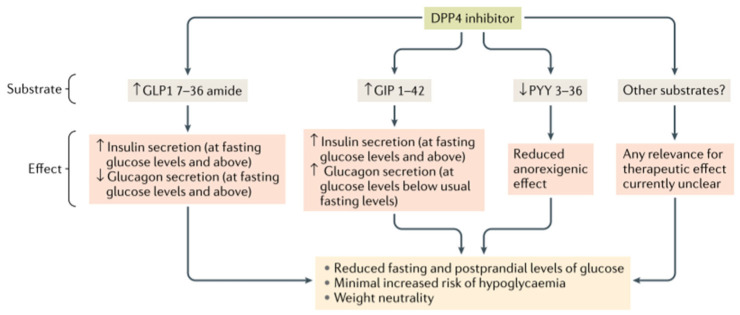
A key physiological function of DPP-4 is the rapid inactivation of incretin hormones, primarily glucagon-like peptide-1 (GLP-1) and glucose-dependent insulinotropic polypeptide (GIP), which are secreted from the gastrointestinal tract in response to nutrient intake [ref. 3,ref. 5]. These hormones contribute to postprandial glucose control by stimulating insulin secretion and suppressing glucagon release in a glucose-dependent manner. In addition, GLP-1 exerts extra-pancreatic effects, including slowing gastric emptying and reducing hepatic glucose production [ref. 3].
DPP-4 enzymatically cleaves incretins at the N-terminal region, particularly in peptides containing proline or alanine at the penultimate position, leading to rapid loss of their biological activity [ref. 4,ref. 5]. As a consequence, active GLP-1 has an extremely short half-life in circulation, typically around 1–2 min, which significantly limits the duration of its physiological effects [ref. 3,ref. 5]. Through this rapid degradation, DPP-4 tightly regulates incretin bioavailability and ensures precise temporal control of glucose-lowering signals.
Overall, DPP-4 acts as a key enzymatic checkpoint in glucose metabolism, controlling the intensity and duration of incretin-mediated effects on insulin secretion and glucagon suppression. This regulatory role provides the biological rationale for targeting DPP-4 in the treatment of type 2 diabetes mellitus (Figure 1).
3.2. Clinically Used DPP-4 Inhibitors
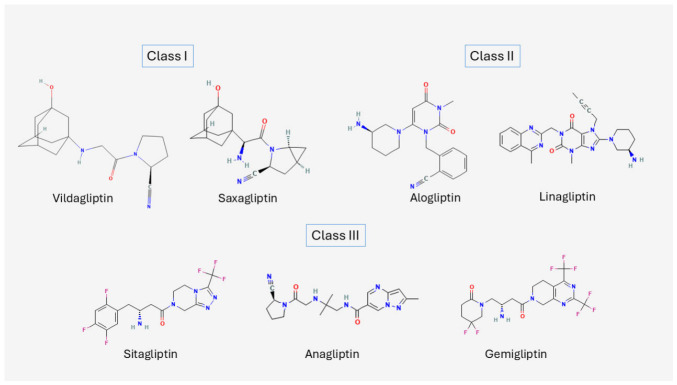
Given the central role of DPP-4 in incretin inactivation, pharmacological inhibition of this enzyme has become an established strategy in the management of type 2 diabetes mellitus. DPP-4 inhibitors, commonly referred to as “gliptins”, include several clinically approved agents such as sitagliptin, vildagliptin, saxagliptin, alogliptin, linagliptin, teneligliptin, omarigliptin, and trelagliptin [ref. 4,ref. 6]. These compounds differ in their chemical structures and pharmacokinetic profiles but share a common mechanism of action.
DPP-4 inhibitors exert their therapeutic effect by preventing the enzymatic degradation of endogenous incretins, thereby prolonging their activity and enhancing physiological glucose regulation. This leads to increased insulin secretion and reduced glucagon levels in a glucose-dependent manner, which minimizes the risk of hypoglycemia compared to traditional insulin secretagogues [ref. 3].
In clinical settings, DPP-4 inhibitors are used both as monotherapy and in combination with other antidiabetic agents, particularly metformin. They have been shown to provide moderate but consistent reductions in glycated hemoglobin (HbA1c) and improvements in both fasting and postprandial glucose levels [ref. 3,ref. 4]. An additional advantage of this drug class is its neutral effect on body weight and generally favorable tolerability profile, making it suitable for a wide range of patients.
However, despite these benefits, DPP-4 inhibitors exhibit lower glucose-lowering efficacy compared to some newer therapeutic options, especially in patients with advanced T2DM and reduced β-cell function [ref. 3]. Furthermore, although these agents are considered safe, rare adverse events such as pancreatitis have been reported [ref. 3,ref. 7]. Differences in pharmacokinetic properties among individual drugs may also influence dosing frequency and clinical use.
Taken together, DPP-4 inhibitors are a well-tolerated therapeutic class targeting incretin metabolism (Figure 2). However, their moderate efficacy drives the search for novel agents with improved potency. To further improve the efficacy and selectivity of DPP-4 inhibitors, a detailed understanding of the structural features of the enzyme and its active site is required.
3.3. Structural Features of the DPP-4 Active Site
Dipeptidyl peptidase-4 is a membrane-associated serine protease that functions as a homodimer, with each monomer composed of a catalytic domain and an eight-bladed β-propeller domain [ref. 4]. The active site is located within the extracellular region of the enzyme, forming a relatively large binding cavity capable of accommodating structurally diverse ligands [ref. 6]. However, substrate recognition and inhibitor specificity are primarily governed by well-defined subpockets within the active site, including the S1, S2, and S2 extensive regions, as well as the catalytic triad (Ser630, Asp708, His740), which collectively determine binding orientation and interaction patterns.
The architecture of the active site is defined by a series of interconnected subsites, including S1, S2, S1′, S2′, and the S2 extensive region, which together create a complex and versatile binding environment [ref. 6]. Among these, the S1 and S2 pockets play a central role in ligand recognition and are essential for inhibitory activity, whereas additional interactions within the S1′, S2′, or S2 extensive regions can significantly enhance binding affinity and potency [ref. 4]. Functionally, the S1 pocket is predominantly hydrophobic and accommodates nonpolar fragments of ligands, while the S2 subsite provides a more polar environment that enables hydrogen bonding and electrostatic interactions, thereby contributing to ligand stabilization (Figure 3) [ref. 4,ref. 6].
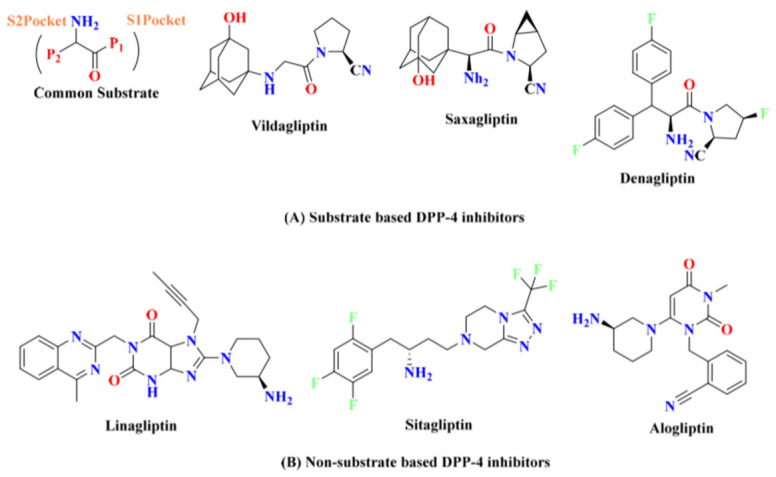
At the molecular level, ligand binding within the DPP-4 active site is governed by a network of conserved amino acid residues that ensure both specificity and stability of the complex. In particular, Glu205 and Glu206 play a pivotal role in anchoring ligands through hydrogen bonding interactions, forming a key recognition motif within the catalytic pocket [ref. 6]. Additional residues, such as Tyr662 and Asn710, contribute to the precise orientation and stabilization of bound ligands, while Arg125 is involved in positioning specific functional groups within the binding cavity, supporting a conserved binding mode across structurally diverse inhibitors [ref. 6,ref. 8].
Despite the structural diversity of DPP-4 inhibitors, crystallographic studies consistently demonstrate that the overall architecture of the active site remains largely preserved upon ligand binding, with only minor adjustments observed in selected side chains [ref. 6,ref. 8]. This relative rigidity suggests that ligand recognition in DPP-4 relies more on precise complementarity to a preorganized binding pocket than on large-scale conformational changes. Notably, conserved water molecules within the active site have been shown to play a critical role in maintaining the orientation of key residues, particularly Glu205 and Glu206, and in facilitating proper ligand positioning within the S2 subsite [ref. 6].
From a molecular docking perspective, these structural characteristics are of fundamental importance. The presence of multiple subsites enables ligands to adopt diverse binding modes, which must be accurately captured during computational modeling. At the same time, the conserved arrangement of key residues and the involvement of water-mediated interactions highlight the need to account for both direct protein-ligand contacts and solvent effects in docking studies [ref. 8]. Furthermore, the relatively large and adaptable binding cavity of DPP-4 necessitates careful conformational sampling and thorough validation of predicted binding poses to ensure reliable results. These features are particularly relevant in the context of natural compounds, which exhibit high structural diversity and complexity, making molecular docking an essential tool for exploring their potential as DPP-4 inhibitors.
4. Computational Approaches in DPP-4 Inhibitor Research
4.1. Why Molecular Docking Is Widely Used?
Computational approaches have become an integral part of modern drug discovery, particularly at the early stages of identifying potential bioactive compounds. Among these methods, molecular docking is one of the most widely applied techniques for evaluating ligand-protein interactions, enabling rapid screening of large compound libraries and prediction of potential binding modes within a target protein.
One of the key advantages of molecular docking is its ability to provide a cost-effective and time-efficient strategy for prioritizing candidate molecules prior to experimental validation. By estimating binding affinity and identifying key interactions within the active site, docking studies allow researchers to narrow down large sets of compounds and focus on the most promising candidates. This is particularly relevant in the context of natural products, which are characterized by high structural diversity and often require extensive screening to identify biologically active compounds.
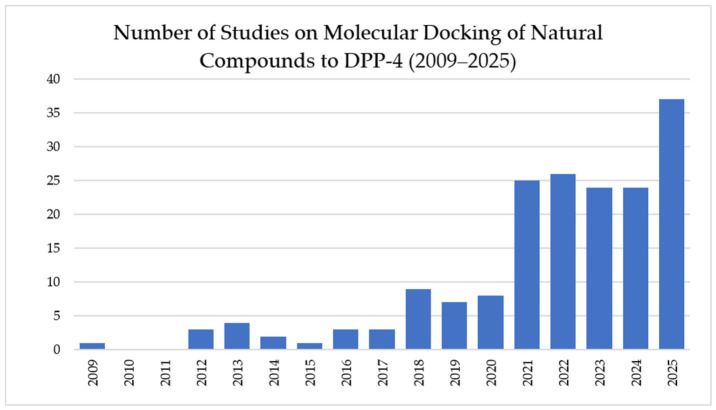
In recent years, there has been a noticeable increase in the number of studies employing molecular docking to investigate natural compounds as potential DPP-4 inhibitors. This growing trend reflects both the expanding interest in natural product-based drug discovery and the accessibility of docking software. The increasing number of publications in this field is illustrated in Figure 4, which presents the rising trend of docking studies over time.
4.2. General Workflow of Molecular Docking Studies
Molecular docking studies typically follow a multistep workflow that includes protein preparation, ligand preparation, definition of the binding site, docking calculations, and analysis of the resulting ligand-protein interactions. Although these steps are conceptually straightforward, their proper execution is critical for obtaining reliable and reproducible results [ref. 9].
A key aspect of any docking study is the selection of an appropriate protein structure. High-resolution crystal structures are generally preferred, as they provide more accurate atomic coordinates within the binding site. In addition, the presence of a co-crystallized ligand is highly advantageous, as it facilitates precise identification of the active site and enables validation of the docking protocol through re-docking approaches.
Equally important is the choice of docking software, as different programs employ distinct search algorithms and scoring functions, which may lead to variations in predicted binding modes and affinity estimates. Consequently, the selection of the docking platform and parameter settings can significantly influence the outcome of the study [ref. 10].
Ligand preparation represents another critical step, particularly in the case of natural compounds, which often exhibit structural complexity, multiple ionization states, and conformational flexibility. Inadequate ligand preparation may lead to unrealistic binding poses or misleading docking scores.
Following docking calculations, analysis of binding modes typically focuses on identifying key interactions within the active site, including hydrogen bonds, hydrophobic contacts, and π–π interactions with residues involved in ligand recognition.
Importantly, molecular docking provides a static representation of ligand-protein interactions. Therefore, increasing attention is being paid to the integration of molecular dynamics (MD) simulations, which allow evaluation of the stability of the docked complex over time and provide insight into protein flexibility and solvent effects. The inclusion of MD simulations can significantly improve the reliability of in silico predictions and should be considered an important component of a comprehensive computational workflow [ref. 11,ref. 12].
4.3. Docking Software Used in Studies of Natural DPP-4 Inhibitors
To better understand current computational practices in studies investigating natural inhibitors of DPP-4, the docking software used in the reviewed literature was analyzed. The results of this analysis indicate a clear dominance of AutoDock-based platforms in molecular docking studies investigating natural compounds as potential inhibitors of DPP-4. Among the evaluated software tools, AutoDock Vina was the most frequently used program (56 studies), followed by AutoDock (32 studies). Together, these tools accounted for the majority of docking analyses reported in the literature, highlighting their popularity in studies involving natural products. Their widespread application is likely related to their open accessibility, ease of use, and extensive validation in protein-ligand interaction studies (Figure 5).
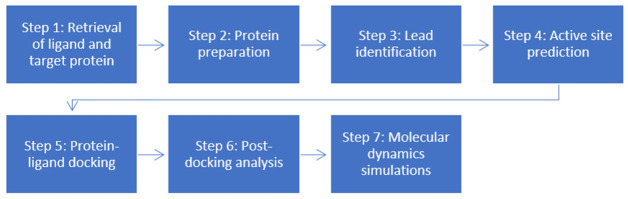
Other docking platforms were used less frequently. Glide was the third most commonly employed software (18 studies), reflecting its established role as a high-accuracy docking tool within commercial computational chemistry suites. Molegro Virtual Docker (10 studies) and Molecular Operating Environment (MOE) (6 studies) were also applied in several investigations, whereas programs such as CDOCKER, Discovery Studio, SYBYL, GOLD, FRED, and FlexX appeared only sporadically.
In addition, a small number of studies utilized web-based docking servers, including CB-Dock and DockingServer.com. Although such tools offer convenient access to docking workflows, their limited use suggests that most researchers prefer standalone docking software that provides greater control over docking parameters and scoring functions.
Overall, the results demonstrate that molecular docking studies of natural DPP-4 inhibitors are strongly concentrated around a limited number of widely used platforms, particularly AutoDock Vina and AutoDock (Table 1). However, the diversity of applied software indicates considerable methodological heterogeneity across studies. Differences in docking algorithms, scoring functions, and protein preparation protocols may significantly influence predicted binding affinities and interaction patterns. For example, AutoDock-based methods rely on empirical free-energy scoring functions, whereas programs such as Glide or MOE employ different scoring schemes and search algorithms. These methodological differences may lead to variations in predicted binding modes and docking scores across studies and should therefore be considered when comparing results reported in independent investigations.
Table 1: Docking tools employed in DPP-4 studies.
| Software | Number of Studies |
|---|---|
| AutoDock | 32 |
| AutoDock Vina | 56 |
| CB Dock | 3 |
| CDOCKER | 7 |
| Dockingserver.com | 2 |
| Discovery Studio | 4 |
| FlexX | 2 |
| FRED | 3 |
| Glide | 18 |
| GOLD | 3 |
| Molecular Operating Environment (MOE) | 6 |
| Molegro Virtual Docker | 10 |
| PLANTS | 2 |
| SYBYL | 5 |
| Yasara | 2 |
| Other | 23 |
Despite the widespread application of molecular docking in the analyzed studies, only a limited number of investigations further validated the predicted protein-ligand complexes using molecular dynamics simulations. This indicates that the majority of computational studies on natural DPP-4 inhibitors rely primarily on docking results alone.
While docking is a valuable tool for predicting potential binding modes and estimating binding affinity, it represents a static approximation of protein-ligand interactions. In contrast, MD simulations allow the evaluation of the stability of the ligand within the binding pocket over time, taking into account protein flexibility, solvent effects, and conformational changes in the complex. Therefore, the limited use of MD simulations represents a methodological gap in the current literature. Future computational investigations of natural DPP-4 inhibitors would benefit from integrating docking with MD simulations to improve the reliability of in silico predictions.
4.4. Protein Structures Used in Docking Studies
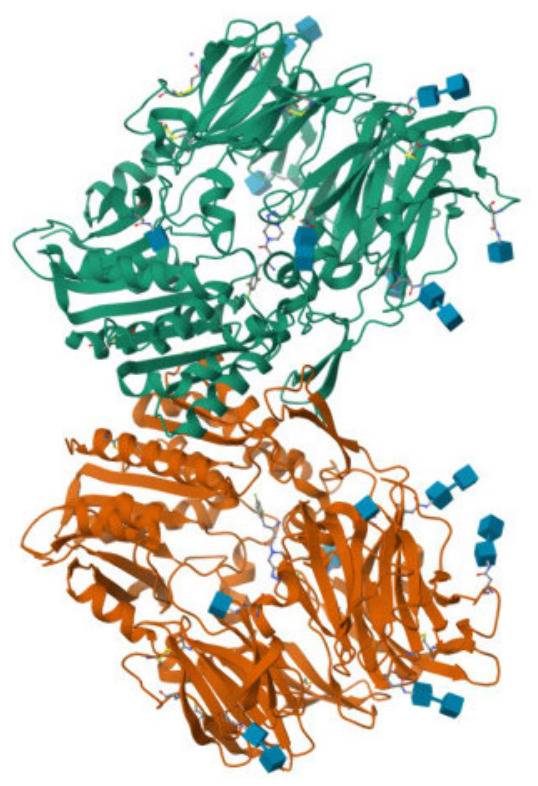
To further characterize the structural models used in docking studies of natural DPP-4 inhibitors, the Protein Data Bank (PDB) structures employed across the reviewed literature were analyzed. The results revealed that a relatively small number of DPP-4 crystal structures were repeatedly used as docking templates. Among them, the human DPP-4 structure 1X70, co-crystallized with sitagliptin, was the most frequently applied model (24 studies). Other commonly used structures included 6B1E (vildagliptin-bound, 14 studies), 4A5S containing a synthetic DPP-4 inhibitor (PDB ligand N7F, 12 studies), 2ONC representing an apo structure (11 studies), and 1WCY co-crystallized with Diprotin A (10 studies). Several additional structures, such as 3G0B, 4PNZ, 5T4B, 3F8S, and 2P8S, were used in a moderate number of studies (Table 2).
Table 2: Protein structures of DPP-4 used in docking studies.
| PDB ID | Resolution (Å) | Co-Crystallized Ligand | Number of Studies |
|---|---|---|---|
| 1J2E | 2.60 | None (apo structure) | 3 |
| 1NU6 | 2.60 | None (apo structure) | 3 |
| 1NU8 | 2.50 | Diprotin A | 3 |
| 1RWQ | 2.20 | PDB ligand ID: 5AP (synthetic DPP-4 inhibitor)DrugBank ID: DB02004 | 2 |
| 1WCY | 2.20 | Diprotin A | 10 |
| 1X70 | 2.10 | Sitagliptin | 24 |
| 2BGR | 2.00 | HIV-1 Tat(1-9) derived peptide | 1 |
| 2G63 | 2.00 | Cyanopyrrolidine (C5-Pro-Pro) inhibitor 24b | 4 |
| 2I03 | 2.40 | Alkynyl cyanopyrrolidine inhibitor (ABT-279) | 3 |
| 2ONC | 2.55 | Alogliptin | 11 |
| 2P8S | 2.20 | Cyclohexalamine inhibitor | 5 |
| 2QT9 | 2.10 | PDB ligand ID: 524 (synthetic DPP-4 inhibitor)DrugBank ID: DB07135 | 1 |
| 2RGU | 2.60 | Linagliptin | 1 |
| 2RIP | 2.90 | 34Q-(3R,4R)-4-(pyrrolidin-1-ylcarbonyl)-1-(quinoxalin-2-ylcarbonyl)pyrrolidin-3-amine | 4 |
| 3BJM | 2.35 | Saxagliptin | 1 |
| 3F8S | 2.43 | Gosogliptin | 5 |
| 3G0B | 2.25 | Alogliptin | 7 |
| 3KWF | 2.40 | Carmegliptin | 1 |
| 3VJK | 2.49 | Teneligliptin | 2 |
| 3VJM | 2.10 | PDB ligand ID: W61 (synthetic DPP-4 inhibitor) | 2 |
| 3W2T | 2.36 | Vildagliptin | 3 |
| 3WQH | 2.85 | Anagliptin | 4 |
| 4A5S | 1.62 | PDB ligand ID: N7F (synthetic DPP-4 inhibitor) | 12 |
| 4FFV | 2.40 | 11A19 Fab (antibody fragment) | 1 |
| 4FFW | 2.90 | Sitagliptin + Fab fragment | 3 |
| 4J3J | 3.20 | PDB ligand ID: D3C (synthetic DPP-4 inhibitor) | 3 |
| 4LKO | 2.43 | PDB ligand ID: 1WH (synthetic DPP-4 inhibitor) | 1 |
| 4N8D | 1.65 | PDB ligand ID: 2KS (synthetic DPP-4 inhibitor) | 3 |
| 4N8E | 2.30 | PDB ligand ID: 2KV (synthetic DPP-4 inhibitor) | 1 |
| 4PNZ | 1.90 | Omarigliptin | 6 |
| 5J3J | 2.75 | PDB ligand ID: HL1 (synthetic DPP-4 inhibitor) | 5 |
| 5KBY | 2.24 | Trelagliptin | 1 |
| 5T4B | 1.76 | PDB ligand ID: 75N (synthetic DPP-4 inhibitor) | 5 |
| 5T4E | 1.77 | PDB ligand ID: 75L (synthetic DPP-4 inhibitor) | 1 |
| 5T4F | 1.90 | PDB ligand ID: 75M (synthetic DPP-4 inhibitor) | 2 |
| 5Y7H | 3.00 | PDB ligand ID: 8O3 (synthetic DPP-4 inhibitor) | 2 |
| 5Y7J | 2.52 | PDB ligand ID: 8OL (synthetic DPP-4 inhibitor) | 1 |
| 5Y7K | 2.51 | PDB ligand ID: 8VU (synthetic DPP-4 inhibitor) | 5 |
| 5YP1 | 2.47 | None (apo structure) | 1 |
| 5YP3 | 2.44 | Ile-Pro from Pseudoxanthomonas mexicana | 1 |
| 6B1E | 1.77 | Vildagliptin | 14 |
| 6B1O | 1.91 | Vildagliptin Analog | 2 |
| Not specified | 5 | ||
| Homology model | 1 | ||
Importantly, the majority of selected structures contained co-crystallized inhibitors, including clinically used DPP-4 inhibitors such as sitagliptin, vildagliptin, linagliptin, alogliptin, saxagliptin, teneligliptin, gosogliptin, and omarigliptin, as well as several synthetic inhibitors deposited in the PDB. The presence of a bound ligand in the crystal structure facilitates identification of the active site and enables a more reliable definition of the docking grid. In contrast, apo structures, such as 1J2E, 1NU6, and 5YP1, were used less frequently. Although apo structures may still be suitable for docking simulations, the absence of a bound ligand may complicate accurate identification of the binding pocket and introduce additional uncertainty in docking results [ref. 9].
Another notable observation is that most of the employed crystal structures exhibited relatively high resolution, typically ranging from approximately 1.6 Å to 2.6 Å, indicating that the majority of docking studies were performed using structurally reliable protein models. High-resolution structures are generally preferred for docking simulations because they provide more accurate atomic coordinates within the binding site.
Interestingly, in addition to commonly used and well-characterized structures, several studies employed less frequently used or unique PDB entries, which appeared only in single publications. In some cases, the rationale for selecting these particular structures was not clearly discussed in the corresponding articles. Such variability in the choice of protein models may contribute to methodological heterogeneity and may influence the comparability of docking results across different studies.
The selection of an appropriate protein structure is therefore a critical step in molecular docking studies. Ideally, the chosen model should possess high crystallographic resolution and contain a well-defined binding pocket, preferably characterized by a co-crystallized ligand (Figure 6). Since the quality of the protein model directly affects docking outcomes, careful evaluation of available PDB entries prior to docking simulations is essential. Consequently, the process of selecting a suitable structural template should be performed thoughtfully and may require analysis of several available crystal structures.
5. Critical Assessment and Practical Guidelines for DPP-4 Docking Studies
5.1. Critical Limitations in Current Docking Approaches
Despite the widespread application of molecular docking in the identification of potential DPP-4 inhibitors, several important limitations can be identified across the reviewed studies.
First, a major issue is the lack of standardization in docking protocols. Considerable variability exists in protein structure selection, ligand preparation, grid definition, and scoring functions, which significantly affects the reproducibility and comparability of results. In many cases, the rationale behind the selection of a specific protein model or docking parameters is not clearly justified, further limiting the interpretability of the findings.
Second, a substantial proportion of studies rely exclusively on docking scores as indicators of inhibitory potential. However, docking scoring functions provide only approximate estimates of binding affinity and are known to produce false positives. In particular, hydrophobic and bulky natural compounds may artificially achieve favorable docking scores without demonstrating actual biological activity.
Third, insufficient validation represents a critical limitation. Only a limited number of studies perform redocking procedures, molecular dynamics simulations, or experimental verification of predicted interactions. As a result, many reported binding modes remain hypothetical and lack confirmation under dynamic or biological conditions. Another important challenge is related to the structural complexity of natural compounds. High conformational flexibility, multiple ionization states, and the presence of glycosylated moieties complicate accurate modeling and may lead to unrealistic docking poses if not properly addressed.
Finally, the static nature of molecular docking does not account for protein flexibility, solvent effects, or long-range interactions, all of which play a crucial role in ligand binding. This limitation is particularly relevant for DPP-4, which contains a relatively large and complex binding cavity with multiple subsites. Taken together, these limitations highlight that molecular docking should be considered a preliminary screening tool rather than a definitive method for predicting DPP-4 inhibitory activity. Integration with molecular dynamics simulations and experimental validation is essential to improve the reliability and translational value of computational predictions.
5.2. Practical Guidelines for Reliable Computational Studies
Based on the analysis of the reviewed literature, several key recommendations can be proposed to improve the quality, reproducibility, and translational relevance of molecular docking studies targeting DPP-4.
First, careful selection of the protein structure is essential. Whenever possible, high-resolution crystal structures co-crystallized with a ligand should be used, as they enable accurate identification of the active site and facilitate validation through redocking procedures. Structures such as 1X70 or 6B1E represent well-characterized and frequently used models in DPP-4 studies.
Second, validation of the docking protocol should be considered a mandatory step. Redocking of the co-crystallized ligand and evaluation of the root-mean-square deviation (RMSD) between experimental and predicted poses provide a basic measure of protocol reliability. Ideally, RMSD values below 2.0 Å should be achieved [ref. 9].
Third, ligand preparation requires particular attention, especially in the case of natural compounds. Proper consideration of protonation states, tautomeric forms, and conformational flexibility is necessary to avoid unrealistic docking results. For glycosylated or highly flexible molecules, additional conformational sampling may be required.
Another critical aspect is the definition of the docking grid. The grid box should be centered on the co-crystallized ligand or key catalytic residues and sufficiently large to cover all relevant subsites of the DPP-4 active site, including S1, S2, and S2 extensive regions. Improper grid definition may lead to incorrect binding modes.
Furthermore, docking results should not be interpreted solely on the basis of scoring functions. Detailed analysis of ligand–protein interactions, including hydrogen bonding, hydrophobic contacts, and π–π interactions with key residues such as Glu205, Glu206, Ser630, and Tyr662, is essential for meaningful interpretation.
Importantly, integration with complementary computational methods is strongly recommended. Molecular dynamics simulations can provide insight into the stability of the ligand–protein complex and account for protein flexibility and solvent effects, which are not captured in static docking models.
Finally, experimental validation should be considered an essential component of any docking-based study. Enzymatic inhibition assays, cell-based studies, or in vivo models are necessary to confirm the biological relevance of predicted interactions.
Overall, the implementation of standardized and well-validated computational workflows, combined with experimental verification, is crucial to enhance the reliability of molecular docking studies and support the development of effective natural DPP-4 inhibitors.
An additional observation emerging from the analyzed literature is the clear predominance of AutoDock Vina as the docking platform of choice. Its popularity is likely related to its open accessibility, ease of use, and relatively favorable balance between computational efficiency and prediction accuracy. However, the widespread use of a single software platform may also introduce systematic biases, as different scoring functions and search algorithms implemented in alternative programs may lead to distinct binding poses and affinity estimates. Therefore, comparison of docking scores obtained using different software should be performed with caution.
Another important source of variability is the choice of the protein structure used for docking. The present analysis demonstrated that ligand-bound crystal structures, particularly 1X70 and 6B1E, were employed considerably more frequently than apo structures. The presence of a co-crystallized ligand facilitates identification of the binding site and enables validation through redocking procedures, thereby increasing the reliability of docking calculations. In contrast, apo structures may introduce additional uncertainty associated with active-site definition and conformational variability.
Taken together, these observations emphasize that methodological heterogeneity remains one of the major challenges in the field. Differences in protein preparation, docking software, scoring functions, and validation strategies limit direct comparison of results reported by independent studies. Consequently, improved standardization of computational protocols would substantially enhance the reproducibility and translational value of molecular docking studies investigating natural DPP-4 inhibitors.
6. Natural Compounds Investigated as Potential DPP-4 Inhibitors
The studies reviewed in this section are organized according to major phytochemical classes, including flavonoids, phenolic compounds (with coumarins discussed separately), terpenoids and their subgroups (with saponins and sterols presented as distinct categories), as well as alkaloids and peptides.
The corresponding tables provide a structured overview of published studies in which molecular docking was applied to investigate these compounds as potential DPP-4 inhibitors. Given the substantial structural diversity both within and between these groups, their binding behavior toward DPP-4 cannot be directly compared in a uniform manner. Therefore, the following subsections summarize the main trends observed within each class, with particular emphasis on recurring interaction patterns and the extent of experimental validation supporting the computational findings.
6.1. Alkaloids
Alkaloids constitute a structurally diverse group of phytochemicals with increasing relevance in antidiabetic research, particularly in the context of DPP-4 inhibition (Table 3). Among them, isoquinoline alkaloids such as berberine and its derivatives appear to be the most consistently investigated, combining computational docking data with experimental enzyme inhibition studies.
Table 3: Alkaloids docked to DPP-4.
| Compound | Reported Natural Source | PDB ID | Docking Software | MD * | Experimental Validation | Reference |
|---|---|---|---|---|---|---|
| Berberine | Coptis chinensis | 2G63 | FRED | − | DPP-4 Inhibition Assay | [ref. 13] |
| BerberineAustralineCastanospermine | Castanospermum australe | – | GOLD | − | DPP-4 Inhibition Assay | [ref. 14] |
| Glycosin | Rhizophora apiculata | 2RIP | AutoDock 4.0 | − | In vivo (STZ/nicotinamide diabetic rat) | [ref. 15] |
| Berberine | Cardiospermum halicacabum | 6B1E | AutoDock Vina | + | DPP-4 Inhibition Assay | [ref. 16] |
| Berberine Palmatine | Fibraurea tinctoria | 6B1E | AutoDock 4.0 | − | In vitro antioxidant activity test | [ref. 17] |
| Tetrandrine Limacusine | Phaeanthus ophtalmicus | 2RIP | UCSF Chimera | − | DPP-4 Inhibition Assay | [ref. 18] |
| Colchicine | Schleichera oleosa | 5T4B | AutoDockTools v.1.5.7 | + | DPP-4 Inhibition Assay | [ref. 19] |
| Anonaine | Annona squamosa | 4A5S | AutoDock software (v4.2.6) | − | – | [ref. 20] |
| ElaeocarpidineElaeocarpine | Elaeocarpus serratus | 4A5S | AutoDock software (v4.2.6) | − | – | [ref. 20] |
| ActinodaphnineCoreximine | Litsea glutinosa | 3F8S | AutoDockVina version 1.1.2 | − | – | [ref. 21] |
| Adunctin C | Piper aduncum | 2ONC | AutoDock 4.2 and AutoDock Vina | + | – | [ref. 22] |
| Veramiline | Eclipta prostata | 2ONC | AutoDock 4.2 and AutoDock Vina | + | – | [ref. 22] |
| Withasomnine | Withania coagulans | 5Y7K | AutoDock | + | DPP-4 Inhibition Assay; in vivo STZ-nicotinamide T2DM rat model | [ref. 23] |
| BerberineCoptisineJatrorrhizine | Coptis chinensis | 5Y7H | Surflex-Dock (SYBYL) | + | DPP-4 Inhibition Assay | [ref. 24] |
| Campthotecin | Garcinia atroviridis | 2RIP | AutoDock Vina | + | DPP-4 Inhibition Assay; in ovo assays; cytotoxicity testing | [ref. 25] |
| CorydineLauroscholtzine | Dalbergia sissoo | 1X70 | AutoDock Vina | + | – | [ref. 26] |
| Solanocapsine | Combinations of extracts from Siraitia grosvenorii, Dimocarpus longan and Orthosiphon stamineus | 6B1E | Glide XP | + | DPP-4 Inhibition Assay; in vitro (L6 cells); cytotoxicity | [ref. 27] |
* MD: molecular dynamics simulation; ‘+’ indicates that MD simulation was performed; ‘−’ indicates that MD simulation was not performed.
For example, berberine has been reported in extracts of Cardiospermum halicacabum L. (Sapindaceae) based on HPLC and MS/MS analysis and was subsequently included in docking studies, which indicated potential DPP-4 inhibitory activity [ref. 16]. However, identification based solely on these techniques, without additional structural confirmation (e.g., NMR), may not be fully conclusive, introducing some uncertainty regarding the actual presence of this alkaloid in the plant material.
In contrast, protoberberine alkaloids are well-established constituents of Coptis chinensis Franch. (Ranunculaceae) and have been identified through integrated virtual screening and bioactivity evaluation approaches [ref. 24]. Overall, these findings support the potential of this structural class as a promising scaffold for natural DPP-4 inhibitor development.
The collected docking studies summarized in Table S2 further indicate that many alkaloids are predicted to bind within the catalytic region of DPP-4. Several reports describe interactions involving residues located in or near the active site, including Glu205, Glu206, Ser630, and Tyr662, although the reporting of specific binding interactions varies considerably among studies [ref. 23,ref. 24]. This variability reflects differences in docking protocols, selected protein structures, and computational platforms, which complicates direct comparison of binding affinities across publications.
Beyond protoberberine alkaloids, other structural classes have also been explored. Alkaloids such as withasomnine from Withania coagulans (Stocks) Dunal (Solanaceae) have been investigated using an integrated approach combining LC–MS-based phytochemical profiling, molecular docking and molecular dynamics simulations, in vitro DPP-4 inhibition assays, and in vivo evaluation in diabetic animal models. In vitro analysis of the fruit extract revealed a concentration-dependent inhibition of DPP-4 activity, reaching a maximum inhibition of 68.4% at a concentration of 60 mg/mL. For comparison, the reference inhibitor sitagliptin achieved a maximal inhibition of 90.1% under similar conditions. These findings were supported by stable ligand–protein interactions observed in silico, as well as improvements in glucose homeostasis and pancreatic histology in vivo [ref. 23]. Similarly, glycosin, an alkaloid reported from Rhizophora apiculata Blume (Rhizophoraceae), demonstrated antidiabetic activity in diabetic animal models supported by docking analyses, although further confirmation of the precise mechanism of action remains necessary [ref. 15].
Overall, integration of docking analyses with experimental findings indicates that alkaloids represent a promising but still incompletely characterized group of natural DPP-4 inhibitors. The dominance of protoberberine alkaloids in both computational and experimental studies suggests a particularly favorable structural framework for DPP-4 interaction [ref. 16,ref. 24]. However, inconsistencies in experimental validation, uncertainties regarding botanical sources in some reports, and methodological heterogeneity highlight the need for more standardized and integrated phytochemical, biochemical, and computational investigations [ref. 17,ref. 22].
6.2. Coumarins
Coumarins constitute a structurally diverse group of benzopyrone-derived phytochemicals that have attracted growing interest in antidiabetic research, particularly in relation to dipeptidyl peptidase-4 inhibition. Both simple coumarins and their glycosylated derivatives (e.g., cichoriin) have been investigated using molecular docking approaches, with several studies combining computational predictions with experimental enzyme inhibition assays. For instance, dicoumarol identified in Schleichera oleosa leaf extracts demonstrated measurable interactions with the DPP-4 active site in docking studies, with a binding affinity of approximately −7.8 kcal/mol and involvement of key residues such as Glu205, Glu206, Tyr662, and Ser630. In vitro experiments further indicated moderate inhibitory activity of the extracts (IC50 = 83–232 µg/mL), suggesting a potential contribution of coumarin-type compounds to the observed effects [ref. 19,ref. 28,ref. 29,ref. 30,ref. 31].
Available docking studies generally indicate that coumarins are capable of occupying the catalytic region of DPP-4, frequently forming hydrogen bonds and hydrophobic interactions with residues associated with the S1 and S2 pockets of the enzyme. However, reported interaction profiles vary considerably between studies, reflecting differences in docking protocols, receptor preparation strategies, scoring functions, and computational platforms such as AutoDock, AutoDock Vina, or Molecular Virtual Docker [ref. 19,ref. 29,ref. 30]. This methodological heterogeneity complicates direct comparison of predicted binding affinities across publications. Moreover, compared with other classes of natural compounds, relatively few studies have specifically focused on the molecular docking of coumarins toward DPP-4. Consequently, the available evidence remains fragmented, and this structural class is still comparatively underexplored as a potential source of natural DPP-4 inhibitors (Figure 7, Table 4).
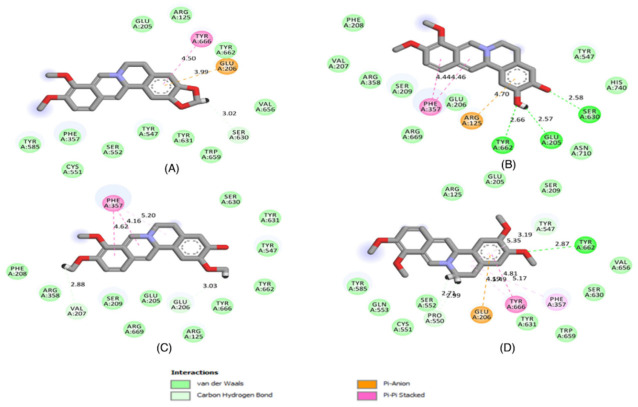
Table 4: Coumarins docked to DPP-4.
| Compound | Reported Natural Source | PDB ID | Docking Software | MD | Experimental Validation | Reference |
|---|---|---|---|---|---|---|
| Coumarin | Not reported | 4J3J | Molegro Virtual Docker 5.0 2012 | − | DPP-4 Inhibition Assay | [ref. 28] |
| Coumarin | Cinnamomum burmannii and Caesalpinia sappan | 1X70 | AutoDock 4.2.6 | − | DPP-4 Inhibition Assay | [ref. 29] |
| Scopoletin(6-methoxy-7-hydroxy coumarin) | Lunasia amara | 5Y7K | Pyrx software version 2.2.3 | − | – | [ref. 30] |
| Dicoumarol | Schleichera oleosa | 5T4B | AutoDockTools v.1.5.7 | + | DPP-4 Inhibition Assay | [ref. 19] |
| Cichoriin(6-hydroxy-7-O-glucosylcoumarin) | Fraxinus hupehensis, Calea fruticosa | 1J2E | AutoDock Vina (version 1.1.2) | − | DPP-4 Inhibition Assay; cytotoxicity; in vitro | [ref. 31] |
| Toddalolactone | Toddalia asiatica | 5T4B | ArgusLab 4.0.1 | − | – | [ref. 32] |
‘+’ indicates that MD simulation was performed; ‘−’ indicates that MD simulation was not performed.
Beyond simple coumarins, glycosylated derivatives and dimeric structures such as dicoumarol have also been examined using combined computational and experimental approaches. Nevertheless, molecular dynamics simulations and consistent biochemical validation remain relatively limited, restricting firm conclusions regarding their inhibitory potency and pharmacological relevance as DPP-4 inhibitors [ref. 28,ref. 31].
Overall, current evidence suggests that coumarins may represent a promising yet still insufficiently characterized scaffold for natural DPP-4 inhibitor development. Although docking studies consistently indicate potential interactions within the catalytic site of the enzyme, further standardized computational workflows combined with systematic biochemical validation are required to clarify their therapeutic potential.
6.3. Flavonoids
Flavonoids are among the most abundant classes of plant secondary metabolites and occur widely in fruits, vegetables, and medicinal plants. Owing to their broad spectrum of biological activities, including antioxidant and antidiabetic effects, they have attracted considerable attention as potential inhibitors of dipeptidyl peptidase-4.
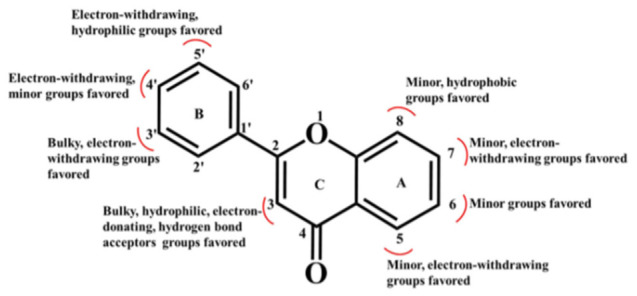
Flavonoids represent one of the most extensively investigated classes of natural compounds evaluated as potential DPP-4 inhibitors. Numerous docking studies summarized in Table 5 have explored a broad spectrum of flavonoid structures originating from various plant sources, reflecting both the chemical diversity of this group and its well-recognized biological activity. The analyzed studies include representatives of several flavonoid subclasses, such as flavonols (e.g., quercetin, kaempferol, isorhamnetin), flavones (apigenin, luteolin, cirsiliol), flavanones (hesperetin, naringenin), isoflavones (genistein, daidzein), flavan-3-ols (catechins), and anthocyanins and their glycoside derivatives.
Table 5: Flavonoids docked to DPP-4.
| Compound | Reported Natural Source | PDB ID | Docking Software | MD | Experimental Validation | Reference |
|---|---|---|---|---|---|---|
| Naringin (naringenin 7-O-neohesperidoside) | Citrus spp. | 2ONC | Molegro Virtual Docker 4.1.0 trial version. | − | DPP-4 Inhibition Assay; in vitro; in vivo; ELISA | [ref. 33] |
| ApigeninGenisteinHesperetinKaempferolNaringeninQuercetin | Citrus spp. and berries (Vaccinium corymbosum, Rubus fruticosus) | 2I03 | AutoDock 4.2 | − | DPP-4 Inhibition Assay | [ref. 34] |
| Gossypetin Chrysoeriol | Urena lobata | – | www.dockingserver.com | − | DPP-4 Inhibition Assay | [ref. 35] |
| DaidzinRobinin (O-glycoside) | Pueraria tuberosa | 4FFV | YASARA | − | DPP-4 Inhibition Assay; in vivo diabetic rat model | [ref. 36] |
| Kaempferol O-glycosides | Lens culinaris | 1X70 | Glide | − | DPP-4 Inhibition Assay | [ref. 37] |
| Quercetin | Not reported | 4J3J | Molegro Virtual Docker 5.0 2012 | − | DPP-4 Inhibition Assay | [ref. 28] |
| Isorhamnetin –O-glycosidesCyanidin-3-O-glucoside | Not reported | 1X70 | SYBYL (Surflex-Dock) | − | DPP-4 Inhibition Assay; Caco-2 expression study | [ref. 38] |
| Rutin | Not reported | 2ONC | Glide | + | – | [ref. 39] |
| Taxifolin | Not reported | 4A5S | Surflex-Doc SYBYL-X 1.3 | + | DPP-4 Inhibition Assay | [ref. 40] |
| Rutin (quercetin-3-O-rutinoside)Quercetin-3-O–glucosideNaringinKaempferolChalcone | Solanum elaeagnifolium | 2RIP | Glide | − | In Vitro Antidiabetic Activity | [ref. 41] |
| LuteolinApigeninPinocembrine | Crescentia cujete | 1WCY | AutoDock Vina | + | – | [ref. 42] |
| Diosmetin Diosmin (diosmetin 7-O-rutinoside) Hesperidin Naringenin Naringin Nobiletin Quercetin SudachitinTangeretin | Not reported | 5T4E | AutoDock 4.2 | − | – | [ref. 43] |
| Gallocatechin(+)-Catechin(−)-EpicatechinTaxifolinProcyanidin B1 | Prunus persica | 1X70 | AutoDock Vina | − | DPP-4 Inhibition Assay | [ref. 44] |
| QuercetinKaempferol | Not reported | 1J2E | AutoDock Vina 1.1.2 software | − | In vivo diabetic rat model, cell viability assay | [ref. 45] |
| GenisteinGlycitin (glycitein 7-O-glucoside)Genistein 8-C-glucosideAureusidin | Chrozophora rottleri | 4A5S | AutoDock Vina | − | – | [ref. 46] |
| GallocatechinAstragalin (kaempferol 3-O-glucoside)Quercetol C | Phyllantus niruri | 4A5S | Glide | − | In vivo antidiabetic study (STZ-induced diabetic mice model) | [ref. 47] |
| QuercetinKaempferolIsorhamnetinFisetinNaringeninApigeninLuteolinMyricetinPuerarinBiochanin ARutinAnthocyaninSilymarin | Not specified | 1X70 | CB-Dock | − | – | [ref. 48] |
| LuteolinApigeninPetunidin | Syzygium cuminiOcium sanctumPsidium guajave | 5Y7H | Glide | + | – | [ref. 49] |
| MyricetinRutinQuercetrin (Quercetin 3-O-rhamnoside) | Beta vulgaris Persea americana Syzygium aromaticum | 6B1E | AutoDock Vina | + | DPP-4 Inhibition Assay; cytotoxicity | [ref. 50] |
| Chrysin | Not reported | 6B1E | FlexX | − | DPP-4 Inhibition Assay | [ref. 51] |
| RutinNaringin Hesperidin (hesperetin 7-O-rutinoside)Naringenin Eriocitrin (eriodictyol-7-O-rutinoside) Hesperetin Eriodictyol | Citrus bioflavonoids (commercial nutraceuticals) | 2ONC | AutoDock Vina | − | DPP-4 Inhibition Assay | [ref. 52] |
| 5,7-dihydroxy-6-4-dimethoxyflavanoneHomoesperetin-O-7-rutinoside | Chromolaena odorata | 6B1O | AutoDock Vina | − | In vivo GLP-1 modulation study (rats) | [ref. 53] |
| Catechin | Withania somnifera | 1NU6 | PatchDock | − | DPP-4 Inhibition Assay; STC-1 cell assay; fluorescence/CD spectroscopy | [ref. 54] |
| Galangin | Not specified | 6B1E | FlexX tool | − | DPP-4 Inhibition Assay; L6 cell culture study | [ref. 55] |
| 5,3′,4′-trihydroxy-6,7-dimethoxyflavoneQuercetagetin-3,4′-dimethyl ether | Melicope glabra | 1X70 | AutoDock Vina 1.5.6 | − | DPP-IV Inhibition Assay | [ref. 56] |
| CatechinGenisteinRobustaflavoneKaempferolQuercetinMyricetinApigenin | Anacardium occidentale | 2ONC | AutoDock Vina | − | – | [ref. 57] |
| Hyperoside (quercetin-3-O-galactoside) Myricetin Narcissoside (Isorhamnetin-3-O-rutinoside) Cyanidin-3-O-glucoside Isoliquiritigenin | Not specified | 1X70 | AutoDock 4.2 software | − | DPP-IV Inhibition Assay | [ref. 58] |
| Hibiscetin | Hibiscus cannabinus | 1RWQ | Glide | − | – | [ref. 59] |
| O-methyl quercetin analogs | Synthetic derivatives of quercetin | 4J3J | Molegro Virtual Docker 6.0 | − | – | [ref. 60] |
| CirsiliolCirsimarin (cirsimaritin-4′-O-glucoside)Cirsimaritin Pedalitin | Ruellia tuberosa | 4A5S | Glide | − | – | [ref. 61] |
| Isorhamnetin | Not specified | 4A5S | AutoDock Vina | + | – | [ref. 62] |
| GlyciteinPectolinarigeninFormononetin | Peronema canescens | 3G0B | Molegro Virtual Docker 5.0 | − | DPP-4 Inhibition Assay | [ref. 63] |
| Epigallocatechin-3-O-gallateGallocatechin-3-O-gallate | Catechins from dietary plant sources | 4LKO | Flare™ software | + | – | [ref. 64] |
| SalvigeninDaidzein | Ocimum gratissimumJatropha curcas | 4A5S | AutoDock Vina (PyRx) | + | – | [ref. 65] |
| RutinHesperidin | Citrus aurantiifolia | 3G0B | Molegro Virtual Docker 5.0 | − | – | [ref. 66] |
| QuercetinKaempferolLuteolinRutin | Abelmoschus esculentus | 2ONC | AutoDock Vina | − | DPP-4 Inhibition Assay | [ref. 67] |
| Cyanidin glycosidesLuteolin glycosidesIsorhamnetin glycosidesQuercetin and derivatives | Brassica oleracea | 1NU6 | AutoDock Vina 4.2 | − | – | [ref. 68] |
‘+’ indicates that MD simulation was performed; ‘−’ indicates that MD simulation was not performed.
In many studies, multiple flavonoids were evaluated within a single docking investigation, often derived from the same plant source, highlighting the interest in comparing structurally related compounds within this class. For example, Rath et al. [ref. 43] investigated several citrus-derived flavonoids such as naringin, hesperidin, naringenin, and quercetin using molecular docking approaches against diabetes-related targets including DPP-4.
Additionally, some studies explore structural modifications of natural flavonoid scaffolds; for instance, Kamboj et al. [ref. 60] designed and evaluated O-methyl-substituted quercetin analogs to assess how structural changes influence binding interactions within the DPP-4 active site.
Despite their structural diversity, several common interaction patterns with the DPP-4 catalytic site can be observed. Docking analyses frequently report hydrogen bonding and π–π interactions with residues located in the S1 and S2 pockets of the enzyme, particularly Glu205, Glu206, Ser630, Tyr547, Arg358, and Tyr662, which are known to play an important role in ligand recognition within the DPP-4 active site (Table S2).
Furthermore, compared with many other classes of natural compounds, a relatively large proportion of flavonoid docking studies include experimental validation, most commonly through DPP-4 inhibition assays performed in vitro, and in some cases supported by in vivo models. For example, Bhushan et al. [ref. 47] combined docking analysis with in vitro assays and in vivo studies in streptozotocin-induced diabetic mice to evaluate phytochemicals targeting DPP-IV. Their results demonstrated significant improvements in glycemic control, including a reduction in blood glucose levels by up to approximately 60% and favorable effects on lipid parameters. Docking analysis identified several flavonoid-type compounds, such as gallocatechin and astragalin, as potential DPP-4 inhibitors, exhibiting binding affinities in the range of −7 to −8.5 kcal/mol and interactions with key active-site residues, including Glu205 and Glu206. These findings support the potential contribution of flavonoid compounds to the observed antidiabetic effects, although additional mechanisms may also play a role (Figure 8).
In addition, some studies further strengthen docking predictions through molecular dynamics simulations, which allow assessment of the stability of ligand-protein complexes over time. An example of such an approach is provided by Ojo et al. [ref. 50], who performed molecular dynamics simulations following docking to evaluate the stability of ligand–protein interactions and the persistence of binding poses of bioactive plant compounds with diabetes-related targets, including DPP-4. Their results indicated that the analyzed complexes remained stable throughout the simulation, with low structural deviations and persistent hydrogen bond interactions, supporting the reliability of the predicted binding modes.
However, it should be noted that the available studies employ a wide range of docking protocols, including different docking software, scoring functions, receptor preparation strategies, and crystal structures of DPP-4 obtained from the Protein Data Bank. This methodological variability makes direct comparison of docking scores and predicted binding affinities between studies difficult. In addition, some flavonoids investigated in docking analyses are glycosylated derivatives characterized by relatively high molecular weight and polarity, which may limit their bioavailability despite favorable predicted binding interactions with the enzyme.
Overall, the reviewed studies indicate that flavonoids constitute one of the most promising and extensively investigated structural scaffolds among natural products evaluated as potential DPP-4 inhibitors.
6.4. Phenolics (Non-Flavonoid)
Another group of phenolic compounds highlighted in this review includes phenolics that do not belong to the flavonoid class. For the purpose of this review, these compounds were grouped together as non-flavonoid phenolics, a category that encompasses a structurally diverse set of plant-derived molecules. This group includes simple phenolic acids (e.g., gallic acid, caffeic acid, ferulic acid, and p-coumaric acid), stilbenes such as resveratrol and piceatannol, as well as other phenolic derivatives including xanthones, lignans, curcuminoids, and glycosylated phenolics such as oleuropein and mangiferin. Many of these compounds are widely distributed in edible plants, fruits, and medicinal herbs and have been investigated for their potential antidiabetic properties, including the inhibition of DPP-4 (Figure 9).
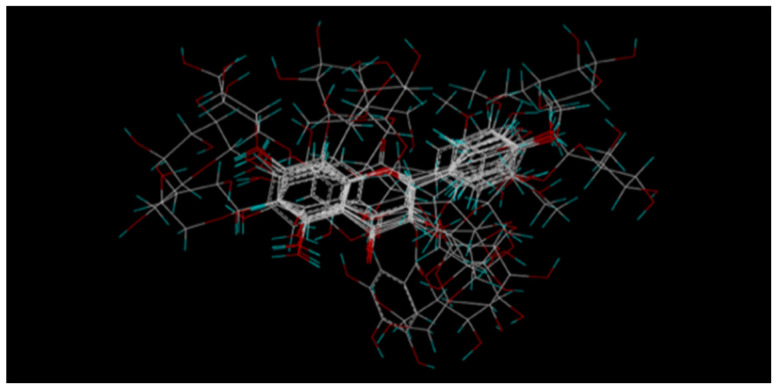
Numerous docking studies summarized in Table 6 have evaluated phenolic compounds originating from a broad range of plant sources, including fruits, medicinal plants, and traditional herbal medicines. In several investigations, multiple phenolic compounds were screened simultaneously, particularly simple phenolic acids and their derivatives, in order to compare their binding potential toward the DPP-4 catalytic site. For example, Fan et al. [ref. 34] evaluated resveratrol together with several structurally related phenolic acids, including gallic and caffeic acids, to compare their inhibitory activity against DPP-4. Similarly, other studies have screened panels of phenolic compounds such as ferulic, sinapic, vanillic, and protocatechuic acids. Such comparative approaches enable the assessment of structure–activity relationships within closely related phenolic scaffolds by linking differences in chemical structure to variations in inhibitory activity.
Table 6: Phenolics (non-flavonoid) docked to DPP-4.
| Compound | Reported Natural Source | PDB ID | Docking Software | MD | Experimental Validation | Reference |
|---|---|---|---|---|---|---|
| Caffeic acidGallic acidResveratrol | Citrus spp. and berries | 2I03 | AutoDock 4.2 | − | DPP-4 Inhibition Assay | [ref. 34] |
| Caffeic acid Gallic acid | Cocos nucifera | 3F8S | CDOCKER | − | Cell line study (HCT-15); in vivo diabetic rat model | [ref. 69] |
| OleaceinOleocanthalOleuropein | Olea europaea | 5T4F | PLANTS | − | DPP-4 Inhibition Assay; Caco-2 expression study | [ref. 70] |
| 4-hydroxybenzaldehydeCaffeic acid 4-O-glucosideGallic acidp-Coumaric acid | Bambusa arundinacea Oryza sativa | 2I03 | AutoDock 4.2 | − | [ref. 71] | |
| ChrysophanolDihydropiceatannolEmodinPiceatannolResveratrol | Senna siamea | 1J2E | AutoDock Vina 1.1.2 | − | DPP-4 Inhibition Assay; zebrafish larvae insulin-resistance model | [ref. 72] |
| Oleuropein | Not reported | 2ONC | Glide | + | – | [ref. 39] |
| Calebin A | Curcuma longa | 3VJK | Glide | + | DPP-4 Inhibition Assay | [ref. 73] |
| Resveratrol | Not reported | 4A5S | Surflex-Doc SYBYL-X 1.3 | + | DPP-4 Inhibition Assay | [ref. 40] |
| Peperochromene A | Peperomia pellucida | 4PNZ | AutoDock 4.2 | − | – | [ref. 74] |
| Chlorogenic acidCinnamic acidFerulic acidSalicylic acidSinapic acid | Solanum elaeagnifolium | 2RIP | Glide | − | In Vitro Antidiabetic Activity | [ref. 41] |
| Cryptochlorogenic acidEllagic acidIsoferulic acidVanillic acidα-Hydrojuglone glucoside | Chrozophora rottleri | 4A5S | AutoDock Vina | − | – | [ref. 46] |
| Brevifolin carboxylic acidEllagic acidGallic acidMethyl brevifolincarboxylate | Phyllantus niruri | 4A5S | Glide | − | In vivo antidiabetic study (STZ-induced diabetic mice model) | [ref. 47] |
| Phenanthrene glycosides | Elatostema tenuicaudatum | 4FFW | CDOCKER | − | HepG2 cell-based study | [ref. 75] |
| Mangiferin | Mangifera indica | 2P8S | AutoDock Vina 1.1.2 | + | DPP-4 Inhibition Assay | [ref. 76] |
| Sennoside A | Cassia angustifolia | 2P8S | Glide | + | DPP-4 Inhibition Assay | [ref. 77] |
| Benzyl cinnamateCurcuminEthyl gallateEugenol ResveratrolSyringic acid | Not reported | 2ONC | AutoDock | − | DPP-4 Inhibition Assay; Cell culture (C2C12, AR42J, Caco-2) | [ref. 78] |
| Gallic acid | Trigonella foenum | 3F8S | AutoDock | − | DPP-4 Inhibition Assay; in vivo diabetic rat model (corticosteroid-induced T2DM) | [ref. 79] |
| α-mangostin γ-mangostinxanthone | Garcinia mangostana | 3W2T | MOE | − | – | [ref. 80] |
| Caffeic acidFerulic acidGallic acidp-coumaric acidProtocatechuic acidSalicylic acidSinapic acidVanillic acid | Anacardium occidentale | 2ONC | AutoDock Vina | − | – | [ref. 57] |
| Syringaldehyde | Tetradium ruticarpumBlumea lanceolariaMicrotropis japonicaCoix lacryma-jobi,Phaius Mish-mensisGarcinia lini | 4N8D | GOLD | − | In vivo DIO diabetic mouse model (OGTT, ITT) | [ref. 81] |
| Matairesinol | Not specified | – | Mcule software | − | In vivo diabetic rat model | [ref. 82] |
| Curcumin | Not specified | 2P8S | SYBYL-X 2.0 (Surflex-Dock) | − | DPP-4 Inhibition Assay; in vivo HFSD mouse model | [ref. 83] |
| Emodin and synthetic derivatives | Cassia multi-jugaRumex japonicusAloe vera | 5T4F | Molegro Virtual Docker 6.0 | − | DPP-4 Inhibition Assay | [ref. 84] |
| Eleutherol Eleutherinoside AEleuthoside B | Eleutherine Bulbosa | 3KWF | AutoDock Vina 1.2.3 ver. 2020. | − | – | [ref. 85] |
| Caffeoylquinic acid derivatives Feruloylquinic acid derivativesCoumaroylquinic acid derivativesProtocatechuic acid derivatives | Brassica oleracea | 1NU6 | AutoDock Vina 4.2 | − | – | [ref. 68] |
‘+’ indicates that MD simulation was performed; ‘−’ indicates that MD simulation was not performed.
Despite their structural diversity, many phenolic compounds were predicted to interact with key residues within the DPP-4 active site. Docking analyses frequently report hydrogen bonding and hydrophobic interactions involving residues located in the S1 and S2 pockets of the enzyme, particularly Glu205, Glu206, Ser630, Tyr547, Arg358, Tyr662, and Arg669. Several studies also reported π–π stacking interactions with aromatic residues such as Phe357 and Tyr547, which contribute to stabilization of ligand binding within the catalytic pocket (Table S2).
Compared with several other classes of natural compounds, phenolic compounds are relatively often evaluated in studies that combine molecular docking with experimental validation. In vitro DPP-4 inhibition assays are commonly used to confirm computational predictions, and some studies additionally include cellular or in vivo models of diabetes. For example, Sheela et al. [ref. 69] combined docking with gene expression analysis in HCT-15 cells and in vivo diabetic rat models, whereas Nuankaew et al. [ref. 72] investigated phenolic compounds using both enzyme inhibition assays and a zebrafish insulin-resistance model.
An interesting example of combining computational and experimental approaches is provided by Huang et al. [ref. 78], who evaluated several phenolic compounds including curcumin, resveratrol, syringic acid, ethyl gallate, and eugenol. In addition to molecular docking analysis, the authors performed DPP-4 inhibition assays and investigated the biological effects of selected compounds in cellular models, including C2C12, AR42J, and Caco-2 cells. Importantly, curcumin and resveratrol demonstrated direct inhibitory activity against DPP-4 in enzymatic assays, with curcumin achieving approximately 40% inhibition at 100 µM. In cellular models, curcumin further reduced DPP-4 activity in Caco-2 cells and modulated ERK phosphorylation in C2C12 cells. Moreover, in vivo studies revealed improved glucose tolerance and reduced HbA1c levels in diabetic mice following curcumin treatment. These findings suggest that DPP-4 inhibition may contribute to the observed biological effects, although additional mechanisms cannot be excluded [ref. 78].
Nevertheless, molecular dynamics simulations are still relatively rarely employed in studies focusing on phenolic compounds, although several recent investigations have begun to incorporate this approach to assess the stability of predicted ligand-protein complexes.
It should be noted that the category of phenolic compounds discussed in this section represents a structurally diverse group of compounds that were collectively analyzed within a single category for the purposes of this review. These compounds differ substantially in terms of their chemical structures, physicochemical properties, and binding capabilities, which limits the direct comparability of their docking results. Consequently, differences in reported binding affinities and interaction patterns should be interpreted with caution.
Despite this structural diversity and associated methodological limitations, the analyzed studies consistently indicate that phenolic compounds constitute a promising source of potential DPP-4 inhibitors, warranting further investigation and optimization. Notably, the most consistent and comprehensive evidence has been reported for compounds such as curcumin and resveratrol, which have been evaluated across multiple experimental levels, including enzymatic assays, cellular models, and in vivo studies, thereby supporting their potential biological relevance [ref. 40,ref. 78,ref. 83].
6.5. Saponins
Saponins are structurally complex amphiphilic glycosides typically composed of a triterpenoid or steroid aglycone linked to one or more sugar chains. Saponins have only recently begun to appear in studies investigating natural DPP-4 inhibitors, and the available literature remains noticeably limited compared with other phytochemical classes. Most reports focus on steroidal or triterpenoid saponins from medicinal plants such as Trillium govanianum Wall. ex D.Don (Melanthiaceae), Gymnema sylvestre (Retz.) R.Br. ex Sm. (Apocynaceae), or Allium sativum L. (Amaryllidaceae), where molecular docking was used primarily as a supportive tool alongside broader antidiabetic investigations (Table 7) [ref. 86,ref. 87,ref. 88].
Table 7: Saponins docked to DPP-4.
| Compound | Reported Natural Source | PDB ID | Docking Software | MD | Experimental Validation | Reference |
|---|---|---|---|---|---|---|
| Borassoside DBorassoside E Protodioscin Pennogenin triglycoside Pennogenin tetraglycoside | Trillium govanianum | 5Y7J | Glide | − | DPP-4 Inhibition Assay | [ref. 86] |
| Gymnemasaponin IIGymnemaside IIGymnemic acid IDeacylgymnemic acid | Gymnema sylvestre | – | CB-Dock | − | – | [ref. 87] |
| Calenduloside E | Allium sativum | 6B1E4FFW3WQH | Flare (Cresset) | − | DPP-4 Inhibition Assay, in vitro | [ref. 88] |
| Polygosides A | Polygonatum odoratum | 3VJK | AutoDock Vina 1.1.2 | + | – | [ref. 89] |
| Ginsenoside Rg5 | Panax ginseng | 3VJK | AutoDock Vina 1.1.2 | + | – | [ref. 89] |
‘+’ indicates that MD simulation was performed; ‘−’ indicates that MD simulation was not performed.
In several cases, docking predictions were complemented by enzymatic DPP-4 inhibition assays or additional biological studies, suggesting that selected saponins may interact with regions close to the catalytic site of the enzyme. However, these experimental confirmations are not consistently reported across studies, and molecular dynamics simulations are only occasionally included, which limits the strength of mechanistic interpretation [ref. 22,ref. 89].
Another characteristic feature of this group is the considerable structural complexity of saponins, particularly their glycosylated moieties, which can influence docking outcomes and binding stability. Differences in docking software, scoring approaches, and protein preparation protocols further complicate cross-study comparisons, making it difficult to identify clear structure-activity trends.
Taken together, the currently available data suggest that saponins may represent an interesting but still insufficiently explored source of natural DPP-4 inhibitors. Importantly, while certain saponins exhibit antidiabetic effects, their activity toward DPP-4 appears to be moderate or insufficiently characterized [ref. 86]. The relatively small number of dedicated docking studies and the uneven level of experimental validation further indicate that this area remains at an early stage of investigation.
6.6. Sterols
Sterols are lipophilic tetracyclic triterpenoid-derived compounds characterized by a rigid steroid nucleus and variable aliphatic side chains. These structural features determine their strong hydrophobicity and relatively limited polarity, which may influence their interaction with protein targets such as DPP-4 (Table 8).
Table 8: Sterols docked to DPP-4.
| Compound | Reported Natural Source | PDB ID | Docking Software | MD | Experimental Validation | Reference |
|---|---|---|---|---|---|---|
| Stigmasterol β-sitosterol | Urena lobata | – | dockingserver.com | − | DPP-4 Inhibition Assay | [ref. 35] |
| Stigmasterolβ-sitosterol | Pueraria tuberosa | 4FFV | YASARA | − | DPP-4 Inhibition Assay; in vivo | [ref. 36] |
| Stigmasterolα-spinasterol | Abelmoschus manihot | 4FFW | AutoDock Vina PyRx 9.5 | + | DPP-4 Inhibition Assay | [ref. 90] |
| Stigmasterol β-sitosterol | Morinda citrifolia | 4PNZ | AutoDock | − | – | [ref. 91] |
| Campesterolβ-sitosterol | Trigonella foenum-graecum | 1X70 | AutoDock Vina 1.1.2 | + | – | [ref. 92] |
| Campesterol Stigmasterol β-sitosterol | Not reported | 2ONC | AutoDock Vina | − | DPP-4 fluorometric assay | [ref. 93] |
| CampesterolLanosterolStigmasterolβ-Sitosterol | Glycine max | Homology model (Swiss-Model; UniProt P27487) | dockingserver.com | − | – | [ref. 94] |
| Campesterol | Allium cepaHelianthus annuusLuffa cylindricaMoringa oleifera | 2ONC | AutoDock 4.2 and AutoDock Vina | + | – | [ref. 22] |
‘+’ indicates that MD simulation was performed; ‘−’ indicates that MD simulation was not performed.
Across the available studies, molecular docking investigations most frequently focused on β-sitosterol and stigmasterol, which appear repeatedly in screenings of plant extracts [ref. 35,ref. 36,ref. 91,ref. 93]. Other sterols, including campesterol, α-spinasterol, and lanosterol, were examined less often and typically within broader phytochemical profiling rather than targeted inhibitor discovery [ref. 22,ref. 90,ref. 94]. In several studies, docking predictions were accompanied by enzymatic DPP-4 inhibition assays or antidiabetic biological evaluation, particularly for sterols isolated from Urena lobata L. (Malvaceae), Pueraria tuberosa (Roxb. ex Willd.) DC. (Fabaceae), or mixed plant extracts [ref. 35,ref. 36,ref. 93]. However, purely in silico studies without biochemical validation also remain common (Figure 10) [ref. 91,ref. 94].
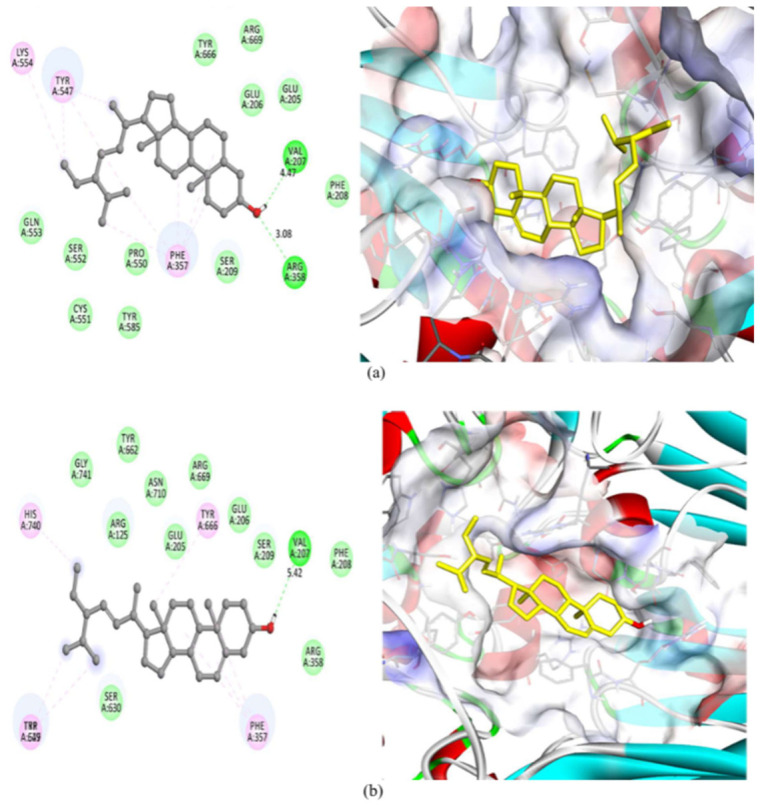
A more comprehensive workflow was reported only in the study by Tangka et al. [ref. 90], where sterols from Abelmoschus manihot (L.) Medik. (Malvaceae) were evaluated using docking, molecular dynamics simulations, and enzymatic DPP-4 inhibition assays, providing a more coherent computational-experimental framework. However, the extract exhibited relatively weak inhibitory activity (IC50 = 860 µg/mL) compared to the reference inhibitor sitagliptin (IC50 = 9.7 µg/mL), and the contribution of individual compounds to the observed activity was not experimentally confirmed.
Molecular dynamics simulations were also reported in selected sterol-focused docking studies, performed using platforms such as YASARA and GROMACS, although these analyses remain relatively infrequent and methodologically heterogeneous across studies [ref. 22,ref. 90,ref. 92]. Such integrated approaches are otherwise relatively rare in this phytochemical group.
From a biological perspective, the pronounced lipophilicity and structural rigidity of sterols may favor hydrophobic accommodation within the DPP-4 binding pocket. However, these same features can also lead to overestimation of inhibitory potential in docking simulations, as hydrophobic fit does not necessarily translate into strong or specific enzymatic inhibition [ref. 90]. Consequently, although phytosterols occasionally demonstrate moderate computational affinity toward DPP-4, their role as standalone inhibitors remains uncertain due to the limited and inconsistent experimental validation. Overall, sterols appear to represent a supplementary and still relatively underexplored class of natural DPP-4 inhibitors, requiring more systematic experimental and mechanistic validation.
6.7. Terpenoids
Terpenoids constitute a broad and structurally diverse class of natural compounds derived from isoprene units, encompassing multiple subclasses such as monoterpenoids, sesquiterpenoids, diterpenoids, and triterpenoids, as well as structurally related derivatives. The compounds included in Table 9 represent several of these subclasses, highlighting the wide chemical diversity within this group. These molecules differ substantially in terms of size, functional groups, polarity, and three-dimensional structure, which directly influences their binding behavior toward protein targets.
Table 9: Terpenoids docked to DPP-4.
| Compound | Reported Natural Source | PDB ID | Docking Software | MD | Experimental Validation | Reference |
|---|---|---|---|---|---|---|
| LinaloolMyrcenolα-Elemol | Cymbopogon citratus | 1X70 | FRED and HYBRID | − | In vivo antidiabetic study | [ref. 95] |
| ValeranoneValencene Germacrene | Amberboa ramosa | 2ONC | XP docking (Schrödinger suite) | + | DPP-4 Inhibition Assay; Kinetics studies | [ref. 96] |
| Caryophyllene oxideMyristicinTorreyolβ-Elemene | Oliveria decumbens | 5T4B | MOE Software | − | – | [ref. 97] |
| Citronellyl butyrate CitronellolCitronellyl formateIsomenthoneLinaloolα-Terpineol | Plectranthus neochilus | 1WCY | AutoDock Vina tool from PyRx | − | – | [ref. 98] |
| Rebaudioside AStevioside | Stevia sp. | 3F8S | Molecular Docking Module using software Hex4e | + | – | [ref. 99] |
| Carnosol | Rosmarinus officinalis | 1X70 | AutoDock Vina | − | DPP-4 Inhibition Assay | [ref. 100] |
| Arjunic acid Arjunone Arjungenin Arjunetin | Terminalia arjuna | 2QT9 | Hex software 8.0.0 | − | DPP-4 Inhibition Assay, in vivo STZ rat model | [ref. 101] |
| Thymoquinone | Nigella sativa | 4A5S | AutoDock Vina | − | In vivo T2DM model; serum DPP-4 quantification (ELISA) | [ref. 102] |
| Ficusonolide | Ficus foveolata | 2G63 | Molecular Operating Environment (MOE 2016) | − | In vitro glucose uptake assay (L-6 cells) In vivo STZ-nicotinamide rat model | [ref. 103] |
| 6′-O-Lactoyl Borapetoside BBorapetoside EBorapetoside FRumphioside CRumphioside I | Tinospora crispa | 3G0B | Molegro Virtual Docker | − | – | [ref. 104] |
| β-Boswellic acidβ-Keto-boswellic acid | Boswellia sp. | 6B1E | Inverse docking approach MOE (v2014.09) | − | In vivo antidiabetic evaluation | [ref. 105] |
| 24-methylcycloartanonCycloartenonCycloartenolCycloeucalenol | Artocarpus champeden | 1X70 | AutoDock 4.2.6 | − | – | [ref. 106] |
| Betulin | Striga orobanchioides | – | AutoDockVina 1.1.2 | − | In vivo STZ-diabetic rat model | [ref. 107] |
| α-caryophyllenePineneOcimene | Spilanthes filicaulis | 5Y7K | AutoDock Vina in PyRx 0.8 | + | DPP-4 Inhibition Assay | [ref. 108] |
| 6-α-hydroxyneopulchellinAilanquassinAsiatic acidAucubinBigelovinCarnosolJatropholoneRosmanolTagitinin | Various plant-derived terpenoids (retrieved from the NPACT database) | 3WQH | AutoDock Tools | + | – | [ref. 109] |
| CBD CBGCBNTHC | Cannabis sp. | 3BJM | AutoDock Vina | + | DPP-4 Inhibition Assay; Kinetic analysis (Lineweaver–Burk); Circular Dichroism | [ref. 110] |
| Salannin | Chrozophora rottleri | 4A5S | AutoDock Vina | − | – | [ref. 46] |
| Friedelin | Myrianthus serratus | 2P8S | AutoDock Vina 1.1.2 | + | DPP-4 inhibition assay | [ref. 76] |
| α-Amyrin | Elaeocarpus serratus | 4A5S | AutoDock software (v4.2.6) | − | – | [ref. 20] |
| Limonin | Citrus aurantiifolia | 4A5S | AutoDock software (v4.2.6) | − | – | [ref. 20] |
| Cucurbitacin A, B | Cucumis sativus | 4A5S | AutoDock software (v4.2.6) | − | – | [ref. 20] |
| Kuguacin B, H | Momordica charantia | 6B1O | AutoDock Vina | − | In vivo (Wistar rats; RT-PCR gene expression) | [ref. 111] |
| Withanolide AWithacoagulin | Withania coagulans | 2I03 | Glide | − | – | [ref. 112] |
| Sitoindoside IXWithanoside IV | Withania coagulans | 5Y7K | AutoDock 4.2 | − | DPP-4 Inhibition Assay, HOMA analysis | [ref. 113] |
| Yuccagenin | Curculigo orchioides | 2ONC | AutoDock 4.2 and AutoDock Vina | + | – | [ref. 22] |
| Glochidon | Phyllanthus debilis | 2G63 | AutoDock Vina | + | DPP-4 Inhibition Assay; In vivo OGTT | [ref. 114] |
| Eucalyptol α-Terpineol Borneol | Aframomum melegueta | 5KBY | Glide | − | – | [ref. 115] |
| Withanolides (withanolide B,D,E, withaferin A, withanone, withangulatin A, withacoagulin H, sitoindoside IX) | Withania coagulans | 5Y7K | AutoDock 4.2.6 | − | DPP-4 Inhibition Assay; In vivo T2DM rat model | [ref. 113] |
| Coagulin L | Withania coagulans | 6B1E | Glide, AutoDock 4.0 | + | – | [ref. 116] |
| AurapteneCitralβ-Bisabolene | Aegle marmelos | 4N8E | AutoDock Vina | + | – | [ref. 117] |
| α-Humulene β-Caryophyllene β-Gurjunene β-Pinene Camphene Eucalyptol Myrcene Germacrene D Tagitinin A Tagitinin C Tagitinin F Tirotundin Tithonine Diversifolin | Tithonia diversifolia | 4A5S | AutoDock Vina | − | – | [ref. 118] |
| WithacoaginWithanolide E | Withania coagulans | 5Y7K | AutoDock | + | DPP-4 Inhibition Assay; In vivo STZ-nicotinamide T2DM rat model | [ref. 23] |
| BetulinBetulinic acid | Ruellia tuberosa | 4A5S | Glide | − | – | [ref. 61] |
| 3-oxo-α-ionolLoliolide | Peronema canescens | 3G0B | Molegro Virtual Docker 5.0 | − | DPP-4 Inhibition Assay | [ref. 63] |
| Kravanhin C | Amomum tsao-ko | 2P8S | AutoDock 4.2.6 | − | DPP-4 Inhibition Assay | [ref. 119] |
| Beta-amyronLup-20(29)-en-3-oneLupeolSoyasapogenol B | Dalbergia sissoo | 1X70 | AutoDock Vina | + | – | [ref. 26] |
| 6′-O-Lactoyl Borapetoside BBorapetoside CBorapetoside DRumphioside B | Tinospora crispa | 3G0B | Molegro Virtual Docker | − | DPP-4 Inhibition Assay | [ref. 120] |
‘+’ indicates that MD simulation was performed; ‘−’ indicates that MD simulation was not performed.
Due to this structural diversity, terpenoid compounds have been investigated as potential DPP-4 inhibitors using a range of complementary approaches. Several studies have combined molecular docking analyses with molecular dynamics simulations and, in selected cases, in vitro or in vivo experiments, enabling a more comprehensive evaluation of their potential inhibitory activity.
For instance, phytoconstituents identified in Withania coagulans demonstrated significant DPP-4 inhibition both in vitro and in diabetic animal models, accompanied by improvements in glucose homeostasis parameters and restoration of pancreatic tissue morphology. Molecular docking and ADMET analyses further supported the favorable binding and drug-like properties of the identified compounds [ref. 113].
Similarly, terpenoid-rich extracts from Amberboa ramosa (Roxb.) Jafri (Asteraceae) exhibited inhibitory activity against DPP-4, with enzymatic assays and kinetic studies indicating a mixed mode of inhibition. Molecular docking identified valeranone as a key compound interacting within the catalytic pocket, while molecular dynamics simulations confirmed the stability of the protein-ligand complex [ref. 96].
An interesting extension of this group includes cannabinoid compounds, which, although not classified as classical terpenoids, are structurally derived from terpenoid precursors and were therefore included in this section. Experimental studies revealed that compounds such as cannabidiol (CBD), cannabigerol (CBG), and cannabinol (CBN) exhibit dose-dependent inhibition of DPP-4, with reported IC50 values in the range of approximately 4.0–6.9 μg/mL, depending on the compound. Molecular docking and molecular dynamics simulations further confirmed stable interactions with both active and allosteric sites of the enzyme [ref. 110].
Despite these promising findings, molecular dynamics simulations are still not consistently applied across studies on terpenoids, and experimental validation remains uneven. Given the substantial structural heterogeneity within this group, comparisons of docking scores and binding affinities across individual compounds remain inherently limited.
Nevertheless, the available evidence suggests that terpenoids constitute a promising and mechanistically diverse class of natural DPP-4 inhibitors, particularly when supported by integrated computational and experimental approaches.
6.8. Peptides
In addition to small-molecule natural compounds, a growing number of studies have investigated peptides as potential DPP-4 inhibitors using molecular docking approaches. This trend reflects the increasing interest in food-derived and bioactive peptides as functional agents in metabolic disorders, particularly in the context of type 2 diabetes.
A substantial proportion of these studies focus on short peptide sequences derived from dietary proteins, including legumes (e.g., Glycine max (L.) Merr., Phaseolus vulgaris L.) [ref. 121,ref. 122], cereals, and other plant-based sources. Molecular docking is frequently employed as an initial screening tool to identify peptide sequences with potential affinity toward the DPP-4 active site prior to experimental validation.
Notably, compared with small-molecule studies, peptide-based investigations often rely on simpler and more standardized docking workflows, most commonly using AutoDock or AutoDock Vina, and are frequently complemented by in vitro DPP-4 inhibition assays. However, molecular dynamics simulations are still rarely applied in peptide docking studies, similarly to observations made for small-molecule ligands.
Despite the increasing number of publications in this area, peptide docking studies are often focused on screening large sets of sequences rather than detailed structure-activity relationship analysis. As a result, the available data remain highly heterogeneous and difficult to compare across studies.
Due to the large number and diversity of investigated peptide sequences, detailed information on individual studies has been provided in the Supplementary Material (Table S1) [ref. 121,ref. 122,ref. 123,ref. 124,ref. 125,ref. 126,ref. 127,ref. 128,ref. 129,ref. 130,ref. 131,ref. 132,ref. 133,ref. 134,ref. 135,ref. 136,ref. 137,ref. 138,ref. 139,ref. 140,ref. 141,ref. 142,ref. 143,ref. 144,ref. 145,ref. 146,ref. 147].
6.9. Overall Trends in Experimental Validation
Among the 178 studies analyzed, molecular dynamics simulations were performed only in a minority of investigations, confirming that most reports relied exclusively on docking calculations. Experimental validation was heterogeneous and ranged from isolated DPP-4 inhibition assays to cell-based studies and in vivo models. However, DPP-4 inhibition assays were considerably more common than cellular or animal experiments, whereas several studies reported broader antidiabetic effects without demonstrating direct inhibition of DPP-4. Therefore, the biological significance of favorable docking scores should be interpreted with caution, since antidiabetic activity may arise from mechanisms unrelated to DPP-4 inhibition (Table 10).
Table 10: Levels of validation used in studies of natural DPP-4 inhibitors.
| Evidence Level | Interpretation |
|---|---|
| Docking only | Low confidence |
| Docking + MD | Moderate confidence |
| Docking + DPP-4 inhibition assay | Moderate-to-high confidence |
| Docking + DPP-4 inhibition assay + cell studies | High confidence |
| Docking + DPP-4 inhibition assay + in vivo studies | High confidence |
| Docking + MD + comprehensive experimental validation | Highest confidence |
7. Structure–Activity Relationships of Natural DPP-4 Inhibitors
Analysis of the interaction patterns summarized in the reviewed studies indicates that natural compounds share several key binding features with clinically used DPP-4 inhibitors. In particular, hydrogen bonding with the catalytic residues Glu205 and Glu206 appears to be a frequently observed and functionally important interaction motif across multiple classes of natural compounds, including flavonoids, phenolics, and alkaloids [ref. 34,ref. 37,ref. 38,ref. 39,ref. 41]. Notably, these residues are also central to the binding of marketed gliptins, which consistently form hydrogen bonds with Glu205 and Glu206, confirming their essential role in ligand anchoring within the active site [ref. 4]. In addition, frequent interactions with residues such as Arg358 and Arg669 suggest a potential contribution of electrostatic and hydrogen-bonding interactions to ligand recognition.
In addition to hydrogen bonding, π–π stacking interactions with aromatic residues such as Tyr547, Tyr662, and Phe357 are frequently observed, highlighting the importance of aromatic ring systems for stabilizing ligand binding within the S1 pocket [ref. 39,ref. 41,ref. 70]. This is in agreement with interaction profiles reported for synthetic DPP-4 inhibitors, where aromatic moieties contribute to hydrophobic and π-mediated interactions within the binding cavity [ref. 4]. Interactions with catalytic residues such as Ser630 are also reported, although less consistently, suggesting a more limited engagement of the catalytic machinery compared to synthetic inhibitors [ref. 19,ref. 73].
Despite these similarities, natural compounds generally exhibit less complex and less optimized interaction networks compared to gliptins. While synthetic inhibitors are designed to occupy multiple subsites within the DPP-4 active site and maximize interactions across S1, S2, and additional regions, natural compounds are most often associated with residues located within the S1 and S2 pockets, with only occasional extension toward the S2 extensive subsite [ref. 71]. This more limited and less coordinated binding pattern may contribute to their generally lower reported binding affinities and highlights the importance of structural optimization in the development of potent DPP-4 inhibitors.
A comprehensive overview of residue-level interactions for all analyzed compounds is provided in the Supplementary Material (Table S2), where detailed interaction profiles derived from individual docking studies are compiled.
8. Limitations and Future Perspectives of Docking Studies on Natural DPP-4 Inhibitors
Despite the growing number of molecular docking studies investigating natural compounds as potential DPP-4 inhibitors, several methodological limitations can be identified across the current literature, which may affect the reliability and interpretability of reported results. At the same time, it is important to recognize that the increasing application of docking approaches in studies on natural products reflects a broader trend in modern drug discovery, where computational methods are used to accelerate the identification of promising bioactive compounds and reduce the time and cost associated with experimental screening.
A critical factor influencing docking outcomes is the selection of an appropriate protein structure. The choice of PDB entry, including its resolution, conformational state, and the nature of the co-crystallized ligand, can significantly impact predicted binding modes. Structures containing well-characterized inhibitors in the active site are generally preferred, as they better reflect biologically relevant binding conformations. In this context, validation of docking protocols using multiple PDB structures may provide a more robust assessment of ligand binding and reduce structure-dependent bias.
Another major limitation is the inconsistent application of molecular dynamics simulations. While docking provides a rapid estimation of binding modes, it remains a static approach that does not account for protein flexibility or solvent effects. Therefore, MD simulations should be considered an essential step in validating docking results, particularly when proposing stable binding interactions or mechanistic interpretations.
Furthermore, substantial variability exists in docking methodologies across studies, including differences in software platforms, scoring functions, and protein preparation procedures. These methodological discrepancies can lead to inconsistencies in predicted binding affinities and interaction patterns, limiting the comparability of results between independent studies.
Importantly, experimental validation remains insufficient in many reports. Although docking can serve as a valuable tool for the initial screening of large numbers of compounds, it provides only a theoretical estimation of binding and does not confirm biological activity. Therefore, enzymatic assays, cellular studies, and in vivo models are essential to verify the inhibitory potential of identified compounds. In this regard, molecular docking should be regarded primarily as a hypothesis-generating and screening approach rather than a definitive method for confirming biological activity.
In the context of natural products, additional challenges should also be considered. Many plant-derived compounds, particularly polyphenols such as flavonoids and certain alkaloids, have demonstrated promising interactions with the DPP-4 active site in docking studies. Among these, the most consistently investigated and biologically supported compounds include protoberberine alkaloids such as berberine and its derivatives, as well as selected flavonoids, including quercetin and gallocatechin, and other phenolic compounds such as resveratrol and curcumin. However, their pharmacokinetic properties, including limited bioavailability, rapid metabolism, and extensive biotransformation after absorption, may significantly affect their actual biological activity. Consequently, strong docking scores do not necessarily translate into in vivo efficacy.
Despite the growing number of reports describing favorable docking interactions between natural compounds and DPP-4, successful translation into therapeutic agents requires consideration of additional factors beyond binding affinity. Many phytochemicals exhibit limited aqueous solubility, poor membrane permeability, low oral bioavailability, or extensive first-pass metabolism, which may significantly restrict their clinical utility. Therefore, favorable docking scores should not be interpreted as direct indicators of drug-likeness or therapeutic efficacy.
Future investigations should integrate molecular docking with complementary approaches addressing pharmacokinetic and biopharmaceutical properties, including ADME predictions, molecular dynamics simulations, and formulation strategies aimed at improving solubility and bioavailability. Such integrated approaches may enhance the translational potential of natural compounds identified as promising DPP-4 inhibitors.
Based on the analysis of the reviewed literature, a standardized workflow (Figure 11) for the computational evaluation of natural DPP-4 inhibitors can be proposed. Such an approach should include the use of high-resolution ligand-bound crystal structures, validation of docking protocols through redocking procedures, detailed analysis of ligand–protein interactions, and, whenever possible, molecular dynamics simulations. Importantly, computational predictions should be complemented by experimental verification, including biochemical DPP-4 inhibition assays, cellular studies, and in vivo investigations. Adoption of more standardized workflows would facilitate comparison of results obtained by independent groups and improve the translational relevance of docking-based studies.
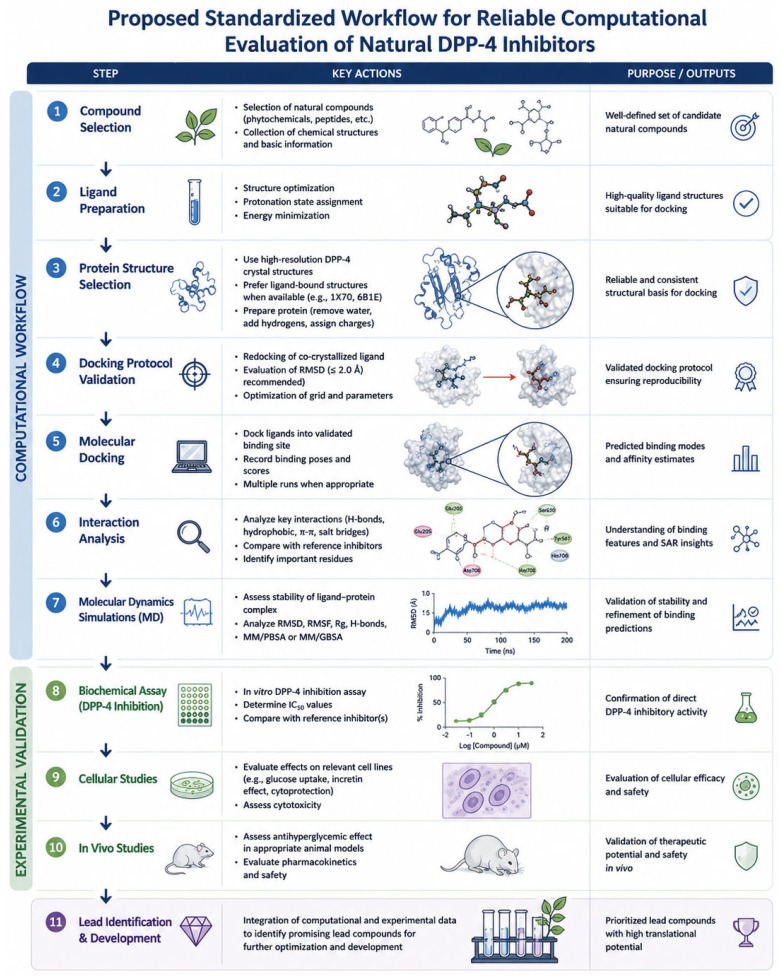
Taken together, these considerations highlight that, while molecular docking represents a powerful and increasingly utilized tool in the search for novel DPP-4 inhibitors from natural sources, its results should be interpreted critically and in conjunction with complementary computational and experimental approaches. When applied appropriately, docking can substantially support early-stage screening and guide further investigation, but it should not be used as a standalone method for drawing definitive conclusions.
9. Conclusions
This review summarizes key findings from 178 studies investigating molecular docking of natural compounds as potential inhibitors of dipeptidyl peptidase-4, providing a broad overview of current computational approaches in this field. The collected data clearly demonstrate a growing interest in the use of in silico methods for the identification of natural compounds with potential antidiabetic activity.
Across the analyzed studies, natural products emerge as a structurally diverse and promising source of DPP-4 inhibitors, with phenolic compounds and alkaloids representing the most consistently investigated and supported groups. At the same time, the literature reveals noticeable variability in computational methodologies, including differences in docking software, scoring functions, and protein structure selection.
Importantly, the findings of this review highlight the need for more standardized and rigorously validated computational workflows. In particular, the integration of molecular dynamics simulations and consistent experimental validation remains limited, despite their critical role in improving the reliability of docking predictions.
Overall, molecular docking represents a valuable and efficient tool for early-stage screening of natural compounds. However, its results should be interpreted with caution, especially considering the complexity of natural products, including issues related to bioavailability and metabolic stability. The future development of this field will depend on the combination of computational strategies with experimental approaches, enabling more reliable identification of biologically relevant DPP-4 inhibitors.
References
- K.L. Ong, L.K. Stafford, S.A. McLaughlin, E.J. Boyko, S.E. Vollset, A.E. Smith, B.E. Dalton, J. Duprey, J.A. Cruz, H. Hagins. Global, Regional, and National Burden of Diabetes from 1990 to 2021, with Projections of Prevalence to 2050: A Systematic Analysis for the Global Burden of Disease Study 2021. Lancet, 2023. [DOI | PubMed]
- R.A. DeFronzo. Pathogenesis of Type 2 Diabetes Mellitus. Med. Clin. N. Am., 2004. [DOI | PubMed]
- C.F. Deacon. Dipeptidyl Peptidase 4 Inhibitors in the Treatment of Type 2 Diabetes Mellitus. Nat. Rev. Endocrinol., 2020. [DOI | PubMed]
- V. Mathur, O. Alam, N. Siddiqui, M. Jha, A. Manaithiya, S. Bawa, N. Sharma, S. Alshehri, P. Alam, F. Shakeel. Insight into Structure Activity Relationship of DPP-4 Inhibitors for Development of Antidiabetic Agents. Molecules, 2023. [DOI | PubMed]
- X. Deng, M.S. Tavallaie, R. Sun, J. Wang, Q. Cai, J. Shen, S. Lei, L. Fu, F. Jiang. Drug Discovery Approaches Targeting the Incretin Pathway. Bioorg. Chem., 2020. [DOI | PubMed]
- H. Nojima, K. Kanou, G. Terashi, M. Takeda-Shitaka, G. Inoue, K. Atsuda, C. Itoh, C. Iguchi, H. Matsubara. Comprehensive Analysis of the Co-Structures of Dipeptidyl Peptidase IV and Its Inhibitor. BMC Struct. Biol., 2016. [DOI | PubMed]
- N. Kerru, A. Singh-Pillay, P. Awolade, P. Singh. Current Anti-Diabetic Agents and Their Molecular Targets: A Review. Eur. J. Med. Chem., 2018. [DOI | PubMed]
- M. Nabeno, F. Akahoshi, H. Kishida, I. Miyaguchi, Y. Tanaka, S. Ishii, T. Kadowaki. A Comparative Study of the Binding Modes of Recently Launched Dipeptidyl Peptidase IV Inhibitors in the Active Site. Biochem. Biophys. Res. Commun., 2013. [DOI | PubMed]
- L.G. Ferreira, R.N. Dos Santos, G. Oliva, A.D. Andricopulo. Molecular Docking and Structure-Based Drug Design Strategies. Molecules, 2015. [DOI | PubMed]
- N.S. Pagadala, K. Syed, J. Tuszynski. Software for Molecular Docking: A Review. Biophys. Rev., 2017. [DOI | PubMed]
- S.A. Hollingsworth, R.O. Dror. Molecular Dynamics Simulation for All. Neuron, 2018. [DOI | PubMed]
- V. Salmaso, S. Moro. Bridging Molecular Docking to Molecular Dynamics in Exploring Ligand-Protein Recognition Process: An Overview. Front. Pharmacol., 2018. [DOI | PubMed]
- I.M. Al-Masri, M.K. Mohammad, M.O. Tahaa. Inhibition of Dipeptidyl Peptidase IV (DPP IV) Is One of the Mechanisms Explaining the Hypoglycemic Effect of Berberine. J. Enzym. Inhib. Med. Chem., 2009. [DOI]
- S.K. Bharti, S. Krishnan, A. Kumar, K.K. Rajak, K. Murari, B.K. Bharti, A.K. Gupta. Antihyperglycemic Activity with DPP-IV Inhibition of Alkaloids from Seed Extract of Castanospermum Australe: Investigation by Experimental Validation and Molecular Docking. Phytomedicine, 2012. [DOI | PubMed]
- G. Selvaraj, S. Kaliamurthi, R. Thirugnasambandan. Effect of Glycosin Alkaloid from Rhizophora Apiculata in Non-Insulin Dependent Diabetic Rats and Its Mechanism of Action: In Vivo and in Silico Studies. Phytomedicine, 2016. [DOI | PubMed]
- S. Naik, N. Deora, S.K. Pal, M.Z. Ahmed, A.S. Alqahtani, P.K. Shukla, K. Venkatraman, S. Kumar. Purification, Biochemical Characterization, and DPP-IV and α-Amylase Inhibitory Activity of Berberine from Cardiospermum halicacabum. J. Mol. Recognit., 2022. [DOI | PubMed]
- I. Purwaningsih, I.P. Maksum, D. Sumiarsa, S. Sriwidodo. Isolation and Quantification of Palmatine from Fibraurea tinctoria Lour: In Vitro Antioxidant Activity and In Silico Antidiabetic Activity Evaluation. Drug Des. Devel. Ther., 2024. [DOI]
- J.A.H. Manzano, L.C.J. Llames, A.P.G. Macabeo. Tetrahydrobisbenzylisoquinoline Alkaloids from Phaeanthus ophthalmicus Inhibit Target Enzymes Associated with Type 2 Diabetes and Obesity. J. Appl. Pharm. Sci., 2024. [DOI]
- N. Nursamsiar, F.J. Sami, H. Kasmawati, S. Nur, Marwati. Antioxidant Capacity, Inhibitor of Alpha-Glucosidase and DPP-IV of Kesambi (Schleichera oleosa) Leaf Extract and Their Compound Profiles Based on LC-ESI-MS Analysis: In Vitro and In Silico Study. Biointerface Res. Appl. Chem., 2025. [DOI]
- S. Giri, A. Chakraborty, S. Hazra, A. Sarkar, S.K. Dey, N. Ghorai, T. Adhikari. In Silico Screening and Molecular Docking Studies of Unique Phytoconstituents Present in Different Unripe Fruits as Potential Antidiabetic and Anti-Hyperlipidemic Agents. Biointerface Res. Appl. Chem., 2025. [DOI]
- S.W. Kisnawaty, P. Nityasewaka, B.A.R. Sukma, A.V. Putrinadia, T. Ma’Rifah, D.G. Tamtomo, D. Indarto. Alkaloid Fraction of Litsea Glutinosa Leaves Provides an Important Precursor for Inhibition of Dipeptidyl Peptidase 4 Activity. IOP Conf. Ser. Mater. Sci. Eng., 2019. [DOI]
- M.A.B. Macalalad, A.A. Gonzales. In Silico Screening and Identification of Antidiabetic Inhibitors Sourced from Phytochemicals of Philippine Plants against Four Protein Targets of Diabetes (PTP1B, DPP-4, SGLT-2, and FBPase). Molecules, 2023. [DOI | PubMed]
- P. Kumar, H. Ram, C. Kala, P. Kashyap, G. Singh, C. Agnihotri, B.P. Singh, A. Kumar, A. Panwar. DPP-4 Inhibition Mediated Antidiabetic Potential of Phytoconstituents of an Aqueous Fruit Extract of Withania coagulans (Stocks) Dunal: In-Silico, in-Vitro and in-Vivo Assessments. J. Biomol. Struct. Dyn., 2023. [DOI | PubMed]
- Z. Zhao, R. Ma, Y. Ma, L. Zhao, L. Wang, Y. Fang, Y. Zhang, X. Wu, X. Wang. Discovery of Nine Dipeptidyl Peptidase-4 Inhibitors from Coptis Chinensis Using Virtual Screening, Bioactivity Evaluation, and Binding Studies. Molecules, 2024. [DOI | PubMed]
- M. Shahid, S. Fazry, A.A.K. Najm, D. Law, C.Y. Hoong, L.S. Joe, C.S. Jiun, M.M. Mackeen. Antidiabetic Potential of Ethanolic Crude Extract of Garcinia Atroviridis Fruits: In Vitro, in Ovo, and in Silico Analysis. Int. J. Food Sci. Technol., 2024. [DOI]
- D. Vijh, P. Gupta. GC–MS Analysis, Molecular Docking, and Pharmacokinetic Studies on Dalbergia Sissoo Barks Extracts for Compounds with Anti-Diabetic Potential. Sci. Rep., 2024. [DOI | PubMed]
- J. Zhao, A. Najm, T.T. Tee, Y.H. Cheah, R. Ng, D. Law, S. Fazry. In Vitro and in Silico Synergistic Antidiabetic Effectiveness of Several Multi-Drug Combinations of Siraitia grosvenorii, Dimocarpus longan Lour., and Orthosiphon stamineus Benth. Extracts. Kuwait J. Sci., 2025. [DOI]
- A.K. Singh, P.K. Patel, K. Choudhary, J. Joshi, D. Yadav, J.O. Jin. Quercetin and Coumarin Inhibit Dipeptidyl Peptidase-IV and Exhibits Antioxidant Properties: In Silico, in Vitro, Ex Vivo. Biomolecules, 2020. [DOI | PubMed]
- I. Ahmad, A.E. Arifianti, A.S. Sakti, F.C. Saputri, A. Mun’im. Simultaneous Natural Deep Eutectic Solvent-Based Ultrasonic-Assisted Extraction of Bioactive Compounds of Cinnamon Bark and Sappan Wood as a Dipeptidyl Peptidase IV Inhibitor. Molecules, 2020. [DOI | PubMed]
- A. Adriani, N. Noorhamdani, T. Ardyati, S. Winarsih. Non-Targeted Screening with LC-HRMS and In-Silico Study on Diabetic Activity of Ethyl Acetate Extract of Sanrego (Lunasia Amara Blanco). Res. J. Pharm. Technol., 2022. [DOI]
- N.K. Sishu, C.I. Selvaraj. Cichoriin, a Coumarin Glycoside with Antidiabetic Effect and Cardioprotective Activity against H2O2 induced Oxidative Stress in H9c2 Cells: In-Vitro and in-Silico Study. Free Radic. Biol. Med., 2025. [DOI | PubMed]
- R.S. Upendra, S. Srinivas Nagar, K. Vasudevan. Computational Screening of Phytocompound Isolated from the Plant Toddalia asiatica and Coleonema album as Potential Inhibitors against Enzyme DPP-4 as a Treatment for Type-2 Diabetes Mellitus. Chem. Pap., 2024. [DOI]
- H.S. Parmar, P. Jain, D.S. Chauhan, M.K. Bhinchar, V. Munjal, M. Yusuf, K. Choube, A. Tawani, V. Tiwari, E. Manivannan. DPP-IV Inhibitory Potential of Naringin: An in Silico, in Vitro and in Vivo Study. Diabetes Res. Clin. Pract., 2012. [DOI | PubMed]
- J. Fan, M.H. Johnson, M.A. Lila, G. Yousef, E.G. De Mejia. Berry and Citrus Phenolic Compounds Inhibit Dipeptidyl Peptidase IV: Implications in Diabetes Management. Evid.-Based Complement. Altern. Med., 2013. [DOI | PubMed]
- Y. Purnomo, D.W. Soeatmadji, S.B. Sumitro, M.A. Widodo. Anti-Diabetic Potential of Urena Lobata Leaf Extract through Inhibition of Dipeptidyl Peptidase IV Activity. Asian Pac. J. Trop. Biomed., 2015. [DOI]
- S. Srivastava, P. Shree, Y.B. Tripathi. Active Phytochemicals of Pueraria Tuberosa for DPP-IV Inhibition: In Silico and Experimental Approach. J. Diabetes Metab. Disord., 2017. [DOI | PubMed]
- B.R. Kim, H.Y. Kim, I. Choi, J.B. Kim, C.H. Jin, A.R. Han. DPP-IV Inhibitory Potentials of Flavonol Glycosides Isolated from the Seeds of Lens Culinaris: In Vitro and Molecular Docking Analyses. Molecules, 2018. [DOI | PubMed]
- F. Gao, Y. Fu, J. Yi, A. Gao, Y. Jia, S. Cai. Effects of Different Dietary Flavonoids on Dipeptidyl Peptidase-IV Activity and Expression: Insights into Structure-Activity Relationship. J. Agric. Food Chem., 2020. [DOI | PubMed]
- R.K. Paul, V. Nath, V. Kumar. Structure Based Virtual Screening of Natural Compounds and Molecular Dynamics Simulation: Butirosin as Dipeptidyl Peptidase (DPP-IV) Inhibitor. Biocatal. Agric. Biotechnol., 2021. [DOI]
- M.F. Khalid, K. Rehman, K. Irshad, T.A. Chohan, M.S.H. Akash. Biochemical Investigation of Inhibitory Activities of Plant-Derived Bioactive Compounds Against Carbohydrate and Glucagon-Like Peptide-1 Metabolizing Enzymes. Dose Response, 2022. [DOI | PubMed]
- M. Bouslamti, E.H. Loukili, A. Elrherabi, A. El Moussaoui, M. Chebaibi, N. Bencheikh, H.A. Nafidi, Y.A. Bin Jardan, M. Bourhia, M. Bnouham. Phenolic Profile, Inhibition of α-Amylase and α-Glucosidase Enzymes, and Antioxidant Properties of Solanum elaeagnifolium Cav. (Solanaceae): In Vitro and In Silico Investigations. Processes, 2023. [DOI]
- F.O. Balogun, K. Singh, A. Rampadarath, A. Akoonjee, K. Naidoo, S. Sabiu. Cheminformatics Identification of Modulators of Key Carbohydrate-Metabolizing Enzymes from C. cujete for Type-2 Diabetes Mellitus Intervention. J. Diabetes Metab. Disord., 2023. [DOI | PubMed]
- D. Rath, G. Pattnaik, B. Kar, G.K. Padhy, C. Patro, P. Bhukta. Antidiabetic Potency of Flavonoids Using a Systematic Computer-Aided Drug Design Platform. Int. J. Exp. Res. Rev., 2024. [DOI]
- S. Bie, S. Zhao, S. Cai, J. Yi, L. Zhou. The Profiles of Free, Esterified and Insoluble-Bound Phenolics in Peach Juice after High Pressure Homogenization and Evaluation of Their Antioxidant Capacities, Cytoprotective Effect, and Inhibitory Effects on α-Glucosidase and Dipeptidyl Peptidase-IV. Food Chem. X, 2024. [DOI | PubMed]
- M. Ali, M. Hassan, S.A. Ansari, H.M. Alkahtani, L.S. Al-Rasheed, S.A. Ansari. Quercetin and Kaempferol as Multi-Targeting Antidiabetic Agents against Mouse Model of Chemically Induced Type 2 Diabetes. Pharmaceuticals, 2024. [DOI | PubMed]
- S. Nallapaty, N. Malothu, S.K. Konidala, A.R. Areti, C. Guntupalli. HR-LCMS Metabolite Profiling and in Silico Evaluation of the Antidiabetic Activity of Methanolic Leaf Extract of Chrozophora rottleri (Geiseler) A. Juss. Ex Spreng. Indian J. Pharm. Educ. Res., 2024. [DOI]
- V. Bhushan, S.K. Bharti, S. Krishnan, A. Kumar, A. Kumar. Antidiabetic Effectiveness of Phyllanthus niruri Bioactive Compounds via Targeting DPP-IV. Nat. Prod. Res., 2025. [DOI | PubMed]
- A.M. Anas, K. Sujatha, R. Srimathi. In-Silico Estimation of Flavonoids through Molecular Docking and Assessment of ADMET Properties as DPP-IV Inhibitor in the Treatment of Diabetes Mellitus. Curr. Trends Biotechnol. Pharm., 2025. [DOI]
- V. Kumar, N. Sharma, V.K. Mishra, S. Mall, A. Kumar, K. Dev, C.N. Patel. Computational Evaluation of Phytocompounds From Selective Medicinal Plants as Potential Antidiabetic Agents. Chem. Biodivers., 2025. [DOI | PubMed]
- O.A. Ojo, A.D. Ogunlakin, O.A. Ajayi-Odoko, G.A. Gyebi, D.I.K. Ayokunle, A.A. Olanrewaju, O.D. Agbeye, E.T. Ogunwale, O.S. Adeyemi. Bioprospection of Indigenous Herbal Formulations for Diabetes Care: In Vitro, Network Pharmacology, and Molecular Dynamics Studies. BMC Complement. Med. Ther., 2025. [DOI | PubMed]
- P. Kalhotra, V.C.S.R. Chittepu, G. Osorio-Revilla, T. Gallardo-Velázquez. Structure–Activity Relationship and Molecular Docking of Natural Product Library Reveal Chrysin as a Novel Dipeptidyl Peptidase-4 (DPP-4) Inhibitor: An Integrated in Silico and in Vitro Study. Molecules, 2018. [DOI | PubMed]
- A. Gupta, G.A. Jacobson, J.R. Burgess, H.F. Jelinek, D.S. Nichols, C.K. Narkowicz, H.A. Al-Aubaidy. Citrus Bioflavonoids Dipeptidyl Peptidase-4 Inhibition Compared with Gliptin Antidiabetic Medications. Biochem. Biophys. Res. Commun., 2018. [DOI | PubMed]
- O.I. Omotuyi, O. Nash, O.K. Inyang, J. Ogidigo, O. Enejoh, O. Okpalefe, T. Hamada. Flavonoid-Rich Extract of Chromolaena odorata Modulate Circulating GLP-1 in Wistar Rats: Computational Evaluation of TGR5 Involvement. 3 Biotech, 2018. [DOI | PubMed]
- P.K. Kempegowda, F. Zameer, S.K. Murari. Delineating Antidiabetic Proficiency of Catechin from Withania somnifera and Its Inhibitory Action on Dipeptidyl Peptidase-4 (Dpp-4). Biomed. Res., 2018. [DOI]
- P. Kalhotra, V.C.S.R. Chittepu, G. Osorio-Revilla, T. Gallardo-Velázquez. Discovery of Galangin as a Potential DPP-4 Inhibitor That Improves Insulin-Stimulated Skeletal Muscle Glucose Uptake: A Combinational Therapy for Diabetes. Int. J. Mol. Sci., 2019. [DOI | PubMed]
- A. Quek, N.K. Kassim, A. Ismail, M.A.M. Latif, K. Shaari, D.C. Tan, P.C. Lim. Identification of Dipeptidyl Peptidase-4 and α-Amylase Inhibitors from Melicope glabra (Blume) T. G. Hartley (Rutaceae) Using Liquid Chromatography Tandem Mass Spectrometry, In Vitro and In Silico Methods. Molecules, 2021. [DOI | PubMed]
- N. Haron, N. Nadia, P.N. Farahin, D. Susanti, N. Hasniza, K.B.A. Halim. Molecular Docking of Polyphenol Compounds from Anacardium occidentale with Alpha-Glucosidase and Dipeptidyl-Peptidase-4 Enzymes. Malays. J. Fundam. Appl. Sci., 2021. [DOI]
- J. Pan, Q. Zhang, C. Zhang, W. Yang, H. Liu, Z. Lv, J. Liu, Z. Jiao. Inhibition of Dipeptidyl Peptidase-4 by Flavonoids: Structure–Activity Relationship, Kinetics and Interaction Mechanism. Front. Nutr., 2022. [DOI | PubMed]
- O.B. Afolabi, O.R. Olasehinde, D.G. Olanipon, S.O. Mabayoje, O.M. Familua, K.F. Jaiyesimi, E.K. Agboola, T.O. Idowu, O.T. Obafemi, O.A. Olaoye. Antioxidant Evaluation and Computational Prediction of Prospective Drug-like Compounds from Polyphenolic-Rich Extract of Hibiscus cannabinus L. Seed as Antidiabetic and Neuroprotective Targets: Assessment through in Vitro and in Silico Studies. BMC Complement. Med. Ther., 2023. [DOI | PubMed]
- S. Kamboj, Shivam, M. Mukhija, J. Monga, P.S. Bajwa, J. Chaudhary. Evaluation of O-Methyl Substituted Quercetin Analogues as DPP-4 Inhibitor: In Silico Study. J. Integr. Sci. Technol., 2024. [DOI]
- E. Retnaningtyas, A. Setiawan, B. Susatia, T. Hariyanto, N.L.P.E. Sudiwati. In Silico Studies of Ruellia tuberosa L. Compounds as Aldose Reductase, Dipeptidyl Peptidase 4, and α-Glucosidase Inhibitors against Type 2 Diabetes Mellitus | Estudios in Silico de Compuestos de Ruellia tuberosa L. Como Inhibidores de La Aldosa Reductasa, Dipeptidil Peptidasa 4 y α-Glucosidasa Contra La Diabetes Mellitus de Tipo 2. J. Pharm. Pharmacogn. Res., 2024. [DOI]
- A. Hossain, M.E. Rahman, M.O. Faruqe, A. Saif, S. Suhi, R. Zaman, A.H. Hirad, M.N. Matin, M.F. Rabbee, K.H. Baek. Characterization of Plant-Derived Natural Inhibitors of Dipeptidyl Peptidase-4 as Potential Antidiabetic Agents: A Computational Study. Pharmaceutics, 2024. [DOI | PubMed]
- B. Elya, R.C. Forestrania, N.M. Hashim, N. Triadisti. Dipeptidyl Peptidase-4 Inhibition of Peronema canescens Jack Leaves and Stems: Bioassay-Guided Fractionation, Compound Profiling by LC-MS/MS, and Interaction Mechanism. J. Appl. Pharm. Sci., 2024. [DOI]
- M. Salih, M. Yahya Alnour, T. Omer Ahmed, A.H. Arbab, B.A. Yousef. Catechins Anti-Diabetic Actions Are Mediated via Multiple Receptors, a Mechanism Deduced via Molecular Docking and Dynamic Simulations. J. Biomol. Struct. Dyn., 2025. [DOI | PubMed]
- I.A. Akinwumi, A.M. Rabie, K. Katiyar, A. Ajayi, R.O. Bello, A.T. Aborode, A.T. Moin, J. Ferdoush, A. Ogunyemi, P. Etinosa. In-Silico Discovery of Dipeptidyl Peptidase-4 Inhibitors from African Medicinal Plants: Molecular Docking, ADMET, Dynamics Simulation, and MM-GBSA Analyses. Nucl. India, 2025. [DOI]
- Y. Desmiaty, F. Xavier, H. Agusti, S. Senjanursa, I. Bala, S. Sahroni, S.S. Arini, N. Nastasja, E. Mumpuni, E. Mulatsari. Molecular Docking Study of Standardized Lime (Citrus aurantiifolia) Peel Decoction as an Antidiabetic Herbal. Trop. J. Nat. Product. Res., 2025. [DOI]
- A.H. Elwekeel, E. Amin, A.M. Sayed, M.H.A. Hassan. Antidiabetic Potential of Abelmoschus esculentus Leaves and Fruits: A Comparative Study Assisted by Chemical Profiling, in Vitro and in Silico Studies. RSC Adv., 2025. [DOI | PubMed]
- C.N. Cano-Gonzalez, R.Y. Aguirre-Loredo, J.A. Ascacio Valdes, C.N. Aguilar González, L.d.A.A. Soriano-Melgar. Enzyme-Assisted Recovery of Phenolic Compounds from Broccoli Waste with Antioxidant and Antihyperglycemic Activities Evaluated through in Vitro and Molecular Docking Studies. Biocatal. Agric. Biotechnol., 2025. [DOI]
- D.L. Sheela, P.A. Nazeem, A. Narayanankutty, R.M. Shylaja, S.P. Davis, P. James, R. Valsalan, T. Devassy Babu, A.C. Raghavamenon. Coconut Phytocompounds Inhibits Polyol Pathway Enzymes: Implication in Prevention of Microvascular Diabetic Complications. Prostaglandins Leukot. Essent. Fat. Acids, 2017. [DOI | PubMed]
- C. Lammi, M. Bartolomei, C. Bollati, L. Cecchi, M. Bellumori, E. Sabato, G. Vistoli, N. Mulinacci, A. Arnoldi. Phenolic Extracts from Extra Virgin Olive Oils Inhibit Dipeptidyl Peptidase Iv Activity: In Vitro, Cellular, and in Silico Molecular Modeling Investigations. Antioxidants, 2021. [DOI | PubMed]
- A.C. Haldipur, N. Srividya. A Comparative Evaluation of in Vitro Antihyperglycemic Potential of Bamboo Seed Rice (Bambusa arundinacea) and Garudan Samba (Oryza sativa): An Integrated Metabolomics, Enzymatic and Molecular Docking Approach. J. Cereal Sci., 2021. [DOI]
- W. Nuankaew, A. Heemman, C. Wattanapiromsakul, J.H. Shim, N.W. Kim, T. Yasmin, S.Y. Jeong, Y.H. Nam, B.N. Hong, S. Dejadisai. Anti-Insulin Resistance Effect of Constituents from Senna siamea on Zebrafish Model, Its Molecular Docking, and Structure–Activity Relationships. J. Nat. Med., 2021. [DOI | PubMed]
- N.S.S. Chalichem, S. Jupudi, V.R. Yasam, D. Basavan. Dipeptidyl Peptidase-IV Inhibitory Action of Calebin A: An in Silico and in Vitro Analysis. J. Ayurveda Integr. Med., 2021. [DOI | PubMed]
- Y. Susilawati, S. Megantara, J. Levita. Antidiabetic Activity of Novel Chromene Compound Isolated from Peperomia pellucida L. Kunth and In Silico Study Against DPP-IV, Alpha-Glucosidase, Alpha-Amylase, and Aldose Reductase for Blood Glucose Homeostasis. Int. J. Appl. Pharm., 2022. [DOI]
- Q.D. Tran Huynh, S.J. Hsu, T.L.T. Duong, H.K. Liu, T.W. Liu, M.H. Chu, Y.H. Wang, D.K. Nguyen, T.T.T. Phan, N.K.H. Tran. New Hydrogenated Phenanthrene Glycosides from the Edible Vegetable Elatostema tenuicaudatum W.T.Wang with DPP-IV Inhibitory and Hepatoprotective Activity. J. Agric. Food Chem., 2025. [DOI | PubMed]
- R.M. Suryawanshi, R.B. Shimpi, V. Muralidharan, L.S. Nemade, S. Gurugubelli, S. Baig, S.R. Vikhe, S.A. Dhawale, M.R. Mortuza, S.H. Sweilam. ADME, Toxicity, Molecular Docking, Molecular Dynamics, Glucokinase Activation, DPP-IV, α-Amylase, and α-Glucosidase Inhibition Assays of Mangiferin and Friedelin for Antidiabetic Potential. Chem. Biodivers., 2025. [DOI | PubMed]
- S. Chhabria, S. Mathur, S. Vadakan, D. Goswami, J. Prajapati, K. Thaker, B. Paital. Sennoside A from Cassia Angustifolia as a Mixed-Type Inhibitor of DPP-IV: Integrative in Vitro, in Silico, and Kinetic Characterization. Biochem. Biophys. Res. Commun., 2025. [DOI | PubMed]
- P.K. Huang, S.R. Lin, C.H. Chang, M.J. Tsai, D.N. Lee, C.F. Weng. Natural Phenolic Compounds Potentiate Hypoglycemia via Inhibition of Dipeptidyl Peptidase IV. Sci. Rep., 2019. [DOI | PubMed]
- H. Ram, A. Krishna, P. Kashyap, S. Kumar. Amelioration in Insulin Resistance and β-Cell Function by DPP-4 Inhibition Potential of Trigonella foenum Seed Extract in Type-2 Diabetic Rats. Indian Drugs, 2019. [DOI]
- R. Mahmudah, I. Adnyana, E. Sukandar. Molecular Docking Studies of α-Mangostin, γ-Mangostin, and Xanthone on Peroxisome Proliferator-Activated Receptor Gamma Diphenyl Peptidase-4 Enzyme, and Aldose Reductase Enzyme as an Antidiabetic Drug Candidate. J. Adv. Pharm. Technol. Res., 2021. [DOI | PubMed]
- L. Weng, T.H. Chen, Q. Zheng, W.H. Weng, L. Huang, D. Lai, Y.S. Fu, C.F. Weng. Syringaldehyde Promoting Intestinal Motility with Suppressing α-Amylase Hinders Starch Digestion in Diabetic Mice. Biomed. Pharmacother., 2021. [DOI | PubMed]
- L. Yang, C. Wang. LIGNAN MATAIRESINOL ILLUSTRATES AN ANTIDIABETIC EFFECT VIA INHIBITION OF DPP-4 AND HEPATO-PROTECTIVE EFFECT VIA INHIBITION OF APOPTOSIS IN DIABETIC RATS. Acta Pol. Pharm. Drug Res., 2022. [DOI]
- W. Cao, X. Chen, Y. Chin, J. Zheng, P.E. Lim, C. Xue, Q. Tang. Identification of Curcumin as a Potential α-Glucosidase and Dipeptidyl-Peptidase 4 Inhibitor: Molecular Docking Study, in Vitro and in Vivo Biological Evaluation. J. Food Biochem., 2022. [DOI | PubMed]
- A. Masyita, F. Firdayani, S. Listiana, A.Y. Besari. Emodin Derivatives as Novel Potent DPP-4 Inhibitors: Design, Synthesis, and in Vitro Evaluation. Biochem. Biophys. Res. Commun., 2024. [DOI | PubMed]
- S. Anam, Y. Yuyun, Y. Yusriadi, A. Sultan, D. Pakaya, S. Maulana, M.S. Zubair. Docking Study of Naphthalene Compounds from Eleutherine bulbosa as Antidiabetic Agents on Multiple Receptors. Molekul, 2025. [DOI]
- P.S. Suresh, P.P. Singh, Y.S. Padwad, U. Sharma. Steroidal Saponins from Trillium govanianum as α-Amylase, α-Glucosidase, and Dipeptidyl Peptidase IV Inhibitory Agents. J. Pharm. Pharmacol., 2021. [DOI | PubMed]
- V. Sable, G. Ahire. Network Pharmacology and Molecular Docking Technology-Based Strategy to Explore the Potential Mechanism of Diabecon Formulation Botanicals. Int. J. Drug Deliv. Technol., 2024. [DOI]
- P. Kalhotra, V.C.S.R. Chittepu, G. Osorio-Revilla, T. Gallardo-Velazquez. Phytochemicals in Garlic Extract Inhibit Therapeutic Enzyme DPP-4 and Induce Skeletal Muscle Cell Proliferation: A Possible Mechanism of Action to Benefit the Treatment of Diabetes Mellitus. Biomolecules, 2020. [DOI | PubMed]
- W. Yong-Lin, Z. Yan, T. Yan, K. Yuan-Fang, H. Yu-Long, L. Jie-Ming, W. Shao-Pei, D. Chun-Hong, L. Xiao-Fei. Exploring the Hypoglycaemic Mechanism of Chinese Medicine Xiao-Ke-An Based on Target Dipeptidyl Peptidase 4 Using Molecular Docking and Dynamics Simulation. ChemistrySelect, 2021. [DOI]
- J. Tangka, E.N. Barung, D. Lyrawati, D. Soeatmadji, N. Nurdiana. DPP-IV Inhibitory Activity of the Ethanolic Extract of Red Gedi Leaves Abelmoschus manihot L. Medic. Open Access Maced. J. Med. Sci., 2022. [DOI]
- N. Lolok, D.S.F. Ramadhan, S.A. Sumiwi, I. Sahidin, J. Levita. MOLECULAR DOCKING OF B-SITOSTEROL AND STIGMASTEROL ISOLATED FROM Morinda Citrifolia WITH α-AMYLASE, α-GLUCOSIDASE, DIPEPTIDYLPEPTIDASE-IV, AND PEROXISOME PROLIFERATOR-ACTIVATED RECEPTOR-γ. Rasayan J. Chem., 2022. [DOI]
- D.K. Sarker, P. Ray, R. Rouf, J.A. Shilpi, S.J. Uddin. In Silico Molecular Docking and Dynamic Investigations of Bioactive Phytoconstituents from Fenugreek Seeds as a Potent Drug against DPP-IV Enzyme. ACS Food Sci. Technol., 2023. [DOI]
- A. Gupta, C.K. Narkowicz, H.A. Al-Aubaidy, H.F. Jelinek, D.S. Nichols, J.R. Burgess, G.A. Jacobson. Phytosterol Supplements Do Not Inhibit Dipeptidyl Peptidase-4. Diabetes Metab. Syndr. Clin. Res. Rev., 2020. [DOI]
- Y. Purnomo, M. Taufiq, A.N.D. Wijaya, R. Hakim. Molecular Docking of Soybean (Glycine max) Seed and Ginger (Zingiber officinale) Rhizome Components as Anti-Diabetic Through Inhibition of Dipeptidyl Peptidase 4 (DPP-4) and Alpha-Glucosidase Enzymes. Trop. J. Nat. Product. Res., 2021. [DOI]
- S.K. Bharti, A. Kumar, O. Prakash, S. Krishnan, A.K. Gupta. Essential Oil of Cymbopogon Citratus against Diabetes: Validation by In Vivo Experiments and Computational Studies. J. Bioanal. Biomed., 2013. [DOI]
- R.K. Paul, I. Ahmad, H. Patel, K. Raza. Antidiabetic Activity of the Extracted Oil from an Indian Indigenous Plant, Amberboa ramosa: Evidences from in Silico, in Vitro and Enzyme Inhibition Kinetic Studies. Chem. Pap., 2025. [DOI]
- S. Bouchentouf, E. Talebi. Predicting Binding between Main Molecules of Iranian Oliveria Decumbens and DPP-4 Enzyme Using Molecular Docking. Trop. J. Nat. Product. Res., 2018. [DOI]
- H. Mamoudou, A.H. Abdoulaye, N.Y.O. Ditchou, J.N. Olumasai, R.M.Z.K. Adissa, M.A.M. Mune. Computational Investigation of Plectranthus Neochilus Essential Oil Phytochemicals Interaction with Dipeptidyl Peptidase 4: A Potential Avenue for Antidiabetic Drug Discovery. Curr. Pharm. Anal., 2025. [DOI]
- H. Ayachi, M. Merad, S. Ghalem. Study of Interaction between Dipeptidyl Peptidase-4 and Products Extracted from the Stevia Plant by Molecular Modeling. Int. J. Pharm. Sci. Rev. Res., 2013
- A.M. Bower, L.M. Real Hernandez, M.A. Berhow, E.G. De Mejia. Bioactive Compounds from Culinary Herbs Inhibit a Molecular Target for Type 2 Diabetes Management, Dipeptidyl Peptidase IV. J. Agric. Food Chem., 2014. [DOI | PubMed]
- I.R. Mohanty, M. Borde, C.S. Kumar, U. Maheshwari. Dipeptidyl Peptidase IV Inhibitory Activity of Terminalia arjuna Attributes to Its Cardioprotective Effects in Experimental Diabetes: In Silico, in Vitro and in Vivo Analyses. Phytomedicine, 2019. [DOI | PubMed]
- S. Alshahrani, T. Anwer, M.F. Alam, R.A. Ahmed, G. Khan, S.M. Sivakumar, A. Shoaib, P. Alam, F. Azam. Effect of Thymoquinone on High Fat Diet and STZ-Induced Experimental Type 2 Diabetes: A Mechanistic Insight by in Vivo and in Silico Studies. J. Food Biochem., 2021. [DOI]
- A.U. Din, M. Khan, M.Z. Shah, A. Rauf, U. Rashid, A.A. Khalil, K. Zaman, Y.S. Al-Awthan, M.A. Al-Duais, O. Bahattab. Antidiabetic Activity of Ficusonolide, a Triterpene Lactone from Ficus foveolata (Wall. Ex Miq.): In Vitro, in Vivo, and in Silico Approaches. ACS Omega, 2021. [DOI | PubMed]
- A. Prasetiyo, S. Kumala, E. Mumpuni, R.R. Tjandrawinata. Validation of Structural-Based Virtual Screening Protocols with the PDB Code 3G0B and Prediction of the Activity of Tinospora Crispa Compounds as Inhibitors of Dipeptidyl-Peptidase-IV. Res. Results Pharmacol., 2022. [DOI]
- A. Khan, I. Khan, S.A. Halim, N.U. Rehman, N. Karim, W. Ahmad, M. Khan, R. Csuk, A. Al-Harrasi. Anti-Diabetic Potential of β-Boswellic Acid and 11-Keto-β-Boswellic Acid: Mechanistic Insights from Computational and Biochemical Approaches. Biomed. Pharmacother., 2022. [DOI | PubMed]
- S. Supandi, M.S. Wulandari, E. Samsul, A. Azminah, R.Y. Purwoko, H. Herman, H. Kuncoro, A. Ibrahim, N.S.S. Ambarwati, R. Rosmalena. Dipeptidyl Peptidase IV Inhibition of Phytocompounds from Artocarpus champeden (Lour.) Stokes: In Silico Molecular Docking Study and ADME-Tox Prediction Approach. J. Adv. Pharm. Technol. Res., 2022. [DOI | PubMed]
- S. Vikhe, R. Kunkulol, D. Raut. Antidiabetic and Antihyperlipidemic Effects of Crude Fractions and Isolated Compound from Striga Orobanchioides Benth on Streptozotocin Induced Diabetic Rats. J. Ayurveda Integr. Med., 2022. [DOI | PubMed]
- O.A. Ojo, A.D. Ogunlakin, G.A. Gyebi, D.I.K. Ayokunle, A.I. Odugbemi, D.E. Babatunde, O.A. Ajayi-Odoko, M. Iyobhebhe, S.C. Ezea, C.O. Akintayo. GC-MS Chemical Profiling, Antioxidant, Anti-Diabetic, and Anti-Inflammatory Activities of Ethyl Acetate Fraction of Spilanthes filicaulis (Schumach. and Thonn.) C.D. Adams Leaves: Experimental and Computational Studies. Front. Pharmacol., 2023. [DOI | PubMed]
- I. Khan, M.K.A. Khan, S. Akhtar. Evaluation of Terpenoids as Dipeptidyl Peptidase 4 Lead Molecules: Molecular Docking and Dynamics Simulation Study. Biointerface Res. Appl. Chem., 2023. [DOI]
- L. Mkabayi, Z. Viljoen, R.W.M. Krause, K.A. Lobb, B.I. Pletschke, C.L. Frost. Inhibitory Effects of Selected Cannabinoids against Dipeptidyl Peptidase IV, an Enzyme Linked to Type 2 Diabetes. Heliyon, 2024. [DOI | PubMed]
- O.O. Elekofehinti, E.O. Ariyo, M.O. Akinjiyan, O.S. Olayeriju, A.O. Lawal, I.G. Adanlawo, J.B.T. Rocha. Potential Use of Bitter Melon (Momordica charantia) Derived Compounds as Antidiabetics: In Silico and in Vivo Studies. Pathophysiology, 2018. [DOI | PubMed]
- S.B. Meeran, U. Subburaya, G. Narasimhan. In Silico and in Vitro Screening of Ethanolic Extract of Fruits of Withania Coagulans against Diabetes. Res. J. Pharm. Technol., 2020. [DOI]
- H. Ram, P. Kumar, A. Purohit, P. Kashyap, S. Kumar, S. Kumar, G. Singh, A.A. Alqarawi, A. Hashem, E.F. Abd-Allah. Improvements in HOMA Indices and Pancreatic Endocrinal Tissues in Type 2-Diabetic Rats by DPP-4 Inhibition and Antioxidant Potential of an Ethanol Fruit Extract of Withania coagulans. Nutr. Metab., 2021. [DOI]
- A. Verma, P. Pathak, H. Rimac, H. Khalilullah, V. Kumar, M. Grishina, V. Potemkin, B. Ahmed. A Triterpene Glochidon from Phyllanthus debilis: Isolation, Computational Studies, and Antidiabetic Activity Evaluation. Biocatal. Agric. Biotechnol., 2021. [DOI]
- O.A. Ojo, A.B. Ojo, C. Okolie, J. Abdurrahman, M. Barnabas, I.O. Evbuomwan, O.P. Atunwa, B. Atunwa, M. Iyobhebhe, T.C. Elebiyo. Elucidating the Interactions of Compounds Identified from Aframomum melegueta Seeds as Promising Candidates for the Management of Diabetes Mellitus: A Computational Approach. Inform. Med. Unlocked, 2021. [DOI]
- A. Singh, A. Mishra. Molecular Dynamics Simulation and Free Energy Calculation Studies of Coagulin L as Dipeptidyl Peptidase-4 Inhibitor. J. Biomol. Struct. Dyn., 2022. [DOI | PubMed]
- P. Sharma, T. Joshi, S. Mathpal, S. Chandra, S. Tamta. In Silico Identification of Antidiabetic Target for Phytochemicals of A. Marmelos and Mechanistic Insights by Molecular Dynamics Simulations. J. Biomol. Struct. Dyn., 2022. [DOI | PubMed]
- O.R. Adianingsih, U. Khasanah, K.D. Anandhy, V. Yurina. In Silico ADME-T and Molecular Docking Study of Phytoconstituents from Tithonia diversifolia (Hemsl.) A. Gray on Various Targets of Diabetic Nephropathy | ADME-T in Silico y Estudio de Acoplamiento Molecular de Fitoconstituyentes de Tithonia diversifolia (Hemsl.) A. Gray En Varias Dianas de Nefropatía Diabética. J. Pharm. Pharmacogn. Res., 2022. [DOI]
- Y. Wang, S.L. Wu, X.Y. Li, P. Gongpan, H. Fu, X.M. Liao, Y. Yang, M. Huang, X.Y. Huang, Y.B. Ma. Isospongian Diterpenoids from the Leaves of Amomum Tsao-Ko Promote GLP-1 Secretion via Ca2+/CaMKII and PKA Pathways and Inhibit DPP-4 Enzyme. Chem. Biodivers., 2024. [DOI | PubMed]
- A. Prasetiyo, S. Kumala, E. Mumpuni, R.R. Tjandrawinata, N.D. Yuliana. Dipeptidyl-Peptidase-4 Inhibitors from Tinospora Crispa as Revealed By Metabolomics Study, Molecular Docking And Molecular Dynamics Simulation Approaches|Metabolomi Çalişmalari, Moleküler Dokunma Ve Moleküler Dinamik Simülasyon Yaklaşimlariyla Ortaya Çikan Tinospora Crispa’dan Dipeptidil-Peptidaz-4 Inhibitörleri. Ank. Univ. Eczaci. Fak. Derg., 2025. [DOI]
- L. Mojica, E.G. De Mejía. Optimization of Enzymatic Production of Anti-Diabetic Peptides from Black Bean (Phaseolus vulgaris L.) Proteins, Their Characterization and Biological Potential. Food Funct., 2016. [DOI | PubMed]
- C. Lammi, C. Zanoni, A. Arnoldi, G. Vistoli. Peptides Derived from Soy and Lupin Protein as Dipeptidyl-Peptidase IV Inhibitors: In Vitro Biochemical Screening and in Silico Molecular Modeling Study. J. Agric. Food Chem., 2016. [DOI | PubMed]
- X. Kong, L. Zhang, W. Song, C. Zhang, Y. Hua, Y. Chen, X. Li. Separation, Identification and Molecular Binding Mechanism of Dipeptidyl Peptidase IV Inhibitory Peptides Derived from Walnut (Juglans regia L.) Protein. Food Chem., 2021. [DOI | PubMed]
- S. Thakur, J. Chhimwal, R. Joshi, M. Kumari, Y. Padwad, R. Kumar. Evaluating Peptides of Picrorhiza Kurroa and Their Inhibitory Potential against ACE, DPP-IV, and Oxidative Stress. J. Proteome Res., 2021. [DOI | PubMed]
- C. Li, R. Qi, J. Yuan, L. Han, S. Wang, W. Li, W. Han. In Silico Study to Predict Potential Precursors of Human Dipeptidyl Peptidase-IV Inhibitors from Hazelnut. J. Biomol. Struct. Dyn., 2022. [DOI | PubMed]
- L. Dai, L. Kong, X. Cai, D. Zhang, Z. Li. Analysis of the Structure and Activity of Dipeptidyl Peptidase IV (DPP-IV) Inhibitory Oligopeptides from Sorghum Kafirin. J. Agric. Food Chem., 2022. [DOI | PubMed]
- W. Wang, X. Liu, Y. Li, H. You, Z. Yu, L. Wang, X. Liu, L. Ding. Identification and Characterization of Dipeptidyl Peptidase-IV Inhibitory Peptides from Oat Proteins. Foods, 2022. [DOI | PubMed]
- N. Rodríguez-Arana, K. Jiménez-Aliaga, A. Intiquilla, J.A. León, E. Flores, A.I. Zavaleta, V. Izaguirre, C. Solis-Calero, B. Hernández-Ledesma. Protection against Oxidative Stress and Metabolic Alterations by Synthetic Peptides Derived from Erythrina Edulis Seed Protein. Antioxidants, 2022. [DOI | PubMed]
- R. Zan, Q. Wu, Y. Chen, G. Wu, H. Zhang, L. Zhu. Identification of Novel Dipeptidyl Peptidase-IV Inhibitory Peptides in Chickpea Protein Hydrolysates. J. Agric. Food Chem., 2023. [DOI | PubMed]
- H.H. Chen, W. Li, Y. Wang, B. Xu, X. Hu, X.B. Li, J.Y. Liu, C. Zhang, C.Y. Zhang, X.H. Xing. Mining and Validation of Novel Hemp Seed-Derived DPP-IV-Inhibiting Peptides Using a Combination of Multi-Omics and Molecular Docking. J. Agric. Food Chem., 2023. [DOI | PubMed]
- R. Chirinos, N. Escobar-Mendoza, A. Figueroa-Merma, T.V. de Oliveira, F. Guzmán, R. Pedreschi, D. Campos. Evaluation of the Antihypertensive and Antidiabetic Potential of Peptides from the Globulin Fraction of Quinoa (Chenopodium quinoa) by an in Silico and in Vitro Approach. Int. J. Food Sci. Technol., 2023. [DOI]
- J.A. Mora-Melgem, J.G. Arámburo-Gálvez, F.I. Cárdenas-Torres, J. Gonzalez-Santamaria, G.I. Ramírez-Torres, A.A. Arvizu-Flores, O.G. Figueroa-Salcido, N. Ontiveros. Dipeptidyl Peptidase IV Inhibitory Peptides from Chickpea Proteins (Cicer arietinum L.): Pharmacokinetics, Molecular Interactions, and Multi-Bioactivities. Pharmaceuticals, 2023. [DOI | PubMed]
- R. Chirinos, T.V. de Oliveira, F. Guzmán, A. Aguilar-Galvez, A. Figueroa-Merma, R. Pedreschi, D. Campos. In Vitro and in Silico Studies of Antioxidant Peptides from Tarwi (Lupinus mutabilis) as Inhibitors of Angiotensin-Converting Enzyme and Dipeptidyl Peptidase IV Enzyme. Int. J. Food Sci. Technol., 2023. [DOI]
- S. Zhang, Z.M. Li, Y. Feng, S. Yu, Z. Li, D. Zhang, C. Wang. DPP-IV Inhibitory Peptides from Coix Seed Prolamins: Release, Identification, and Analysis of the Interaction between Key Residues and Enzyme Domains. J. Agric. Food Chem., 2023. [DOI | PubMed]
- W. Li, H. Li, J. Li, J. Xu, L. Fang, C. Liu, D. Wu, W. Min. Structure-Activity Relationship of Walnut Peptide in Gastrointestinal Digestion, Absorption and Antioxidant Activity. LWT, 2023. [DOI]
- R. Chirinosa, J. Rodriguez-Diaz, S. Anticona, A. Aguilar-Galvez, R. Pedreschi, D. Campos. Antihypertensive and Antidiabetic Peptides Derived from In Silico Simulated Gastrointestinal Digestion of Quinoa (Chenopodium Quinoa) Globulins and Molecular Docking Study. Quim. Nova, 2024. [DOI]
- N.T.P. Nong, C.H. Lee, J.L. Hsu. Characterization of Allium Tuberosum Rottl. Peptides with Dual Inhibitory Activities against Angiotensin I Converting Enzyme and Dipeptidyl Peptidase-IV. Med. Chem. Res., 2024. [DOI]
- S.H. Kwan, F. Esteves, E. Davis, E. Gonzalez de Mejia. Chemical Characterization and DPP IV Inhibitory Capacity of Purified Adzuki Bean β-Vignin Digest in Comparison to Soybean β-Conglycinin and in Vitro Effect of β-Vignin on Diabetic-Related Outcomes. Food Chem., 2025. [DOI | PubMed]
- J. Saetang, T. Haewphet, K. Nilsuwan, S. Benjakul. ACE- and DPP-IV-Inhibitory Peptides from Bambara Groundnut Hydrolysate: Elucidation Using Computational Tools and Molecular Docking. Biology, 2025. [DOI | PubMed]
- Q. Shan, Y. Jia, T. Wu, J. Zhang, L. Shan. Seabuckthorn Seed Meal Protein-Based Inhibitory Peptides Targeting Multiple Hyperglycemic Enzymes: Optimization of Process and Probing of Mechanisms. Foods, 2025. [DOI | PubMed]
- Y. Jiang, Q. Wu, X. Mao, S. Zhao, J. Li, Y. Li, J. Zhang, R. Guo. Identification, Screening, and Mechanistic Analysis of Dipeptidyl Peptidase IV (DPP-IV) Inhibitory Peptides from Walnut (Juglans regia L.) Protein. Food Biosci., 2025. [DOI]
- X. Chen, W. Zhang, Y. Pan, J. Ran, X. Liu, X. Yu, Q. He. Preparation, Identification, and Molecular Mechanism of Novel DPP-IV Inhibitory Peptides from Pumpkin Seed: In Silico Screening and Experimental Validation. Food Chem., 2025. [DOI | PubMed]
- S.H. Abida, C.C.Y. Sutopo, W.-T. Hung, N.T.P. Nong, T. Mahatmanto, J.-L. Hsu. Stable Non-Competitive DPP-IV Inhibitory Hexapeptide from Parkia timoriana Seeds: A Candidate for Functional Food Development in Type 2 Diabetes. Processes, 2025. [DOI]
- X. Bao, Y. Zhang, L. Wang, Z. Dai, R. Li, K. Wei, J. Cao, Q. Zhao, Q. Shen, Y. Xue. DPP-IV Inhibitory Peptides from Highland Barley via Machine Learning and Multi-Scale Validation. Food Chem., 2025. [DOI | PubMed]
- H. Wen, J. Lan, K. Dang, Y. Wang, D. Pan, X. Gao, Y. Dang. Design and Experimental Verification of Novel Angiotensin-Converting Enzyme and Dipeptidyl Peptidase IV Inhibitory Peptides from Ziziphus jujuba Peptide KALVAP. J. Sci. Food Agric., 2026. [DOI | PubMed]
- M. Zhang, L. Zhu, G. Wu, T. Liu, X. Qi, H. Zhang. Rapid Screening of Novel Dipeptidyl Peptidase-4 Inhibitory Peptides from Pea (Pisum sativum L.) Protein Using Peptidomics and Molecular Docking. J. Agric. Food Chem., 2022. [DOI | PubMed]
- A. Majid, M. Lakshmikanth, N.K. Lokanath, C.G. Poornima Priyadarshini. Generation, Characterization and Molecular Binding Mechanism of Novel Dipeptidyl Peptidase-4 Inhibitory Peptides from Sorghum bicolor Seed Protein. Food Chem., 2022. [DOI | PubMed]