
Association Between Electronic Device Usage, Physical Activity, and Sleep Quality Related to Cervicogenic Headache Among College Students in Saudi Arabia
Abstract
Background and Objectives: Cervicogenic headaches (CGH) are increasingly common among college students and may negatively affect academic performance and sleep quality. This study aimed to identify the self-reported prevalence of cervicogenic-type head and neck pain in a convenience sample of Saudi college students and to examine its associations with electronic device use, physical activity, and sleep quality among college students in Saudi Arabia. Materials and Methods: A cross-sectional study was conducted among 313 college students from various Saudi university colleges using an online self-administered questionnaire. The questionnaire gathered information on sociodemographic characteristics, electronic device usage, neck pain awareness, physical activity levels, and sleep quality. Descriptive statistics were used to summarize the data, and chi-square tests were used to explore associations between potential predictors and the prevalence of self-reported cervicogenic-type head and neck pain consistent with possible CGH. Results: Most participants were female (84.3%) and aged 18–25 years (95.2%). Cervicogenic-type head and neck pain were reported by 65.2% (n = 204/313), while 56.5% experienced moderate to severe stress. A significant association was found with perceived stress (p = 0.002). Prolonged electronic device use (>4 h/day: 77.9%; p < 0.01), lower physical activity (p = 0.056), medication use (p < 0.01), headache exacerbation with inactivity (p = 0.006), and poor sleep quality (95.1% with PSQI > 10; p = 0.044) were significantly associated. Conclusions: These findings highlight associations between excessive electronic device use, low physical activity, and poor sleep quality with self-reported cervicogenic-type head and neck pain among Saudi college students. Future longitudinal studies and randomized controlled trials are needed to determine whether targeting these factors reduces the prevalence of CGH.
Article type: Research Article
Keywords: headache disorders, neck pain, posture, exercise, screen time, sleep quality, students
License: © 2026 by the authors. CC BY 4.0 Licensee MDPI, Basel, Switzerland. This article is an open access article distributed under the terms and conditions of the Creative Commons Attribution (CC BY) license.
Article links: DOI: 10.3390/healthcare14121695 | PubMed: 42354553 | PMC: PMC13299052
Relevance: Moderate: mentioned 3+ times in text
Full text: PDF (633 KB)
1. Introduction
Cervicogenic headache (CGH) is a secondary headache that originates in the posterior neck and radiates to the frontal region of the head, and the ipsilateral eye, and the duration of this headache can range from several hours to days [ref. 1]. CGH shares overlapping clinical features with migraine and tension-type headache, complicating differential diagnosis [ref. 2]. Emerging evidence indicates that migraine, tension-type headache, and CGH share common cervical musculoskeletal impairments and mechanisms related to peripheral and central sensitization, including altered trigeminocervical nociception and sensitized peripheral afferents [ref. 3,ref. 4]. Cervical musculoskeletal dysfunction—such as reduced range of motion, segmental hypomobility, and increased pressure pain thresholds—has been documented across headache types, suggesting that assessment of posture, neck pain, and device-related postural strain is warranted regardless of headache classification [ref. 3]. Various factors, such as fatigue, disrupted sleep, cervical disc disorders, neck trauma, poor posture, muscle strain, and smoking, have been associated with CGH [ref. 5]. A recent bibliometric review found that cervicogenic headache is a common condition, with prevalence estimates ranging from 0.4% to 42% [ref. 6]. In Saudi Arabia, the incidence of headaches was reported at 44.2%, exceeding many other common health issues [ref. 7].
Smartphone use has grown rapidly over the past decade, with global penetration estimated at approximately 41.5% and nearly universal adoption among young adults in several regions, a trend that has substantially increased exposure to prolonged screen-based postures associated with cervical strain [ref. 8,ref. 9]. Adults, including college students, spend significant time using smartphones, tablets, and computers, often with prolonged static postures that place mechanical load on the cervical spine, a key contributor to cervicogenic-type headaches [ref. 10]. Prolonged smartphone use promotes forward head posture (FHP), in which the head translates anteriorly relative to the cervical spine. This posture leads to shortening and increased tone of the suboccipital muscles while simultaneously placing the cervical extensor muscles under sustained eccentric load. Separately, acute neck flexion during downward gaze at a screen elongates the suboccipital structures and increases compressive loads on the posterior cervical joints, both mechanisms contributing to neck pain and cervicogenic-type headache [ref. 11,ref. 12]. It is crucial to investigate the underlying causes and implement early interventions to address improper posture [ref. 13]. Saudi medical students may be more vulnerable to device-related headaches due to the growing use of technology in medical education [ref. 14]. Excessive mobile phone use has been associated with increased headache frequency, likely mediated through cervical postural strain, eye strain, and sleep disruption [ref. 15]. These mechanisms warrant early clinical investigation and preventive intervention. Nevertheless, there is a dearth of thorough studies examining various aspects of headaches, including patterns, causes, severity, and knowledge gaps specific to Saudi college students. This issue is troubling, as the particular stresses and strains of medical school may make students more susceptible to headaches triggered or exacerbated by extended use of electronic devices for learning [ref. 16].
Numerous behavioral and lifestyle approaches, such as stress reduction, dietary modifications, improved sleep hygiene, and increased physical activity, have been investigated for the prevention and treatment of migraines [ref. 17]. Studies on physical activity levels in the general population of Saudi Arabia indicate that a significant proportion does not meet the recommended physical activity guidelines [ref. 18]. Previous Saudi-based research has established associations between screen time and headaches in university students; Abou Hashish et al. (2022) reported significant screen-related headaches among Saudi health sciences students during the COVID-19 pandemic [ref. 19]. While the majority of exercise intervention studies have focused on migraine, the underlying mechanisms, including endorphin release, stress reduction, and improved sleep quality, are physiologically relevant to cervicogenic-type headaches as well, given the shared musculoskeletal and neurological pathways [ref. 20]. Yoga and aerobic exercise are also used to reduce migraine attacks and alleviate their symptoms in a new clinical practice guideline [ref. 20]. Additionally, this guideline offered particular recommendations for exercise prescriptions based on clinical study criteria.
Poor sleep quality is a recognized risk factor and perpetuating factor for CGH, as sleep deprivation lowers pain thresholds and increases muscle tension in the cervical region [ref. 21,ref. 22]. Among college students, disrupted sleep hygiene adversely affects cognitive function, academic performance, and pain sensitivity [ref. 23]. Given that neck pain secondary to poor posture and device use may itself impair sleep, investigating the bidirectional relationship between sleep quality and CGH in this population is warranted. Identifying associations between electronic device use, physical activity, sleep quality, and self-reported head and neck pain may help inform educational initiatives and clinical screening approaches targeting modifiable risk behaviors in college students.
Despite growing evidence linking electronic device use to neck pain and headache, several important gaps remain. First, most existing studies have examined headache broadly rather than focusing specifically on cervicogenic-type presentations involving co-occurring head and neck pain. Second, the joint contribution of device use, physical activity, and sleep quality to CGH burden has rarely been examined within a single study. Third, and critically, no prior study has investigated these associations specifically among college students in Saudi Arabia, a population with high device dependency, limited ergonomic awareness, and documented physical inactivity [ref. 21,ref. 22]. The present study was designed to address these gaps by examining the prevalence of self-reported cervicogenic-type head and neck pain and its associations with the above lifestyle and behavioral factors in a sample of Saudi college students. This study aimed to estimate the self-reported prevalence of cervicogenic-type head and neck pain in a convenience sample of Saudi college students and to examine its associations with electronic device use, medication use, physical activity, and sleep quality.
2. Methods
2.1. Study Design and Collection of Data
This cross-sectional study was carried out during April 2026 using a self-structured questionnaire in Arabic, translated via forward translation. The questionnaire was distributed electronically via Google Forms to college students enrolled at five government universities in different regions of Saudi Arabia (Southern, Central, Eastern, Western, and Northern). Distribution used university student group channels (WhatsApp and university e-mail lists) with the assistance of academic staff liaisons at each institution. Participation was voluntary, unpaid; no incentives of any kind were provided. Consent was obtained prior to data collection. As the questionnaire was distributed electronically through student communication channels with an unknown total reach, an overall response rate could not be determined, limiting assessment of non-response bias.
2.2. Inclusion and Exclusion Criteria
The study was open to university students who were willing to participate, regardless of their college year. Exclusions were made for ineligible individuals, including those who refused to participate, were under the age of 18, had a history of neurological disorders, had previously experienced a cervical spine injury or surgery, or had been diagnosed with chronic migraines, among other criteria.
2.3. Self-Structured CGH Questionnaire Tool
Participants completed a 37-item questionnaire covering electronic device usage, headache patterns, physical activity, and sleep quality. Participants were identified as having possible CGH based on self-reported concurrent head and neck pain. This classification was not based on ICHD-3 diagnostic criteria, which require clinical assessment, including provocation by neck movement or palpation, restricted cervical range of motion, and unilateral pain without side-shifting. This represents a key limitation of the study design, and future work should incorporate clinical examination or validated diagnostic criteria to confirm CGH. The CGH questionnaire tool was self-structured, with items drawn from two prior Saudi-based studies [ref. 21,ref. 22]. These source studies used item pools informed by existing headache and screen-time literature, but did not independently validate their instruments using factor analysis or item-response theory. The final questionnaire used in the present study was not subjected to formal psychometric testing prior to administration. The Pittsburgh Sleep Quality Index (PSQI), which formed the final section of the questionnaire, is a validated, internationally recognized instrument with established reliability (Cronbach’s alpha = 0.83) and has been validated in an Arabic version [ref. 24]. The absence of psychometric validation for the non-PSQI components is acknowledged as a limitation, and future studies should develop and validate a dedicated Arabic-language CGH screening questionnaire for use in Saudi populations.
2.4. The Pittsburgh Sleep Quality Index
The Pittsburgh Sleep Quality Index (PSQI) assesses seven aspects of sleep patterns, including bedtimes, wake-up times, total sleep duration, sleep efficiency, sleep onset latency, and daytime dysfunction over the preceding month. Scores ≥ 5 or ≥8 indicate poor or extremely poor sleep quality on the global scale (0–21) [ref. 25]. The PSQI is a globally validated instrument (Cronbach’s alpha = 0.83) with an established Arabic version [ref. 24].
2.5. Sample Size Calculation
The required sample size was estimated using the formula for a single proportion: n = Z2·p·(1 − p)/e2, where Z = 1.96 (95% confidence level), p = 0.50 (conservative prevalence estimate), and e = 0.05 (5% margin of error), yielding a minimum of 384 participants. After accounting for potential non-responses and exclusions, a target of approximately 325 participants was set, with 313 meeting the eligibility criteria.
2.6. Statistical Analysis
Descriptive statistics summarized data by number and percentage. Chi-square tests of independence were used to examine associations between cervicogenic headache status and categorical variables, including perceived stress, electronic device use patterns, physical activity, medication use, and sleep quality. This approach assesses whether the distribution of responses differs across headache severity categories, consistent with the study’s aim of identifying associations rather than causal relationships. A p-value < 0.05 was considered significant. Data analysis used SPSS statistic software (Version 25.0; IBM Corp., Armonk, NY, USA).
3. Results
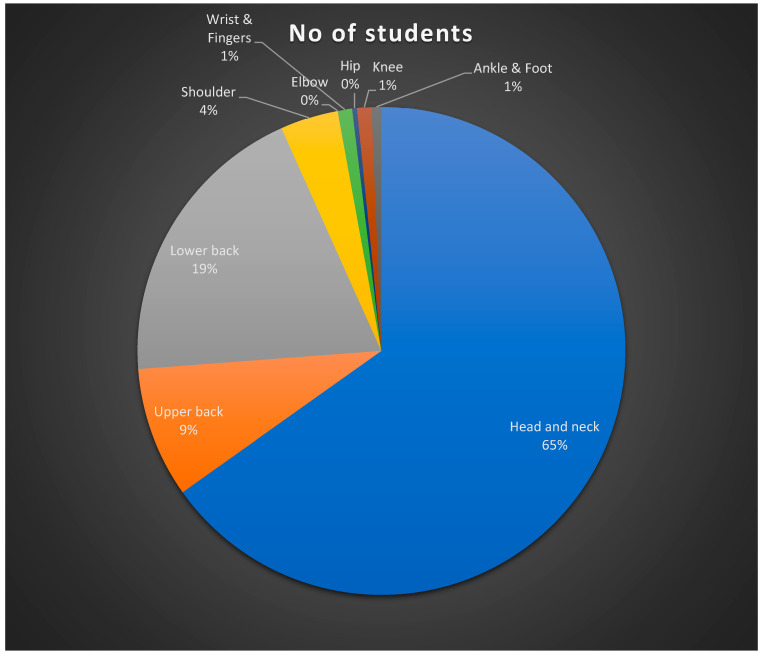
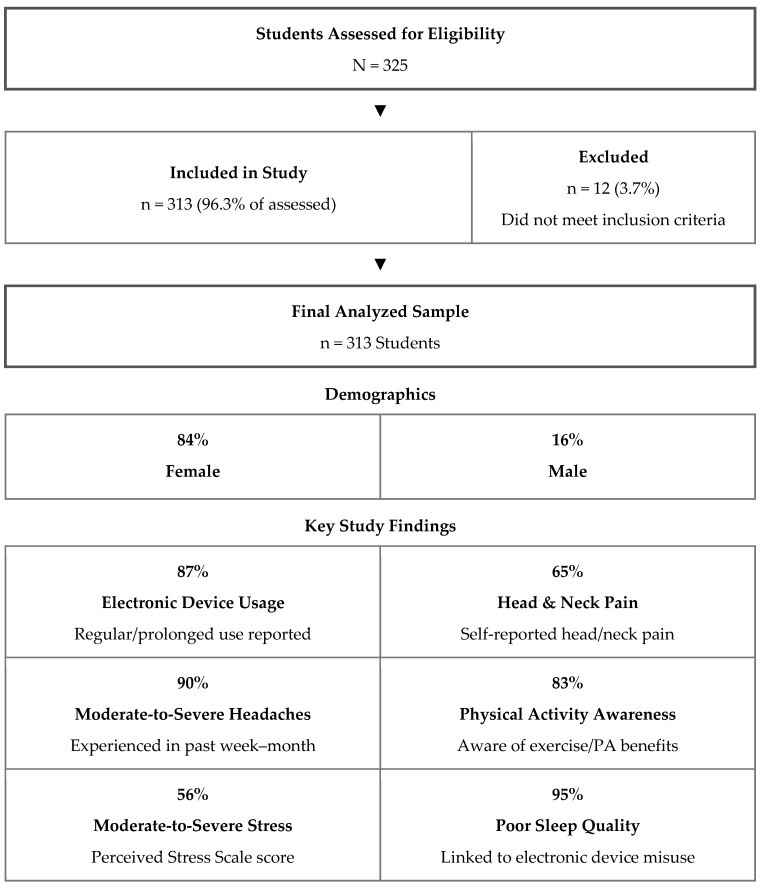
The current study included 325 participants, of whom 12 were excluded based on the established exclusion criteria. The study included 313 eligible participants; most were female (n = 264, 84.3%). Most were aged 18–25 years (n = 298, 95.2%), predominantly single (n = 295, 94.2%), and in their third to fifth year (n = 187, 59.7%). A majority reported head and neck pain (n = 204, 65.2%), followed by lower back (n = 61, 19.5%) and other areas (n = 48, 15.3%) (Table 1) and (Figure 1). More than half reported moderate-to-severe perceived stress (n = 197, 56.5%).
Table 1: Demographic characteristics of the respondents (N = 313).
| Characteristic | n | % |
|---|---|---|
| Gender | ||
| Male | 49 | 15.7 |
| Female | 264 | 84.3 |
| Age (Years) | ||
| 18–21 | 176 | 56.2 |
| 22–25 | 122 | 39.0 |
| 26–30 | 10 | 3.2 |
| 31 and above | 5 | 1.6 |
| Marital status | ||
| Single | 295 | 94.2 |
| Married | 18 | 5.8 |
| Academic Year | ||
| First | 53 | 16.9 |
| Second | 45 | 14.4 |
| Third | 50 | 16.0 |
| Fourth | 89 | 28.4 |
| Fifth year or above | 48 | 15.3 |
| Postgraduate | 28 | 8.9 |
| BMI Categories | ||
| cervicogenic headahce | 41 | 13.1 |
| Normal weight | 208 | 66.5 |
| Over weight | 52 | 16.6 |
| Obese | 12 | 3.8 |
| Region in Saudi Arabia | ||
| Southern | 39 | 12.5 |
| Central | 37 | 11.8 |
| Eastern | 14 | 4.5 |
| Western | 60 | 19.2 |
| Northern | 163 | 52.1 |
| Painful body regions | ||
| Head and neck | 204 | 65.2 |
| Upper back | 27 | 8.6 |
| Lower back | 61 | 19.5 |
| Shoulder | 12 | 3.8 |
| Elbow | 0 | 0 |
| Wrist & Fingers | 3 | 1.0 |
| Hip | 1 | 0.3 |
| Knee | 3 | 1.0 |
| Ankle & Foot | 2 | 0.6 |
| Duration of the problem | ||
| Less than a week | 24 | 7.7 |
| 1 week to 1 month | 82 | 26.2 |
| 2 months to 6 months | 100 | 31.9 |
| 7 months to 1 year | 29 | 9.3 |
| more than 1 year | 78 | 24.9 |
| Perceived stress level | ||
| Mild | 136 | 43.5 |
| Moderate | 150 | 47.9 |
| Severe | 27 | 8.6 |
For the purpose of examining associations with self-reported cervicogenic-type head and neck pain, only participants who reported head and neck pain (n = 204, 65.2%) were included in subsequent analyses (Table 2, Table 3, Table 4 and Table 5), and Figure 2 presents a flowchart of participant recruitment and characteristics for the cross-sectional study. Participants reporting pain exclusively in other regions were not classified as having possible CGH and were excluded from these analyses. Among those with head and neck pain, the most used devices were smartphones and tablets (88.2%), and 159 participants (77.9%) reported using devices for more than 4 h daily.
Table 2: Electronic device usage among students with head and neck pain (n = 204).
| Electronic Devices Used (Daily) | n (n = 204) | % |
|---|---|---|
| Smartphone | 132 | 64.7 |
| Tablet device (Tablet or iPad) | 48 | 23.5 |
| Computer | 23 | 11.3 |
| Smart TV | 1 | 0.5 |
| Primary devices use duration (hours/day) | ||
| Less than 1 h | 2 | 1.0 |
| 1–2 h | 9 | 4.4 |
| 3–4 h | 34 | 16.7 |
| More than 4 h | 159 | 77.9 |
| All devices use duration (hours/day) | ||
| Less than 1 h | 6 | 2.9 |
| 1–2 h | 15 | 7.4 |
| 3–4 h | 24 | 11.8 |
| More than 4 h | 159 | 77.9 |
| Rate of use per session | ||
| Continuously | 117 | 57.4 |
| Without stopping | 11 | 5.4 |
| Interrupted | 75 | 36.8 |
| I don’t use devices continuously | 1 | 0.5 |
Table 3: Headache patterns and characteristics after electronic device use (n = 204).
| Headache Severity (Past Week/Months) | n (n = 204) | % |
|---|---|---|
| 1–3 (mild pain) | 19 | 9.3 |
| 4–6 (moderate pain) | 105 | 51.5 |
| 7–10 (severe pain) | 80 | 39.2 |
| Headache duration | ||
| Less than 30 min | 73 | 35.8 |
| 31 min to 1 h | 55 | 27.0 |
| 1–2 h | 42 | 20.6 |
| More than 2 h | 34 | 16.7 |
| Headache medications (last 30 days) | ||
| 1–5 days | 78 | 38.2 |
| 6–10 days | 11 | 5.4 |
| More than 10 days | 12 | 5.9 |
| I do not take any pills | 103 | 50.5 |
| Duration without medicaion | ||
| Less than 30 min | 113 | 55.4 |
| 31 min to 1 h | 0 | 20.6 |
| 1–2 h | 42 | 24.0 |
| More than 2 h | 49 | 55.4 |
| Headache location | ||
| Left/Right side | 57 | 27.9 |
| Both sides | 42 | 20.6 |
| Forehead | 64 | 31.4 |
| Back of the head | 41 | 20.1 |
| Type of headache | ||
| Throbbing or pulsating | 58 | 28.4 |
| Pressing or squeezing | 59 | 28.9 |
| Sharp or stabbing | 13 | 6.4 |
| Every attack with different pattern | 74 | 36.3 |
| Triggers/worsening factors | ||
| Exercises | 0 | 0.0 |
| Light exposure | 68 | 33.3 |
| Noise | 98 | 48.0 |
| Other | 38 | 18.6 |
Table 4: Physical activity and sleep quality among students with head and neck pain (n = 204).
| Primary Treatment for Headache/Neck Pain | Number (n = 204) | Percentage (%) |
|---|---|---|
| Rest | 164 | 80.4 |
| Consulting Doctor | 9 | 4.4 |
| Physical Therapy | 18 | 8.8 |
| Other | 13 | 6.4 |
| Physical activity frequency | ||
| Always | 34 | 16.7 |
| Usually | 58 | 28.4 |
| Sometimes | 77 | 37.7 |
| Never | 35 | 17.2 |
| Regular exercise | ||
| Always | 30 | 14.7 |
| Usually | 42 | 20.6 |
| Sometimes | 74 | 36.3 |
| Never | 58 | 28.4 |
| Exercise days per week? | ||
| One day | 86 | 42.2 |
| 2–3 days | 71 | 34.8 |
| 4–6 days | 35 | 17.2 |
| Everyday | 12 | 5.9 |
| Exercise duration per day | ||
| Less than 30 min | 94 | 46.1 |
| 31–60 min | 69 | 33.8 |
| 61–120 min | 39 | 19.1 |
| More than 120 min | 2 | 1.0 |
| Does exercise worsen headache? | ||
| Always | 17 | 8.3 |
| Usually | 33 | 16.2 |
| Sometimes | 68 | 33.3 |
| Never | 86 | 42.2 |
| Known physical therapy measures | ||
| TENS | 13 | 6.4 |
| ULTRA | 6 | 2.9 |
| Stretching | 81 | 39.7 |
| Exercise | 76 | 37.3 |
| Strengthening | 7 | 3.4 |
| Patient Education | 17 | 8.3 |
| Other | 4 | 2.0 |
| Sleep Quality (PSQI score) | ||
| Normal Sleep Quality(Less than 5) | 0 | 0.0 |
| Moderate Sleep Quality (5 to 10) | 10 | 4.9 |
| Poor Sleep Quality(more than 10) | 194 | 95.1 |
Table 5: Chi-square associations between headache severity and key variables (n = 204).
| Variable | Mild Pain(0–3) | Moderate Pain (4–6) | Severe Pain(7–10) | Chi-Square | p | |||
|---|---|---|---|---|---|---|---|---|
| Perceived stress level | ||||||||
| Mild | 11 | 13.3 | 51 | 61.4 | 21 | 25.3 | 16.684 a | 0.002 * |
| Moderate | 4 | 4.1 | 47 | 48.0 | 47 | 48.0 | ||
| Severe | 4 | 17.4 | 7 | 30.4 | 12 | 52.2 | ||
| Neck pain/headache after prolonged device use | ||||||||
| Always | 3 | 5.6 | 28 | 51.9 | 23 | 42.6 | 26.723 a | 0.000 * |
| Usually | 4 | 4.9 | 43 | 52.4 | 35 | 42.7 | ||
| Sometimes | 7 | 11.9 | 32 | 54.2 | 20 | 33.9 | ||
| Never | 5 | 55.6 | 2 | 22.2 | 2 | 22.2 | ||
| Headache start from neck and spread to the head/eyes | ||||||||
| Always | 0 | 0.0 | 27 | 37.8 | 28 | 62.2 | 23.370 a | 0.001 * |
| Usually | 2 | 3.8 | 29 | 55.8 | 21 | 40.4 | ||
| Sometimes | 11 | 15.1 | 38 | 52.1 | 24 | 32.9 | ||
| Never | 6 | 17.6 | 21 | 61.8 | 7 | 20.6 | ||
| Exercise days per week? | ||||||||
| One day | 6 | 7.0 | 43 | 50.0 | 37 | 43.0 | 12.290 a | 0.056 * |
| 2–3 days | 6 | 8.5 | 41 | 57.7 | 24 | 33.8 | ||
| 4–6 days | 3 | 8.6 | 15 | 42.9 | 17 | 48.6 | ||
| Everyday | 4 | 33.3 | 6 | 50.0 | 2 | 16.7 | ||
| Does exercise worsen headache? | ||||||||
| Always | 1 | 5.9 | 10 | 58.8 | 6 | 35.3 | 17.988 a | 0.006 * |
| Usually | 1 | 3.0 | 16 | 48.5 | 16 | 48.5 | ||
| Sometimes | 3 | 4.4 | 29 | 42.6 | 36 | 52.9 | ||
| Never | 14 | 16.3 | 50 | 58.1 | 22 | 25.6 | ||
| Medication use (last 30 days) | ||||||||
| 1–5 days | 1 | 1.3 | 40 | 51.3 | 37 | 47.4 | 31.820 a | 0.000 * |
| 6–10 days | 0 | 0.0 | 1 | 9.1 | 10 | 90.9 | ||
| More than 10 days | 0 | 0.0 | 7 | 58.3 | 5 | 41.7 | ||
| I do not take any pills | 18 | 17.5 | 57 | 55.3 | 28 | 27.2 | ||
| Headache duration without medication) | ||||||||
| Less than 30 min | 16 | 14.2 | 62 | 54.9 | 35 | 31.0 | 20.976 a | 0.000 * |
| 31 min to 1 h | 0 | 0.0 | 0 | 0.0 | 0 | 0.0 | ||
| 1–2 h | 1 | 2.4 | 27 | 64.3 | 14 | 33.3 | ||
| More than 2 h | 2 | 4.1 | 16 | 32.7 | 31 | 63.3 | ||
| Sleep Quality | ||||||||
| Moderate Sleep Quality (5–10) | 3 | 30.0 | 5 | 50.0 | 2 | 20.0 | 5.826 a | 0.044 * |
| Poor (>10) | 16 | 8.2 | 100 | 51.5 | 78 | 40.2 | ||
* p < 0.05 (statistically significant). a Chi-square values shown for first category only within each grouping variable.
A significant number (90.7%) reported moderate-to-severe headaches over the past week to a month. Approximately half (50%) used headache medications, while 55.4% could tolerate a headache without medication for less than 30 min. None reported headaches after exercising. Light exposure and noise were the most common headache-worsening factors (Table 3).
Table 4 shows 80.4% selected rest as the primary treatment. Only 15% engaged in regular exercise; 46% exercised less than 30 min per day. 4.9% had moderate sleep quality (PSQI 5–10), and 95.1% had poor sleep quality (PSQI > 10).
Chi-square analyses identified significant associations between CGH severity and: perceived stress (p = 0.002), prolonged device use (p < 0.001), headache radiating from neck to head/eyes (p = 0.001), exercise duration (p = 0.056), exercise worsening headache (p = 0.006), medication use (p < 0.001), headache tolerance without medication (p < 0.001), and sleep quality (p = 0.044) (Table 5).
4. Discussion
CGH is prevalent among students worldwide, affecting both physical and psychological well-being [ref. 6,ref. 26]. This study investigated the relationship between prolonged use of electronic devices, levels of physical activity, medication use, sleep quality, and self-reported cervicogenic-type head and neck pain among college students in Saudi Arabia. The one-month self-reported prevalence of head and neck pain was 65%. Given the cross-sectional design, no causal inferences can be drawn. The higher prevalence of self-reported head and neck pain observed in third to fifth year students may reflect the cumulative exposure to prolonged device use and elevated academic stress during this period, though the cross-sectional design precludes any causal interpretation. In addition, it should be noted that students in the third to fifth years of study are inherently subject to greater academic pressure and cognitive demands, which may independently elevate stress, reduce sleep quality, and increase sedentary device use, all of which are associated with headache regardless of cervicogenic etiology. Without a headache-free comparison group drawn from a similar academic population, we cannot determine whether the observed associations are specific to CGH or reflect the general profile of senior university students.
The demographic composition of our sample warrants careful consideration when interpreting these findings. Female students constituted 84.3% of respondents, which is markedly disproportionate relative to the gender distribution of the Saudi university student population as a whole (approximately 50% female according to national higher education statistics). This imbalance likely reflects the differential response propensity of female students, who may have been more willing to engage with a health-focused online questionnaire and may have amplified the observed prevalence of head and neck pain, as headache disorders, including migraine, are known to be more prevalent in women, partly due to hormonal mechanisms [ref. 27]. Additionally, gender-specific psychological stressors might account for the observed differences between the genders [ref. 26].
Our findings align with existing research that indicates a correlation between excessive electronic device usage and CGH disorders [ref. 28,ref. 29]. Students who used electronic devices for 4 or more hours daily were more frequently represented in the moderate-to-severe headache group than those reporting less than one hour of daily use. While this is consistent with prior literature linking prolonged device exposure to cervical strain and headache [ref. 30], the observed pattern cannot be interpreted causally given the cross-sectional design. Additionally, we found a strong association between physical activity and headaches, consistent with prior research indicating that exercise may help prevent headaches [ref. 31]. Potential mechanisms include stress reduction, endorphin release, and improved sleep quality [ref. 32,ref. 33]. This study is limited by its cross-sectional design and reliance on self-reported data. Additionally, we did not examine other factors, such as mental health, coffee intake, or diet. The strengths of this research include a substantial response rate and a thorough assessment of multiple facets associated with CGHs. These findings suggest that excessive electronic device use and physical inactivity are associated with greater self-reported head and neck pain severity among college students. Whether targeted interventions addressing these behaviors would reduce the occurrence of CGH requires confirmation through future longitudinal or experimental studies.
The mechanisms by which prolonged electronic device use may contribute to cervicogenic-type headache involve an interconnected cascade of biomechanical and neurophysiological processes. At the structural level, sustained forward head posture characteristic of smartphone and tablet use increases the effective gravitational load on the cervical spine from approximately 5 kg in neutral alignment to an estimated 27 kg at 45 degrees of neck flexion [ref. 34]. This compressive load accelerates fatigue in the cervical extensor musculature and promotes adaptive shortening of the suboccipital muscles, which contain a high density of muscle spindles that project directly to the trigeminocervical nucleus caudalis (TCC). At the neurophysiological level, sustained nociceptive input from sensitized cervical structures, including the C1–C3 facet joints, upper cervical myofascia, and dural afferents, converges on second-order neurons in the TCC. This convergence underpins the referral of cervical pain to the frontotemporal and periorbital regions and facilitates peripheral sensitization of cervical afferents. With repeated or chronic activation, central sensitization may develop, characterized by lowered pain thresholds, expanded receptive fields, and heightened sensitivity to normally innocuous stimuli such as light and noise, findings reflected in our results, in which light exposure and noise were the most frequently reported headache-worsening factors. Physical inactivity, documented in our sample (46% exercising less than 30 min daily), may further perpetuate these mechanisms by reducing endorphin-mediated descending pain inhibition and impairing sleep architecture itself, a modulator of central pain sensitization. This mechanistic chain, from postural load through peripheral and central sensitization to headache generation, provides a coherent physiological rationale for the associations observed in the present study and aligns with the shared sensitization model recently proposed across headache subtypes [ref. 3,ref. 4].
Over the past decade, smartphones have become integral to our daily lives, resulting in a significant rise not only in ownership but also in prolonged sedentary postures, which may lead to musculoskeletal issues [ref. 35]. Extended static positioning while using a smartphone can lead to spinal misalignment, pain, and discomfort by increasing cervical flexion, which may also exacerbate thoracolumbar pain by altering spinal curvatures and increasing activation of both contractile and non-contractile tissues [ref. 34]. Kim and Kim (2015) indicated that the cervical area is the most susceptible to adverse effects associated with smartphone usage [ref. 36]. Inal and Serel Arslan (2021) indicated that smartphone addiction may lead to detrimental postural patterns, subsequently contributing to shoulder and upper extremity pain among university students [ref. 37]. Lee (2016) reported diminished neck muscle endurance and elevated Neck Disability Index scores among university students associated with extended smartphone use [ref. 38]. It is important to acknowledge that much of the electronic device use reported by college students serves academic purposes, such as reviewing lecture notes, reading e-books, and attending online classes. The biomechanical posture adopted during academic device use (e.g., cervical flexion over a tablet or phone screen) may not differ substantially from that assumed when reading a physical textbook. Future studies should distinguish between academic and recreational device use and assess whether the nature of the task, the duration of static posture, or the type of device modifies the association with cervicogenic-type headache.
We demonstrated high levels of impaired sleep quality, with 95.1% exhibiting poor sleep quality (PSQI > 10). Sleep disturbances are more prevalent among youth due to the digitization of lifestyles [ref. 39]. Furthermore, the complete absence of participants with normal sleep quality (PSQI < 5) is an unexpected finding. While poor sleep is highly prevalent among university students and has been consistently associated with excessive screen time [ref. 40,ref. 41], a 0% rate of normal sleep is unlikely to reflect the true population distribution and may reflect a self-selection effect, whereby students experiencing the most pronounced symptoms were most motivated to participate.
Given the observational design of this study, which was limited to identifying associations rather than establishing causal pathways, programs targeting electronic device overuse and physical inactivity should be considered exploratory rather than evidence-based interventions. Confirmatory longitudinal research is necessary before firm recommendations can be made. The connections between possible triggers, such as stress, sleep problems, food habits, and headache outcomes over time, should be further investigated by longitudinal studies. Examining how variables such as age, gender, comorbidities, and other factors can influence the development of individualized treatment plans is also crucial. Intervention trials are necessary to examine the long-term effects of lifestyle changes on headache patterns, such as exercise, stress reduction, sleep hygiene, and diet. This research may clarify the best “doses” and combinations of non-pharmacological headache management and prevention techniques.
5. Limitations
The cross-sectional design limits our ability to determine causal relationships or temporal associations. The absence of a headache-free control group limits our ability to determine whether the observed associations are specific to cervicogenic headaches or reflect general characteristics of college students. The inherently elevated stress levels associated with university study, particularly in the third to fifth years, may independently account for the patterns observed, irrespective of headache status. The primary classification of CGH was based on self-reported co-occurrence of head and neck pain rather than ICHD-3 clinical criteria. As a result, the true proportion of participants who meet formal CGH diagnostic criteria is unknown, and the sample may include individuals with migraine, tension-type headache, or mixed presentations. This limits the diagnostic specificity of our findings and represents the most significant methodological constraint of the current study. We did not assess other potentially significant factors such as caffeine intake, dietary triggers, or smoking. The study has several notable sampling limitations. First, 84.3% of participants were female, which is disproportionate relative to the general Saudi university student population and likely inflated the estimated prevalence of head and neck pain. Second, not a single participant reported normal sleep quality (PSQI score < 5), a finding that almost certainly reflects a self-selection effect rather than a true population characteristic. Participants were recruited via convenience sampling from a limited number of universities, introducing selection bias and limiting the representativeness of the estimated prevalence. The observed rate of 65.2% should therefore be considered a sample-specific figure rather than a population-level prevalence estimate for Saudi university students. Future studies employing stratified random sampling across a nationally representative range of institutions are needed to produce reliable prevalence estimates. The absence of formal psychometric validation for the non-PSQI questionnaire components is also acknowledged as a limitation.
6. Conclusions
This study identifies significant associations between self-reported cervicogenic-type head and neck pain and excessive electronic device use, physical inactivity, medication reliance, and poor sleep quality among Saudi college students. These associations highlight potential targets for future interventional research. However, given the cross-sectional design, no causal inferences can be drawn. Longitudinal studies and randomized controlled trials are needed to determine whether modifying these behaviors reduces the burden of cervicogenic-type headache in this population.
Recommendations
Based on the associations identified in this study, the following research and practice directions are proposed:
- Future longitudinal studies should investigate whether reducing daily electronic device use is prospectively associated with lower incidence or severity of cervicogenic-type headache among college students.
- Intervention trials examining the effect of structured physical activity programs on self-reported head and neck pain in device-heavy student populations are warranted.
- Universities may consider developing ergonomic awareness programs; however, the effectiveness of these programs in reducing CGH should be evaluated through controlled study designs before widespread implementation.
- Future research should incorporate objective measures of device use, clinically verified CGH diagnoses (ICHD-3 criteria), and actigraphy-based sleep assessment to strengthen the evidence base.
- Dietary habits, psychosocial determinants, and quality of life should be assessed in future multifactorial studies to develop a comprehensive understanding of the contributing factors to CGH.
References
- R. Banerjee. Effectiveness of instrument assisted soft tissue mobilisation technique on cervicogenic headache in smartphone addicted college students: A randomized clinical trial. Int. J. Res. Anal. Rev. (IJRAR), 2022
- E. Anarte-Lazo, G.F. Carvalho, A. Schwarz, K. Luedtke, D. Falla. Differentiating migraine, cervicogenic headache and asymptomatic individuals based on physical examination findings: A systematic review and meta-analysis. BMC Musculoskelet. Disord., 2021. [DOI | PubMed]
- M. Deodato, A. Granato, J. Del Frate, M. Martini, P. Manganotti. Differences in musculoskeletal dysfunctions and in postural alterations between chronic migraine and chronic tension type headache: A cross-sectional study. J. Bodyw. Mov. Ther., 2024. [DOI | PubMed]
- S. Ashina, L. Bendtsen, A.C. Lyngberg, R.B. Lipton, N. Hajiyeva, R. Jensen. Prevalence of neck pain in migraine and tension-type headache: A population study. Cephalalgia, 2015. [DOI | PubMed]
- K. Shimohata, K. Hasegawa, O. Onodera, M. Nishizawa, T. Shimohata. The Clinical Features, Risk Factors, and Surgical Treatment of Cervicogenic Headache in Patients with Cervical Spine Disorders Requiring Surgery. Headache J. Head Face Pain, 2017. [DOI]
- Y. Xu, Y. Gao, L. Jiang, L. Wu, J. Yin, Z. Yang, Y. Dong. Global trends in research on cervicogenic headache: A bibliometric analysis. Front. Neurol., 2023. [DOI | PubMed]
- M.H. Alshareef, B.H. Alsharif. Headache prevalence and its associated factors in Makkah, Saudi Arabia. Biomedicines, 2023. [DOI | PubMed]
- R. Puntumetakul, T. Chatprem, P. Saiklang, S. Phadungkit, W. Kamruecha, S. Sae-Jung. Prevalence and associated factors of clinical myelopathy signs in smartphone-using university students with neck pain. Int. J. Environ. Res. Public Health, 2022. [DOI | PubMed]
- A.V. Ertemel, E. Ari. A marketing approach to a psychological problem: Problematic smartphone use on adolescents. Int. J. Environ. Res. Public Health, 2020. [DOI | PubMed]
- V. Steiner-Hofbauer, B. Schrank, G. Mittmann. Screen time and quality of life in Austrian young adults. J. Public Health, 2025. [DOI]
- A. Hijab, A. Fatima, T. Suleman, R. Naseer. Association of smartphone addiction with text neck syndrome among medical students of Lahore. Pak. J. Phys. Ther., 2019. [DOI]
- V. Ramalingam, A. Subramaniam. Prevalence and associated risk factors of forward head posture among university students. Indian J. Public Health Res. Dev., 2019. [DOI]
- W. Wilaiwan, J. Rohitrattana, N. Taneepanichskul, V. Danthamrongkua, M.G. Robsond, W. Siriwong. Health Effects of Using Mobile Communication Devices: A case Study in Senior Citizens, Thailand. Environ. Asia, 2018
- A. Alshraeef, O. Alhazmi. The Use of Digital Devices in The Study Increases Migraine Incidence Among Medical Students, Kau, Saudi Arabia. J. Organ. Behav. Res., 2020. [DOI]
- H.K. Falkenberg, T.R. Johansen, H.M. Thorud. Headache, eyestrain, and musculoskeletal symptoms in relation to smartphone and tablet use in healthy adolescents. Scand. J. Optom. Vis. Sci., 2020. [DOI]
- R.F. Alkahtani, S.S. Alrumaih, S.S. Algezlan, R.R. Almutairi, B.A. Alturki, R.M. Alanazi, F.A. Alateeq. The Impact of Migraine Disease on Work Productivity and Quality of Life Among the Adults in Riyadh, Saudi Arabia. Cureus, 2022. [DOI | PubMed]
- P.R. Martin, J. Reece, M. Callan, C. MacLeod, A. Kaur, K. Gregg, P.J. Goadsby. Behavioral management of the triggers of recurrent headache: A randomized controlled trial. Behav. Res. Ther., 2014. [DOI | PubMed]
- K.R. Evenson, N. Alhusseini, C.C. Moore, M.M. Hamza, A. Al-Qunaibet, S. Rakic, R.F. Alsukait, C.H. Herbst, R. Al-Ahmed, H.M. Al-Hazzaa. Scoping review of population- based physical activity and sedentary behavior in Saudi Arabia. J. Phys. Act. Health, 2023. [DOI | PubMed]
- E.A. Abou Hashish, N.Y. Baatiah, A.H. Bashaweeh, A.M. Kattan. The online learning experience and reported headaches associated with screen exposure time among Saudi health sciences students during the COVID-19 pandemic. BMC Med. Educ., 2022. [DOI | PubMed]
- R. La Touche, J. Fierro-Marrero, I. Sánchez-Ruíz, B. Rodríguez de Rivera-Romero, C.D. Cabrera-López, S. Lerma-Lara, N. Requejo-Salinas, F. de Asís-Fernández, I. Elizagaray-García, J. Fernández-Carnero. Prescription of therapeutic exercise in migraine, an evidence-based clinical practice guideline. J. Headache Pain, 2023. [DOI | PubMed]
- A.Y. Alqassim, A.A. Alharbi, M.A. Muaddi, A.M. Makeen, W.H. Shuayri, A.M. Safhi, A.Y. Alfifa, I.H. Samily, N.A. Darbashi, M.A. Otayn. Associations of Electronic Device Use and Physical Activity with Headaches in Saudi Medical Students. Medicina, 2024. [DOI | PubMed]
- H.A. Qashqari, A.H. Alansari, H.N. Alabdali, R.M. Aljabri, R.F. Alsayegh, R.N. Alotaibi, M.A. Alsayed, A. Alkhotani. Associations of electronic devices use and physical activity with headaches among the adult population in Makkah City, Saudi Arabia. Int. J. Med. Dev. Ctries., 2024. [DOI]
- R.K. Dewi, F. Efendi, E.M.M. Has, J. Gunawan. Adolescents’ smartphone use at night, sleep disturbance, and depressive symptoms. Int. J. Adolesc. Med. Health, 2018. [DOI | PubMed]
- R.A. Alqarni, N.S. Almutairi, A.S. Albalawi, M.B. Alsulami, M.A. Alhashrani, K.A. Abdulrahman. Test-retest reliability of the Arabic version of the Pittsburgh Sleep Quality Index. Medicine, 2025. [DOI | PubMed]
- I. Moussa-Chamari, A. Farooq, M. Romdhani, J.A. Washif, U. Bakare, M. Helmy, R.A. Al-Horani, P. Salamh, N. Robin, O. Hue. The relationship between quality of life, sleep quality, mental health, and physical activity in an international sample of college students: A structural equation modeling approach. Front. Public Health, 2024. [DOI | PubMed]
- S.K. Sharma, U.U. Ukey. Epidemiology of Primary Headache and Its Associated Psychosocial Factors Amongst Undergraduate Medical Students: A Cross-Sectional Study from the Vidarbha Region. Cureus, 2023. [DOI | PubMed]
- J. Olesen. Headache Classification Committee of the International Headache Society (IHS) The International Classification of Headache Disorders, 3rd edition. Cephalalgia, 2018. [DOI]
- A. Milde-Busch, R. von Kries, S. Thomas, S. Heinrich, A. Straube, K. Radon. The association between use of electronic media and prevalence of headache in adolescents: Results from a population-based cross-sectional study. BMC Neurol., 2010. [DOI | PubMed]
- I. Montagni, E. Guichard, C. Carpenet, C. Tzourio, T. Kurth. Screen time exposure and reporting of headaches in young adults: A cross-sectional study. Cephalalgia, 2016. [DOI | PubMed]
- K. Kaur, B. Gurnani, S. Nayak, N. Deori, S. Kaur, J. Jethani, D. Singh, S. Agarkar, J.R. Hussaindeen, J. Sukhija. Digital Eye Strain—A Comprehensive Review. Ophthalmol. Ther., 2022. [DOI | PubMed]
- E. Varkey, Å. Cider, J. Carlsson, M. Linde. Exercise as migraine prophylaxis: A randomized study using relaxation and topiramate as controls. Cephalalgia, 2011. [DOI | PubMed]
- A. Pilozzi, C. Carro, X. Huang. Roles of β-Endorphin in Stress, Behavior, Neuroinflammation, and Brain Energy Metabolism. Int. J. Mol. Sci., 2020. [DOI | PubMed]
- S.M. Abd El-Kader, O.H. Al-Jiffri. Aerobic exercise affects sleep, psychological wellbeing and immune system parameters among subjects with chronic primary insomnia. Afr. Health Sci., 2020. [DOI | PubMed]
- J.M. Barrett, C. McKinnon, J.P. Callaghan. Cervical spine joint loading with neck flexion. Ergonomics, 2020. [DOI | PubMed]
- Z.A. Ratan, A.M. Parrish, S.B. Zaman, M.S. Alotaib, H. Hosseinzadeh. Smartphone addiction and associated health outcomes in adult populations: A systematic review. Int. J. Environ. Res. Public Health, 2021. [DOI | PubMed]
- H.J. Kim, J.S. Kim. The relationship between smartphone use and subjective musculoskeletal symptoms and university students. J. Phys. Ther. Sci., 2015. [DOI | PubMed]
- O. Inal, S. Serel Arslan. Investigating the effect of smartphone addiction on musculoskeletal system problems and cognitive flexibility in university students. Work, 2021. [DOI | PubMed]
- H. Lee. Neck pain and functioning in daily activities associated with smartphone usage. J. Korean Phys. Ther., 2016. [DOI]
- V. Kubiszewski, R. Fontaine, E. Rusch, E. Hazouard. Association between electronic media use and sleep habits: An eight-day follow-up study. Int. J. Adolesc. Youth, 2014. [DOI]
- M.O. Mireku, M.M. Barker, J. Mutz, I. Dumontheil, M.S. Thomas, M. Röösli, P. Elliott, M.B. Toledano. Night-time screen-based media device use and adolescents’ sleep and health-related quality of life. Environ. Int., 2019. [DOI | PubMed]
- M. Samaha, N.S. Hawi. Relationships among smartphone addiction, stress, academic performance, and satisfaction with life. Comput. Hum. Behav., 2016. [DOI]