
Molecular dynamics of inflammation resolution: therapeutic implications
Abstract
Inflammation is a critical part of innate immune response that is essential for exclusion of harmful stimuli and restoration of tissue homeostasis. Nonetheless, failure to resolve inflammation results in chronic inflammatory conditions, including autoimmune diseases. Conventionally, resolution of inflammation was deemed a passive process; however, evidence indicates that it entails active, highly regulated molecular and cellular events involving efferocytosis-driven macrophage reprogramming, post-transcriptional regulatory mechanisms and the production of specialized pro-resolving mediators (SPMs). These processes collectively restore tissue homeostasis and prevent chronic inflammation. Emerging therapeutic approaches targeting these pathways demonstrate promising results in preclinical studies and clinical trials, enhancing resolution and improving overall disease outcome. This resulted in a paradigm shift from conventional anti-inflammatory strategies to resolution-focused treatment. Yet, challenges remain due to the complexity of resolution mechanisms and tissue-specific differences. This review summarizes current advances in inflammation resolution, emphasizing emerging concepts of resolution pharmacology. By employing endogenous mechanisms facilitating resolution, novel therapeutic applications can effectively manage several chronic inflammatory disorders.
Article type: Review Article
Keywords: acute inflammation, resolution, specialized pro-resolving molecules, proinflammatory pathways, resolution pharmacology
Affiliations: Department of Biological Sciences, Faculty of Science, Concordia University of Edmonton, Edmonton, AB, Canada; Department of Microbiology, Faculty of Medicine, Northern Border University, Arar, Saudi Arabia; Department of Pathology, Faculty of Medicine, Northern Border University, Arar, Saudi Arabia; Department of Pharmacology, Faculty of Medicine, Northern Border University, Arar, Saudi Arabia; Department of Family and Community Medicine, Faculty of Medicine, Northern Border University, Arar, Saudi Arabia; Department of Anatomy, Faculty of Medicine, Northern Border University, Arar, Saudi Arabia
License: Copyright © 2025 Soliman, Soliman, Shah, Baig, Gouda, Alenezi, Alenezy, Hegazy, Jan and Eltom. CC BY 4.0 This is an open-access article distributed under the terms of the Creative Commons Attribution License (CC BY). The use, distribution or reproduction in other forums is permitted, provided the original author(s) and the copyright owner(s) are credited and that the original publication in this journal is cited, in accordance with accepted academic practice. No use, distribution or reproduction is permitted which does not comply with these terms.
Article links: DOI: 10.3389/fcell.2025.1600149 | PubMed: 40406415 | PMC: PMC12095172
Relevance: Moderate: mentioned 3+ times in text
Full text: PDF (18.4 MB)
1 Introduction
Inflammation is a physiological immune response triggered upon injury and/or infection to eliminate harmful stimuli, promote tissue repair and establish immune memory for future encounters (ref. Kumar et al., 2004). The acute inflammatory response involves a complex and coordinated series of molecular and cellular events, including release of soluble mediators such as chemokines, cytokines, free radicals and eicosanoids, regulating its initiation and resolution (ref. Rankin, 2004). Traditionally, the termination of inflammatory responses was mainly credited to passive dissipation of pro-inflammatory inducers; however, the expanding literature implies inflammation resolution to be highly regulated. Canon of Medicine, compiled in 1025 by the physician-philosopher Avicenna, was first to highlight the concept of active resolution of inflammation, (ref. Sina, 2005). In the late 1970s, Kumar et al reemphasized resolution as a distinctive process mediated by cellular and soluble effectors with well-characterized events (ref. Kumar et al., 2021). Following that, key insights into cellular dynamics of inflammation resolution emerged following studies revealing that macrophages phagocytosed apoptotic polymorphonuclear cells (PMNs), as a key event in establishing resolution (ref. Savill et al., 1989). Macrophages were subsequently recognized for their role in coordinating inflammation resolution processes. This was accentuated with complete resolution as the ideal inflammatory outcome, and chronic inflammation attributed to resolution failure (ref. Cotran et al., 1999).
Discoveries of arachidonic acid metabolism and cytokine signaling enhanced our understanding of acute inflammation as a complex and biochemically driven process. The 1982 Nobel Prize was awarded to Bergström, Samuelsson and Vane for emphasizing the significance of prostaglandin biosynthesis and aspirin’s mechanism of action (ref. Vane, 1971; ref. Samuelsson, 1983). The work on arachidonic acid derivatives highlighted the role of lipid autacoids in inflammation induction and resolution (ref. Samuelsson, 1983). The discovery of lipoxins (LXs) by Serhan et al. revealed their anti-inflammatory and pro-resolving activities, such as suppressing neutrophil recruitment and enhancing clearance of tissue debris by macrophages (ref. Serhan et al., 1984; ref. Serhan, 2005), emphasizing a dual effect of LXs in limiting neutrophil activity while promoting monocyte trafficking for tissue repair. As a result, LXs are currently perceived as active mediators of tissue restoration rather than passive anti-inflammatory agents (ref. Maddox and Serhan, 1996). Additional molecules were reported over the years to be actively involved in inflammation resolution and were termed specialized pro-resolving mediators (SPMs). These mediators cemented the concept of resolution as a dynamic biologically orchestrated process crucial for restoring tissue homeostasis (ref. Panigrahy et al., 2021).
Over the past two decades, significant progress has been made in understanding the resolution of cardinal signs of inflammation: heat (calor), pain (dolor), redness (rubor), swelling (tumor) and loss of function (functio laesa) (ref. Heidland et al., 2006; ref. Tracy, 2006). Interplay between effective resolution, innate immunity and adaptive immunity was reported, where unresolved acute inflammation led to maladaptive immune responses (ref. Newson et al., 2014). This supported the idea that chronic inflammatory diseases may not only be driven by persistent pro-inflammatory processes but also by impaired resolution, with therapies aimed at activating resolution potentially guiding inflammation down a pro-resolution pathway. Unlike traditional anti-inflammatory approaches, pro-resolution strategies offer broader potential; however, challenges remain, such as defining the diverse tissue- and stimulus-specific nature of resolution pathways (ref. Fullerton and Gilroy, 2016). Additionally, while central mediators of resolution have been identified, it is uncertain whether a single pro-resolution therapy can address multiple diseases.
The literature is progressively distinguishing the terms “anti-inflammation” and “pro-resolution,” emphasizing the concept that resolution is an active process, facilitating restoration of tissue homeostasis and the transition from innate to adaptive immunity (ref. Serhan et al., 2007; ref. Buckley et al., 2014). Efforts to target pro-resolution pathways in chronic inflammatory diseases are ongoing, with new therapeutic models being explored. This evolving understanding encourages a shift in how chronic inflammation is treated, suggesting that pro-resolving agents may be as effective, or even synergistic with, or superior to, conventional anti-inflammatory drugs (ref. Fullerton and Gilroy, 2016). Although many effective anti-inflammatory treatments are available, including NSAIDs, anti-cytokine therapies and steroids, addressing underlying disease mechanisms remains a significant challenge. Diseases driven by persistent inflammation could be treated by activating pro-resolution pathways that are either pathologically suppressed or by enhancing functional pro-resolution mechanisms. To target resolution specifically, the aim should be to alter the trajectory of established inflammation-driven disease in a clinically relevant manner by leveraging endogenous “off switches,” such as signaling cascades or cellular interactions, that lead to inflammation resolution (ref. Fullerton and Gilroy, 2016). This review offers an update on the field of inflammation resolution, focusing on key molecular and cellular participants and mechanisms that influence their behavior, fate and clearance while emphasizing ongoing efforts to develop therapies targeting pro-resolution pathways.
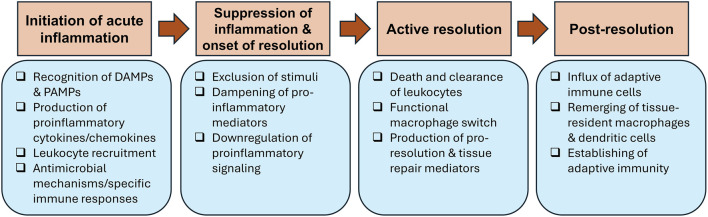
A typical acute inflammatory response and its resolution goes through four main phases that each comprises several critical events (summarized in Figure 1): 1) initiation of acute inflammation, 2) suppression of inflammation and onset of resolution, 3) active resolution and 4) post-resolution.
2 Initiation of acute inflammation
Following injury and/or infection, damage-associated molecular patterns (DAMPs) (ref. Roh and Sohn, 2018), released by necrotic cells, and pathogen-associated molecular patterns (PAMPs) (ref. Mogensen, 2009), including conserved motifs of invading pathogens, are detected by innate receptors such as toll-like receptors (TLRs) on tissue-resident cells. Recognizing DAMPs or PAMPs triggers the onset of an acute inflammatory response (ref. Medzhitov and Janeway, 2000), leading to release of various pro-inflammatory mediators facilitating cellular recruitment and modulating immune responses to clear infections (ref. Abdallah et al., 2017). Previously, we discussed mediators, cellular effectors and pathways involved during onset and peak phase of acute inflammation, and importantly demonstrated that mechanisms involved in induction of inflammation are evolutionarily conserved among cold- and warm-blooded animals (ref. Soliman and Barreda, 2023). These mechanisms involve exudation of proteins, upregulation of cell adhesion molecules on endothelial cells and influx of granulocytes (PMNs in nonspecific inflammation or eosinophils in allergic responses) (ref. Fullerton and Gilroy, 2016). Recruited immune cells act through intracellular mechanisms, such as superoxide radicals, myeloperoxidase, proteases and lactoferrins, or extracellularly via neutrophil extracellular traps (NETs) to neutralize pathogens (ref. Schmid-Schönbein, 2006). Drugs such as NSAIDs and cytokine-neutralizing antibodies, e.g., tumor necrosis factor (TNF)-specific antibodies, are frequently utilized to suppress inflammation to treat chronic inflammatory diseases (ref. Yeung et al., 2018).
3 Suppression of inflammation and onset of resolution
Inflammation resolution is triggered by effector cells that induce inhibition of pro-inflammatory profiles and transition toward tissue repair and homeostasis (ref. Buckley et al., 2014). Indeed, the process depends on the extent to which inflammatory cells have neutralized provocative stimuli (ref. Buckley et al., 2014). The transition from pro-inflammatory to anti-inflammatory profile and subsequent restoration of tissue homeostasis, traditionally referred to as resolution, is now understood to be an active process rather than a passive dissipation of inflammation (ref. Buckley et al., 2013). Initially, dampening of acute inflammation starts only once the injurious agents responsible for triggering the inflammatory response are eliminated (exclusion of the stimuli). Afterward, the production of pro-inflammatory mediators ceases, and any remaining mediators are degraded and cleared (dampening of pro-inflammatory mediators). This results in the downregulation of pro-inflammatory signaling and halting further leukocyte recruitment and edema formation.
3.1 Exclusion of stimuli
For resolution to proceed effectively, agents that triggered the inflammatory response must be cleared. We previously highlighted antimicrobial responses by which the immune system can remove bacterial infections (ref. Soliman et al., 2021; ref. Soliman and Barreda, 2022; Soliman and Barreda, 2023). These include NADPH oxidase-dependent killing by PMNs, antimicrobial peptides, phagocytosis and NETs. Additionally, leukocytes, such as neutrophils, engulf debris, clearing the injury site of dead tissue and creating pathways for angiogenesis necessary for restoring tissue repair (ref. Peiseler and Kubes, 2019). Dysregulated inflammatory responses in the case of immunodeficiency disorders (e.g., chronic granulomatous disease) have been attributed to defects in mechanisms of bacterial clearance (ref. Pollock et al., 1995), causing resolution failure. Likewise, autoimmune diseases such as rheumatoid arthritis are driven by persistent endogenous antigens (ref. Firestein, 2003).
3.2 Dampening of pro-inflammatory mediators
After exclusion of stimuli, levels of pro-inflammatory mediators (cytokines, chemokines, eicosanoids and cell adhesion molecules) must return to their pre-inflammatory baseline. The depletion of chemokines through mechanisms such as proteolytic cleavage and sequestration is essential for creating a resolving environment and halting neutrophil influx (ref. Ortega-Gómez et al., 2013). Prostaglandins contributing to vasodilation and edema formation were found to undergo catabolism during resolution (ref. Hansen et al., 1999). Leukotrienes are degraded by β-oxidation pathway, breaking down carboxyl ends of molecules into short-chain metabolites (ref. Hansen et al., 1999; ref. Freire and Van Dyke, 2013).
Proteolysis of chemokines has been shown to be a key mechanism for their depletion. Matrix metalloproteinases (MMPs), known for their role in breaking down extracellular matrix proteins during many physiological and pathological conditions, contribute to modulating activity of several bioactive molecules involved during inflammation (ref. Tam et al., 2004; ref. Dean and Overall, 2007). Levels of molecules including chemokines (ref. McQuibban et al., 2000; ref. Moelants et al., 2013), defensins (ref. Wilson et al., 1999), mannose-binding lectin (ref. Butler et al., 2002) and TNF-α (ref. Gearing et al., 1994) are controlled by MMPs during inflammation resolution. At the cellular level, macrophages regulate acute inflammatory responses by selectively cleaving chemokines via MMP-12 (ref. Dean et al., 2008). For example, macrophage-derived MMP-12 targets ELR motif in CXC chemokines, a domain essential for receptor binding, depicting these chemokines ineffective (ref. Dean et al., 2008). These findings emphasize these endogenous mechanisms clearing pro-inflammatory mediators and suggest that their dysregulation can lead to chronic inflammation. Indeed, leveraging pro-inflammatory catabolic pathways therapeutically could help shift ongoing inflammation toward resolution.
Chemokines drive cell migration via conventional G protein-coupled chemokine receptors. A subset of chemokines is recognized by a unique class of atypical chemokine receptors (ACKRs), previously referred to as decoys or chemokine-binding proteins, including chemokine-binding protein D6 and CCR5 (ref. Ariel et al., 2006; ref. Nibbs and Graham, 2013; ref. Vacchini et al., 2016). Unlike conventional receptors, ACKRs do not induce leukocyte migration because they cannot activate classical G protein-dependent signaling pathways (ref. Vacchini et al., 2016). These receptors bind ligands without triggering classical signaling pathways, acting as scavengers for pro-inflammatory signals. Instead, ACKRs sequester chemokines from the environment, which is critical for shaping chemokine gradients (ref. Nibbs and Graham, 2013). As a result, ACKRs are increasingly recognized as vital regulatory elements in chemokine networks across various physiological and pathological conditions. For example, CCR5 expressed on apoptotic neutrophils can scavenge chemokines CCL3 and CCL5 in mice (ref. Ariel et al., 2006). In Ccr5 −/− mice, CCL3 and CCL5 were elevated in peritoneal exudates during the resolution of acute peritonitis (ref. Ariel et al., 2006).
3.3 Downregulation of pro-inflammatory signaling
After removal of stimuli and lowering levels of pro-inflammatory mediators at the inflammation site, various pro-inflammatory receptor families and their signaling pathways are deactivated to prevent collateral damage from a sustained pro-inflammatory state. A failure of this process would result in a cytokine storm that can occur even in the absence of positive bacterial blood cultures (i.e., sepsis), indicating excessive and prolonged activation of the innate immune system despite eliminating the initial trigger (ref. Buckley et al., 2013). The “stop signals” of inflammation consist of negative feedback regulators. These signals counteract pro-inflammatory signaling pathways and suppress further production of pro-inflammatory mediators.
Inflammation is regulated by both transcriptional and post-transcriptional mechanisms, which control the expression of proteins involved in its initiation and resolution (ref. Sugimoto et al., 2016). While transcription is the initial step in gene expression, post-transcriptional regulation is essential for rapidly suppressing inflammation by facilitating mRNA degradation. This is particularly important because mRNA can be long-lived, and simply halting its synthesis does not immediately stop inflammation. mRNAs of pro-inflammatory cytokines are frequently controlled through mRNA decay or blocking their translation (ref. Anderson, 2008). These mechanisms protect the host from the pathological overexpression of inflammatory proteins. Many mRNAs contain adenine- or uridine-rich elements (AREs) within their 3′-untranslated regions (UTRs), which attract destabilizing factors and translational silencers (ref. Anderson, 2008). Among the ARE-binding proteins that promote mRNA destabilization are tristetraprolin (TTP) (ref. Carballo et al., 2000) and steroid receptor co-activator 3 (SRC3) (ref. Li et al., 2012). Additionally, microRNAs (miRNAs) can post-transcriptionally regulate mRNA stability and translation, limiting the expression of inflammatory mediators. Although the precise role of post-transcriptional regulation in inflammation resolution is not entirely understood, it presents exciting opportunities for pharmacological interventions to address the overproduction of inflammatory proteins (ref. Mazumder et al., 2010). Downregulators of pro-inflammatory signaling, summarized in Table 1, can be categorized into 1) anti-inflammatory mediators that can negatively regulate signaling of pro-inflammatory pathways and their activated transcription programs; 2) post-transcriptional regulation promoting mRNA degradation or inhibiting its translation; and 3) miRNAs.
TABLE 1: Inhibitors of pro-inflammatory signaling.
| Category | Inhibitory agent | Targeted pro-inflammatory pathway/biological process | References |
|---|---|---|---|
| Anti-inflammatory mediators | LRRC33 | TLR signaling and subsequent NF-κB activation | ref. Liu et al. (2013) |
| RP105 (CD180) | ref. Divanovic et al. (2005) | ||
| Deubiquitinase cylindromatosis | NF-κB | ref. Kovalenko et al. (2003) | |
| PGE2 | Expression of TLR4 | ref. Degraaf et al. (2014) | |
| Post-transcriptional regulation by binding of destabilizing agents to mRNA resulting in its degradation | TTP | Expression of GM-CSF | ref. Carballo et al. (2000) |
| Expression of IL-2 | ref. Ogilvie et al. (2005) | ||
| Expression of IL-6 | ref. Sauer et al. (2006) | ||
| Expression of iNOS | ref. Linker et al. (2005) | ||
| Expression of COX2 | ref. Phillips et al. (2004) | ||
| Expression of IFNγ | ref. Ogilvie et al. (2009) | ||
| Expression of TNF | ref. Carballo et al. (1998) | ||
| Post-transcriptional regulation by binding of destabilizing agents to mRNA, inhibiting its translation | TIA1 | Expression of TNF | ref. Piecyk et al. (2000), ref. Mukhopadhyay et al. (2009) |
| SRC3 binds to TIA1, enhancing the attachment of TIA1 to ARE | Expression of TNF, IL-6, IL-1β | ref. LI et al. (2012) | |
| GAIT complex | Expression of CCL22, CCR3, CCR4, CCR6 | ref. Piecyk et al. (2000), ref. Vyas et al. (2009) | |
| ZC3H12A | NF-κB resulting in inhibition of macrophage activation, TNF and iNOS expression | ref. Liang et al. (2008) | |
| miRNA | miR-146 | Translation of mRNA encoding IRAK1, IRAK2, TRAF6 required for NF-κB activation | ref. Mukhopadhyay et al. (2009) |
| miR-21 | Translation of pro-inflammatory tumor suppressor PD4 that inhibits IL-10 expression | ref. Sheedy et al. (2010) | |
| miR-9 | TLR4-MyD88-NF-κB | ref. Bazzoni et al. (2009) | |
| miR-155 | TLR-signaling by targeting TAB2, MyD88, IKKε, RIPK1, C/EBPβ, eNOS and NF-κB subunit p65 | ref. Tili et al. (2007), ref. Ceppi et al. (2009), ref. Tang et al. (2010), ref. Wu et al. (2014), ref. Obora et al. (2017) | |
| miR-132 | Expression of acetylcholinesterase | ref. Shaked et al. (2009) | |
| miR-223 | IKKα, attenuating TLR9/NF-κB signaling pathway in neutrophilsGranzyme B, Roquin and STAT3 | ref. He et al. (2017) | |
| miR-17 | TNF-α signaling by targeting TRAF2 and cIAP2 | ref. Akhtar et al. (2016) | |
| miR-18 | Pias3 and TNFAIP3, negatively regulating Stat3 and NF-κB signaling | ref. Brock et al. (2011) | |
| miR-23 | IL-17-mediated TNF-α production, IL-1β-induced NF-κB signaling, through targeting IKKα, TAB2 and TAB3 | ref. Zhu et al. (2012) |
AREs (adenylate- and uridylate-rich elements), COX2 (cyclooxygenase 2), CCL (CC-chemokine ligand), CCR (CC-chemokine receptor), C/EBPβ (CCAAT/enhancer-binding protein beta), GAIT (gamma-activated inhibitor of translation), GM-CSF (granulocyte-macrophage colony-stimulating factor). IFNγ (interferon gamma), IKKε (IκB kinase epsilon), and IKKα (IκB kinase alpha), IL (interleukin), iNOS (inducible nitric oxide synthase), IRAK (IL-1, receptor-associated kinases), LRRC33 (leucine-rich repeat-containing protein 33), MyD88 (myeloid differentiation primary response 88), NF-κB (nuclear factor kappa B), PD4 (programmed cell death 4), PGE2 (prostaglandin E2), RIPK1 (receptor-interacting protein kinase 1), RA (rheumatoid arthritis), CD180 (radioprotective 105), SRC3 (steroid receptor coactivator 3), STAT3 (signal transducer and activator of transcription 3), TAB (TAK1-binding proteins), TIA1 (T-cell intracellular antigen 1), TLR (Toll-like receptor), TNF (tumor necrosis factor), TNFAIP3 (TNF, alpha-induced protein 3), TRAF (TNF, receptor-associated factors), ZC3H12A (zinc finger CCCH-type containing 12A), TTP (Tristetraprolin), miR (microRNA).
4 Active resolution of inflammation
Cell death and removal of inflammatory leukocytes are the main drivers of resolution, offering a wealth of potential targets for developing pro-resolution therapeutics. Active resolution of inflammation involves: 1) death and clearance of inflammatory leukocytes; 2) functional macrophage switch; and 3) production of pro-resolution and tissue repair mediators. During resolution phase, regardless of whether the initial response was driven by PMNs, eosinophils, or lymphocytes responding to recall antigens, immune cells are cleared from inflamed tissues (ref. Buckley et al., 2014). While some inflammatory leukocytes may return to systemic circulation, many PMNs, eosinophils and lymphocytes undergo local apoptosis or necrosis, followed by engulfing apoptotic cells by monocyte-derived macrophages, a process known as efferocytosis (ref. Buckley et al., 2013). This process is governed by complex signaling pathways involving cell-to-cell receptor interactions and humoral mediators, notably bioactive lipids. After completing neutrophil apoptosis and efferocytosis, a shift towards a pro-resolution profile is triggered by effector cells including macrophages via releasing pro-resolving mediators (ref. Serhan and Savill, 2005).
4.1 Death and clearance of inflammatory leukocytes
Three primary means by which inflammatory cells can be cleared from inflammatory sites: 1) retro-transendothelial migration back into systemic circulation, 2) lymphatic drainage, facilitating their role in adaptive immunity, and 3) cell death within inflamed tissues (ref. Fullerton and Gilroy, 2016).
Many mechanisms, including autophagy, pyroptosis, necrosis, apoptosis and necroptosis mediate localized cell death (ref. Fullerton and Gilroy, 2016). Granulocytes (e.g., neutrophils) are known to have a short lifespan, though pro-inflammatory cytokines (e.g., IL-6, IL-8 and GM-CSF) enhance survival of these cells. Likewise, eosinophil endurance is promoted by IL-3, IL-5 and GM-CSF (ref. Filep, 2022). Pathways such as NF-κB enhance pro-survival molecules of granulocytes while reducing pro-apoptotic ones. Downregulating these mediators via dampening pro-inflammatory pathways is the initial step in activating pro-apoptotic pathways in inflammatory cells. The regulation of cell death pathways plays a crucial role in inflammation and its resolution, with several key mechanisms and signaling pathways influencing leukocyte survival. Inducing apoptotic pathways in inflammatory cells like PMNs, eosinophils and T helper (Th)1 lymphocytes can aid in resolving chronic inflammation. However, this strategy requires precise targeting to avoid disrupting pro-resolving and homeostatic cells (ref. Alessandri et al., 2011; ref. Leitch et al., 2012). Granulocyte apoptosis during resolution has been extensively studied, with key molecules and pathways regulating leukocyte survival or death, including CDK, NF-κB, PI3K–AKT, cAMP and MAPK. The following summarizes some of these important pathways and potential therapeutic targets.
4.1.1 NF-κB pathway
NF-κB is a critical transcription factor involved in regulating expression of several pro-inflammatory mediators. Activation of NF-κB pathway influences cellular survival by regulating intracellular pro-survival proteins, including BCL-2 family members like BCL-XL and XIAP. Pharmacological inhibition of NF-κB and IKKα can enhance granulocyte apoptosis, promoting inflammatory resolution (ref. Savill, 1997; ref. Sousa et al., 2009; ref. Lawrence and Fong, 2010; ref. Remijsen et al., 2011; ref. Vanden Berghe et al., 2014).
4.1.2 cAMP pathway
Cyclic AMP (cAMP) plays a dual role in apoptosis, with its effects varying based on the context and cell type. cAMP was shown to inhibit granulocyte apoptosis and impair efferocytosis in vitro (ref. Rossi et al., 1998; ref. Lawrence and Fong, 2010). However, in vivo studies demonstrate that therapeutic increase of cAMP, via rolipram or forskolin, in LPS-induced pleurisy promotes PMN apoptosis and inhibits neutrophil accumulation (ref. Sousa et al., 2010). Additionally, rolipram induces a cAMP-mediated switch of M1-like macrophages to M2 pro-resolving macrophages, highlighting cAMP’s therapeutic potential in regulating inflammation (ref. Bystrom et al., 2008).
4.1.3 PI3K–AKT pathway
The pro-apoptotic protein BAD, a downstream target of PI3K–AKT pathway, is phosphorylated by AKT to suppress apoptosis and promote cell survival (ref. Song et al., 2005). In experimental autoimmune encephalomyelitis (EAE), a multiple sclerosis model, PI3Kγ-deficient mice showed reduced disease severity, lower CCL2 and CCL5 levels in brain tissue, and increased leukocyte apoptosis compared to wild-type controls (ref. Rodrigues et al., 2010). Notably, neither PI3Kγ deficiency nor its pharmacological inhibition (e.g., with AS-605240) affected the acute phase of disease but instead reduced inflammation by promoting leukocyte apoptosis.
4.1.4 MAPK pathway
Mitogen-activated protein kinase (MAPK) pathways have various roles in inflammation resolution ranging from enhancing neutrophil apoptosis to inducing polarization of anti-inflammatory macrophages. MAPK subtypes (e.g., ERK1/2, JNK, p38 MAPK) are involved in regulating cellular apoptosis (ref. Junttila et al., 2008). ERK1/2 is typically linked to cell survival, but its inhibition can promote resolution of pleurisy by triggering PMNs apoptosis (ref. Sawatzky et al., 2006; ref. Chapman and Miner, 2011). Controversial roles of p38 MAPK were reported, with evidence for both pro-apoptotic (ref. Langereis et al., 2010) and anti-apoptotic (ref. Allaeys et al., 2014) effects. MAPK phosphatase 1 (MKP-1), an enzyme that regulates activity of MAPK, limits activation of p38 MAPK, aiding macrophage polarization and release of anti-inflammatory cytokines (ref. Perdiguero et al., 2012).
4.1.5 CDK inhibition
Cyclin-dependent kinase (CDK), which generally promotes cell survival by driving cell cycle progression, is increasingly recognized as emerging therapeutic tool prompting inflammation resolution (ref. Rossi et al., 2006). By targeting CDK, therapies facilitate efferocytosis and enhance clearing of inflammatory cells. For example, inhibitors such as roscovitine induce apoptosis in granulocytes, enhancing resolution in GM-CSF- and LPS- stimulated human PMNs (ref. Leitch et al., 2010; ref. Perdiguero et al., 2012).
Therapeutic inducing of apoptosis is a promising strategy, however, effective efferocytosis is further required to prevent accumulation of apoptotic cells (ref. Leitch et al., 2010). On the other hand, efferocytosis is an immunosuppressive process, with the potential to increase susceptibility to infections (ref. Medeiros et al., 2009). Understanding interactions between apoptotic cells, phagocytosis and soluble mediators regulating these processes is essential for interpreting mechanisms underlying chronic inflammatory diseases and developing therapies. Efferocytosis is mediated by complex interplay of signals and receptors that assist in recognizing and engulfing apoptotic cells. Apoptotic PMNs release “find-me” signals such as ATP, which activate purinergic receptors on macrophages (ref. Elliott et al., 2009). ICAM3 (CD50) binding to CD14 on macrophages and thrombospondin (TSP1) engaging CD36, further enhance apoptotic cell recognition (ref. Savill et al., 1992; ref. Moffatt et al., 1999). Lysophosphatidylcholine (LPC) and sphingosine-1-phosphate (S1P) interact with G-protein-coupled receptors G2A and S1P1-5, respectively, to guide phagocytes toward apoptotic PMNs (ref. Lauber et al., 2003; ref. Gude et al., 2008). In addition to “find-me” signal, “eat-me” signal (e.g., phosphatidylserine; PS) is crucial for specific recognition of apoptotic cells. Externalization of PS during apoptosis allows direct or opsonin-mediated binding to phagocytic receptors including αvβ3 (ref. Poon et al., 2014; ref. Elliott and Ravichandran, 2016).
Bridging molecules are essential for connecting macrophages and apoptotic cells. For example, αvβ3 or αvβ5 integrins on macrophages and PS on apoptotic cells are bound by the milk fat globule-EGF factor 8 protein (MFG-E8) (ref. Hanayama et al., 2002). Likewise, developmental endothelial locus-1 (DEL-1) facilitates efferocytosis and inflammation resolution by connecting PS to αvβ3 integrins (ref. Hajishengallis and Chavakis, 2019). Annexin A1 (ANXA1), galectin-3 and protein S are additional bridging molecules that promote PS-dependent clearance of apoptotic cells by interacting with TAM receptors (e.g., Tyro-3, Axl, Mer) (ref. Anderson et al., 2003; ref. Arur et al., 2003; ref. Lemke and Burstyn-Cohen, 2010; ref. Caberoy et al., 2012). By identifying PS, macrophage phagocytic receptors such TIM-1, TIM-4 and stabilin-2 aid in efferocytosis (ref. Kobayashi et al., 2007; ref. Park et al., 2008). Additional receptors, including CD14, scavenger receptor CD36 and integrin CD11b/CD18, are involved in regulating apoptotic cell clearance (ref. Devitt et al., 1998; ref. Mevorach et al., 1998). Defective clearance of apoptotic cells is associated with autoimmune disorders (ref. Shao and Cohen, 2011) and chronic inflammatory diseases (ref. Brown et al., 2003), making efferocytosis a critical process for resolving inflammation and maintaining immune tolerance (ref. Brown et al., 2003).
4.2 Functional macrophage switch
By triggering immunological reactions through releasing pro-inflammatory mediators, classically activated macrophages (M1) act as early respondents in inflammatory sites (ref. Soliman and Barreda, 2022). However, these cells shift to alternatively activated anti-inflammatory (M2) phenotype during the resolution phase, which is necessary to eliminate apoptotic cells and facilitate resolution. Efferocytosis enables this transition, resulting in a decrease in pro-inflammatory cytokines and increased levels of anti-inflammatory mediators such as IL-10 and TGF-β (ref. Soliman and Barreda, 2022). Several mediators and signaling pathways regulating the functional switch of macrophages from M1 (classical) to M2 (alternative) phenotype are summarized in Figure 2.
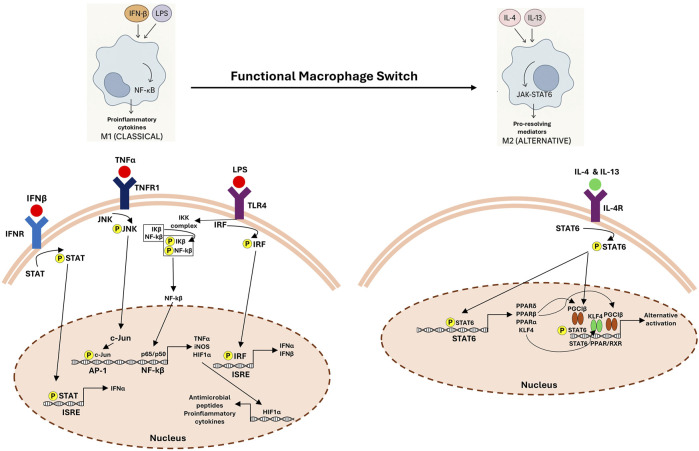
Prostaglandin E2 (PGE2) plays a complex role in inflammation, initially acting as a pro-inflammatory mediator by promoting vasodilation, edema and neutrophil recruitment during the onset phase (ref. Ricciotti and FitzGerald, 2011). This is mediated through COX-2-derived PGE2, which is a key target of Nonsteroidal anti-inflammatory drugs (NSAIDs). However, during resolution, PGE2 contributes to macrophage reprogramming by suppressing TNF-α and IL-1β production while enhancing IL-10 release, thereby facilitating the transition to a pro-resolving environment (ref. Ricciotti and FitzGerald, 2011). PGE2 further reduces synthesis and secretion of TNF-α and IL-1β from macrophages (ref. Kunkel et al., 1986; ref. Katakami et al., 1988). This oppressive effect allows PGE2 to act as self-regulator of pro-inflammatory cytokines (ref. Kunkel et al., 1986). Recently, PGE2 has been shown to enhance IL-10 release in LPS-stimulated macrophages (ref. MacKenzie et al., 2013). PGE2 induces production of IL-10 in alternatively active macrophages through EP receptor signaling, suggesting a continuous role in macrophage reprogramming (ref. Németh et al., 2009). Others reported that PGE2 displays a bipolar effect on IL-6 transcription, promoting its expression initially before limiting it (ref. MacKenzie et al., 2013). High levels of PGE2 reduced mucosal inflammation and colitis symptoms in DSS-induced colitis murine model (ref. Zhang Y. et al., 2015). In lungs, PGE2 was released by fibroblasts and alveolar macrophages, limiting inflammatory reactions and facilitating tissue repair (ref. Vancheri et al., 2004). Conversely, low levels of PGE2 have been linked to lung fibrosis in human and animal models, highlighting its role in effective inflammation resolution (ref. Wilborn et al., 1995; ref. Hodges et al., 2004).
Macrophages undergo metabolic adaptations as they process the metabolites of apoptotic cells, influencing their pro-resolving functions (ref. Schilperoort et al., 2023b). Apoptotic cell-derived arginine facilitates multiple cycles of efferocytosis, termed continual efferocytosis, in murine macrophages generated in vitro or isolated during resolution (ref. Yurdagul et al., 2020). In contrast, human monocyte-derived macrophages primarily utilize apoptotic cell-derived ornithine to sustain continual efferocytosis (ref. Yurdagul et al., 2020). These findings highlight cellular metabolic dependencies, underscoring the necessity of mechanistic investigations of immunometabolism in human macrophages. Macrophages engaging in efferocytosis activate distinct metabolic pathways that enhance production of pro-resolving mediators (ref. Zhang et al., 2019). For example, suppression of Cpt1, which encodes a key enzyme in mitochondrial long-chain fatty acid oxidation, in murine macrophages co-cultured with apoptotic cells, led to decreased IL-10 levels. Interestingly, when glycolysis was inhibited, IL-10 production remained unaffected (ref. Zhang et al., 2019). These findings indicate that fatty acid oxidation is a crucial metabolic pathway for efferocytosis-driven IL-10 production in macrophages. Other reports indicated that glycolysis is non-replaceable for definite efferocytosis persistence in murine as well as human macrophages (ref. Schilperoort et al., 2023a).
Additionally, GLS1-modified by glutaminase 1 (GLS1)-mediated glutaminolysis was required for established efferocytosis. Macrophages that were removed from liver and spleens of Gls1-deficient mice were identified to be defective in efferocytosis when they were subsequently challenged with labeled apoptotic cells (ref. Merlin et al., 2021). In atherosclerosis murine model, efferocytosis was impaired in Gls1-deficient mice, facilitating the deterioration of disease (ref. Merlin et al., 2021). Interestingly, macrophages no matter if differentiated in vitro or isolated from tissues (e.g., spleen and thymus), maintained clearing of apoptotic cells under hypoxic conditions by developing the required metabolic profile (ref. Wang et al., 2023). Table 2 summarizes various drugs and compounds that promote M2 macrophage polarization by targeting specific signaling pathways. These interventions have been studied in different experimental models, demonstrating their potential to modulate inflammation and enhance tissue repair. Future studies should investigate how efferocytosis of cells undergoing pro-inflammatory cell death (i.e., pyroptosis, necroptosis, ferroptosis) might impact macrophage-mediated resolution of inflammation.
TABLE 2: Recent advances in targeting macrophage phenotype transitions during inflammation resolution.
| Drug/compound | Target pathway | Effect | Model | References |
|---|---|---|---|---|
| Resolvin D1 | GPR32/ALX/FPR2 receptors | Promotes M2 polarization, enhances efferocytosis | Human macrophages | ref. Arnardottir et al. (2021) |
| Maresin 1 | LGR6 receptor | Induces M2 phenotype, reduces inflammation | Mouse peritonitis model | ref. Zhao et al. (2022) |
| IL-4 | IL-4 receptor α | Enhances M2 polarization, accelerates resolution | Murine muscle injury | ref. Weng et al. (2018) |
| IL-10 | STAT3 pathway | Promotes M2 phenotype, suppresses inflammation | Human monocytes | ref. Xia et al. (2023) |
| TGF-β1 | SMAD2/3 pathway | Induces M2 polarization, enhances tissue repair | Murine lung injury | ref. Zhang et al. (2016) |
| PPARγ Agonist (Rosiglitazone) | PPARγ pathway | Promotes M2 phenotype, reduces inflammation | Mouse colitis | ref. Xue and Wu (2025) |
| IL-13 | IL-4 receptor α | Enhances M2 polarization, promotes tissue repair | Murine skin wound healing | ref. Hassanshahi et al. (2022) |
| Glucocorticoids (dexamethasone) | Glucocorticoid receptor | Induces M2 phenotype, suppresses inflammation | Human macrophages | ref. Xie et al. (2019) |
| IL-33 | ST2 receptor | Promotes M2 polarization, enhances efferocytosis | Mouse atherosclerosis model | ref. Sheng et al. (2018) |
| Vitamin D3 | Vitamin D receptor/MAPK | Blocks M1 phenotype, reduces inflammation | Human monocytes | ref. Zhang et al. (2012) |
| LXA4 | 12/15-lipoxygenase | Induces M2 phenotype, suppresses inflammation | Murine arthritis | ref. Jackson et al. (2023) |
| Mesenchymal stem cells | Paracrine signaling | Enhances M2 phenotype, suppresses inflammation | Mouse lung injury | ref. Ionescu et al. (2012) |
| PGE2 | EP2/EP4 receptor | Induces M2 phenotype, suppresses inflammation | Human macrophages | ref. Wu et al. (2018) |
| IL-6 | IL-6 receptor | Promotes M2-like phenotype, enhances resolution | Murine colitis | ref. Zhang et al. (2023) |
| Omega-3 fatty acids | NF-κB inhibition | Enhances M2 phenotype, reduces inflammation | Human monocytes | ref. Videla et al. (2023) |
GPR32 (G protein-coupled receptor 32), ALX/FPR2 (lipoxin A4/formyl peptide receptor 2), LGR6 (leucine-rich repeat-containing G-protein-coupled receptor 6), IL (interleukin), STAT3 (signal transducer and activator of transcription 3), TGF-β1 (transforming growth factor beta 1), SMAD2/3 (SMAD, family members 2 and 3), PPARγ (peroxisome proliferator-activated receptor gamma), ST2 (suppression of tumorigenicity 2 receptor), MAPK (mitogen-activated protein kinase), LXA4 (lipoxin A4), EP2/EP4 (prostaglandin E2 receptors 2 and 4), NF-κB (nuclear factor kappa B), PGE2: Prostaglandin E2.
4.3 Production of pro-resolution and tissue repair mediators
Macrophages engulfing apoptotic cells shift toward a pro-resolution phenotype (ref. Junttila et al., 2008), that is characterized by increased expression of inhibitory molecules (e.g., PDL1 and ICOS ligand), secretion of anti-inflammatory cytokines, and reduced release of pro-inflammatory cytokines (e.g., TNF, IL-1β, IL-18) (ref. Poon et al., 2014). They also produce pro-resolving lipid mediators, including SPMs (ref. Schwab et al., 2007; ref. Serhan et al., 2012), which contribute to many steps of resolving inflammation and subsequent restoration of tissue homeostasis (Figure 3). Table 3 details to a large extent pro-resolution mediators and their mechanisms of action in overcoming inflammation. SPMs, including lipoxins, resolvins, maresins and protectins, play a crucial role in actively resolving inflammation (Figure 4). These mediators not only counteract excessive immune activation but also promote tissue repair and immune balance (ref. Serhan and Levy, 2018). The exact mechanisms by which SPMs exert their anti-inflammatory and pro-resolving effects is not fully understood. SPMs promote inflammation resolution as well as switch the balance from effector to regulatory T cell (Treg). Other SPMs such as protectins, maresins, and D-series resolvins have been shown to function as biased positive allosteric modulators (PAM) of the prostaglandin E2 (PGE2) receptor (EP4), promoting anti-inflammatory signaling of EP4 (ref. Alnouri et al., 2024).
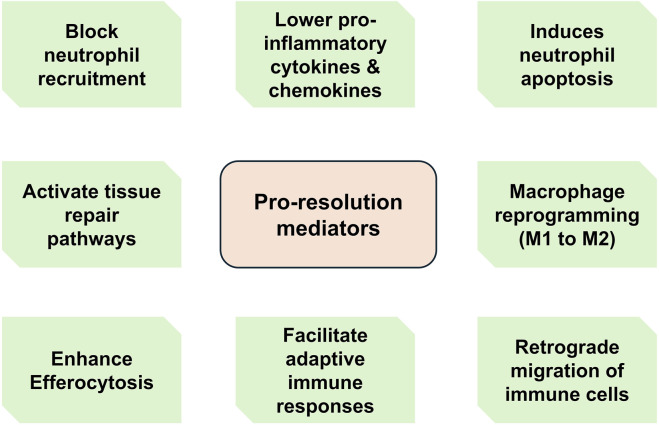
TABLE 3: Pro-resolution mediators and their mechanistic contributions to inflammation resolution.
| Pro-resolution functions | Mediator | Receptor | Target/mechanism | References |
|---|---|---|---|---|
| Inhibition of granulocyte recruitment to inflammation site | LXA4, LXB4 | FPR2, GPR32 | PMNs, NK cells | ref. Chiang et al. (2006), ref. Barnig et al. (2013) |
| RvD1 | PMNs, Macrophages | ref. Xiang et al. (2021) | ||
| ANXA1 | PMNs, Eosinophils | ref. Cirino et al. (1993), ref. Wang et al. (2011), ref. Perretti and Dalli (2023) | ||
| PGD2 | DP1, DP2 | Eosinophils | ref. Ward et al. (2002) | |
| 15d-PGJ2 | PPARγ | PMNs | ref. Napimoga et al. (2008) | |
| MaR1 | ND | PMNs, Eosinophils | ref. Serhan et al. (2012), ref. Ou et al. (2021) | |
| Protectin D1 | ND | PMNs, T cells, Macrophages | ref. Ariel et al. (2005), ref. Nguyen-Chi et al. (2020) | |
| RvE1 | BLT1, CMKLR1 | Dendritic cells | ref. Sawada et al. (2015) | |
| RvD2 | GPR18 | PMNs | ref. Gao et al. (2023a) | |
| Galectin 1 | CD3, CD7, CD43, CD45 | PMNs, Eosinophils | ref. Auvynet et al. (2013), ref. Rao et al. (2017), ref. Law et al. (2020) | |
| αMSH | MC3R | PMNs | ref. Brzoska et al. (2010) | |
| C15 | CMKLR1 | PMNs | ref. Cash et al. (2013) | |
| Pro-inflammatory cytokine scavenging | LXA4 | FPR2 | Reduces CD11b/CD18 expression, NF-κB activation | ref. Bäck et al. (2014) |
| D6 | N/A | D6 acts as a decoy receptor | ref. Graham and Locati (2013) | |
| Inhibition of pro-inflammatory signaling pathways | 15d-PGJ2 | PPARγ | NO-dependent reduction in leukocyte rolling and adhesion | ref. Napimoga et al. (2008) |
| H2S | ND | Inhibits NF-kB, activates Nrf-2 molecular pathways | ref. Benedetti et al. (2017) | |
| RvE1 | BLT1, CMKLR1 | Inhibits TNF-α-induced nuclear translocation of NF-κB | ref. Ishida et al. (2010) | |
| RvD1 | FPR2, GPR32 | Stimulates phosphorylation of AKT, prevents cleavage of caspase-3 | ref. Xie et al. (2016) | |
| Efferocytosis | αMSH | MC3R | Apoptotic PMNs | ref. Wallace and Wang (2015) |
| LXA4,LXB4 | FPR2, GPR32 | Apoptotic PMNs | ref. Mitchell et al. (2002), ref. Maderna et al. (2010), ref. Bäck et al. (2014) | |
| RvD1 | Apoptotic PMNs via p50/p50-homodimer-mediated repression of TNF expression | ref. Lee et al. (2013) | ||
| ANXA1 | Ac2-26 stimulates phagocytosis of apoptotic PMNs | ref. Maderna et al. (2005) | ||
| RvD2 | GPR18 | RvD2/GPR18 axis regulates polarization and efferocytosis through activation of PI3K/Akt | ref. Zhao et al. (2023) | |
| MaR1 | ND | Redirects macrophage activation toward M2 phenotype, increases phagocytic engulfment of PMNs via silencing pro-inflammatory intracellular signaling (STAT3, ERK1/2) | ref. Francos-Quijorna et al. (2017) | |
| Galectin 3 | CD3, CD7, CD43, CD45 | Enhances monocyte-derived macrophage efferocytosis of apoptotic PMNs | ref. Erriah et al. (2019) | |
| RvE1 | BLT1, CMKLR1 | Facilitates PMNs apoptosis and their removal | ref. El Kebir et al. (2012) | |
| M1 to M2 polarization | LXA4, LXB4 | FPR | Polarization of THP-1-derived macrophages | ref. Amici et al. (2017), ref. Aubeux et al. (2023) |
| RvD1 | Promotes anti-inflammatory M2 phenotype, enhances phagocytic function of recruited macrophages | ref. Xiang et al. (2021) | ||
| ANXA1 | AnxA1/FPR2/AMPK axis | ref. Vago et al. (2012), ref. McArthur et al. (2020) | ||
| RvE1 | BLT1, CMKLR1 | RvE1 inhibits LPS-mediated M1 macrophage polarization, promotes polarization toward M2 phenotype | ref. Zhang et al. (2020) | |
| H2S | ND | Promotes mitochondrial biogenesis and FAO, inhibits iNOS, NF-κB, ERK, p38 MAPK signaling pathways | ref. Zhang et al. (2014), ref. Miao et al. (2016), ref. Sun et al. (2021) |
LXA (lipoxin A), FPR2 (formyl peptide receptor 2), GPR32 (G protein-coupled receptor 32), PMNs (polymorphonuclear neutrophils), NK, cells (natural killer cells), RvD1 (resolvin D1), ANXA1 (annexin A1), PGD2 (prostaglandin D2), DP1/DP2 (prostaglandin D2 receptors 1,2), 15d-PGJ2 (15-deoxy-Δ12, 14-prostaglandin J2), PPARγ (peroxisome proliferator-activated receptor gamma), MaR1 (maresin 1), ND (not determined), BLT1 (leukotriene B4 receptor 1), CMKLR1 (chemerin receptor 1), RvE1 (resolvin E1), RvD2 (resolvin D2), GPR18 (G protein-coupled receptor 18), Galectin 1 (lectin family protein involved in immune regulation), αMSH (alpha-melanocyte-stimulating hormone), MC3R (melanocortin receptor 3), C15 (chemerin-derived peptide), D6 (atypical chemokine receptor acting as a decoy receptor), NO (nitric oxide), H2S (hydrogen sulfide), Nrf-2 (nuclear factor erythroid 2-related factor 2), TNF-α (tumor necrosis factor-alpha), AKT (protein kinase B), PI3K (phosphoinositide 3-kinase), Ac2-26 (annexin A1-derived peptide), STAT3 (signal transducer and activator of transcription 3), p38 MAPK (p38 mitogen-activated protein kinase), ERK (extracellular signal-regulated kinase), Galectin 3 (a lectin involved in immune regulation), FAO (fatty acid oxidation), FPR (formyl peptide receptor), THP-1 (human monocytic cell line), AMPK (AMP-activated protein kinase), LPS (lipopolysaccharide).
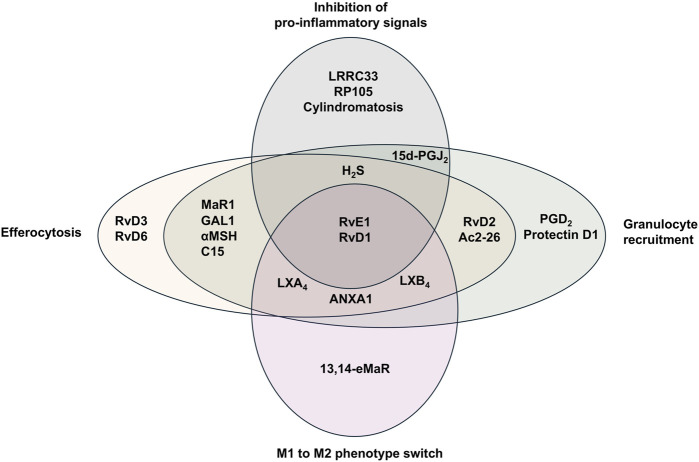
Resolvin E4 (RvE4), a newly identified member of resolvin family, has been reported to enhance efferocytosis (ref. Serhan and Levy, 2018). Meanwhile, RvE1 reduces differentiation of Th17 and thus IL-17 production (ref. Oner et al., 2021). RvD1 suppresses inflammation via post-transcriptional regulation, linking miRNA modulation to macrophage reprogramming (ref. Amin Mohedin et al., 2024). Explicitly, RvD1 prevented age-related inflammation by reducing macrophage senescence and fibrosis in spleens of aged mice, indicating its anti-aging and anti-fibrotic potential (ref. Groenen et al., 2024). Precise delivery of RvD1 using nanotechnology enhanced its anti-inflammatory effects within vascular lesions (ref. He et al., 2024). RvD2 activation of GPR18 on macrophages reduces plaque burden and inflammation in atherosclerosis murine models, showing targeted SPM signaling benefits (ref. Lipscomb et al., 2024). Likewise RvT4 promotes macrophage cholesterol efflux, reducing atherosclerosis and highlighting a novel role for SPMs in lipid homeostasis in cardiovascular diseases (ref. Walker et al., 2024). Mechanistically, resolvin enhances mitochondrial metabolism and reduces inflammatory gene expression, supporting long-term macrophage function under inflammatory stress (ref. Padovani et al., 2024). Additionally, resolvins demonstrated diagnostic and prognostic potentials in experimental models and clinical trials (ref. Perez-Hernandez et al., 2021). A clinical study demonstrated that low RvD1 and LXA4 levels correlated with inflammation severity in gallstone-induced pancreatitis patients (ref. Mısırlıoglu et al., 2025).
SPMs exhibit various pro-resolution effects in organ-specific inflammation and injury. RvD4 mitigates LPS-induced lung injury via reducing neutrophil infiltration and cytokine levels (ref. Inomata et al., 2024). RvE1 has been also shown to protect against one-lung ventilation-induced injury via diminishing cytokine storms and epithelial damage (ref. Ji et al., 2024). In pressure-overload-induced heart failure model, RvD2/GPR18 axis ameliorated pro-inflammatory macrophage polarization (ref. Zheng et al., 2024). RvD1 with exercise therapy was reported to mediate neuroprotective effects in intracranial hemorrhage mice models via BDNF/TrkB/PI3K/AKT signaling by enhancing neural recovery post-stroke (ref. Xiaoyu et al., 2024). RvD2 induces dentin regeneration and pulp stem cell activation post-pulpotomy, showcasing dental regenerative potential of SPMs through stimulation of reparative processes in dental tissues (ref. Yoneda et al., 2024).
SPMs have been found to change tumor-associated macrophages (TAMs) into an anti-tumor phenotype in cancer (ref. Lavy et al., 2021). SPMs also include Protectin Conjugates in Tissue Regeneration 1 (PCTR1) and Protectin D1 (PD1). PCTR1 and PD1 were detected during the resolution phase of respiratory synthetical virus (RSV) infection where they demonstrated modulatory effects on secondary immune responses in lungs (ref. Walker et al., 2021). Similarly, RvD1 inhibited IL-6/STAT3-driven epithelial mesenchymal transmission in colorectal cancer, suppressing cancer progression by interfering with inflammatory cytokine signaling (ref. Du et al., 2024).
Maresin 1 (MaR1), a lipid mediator derived from docosahexaenoic acid, plays a crucial role in the resolution of inflammation by promoting macrophage-mediated efferocytosis and reducing pro-inflammatory cytokine production (ref. Francos-Quijorna et al., 2017). Dysregulated maresin 1 production was associated with chronic rhinosinusitis. Maresin 1 is also involved in the regulation of adhesion molecule expression in phagocytes, resulting in promoting inflammation resolution (ref. Beegun et al., 2021). Prostanoids, which include prostaglandins and thromboxanes, fuel the immune system to start normally but then induce inflammation resolution. Specifically, PGE2 and PGD2 affect immune cell activity by regulating neutrophil influx, enhancing macrophage-mediated clearance of apoptotic cells, and shifting from a pro-inflammatory to a reparative environment. These bioactive lipids are prominent factors leading the shift from inflammation to resolution, and as a result, they are promising therapeutic candidates for inflammatory diseases (ref. Schmid and Brüne, 2021). Likewise, RvE1 enhances macrophage efferocytosis and restores hematopoiesis in aplastic anemia, suggesting a therapeutic role of RvE1 in bone marrow failure syndromes (ref. Grazda et al., 2024). RvE1 and MaR1 enhance osteogenesis of bone marrow stem cells under inflammatory stress by resolving inflammation and promoting regenerative capacity through enhancing osteoblast differentiation (ref. Alzahrani et al., 2024).
Recent studies indicated phytocannabinoids, like cannabidiol (CBD) and tetrahydrocannabinol (THC), as key modulators of inflammation resolution. CBD and THC activate the endocannabinoids system (ECS) through CB1 and CB2 receptors, triggering the endocannabinoid pathway. This system influences immune cell function, suppresses the production of pro-inflammatory mediators and promotes M2 macrophage efferocytosis (ref. Nagarkatti et al., 2009; ref. Burstein, 2015). Besides, phytocannabinoid treatment increases apoptosis and promotes tissue repair by suppressing oxidative stress and downregulating fibrotic activity. Immunomodulatory properties of these substances have made them favorable for utilizing them in chronic inflammatory diseases and infections, even in extreme cases such as COVID-19 (ref. Paland et al., 2021).
5 Post-resolution
The post-resolution phase bridges innate and adaptive immunity, where molecular pathways regulating resolution events (e.g., macrophage reprogramming) directly influence long-term immune memory and tissue repair. For instance, resolvins and maresins have been found to not only assist in clearing apoptotic neutrophils but also modulating dendritic cell (DCs) trafficking to lymph nodes and priming T-cell responses (ref. Chiurchiù et al., 2016). Subsequently, macrophages transitioning to an M2 phenotype secrete TGF-β and IL-10, which dampen inflammation while promoting Treg expansion, a critical step in preventing autoimmune reactivation (ref. Chen et al., 2023). This crosstalk underscores how resolution pathways are not merely endpoints but active participants in immune homeostasis, with failures leading to chronic inflammation or fibrosis.
The traditional view that resolution marks the end of inflammatory responses is increasingly challenged by recent reports confirming a post-resolution phase (ref. Newson et al., 2014). It was reported that after resolution of innate immune responses to fungal mimics (zymosan) or bacterial infection (S. pneumoniae), a second wave of leukocytes infiltrated tissues, consisting of monocyte-derived macrophages, myeloid-derived suppressor cells, DCs and macrophages (ref. Ersland et al., 2010; ref. Newson et al., 2014). Furthermore, tissue-resident embryonically derived macrophages, previously lost during acute inflammation, re-emerged (ref. Blériot et al., 2020). These populations were further associated with increased memory T and B lymphocytes in tissues and absence of PMNs (ref. Nakano et al., 2009; ref. Ersland et al., 2010). Collectively, the data suggest that immune cells originating from resolving tissues or peripheral blood enhance adaptive immune responses during resolution by persisting in tissues for months post-inflammation (ref. Yona et al., 2013; ref. Panigrahy et al., 2021). Thus, these post-resolution processes shape a connection between innate and adaptive immunity, where induction of acute inflammation and its resolution are crucial for regulating humoral and cell-mediated immune responses.
Post-resolution is crucial for establishing long-term immune memory and ensuring effective tissue remodeling. SPMs, such as resolvins, protectins and maresins are not merely passive byproducts but actively orchestrate the cessation of inflammation, promote clearance of inflammatory cells and facilitate tissue repair and regeneration (ref. Spite et al., 2014). The phase is thus crucial for restoring tissue homeostasis and preventing chronic inflammation, which can lead to fibrosis and impaired function. SPMs modulate adaptive immunity by influencing DCs function and T cell responses (ref. Serhan and Levy, 2018). This modulation ensures that the immune system can remember and respond more effectively to future insults, thereby linking the resolution of inflammation directly to quality and durability of adaptive immune memory.
6 Epigenetic regulatory mechanisms during inflammation resolution
Emerging evidence highlights epigenetic mechanisms as pivotal regulators of inflammation resolution, primarily through the modulation of gene expression in innate immune cells (ref. Zhang and Cao, 2021). Histone modifications, such as methylation and acetylation, dynamically regulate inflammatory gene transcription in macrophages and DCs. These modifications influence the accessibility of transcriptional machinery to gene of pro- and anti-inflammatory cytokines, thereby controlling the intensity and duration of immune responses (ref. Zhang and Cao, 2021). For instance, histone demethylase Tet2 plays a crucial role in repressing IL-6 transcription during resolution phase, preventing prolonged inflammation and promoting tissue homeostasis (ref. Zhang Q. et al., 2015).
Macrophage polarization is another critical aspect influenced by epigenetic regulation. Epigenetic modifications govern the transition between pro-inflammatory M1 and anti-inflammatory M2 macrophage phenotypes (ref. Kapellos and Iqbal, 2016). DNA methylation (e.g., DNMT3A-mediated silencing of pro-inflammatory genes) and histone modifications (e.g., HDAC3-dependent deacetylation) dynamically modulate macrophage polarization (ref. Jin et al., 2021). Jin et al. explored the potential of targeting epigenetic modifiers to reprogram macrophages in non-resolving inflammatory conditions, such as in atherosclerosis (ref. Jin et al., 2021). By modulating epigenetic enzymes, it is possible to shift macrophage polarization towards a reparative phenotype, offering therapeutic avenues for chronic inflammatory diseases.
7 Translational research and therapeutic implications
Understanding the therapeutic potential of these pathways requires a detailed examination of how they can be targeted to accelerate inflammation resolution in clinical settings. Table 4 summarizes key molecular pathways involved in inflammation resolution, highlighting their downstream targets, effects on resolution, and the progress made in testing these pathways as therapeutic targets. Targeting resolution pathways in chronic inflammatory conditions may yield valuable insights for resolution pharmacology. As preclinical research continues to elucidate the functions of SPMs in inflammation, their potential as therapeutic agents is drawing increasing interest. For example, RvD2 in combination with omega-3 polyunsaturated fatty acid mitigated inflammatory bowel disease (IBD) symptoms in murine models through modulation of intestinal inflammation and epithelial repair (ref. Chaim et al., 2024). Recently imidazole-derived RvD1 analogues with antioxidant activity demonstrated promising potentials for the treatment of oxidative stress-related diseases, including osteoarthritis (ref. Kariminezhad et al., 2024). Another study showed that RvD1 promotes chondrocyte proliferation in osteoarthritis via NLRP3/caspase-1 suppression, highlighting mechanistic insights into how RvD1 can reduce inflammasome activation and restore cartilage cell health (ref. Wang et al., 2024). RvD1 suppresses inflammation in synoviocytes via p38, NF-κB, and AKT pathways, supporting the use of RvD1 in treating inflammatory joint diseases like rheumatoid arthritis (ref. Yanoshita et al., 2025). Ongoing clinical trials are investigating the efficacy of SPMs-based synthetic analogs, designed to resist metabolic degradation and extend their pharmacological effects. These analogs are being evaluated for their therapeutic potential in inflammatory diseases, including dry eye, asthma, periodontitis, inflammatory bowel disease and cardiovascular disorders. Table 5 summarizes key translational research efforts exploring SPMs interventions in clinical settings, highlighting their study outcomes and therapeutic potential.
TABLE 4: Molecular pathways in inflammation resolution and their therapeutic implications.
| Pathway | Target | Receptor | Mechanism | Implications | References |
|---|---|---|---|---|---|
| Vagus nerve stimulation (VNS) | Gut-brain axis, immune Cells | N/A | VNS modulates Gut-Brain Axis in patients with IBD, reducing inflammation | Reduces pain and diarrhea, balances immune activity | ref. Hesampour et al. (2024) |
| IL-10 signaling pathway | Macrophages, M2-like phenotype | IL-10R | Enhances macrophage reprogramming to pro-resolving M2 phenotype | In-vivo infusion of IL-10 post-myocardial infarction suppresses inflammation and facilitates wound healing | ref. Jung et al. (2017) |
| Galectin-1 | T-cells, macrophages | N/A | Induces T-cell apoptosis, enhances macrophage efferocytosis | Gal-1 administration in murine models reduced inflammation and promoted immune tolerance | ref. Iqbal et al. (2011), ref. Yaseen et al. (2020) |
| Annexin A1 | Macrophage, neutrophils | FPR1, FPR2 | Promotes efferocytosis, downregulates PMNs infiltration | Targeting AnxA1/FPR2/ALX pathway protects against thromboinflammatory diseases | ref. Ansari et al. (2021) |
| NLRP3 deactivation | IL-1β, IL-18 | NLRP3 | Reduces pro-inflammatory cytokine production, restores tissue homeostasis | Inhibiting NLRP3 reduces inflammation in animal models of chronic diseases | ref. Coll et al. (2015), ref. Mangan et al. (2018) |
| CX3CL1-CX3CR1 axis | Monocytes, macrophages | CX3CR1 | Enhances macrophage recruitment, promotes efferocytosis | Promoting CX3CL1-CX3CR1 axis has been shown to modulate immune cell recruitment and improve resolution | ref. Truman et al. (2008), ref. Gao et al. (2023b), ref. Szukiewicz (2024) |
| Nitric oxide (NO) | Neutrophils, macrophage, endothelial Cells | N/A | Reduces PMNs adhesion, enhances macrophage clearance, supports vascular repair | NO regulates clearance of apoptotic neutrophils and production of pro-inflammatory cytokines | ref. Chello et al. (1998), ref. Kobayashi (2010) |
IBD (inflammatory bowel disease), IL (interleukin), IL-10R (interleukin 10 receptor), M2 (alternatively activated macrophages), Gal-1 (galectin-1), FPR (formyl peptide receptor), FPR1/FPR2 (formyl peptide receptors 1 and 2), PMNs (polymorphonuclear neutrophils), AnxA1 (annexin A1), ALX (lipoxin A4 receptor), NLRP3 (NOD-, LRR-, and pyrin domain-containing protein 3), NO (nitric oxide), N/A (not applicable).
TABLE 5: Translational research on specialized pro-resolving mediators (SPMs) and related therapeutic interventions.
| Research area | Key findings | Clinical applications | Challenges & limitations | References |
|---|---|---|---|---|
| Omega-3 dietary interventions | Randomized controlled trials indicate that fatty acids lower inflammatory markers (IL-1β, IL-6, TNF-α, CRP) | Reduces myocardial infarction risk, modulates immune response in autoimmune diseases, improves periodontal healing | Variability in clinical responses, dosage standardization, bioavailability issues | ref. Vedin et al. (2008), ref. El-Sharkawy et al. (2010), ref. Miles and Calder (2012), ref. Hu et al. (2019) |
| LXA4 analogs | Stable LXA4 analogs (e.g., 15-(R/S)-methyl-LXA4) exhibit comparable efficacy to corticosteroids in eczema. BLXA4 promotes systemic pro-resolving pathways when applied topically | Targeting inflammatory diseases, including dry eye, asthma, periodontitis, inflammatory bowel diseases, cardiovascular diseases | Stability and delivery remain key challenges in clinical translation. Small sample sizes in early-phase trials; larger clinical trials are needed to confirm long-term efficacy and safety | ref. Wu et al. (2013), ref. Van Dyke et al. (2015), ref. Hasturk et al. (2021) |
| RvE1 analog | RX-10045 (RvE1 analog) improves tear film stability in dry eye models, while BDA-RvD1 reduces neutrophilic inflammation in ischemia–reperfusion lung injury models | RX-10045 tested in phase 2 trials for dry eye and allergic uveitis; BDA-RvD1 investigated for acute lung inflammation | RX-10045 showed inconsistent efficacy; potential issues with drug permeability across the corneal epithelium | ref. Cholkar et al. (2015), ref. Orr et al. (2015), ref. Resolve SARL (2019) |
| Non-lipid GPCR agonists | FPR2/ALX receptor agonists reduce immune cell degranulation | ACT-389949 studied in phase 2 trials; demonstrated transient cytokine suppression | Temporary leukocyte reduction observed; receptor desensitization with prolonged dosing | ref. Wang et al. (2004), ref. Stalder et al. (2017) |
(Specialized Pro-Resolving Mediators), LXA (Lipoxin A), RvE1 (Resolvin E1), TNF-α (Tumor Necrosis Factor Alpha), CRP (C-Reactive Protein), FPR2/ALX (Formyl Peptide Receptor 2/Annexin A1 Receptor), GPCR (G Protein-Coupled Receptor), IL (Interleukin).
8 Conclusion
The resolution of inflammation is an active, highly regulated process that restores tissue homeostasis and prevents the transition to chronic inflammation. Over the past decades, significant progress has been made in elucidating the molecular and cellular mechanisms underlying resolution, including the roles of SPMs, macrophage reprogramming and efferocytosis. These insights have shifted the paradigm from traditional anti-inflammatory treatments to pro-resolution strategies, which offer a more targeted and physiological approach to managing chronic inflammatory diseases.
Despite these advances, challenges remain in translating fundamental discoveries into clinical therapies. The complexity of resolution pathways, their tissue-specific dynamics, and the interplay between innate and adaptive immunity necessitate further investigation. Emerging therapeutic approaches, including lipid mediator analogs, nanomedicine, and immunometabolic interventions, hold promises for enhancing resolution in disease contexts. Future research should focus on refining biomarker identification, optimizing drug delivery systems, and integrating computational models to advance resolution-targeted treatments. By leveraging these strategies, resolution pharmacology has the potential to revolutionize how inflammatory diseases are treated, shifting the focus from merely suppressing inflammation to actively restoring immune balance and tissue integrity.
References
- F. Abdallah, L. Mijouin, C. Pichon. Skin immune landscape: inside and outside the organism.. Mediat. Inflamm., 2017. [DOI]
- N. Akhtar, A. K. Singh, S. Ahmed. MicroRNA-17 suppresses TNF-α signaling by interfering with TRAF2 and cIAP2 association in rheumatoid arthritis synovial fibroblasts.. J. Immunol., 2016. [DOI | PubMed]
- A. L. Alessandri, R. Duffin, A. E. Leitch, C. D. Lucas, T. A. Sheldrake, D. A. Dorward. Induction of eosinophil apoptosis by the cyclin-dependent kinase inhibitor AT7519 promotes the resolution of eosinophil-dominant allergic inflammation.. PLoS One, 2011. [DOI | PubMed]
- I. Allaeys, I. Gymninova, C. Canet-Jourdan, P. E. Poubelle. IL-32γ delays spontaneous apoptosis of human neutrophils through MCL-1, regulated primarily by the p38 MAPK pathway.. PLoS One, 2014. [DOI | PubMed]
- M. W. Alnouri, K. A. Roquid, R. Bonnavion, H. Cho, J. Heering, J. Kwon. SPMs exert anti-inflammatory and pro-resolving effects through positive allosteric modulation of the prostaglandin EP4 receptor.. Proc. Natl. Acad. Sci. U. S. A., 2024. [DOI | PubMed]
- S. Alzahrani, Z. Shinwari, A. Alaiya, A.-K. Al-Kahtani. Impact of resolvin-E1 and maresin-1 on bone marrow stem cell osteogenesis under inflammatory stress.. Cells, 2024. [DOI | PubMed]
- S. A. Amici, J. Dong, M. Guerau-de-Arellano. Molecular mechanisms modulating the phenotype of macrophages and microglia.. Front. Immunol., 2017. [DOI | PubMed]
- J. Amin Mohedin, A. Rezaiemanesh, S. Asadi, M. Haddadi, B. Abdul Ahmed, A. Gorgin Karaji. Resolvin D1 (Rvd1) attenuates in vitro LPS-stimulated inflammation through downregulation of miR-155, miR -146, miR -148 and krupple like factor 5.. Rep. Biochem. Mol. Biol., 2024. [DOI | PubMed]
- H. A. Anderson, C. A. Maylock, J. A. Williams, C. P. Paweletz, H. Shu, E. Shacter. Serum-derived protein S binds to phosphatidylserine and stimulates the phagocytosis of apoptotic cells.. Nat. Immunol., 2003. [DOI | PubMed]
- P. Anderson. Post-transcriptional control of cytokine production.. Nat. Immunol., 2008. [DOI | PubMed]
- J. Ansari, E. Y. Senchenkova, S. A. Vital, Z. Al-Yafeai, G. Kaur, E. M. Sparkenbaugh. Targeting the AnxA1/Fpr2/ALX pathway regulates neutrophil function, promoting thromboinflammation resolution in sickle cell disease.. Blood, 2021. [DOI | PubMed]
- A. Ariel, G. Fredman, Y.-P. Sun, A. Kantarci, T. E. Van Dyke, A. D. Luster. Apoptotic neutrophils and T cells sequester chemokines during immune response resolution through modulation of CCR5 expression.. Nat. Immunol., 2006. [DOI | PubMed]
- A. Ariel, P.-L. Li, W. Wang, W.-X. Tang, G. Fredman, S. Hong. The docosatriene protectin D1 is produced by TH2 skewing and promotes human T cell apoptosis via lipid raft clustering.. J. Biol. Chem., 2005. [DOI | PubMed]
- H. Arnardottir, S. Thul, S.-C. Pawelzik, G. Karadimou, G. Artiach, A. L. Gallina. The resolvin D1 receptor GPR32 transduces inflammation resolution and atheroprotection.. J. Clin. Invest., 2021. [DOI | PubMed]
- S. Arur, U. E. Uche, K. Rezaul, M. Fong, V. Scranton, A. E. Cowan. Annexin I is an endogenous ligand that mediates apoptotic cell engulfment.. Dev. Cell., 2003. [DOI | PubMed]
- D. Aubeux, S. Tessier, F. Pérez, V. Geoffroy, A. Gaudin. In vitro phenotypic effects of Lipoxin A4 on M1 and M2 polarized macrophages derived from THP-1.. Mol. Biol. Rep., 2023. [DOI | PubMed]
- C. Auvynet, S. Moreno, E. Melchy, I. Coronado-Martínez, J. L. Montiel, I. Aguilar-Delfin. Galectin-1 promotes human neutrophil migration.. Glycobiology, 2013. [DOI | PubMed]
- M. Bäck, W. S. Powell, S.-E. Dahlén, J. M. Drazen, J. F. Evans, C. N. Serhan. Update on leukotriene, lipoxin and oxoeicosanoid receptors: IUPHAR Review 7.. Br. J. Pharmacol., 2014. [DOI | PubMed]
- C. Barnig, M. Cernadas, S. Dutile, X. Liu, M. A. Perrella, S. Kazani. Lipoxin A4 regulates natural killer cell and type 2 innate lymphoid cell activation in asthma.. Sci. Transl. Med., 2013. [DOI]
- F. Bazzoni, M. Rossato, M. Fabbri, D. Gaudiosi, M. Mirolo, L. Mori. Induction and regulatory function of miR-9 in human monocytes and neutrophils exposed to proinflammatory signals.. Proc. Natl. Acad. Sci. U. S. A., 2009. [DOI | PubMed]
- I. Beegun, D. S. Koenis, G. Alusi, J. Dalli. Dysregulated maresin concentrations in plasma and nasal secretions from patients with chronic rhinosinusitis.. Front. Immunol., 2021. [DOI | PubMed]
- F. Benedetti, S. Curreli, S. Krishnan, S. Davinelli, F. Cocchi, G. Scapagnini. Anti-inflammatory effects of H2S during acute bacterial infection: a review.. J. Transl. Med., 2017. [DOI | PubMed]
- C. Blériot, S. Chakarov, F. Ginhoux. Determinants of resident tissue macrophage identity and function.. Immunity, 2020. [DOI | PubMed]
- M. Brock, M. Trenkmann, R. E. Gay, S. Gay, R. Speich, L. C. Huber. MicroRNA-18a enhances the interleukin-6-mediated production of the acute-phase proteins fibrinogen and haptoglobin in human hepatocytes.. J. Biol. Chem., 2011. [DOI | PubMed]
- J. R. Brown, D. Goldblatt, J. Buddle, L. Morton, A. J. Thrasher. Diminished production of anti-inflammatory mediators during neutrophil apoptosis and macrophage phagocytosis in chronic granulomatous disease (CGD).. J. Leukoc. Biol., 2003. [DOI | PubMed]
- T. Brzoska, M. Böhm, A. Lügering, K. Loser, T. A. Luger. Terminal signal: anti-inflammatory effects of α-melanocyte-stimulating hormone related peptides beyond the pharmacophore.. Adv. Exp. Med. Biol., 2010. [DOI | PubMed]
- C. D. Buckley, D. W. Gilroy, C. N. Serhan. Proresolving lipid mediators and mechanisms in the resolution of acute inflammation.. Immunity, 2014. [DOI | PubMed]
- C. D. Buckley, D. W. Gilroy, C. N. Serhan, B. Stockinger, P. P. Tak. The resolution of inflammation.. Nat. Rev. Immunol., 2013. [DOI | PubMed]
- S. Burstein. Cannabidiol (CBD) and its analogs: a review of their effects on inflammation.. Bioorg Med. Chem., 2015. [DOI | PubMed]
- G. S. Butler, D. Sim, E. Tam, D. Devine, C. M. Overall. Mannose-binding lectin (MBL) mutants are susceptible to matrix metalloproteinase proteolysis: potential role in human MBL deficiency.. J. Biol. Chem., 2002. [DOI | PubMed]
- J. Bystrom, I. Evans, J. Newson, M. Stables, I. Toor, N. van Rooijen. Resolution-phase macrophages possess a unique inflammatory phenotype that is controlled by cAMP.. Blood, 2008. [DOI | PubMed]
- N. B. Caberoy, G. Alvarado, J.-L. Bigcas, W. Li. Galectin-3 is a new MerTK-specific eat-me signal.. J. Cell. Physiol., 2012. [DOI | PubMed]
- E. Carballo, W. S. Lai, P. J. Blackshear. Feedback inhibition of macrophage tumor necrosis factor-alpha production by tristetraprolin.. Science, 1998. [DOI | PubMed]
- E. Carballo, W. S. Lai, P. J. Blackshear. Evidence that tristetraprolin is a physiological regulator of granulocyte-macrophage colony-stimulating factor messenger RNA deadenylation and stability.. Blood, 2000. [DOI | PubMed]
- J. L. Cash, S. Bena, S. E. Headland, S. McArthur, V. Brancaleone, M. Perretti. Chemerin15 inhibits neutrophil-mediated vascular inflammation and myocardial ischemia-reperfusion injury through ChemR23.. EMBO Rep., 2013. [DOI | PubMed]
- M. Ceppi, P. M. Pereira, I. Dunand-Sauthier, E. Barras, W. Reith, M. A. Santos. MicroRNA-155 modulates the interleukin-1 signaling pathway in activated human monocyte-derived dendritic cells.. Proc. Natl. Acad. Sci. U. S. A., 2009. [DOI | PubMed]
- F. H. M. Chaim, L. B. Pascoal, M. M. de Castro, B. B. Palma, B. L. Rodrigues, J. J. Fagundes. The resolvin D2 and omega-3 polyunsaturated fatty acid as a new possible therapeutic approach for inflammatory bowel diseases.. Sci. Rep., 2024. [DOI | PubMed]
- M. S. Chapman, J. N. Miner. Novel mitogen-activated protein kinase kinase inhibitors.. Expert Opin. Investig. Drugs, 2011. [DOI]
- M. Chello, P. Mastroroberto, A. R. Marchese, G. Maltese, E. Santangelo, B. Amantea. Nitric oxide inhibits neutrophil adhesion during experimental extracorporeal circulation.. Anesthesiology, 1998. [DOI | PubMed]
- S. Chen, A. F. U. H. Saeed, Q. Liu, Q. Jiang, H. Xu, G. G. Xiao. Macrophages in immunoregulation and therapeutics.. Sig Transduct. Target Ther., 2023. [DOI]
- N. Chiang, C. N. Serhan, S.-E. Dahlén, J. M. Drazen, D. W. P. Hay, G. E. Rovati. The lipoxin receptor ALX: potent ligand-specific and stereoselective actions in vivo .. Pharmacol. Rev., 2006. [DOI | PubMed]
- V. Chiurchiù, A. Leuti, J. Dalli, A. Jacobsson, L. Battistini, M. Maccarrone. Pro-resolving lipid mediators Resolvin D1, Resolvin D2 and Maresin 1 are critical in modulating T cell responses.. Sci. Transl. Med., 2016. [DOI]
- K. Cholkar, H. M. Trinh, A. D. Vadlapudi, Z. Wang, D. Pal, A. K. Mitra. Interaction studies of Resolvin E1 Analog (RX-10045) with efflux transporters.. J. Ocular Pharmacol. Ther., 2015. [DOI]
- G. Cirino, C. Cicala, L. Sorrentino, G. Ciliberto, G. Arpaia, M. Perretti. Anti-inflammatory actions of an N-terminal peptide from human lipocortin 1.. Br. J. Pharmacol., 1993. [DOI | PubMed]
- R. C. Coll, A. A. B. Robertson, J. J. Chae, S. C. Higgins, R. Muñoz-Planillo, M. C. Inserra. A small-molecule inhibitor of the NLRP3 inflammasome for the treatment of inflammatory diseases.. Nat. Med., 2015. [DOI | PubMed]
- R. S. Cotran, V. Kumar, T. Collins. Robbins pathologic basis of disease., 1999
- R. A. Dean, J. H. Cox, C. L. Bellac, A. Doucet, A. E. Starr, C. M. Overall. Macrophage-specific metalloelastase (MMP-12) truncates and inactivates ELR+ CXC chemokines and generates CCL2, -7, -8, and -13 antagonists: potential role of the macrophage in terminating polymorphonuclear leukocyte influx.. Blood, 2008. [DOI | PubMed]
- R. A. Dean, C. M. Overall. Proteomics discovery of metalloproteinase substrates in the cellular context by iTRAQ labeling reveals a diverse MMP-2 substrate degradome.. Mol. Cell. Proteomics, 2007. [DOI | PubMed]
- A. J. Degraaf, Z. Zasłona, E. Bourdonnay, M. Peters-Golden. Prostaglandin E2 reduces toll-like receptor 4 expression in alveolar macrophages by inhibition of translation.. Am. J. Respir. Cell. Mol. Biol., 2014. [DOI | PubMed]
- A. Devitt, O. D. Moffatt, C. Raykundalia, J. D. Capra, D. L. Simmons, C. D. Gregory. Human CD14 mediates recognition and phagocytosis of apoptotic cells.. Nature, 1998. [DOI | PubMed]
- S. Divanovic, A. Trompette, S. F. Atabani, R. Madan, D. T. Golenbock, A. Visintin. Negative regulation of Toll-like receptor 4 signaling by the Toll-like receptor homolog RP105.. Nat. Immunol., 2005. [DOI | PubMed]
- H. Du, L. You, A. Wu, F. Wang, J. Yu, C. Chen. Resolvin D1 inhibits IL-6-induced epithelial-mesenchymal transition of colorectal cancer cells by targeting IL-6/STAT3 signaling.. Cell. Biochem. Biophys., 2024. [DOI | PubMed]
- D. El Kebir, P. Gjorstrup, J. G. Filep. Resolvin E1 promotes phagocytosis-induced neutrophil apoptosis and accelerates resolution of pulmonary inflammation.. Proc. Natl. Acad. Sci. U. S. A., 2012. [DOI | PubMed]
- M. R. Elliott, F. B. Chekeni, P. C. Trampont, E. R. Lazarowski, A. Kadl, S. F. Walk. Nucleotides released by apoptotic cells act as a find-me signal to promote phagocytic clearance.. Nature, 2009. [DOI | PubMed]
- M. R. Elliott, K. S. Ravichandran. The dynamics of apoptotic cell clearance.. Dev. Cell., 2016. [DOI | PubMed]
- H. El-Sharkawy, N. Aboelsaad, M. Eliwa, M. Darweesh, M. Alshahat, A. Kantarci. Adjunctive treatment of chronic periodontitis with daily dietary supplementation with omega-3 fatty acids and low-dose aspirin.. J. Periodontology, 2010. [DOI]
- M. Erriah, K. Pabreja, M. Fricker, K. J. Baines, L. E. Donnelly, J. Bylund. Galectin-3 enhances monocyte-derived macrophage efferocytosis of apoptotic granulocytes in asthma.. Respir. Res., 2019. [DOI | PubMed]
- K. Ersland, M. Wüthrich, B. S. Klein. Dynamic interplay among monocyte-derived, dermal, and resident lymph node dendritic cells during the generation of vaccine immunity to fungi.. Cell. Host Microbe, 2010. [DOI | PubMed]
- J. G. Filep. Targeting neutrophils for promoting the resolution of inflammation.. Front. Immunol., 2022. [DOI | PubMed]
- G. S. Firestein. Evolving concepts of rheumatoid arthritis.. Nature, 2003. [DOI | PubMed]
- I. Francos-Quijorna, E. Santos-Nogueira, K. Gronert, A. B. Sullivan, M. A. Kopp, B. Brommer. Maresin 1 promotes inflammatory resolution, neuroprotection, and functional neurological recovery after spinal cord injury.. J. Neurosci., 2017. [DOI | PubMed]
- M. O. Freire, T. E. Van Dyke. Natural resolution of inflammation.. Periodontol. 2000, 2013. [DOI | PubMed]
- J. N. Fullerton, D. W. Gilroy. Resolution of inflammation: a new therapeutic frontier.. Nat. Rev. Drug Discov., 2016. [DOI | PubMed]
- J. Gao, Y. Su, Z. Wang. Lung inflammation resolution by RvD1 and RvD2 in a receptor-dependent manner.. Pharmaceutics, 2023a. [DOI | PubMed]
- X.-W. Gao, H.-L. Hu, M.-H. Xie, C.-X. Tang, J. Ou, Z.-H. Lu. CX3CL1/CX3CR1 axis alleviates inflammation and apoptosis in human nucleus pulpous cells via M2 macrophage polarization.. Exp. Ther. Med., 2023b. [DOI | PubMed]
- A. J. Gearing, P. Beckett, M. Christodoulou, M. Churchill, J. Clements, A. H. Davidson. Processing of tumour necrosis factor-alpha precursor by metalloproteinases.. Nature, 1994. [DOI | PubMed]
- G. J. Graham, M. Locati. Regulation of the immune and inflammatory responses by the “atypical” chemokine receptor D6.. J. Pathology, 2013. [DOI]
- R. Grazda, A. N. Seyfried, K. R. Maddipati, G. Fredman, K. C. MacNamara. Resolvin E1 improves efferocytosis and rescues severe aplastic anemia in mice.. Cell. Death Dis., 2024. [DOI | PubMed]
- A. G. Groenen, M. Lipscomb, R. Bossardi Ramos, S. Sadhu, V. Bazioti, G. Fredman. Resolvin D1 suppresses macrophage senescence and splenic fibrosis in aged mice.. Prostagl. Leukot. Essent. Fat. Acids, 2024. [DOI]
- D. R. Gude, S. E. Alvarez, S. W. Paugh, P. Mitra, J. Yu, R. Griffiths. Apoptosis induces expression of sphingosine kinase 1 to release sphingosine-1-phosphate as a “come-and-get-me” signal.. FASEB J., 2008. [DOI | PubMed]
- G. Hajishengallis, T. Chavakis. DEL-1-regulated immune plasticity and inflammatory disorders.. Trends Mol. Med., 2019. [DOI | PubMed]
- R. Hanayama, M. Tanaka, K. Miwa, A. Shinohara, A. Iwamatsu, S. Nagata. Identification of a factor that links apoptotic cells to phagocytes.. Nature, 2002. [DOI | PubMed]
- W. R. Hansen, J. A. Keelan, S. J. M. Skinner, M. D. Mitchell. Key enzymes of prostaglandin biosynthesis and metabolism. Coordinate regulation of expression by cytokines in gestational tissues: a review.. Prostagl. & Other Lipid Mediat., 1999. [DOI]
- A. Hassanshahi, M. Moradzad, S. Ghalamkari, M. Fadaei, A. J. Cowin, M. Hassanshahi. Macrophage-mediated inflammation in skin wound healing.. Cells, 2022. [DOI | PubMed]
- H. Hasturk, F. Schulte, M. Martins, H. Sherzai, C. Floros, M. Cugini. Safety and preliminary efficacy of a novel host-modulatory therapy for reducing gingival inflammation.. Front. Immunol., 2021. [DOI | PubMed]
- Y. He, D. Feng, M. Li, Y. Gao, T. Ramirez, H. Cao. Hepatic mitochondrial DNA/Toll-like receptor 9/MicroRNA-223 forms a negative feedback loop to limit neutrophil overactivation and acetaminophen hepatotoxicity in mice.. Hepatology, 2017. [DOI | PubMed]
- Z. He, W. Chen, K. Hu, Y. Luo, W. Zeng, X. He. Resolvin D1 delivery to lesional macrophages using antioxidative black phosphorus nanosheets for atherosclerosis treatment.. Nat. Nanotechnol., 2024. [DOI | PubMed]
- A. Heidland, A. Klassen, P. Rutkowski, U. Bahner. The contribution of Rudolf Virchow to the concept of inflammation: what is still of importance?. J. Nephrol., 2006. [PubMed]
- F. Hesampour, C. N. Bernstein, J.-E. Ghia. Brain-gut Axis: invasive and noninvasive vagus nerve stimulation, limitations, and potential therapeutic approaches.. Inflamm. Bowel Dis., 2024. [DOI | PubMed]
- R. J. Hodges, R. G. Jenkins, C. P. D. Wheeler-Jones, D. M. Copeman, S. E. Bottoms, G. J. Bellingan. Severity of lung injury in cyclooxygenase-2-deficient mice is dependent on reduced prostaglandin E(2) production.. Am. J. Pathol., 2004. [DOI | PubMed]
- Y. Hu, F. B. Hu, J. E. Manson. Marine omega-3 supplementation and cardiovascular disease: an updated meta-analysis of 13 randomized controlled trials involving 127 477 participants.. J. Am. Heart Assoc., 2019. [DOI | PubMed]
- R. Inomata, H. Tsubouchi, T. Takao, M. Kurokawa, S. Yanagi, K. Sakai. Resolvin D4 mitigates lipopolysaccharide-induced lung injury in mice.. Prostagl. Leukot. Essent. Fat. Acids, 2024. [DOI]
- L. Ionescu, R. N. Byrne, T. van Haaften, A. Vadivel, R. S. Alphonse, G. J. Rey-Parra. Stem cell conditioned medium improves acute lung injury in mice: in vivo evidence for stem cell paracrine action.. Am. J. Physiol. Lung Cell. Mol. Physiol., 2012. [DOI | PubMed]
- A. J. Iqbal, A. L. F. Sampaio, F. Maione, K. V. Greco, T. Niki, M. Hirashima. Endogenous galectin-1 and acute inflammation: emerging notion of a galectin-9 pro-resolving effect.. Am. J. Pathology, 2011. [DOI]
- T. Ishida, M. Yoshida, M. Arita, Y. Nishitani, S. Nishiumi, A. Masuda. Resolvin E1, an endogenous lipid mediator derived from eicosapentaenoic acid, prevents dextran sulfate sodium induced colitis.. Inflamm. Bowel Dis., 2010. [DOI | PubMed]
- C. D. Jackson, K. A. Hilliard, C. R. Brown. 12/15-lipoxygenase activity promotes efficient inflammation resolution in a murine model of Lyme arthritis.. Front. Immunol., 2023. [DOI | PubMed]
- L. Ji, G. Liu, G. Yu, C. Xia, S. Liu, Y. Lan. Resolvin E1 and inhibition of BLT2 signaling attenuate the inflammatory response and improve one-lung ventilation-induced lung injury.. Immunol. Invest., 2024. [DOI | PubMed]
- F. Jin, J. Li, J. Guo, T. R. Doeppner, D. M. Hermann, G. Yao. Targeting epigenetic modifiers to reprogramme macrophages in non-resolving inflammation-driven atherosclerosis.. Eur. Heart J. Open, 2021. [DOI | PubMed]
- M. Jung, Y. Ma, R. P. Iyer, K. Y. DeLeon-Pennell, A. Yabluchanskiy, M. R. Garrett. IL-10 improves cardiac remodeling after myocardial infarction by stimulating M2 macrophage polarization and fibroblast activation.. Basic Res. Cardiol., 2017. [DOI | PubMed]
- M. R. Junttila, S.-P. Li, J. Westermarck. Phosphatase-mediated crosstalk between MAPK signaling pathways in the regulation of cell survival.. FASEB J., 2008. [DOI | PubMed]
- T. S. Kapellos, A. J. Iqbal. Epigenetic control of macrophage polarisation and soluble mediator gene expression during inflammation.. Mediat. Inflamm., 2016. [DOI]
- Z. Kariminezhad, M. Rahimi, J. Fernandes, R. Maltais, J.-Y. Sancéau, D. Poirier. Development of new resolvin D1 analogues for osteoarthritis therapy: acellular and computational approaches to study their antioxidant activities.. Antioxidants, 2024. [DOI | PubMed]
- Y. Katakami, Y. Nakao, T. Koizumi, N. Katakami, R. Ogawa, T. Fujita. Regulation of tumour necrosis factor production by mouse peritoneal macrophages: the role of cellular cyclic AMP.. Immunology, 1988. [PubMed]
- N. Kobayashi, P. Karisola, V. Peña-Cruz, D. M. Dorfman, M. Jinushi, S. E. Umetsu. TIM-1 and TIM-4 glycoproteins bind phosphatidylserine and mediate uptake of apoptotic cells.. Immunity, 2007. [DOI | PubMed]
- Y. Kobayashi. The regulatory role of nitric oxide in proinflammatory cytokine expression during the induction and resolution of inflammation.. J. Leukoc. Biol., 2010. [DOI | PubMed]
- A. Kovalenko, C. Chable-Bessia, G. Cantarella, A. Israël, D. Wallach, G. Courtois. The tumour suppressor CYLD negatively regulates NF-kappaB signalling by deubiquitination.. Nature, 2003. [DOI | PubMed]
- R. Kumar, G. Clermont, Y. Vodovotz, C. C. Chow. The dynamics of acute inflammation.. J. Theor. Biol., 2004. [DOI | PubMed]
- V. Kumar, A. K. Abbas, J. C. Aster, R. S. Cotran, S. L. Robbins. Robbins & Cotran pathologic basis of disease., 2021
- S. L. Kunkel, S. W. Chensue, S. H. Phan. Prostaglandins as endogenous mediators of interleukin 1 production.. J. Immunol., 1986. [DOI | PubMed]
- J. D. Langereis, H. A. J. A. Raaijmakers, L. H. Ulfman, L. Koenderman. Abrogation of NF-κB signaling in human neutrophils induces neutrophil survival through sustained p38-MAPK activation.. J. Leukoc. Biol., 2010. [DOI | PubMed]
- K. Lauber, E. Bohn, S. M. Kröber, Y. Xiao, S. G. Blumenthal, R. K. Lindemann. Apoptotic cells induce migration of phagocytes via caspase-3-mediated release of a lipid attraction signal.. Cell., 2003. [DOI | PubMed]
- M. Lavy, V. Gauttier, N. Poirier, S. Barillé-Nion, C. Blanquart. Specialized pro-resolving mediators mitigate cancer-related inflammation: role of tumor-associated macrophages and therapeutic opportunities.. Front. Immunol., 2021. [DOI | PubMed]
- H. L. Law, R. D. Wright, A. J. Iqbal, L. V. Norling, D. Cooper. A pro-resolving role for galectin-1 in acute inflammation.. Front. Pharmacol., 2020. [DOI | PubMed]
- T. Lawrence, C. Fong. The resolution of inflammation: anti-inflammatory roles for NF-κB.. Int. J. Biochem. & Cell. Biol., 2010. [DOI | PubMed]
- H.-N. Lee, J. K. Kundu, Y.-N. Cha, Y.-J. Surh. Resolvin D1 stimulates efferocytosis through p50/p50-mediated suppression of tumor necrosis factor-α expression.. J. Cell. Sci., 2013. [DOI | PubMed]
- A. E. Leitch, C. D. Lucas, J. A. Marwick, R. Duffin, C. Haslett, A. G. Rossi. Cyclin-dependent kinases 7 and 9 specifically regulate neutrophil transcription and their inhibition drives apoptosis to promote resolution of inflammation.. Cell. Death Differ., 2012. [DOI | PubMed]
- A. E. Leitch, N. A. Riley, T. A. Sheldrake, M. Festa, S. Fox, R. Duffin. The cyclin-dependent kinase inhibitor R-roscovitine down-regulates Mcl-1 to override pro-inflammatory signalling and drive neutrophil apoptosis.. Eur. J. Immunol., 2010. [DOI | PubMed]
- G. Lemke, T. Burstyn-Cohen. TAM receptors and the clearance of apoptotic cells.. Ann. N. Y. Acad. Sci., 2010. [DOI | PubMed]
- J. Liang, J. Wang, A. Azfer, W. Song, G. Tromp, P. E. Kolattukudy. A novel CCCH-zinc finger protein family regulates proinflammatory activation of macrophages.. J. Biol. Chem., 2008. [DOI | PubMed]
- J. Li, Y.-H. Liu, S. Ou, X.-M. Dai, J.-P. Wang, Y.-P. Su. Steroid receptor coactivator-3 differentially regulates the inflammatory response in peritoneal macrophages.. Mol. Med. Rep., 2012. [DOI | PubMed]
- K. Linker, A. Pautz, M. Fechir, T. Hubrich, J. Greeve, H. Kleinert. Involvement of KSRP in the post-transcriptional regulation of human iNOS expression-complex interplay of KSRP with TTP and HuR.. Nucleic Acids Res., 2005. [DOI | PubMed]
- M. Lipscomb, S. Walis, M. Marinello, H. A. Mena, K. C. MacNamara, M. Spite. Resolvin D2 limits atherosclerosis progression via myeloid cell-GPR18.. FASEB J., 2024. [DOI | PubMed]
- J. Liu, Z. Zhang, L. Chai, Y. Che, S. Min, R. Yang. Identification and characterization of a unique leucine-rich repeat protein (LRRC33) that inhibits Toll-like receptor-mediated NF-κB activation.. Biochem. Biophy. Res. Commun., 2013. [DOI]
- K. F. MacKenzie, K. Clark, S. Naqvi, V. A. McGuire, G. Nöehren, Y. Kristariyanto. PGE2 induces macrophage IL-10 production and a regulatory-like phenotype via a protein kinase A–SIK–CRTC3 pathway.. J. Immunol., 2013. [DOI | PubMed]
- J. F. Maddox, C. N. Serhan. Lipoxin A4 and B4 are potent stimuli for human monocyte migration and adhesion: selective inactivation by dehydrogenation and reduction.. J. Exp. Med., 1996. [DOI | PubMed]
- P. Maderna, D. C. Cottell, T. Toivonen, N. Dufton, J. Dalli, M. Perretti. FPR2/ALX receptor expression and internalization are critical for lipoxin A4 and annexin-derived peptide-stimulated phagocytosis.. FASEB J., 2010. [DOI | PubMed]
- P. Maderna, S. Yona, M. Perretti, C. Godson. Modulation of phagocytosis of apoptotic neutrophils by supernatant from dexamethasone-treated macrophages and annexin-derived peptide Ac(2-26).. J. Immunol., 2005. [DOI | PubMed]
- M. S. J. Mangan, E. J. Olhava, W. R. Roush, H. M. Seidel, G. D. Glick, E. Latz. Targeting the NLRP3 inflammasome in inflammatory diseases.. Nat. Rev. Drug Discov., 2018. [DOI | PubMed]
- B. Mazumder, X. Li, S. Barik. Translation control: a multifaceted regulator of inflammatory response.. J. Immunol., 2010. [DOI | PubMed]
- S. McArthur, G. Juban, T. Gobbetti, T. Desgeorges, M. Theret, J. Gondin. Annexin A1 drives macrophage skewing to accelerate muscle regeneration through AMPK activation.. J. Clin. Invest., 2020. [DOI | PubMed]
- G. A. McQuibban, J. H. Gong, E. M. Tam, C. A. McCulloch, I. Clark-Lewis, C. M. Overall. Inflammation dampened by gelatinase A cleavage of monocyte chemoattractant protein-3.. Science, 2000. [DOI | PubMed]
- A. I. Medeiros, C. H. Serezani, S. P. Lee, M. Peters-Golden. Efferocytosis impairs pulmonary macrophage and lung antibacterial function via PGE2/EP2 signaling.. J. Exp. Med., 2009. [DOI | PubMed]
- R. Medzhitov, C. Janeway. Innate immunity.. N. Engl. J. Med., 2000. [DOI | PubMed]
- J. Merlin, S. Ivanov, A. Dumont, A. Sergushichev, J. Gall, M. Stunault. Non-canonical glutamine transamination sustains efferocytosis by coupling redox buffering to oxidative phosphorylation.. Nat. Metab., 2021. [DOI | PubMed]
- D. Mevorach, J. O. Mascarenhas, D. Gershov, K. B. Elkon. Complement-dependent clearance of apoptotic cells by human macrophages.. J. Exp. Med., 1998. [DOI | PubMed]
- L. Miao, X. Shen, M. Whiteman, H. Xin, Y. Shen, X. Xin. Hydrogen sulfide mitigates myocardial infarction via promotion of mitochondrial biogenesis-dependent M2 polarization of macrophages.. Antioxid. Redox Signal, 2016. [DOI | PubMed]
- E. A. Miles, P. C. Calder. Influence of marine n-3 polyunsaturated fatty acids on immune function and a systematic review of their effects on clinical outcomes in rheumatoid arthritis.. Br. J. Nutr., 2012. [DOI | PubMed]
- N. F. Mısırlıoglu, S. Ergun, S. H. Kucuk, S. Himmetoglu, G. D. Ozen, U. Sayili. The importance of resolvin D1, LXA4, and LTB4 in patients with acute pancreatitis due to gallstones.. Med. (Kaunas), 2025. [DOI]
- S. Mitchell, G. Thomas, K. Harvey, D. Cottell, K. Reville, G. Berlasconi. Lipoxins, aspirin-triggered epi-lipoxins, lipoxin stable analogues, and the resolution of inflammation: stimulation of macrophage phagocytosis of apoptotic neutrophils in vivo .. J. Am. Soc. Nephrol., 2002. [DOI | PubMed]
- E. A. V. Moelants, A. Mortier, J. Van Damme, P. Proost. In vivo regulation of chemokine activity by post-translational modification.. Immunol. Cell. Biol., 2013. [DOI | PubMed]
- O. D. Moffatt, A. Devitt, E. D. Bell, D. L. Simmons, C. D. Gregory. Macrophage recognition of ICAM-3 on apoptotic leukocytes.. J. Immunol., 1999. [DOI | PubMed]
- T. H. Mogensen. Pathogen recognition and inflammatory signaling in innate immune defenses.. Clin. Microbiol. Rev., 2009. [DOI | PubMed]
- R. Mukhopadhyay, J. Jia, A. Arif, P. S. Ray, P. L. Fox. The GAIT system: a gatekeeper of inflammatory gene expression.. Trends Biochem. Sci., 2009. [DOI | PubMed]
- P. Nagarkatti, R. Pandey, S. A. Rieder, V. L. Hegde, M. Nagarkatti. Cannabinoids as novel anti-inflammatory drugs.. Future Med. Chem., 2009. [DOI | PubMed]
- H. Nakano, K. L. Lin, M. Yanagita, C. Charbonneau, D. N. Cook, T. Kakiuchi. Blood-derived inflammatory dendritic cells in lymph nodes stimulate acute T helper type 1 immune responses.. Nat. Immunol., 2009. [DOI | PubMed]
- M. H. Napimoga, S. M. Vieira, D. Dal-Secco, A. Freitas, F. O. Souto, F. L. Mestriner. Peroxisome proliferator-activated receptor-γ ligand, 15-deoxy-Δ12,14-prostaglandin J2, reduces neutrophil migration via a nitric oxide pathway.. J. Immunol., 2008. [DOI | PubMed]
- K. Németh, A. Leelahavanichkul, P. S. T. Yuen, B. Mayer, A. Parmelee, K. Doi. Bone marrow stromal cells attenuate sepsis via prostaglandin E2—dependent reprogramming of host macrophages to increase their interleukin-10 production.. Nat. Med., 2009. [DOI | PubMed]
- J. Newson, M. Stables, E. Karra, F. Arce-Vargas, S. Quezada, M. Motwani. Resolution of acute inflammation bridges the gap between innate and adaptive immunity.. Blood, 2014. [DOI | PubMed]
- M. Nguyen-Chi, P. Luz-Crawford, L. Balas, T. Sipka, R. Contreras-López, A. Barthelaix. Pro-resolving mediator protectin D1 promotes epimorphic regeneration by controlling immune cell function in vertebrates.. Br. J. Pharmacol., 2020. [DOI | PubMed]
- R. J. B. Nibbs, G. J. Graham. Immune regulation by atypical chemokine receptors.. Nat. Rev. Immunol., 2013. [DOI | PubMed]
- K. Obora, Y. Onodera, T. Takehara, J. Frampton, J. Hasei, T. Ozaki. Inflammation-induced miRNA-155 inhibits self-renewal of neural stem cells via suppression of CCAAT/enhancer binding protein β (C/EBPβ) expression.. Sci. Rep., 2017. [DOI | PubMed]
- R. L. Ogilvie, M. Abelson, H. H. Hau, I. Vlasova, P. J. Blackshear, P. R. Bohjanen. Tristetraprolin down-regulates IL-2 gene expression through AU-rich element-mediated mRNA decay.. J. Immunol., 2005. [DOI | PubMed]
- R. L. Ogilvie, J. R. SternJohn, B. Rattenbacher, I. A. Vlasova, D. A. Williams, H. H. Hau. Tristetraprolin mediates interferon-γ mRNA decay.. J. Biol. Chem., 2009. [DOI | PubMed]
- F. Oner, C. Alvarez, W. Yaghmoor, D. Stephens, H. Hasturk, E. Firatli. Resolvin E1 regulates Th17 function and T cell activation.. Front. Immunol., 2021. [DOI | PubMed]
- S. K. Orr, R. A. Colas, J. Dalli, N. Chiang, C. N. Serhan. Proresolving actions of a new resolvin D1 analog mimetic qualifies as an immunoresolvent.. Am. J. Physiology-Lung Cell. Mol. Physiology, 2015. [DOI]
- A. Ortega-Gómez, M. Perretti, O. Soehnlein. Resolution of inflammation: an integrated view.. EMBO Mol. Med., 2013. [DOI | PubMed]
- G. Ou, Q. Liu, C. Yu, X. Chen, W. Zhang, Y. Chen. The protective effects of maresin 1 in the OVA-induced asthma mouse model.. Mediat. Inflamm., 2021. [DOI]
- C. M. Padovani, R. M. Wilson, A. Rodriguez, B. W. Spur, K. Yin. Resolvin D2 attenuates LPS-induced macrophage exhaustion.. FASEB J., 2024. [DOI | PubMed]
- N. Paland, A. Pechkovsky, M. Aswad, H. Hamza, T. Popov, E. Shahar. The immunopathology of COVID-19 and the cannabis paradigm.. Front. Immunol., 2021. [DOI | PubMed]
- D. Panigrahy, M. M. Gilligan, C. N. Serhan, K. Kashfi. Resolution of inflammation: an organizing principle in biology and medicine.. Pharmacol. & Ther., 2021. [DOI | PubMed]
- S.-Y. Park, M.-Y. Jung, H.-J. Kim, S.-J. Lee, S.-Y. Kim, B.-H. Lee. Rapid cell corpse clearance by stabilin-2, a membrane phosphatidylserine receptor.. Cell. Death Differ., 2008. [DOI | PubMed]
- M. Peiseler, P. Kubes. More friend than foe: the emerging role of neutrophils in tissue repair.. J. Clin. Invest., 2019. [DOI | PubMed]
- E. Perdiguero, Y. Kharraz, A. L. Serrano, P. Muñoz-Cánoves. MKP-1 coordinates ordered macrophage-phenotype transitions essential for stem cell-dependent tissue repair.. Cell. Cycle, 2012. [DOI | PubMed]
- J. Perez-Hernandez, V. Chiurchiù, S. Perruche, S. You. Regulation of T-cell immune responses by pro-resolving lipid mediators.. Front. Immunol., 2021. [DOI | PubMed]
- M. Perretti, J. Dalli. Resolution pharmacology: focus on pro-resolving annexin A1 and lipid mediators for therapeutic innovation in inflammation.. Annu. Rev. Pharmacol. Toxicol., 2023. [DOI | PubMed]
- K. Phillips, N. Kedersha, L. Shen, P. J. Blackshear, P. Anderson. Arthritis suppressor genes TIA-1 and TTP dampen the expression of tumor necrosis factor alpha, cyclooxygenase 2, and inflammatory arthritis.. Proc. Natl. Acad. Sci. U. S. A., 2004. [DOI | PubMed]
- M. Piecyk, S. Wax, A. R. Beck, N. Kedersha, M. Gupta, B. Maritim. TIA-1 is a translational silencer that selectively regulates the expression of TNF-alpha.. EMBO J., 2000. [DOI | PubMed]
- J. D. Pollock, D. A. Williams, M. A. C. Gifford, L. L. Li, X. Du, J. Fisherman. Mouse model of X–linked chronic granulomatous disease, an inherited defect in phagocyte superoxide production.. Nat. Genet., 1995. [DOI | PubMed]
- I. K. H. Poon, C. D. Lucas, A. G. Rossi, K. S. Ravichandran. Apoptotic cell clearance: basic biology and therapeutic potential.. Nat. Rev. Immunol., 2014. [DOI | PubMed]
- J. A. Rankin. Biological mediators of acute inflammation.. AACN Adv. Crit. Care, 2004. [DOI]
- S. P. Rao, X. N. Ge, P. Sriramarao. Regulation of eosinophil recruitment and activation by galectins in allergic asthma.. Front. Med. (Lausanne), 2017. [DOI | PubMed]
- Q. Remijsen, T. W. Kuijpers, E. Wirawan, S. Lippens, P. Vandenabeele, T. Vanden Berghe. Dying for a cause: NETosis, mechanisms behind an antimicrobial cell death modality.. Cell. Death Differ., 2011. [DOI | PubMed]
- A. T. Resolve Sarl. A multicenter, double-masked, parallel-group, vehicle-controlled study to assess the efficacy and safety of RX-10045 nanomicellar ophthalmic solution for treatment of ocular inflammation and pain in subjects undergoing cataract surgery. clinicaltrials.gov.. 2019
- E. Ricciotti, G. A. FitzGerald. Prostaglandins and inflammation.. Arterioscler. Thromb. Vasc. Biol., 2011. [DOI | PubMed]
- D. H. Rodrigues, M. de C. Vilela, L. da S. Barcelos, V. Pinho, M. M. Teixeira, A. L. Teixeira. Absence of PI3Kγ leads to increased leukocyte apoptosis and diminished severity of experimental autoimmune encephalomyelitis.. J. Neuroimmunol., 2010. [DOI | PubMed]
- J. S. Roh, D. H. Sohn. Damage-associated molecular patterns in inflammatory diseases.. Immune Netw., 2018. [DOI | PubMed]
- A. G. Rossi, J. C. McCutcheon, N. Roy, E. R. Chilvers, C. Haslett, I. Dransfield. Regulation of macrophage phagocytosis of apoptotic cells by cAMP.. J. Immunol., 1998. [DOI | PubMed]
- A. G. Rossi, D. A. Sawatzky, A. Walker, C. Ward, T. A. Sheldrake, N. A. Riley. Cyclin-dependent kinase inhibitors enhance the resolution of inflammation by promoting inflammatory cell apoptosis.. Nat. Med., 2006. [DOI | PubMed]
- B. Samuelsson. From studies of biochemical mechanism to novel biological mediators: prostaglandin endoperoxides, thromboxanes, and leukotrienes. Nobel Lecture, 8 December 1982.. Biosci. Rep., 1983. [DOI | PubMed]
- I. Sauer, B. Schaljo, C. Vogl, I. Gattermeier, T. Kolbe, M. Müller. Interferons limit inflammatory responses by induction of tristetraprolin.. Blood, 2006. [DOI | PubMed]
- J. Savill. Apoptosis in resolution of inflammation.. J. Leukoc. Biol., 1997. [DOI | PubMed]
- J. Savill, N. Hogg, Y. Ren, C. Haslett. Thrombospondin cooperates with CD36 and the vitronectin receptor in macrophage recognition of neutrophils undergoing apoptosis.. J. Clin. Invest., 1992. [DOI | PubMed]
- J. S. Savill, P. M. Henson, C. Haslett. Phagocytosis of aged human neutrophils by macrophages is mediated by a novel “charge-sensitive” recognition mechanism.. J. Clin. Invest., 1989. [DOI | PubMed]
- Y. Sawada, T. Honda, S. Hanakawa, S. Nakamizo, T. Murata, Y. Ueharaguchi-Tanada. Resolvin E1 inhibits dendritic cell migration in the skin and attenuates contact hypersensitivity responses.. J. Exp. Med., 2015. [DOI | PubMed]
- D. A. Sawatzky, D. A. Willoughby, P. R. Colville-Nash, A. G. Rossi. The involvement of the apoptosis-modulating proteins ERK 1/2, Bcl-xL and Bax in the resolution of acute inflammation in vivo .. Am. J. Pathol., 2006. [DOI | PubMed]
- M. Schilperoort, D. Ngai, M. Katerelos, D. A. Power, I. Tabas. PFKFB2-mediated glycolysis promotes lactate-driven continual efferocytosis by macrophages.. Nat. Metab., 2023a. [DOI | PubMed]
- M. Schilperoort, D. Ngai, S. R. Sukka, K. Avrampou, H. Shi, I. Tabas. The role of efferocytosis-fueled macrophage metabolism in the resolution of inflammation.. Immunol. Rev., 2023b. [DOI | PubMed]
- T. Schmid, B. Brüne. Prostanoids and resolution of inflammation – beyond the lipid-mediator class switch.. Front. Immunol., 2021. [DOI | PubMed]
- G. W. Schmid-Schönbein. Analysis of inflammation.. Annu. Rev. Biomed. Eng., 2006. [DOI | PubMed]
- J. M. Schwab, N. Chiang, M. Arita, C. N. Serhan. Resolvin E1 and protectin D1 activate inflammation-resolution programmes.. Nature, 2007. [DOI | PubMed]
- C. N. Serhan. Lipoxins and aspirin-triggered 15-epi-lipoxins are the first lipid mediators of endogenous anti-inflammation and resolution.. Prostagl. Leukot. Essent. Fat. Acids, 2005. [DOI]
- C. N. Serhan, S. D. Brain, C. D. Buckley, D. W. Gilroy, C. Haslett, L. A. J. O’Neill. Resolution of inflammation: state of the art, definitions and terms.. FASEB J., 2007. [DOI | PubMed]
- C. N. Serhan, J. Dalli, S. Karamnov, A. Choi, C.-K. Park, Z.-Z. Xu. Macrophage proresolving mediator maresin 1 stimulates tissue regeneration and controls pain.. FASEB J., 2012. [DOI | PubMed]
- C. N. Serhan, M. Hamberg, B. Samuelsson. Lipoxins: novel series of biologically active compounds formed from arachidonic acid in human leukocytes.. Proc. Natl. Acad. Sci., 1984. [DOI | PubMed]
- C. N. Serhan, B. D. Levy. Resolvins in inflammation: emergence of the pro-resolving superfamily of mediators.. J. Clin. Invest., 2018. [DOI | PubMed]
- C. N. Serhan, J. Savill. Resolution of inflammation: the beginning programs the end.. Nat. Immunol., 2005. [DOI | PubMed]
- I. Shaked, A. Meerson, Y. Wolf, R. Avni, D. Greenberg, A. Gilboa-Geffen. MicroRNA-132 potentiates cholinergic anti-inflammatory signaling by targeting acetylcholinesterase.. Immunity, 2009. [DOI | PubMed]
- W.-H. Shao, P. L. Cohen. Disturbances of apoptotic cell clearance in systemic lupus erythematosus.. Arthritis Res. Ther., 2011. [DOI | PubMed]
- F. J. Sheedy, E. Palsson-McDermott, E. J. Hennessy, C. Martin, J. J. O’Leary, Q. Ruan. Negative regulation of TLR4 via targeting of the proinflammatory tumor suppressor PDCD4 by the microRNA miR-21.. Nat. Immunol., 2010. [DOI | PubMed]
- Y.-R. Sheng, W.-T. Hu, C.-Y. Wei, L.-L. Tang, Y.-K. Liu, Y.-Y. Liu. IL-33/ST2 axis affects the polarization and efferocytosis of decidual macrophages in early pregnancy.. Am. J. Reprod. Immunol., 2018. [DOI | PubMed]
- I. Sina. Al-qanun fi al-tibb [the canon of medicine]., 2005
- A. M. Soliman, D. R. Barreda. Acute inflammation in tissue healing.. Int. J. Mol. Sci., 2022. [DOI | PubMed]
- A. M. Soliman, D. R. Barreda. The acute inflammatory response of teleost fish.. Dev. & Comp. Immunol., 2023. [DOI | PubMed]
- A. M. Soliman, T. Yoon, J. Wang, J. L. Stafford, D. R. Barreda. Isolation of skin leukocytes uncovers phagocyte inflammatory responses during induction and resolution of cutaneous inflammation in fish.. Front. Immunol., 2021. [DOI | PubMed]
- G. Song, G. Ouyang, S. Bao. The activation of Akt/PKB signaling pathway and cell survival.. J. Cell. Mol. Med., 2005. [DOI | PubMed]
- L. P. Sousa, A. F. Carmo, B. M. Rezende, F. Lopes, D. M. Silva, A. L. Alessandri. Cyclic AMP enhances resolution of allergic pleurisy by promoting inflammatory cell apoptosis via inhibition of PI3K/Akt and NF-kappaB.. Biochem. Pharmacol., 2009. [DOI | PubMed]
- L. P. Sousa, F. Lopes, D. M. Silva, L. P. Tavares, A. T. Vieira, B. M. Rezende. PDE4 inhibition drives resolution of neutrophilic inflammation by inducing apoptosis in a PKA-PI3K/Akt-dependent and NF-kappaB-independent manner.. J. Leukoc. Biol., 2010. [DOI | PubMed]
- M. Spite, J. Clària, C. N. Serhan. Resolvins, specialized proresolving lipid mediators, and their potential roles in metabolic diseases.. Cell. Metab., 2014. [DOI | PubMed]
- A. K. Stalder, D. Lott, D. S. Strasser, H. G. Cruz, A. Krause, P. M. A. Groenen. Biomarker-guided clinical development of the first-in-class anti-inflammatory FPR2/ALX agonist ACT-389949.. Br. J. Clin. Pharmacol., 2017. [DOI | PubMed]
- M. A. Sugimoto, L. P. Sousa, V. Pinho, M. Perretti, M. M. Teixeira. Resolution of inflammation: what controls its onset?. Front. Immunol., 2016. [DOI | PubMed]
- F. Sun, J. Luo, T. Yue, F. Wang, C. Yang, S. Zhang. The role of hydrogen sulphide signalling in macrophage activation.. Immunology, 2021. [DOI | PubMed]
- D. Szukiewicz. CX3CL1 (Fractalkine)-CX3CR1 Axis in inflammation-induced angiogenesis and tumorigenesis.. Int. J. Mol. Sci., 2024. [DOI | PubMed]
- E. M. Tam, C. J. Morrison, Y. I. Wu, M. S. Stack, C. M. Overall. Membrane protease proteomics: isotope-coded affinity tag MS identification of undescribed MT1–matrix metalloproteinase substrates.. Proc. Natl. Acad. Sci. U. S. A., 2004. [DOI | PubMed]
- B. Tang, B. Xiao, Z. Liu, N. Li, E.-D. Zhu, B.-S. Li. Identification of MyD88 as a novel target of miR-155, involved in negative regulation of Helicobacter pylori-induced inflammation.. FEBS Lett., 2010. [DOI | PubMed]
- E. Tili, J.-J. Michaille, A. Cimino, S. Costinean, C. D. Dumitru, B. Adair. Modulation of miR-155 and miR-125b levels following lipopolysaccharide/TNF-alpha stimulation and their possible roles in regulating the response to endotoxin shock.. J. Immunol., 2007. [DOI | PubMed]
- R. P. Tracy. The five cardinal signs of inflammation: calor, dolor, rubor, tumor … and penuria (apologies to aulus cornelius celsus, de medicina, c. A.D. 25).. Journals Gerontology Ser. A, 2006. [DOI]
- L. A. Truman, C. A. Ford, M. Pasikowska, J. D. Pound, S. J. Wilkinson, I. E. Dumitriu. CX3CL1/fractalkine is released from apoptotic lymphocytes to stimulate macrophage chemotaxis.. Blood, 2008. [DOI | PubMed]
- A. Vacchini, M. Locati, E. M. Borroni. Overview and potential unifying themes of the atypical chemokine receptor family.. J. Leukoc. Biol., 2016. [DOI | PubMed]
- J. P. Vago, C. R. C. Nogueira, L. P. Tavares, F. M. Soriani, F. Lopes, R. C. Russo. Annexin A1 modulates natural and glucocorticoid-induced resolution of inflammation by enhancing neutrophil apoptosis.. J. Leukoc. Biol., 2012. [DOI | PubMed]
- C. Vancheri, C. Mastruzzo, M. A. Sortino, N. Crimi. The lung as a privileged site for the beneficial actions of PGE2.. Trends Immunol., 2004. [DOI | PubMed]
- T. Vanden Berghe, A. Linkermann, S. Jouan-Lanhouet, H. Walczak, P. Vandenabeele. Regulated necrosis: the expanding network of non-apoptotic cell death pathways.. Nat. Rev. Mol. Cell. Biol., 2014. [DOI | PubMed]
- T. E. Van Dyke, H. Hasturk, A. Kantarci, M. O. Freire, D. Nguyen, J. Dalli. Proresolving nanomedicines activate bone regeneration in periodontitis.. J. Dent. Res., 2015. [DOI | PubMed]
- J. R. Vane. Inhibition of prostaglandin synthesis as a mechanism of action for aspirin-like drugs.. Nat. New Biol., 1971. [DOI | PubMed]
- I. Vedin, T. Cederholm, Y. Freund Levi, H. Basun, A. Garlind, G. Faxén Irving. Effects of docosahexaenoic acid-rich n-3 fatty acid supplementation on cytokine release from blood mononuclear leukocytes: the OmegAD study.. Am. J. Clin. Nutr., 2008. [DOI | PubMed]
- L. A. Videla, R. Valenzuela, A. Del Campo, J. Zúñiga-Hernández. Omega-3 lipid mediators: modulation of the M1/M2 macrophage phenotype and its protective role in chronic liver diseases.. Int. J. Mol. Sci., 2023. [DOI | PubMed]
- K. Vyas, S. Chaudhuri, D. W. Leaman, A. A. Komar, A. Musiyenko, S. Barik. Genome-wide polysome profiling reveals an inflammation-responsive posttranscriptional operon in gamma interferon-activated monocytes.. Mol. Cell. Biol., 2009. [DOI | PubMed]
- K. H. Walker, N. Krishnamoorthy, T. R. Brüggemann, A. E. Shay, C. N. Serhan, B. D. Levy. Protectins PCTR1 and PD1 reduce viral load and lung inflammation during respiratory syncytial virus infection in mice.. Front. Immunol., 2021. [DOI | PubMed]
- M. E. Walker, R. De Matteis, M. Perretti, J. Dalli. Resolvin T4 enhances macrophage cholesterol efflux to reduce vascular disease.. Nat. Commun., 2024. [DOI | PubMed]
- J. L. Wallace, R. Wang. Hydrogen sulfide-based therapeutics: exploiting a unique but ubiquitous gasotransmitter.. Nat. Rev. Drug Discov., 2015. [DOI | PubMed]
- C. Wang, F. Rosas, M. Ramirez, V. Nioko, A. Verdu, P. Dosa. Inhibition of pulmonary inflammatory diseases, asthma and pulmonary fibrosis, by lipoxin A4 and a novel series of selective small molecule FPRL1 agonists.. J. Allergy Clin. Immunol., 2004. [DOI]
- L. Wang, W. Li, Y. Xu, Q. Wei, H. Zhao, X. Jiang. Annexin 1-derived peptide Ac2-26 inhibits eosinophil recruitment in vivo via decreasing prostaglandin D2 .. Int. Arch. Allergy Immunol., 2011. [DOI | PubMed]
- X. Wang, M. Yang, G. Yu, J. Qi, Q. Jia, S. Liu. Promoting the proliferation of osteoarthritis chondrocytes by resolvin D1 regulating the NLRP3/caspase-1 signaling pathway.. Cell. Signal, 2024. [DOI | PubMed]
- Y.-T. Wang, A. J. Trzeciak, W. S. Rojas, P. Saavedra, Y.-T. Chen, R. Chirayil. Metabolic adaptation supports enhanced macrophage efferocytosis in limited-oxygen environments.. Cell. Metab., 2023. [DOI | PubMed]
- C. Ward, I. Dransfield, J. Murray, S. N. Farrow, C. Haslett, A. G. Rossi. Prostaglandin D2 and its metabolites induce caspase-dependent granulocyte apoptosis that is mediated via inhibition of IκBα degradation using a peroxisome proliferator-activated receptor-γ-independent mechanism.. J. Immunol., 2002. [DOI | PubMed]
- S.-Y. Weng, X. Wang, S. Vijayan, Y. Tang, Y. O. Kim, K. Padberg. IL-4 receptor alpha signaling through macrophages differentially regulates liver fibrosis progression and reversal.. EBioMedicine, 2018. [DOI | PubMed]
- J. Wilborn, L. J. Crofford, M. D. Burdick, S. L. Kunkel, R. M. Strieter, M. Peters-Golden. Cultured lung fibroblasts isolated from patients with idiopathic pulmonary fibrosis have a diminished capacity to synthesize prostaglandin E2 and to express cyclooxygenase-2.. J. Clin. Investigation, 1995. [DOI]
- C. L. Wilson, A. J. Ouellette, D. P. Satchell, T. Ayabe, Y. S. López-Boado, J. L. Stratman. Regulation of intestinal alpha-defensin activation by the metalloproteinase matrilysin in innate host defense.. Science, 1999. [DOI | PubMed]
- J. M. F. Wu, Y. Cheng, T. W. H. Tang, C. Shih, J. Chen, P. C. H. Hsieh. Prostaglandin E2 receptor 2 modulates macrophage activity for cardiac repair.. J. Am. Heart Assoc., 2018. [DOI | PubMed]
- S.-H. Wu, X.-Q. Chen, B. Liu, H.-J. Wu, L. Dong. Efficacy and safety of 15(R/S)-methyl-lipoxin A4 in topical treatment of infantile eczema.. Br. J. Dermatology, 2013. [DOI]
- X.-Y. Wu, W.-D. Fan, R. Fang, G.-F. Wu. Regulation of microRNA-155 in endothelial inflammation by targeting nuclear factor (NF)-κB P65.. J. Cell. Biochem., 2014. [DOI | PubMed]
- T. Xia, M. Zhang, W. Lei, R. Yang, S. Fu, Z. Fan. Advances in the role of STAT3 in macrophage polarization.. Front. Immunol., 2023. [DOI | PubMed]
- S. Xiang, Y. Ye, Q. Yang, H. Xu, C. Shen, M. Ma. RvD1 accelerates the resolution of inflammation by promoting apoptosis of the recruited macrophages via the ALX/FasL-FasR/caspase-3 signaling pathway.. Cell. Death Discov., 2021. [DOI | PubMed]
- L. Xiaoyu, L. Dandan, O. Tianzhao, Z. Ziyou, L. Zhenlin, L. Zhuang. Resolvin D1 combined with exercise rehabilitation alleviates neurological injury in mice with intracranial hemorrhage via the BDNF/TrkB/PI3K/AKT pathway.. Sci. Rep., 2024. [DOI | PubMed]
- W. Xie, H. Wang, Q. Liu, Y. Li, J. Wang, S. Yao. ResolvinD1 reduces apoptosis and inflammation in primary human alveolar epithelial type 2 cells.. Lab. Invest., 2016. [DOI | PubMed]
- Y. Xie, S. Tolmeijer, J. M. Oskam, T. Tonkens, A. H. Meijer, M. J. M. Schaaf. Glucocorticoids inhibit macrophage differentiation towards a pro-inflammatory phenotype upon wounding without affecting their migration.. Dis. Model. Mech., 2019. [DOI | PubMed]
- L. Xue, Y.-Y. Wu. Activation of PPARγ regulates M1/M2 macrophage polarization and attenuates dextran sulfate sodium salt-induced inflammatory bowel disease via the STAT-1/STAT-6 pathway.. Kaohsiung J. Med. Sci. n/a, 2025. [DOI]
- M. Yanoshita, N. Hirose, S. Nishiyama, E. Tsuboi, N. Kubo, D. Kita. Resolvin D1 suppresses inflammation in human fibroblast-like synoviocytes via the p-38, NF-κB, and AKT signaling pathways.. Vitro Cell. Dev. Biol. Anim., 2025. [DOI]
- H. Yaseen, S. Butenko, I. Polishuk-Zotkin, S. Schif-Zuck, J. M. Pérez-Sáez, G. A. Rabinovich. Galectin-1 facilitates macrophage reprogramming and resolution of inflammation through IFN-β.. Front. Pharmacol., 2020. [DOI | PubMed]
- Y. T. Yeung, F. Aziz, A. Guerrero-Castilla, S. Arguelles. Signaling pathways in inflammation and anti-inflammatory therapies.. Curr. Pharm. Des., 2018. [DOI | PubMed]
- S. Yona, K.-W. Kim, Y. Wolf, A. Mildner, D. Varol, M. Breker. Fate mapping reveals origins and dynamics of monocytes and tissue macrophages under homeostasis.. Immunity, 2013. [DOI | PubMed]
- M. Yoneda, H. Ideguchi, S. Nakamura, Z. Arias, M. Ono, K. Omori. Resolvin D2-induced reparative dentin and pulp stem cells after pulpotomy in a rat model.. Heliyon, 2024. [DOI | PubMed]
- A. Yurdagul, M. Subramanian, X. Wang, S. B. Crown, O. R. Ilkayeva, L. Darville. Macrophage metabolism of apoptotic cell-derived arginine promotes continual efferocytosis and resolution of injury.. Cell. Metab., 2020. [DOI | PubMed]
- F. Zhang, H. Wang, X. Wang, G. Jiang, H. Liu, G. Zhang. TGF-β induces M2-like macrophage polarization via SNAIL-mediated suppression of a pro-inflammatory phenotype.. Oncotarget, 2016. [DOI | PubMed]
- J. Zhang, M. Wang, J. Ye, J. Liu, Y. Xu, Z. Wang. The anti-inflammatory mediator resolvin E1 protects mice against lipopolysaccharide-induced heart injury.. Front. Pharmacol., 2020. [DOI | PubMed]
- M. Zhang, X. Li, Q. Zhang, J. Yang, G. Liu. Roles of macrophages on ulcerative colitis and colitis-associated colorectal cancer.. Front. Immunol., 2023. [DOI | PubMed]
- Q. Zhang, X. Cao. Epigenetic remodeling in innate immunity and inflammation.. Annu. Rev. Immunol., 2021. [DOI | PubMed]
- Q. Zhang, L. Yuan, D. Liu, J. Wang, S. Wang, Q. Zhang. Hydrogen sulfide attenuates hypoxia-induced neurotoxicity through inhibiting microglial activation.. Pharmacol. Res., 2014. [DOI | PubMed]
- Q. Zhang, K. Zhao, Q. Shen, Y. Han, Y. Gu, X. Li. Tet2 is required to resolve inflammation by recruiting Hdac2 to specifically repress IL-6.. Nature, 2015a. [DOI | PubMed]
- S. Zhang, S. Weinberg, M. DeBerge, A. Gainullina, M. Schipma, J. M. Kinchen. Efferocytosis fuels requirements of fatty acid oxidation and the electron transport chain to polarize macrophages for tissue repair.. Cell. Metab., 2019. [DOI | PubMed]
- Y. Zhang, A. Desai, S. Y. Yang, K. B. Bae, M. I. Antczak, S. P. Fink. Inhibition of the prostaglandin-degrading enzyme 15-PGDH potentiates tissue regeneration.. Science, 2015b. [DOI | PubMed]
- Y. Zhang, D. Y. M. Leung, B. N. Richers, Y. Liu, L. K. Remigio, D. W. Riches. Vitamin D inhibits monocyte/macrophage proinflammatory cytokine production by targeting MAPK phosphatase-1.. J. Immunol., 2012. [DOI | PubMed]
- M. Zhao, C. Li, J. Zhang, Z. Yin, Z. Zheng, J. Wan. Maresin-1 and its receptors RORα/LGR6 as potential therapeutic target for respiratory diseases.. Pharmacol. Res., 2022. [DOI | PubMed]
- M. Zhao, Z. Zheng, Z. Yin, J. Zhang, J. Qin, J. Wan. Resolvin D2 and its receptor GPR18 in cardiovascular and metabolic diseases: a promising biomarker and therapeutic target.. Pharmacol. Res., 2023. [DOI | PubMed]
- Z. Zheng, M. Zhao, Y. Xu, J. Zhang, S. Peng, J. Liu. Resolvin D2/GPR 18 axis ameliorates pressure overload-induced heart failure by inhibiting pro-inflammatory macrophage polarization.. J. Lipid Res., 2024. [DOI | PubMed]
- S. Zhu, W. Pan, X. Song, Y. Liu, X. Shao, Y. Tang. The microRNA miR-23b suppresses IL-17-associated autoimmune inflammation by targeting TAB2, TAB3 and IKK-α.. Nat. Med., 2012. [DOI | PubMed]