
Research on the Mechanism of Natural Products Acting on Chronic Obstructive Pulmonary Disease
Abstract
Chronic obstructive pulmonary disease (COPD) is one of the major health problems worldwide. Its pathological process involves multiple mechanisms such as oxidative stress, chronic airway inflammation, airway remodeling, and excessive mucus secretion. Current clinical therapeutic drugs have limitations in curbing the progression of the disease. An increasing number of studies have shown that natural products, due to their multi‐target synergistic regulatory characteristics and good biological safety, have shown important research value and application potential in the prevention and treatment of COPD. This article discusses the potential therapeutic effects of about 80 natural compounds from plants, microorganisms, animals, and marine organisms on COPD, and summarizes more than 350 references to analyze their potential mechanisms.
Article type: Review Article
Keywords: antioxidants, chronic obstructive pulmonary disease, multi‐targets, natural products, therapeutic mechanisms
Affiliations: The First Clinical Medical College Lanzhou University Lanzhou Gansu China; Department of Gerontal Respiratory Medicine The First Hospital of Lanzhou University Lanzhou Gansu China
License: © 2026 The Author(s). Food Science & Nutrition published by Wiley Periodicals LLC. CC BY 4.0 This is an open access article under the terms of the http://creativecommons.org/licenses/by/4.0/ License, which permits use, distribution and reproduction in any medium, provided the original work is properly cited.
Article links: DOI: 10.1002/fsn3.71965 | PMC: PMC13325018
Relevance: Moderate: mentioned 3+ times in text
Full text: PDF (6.3 MB)
Introduction
Chronic obstructive pulmonary disease (COPD) is a respiratory disease characterized by persistent airflow limitation, with high prevalence and mortality rates. It has become a major global public health challenge. Epidemiological data show that the global prevalence of COPD is 10.3%, and it continues to increase with the rise in smoking rates and population aging in low‐ and middle‐income countries (Adeloye et al. ref. 2015, ref. 2022; Fallahzadeh et al. ref. 2022). COPD is the third leading cause of death worldwide (World Health Organization ref. 2025), with approximately 3.23 million deaths in 2019, and it is projected to exceed 5.4 million by 2060 (ref. Mathers). The high concealment of early COPD further intensifies the difficulty in disease prevention and control, becoming an important underlying factor for the persistently high mortality rate of COPD (Lei et al. ref. 2024). In terms of economic burden, COPD accounts for 56% of the EU’s respiratory disease medical budget each year (about 38.6 billion euros) (World Health Organization ref. 2025). The total cost related to this disease in the United States is expected to reach 800.9 billion US dollars in the next 20 years (Zafari et al. ref. 2021), and it is projected to become the seventh leading disease burden by 2030 (Liao et al. ref. 2024). This highlights the urgency of strengthening its prevention and control.
The onset of COPD is primarily linked to long‐term exposure to toxic particles such as cigarette smoke, occupational dust, and fuel smoke, along with respiratory tract infections (Gayle et al. ref. 2021). These factors can trigger chronic inflammation, leading to airway abnormalities (chronic bronchitis, bronchiolitis) and alveolar destruction (Singh et al. ref. 2025). Pathological changes occur at multiple sites: in the central airways, there is epithelial cell damage, inflammatory cell infiltration, goblet cell hyperplasia, and increased mucus secretion; in the peripheral small airways, lumen constriction occurs; and in the lung parenchyma, typical features include decreased elasticity of alveolar walls and dilation of alveolar sacs (Hogg and Timens ref. 2009; Kim et al. ref. 2024). This pathological process involves several mechanisms including chronic inflammation, oxidative stress, protease‐antiprotease imbalance, fibrosis, and excessive mucus secretion (Zhang, Luo, et al. ref. 2020).
Current COPD treatment combines drug and non‐drug interventions. However, drug therapy has limitations: many patients show low sensitivity to corticosteroids, and inhaled corticosteroids (ICS) are less effective in patients with COPD than in those with asthma (Barnes ref. 2013); while phosphodiesterase 4 (PDE4) inhibitors are restricted in clinical application due to their low therapeutic index and side effects (Vogelmeier et al. ref. 2020). Currently available drug interventions can only provide symptom relief but are limited in their ability to fully control or reverse disease progression (Liao et al. ref. 2024). Additionally, COPD patients often have systemic manifestations such as decreased exercise tolerance, fatigue, osteoporosis, depression, and anxiety in addition to pulmonary symptoms, which seriously affect their quality of life (Agustí et al. ref. 2022; Aldhahir et al. ref. 2020).
In recent years, the in‐depth investigation of the pathological mechanisms underlying COPD has garnered significant attention regarding the application of natural products (NPs) for its treatment and prevention (Figure 1). NPs are chemical compounds produced by various organisms, including plants, animals, marine, and microorganisms (Sorokina and Steinbeck ref. 2020). Both in vitro and in vivo studies have shown that many NPs have anti‐inflammatory, antioxidant, and lung‐protective effects and can be used in the treatment of COPD. Given the current absence of a comprehensive overview summarizing the interventions provided by NPs from diverse sources on COPD, this review comprehensively summarizes the therapeutic effects of NPs derived from plants (phenolic compounds, terpenoids, alkaloids, polyunsaturated fatty acids, and vitamins), microorganisms (macrolides, Cordyceps sinensis, and probiotics), animals (lipoxin A4, melatonin, and taurine), and marine organisms (n‐3 polyunsaturated fatty acids and phycocyanin) against COPD (Figures 2 and 3; Tables 1, 2, 3, 4, 5, 6). We systematically analyze their pulmonary protective effects mediated through multi‐target mechanisms, including anti‐inflammatory, antioxidant, anti‐fibrotic, and anti‐aging pathways, and discuss recent advances in clinical trials. By integrating data from over 80 natural compounds and more than 350 references, this review aims to provide a theoretical foundation and identify research directions for the development of natural therapeutics in COPD management.
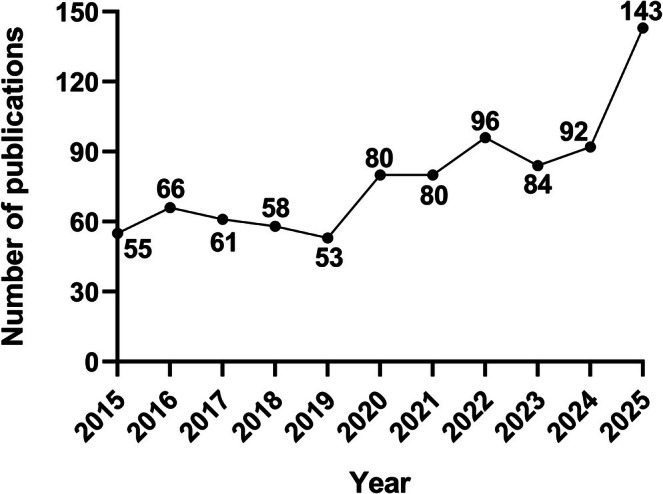
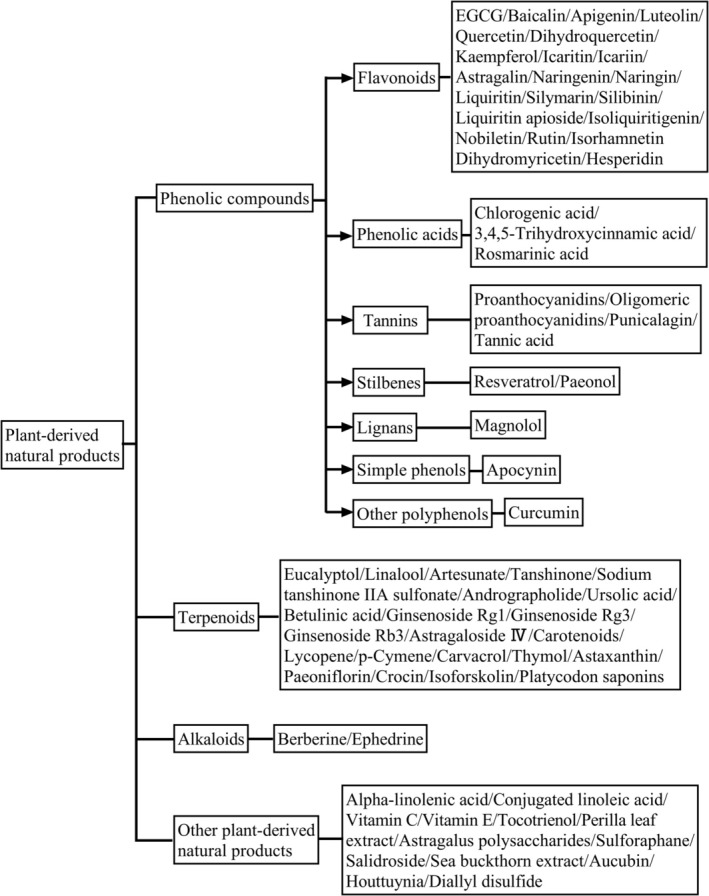
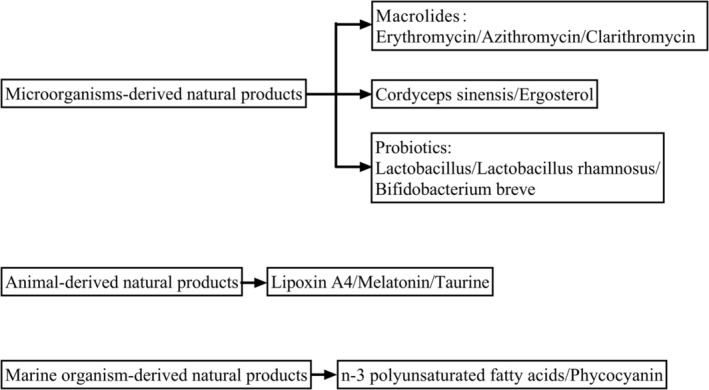
TABLE 1: Effects of flavonoids on animal models of COPD.
| Subclassification | Substance | Molecular formula | Author(s) | Animal model | Species | Dose | Effect | Mechanism |
|---|---|---|---|---|---|---|---|---|
| Flavan‐3‐ols | Epigallocatechin‐3‐gallate | C22H18O11 | Liang et al. ref. 2017 | CS‐induced COPD model | Sprague–Dawley rats | During the 56‐day CS exposure period, EGCG (50 mg/kg) was administered via oral gavage every other day. | Anti‐inflammatory; anti‐mucus secretion | ↑: SOD, CAT;↓: GST, MCP‐1, neutrophil count, MUC5AC, p‐EGFR, EGFR protein |
| Cheng et al. ref. 2025 | CS‐ and LPS‐induced AECOPD model | C57BL/6J mice | QKPC was administered via intragastric administration at doses of 5 or 10 g/kg once daily for 5 consecutive days. | Anti‐inflammatory; antioxidant; anti‐mucus secretion | ↓: IL‐6, CXCL1, TNF‐α, neutrophil count, MUC5AC, ROS, NET formation, NOX2, p47phox | |||
| March et al. ref. 2006 | CS‐induced COPD model | A/J mice | EGCG was administered via drinking water at a dose of 50 μg/mL. | Anti‐inflammatory | ↓: number of inflammatory cells, lactate dehydrogenase | |||
| Chan et al. ref. 2012 | CS‐induced COPD model | Sprague ‐Dawley rats | A 10 mL dose of Lung Chen tea was administered daily via oral tube feeding for 56 days. | Antioxidant | ↓: MDA, neutrophil elastase, MMP‐12 | |||
| Flavones | Baicalin | C15H10O5 | Wang, Mohammadtursun, et al. ref. 2018 | CS‐induced COPD model | Sprague–Dawley rats | BIA was administered via gavage at doses of 40, 80 or 160 mg/kg/d, respectively. | Anti‐inflammatory; antioxidant; anti‐airway remodeling | ↑: IL‐10, HPA;↓: MMP‐2, MMP‐9, MDA |
| Ju et al. ref. 2022 | CS‐ and LPS‐induced COPD model | Sprague–Dawley rats | BIA (dissolved in normal saline) was administered daily at 40, 80, or 160 mg/kg/d for 3 weeks. | Anti‐inflammatory; antioxidant | ↑: IL‐10, SOD, GSH;↓: TNF‐α, IL‐1β, IL‐6, IL‐8, MDA, MYD88, p‐NF‐κ, Bp65/NF‐κBp65, TLR2, TLR4 | |||
| Zhang, Liu, et al. 2021 | CS‐induced COPD model | Sprague–Dawley rats | BIA was administered via intragastric administration at doses of 40, 80, or 160 mg/kg. | Anti‐inflammatory | ↑: HDAC2;↓: NF‐κB, PAI‐1 | |||
| Luteolin | C15H10O6 | Zhou et al. ref. 2023 | CS‐ and LPS‐induced COPD model | C57BL/6J mice | Starting from Week 15, Lut was orally administered at doses of 50 or 100 mg/kg 1 h prior to CS exposure. | Anti‐inflammatory; antioxidant | ↑: SOD, CAT, GSH, SIRT6;↓: MDA, LDH, TRPV1, CYP2A13 | |
| Li et al. ref. 2023 | CS‐induced COPD model | BALB/c mice | During the 75‐day CS exposure period, Lut was administered via gavage at doses of 20 or 40 mg/kg once daily. | Anti‐inflammatory; antioxidant | ↑: SOD, CAT, NQO1, HO‐1;↓: IL‐1β, IL‐6, TNF‐α, IL‐8, MDA, NOX4, p‐p65/p65, p‐IκB/IκB | |||
| Wang, Gu, et al. ref. 2021 | CS‐ and LPS‐induced COPD model | ICR mice | After the first LPS injection, Lut was administered via intragastric administration at doses of 5, 10, or 20 mg/kg once daily for 6 weeks. | Anti‐inflammatory | ↓: EGFR, MMP9, PTGS2, MMP2, ERBB2 | |||
| Nobiletin | C21H22O8 | Lu et al. ref. 2022 | CSE combined with Klebsiella pneumoniae‐induced COPD model | Sprague–Dawley rats | Nobiletin and Icariin were administered at 2.12 mg/kg/d (1:12.5 ratio). | Anti‐inflammatory | ↓: IL‐6, IL‐1β, TNF‐α, PI3K, P‐AKT, P‐p38 | |
| Flavonols | Quercetin | C15H10O7 | Araújo et al. ref. 2022 | CS‐induced emphysema model | C57BL/6 mice | One hour before the first CS exposure, Que was administered via orogastric gavage at a dose of 10 mg/kg/d. | Anti‐inflammatory; antioxidant | ↑: SOD, CAT;↓: IL‐13, IL‐22, Macrophage recruitment, MDA |
| Zhou, Cai, et al. ref. 2025 | CS‐induced COPD model | Sprague–Dawley rats | Que was administered via gastric gavage at doses of 0.25 or 1 g/kg once daily. | anti‐airway remodeling | ↓: TNF‐α, IL‐1β, Wnt5a, β‐catenin, collagen fiber deposition | |||
| Yin et al. ref. 2024 | CS‐induced COPD model | C57BL/6 mice | Que was administered at 50 mg/kg and Que‐lipo at 0.3 mg/kg via intraperitoneal injection; Que‐lipo was administered at 0.3 mg/kg via intrathecal injection. | Anti‐inflammatory; anti‐fibrosis | ↑: GSH‐Px, SOD, Bcl‐2;↓: IL‐6, TNF‐α, MDA, MPO, caspase 3/7, TGF‐β1, Rho, ROCK | |||
| Rutin | C27H30O16 | Chen et al. ref. 2020 | CS‐induced COPD model | BALB/c mice | Rutin was administered at doses of 200, 300, or 400 mg/kg. | Anti‐inflammatory | ↓: IL‐8, TNF‐α, Platelet‐activating factor level | |
| Isorhamnetin | C16H12O7 | Xu et al. ref. 2022 | CS‐ and LPS‐induced COPD model | C57BL/6J mice | Isorhamnetin was administered via gavage at doses of 30 or 60 mg/kg/d. | Anti‐inflammatory; antioxidant | ↑: Nrf2, HO‐1, SOD1/2;↓: Keap1, number of inflammatory cells | |
| Flavanones | Naringenin | C15H12O5 | Liu et al. ref. 2018 | CS‐induced COPD model | BALB/c mice | Naringenin was administered via gavage at doses of 20, 40, or 80 mg/kg, 2 h prior to CS exposure. | Anti‐inflammatory | ↓: IL‐8, TNF‐α, MMP‐9, NF‐κB, number of inflammatory cells |
| Hesperidin | C28H34O15 | Wang et al. ref. 2020 | Establishment of COPD model by intraperitoneal injection of CSE | C57BL/6 mice | Hesperidin was administered at doses of 25 or 50 mg/kg. | Anti‐inflammatory; antioxidant | ↑: SOD, CAT, PGC‐1α, SIRT1;↓: IL‐6, IL‐8, MDA, MPO | |
| Isoliquiritigenin | C15H12O4 | Yu et al. ref. 2018 | CS‐induced COPD model | C57BL/6N mice | Isoliquiritigenin was orally administered at doses of 10, 20, or 30 mg/kg 1 h prior to CS exposure. | Anti‐inflammatory; antioxidant | ↑: Nrf2, HO‐1;↓: NF‐κB p‐p65, p‐IκBα, MPO, MDA, TNF‐α, IL‐1β, number of neutrophils and macrophages | |
| Flavanonols | Silibinin | C25H22O10 | Park et al. ref. 2016 | CS‐ and LPS‐induced COPD model | C57BL/6N mice | Silibinin was administered via oral gavage at doses of 20 or 40 mg/kg 1 h prior to CS exposure. | Anti‐inflammatory; antioxidant | ↓: ERK, SP‐1, MUC5AC, MDA |
| Dihydromyricetin | C15H12O8 | Hou et al. ref. 2025 | CS‐ and LPS‐induced COPD model | BALB/c mice | Dihydromyricetin was administered via gavage at doses of 100 or 200 mg/kg. | Anti‐inflammatory; antioxidant; anti‐apoptosis | ↑: GSH, xCT, GPx4;↓: IL‐6, TNF‐α, MDA |
TABLE 2: Effects of tannins, stilbenes, phenolic acids, simple phenols, lignans, and other polyphenolic compounds in animal models of COPD.
| Classification | Subclassification | Substance | Molecular formula | Author (s) | Animal model | Species | Dose | Effect | Mechanism |
|---|---|---|---|---|---|---|---|---|---|
| Tannins | Condensed Tannins | Proanthocyanidin | C15H14O6 | Sul et al. ref. 2023 | Establishment of COPD model by intraperitoneal injection of CSE | BALB/c mice | Mice treated with 25, 50, or 100 mg/kg of GSPE intraperitoneally 30 min before CSE injection. | Anti‐inflammatory; anti‐autophagy | ↓: TNF‐α, IL‐1β, IL‐6, ROS, NLRP3, TFEB transcription |
| Hydrolysable Tannins | Tannic acid | C76H52O46 | Rajasekar et al. ref. 2024 | Establishment of emphysema model by intratracheal instillation of elastase | C57BL/6 J mice | Tannic acid was administered via intraperitoneal injection at doses of 6.25, 12.5, or 25 mg/kg. | Anti‐inflammatory; improving emphysema | ↓: TNF‐α, IFN‐γ, MCP‐1, MMP‐9, NF‐kB p65, p38 MAPK | |
| Stilbenes | Polyhydroxystilbenes | Resveratrol | C14H12O3 | Chen et al. ref. 2016 | CS‐ and LPS‐induced COPD model | Kunming mice | Resveratrol was administered at a dose of 50 mg/kg. | Anti‐inflammatory; anti‐fibrosis | ↓: IL‐17, IL‐6, TNF‐α, TGF‐β, Beclin1 |
| Wang, Dong, et al. ref. 2017 | CS‐ and LPS‐induced COPD model | Wistar rats | Resveratrol was administered via gavage at a dose of 50 mg/kg. | Anti‐inflammatory; antioxidant | ↑: SOD, SIRT1, PGC‐1α;↓: IL‐6, IL‐8, MDA | ||||
| Hu et al. ref. 2013 | CS‐ and LPS‐induced COPD model | Sprague–Dawley rats | Resveratrol was administered via gavage at a dose of 25 mg/kg/d. | Anti‐left ventricular remodeling | ↑: SOD, SIRT1;↓: LVW/BW, LVEDD, LVEDP, 8‐OHdG | ||||
| Li et al. ref. 2022 | CS‐induced COPD model | C57BL/6 mice | From week 25 to week 28, RSV was administered via gavage at a dose of 200 mg/kg/d. | Anti‐inflammatory; anti‐aging | ↑: HDAC2↓: MURF1, MAFbx, P53, P21, SMP3, L‐1β, TNF‐α | ||||
| Shi et al. ref. 2012 | CS‐induced COPD model | BALB/cmice | One hour prior to CS exposure, resveratrol (30 mg/kg) or Vam3 (a resveratrol derivative) (50 mg/kg) was administered via intragastric administration. | Antioxidant; anti‐autophagy | ↑: SIRT1, FoxO3a, GSH‐Px;↓: ROS | ||||
| Li, Sun, et al. ref. 2014 | CS‐ and LPS‐induced COPD model | Sprague–Dawley rats | Resveratrol was administered via gavage at a dose of 25 mg/kg. | Anti‐inflammatory; anti‐apoptosis | ↓: CHOP, caspase‐12 | ||||
| Zhang, Ding, et al. ref. 2020 | CS‐ and LPS‐induced COPD model | Sprague–Dawley rats | Resveratrol was administered via gavage at a dose of 25 mg/kg. | Antioxidant; anti‐apoptosis | ↑: SIRT1, ORP150;↓: CHOP, caspase 12, caspase 3 | ||||
| Methoxystilbenes | Paeonol | C9H10O3 | Qin et al. ref. 2021 | CS‐ and recurrent bacterial infections‐induced COPD stable phase model | Sprague–Dawley rats | Paeonol was administered via gavage at a dose of 0.25 mg/kg/d. | Anti‐mucus secretion | ↓: MUC5AC, MUC5B, MUC1, MMP‐9 | |
| Phenolic acids | NA | 3,4,5‐Trihydroxycinnamic acid | C9H8O5 | Min et al. ref. 2020 | CS‐ and LPS‐induced COPD model | C57BL/6N mice | THCA was administered at doses of 20 or 40 mg/kg. | Anti‐inflammatory; antioxidant | ↑: NQO1, SIRT1;↓: IL‐6, TNF‐α, MCP‐1, MPO, neutrophil elastase activity, MAPK/NF‐κB |
| Rosmarinic acid | C18H16O8 | Yuan et al. ref. 2025 | CS‐ and LPS‐induced COPD model | BALB/cmice | Rosmarinic acid was administered via gavage at doses of 15, 30, or 60 mg/kg. | Anti‐inflammatory; anti‐apoptosis | ↓: IL‐6, TNF‐α, IL‐17A, IFN‐γ, Bax/Bcl‐2, Syk, p‐Syk | ||
| Simple phenols | NA | Apocynin | C9H10O3 | Chan et al. ref. 2023 | CS‐induced COPD model | BALB/c mice | Apocynin was administered via intraperitoneal injection at a dose of 5 mg/kg daily. | Improving vascular injury | ↑: eNOS;↓: number of macrophages, neutrophils, and lymphocytes, and airway collagen deposition |
| Alateeq et al. ref. 2024 | CS‐induced COPD model | BALB/c mice | Apocynin was administered via intraperitoneal injection at a dose of 5 mg/kg/d. | Anti‐anxiety | ↓: CRP, MDA, IL‐6 and IL‐1β in the amygdala | ||||
| Lignans | NA | Magnolol | C18H18O2 | Tao et al. ref. 2025 | CS combined with Klebsiella pneumoniae‐induced COPD model | Sprague–Dawley rats | Magnolol was administered via gavage at doses of 25 or 50 mg/kg. | Anti‐inflammatory; antioxidant | ↑: ZO‐1, E‐cadherin, PPARγ, GSH‐px, T‐SOD, TIMP‐1;↓: TNF‐α, IL‐6, IL‐1β, MDA, MMP‐9, MMP‐12 |
| Other polyphenol compounds | NA | Curcumin | C21H20O6 | Yuan et al. ref. 2018 | CS‐ and LPS‐induced COPD model | Kunming mice | Curcumin was administered orally at doses of 100 or 200 mg/kg body weight for 10 consecutive days. | Anti‐inflammatory; anti‐airway remodeling | ↓: IκBα, COX‐2, number of neutrophils and lymphocytes |
| Zhang et al. ref. 2017 | CS‐ and LPS‐induced COPD model | Sprague–Dawley rats | Curcumin was administered via gavage at a dose of 100 mg/kg/d starting from the 31st day of modeling. | Anti‐inflammatory; antioxidant; alleviating mitochondrial damage in skeletal muscle | ↑: MnSOD, GSH‐Px and CAT, PGC‐1α, SIRT3;↓: MDA, IL‐6, TNF‐α | ||||
| Gan et al. ref. 2016 | CS‐induced COPD model | Sprague–Dawley rats | AEC II were isolated and cultured from the COPD model, and curcumin (100 μM) was administered 24 h after cultivation. | Restoring corticosteroid resistance | ↑: HDAC2;↓: MCP‐1, IL‐8, MIP‐2α, H3/H4 acetylation | ||||
| Suzuki et al. ref. 2009 | CS‐induced emphysema model | C57BL/6J mice | Curcumin was administered via oral gavage at a dose of 100 mg/kg 1 h prior to CS exposure. | Anti‐inflammatory | ↓: number of neutrophils and macrophages | ||||
| Tang and Ling ref. 2019 | CS‐ and LPS‐induced COPD model | Sprague–Dawley rats | Curcumin was administered intragastrically at a dose of 150 mg/kg for 30 consecutive days. | Anti‐apoptosis | ↑: SIRT1, LC3‐I, LC3‐II, Beclin1;↓: CHOP, GRP78 | ||||
| Zhang et al. ref. 2016 | CS‐ and LPS‐induced COPD model | Sprague–Dawley rats | Curcumin was administered via gavage at a dose of 100 mg/kg/d for 30 consecutive days. | Anti‐inflammatory | ↓: IL‐6, IL‐8, TNF‐α, p66Shc, p‐p66Shc | ||||
| Liu, Yang, et al. ref. 2025 | PM2.5‐induced COPD model | BALB/cmice | Curcumin was administered daily at a dose of 100 mg/kg by gavage. | Anti‐inflammatory; antioxidant | ↑: SOD, CAT, PTEN;↓: IL‐6, IL‐1β, TNF‐α, MDA, p‐PI3K/PI3K, p‐AKT/AKT, p‐P65/P65, p‐FoxO1/FoxO1 |
TABLE 3: Effects of terpenoids in animal models of COPD.
| Subclassification | Substance | Molecular formula | Author (s) | Animal model | Species | Dose | Effect | Mechanism |
|---|---|---|---|---|---|---|---|---|
| Monoterpenoids | Eucalyptol | C10H8O | Kennedy‐Feitosa et al. ref. 2016 | CS‐induced emphysema model | C57BL/6 mice | Eucalyptol was administered via inhalation at doses of 1 or 10 mg/mL. | Anti‐inflammatory; antioxidant | ↑: TIMP‐1, elastin;↓: MPO, TNF‐α, IL‐1β, IL‐6, KC, TGF‐β1, MDA |
| Paeoniflorin | C23H28O11 | Lin et al. ref. 2016 | CS‐induced COPD model | Sprague–Dawley rats | Paeoniflorin was administered via gavage at doses of 12, 24, or 48 mg/kg/d. | Antioxidant | ↑: Nrf2, SOD, OH‐1, T‐AOC, γ‐GCS;↓: ROS, MDA | |
| p‐Cymene | C10H14 | Games et al. ref. 2016 | PPE‐induced COPD model | C57BL/6 mice | 10 μL of p‐Cymene was administered via intranasal instillation. | Anti‐inflammatory; improving emphysema | ↓: IL‐6, KC, IL‐1β, IL‐17, MMP‐9, 8‐iso‐PGF2α, p‐65‐NF‐κB | |
| Carvacrol | C10H14O | 10 μL of Carvacrol was administered via intranasal instillation. | ||||||
| Thymol | C10H14O | 10 μL of Thymol was administered via intranasal instillation. | ||||||
| Sesquiterpenoids | Artesunate | C19H28O8 | Pan et al. ref. 2021 | CS‐induced COPD model | Sprague–Dawley rats | Artesunate was administered via intraperitoneal injection at doses of 25, 50, or 100 mg/kg, 1 h prior to CS exposure. | Anti‐inflammatory; antioxidant; anti‐airway remodeling | ↓: IL‐6, IL‐8, TNF‐α, ICAM‐1, ROS, GSH, TGF‐β1/Smad |
| Diterpenoids | Tanshinone | NA | Yang et al. ref. 2023 | CS‐ and LPS‐induced COPD model | C57BL/6J mice | TS was administered via inhalation using a PARI nebulizer (5 mg/kg, 30 min per administration, twice daily) prior to CS exposure. | Anti‐inflammatory; antioxidant | ↑: Hemopexin;↓: NF‐κB, ERK1/2, NLRP3 |
| Sodium tanshinone IIA sulfonate | C19H17NaO6S | Li, Su, et al. ref. 2018 | CS‐ and LPS‐induced COPD model | C57BL/6J mice | STS was administered via inhalation using a PARI nebulizer (5 mg/kg, 30 min per administration, twice daily) prior to CS exposure. | Anti‐inflammatory; antioxidant; anti‐mucus secretion | ↓: Muc5AC, Muc5B, ERK1/2, NF‐κB | |
| Guan et al. ref. 2018 | CS‐ and LPS‐induced COPD model | C57BL/6J mice | STS was administered via inhalation using a PARI nebulizer (5 mg/kg, 30 min per administration, twice daily) prior to CS exposure. | Anti‐inflammatory; antioxidant | ↓: MAPK, HIF‐1α, TNF‐α, IL‐1β, ROS, HO‐1, NOX1, p‐ERK, p38 MAPK | |||
| Li, Sun, et al. ref. 2020 | CS‐ and LPS‐induced COPD model | C57BL/6J mice | STS was administered via intraperitoneal injection at a dose of 10 mg/kg/d on days 92, 93, 94, 95, and 96. | Anti‐inflammatory; antioxidant; anti‐mucus secretion | ↓: IL‐6, KC, Muc5ac, Muc5b, ERK1/2, NF‐κB/p65 | |||
| Tian et al. ref. 2022 | CS‐ and LPS‐induced COPD model | C57 mice | STS was administered via inhalation through a PARI nebulizer (5 mg/kg, 30 min per session, twice daily) prior to CS exposure. | Protective effect | ↑: miR‐486‐5p | |||
| Andrographolide | C20H30O5 | Yu et al. ref. 2024 | PPE and LPS‐induced AECOPD model | C57BL/6 mice | AGP was administered via intraperitoneal injection at doses of 5 or 10 mg/kg, 2 h prior to the last LPS stimulation. | Anti‐inflammatory | ↓: NLRP3, CARD (PYCARD), Caspase‐1, IL‐1β, IL‐1 | |
| Isoforskolin | C22H34O7 | Xiao et al. ref. 2021 | CS and influenza virus‐induced AECOPD model | C57BL/6 J mice | Isoforskolin was administered orally at doses of 0.5 or 2 mg/kg. | Anti‐inflammatory | ↓: TNF‐α, IL‐1β, IL‐6, IL‐17A, MCP‐1, RORγt, STAT3, Th17, IL‐17A, NLRP3, ASC, caspase‐1 | |
| Crocin | C44H64O24 | Xie et al. ref. 2019 | CS‐induced COPD model | C57BL/6 mice | Crocinwas administered orally at a dose of 50 mg/kg 1 h prior to exposure to CS. | Anti‐inflammatory; anti‐depression | ↓: IL‐1β, IL‐6, TNF‐α, p‐PI3K, p‐NF‐κBp65 | |
| Triterpenoids | Ursolic acid | C30H48O3 | Lin et al. ref. 2017 | CS‐induced emphysema model | Wistar rats | UA was administered intragastrically at doses of 10, 20, or 40 mg/kg body weight/day prior to CS exposure. | antioxidant; anti‐apoptosis | ↑: Nrf2/ARE, GSH, Bcl‐2;↓: Bax, cleaved‐caspase3, cleaved‐caspase12, MDA 8‐OHdG |
| Lin, Hou, Han, Yin, et al. ref. 2019 | CS‐induced emphysema model | Wistar rats | UA was administered via gavage at doses of 10, 20, or 40 mg/kg, 30 min prior to the first CS exposure. | antioxidant; anti‐airway remodeling; improving muscle atrophy | ↓: α‐SMA, EMT, EndMT, TGF‐β1, p‐Smad2/3 | |||
| Lin, Hou, Han, Yin, et al. ref. 2019 | Establishment of emphysema model by intraperitoneal injection of CSE | Sprague–Dawley rats | UA was administered via gavage at a dose of 20 mg/kg. | Anti‐apoptosis; anti‐airway remodeling | ↑: Bcl‐2;↓: cleaved‐caspase3/9/12, p‐Smad2, p‐Smad3, UPR, PERK‐CHOP | |||
| Li, Sun, et al. ref. 2020 | PM2.5‐induced COPD model | NA | Ursolic acid derivatives (LUAD) were administered at doses of 30, 50, or 100 mg/kg. | Anti‐inflammatory; antioxidant | ↓: LDH, ACP, ALP, NOS, MDA, TNF‐α, IL‐6 | |||
| Betulinic acid | C30H48O3 | Yue et al. ref. 2021 | PM2.5‐induced COPD model | NA | Betulinic acid was administered via the intragastric route at doses of 2, 5, or 8 mg/kg for 15 consecutive days. | Anti‐inflammatory | ↑: SOD;↓: LDH, ACP, AKP, ALB, MDA, NO, TNF‐α, IL‐6 | |
| Ginsenoside Rg1 | C42H72O14 | Guan et al. ref. 2017 | CS‐induced COPD model | Sprague–Dawley rats | Rg1 was administered via gavage at a dose of 20 mg/kg per day, 30 min prior to CS exposure. | Anti‐fibrosis | ↓: α‐SMA, collagen, MMP‐9, TGFβRI, p‐Smad2/3 | |
| Tan et al. ref. 2024 | CS‐induced COPD model | C57BL/6 mice | Rg1 was administered via oral gavage at doses of 10 or 20 mg/kg per day for 4 weeks. | Anti‐inflammatory | ↓: IL‐6, IL‐1β, TNF‐α, p‐PERK, ATF4, ROS, MDA, GSH, GPX4 | |||
| Guan et al. ref. 2020 | CS‐induced COPD model | Sprague–Dawley rats | Rg1 was administered via gavage 30 min prior to CS exposure. | Anti‐fibrosis | ↓: IL‐6, TNF‐α, collagen type I, α‐SMA, TGF‐β1/Smad3 | |||
| Ginsenoside Rg3 | C42H72O13 | Guan et al. ref. 2020 | CS and NTHi‐induced AECOPD model | BALB/C mice | Starting from the 12th week of modeling, Rg3 was administered via gavage at doses of 10, 20, or 40 mg/kg once daily. | Anti‐inflammatory | ↓: IL‐6, KC, granulocyte migration | |
| Wang et al. ref. 2024 | CS‐induced COPD model | BALB/C mice | Starting from the 12th week of modeling, Rg3 was administered at a dose of 40 mg/kg at least 2 h prior to CS exposure. | Inhibiting mitophagy | ↑: SIRT1;↓: IL‐6, KC, PINK1, PTEN | |||
| Astragaloside IV | C41H68O14 | Zhang et al. ref. 2023 | COPD model induced by CS or CS + LPS | C57BL/6J mice | AS‐IV was administered via intraperitoneal injection at a dose of 0.2 mL per 10 g prior to CS exposure. | Anti‐inflammatory; anti‐fibrosis | ↑: E‐cadherin↓: TNF‐α, IL‐1β, EGF, IGF, α‐SMA, COL1A1, FoxO3a | |
| Meiqian et al. ref. 2018 | CS‐induced COPD model | ICR mice | AS‐IV was administered via gavage at doses of 10, 20, or 40 mg/kg. | Anti‐inflammatory; antioxidant | ↑: SOD;↓: MDA, TNF‐α, IL‐6, JAK3/STAT3/NF‐κB | |||
| Chen et al. ref. 2025 | CS‐ and LPS‐induced COPD model | C57BL/6 mice | AS‐IV was administered at doses of 10, 20, or 40 mg/kg. | Anti‐inflammatory | ↑: mTOR and GSK‐3β;↓: MPO, NF‐κB | |||
| Zhang et al. ref. 2023 | CS‐induced COPD model | ICR mice | AS‐IV was administered via gavage at a dose of 40 mg/kg daily for 4 weeks. | Anti‐inflammatory | ↓: IL‐1β, TNF‐α, IL‐6, IL‐17A, RORγt, CXCR4 | |||
| Platycodon saponins | C57H92O28 | Xu et al. ref. 2025 | CS and sawdust‐induced COPD model | Sprague–Dawley rats | Platycodon saponins were administered orally at a dose of 45 mg/kg/d. | Anti‐inflammatory | ↑: MUC2, ZO‐1, ki67;↓: CCL20, IFN‐γ, TNF‐α, NO, MUC2, Ly6G, TLR4 | |
| Tetraterpenoids | Lycopene | C40H56 | Mustra et al. ref. 2019 | CS‐induced COPD model | Ferrets | Lycopene was administered orally at doses of 2.2 or 6.6 mg/kg BW/day. | Improving emphysema | ↓: cholesterol |
| Campos et al. ref. 2019 | CS‐induced emphysema model | C57BL/6 mice | Lycopene was administered via orogastric gavage at doses of 25 or 50 mg/kg/d. | Anti‐inflammatory; antioxidant | ↑: SOD, CAT, GSH;↓: TNF‐α, IL‐10, IFN‐γ, MPO, nitrite | |||
| Astaxanthin | C40H52O4 | Ding et al. ref. 2024 | COPD model established by CS exposure combined with intraperitoneal injection of CSE | C57BL/6J mice | AXT was administered intraperitoneally at doses of 10, 50, or 100 mg/kg. | Anti‐airway remodeling | ↑: E‐cadherin;↓: α‐SMA, vimentin, fibronectin | |
| Kubo et al. ref. 2019 | CS‐induced COPD model | C57BL/6 mice | Mice were fed a diet containing astaxanthin at a concentration of 0.0158% (w/w). | Anti‐inflammatory; antioxidant | ↑: Nrf2, HO‐1;↓: neutrophil count | |||
| Deng et al. ref. 2023 | Establishment of COPD model by intraperitoneal injection of CSE | C57BL/6J mice | AXT was administered by oral gavage at doses of 10, 50, or 100 mg/kg. | Anti‐inflammatory; antioxidant | ↑: E‐cadherin, Nrf2, HO‐1, SIRT1, SOD, GSH;↓: α‐SMA, TNF‐α, IL‐6, MPO, p‐p65, MMP‐9 | |||
| Mano et al. ref. 2022 | PPE‐induced emphysema model | C57BL/6Jmice | From week 4 to week 12, mice were fed a diet containing 0.02% astaxanthin. | antioxidant; improving muscle atrophy | ↓: ROS, 4‐HNE, BNIP3, p38 |
TABLE 4: Effects of alkaloids and other plant‐derived natural products in animal models of COPD.
| Substance | Molecular formula | Author (s) | Animal model | Species | Dose | Effect | Mechanism |
|---|---|---|---|---|---|---|---|
| Berberine | C20H18NO4 + | Liu et al. ref. 2022 | CS‐induced COPD model | Sprague–Dawleyrats | Ber aqueous suspension (50 mg/kg) or Ber‐encapsulated SLN‐chitosan nanoparticles (containing 50 mg/kg) was administered intragastrically 1 h prior to CS exposure. | Anti‐inflammatory; antioxidant | ↑: SOD;↓: IL‐1β, IL‐6, IL‐17, TNFα, MPO |
| Ephedrine | C10H15NO | Wang, Chen, and Wu ref. 2022 | CS‐induced COPD model | C57BL/6 mice | Starting from the 7th week of CS exposure, Eph was administered via gavage at a dose of 5 mg/kg 1 h prior to CS exposure, for a duration of 6 weeks. | Anti‐inflammatory; antioxidant; anti‐apoptosis | ↑: SOD, Nrf2;↓: IL‐8, IL‐6, IL‐1β, TNF‐α, MDA, caspase‐3, p‐NF‐κB, Keap‐1, CHOP |
| Vitamin E | NA | Zhao et al. ref. 2022 | CS‐induced COPD model | Sprague–Dawley rats | Vitamin E was fed at 75 mg/kg daily prior to CS exposure. | Anti‐inflammatory; antioxidant | ↑: SOD;↓: MDA, COX2, STAT3 |
| Liu et al. ref. 2019 | CS‐ and LPS‐induced COPD model | Wistar rats | Vitamin E was formulated into a solution with a concentration of 20 mg/mL and administered via intraperitoneal injection at a dose of 40 mg/kg. | Anti‐inflammatory | ↓: TNF‐α, MCP‐1, iNOS | ||
| γ‐Tocotrienol | C28H42O2 | Peh et al. ref. 2017 | CS‐induced COPD model | BALB/c mice | γ‐Tocotrienol was administered via oral gavage at doses of 30, 100, or 250 mg/kg. | Anti‐inflammatory; antioxidant | ↑: Nrf2, IL‐10;↓: 8‐OHdG, 8‐isprostane, 3‐NT, STAT3, NF‐κB |
| Perilla leaf extract | NA | Yuan et al. ref. 2022 | CS‐ and LPS‐induced COPD model | BALB/c mice | PLE was administered at doses of 100, 200, or 400 mg/kg. | Anti‐inflammatory | ↓: IL‐4, IL‐6, IL‐17A, IFN‐γ, TNF‐α, TLR4, Syk, PKC, NF‐κB p65 |
| Astragalus polysaccharides | NA | Chu et al. ref. 2016 | CS‐induced COPD model | BALB/c mice | APS was administered intragastrically at a dose of 200 mg/kg from the first day to the last day of the mice’s CS exposure. | Anti‐inflammatory | ↓: IL‐6, IL‐8, TNF‐α |
| Salidroside | C14H20O7 | Zhang, Li, and Liu ref. 2019 | CS‐induced COPD model | Wistar rats | Salidroside was administered via intraperitoneal injection at doses of 50, 100, or 200 mg/kg. | Anti‐inflammatory; improving muscle atrophy | ↑: SOD, GSH, myogenin;↓: TNF‐α, IL‐6, myostatin |
| Houttuynia | NA | Wang, Wu, et al. ref. 2021 | CS‐ and LPS‐induced COPD model | Sprague–Dawley rats | Houttuynia was administered via gavage at doses of 5, 10, or 25 mg/kg, 30 min prior to CS exposure. | Anti‐inflammatory; anti‐apoptosis | ↓: caspase‐3, caspase‐9, TLR4, MyD88, NF‐κB (p65), IL‐6, IL‐1β, TNF‐α |
| Sea buckthorn extract | NA | Liu, Yang, et al. ref. 2025 | PPE and LPS‐induced COPD model | C57BL/6 mice | SBE was administered via gavage at doses of 100 or 200 mg/kg. | Anti‐inflammatory; antioxidant | ↑: GPX, SLC7A11, SIRT1;↓: p53, MAPK |
| Aucubin | C15H22O9 | Liu, Li, and Hu ref. 2024 | CS‐induced COPD model | C57BL/6 mice | Aucubin was administered intragastrically at a dose of 20 mg/kg, 2 h prior to CS exposure. | Anti‐inflammatory; antioxidant; anti‐apoptosis | ↑: SOD, GSH, Bcl‐2, Nrf2, HO‐1;↓: TNF‐α, IL‐6, IL‐8, MDA, MPO, Bax |
| Diallyl disulfide | C6H10S2 | Cardoso et al. ref. 2021 | CS‐induced emphysema model | C57BL/6 mice | Diallyl disulfide was administered via oral gavage at doses of 30, 60, or 90 mg/kg, three times a week. | Anti‐inflammatory; antioxidant | ↑: SOD, GST;↓: MDA, MMP12, CBR1, PNK, 4‐HNE |
TABLE 5: Effects of microorganisms‐derived natural products in animal models of COPD.
| Substance | Molecular formula | Author (s) | Animal model | Species | Dose | Effect | Mechanism |
|---|---|---|---|---|---|---|---|
| Erythromycin | C37H67NO13 | Zhou et al. ref. 2012 | CS and LPS‐induced emphysema model | Sprague–Dawley rats | Erythromycin was administered orally at a dose of 100 mg/kg, 0.5 h prior to CS exposure, for a duration of 2 weeks. | Anti‐inflammatory; anti‐apoptosis | ↑: IL‐10;↓: TNF‐α, Bax, MMP‐9, TIMP‐1, MMP‐9/TIMP‐1 |
| Xiaofei et al. ref. 2022 | CS‐induced COPD model | C57BL/6J mice | Erythromycin was administered via gavage at a dose of 100 mg/kg/d prior to CS exposure. | Anti‐aging | ↑: SOD;↓: P53, P21, MDA, PI3K‐mTOR | ||
| Ma et al.ref. 2019 | CS‐induced COPD model | BALB/c mice | Erythromycin (100 mg/kg/d) was administered intragastrically 1 h before CS exposure. | ↑: SIRT1;↓: ROS, TNF‐α, IL‐6 | |||
| Erythromycin derivative, F528 | NA | Zhang, Liu, et al. ref. 2021 | CS‐induced COPD model | C57BL/6J mice | F528 was administered orally at a dose of 100 mg/kg. | Anti‐inflammatory; anti‐apoptosis | ↓: IL‐6, TNF‐α, Bax, MMP‐2, MMP‐9, NF‐κB p65 |
| Clarithromycin | C38H69NO13 | Nakanishi et al. ref. 2009 | CS‐induced COPD model | C57BL/6 mice | Clarithromycin was administered orally at doses of 25, 50, or 100 mg/kg. | Anti‐inflammatory | ↓: TNF‐α, MMP‐9, number of macrophages and neutrophils |
| Cordyceps sinensis | NA | Yang, Jiao, et al. ref. 2018 | CS‐ and LPS‐induced COPD model | Wistar rats | Cordyceps sinensis was administered via gavage at doses of 2.5, 5, or 7.5 g/kg/day. | Anti‐inflammatory; anti‐airway remodeling | ↓: α‐SMA, collagen type I, p‐Smad2, p‐Smad3, TGF‐β1 |
| Ergosterol | C28H44O | Sun, Feng, et al. ref. 2019 | Establishment of COPD model by intraperitoneal injection of CSE | BALB/cmice | Ergosterol was administered via oral gavage at 20 or 40 mg/kg | Anti‐inflammatory; antioxidant; anti‐apoptosis | ↑: SOD, CAT;↓: MDA, NF‐κB/p65, iNOS, COX‐2, Bax |
| Wang, Dong, et al. ref. 2017 | CS‐induced COPD model | ICR mice | Ergosterol was administered via gavage at doses of 20 or 50 mg/kg. | Anti‐inflammatory; antioxidant | ↑: SOD, CA;↓: MDA, TNF‐α, IL‐6, IL‐1β, JAK3/STAT3/NF‐κB | ||
| Sun et al. ref. 2020 | Establishment of COPD model by intraperitoneal injection of CSE | Sprague–Dawley rats | Ergosterol was administered orally at doses of 2.5, 5, or 10 mg/kg. | Anti‐inflammatory; antioxidant | ↑: IL‐10, TGF‐β, CD163, HDAC3;↓: ROS, IL‐6, TNF‐α, MMP‐9, CD40, P300/CBP, PCAF, NF‐κB/p65 | ||
| Lactobacillus | NA | Shen et al. ref. 2024 | PPE and LPS‐induced COPD model | BALB/cByJNarl mice | A probiotic composition (Lactobacillus GMNL‐89 and GMNL‐133 at a 1:1 ratio) was administered orally at 109 CFU/0.2 mL PBS for 2 weeks. | Anti‐inflammatory | ↓: IL‐6, TNF‐α, white blood cell count |
| Lactobacillus rhamnosus | NA | Carvalho et al. ref. 2020 | CS‐induced COPD model | C57BL/6 mice | Lr was administered via gavage at 1 × 10⁹ CFU/0.2 mL PBS per mouse, once daily for 7 days prior to COPD induction, with a frequency of 3 times a week. | Anti‐inflammatory; anti‐airway remodeling | ↑: TIMP‐1/2, SOCS3;↓: IL‐1, IL‐6, TNF‐α, KC, IL‐17, TGF‐β, CXCL1, MMP‐9, MMP‐12, TLR2, TLR4, TLR9, STAT3, NF‐κB |
| Aimbire et al. ref. 2019 | CS‐induced COPD model | C57BL/6 mice | NA | Anti‐inflammatory | ↓: MMP‐9, MMP‐12, NF‐κB, STAT3, TLR2/4/9 | ||
| Bifidobacterium breve | NA | Aimbire et al. ref. 2019 | CS‐induced COPD model | C57BL/6 mice | NA | Anti‐inflammatory | ↓: IL‐1β, IL‐6, TNF, CXCL1, CXCL8, CXCL9, CXCL10, CXCL11, KC, MMP‐9, MMP‐12, NF‐κB, STAT3, TLR2/4/9 |
TABLE 6: Effects of animal‐derived natural products in animal models of COPD.
| Substance | Molecular formula | Author (s) | Animal model | Species | Dose | Effect | Mechanism |
|---|---|---|---|---|---|---|---|
| Lipoxin A4 | C20H32O5 | Li et al. ref. 2025 | CS‐induced COPD model | BALB/c mice | LXA4 was administered intraperitoneally at a dose of 10 μg/kg prior to exposure to CS. | Anti‐inflammatory; antioxidant | ↑: GSH; SLC7A11; GPX4; ALX/FPR2;↓: IL‐6, IL‐1β, TNF‐α, MDA, iron, FTH1, p38 MAPK |
| BML‐111 | NA | Cao et al. ref. 2018 | CS‐ and LPS‐induced COPD model | Kunming mice | BML‐111 was administered intraperitoneally at doses of 1 or 10 mg/kg. | Anti‐inflammatory | ↑: SOD, Nrf‐2;↓: TGF‐β, IL‐1β, MDA, NLRP3 |
| Melatonin | C13H16N2O2 | Shin et al. ref. 2015 | CS‐ and LPS‐induced COPD model | C57BL/6N mice | Melatonin was administered intraperitoneally at doses of 10 or 20 mg/kg, 1 h prior to CS exposure. | Anti‐inflammatory; anti‐mucus secretion | ↓: MUC5AC, MDA, Erk, Sp1 |
| Peng et al. ref. 2018 | CS‐ and LPS‐induced COPD model | Wistar rats | Melatonin was administered intraperitoneally at a dose of 10 mg/kg per day. | Anti‐inflammatory | ↑: SIRT1;↓: IL‐1, NLRP3, caspase‐1, ASC | ||
| He et al. ref. 2019 | CS‐ and LPS‐induced COPD model | Wistar rats | Melatonin was administered intraperitoneally at a dose of 10 mg/kg per day, 1 h prior to CS exposure or LPS instillation. | Anti‐apoptosis | ↑: SIRT1;↓: caspase‐3, CHOP, caspase‐12 | ||
| Shin et al. ref. 2020 | CS‐ and LPS‐induced COPD model | C57BL/6N mice | Melatonin was administered intraperitoneally at doses of 15 or 30 mg/kg for 14 consecutive days. | Anti‐inflammatory | ↑: SIRT1;↓: p65, MMP‐9, inflammatory cell count | ||
| Lim et al. ref. 2021 | CS‐ and LPS‐induced COPD model | C57BL/6 mice | Melatonin was administered intraperitoneally at a dose of 30 mg/kg, 1 h prior to CS exposure, for 14 consecutive days. | Anti‐inflammatory | ↑: cAMP;↓: TNF‐α, IL‐6, MMP‐9, PDE4B | ||
| Xu et al. ref. 2024 | CS‐induced COPD model;AECOPD model induced by influenza A/H3N2 virus | C57BL/6 mice | Melatonin was administered intraperitoneally at a dose of 30 mg/kg for 7 consecutive days. | Anti‐inflammatory; anti‐apoptosis | ↓: Caspase1, STAT1, iNOS, M1 polarization of pulmonary macrophages | ||
| Shi et al. ref. 2025 | CS‐induced COPD model | BALB/c mice | Melatonin was administered intraperitoneally at a dose of 20 mg/kg daily, starting from day 61 of modeling, for 30 consecutive days. | Anti‐inflammatory; anti‐apoptosis | ↓: IL‐1β, IL‐6, IL‐8, TNF‐α, Bax, c‐Caspase3, p‐PERK/PER, p‐eIF2α/eIF2α, ATF4, CHOP |
Literature Search Methodology
This review adopted a narrative review approach. A systematic search was conducted in the PubMed and Web of Science databases and the ClinicalTrials.gov clinical trial database from the establishment of the databases to January 2026. The search was performed using a combination of subject terms and free terms, including “Chronic Obstructive Pulmonary Disease”, “COPD”, “Chronic Obstructive”, “natural products”, “Phytotherapy”, “Plant Extracts”, “Herbal Medicine”, “Terpenes”, “Flavonoids”, “Alkaloids”, “Marine Natural Products”, “animal‐derived active substances”, and “microbial metabolites”. The inclusion criteria were as follows: (I) study types were COPD in vitro cell models, in vivo animal models, and clinical trials; (II) intervention measures: clearly exploring the intervention effects and molecular mechanisms of natural products (from plants, microorganisms, animals, and marine organisms) on COPD; (III) high‐quality published studies. The exclusion criteria were: studies on mixtures without clearly defined active components, simple clinical observations without mechanism exploration, conference abstracts, and non‐peer‐reviewed literature. Two researchers independently screened the literature. After an initial screening based on titles and abstracts, full texts were obtained, and the final 350+ articles were selected according to the inclusion and exclusion criteria.
As a narrative review, this study does not involve statistical analysis or meta‐analysis. The conclusions are drawn from qualitative synthesis and critical evaluation of the included preclinical and clinical studies.
Plant‐Derived Natural Products
Plant natural products are generally classified into primary and secondary metabolites. Based on their chemical structures, biologically active secondary metabolites can be categorized into phenolic compounds, terpenoids, alkaloids, steroids, and polysaccharides, among others (Yang, Jiao, et al. ref. 2018). Among these, alkaloids, glycosides, terpenoids, and flavonoids isolated from various herbs have been confirmed to be key active substances that may play therapeutic roles in COPD (Biharee et al. ref. 2024).
Phenolic Compounds
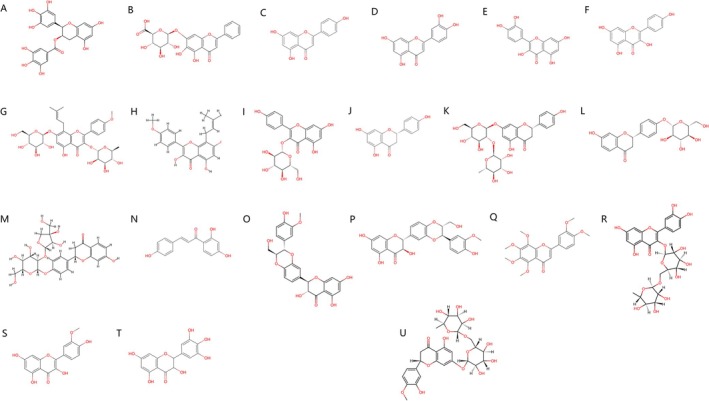
Phenolic compounds represent a significant class of secondary metabolites synthesized by plants, characterized by a core structure consisting of an aromatic ring directly bonded to a hydroxyl group (‐OH) (Akyol et al. ref. 2016). These compounds can be classified based on the number of aromatic rings, the mode of connection, and various substituents. Notable categories include flavonoids—formed by the linkage of two aromatic rings via a three‐carbon chain; phenolic acids—which feature an aromatic ring attached to both a hydroxyl group and a carboxyl group (‐COOH); stilbenes—comprising two aromatic rings connected through a trans‐ethenyl bridge; lignans—resulting from the polymerization of two phenylpropanoid molecules (C6‐C3 units); and tannins—polymerized from gallic acid or flavanols (Bolat et al. ref. 2024; Liu, Li, and Hu ref. 2024). Additionally, there are low‐molecular‐weight simple phenols (Chen, Lan, and Xie ref. 2024). Figures 4 and 5 illustrate the structural formulas of these natural phenolic substances. Due to their diverse chemical structures and biological activities, phenolic compounds play crucial roles in antioxidation, anti‐inflammation, anti‐aging, and disease prevention and treatment (Del Rio et al. ref. 2013; Ganesan and Xu ref. 2017). Tables 1 and 2 summarize the preclinical therapeutic effects and potential mechanisms of phenolic compounds in animal models for COPD.
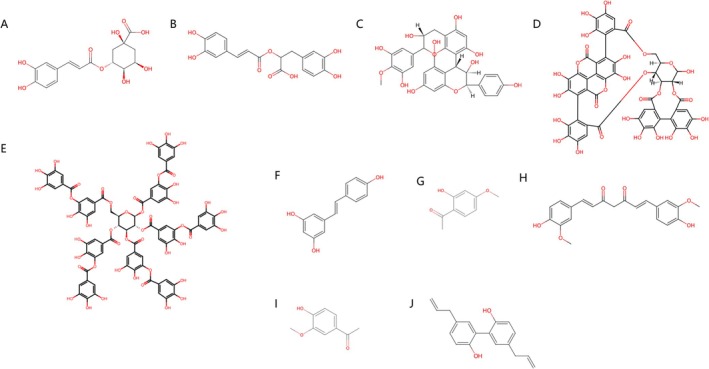
Flavonoids
Flavonoids represent the most diverse group of phenolic compounds and are extensively distributed across various plant species. They primarily exist in the form of glycosides, with a smaller proportion occurring as free aglycones (Dias et al. ref. 2021). The fundamental structure of flavonoids consists of 15 carbon atoms, characterized by a diphenylpropane backbone (C6‐C3‐C6) that includes two aromatic rings—designated as the A ring and B ring—connected by a central three‐carbon bridge (Heleno et al. ref. 2015; Liu, Li, and Hu ref. 2024). Based on the position at which the B ring is attached, the degree of oxidation in the three‐carbon central chain, and whether or not cyclization occurs, flavonoids can be categorized into seven principal subcategories: flavan‐3‐ols, flavones, flavonols, flavanones, flavanonols, isoflavones, and anthocyanins (Table 1) (Šamec et al. ref. 2021).
Epigallocatechin‐3‐Gallate (EGCG)
A clinical cross‐sectional study involving 13,570 Korean participants aged 40 and older demonstrated that individuals who consumed green tea at least twice daily exhibited a significantly lower risk of COPD compared to those who did not consume green tea (OR: 0.39; 95% CI: 0.26, 0.58) (Oh et al. ref. 2018). In a clinical study, green tea (Camellia sinensis) consumption by patients with stable COPD was found to significantly decrease serum matrix metalloproteinase 9 (MMP‐9) levels, enhance forced expiratory volume in 1 s (FEV1), and relieve clinical symptoms (Apriningsih et al. ref. 2018). EGCG, a bioactive component in green tea, has been demonstrated in vitro to suppress the activation of nuclear factor kappa‐B (NF‐κB) in airway epithelial cells induced by cigarette smoke (CS), consequently decreasing pro‐inflammatory cytokines (Syed et al. ref. 2007); concurrently, it lowered the levels of reactive oxygen species (ROS) and 4‐hydroxynonenal (4‐HNE), alleviating oxidative damage (Lakshmi et al. ref. 2020). EGCG preclinically diminished airway inflammation, mucus hypersecretion, and oxidative damage in animal models of COPD by inhibiting epidermal growth factor receptor (EGFR) levels as well as mucin 5 AC (MUC5AC) expression, along with the NOX2/p47phox‐ROS pathway (Chan et al. ref. 2012; Cheng, Yang, et al. ref. 2025; Liang et al. ref. 2017; March et al. ref. 2006) (Table 1).
Baicalin (BIA)
BIA is a flavonoid glycoside derived from the root of Scutellaria baicalensis Georgi (Huangqin). In CS‐induced COPD animal models, BIA demonstrates dose‐dependent, multi‐target anti‐inflammatory activity in preclinical settings centered on histone deacetylase 2 (HDAC2) upregulation (Lixuan et al. ref. 2010). Unlike broad NF‐κB inhibitors, BIA specifically enhances HDAC2 expression, thereby suppressing inflammatory cytokines (TNF‐α, IL‐1β, IL‐6, IL‐8) and toll‐like receptor (TLR) 2/4 signaling, while concurrently reducing plasminogen activator inhibitor‐1 (PAI‐1) to protect against vascular dysfunction (Zhang, Liu, et al. ref. 2021). This HDAC2‐centered mechanism interfaces with NF‐κB pathway modulation via deacetylation‐dependent transcriptional repression at the p65 promoter. BIA further mitigates airway remodeling through dual metalloproteinase inhibition (MMP‐2 and MMP‐9 downregulation) and antioxidant enzyme enhancement [superoxide dismutase (SOD), catalase (CAT), glutathione (GSH) activities], with concomitant malondialdehyde (MDA) reduction (Ju et al. ref. 2022; Wang, Mohammadtursun, et al. ref. 2018) (Table 1). At the cellular level, BIA protects against CSE‐induced apoptosis via miR‐125a suppression in human bronchial epithelial cells (Jing et al. ref. 2024), while the HSP72‐mediated JNK pathway provides additional stress‐responsive cytoprotection (Hao et al. ref. 2021). Collectively, BIA’s mechanism highlights HDAC2 as a master epigenetic regulator that integrates anti‐inflammatory, antifibrotic, and metabolic responses in COPD pathogenesis.
Apigenin
Apigenin is a flavonoid compound that is widely distributed in various plants, including Matricaria chamomilla (chamomile), Apium graveolens (celery), and Citrus species. In vitro studies suggest that apigenin targets oxidative stress‐induced cellular senescence, a core pathological feature of COPD (Li et al. ref. 2021). In vitro, apigenin markedly reduces the percentage of SA‐β‐galactosidase‐positive cells by modulating the SIRT1‐NAD+‐CD38 axis, decreasing senescence‐related markers p16 and p21, and upregulating silent information regulator 1 (SIRT1) expression. This SIRT1‐centered anti‐senescence mechanism complements EGCG’s EGFR‐centric epithelial protection and BIA’s HDAC2‐centric epigenetic regulation, collectively covering multiple cell fate regulatory nodes in COPD. Additionally, apigenin inhibits mucus production and MUC5AC gene expression in airway epithelial cells via NF‐κB pathway suppression, thereby ameliorating airway inflammation and mucus hypersecretion (Seo et al. ref. 2014).
Luteolin (Lut)
Lut, a natural flavonoid compound derived from Lonicera japonica Thunb. (Caprifoliaceae, honeysuckle), possesses integrated redox and inflammatory modulation as well as functional mucociliary enhancement effects. Research has confirmed that Lut effectively mitigates oxidative stress and inflammatory cascades in animal models of COPD by inhibiting the NOX4/NF‐κB signaling pathway (Li et al. ref. 2023) and through the interactive regulation of multiple pathways such as TRPV1/SIRT6 and CYP2A13/Nrf2 (Zhou et al. ref. 2023) (Table 1). Notably, Lut specifically increased the ciliary beat frequency (CBF) in the nasal mucosa of COPD patients, enhancing the mucociliary clearance ability and improving the retention of airway secretions (Yaghi et al. ref. 2012).
Quercetin (Que)
Que is a naturally occurring flavonoid compound that is abundant in Allium cepa, Malus domestica, and Camellia sinensis. Preclinical studies have demonstrated that it exhibits a broad spectrum of biological activities, including antioxidation, anti‐inflammation, immune regulation, and anti‐cellular senescence (Ding et al. ref. 2023). In animal models of emphysema, Que could reduce the levels of IL‐10, IL‐13, and IL‐22 in lung tissue, enhance the activities of SOD and CAT (Araújo et al. ref. 2022), and inhibit the expression of MMP‐9 and MMP‐12 (Ganesan et al. ref. 2010). It should be noted that the increase of IL‐10 and IL‐22 in this model is positively correlated with the severity of the disease. Que restores them to the baseline level, suggesting that it exerts a lung‐protective effect by inhibiting pathological inflammatory responses. Mechanistically, Que terminates the inflammatory cascade by inhibiting the NLRP3/IL‐1β inflammasome, antagonizes the fibrotic process by blocking transforming growth factor‐beta 1 (TGF‐β1) signaling, and suppresses structural remodeling by interrupting the Wnt5a/β‐catenin pathway (Araújo et al. ref. 2022; Yin et al. ref. 2024; Zhou, Lai, et al. ref. 2025) (Table 1). Moreover, Que reversed oxidative damage induced by CS exposure and corticosteroid resistance through activation of the AMPK/Nrf2 axis (Mitani et al. ref. 2017), while also upregulating genes related to epithelial regeneration such as homeobox B2 and E74‐like ETS transcription factor—thereby promoting repair mechanisms within the airway epithelium (McCluskey et al. ref. 2024). Notably, Que’s 5‐HT receptor antagonism enables MAPK pathway‐mediated mitigation of airway inflammation and peribronchiolar fibrosis (Yang et al. ref. 2020), introducing neuro‐immune modulation absent in other flavonoids. In CS‐induced airway injury, Que blocks MUC5AC expression and EGFR phosphorylation (Yang et al. ref. 2012), overlapping with EGCG’s EGFR‐targeting yet extending to NF‐κB‐independent mucus control. Its structural analog dihydroquercetin (DHQ) further expanded the therapeutic potential for flavonoids by inhibiting ferroptosis via the Nrf2 pathway (Liu et al. ref. 2022).
Despite its diverse pharmacological activities, Que exhibits extremely low oral bioavailability (approximately 2%), primarily attributable to extensive first‐pass metabolism, intestinal efflux transporters, and poor aqueous solubility, which collectively restrict its systemic exposure (Li et al. ref. 2016). To overcome these obstacles, current clinical trials (Table 7) have explored different administration strategies: the ref. NCT03989271 trial employed a high‐dose oral regimen of 2000 mg/day, while the ref. NCT06003270 trial compared dose effects of 500 and 1000 mg/day, aiming to balance efficacy and safety through dose optimization.
TABLE 7: Clinical trials of natural products related to COPD.
| Natural products | ID | Administration route | Dosage | Research content | Research status |
|---|---|---|---|---|---|
| Quercetin | ref. NCT03989271 | oral administration | 2000 mg/day for 6 months | Effects of quercetin on inflammatory and oxidative stress biomarkers in COPD | Unknown |
| ref. NCT06003270 | oral administration | 500 or 1000 mg/day for 6 months | Effects of quercetin on the oxidative stress and inflammatory markers in COPD | Recruiting | |
| Resveratrol | ref. NCT03819517 | oral administration | 500 mg/day for 12 weeks | Effects of resveratrol on cardiovascular function and systemic inflammation in patients with COPD | Completed |
| Curcumin | ref. NCT01514266 | — | 5 mg/day of Bioprine combined with 1, 1.5, or 2 g/day (of curcumin) for one month | Effects of curcumin combined with bioprine on sputum cytology in COPD patients | Completed |
| ref. NCT04687449 | oral administration | 950 mg/day for 90 days | Effects of curcumin on health impairment in COPD patients | Unknown | |
| Azithromycin | ref. NCT04069312 | oral administration | 250 mg/day, or 500 mg three times weekly, for 6–72 months | Effects of azithromycin on high‐risk patients with COPD exacerbation | Active, not recruiting |
| ref. NCT05772013 | oral administration | according to standard prescription | Effects of azithromycin maintenance therapy on COPD exacerbations | Recruiting |
Kaempferol (KMF) and Its Derivatives
KMF, a flavonoid originally isolated from Kaempferia galanga L. and also present in Ginkgo biloba, Brassica oleracea, and Camellia sinensis, exerted a lung‐protective effect in preclinical models by inhibiting elastase activity (Al‐Khayri et al. ref. 2022) and downregulating the levels of IL‐1α and C‐X‐C motif chemokine ligand 5, as identified by connectivity map analyses (Vanderstocken et al. ref. 2018). Its important glycoside derivative, Icariin (ICA) inhibited pro‐inflammatory mediators (IL‐8 and TNF‐α), increased the anti‐inflammatory factor IL‐10 to prevent pulmonary inflammation, and reduced ROS generation to inhibit oxidative stress in animal models. The underlying mechanism might be associated with the inhibition of the NF‐κB signaling pathway, an increase in glucocorticoid receptor protein levels, and the regulation of factors related to glucocorticoid resistance (HDAC2, Nrf2) (Hu et al. ref. 2020; Li, Sun, et al. ref. 2014). In vitro experiments demonstrated that the hydrolysis product of ICA, Icaritin (ICT), reduced ROS levels, activated the PI3K‐Akt‐Nrf2 pathway, and upregulates GSH levels, thereby alleviating oxidative stress (Wu et al. ref. 2014). Furthermore, another derivative of KMF, Astragalin (AST), significantly mitigated CS‐induced emphysema and pulmonary thrombosis in mice by blocking ROS production and preventing MAPK pathway activation (Kim et al. ref. 2021).
Naringenin and Naringin
Naringenin is a flavonoid compound widely found in citrus fruits and vegetables. Under experimental conditions, naringenin has been reported to protect airway ciliary structures from cigarette smoke extract (CSE) exposure through IL‐17 down‐regulation and cAMP pathway activation in cultured cells (Zhang et al. ref. 2024). It also reduced the excessive airway mucus secretion by inhibiting the activation of EGFR and the expression of downstream factors of the PI3K/Akt signaling pathway, NF‐κB, and lowering levels of mucin MUC5AC and the generation of ROS (Yang et al. ref. 2011). Mechanistically, in animal models, naringenin was observed to reduce pulmonary inflammation and excessive mucus production through inhibition of both the NF‐κB signaling pathway (Liu et al. ref. 2018) (Table 1) and the EGFR‐PI3K‐Akt/ERK MAPK signal transduction pathways (Yang et al. ref. 2011).
In vivo, its glycoside derivative, naringin, could inhibit neutrophil infiltration, reduce levels of inflammatory mediators such as IL‐8, leukotriene B4 (LTB4), and TNF‐α (Nie et al. ref. 2012), while decreasing the activities of myeloperoxidase (MPO) and MMP‐9, increasing the contents of SOD and lipoxin A4 (Luo et al. ref. 2012), and upregulating the expression of aquaporin‐1 (Zhang, Zhou, et al. ref. 2022), thereby alleviating CS‐induced airway inflammation.
Liquiritin (LQ) and Liquiritin Apioside (LA)
LQ and LA, both glycosylated derivatives of liquiritigenin, are naturally occurring flavonoid compounds derived from Glycyrrhiza uralensis Fisch. exDC. LQ could enhance the SOD activity in lung tissue and reduce MDA levels (Chen, Su, et al. ref. 2020), and exert protective effects by modulating the nuclear receptor Nur77 (NR4A1) and the phosphorylation signaling pathway of the transcription factor c‐Jun within the activator protein‐1 (AP‐1) complex (Zhou ref. 2020). Additionally, when combined in a 1:1 ratio with licochalcone B, LQ significantly enhanced the inhibitory effect on hematopoietic cell kinase, resulting in a synergistic antioxidant, anti‐inflammatory, and anti‐fibrotic response (Dong et al. ref. 2024).
LA could alleviate the CS‐induced oxidative stress and inflammatory response in the lungs by inhibiting neutrophil infiltration, decreasing levels of pro‐inflammatory cytokine TNF‐α and fibrotic factor TGF‐β, and simultaneously reducing MPO levels and enhancing SOD activity (Guan et al. ref. 2012). Importantly, animal experiments showed that LA, as a specific antitussive component, significantly reduced capsaicin‐induced cough frequency in guinea pigs at an oral dosage of 30 mg/kg (Kamei et al. ref. 2005).
Isoliquiritigenin
Liquiritigenin is a flavanone compound extracted from the roots of Glycyrrhiza uralensis. It exhibited antioxidant and anti‐inflammatory properties by activating the AMPK/Nrf2/ARE signaling pathway (Liu et al. ref. 2017), inhibiting the activation of NLRP3 and NF‐κB, and downregulating the expression of inducible nitric oxide synthase (iNOS), cyclooxygenase‐2 (COX‐2), TNF‐α, and IL‐6 (Kim et al. ref. 2008). In CS‐induced COPD mice, it suppresses inflammatory cell infiltration, reduces MPO and MDA levels, and alleviates oxidative stress and airway inflammation via the conserved Nrf2/NF‐κB signaling axis (Yu et al. ref. 2018) (Table 1). Additionally, our previous bioinformatics analysis indicated that liquiritigenin may influence glycolysis and phagocytosis in COPD patients by regulating three key targets: AKT1, IFNG, and JUN (Huang et al. ref. 2025). Notably, isoliquiritigenin is quickly absorbed after oral intake and can cross the blood–brain barrier. However, it breaks down easily in the body and has a short half‐life of 1–3 h. It is mainly processed by the liver through glucuronidation and sulfation, and then removed through urine (Kumar et al. ref. 2025).
Silymarin and Silibinin
Silymarin is a natural polyphenolic flavonoid extracted from the fruits and seeds of the Asteraceae plant Silybum marianum (Trappoliere et al. ref. 2009). It has been shown to mitigate CS‐induced inflammatory responses by inhibiting the ERK/p38 MAPK signaling pathway and decreasing the release of pro‐inflammatory factors, including TNF‐α, IL‐6, IL‐8, and KC (Li et al. ref. 2016). Its main active component, Silibinin, effectively inhibited airway fibrosis by suppressing CS‐induced expression of TGF‐β1 as well as Smad 2/3 phosphorylation while also reducing collagen deposition (Ko et al. ref. 2017). In vivo, Silibinin alleviated airway inflammation and mucus secretion through inhibition of the ERK‐SP1 pathway and reduction in the expression levels of pro‐inflammatory mediators such as MUC5AC and MPO (Park et al. ref. 2016) (Table 1).
Other Flavonoid Compounds
Nobiletin
Nobiletin is a polymethoxyflavone predominantly derived from the pericarp of Citrus reticulata ‘Chachi’ (Chachi mandarin). Nobiletin, a key active constituent of Bufei Yishen formula (BYF) and its modified formulas (ECC‐BYF II, ECC‐BYF III), protects the airway epithelial barrier in COPD by activating the SIRT1/AMPK/FoxO3a pathway to promote autophagy, upregulate tight junction proteins (occludin, ZO‐1, E‐cadherin), and suppress airway epithelial cell senescence (Cheng, Yan, et al. ref. 2025; Jia et al. ref. 2024). It also reduces mucus hypersecretion in COPD rat models via inhibiting the EGFR/PI3K/mTOR pathway (Li, Chen, et al. ref. 2020). Furthermore, combined with ICA, nobiletin alleviates pulmonary inflammation by blocking MAPK and PI3K/Akt signaling and reducing pro‐inflammatory cytokine release (Lu et al. ref. 2022) (Table 1).
Rutin
Rutin, a major flavonol compound predominantly isolated from Sophora japonica L., effectively reduces the levels of IL‐8, TNF‐α, and platelet‐activating factor to exert anti‐inflammatory effects in vivo (Chen, Xiong, et al. ref. 2020) (Table 1).
Isorhamnetin
Isorhamnetin is a naturally occurring flavonol extracted from the fruits of Hippophae rhamnoides L. and Ginkgo biloba L. In CS‐induced COPD mice, it has been shown to increase the levels of Nrf2, heme oxygenase‐1 (HO‐1), and SOD1/2 in a dose‐dependent manner, while significantly downregulating the expression of Keap1, which serves as a negative feedback regulator of Nrf2 (Xu et al. ref. 2022).
Dihydromyricetin (DHM)
DHM, a flavanol compound derived from Ampelopsis grossedentata, has been shown to inhibit lipid peroxidation and pyroptosis by specifically targeting the catalytic subunit SLC7A11 (xCT) (Hou et al. ref. 2025) (Table 1). Additionally, DHM interacted with SRC protein, leading to the upregulation of autophagy‐related proteins such as Beclin‐1, p62, and LC3B to contribute to the alleviation of mucus hypersecretion associated with COPD (Liu, Shi, et al. ref. 2025).
Hesperidin
Hesperidin is abundantly present in the peels of various Citrus species, including Citrus aurantium L. (bitter orange) and Citrus reticulata Blanco (mandarin orange), and is particularly enriched in the pericarp of these fruits. Hesperidin has been shown to mitigate the inflammatory response and oxidative stress injury in mice with COPD by upregulating the expression of peroxisome proliferator‐activated receptor gamma coactivator 1‐alpha (PGC‐1α) and SIRT1, and inhibiting the phosphorylation of NF‐κB subunit p65 (Wang et al. ref. 2020) (Table 1).
Phenolic Acids
The primary phenolic acids found in plants are derivatives of hydroxybenzoic acid (HBA) and hydroxycinnamic acid (HCA) (Heleno et al. ref. 2015). HBA possesses a fundamental C6‐C1 skeleton, with representative compounds including gallic acid and vanillin, among others (Zhang, Cai, et al. ref. 2022). In contrast, the basic structure of HCA is characterized by a C6‐C3 configuration, which primarily encompasses caffeic acid and chlorogenic acid (Heleno et al. ref. 2015; Upadhyay and Mohan Rao ref. 2013).
Chlorogenic Acid (CGA)
Coffea arabica, Lonicera japonica, and Eucommia ulmoides are all natural plant sources of CGA (Lu et al. ref. 2020). CGA selectively inhibited the PKR‐like endoplasmic reticulum kinase (PERK) and activating transcription factor 6 pathways, alleviated endoplasmic reticulum stress (ERS) to improve pulmonary fibrosis in mice (Wang, Li, et al. ref. 2017). CGA also mitigated lipopolysaccharide (LPS)‐induced inflammatory responses and oxidative stress in RAW264.7 cells by inhibiting the NF‐κB and JNK/AP‐1 pathways (Shan et al. ref. 2009) and activating the AMPK/PGC‐1α pathway (Gu et al. ref. 2023).
3,4,5‐Trihydroxycinnamic Acid (THCA)
THCA is a plant phenolic acid metabolite found in various species, including those from the Polygonaceae and Asteraceae families (Lopatriello et al. ref. 2017). It could down‐regulate MAPK/NF‐κB signal transduction while simultaneously upregulating the expression of NAD(P)H:quinone oxidoreductase 1 (NQO1) and SIRT1 (Min et al. ref. 2020). This dual action contributes to the alleviation of the inflammatory response in mice with COPD.
Rosmarinic Acid (RA)
RA is commonly found in plants belonging to the Lamiaceae family, including Rosmarinus officinalis, Perilla frutescens, and Salvia officinalis (Ijaz et al. ref. 2023). It inhibited airway inflammation in COPD mice induced by CS/LPS by reducing the infiltration of IL‐6, TNF‐α, IL‐17A, and IFN‐γ in BALF and lowering the Bax/Bcl‐2 ratio through the inhibition of spleen tyrosine kinase (Syk), thereby effectively suppressing cell apoptosis (Yuan et al. ref. 2025).
Tannins
Tannins are a class of polyphenolic compounds widely found in grains, legume seeds, fruits, and vegetables. Based on their chemical structure and properties, tannins can be mainly categorized into two groups: hydrolysable tannins (HT) and condensed tannins (CT) (Jing et al. ref. 2022).
Proanthocyanidins
CTs, commonly referred to as proanthocyanidins, are a class of condensed tannins widely distributed in plants, particularly enriched in Vitis vinifera L. (grape). It down‐regulated the expression of Nox4, p38 MAPK, and NF‐κB in rat lungs, and up‐regulated the level of the anti‐inflammatory factor HO‐1 to exert anti‐inflammatory effects (Ameeramja and Perumal ref. 2018). Grape seed proanthocyanidin extract (GSPE) reduced ROS levels, decreased the oxidation of the transcription factor EB (TFEB), and inhibited its nuclear translocation, thereby blocking CSE‐induced lung inflammation and emphysema (Sul et al. ref. 2023) (Table 2).
Oligomeric proanthocyanidins (OPC), a specific subclass of proanthocyanidins, exhibit potential therapeutic benefits in enhancing antioxidant capacity and lipid metabolism among patients with COPD. Specifically, COPD patients who ingested 150 mg of OPC orally on a daily basis for eight weeks experienced a reduction in MDA levels (p < 0.05), a marked increase in high‐density lipoprotein cholesterol (HDL‐C) levels (p < 0.05), and a decrease in the total cholesterol/high‐density lipoprotein cholesterol (TC/HDL‐C) ratio (p < 0.05) (Lu et al. ref. 2018).
Punicalagin (Pun)
Pun, a hydrolyzable tannin formed by the ester bond connection of gallic acid and ellagic acid, is predominantly derived from Punica granatum L. It suppresses macrophage inflammation and acute lung injury in mice by regulating NF‐κB and MAPK activation and downregulating FoxO3a (Cao et al. ref. 2019) (Zeng, Zhao, et al. ref. 2022). Pun activated the PI3K/Akt pathway and up‐regulated Nrf2‐mediated HO‐1 expression to enhance cellular antioxidant defense mechanisms (Xu, Wan, et al. ref. 2015). In addition, previous research conducted by our group showed that Pun counteracted CSE‐induced senescence in BEAS‐2B cells by inhibiting the protease‐activated receptor PAR2/mTOR axis, reducing levels of senescence‐related markers p16 and p21, and increasing SIRT1 expression, revealing the role of pun in the regulation of cellular senescence (Xu, Kang, et al. ref. 2024).
Tannic Acid
Tannic acid, a representative hydrolysable tannin compound, has been approved by the U.S. Food and Drug Administration (FDA) as a food additive, effectively alleviates pathological progression of emphysema (Jing et al. ref. 2022). It inhibits NF‐κB p65 and p38 MAPK phosphorylation, downregulates transcription of matrix metalloproteinases (MMPs) and apoptosis‐related genes, and reduces abnormal elastic fiber degradation products in lung tissue (Rajasekar et al. ref. 2024) (Table 2).
Stilbenes
The primary dietary sources of stilbene compounds include wine, peanuts, grapes, and their derivatives. These compounds represent a class of natural polyphenols characterized by a C6‐C2‐C6 skeleton, with their structure comprising 1,2‐diphenylethylene units (Zhou, Cai, et al. ref. 2025). Among the isolated stilbene compounds, monomers account for about 1/4, while the remainder exists in polymeric or derivative forms (Chen, Lan, and Xie ref. 2024). Resveratrol, as a prominent representative molecule in its monomeric form, has become a research hotspot due to its notable anti‐inflammatory, antioxidant, anti‐tumor, and cardiovascular protective effects (El Tannir et al. ref. 2024).
Resveratrol
Resveratrol is a stilbene compound predominantly isolated from the roots of Reynoutria japonica Houtt. (syn. Polygonum cuspidatum Sieb. et Zucc., Polygonaceae), and also found in Vitis vinifera L. (grape skin, seeds, and wine) and Arachis hypogaea L. (peanut). Previous studies conducted by our research group found that resveratrol could inhibit NF‐κB in lymphocytes of patients with COPD, leading to a reduction in the production of TNF‐α and MMP‐9, thereby exerting anti‐inflammatory and anti‐remodeling effects (Liu, Bao, et al. ref. 2016). It could also inhibit the expression of miR‐34a, activate SIRT1 to deacetylate and inactivate NF‐κB, which subsequently weakened CSE‐induced senescence in airway epithelial cells (Zeng, Yang, and Liu ref. 2022). In animal models of COPD, resveratrol inhibited inflammatory cytokines and oxidative stress markers (MDA and ROS), enhanced the activity of antioxidant enzymes (SOD and GSH‐Px), and down‐regulated the expression of endoplasmic reticulum stress markers (CHOP, caspase‐12 and caspase‐3), muscle atrophy‐related markers (MURF1 and MAFbx), as well as cell senescence markers (P53 and P21) (Chen et al. ref. 2016; Hu et al. ref. 2013; Li, Luo, et al. ref. 2014; Shi et al. ref. 2012; Wang, Dong, et al. ref. 2017; Zhang, Valizadeh, et al. ref. 2020) (Table 2). The mechanisms might involve inhibition of the NF‐κB pathway alongside activation of the SIRT1/PGC‐1α axis to achieve anti‐inflammatory and antioxidant effects; upregulation of HO‐1/Nrf2 levels for ameliorating oxidative stress damage; activation of the SIRT1–ORP150 axis for regulating ERS; upregulation of HDAC2 expression to mitigate muscle atrophy; as well as activation of Notch1 and Sirt1/FoxO3a pathways for modulating autophagy (Chen et al. ref. 2016; Hu et al. ref. 2013; Kode et al. ref. 2008; Li, Luo, et al. ref. 2014; Liu, Lin, et al. ref. 2014; Shi et al. ref. 2012; Wang, Dong, et al. ref. 2017; Zhang, Valizadeh, et al. ref. 2020). Moreover, its dimer derivative Amurensin H blocked the Syk/NF‐κB pathway to alleviate LPS/CS‐induced airway inflammation (Fan et al. ref. 2019).
Although resveratrol is rapidly absorbed following oral administration, its bioavailability remains low due to limited solubility, extensive metabolism, and rapid systemic clearance (Kumar et al. ref. 2025). Currently, a clinical trial (NCT03819517) is evaluating the effects of 500 mg daily resveratrol on cardiovascular health and systemic inflammation in patients with COPD, while another trial (ref. NCT05601180) is assessing the efficacy of combined resveratrol and Que administration in respiratory diseases including COPD.
Paeonol
Paeonol is a stilbene compound extracted from the root bark of Paeonia suffruticosa (Zhang, Cao, et al. ref. 2019). As an active constituent of ECC‐BYF III, paeonol alleviates COPD‐related injuries through multiple mechanisms. It suppresses airway mucus hypersecretion in COPD rats by downregulating MUC5AC, MUC5B, MUC1, and MMP‐9 (Qin et al. ref. 2021). It enhances antioxidant defense by promoting Nrf2 nuclear translocation and upregulating downstream antioxidant proteins (Xu, Shao, et al. ref. 2025). It also attenuates inflammation by blocking the ROS‐sensitive MAPKs/NF‐κB signaling axis (Liu, Ren, et al. ref. 2014).
Other Polyphenol Compounds
Curcumin
Curcumin, a linear diarylheptanoid compound extracted from the rhizome of Curcuma longa, a member of the Zingiberaceae family, has emerged as a significant natural product in COPD‐related research due to its multi‐target characteristics (Moghaddam et al. ref. 2009). Curcumin could reduce the infiltration of inflammatory cells and the levels of pro‐inflammatory factors, COX‐2, ROS, and MDA, inhibit the expression of ERS‐related proteins (CHOP, GRP78) and pro‐fibrotic factor TGF‐β, while increasing the activity of antioxidant enzymes and the expression of autophagy‐related proteins, and up‐regulate the level of HDAC2 in COPD animal models (Gan et al. ref. 2016; Suzuki et al. ref. 2009; Tang and Ling ref. 2019; Yuan et al. ref. 2018; Zhang et al. ref. 2016, ref. 2017) (Table 2). Mechanistically, it might involve SIRT1 (Tang and Ling ref. 2019), the NF‐κB/COX‐2 axis (Yuan et al. ref. 2018), the p66Shc pathway (Zhang et al. ref. 2016), the Nrf2‐ARE pathway (Suzuki et al. ref. 2009), and the PGC‐1α/SIRT3 signaling pathway (Zhang et al. ref. 2017) to exert anti‐inflammatory, antioxidant, anti‐airway remodeling, anti‐apoptotic, and anti‐skeletal muscle injury effects. Our research group further revealed that it regulated the activity of FoxO1 through the PTEN/PI3K/Akt/NF‐κB signaling axis to reverse PM2.5‐induced oxidative damage (Liu, Di, et al. ref. 2025).
It is worth noting that although curcumin has multiple pharmacological activities, its clinical application is significantly limited by its extremely low bioavailability (Askarizadeh et al. ref. 2020). Research indicates that the oral bioavailability of curcumin is less than 1%, mainly due to its poor water solubility, rapid first‐pass metabolism (glucuronidation and sulfation), and the action of intestinal efflux transporters (Aggarwal and Harikumar ref. 2009; Hegde et al. ref. 2023). To overcome these obstacles, researchers have developed various delivery systems, including curcumin‐loaded liposomes (Kokkinis et al. ref. 2024; Patel et al. ref. 2024), and nanoparticles (Chen et al. ref. 2022) have been developed to significantly enhance preclinical therapeutic efficacy. Nanocurcumin markedly reduced IL‐6 levels (p < 0.001) and improved lung function indicators (FEV1, FVC) (Zare’I et al. ref. 2024). Currently, two clinical trials are underway evaluating the effects of combination therapy with curcumin on sputum cytology and disease prognosis in patients with COPD (NCT01514266; NCT04687449).
Apocynin
Apocynin is a naturally occurring methoxy‐substituted catechol predominantly derived from Apocynum species, such as Apocynum cannabinum and Apocynum venetum, and exhibits potent anti‐inflammatory and antioxidant properties. Apocynin, a selective inhibitor of the NADPH oxidase Nox2 subtype (Alateeq et al. ref. 2024), exerts multiple protective effects by targeting Nox2‐dependent oxidative stress. It reduced lung inflammation by inhibiting inflammatory cell infiltration and the release of TNF‐α and IL‐6; improved vascular endothelial function (upregulating eNOS and downregulating 3‐NT); and inhibited platelet activation, thereby reducing the risk of cardiovascular complications (Chan et al. ref. 2023); and alleviated anxiety‐like behaviors induced by CS, suggesting its potential as an intervention drug for mental comorbidities in COPD (Alateeq et al. ref. 2024) (Table 2).
Magnolol
Magnolol is a lignan compound extracted from the bark of Magnolia officinalis, a plant of the Magnoliaceae family (Lin et al. ref. 2021). In animal experiments, it could significantly reduce pro‐inflammatory cytokines in lung tissue, increase the levels of antioxidant enzymes such as GSH and SOD, and activate the PPARγ‐SRC axis. It also upregulates the expression of tight junction proteins ZO‐1 and E‐cadherin, thus exerting anti‐inflammatory, antioxidant, and repair functions of the colonic epithelial barrier (Tao et al. ref. 2025) (Table 2).
Terpenoids
Terpenoids are the largest and most structurally diverse class of secondary metabolites in plant natural products (Zhou and Pichersky ref. 2020), composed of isoprene units (C5H8)n (Bergman et al. ref. 2019). Based on the number of isoprene units, terpenoids can be categorized into monoterpenoids (C10), sesquiterpenoids (C15), diterpenoids (C20), triterpenoids (C30), and tetraterpenoids (C40) (Lu et al. ref. 2023). Figure 6 shows the structural formulas of terpenoid natural substances from plants. The discovered terpenoids have properties such as antibacterial, antiviral, anti‐hyperglycemic, anti‐inflammatory, and immune regulation.
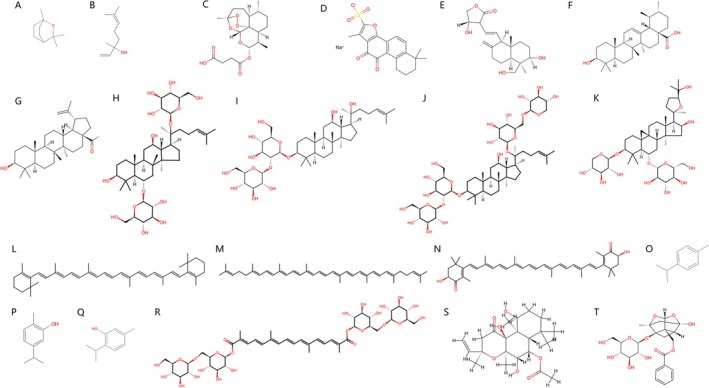
Eucalyptol (EUC)
EUC, also known as 1,8‐cineole, is a monoterpene compound predominantly derived from Eucalyptus globulus Labill. It suppresses TNF‐α, IL‐1β, IL‐6, and KC production, restores antioxidant enzyme homeostasis, optimizes the MMP‐12/TIMP‐1 ratio and TIMP‐1 expression, and facilitates the repair of CS‐induced emphysema in mice (Kennedy‐Feitosa et al. ref. 2016). A multicenter study demonstrated that compared to the currently recommended treatment regimen involving glucocorticoids in combination with long‐acting β2 receptor agonists, cineole (200 mg, tid, for 6 months) could significantly reduce exacerbation rates in patients with stage III/IV COPD (p < 0.036) (Worth et al. ref. 2009).
Linalool
Linalool, a natural acyclic monoterpene alcohol isolated from the essential oil of Cinnamomum camphora (L.) Presl var. linaloolifera, possesses both anti‐inflammatory and antibacterial properties. In CS‐induced inflammatory animal models, it significantly reduces the expression of TNF‐α, IL‐6, IL‐1β, and MCP‐1 by inhibiting the NF‐κB signaling pathway (Ma et al. ref. 2015). It also inhibited the formation of biofilms of Acinetobacter baumannii (Alves et al. ref. 2016), and in combination with antibiotics, it had a synergistic bactericidal effect against methicillin‐resistant Staphylococcus aureus, Pseudomonas aeruginosa, and Escherichia coli, notably decreasing the minimum inhibitory concentration (MIC) values of antibiotics and reversing drug resistance (Aelenei et al. ref. 2019), with an MIC range of 2–8 μL/mL (Alves et al. ref. 2016). Additionally, administration of 50 mg/kg linalool modulated nicotine‐induced conditioned place preference (CPP), exhibiting effects on preventing relapse that were comparable to those observed with 2 mg/kg varenicline in male mice (p < 0.05) (Yunusoğlu ref. 2021).
Artesunate
Artesunate, a semi‐synthetic derivative of artemisinin predominantly sourced from Artemisia annua L., possesses anti‐inflammatory, antioxidant, and anti‐fibrotic properties in animal models. In animal experiments, it could alleviate CS‐induced inflammation and oxidative stress damage by inhibiting pro‐inflammatory signaling pathways such as PI3K/Akt and MAPK, promoting the nuclear translocation of the antioxidant transcription factor Nrf2, and reducing the levels of inflammatory factors such as IL‐8, IL‐1β, MCP‐1, and KC, as well as oxidative stress markers such as 3‐NT and 8‐hydroxy‐2′‐deoxyguanosine (8‐OHdG) (Luo et al. ref. 2016; Ng et al. ref. 2014). It could also significantly improve CS‐induced airway remodeling in rats by modulating the PPAR‐γ/TGF‐β1/Smad2/3 signaling pathway, inhibiting the expression of α‐smooth muscle actin (α‐SMA) and Cyclin D1 (Pan et al. ref. 2021) (Table 3).
Tanshinone
Tanshinone is a lipophilic diterpene quinone compound derived from the root and rhizome of Salvia miltiorrhiza Bge., primarily comprising tanshinone I, tanshinone IIA, tanshinone IIB, and other constituents, among which tanshinone IIA is the active component with a relatively high content (Jiang et al. ref. 2019). TS mitigated the activation of the NLRP3 inflammasome by inhibiting the NF‐κB/ERK1/2 pathway and upregulated the expression of hemopexin, thereby relieving the inflammatory response and oxidative stress induced by CS/LPS (Yang, Yang, et al. ref. 2023) (Table 3). Network pharmacology and molecular docking studies have confirmed that tanshinone IIA ameliorates pathological processes associated with inflammation, oxidative stress, and protease–antiprotease imbalance in COPD through modulation of key targets such as EGFR, CASP3, MMP‐9, SRC, and HSP90AA1 (Liu, Shi, et al. ref. 2025).
Its water‐soluble derivative—tanshinone IIA sulfonic sodium— (Zhou et al. ref. 2019) could inhibit the ERK/NF‐κB (Li, Wang, et al. ref. 2018; Li, Sun, et al. ref. 2020) and MAPK/HIF‐1α signaling pathways (Guan et al. ref. 2018), up‐regulate miR‐486‐5p (Tian et al. ref. 2022) (Table 3), and activate the SIRT1 pathway, exerting anti‐inflammatory, antioxidant, and anti‐apoptotic effects (Guan et al. ref. 2021).
Andrographolide (AGP)
AGP, a diterpenoid compound isolated from Andrographis paniculata (Burm. f.) Nees, demonstrates notable anti‐inflammatory, antioxidant, and anti‐apoptotic biological activities in preclinical and clinical studies (Hu et al. ref. 2024). AGP reduces the expression of inflammasome components (NLRP3, ASC, Caspase‐1) and inflammatory mediators (IL‐1β, TNF‐α, MIP‐2) in vitro and in vivo. It also decreases matrix metalloproteinase expression and oxidative stress markers (MPO, HO‐1), enhances antioxidant activities (GSH, SOD), and regulates apoptosis (Caspase‐3/7) and autophagy markers (p62, LC3B‐II) (Li et al. ref. 2013; Tan et al. ref. 2018; Yang et al. ref. 2013; Yu et al. ref. 2024; Zhang, Ding, et al. ref. 2020). The potential mechanisms might involve the down‐regulation of the NLRP3/ASC/Caspase‐1 complex (Yu et al. ref. 2024), modulation of the miR‐218/NF‐κB pathway (Li et al. ref. 2013) and the SIRT1/ERK pathway (Zhang, Ding, et al. ref. 2020), as well as activation of both HO‐1/STAT3 (Yang et al. ref. 2013) and Nrf2 signaling pathway (Tan et al. ref. 2018). Moreover, AGP inhibited the PI3K/Akt/c‐Jun axis to enhance HDAC2 and Nrf2 levels, reversing glucocorticoid resistance in COPD (Liao et al. ref. 2020).
Ursolic Acid (UA)
UA is a natural pentacyclic triterpenoid compound that is abundantly found in apple peels, loquat leaves, and various medicinal plants (Liu et al. ref. 2012). In animal models of COPD induced by CS or PM2.5, UA inhibited the epithelial‐mesenchymal transition (EMT) and apoptosis markers, reduced levels of inflammatory cytokines, lactate dehydrogenase (LDH), acid phosphatase (ACP), and α‐SMA, and lowered the expression of oxidative damage markers (8‐OHdG, MDA) (Li, Ma, et al. ref. 2020; Lin et al. ref. 2017; Lin, Hou, Han, Kang, and Wang ref. 2019; Lin, Hou, Han, Yin, et al. ref. 2019) (Table 3). The potential mechanisms underlying these effects might involve the inhibition of the TGF‐β1/Smad2/3 (Lin, Hou, Han, Kang, and Wang ref. 2019; Lin, Hou, Han, Yin, et al. ref. 2019), MAPK (Ma, Deng, et al. ref. 2019), and PERK‐CHOP pathways (Lin, Hou, Han, Yin, et al. ref. 2019), as well as the activation of the Nrf2/ARE pathway (Lin et al. ref. 2017), exerting effects such as improving airway‐vascular remodeling, preventing atrophy of the soleus muscle, anti‐apoptosis, antioxidation, and anti‐inflammation in mice.
Betulinic Acid (BA)
BA is a triterpenoid compound mainly found in Betula platyphylla Sukaczev or Betula pendula Roth (Betulaceae, white birch) bark (Lou et al. ref. 2021). It could inhibit the levels of LDH, ACP, alkaline phosphatase (ALP), albumin (ALB), and cytokines, and up‐regulate SOD activity while reducing the expression of MDA and nitric oxide synthase (NOS), thereby alleviating PM2.5‐induced lung inflammation and injury in mice (Yue et al. ref. 2021) (Table 3). Notably, a therapeutic dose of 8 mg/kg BA demonstrated optimal efficacy (Yue et al. ref. 2021).
Ginsenoside
Ginseng is primarily sourced from Panax ginseng C. A. Mey. and Panax notoginseng (Burk.) F. H. Chen. As a traditional Chinese medicine, it exerts multi‐target regulatory effects in the treatment of respiratory system diseases through its active components, ginsenoside Rg1, Rg3, and Rb3. A multicenter, randomized, double‐blind placebo‐controlled clinical trial demonstrated that ginseng could significantly improve the quality of life (QoL) scores and lung function parameters of patients with COPD (Xue et al. ref. 2011).
Rg1 alleviated CS‐induced EMT and airway remodeling by inhibiting the TGF‐β1/Smad signaling pathway, reducing the expression of α‐SMA and vimentin, regulating the MMP‐9/TIMP‐1 balance, and upregulating E‐cadherin (Guan, Liu, et al. ref. 2017; Guan, Xu, et al. ref. 2017; Guan, Yu, et al. ref. 2020). It also inhibited nuclear receptor coactivator 4 (NCOA4)‐mediated ferritin autophagy and the PERK/ATF4 axis in COPD mice, thereby improving COPD‐related ferroptosis (Tan et al. ref. 2024) (Table 3).
Rg3 alleviates inflammation in acute exacerbation of COPD (AECOPD) mice induced by CS/Nontypeable Haemophilus influenzae by inhibiting the PI3K/Akt pathway and activating SIRT1, reducing levels of IL‐6 and KC, and inhibiting PINK1 and PTEN‐mediated mitochondrial autophagy (Guan, Yuan, et al. ref. 2020; Wang et al. ref. 2024) (Table 3).
Rb3 blocked trophoblast antigen protein 2 (TROP2) expression mediated by the p38 MAPK/NF‐κB pathway (Li, Cui, et al. ref. 2021), antagonized the TGF‐β1/VEGF signaling pathway, and reduced excessive accumulation of extracellular matrix proteins such as collagen I, collagen III, and elastin (Wang, Chen, et al. ref. 2018) in vitro, effectively improving CS‐induced airway inflammation and remodeling.
Astragaloside IV (AS‐IV)
Astragalus membranaceus, primarily derived from A. membranaceus (Fisch.) Bge. var. mongholicus (Bge.) Hsiao (Fabaceae), is a tonic herb for qi deficiency, contains the active component AS‐IV, a triterpene saponin compound extracted from its roots. Both in vitro and in vivo studies showed that AS‐IV could inhibit inflammatory cell infiltration, the release of pro‐inflammatory factors, and the level of C‐X‐C motif chemokine receptor 4 (CXCR4), increase the activities of SOD and GSH, down‐regulate the expression of EMT markers (snail and vimentin) and the key protein GSDMD of pyroptosis, and improve lung injury induced by CS/CSE. The underlying mechanisms include: inhibition of the NF‐κB/MAPK (Chen et al. ref. 2010; Hsieh et al. ref. 2022) and JAK3/STAT3/NF‐κB pathways (Meiqian et al. ref. 2018), activation of the mTORC1/GSK‐3β pathway (Chen et al. ref. 2025), and down‐regulation of CXCR4 to restore Th17/Treg balance (Zhang, Wang, et al. ref. 2023), thereby exerting anti‐inflammatory and antioxidant effects (Table 3). Furthermore, AS‐IV inhibited activation of the RAS/RAF/FoxO pathway to prevent pulmonary fibrosis (Zhang, Li, et al. ref. 2023) and suppressed the TXNIP‐NLRP3‐GSDMD pathway to alleviate pyroptosis in lung epithelial cells (Wu et al. ref. 2024) (Table 3).
PM2.5‐specific defense distinguishes AS‐IV. PM2.5 is a major environmental risk factor for COPD (Su et al. ref. 2021). AS‐IV mitigates PM2.5‐induced injury through environmental toxicant‐adaptive mechanisms. It activates Nrf2/SLC7A11/GPX4 to inhibit ferroptosis (Wang, Wu, et al. ref. 2022). Unlike DHQ’s general Nrf2 activation, AS‐IV specifically targets particulate‐induced lipid peroxidation. It inhibits TLR4/MyD88/NF‐κB to reduce inflammation (Wu et al. ref. 2021). It creates context‐dependent autophagy balance via dual mTOR modulation (Pei et al. ref. 2021; Wang, Wang, et al. ref. 2022). This differs from nobiletin’s SIRT1‐dependent autophagy. It suppresses NLRP3/caspase‐1 pyroptosis (Huang et al. ref. 2022). It regulates miR‐362‐3p/RUNX1 to block fibrosis (Tian, Zhang, et al. ref. 2024).
Carotenoids
Carotenoids are a class of tetraprenoid natural pigments widely present in photosynthetic organisms (such as plants and algae) and non‐photosynthetic organisms (including certain fungi and bacteria), with representative members including α‐carotene, β‐carotene, astaxanthin, and lycopene (Saini et al. ref. 2022). Lycopene is predominantly derived from Solanum lycopersicum L. (tomato, Solanaceae).
Studies showed that serum levels of α‐carotene and β‐carotene in adults over the age of 40 exhibited a negative correlation with the incidence of COPD (Zheng et al. ref. 2023), while levels of total ascorbic acid, lycopene, total carotenoids, and whole‐blood GSH in the plasma of COPD patients were significantly reduced, suggesting that the deficiency of antioxidant nutrients might exacerbate oxidative stress in COPD (Kodama et al. ref. 2017).
As a liposoluble compound (Zhao et al. ref. 2017), lycopene could inhibit the infiltration of inflammatory cells and cytokine levels, lower the total cholesterol level, and increase the activity of antioxidant enzymes, effectively alleviating the lung injury induced by CS, with the dose of 50 mg/kg/day showing the best protective effect in vivo experiments (Campos et al. ref. 2019; Mustra Rakic et al. ref. 2019) (Table 3).
Astaxanthin (AXT)
AXT, a naturally occurring keto‐carotenoid predominantly found in Haematococcus pluvialis Flot. (Cheng and Eroglu ref. 2021), demonstrated potential to mitigate lung injury induced by CS/CSE/PPE in preclinical models. It reduces inflammation and oxidative stress by inhibiting the NF‐κB/c‐Jun pathway and the DUOX1/NOX4 axis (Tang et al. ref. 2023), and activating SIRT1 (Deng et al. ref. 2023) and the Nrf2/HO‐1 pathway (Kubo et al. ref. 2019), thereby decreasing pro‐inflammatory factors, ROS, and MDA levels while increasing SOD activity and GSH content. AXT also exerts anti‐fibrotic effects by blocking the PI3K/Akt pathway (Ding et al. ref. 2024), inhibiting α‐SMA and vimentin, up‐regulating the expression of E‐cadherin, and regulating the balance of MMP‐9/TIMP‐1. Additionally, it improves muscle atrophy by activating the p38 MAPK signaling pathway (Mano et al. ref. 2022) (Table 3).
Other Terpene Compounds
P‐Cymene, Carvacrol and Thymol
p‐Cymene, carvacrol, and thymol are structurally homologous monoterpenoids derived from plant essential oils (Bakkali et al. ref. 2008). In COPD animal models, these compounds could all alleviate elastase‐induced emphysema by targeting the inhibition of the NF‐κB signaling pathway, down‐regulating the secretion of pro‐inflammatory factors such as IL‐6, KC, and IL‐17, and synergistically inhibiting MMP‐9‐mediated extracellular matrix degradation and 8‐iso‐PGF2α‐related oxidative stress responses (Games et al. ref. 2016) (Table 3).
Paeoniflorin
Paeoniflorin, a monoterpene glycoside predominantly derived from Paeonia lactiflora Pall. and Paeonia suffruticosa Andr., is a characteristic bioactive compound of Paeonia species. It can activate the Nrf2/ATF4 pathway. Unlike Que’s Nrf2‐mediated corticosteroid resistance reversal or paeonol’s phase II enzyme battery induction, this mechanism specifically couples oxidative stress response with endoplasmic reticulum stress adaptation. ATF4 activation promotes integrated stress response gene expression: HO‐1 for heme‐iron handling, γ‐glutamylcysteine synthetase (γ‐GCS) for glutathione synthesis, and SOD for superoxide dismutation (Lin et al. ref. 2016) (Table 3). This ATF4‐dependent transcriptional coordination distinguishes it from AS‐IV’s Nrf2/SLC7A11/GPX4 ferroptosis focus or EGCG’s Nrf2‐NOX2 redox‐inflammatory coupling.
Crocin
Crocetin, a natural carotenoid derivative found in Crocus sativus L. (saffron) stigma as its glycoside crocin, offers distinct advantages in the treatment of central nervous system disorders (Farkhondeh et al. ref. 2018). It exerted anti‐inflammatory and antidepressant effects by inhibiting the PI3K/Akt/NF‐κB signaling pathway, reducing pro‐inflammatory cytokine levels in the hippocampus and ameliorating depressive‐like behaviors of COPD mice (Xie et al. ref. 2019). Clinical studies showed that crocetin significantly reduced serum TNF‐α levels in COPD patients, improved lung function and 6‐min walk distance test (p < 0.05) to enhance exercise tolerance (Aslani et al. ref. 2023), and also inhibited NF‐kB activity and coordinated the oxidation/antioxidation balance (Ghobadi et al. ref. 2022).
Isoforskolin
Isoforskolin is a natural diterpenoid compound derived from Colquhounia coccinea var. mollis (Schauer) Prain in China (Xiao et al. ref. 2021). Isoforskolin targets acute exacerbation pathophysiology in a cigarette smoke‐influenza virus dual‐stimulus AECOPD model (Xiao et al. ref. 2021). It suppresses Th17/IL‐17A‐driven neutrophilic inflammation. It concurrently inhibits NF‐κB/NLRP3 inflammasome activation (Table 3).
Platycodon Saponins
The combination of platycodin and platycodon grandiflorum polysaccharides exerts a synergistic protective effect against CS/wood shavings‐induced lung inflammatory injury in COPD rats, which is mediated by the gut‐lung axis rather than redundant inhibition of the canonical NF‐κB pathway alone (Xu, Xu, et al. ref. 2025) (Table 3). Specifically, this combination inhibits cytokine release in lung and small intestinal tissues, upregulates intestinal MUC2 and ZO‐1 protein expression to strengthen intestinal barrier function, reduces endotoxin and D‐lactic acid levels to improve intestinal permeability, and further blocks the TLR4/NF‐κB signaling cascade in lung tissue.
Alkaloids
Alkaloids represent a class of nitrogen‐containing organic compounds characterized by their basic properties, predominantly found in monocotyledonous plants (Oladeji et al. ref. 2024). The structural feature of these compounds is defined by the presence of at least one nitrogen atom linked to an aromatic ring (Ma et al. ref. 2018) (Figure 7). Alkaloids exhibit a diverse range of pharmacological activities, including anti‐inflammatory, anti‐cancer, antioxidant, and antibacterial effects (Li, Sun, et al. ref. 2020; Ti et al. ref. 2021).
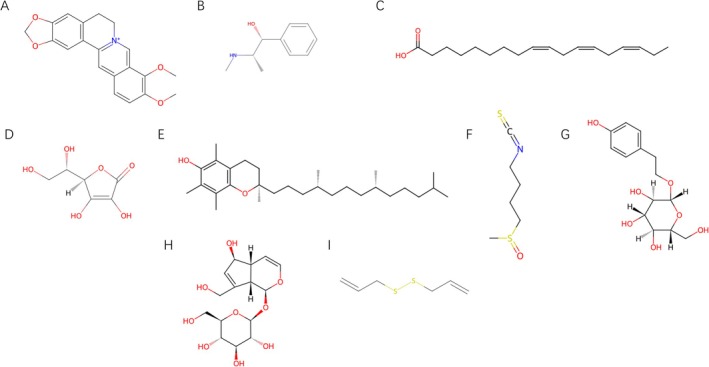
Berberine (Ber)
In the COPD rat model induced by CS, Bar, the principal component of Coptis chinensis Franch., can up‐regulate the expression of SOD, decrease MPO levels, and simultaneously inhibit the release of inflammatory cytokines to improve airway inflammation and oxidative stress injury (Liu et al. ref. 2022) (Table 4). Both in vitro and in vivo studies have demonstrated that Ber can diminish the secretion of pro‐inflammatory factors andMUC5AC expression by inhibiting the NF‐κB pathway (Lee et al. ref. 2007; Lin et al. ref. 2013) the TGF‐β1/Smads signaling pathway (Wang et al. ref. 2019), and the activation of ERK/p38 MAPKs (Xu, Li, et al. ref. 2015), thereby improving airway inflammation and mucus hypersecretion and effectively alleviating acute lung injury induced by CS/CSE (Lin et al. ref. 2013). Moon’s research team (Moon et al. ref. 2011) first revealed that it could inhibit the production of thymic stromal lymphopoietin (TSLP) by blocking the Caspase‐1/NF‐κB axis, opening up a new dimension in anti‐inflammation. Notably, the liposome/nanoparticle delivery system of Ber effectively overcomes its bioavailability bottleneck and can significantly enhance the therapeutic effect (Alnuqaydan et al. ref. 2022; Liu et al. ref. 2022; Paudel et al. ref. 2022).
Ephedrine (Eph)
Eph, the main active component of Ephedra sinica Stapf, is often used to treat hypotension (Fitzgerald et al. ref. 2020), asthma (Anderson ref. 2018), and other diseases. However, due to serious adverse reactions such as palpitations and epilepsy that Eph can cause (Haller and Benowitz ref. 2000), the Food and Drug Administration (FDA) of the United States banned the use of dietary supplements containing Eph in 2004 (Nelson ref. 2004). In terms of treating inflammatory response, oxidative stress, and apoptosis in COPD mice, Eph could inhibit ERS, maintain the activity of the Nrf2 antioxidant pathway, and suppress the activation of Caspase‐3 and NF‐κB (Wang, Chen, and Wu ref. 2022) (Table 4).
Other Plant‐Derived Natural Products
Polyunsaturated Fatty Acid (PUFA)
PUFA refers to fatty acids containing two or more carbon–carbon double bonds (Figure 6), which are classified into Omega‐3 and Omega‐6 based on the position of the first double bond (Broekhuizen et al. ref. 2005). A clinical study has shown that daily supplementation of 9 g of PUFA for 8 weeks can significantly improve the exercise endurance of COPD patients (Broekhuizen et al. ref. 2005).
Omega‐3 fatty acids primarily consist of alpha‐linolenic acid (ALA), eicosapentaenoic acid (EPA), docosapentaenoic acid (DPA), and docosahexaenoic acid (DHA) (Duvall and Levy ref. 2016). The dietary intake of these fatty acids reduced inflammatory marker levels in COPD patients (de Batlle et al. ref. 2012) and was inversely correlated with the risk of developing COPD (Varraso et al. ref. 2015). As an essential fatty acid (Patchen et al. ref. 2023), it exerted anti‐inflammatory effects by inhibiting the NF‐κB/MAPKs signaling pathway and downregulating the expression of iNOS, COX‐2, and TNF‐α (Ren and Chung ref. 2007). Clinical data indicated that levels of ALA, EPA, and linoleic acid (LA) in the sputum from stable COPD patients were significantly lower than those observed in a smoking control group (Vander Does et al. ref. 2019), while a cross‐sectional study in the United States confirmed that increased intake of ALA could reduce the incidence of chronic cough (p = 0.015) and wheezing (p = 0.037) in COPD patients (Lemoine et al. ref. 2019).
LA, a representative member of Omega‐6, competes with Omega‐3 in the regulation of inflammation (Atlantis and Cochrane ref. 2016). Its isomer, conjugated linoleic acid (CLA), has been found to decrease serum IL‐1β levels in COPD patients (Ghobadi et al. ref. 2016), inhibit MMP‐9 and malondialdehyde levels (Matin et al. ref. 2018), and alleviate inflammation and oxidative stress damage in COPD patients.
Vitamin
In clinical studies, vitamin C supplementation has been shown to significantly reduce the frequency of acute exacerbations in patients with COPD (Dey et al. ref. 2021), improve skeletal muscle mass and function (Ahmadi et al. ref. 2020), and enhance neuromuscular fatigue tolerance (p < 0.05) (Hureau et al. ref. 2021). Meta‐analyses indicated that daily supplementation with more than 400 mg of vitamin C could substantially increase antioxidant levels and improve lung function in COPD patients (Lei et al. ref. 2022).
Vitamin E, as a fat‐soluble antioxidant, consists of 8 subtypes including 4 tocopherols and 4 tocotrienols (Peh et al. ref. 2016). Clinical investigations have demonstrated a positive correlation between its intake and lung function (Hanson et al. ref. 2016), as well as a negative correlation with all‐cause mortality among COPD patients (Tian, Li, et al. ref. 2024). At the mechanistic level, vitamin E might alleviate symptoms of COPD by inhibiting the EGFR/MAPK pathway and blocking COX2‐mediated STAT3 phosphorylation and nuclear translocation (Zhao et al. ref. 2022) (Table 4). Notably, γ‐tocotrienol significantly reduced CS‐induced airway remodeling and emphysema in mice by activating the Nrf2 antioxidant pathway and inhibiting the STAT3/NF‐κB inflammatory signal transduction, and its effect on improving lung function was superior to that of prednisolone (Peh et al. ref. 2017).
In addition, supplementation with vitamins A and D has been found to enhance lung function in individuals with COPD (Li, Zhao, et al. ref. 2024; Noh and Baik ref. 2024; Van Iersel et al. ref. 2022), whereas deficiencies in these vitamins might lead to increased morbidity and mortality related to respiratory tract conditions (Salo et al. ref. 2022).
Sulforaphane (SFN)
SFN is derived from Brassica oleracea var. italica Plenck. SFN not only restored the pathogen clearance ability via the Nrf2‐MARCO axis (Harvey et al. ref. 2011), but also, as demonstrated in our previous research, inhibited the TLR2/4‐MyD88 pathway and reduced the production of downstream inflammatory mediators (IL‐6, TNF‐α), thereby exerting an anti‐airway inflammatory effect in COPD patients (Zeng et al. ref. 2021).
Other natural active components in COPD animal models (Table 4): Perilla leaf extract (PLE) (Yuan et al. ref. 2022) and Houttuynia exerted anti‐inflammatory effects by inhibiting the TLR4/Syk/PKC/NF‐κB pathway and the TLR4/MyD88/NF‐κB (p65) pathway, respectively. Notably, the therapeutic efficacy of PLE surpasses that of roflumilast and dexamethasone (Yuan et al. ref. 2022). Hippophae rhamnoides extract inhibited ferroptosis by scavenging ROS, reducing NOX4 activity and down‐regulating the p53/MAPK pathway (Liu, Di, et al. ref. 2025). Aucubin activated the Nrf2/HO‐1 antioxidant pathway (Liu, Shi, et al. ref. 2024), and salidroside regulated the balance of myogenin and myostatin to improve skeletal muscle atrophy (Zhang, Li, and Liu ref. 2019). Furthermore, diallyl disulfide reduced lung injury by lowering oxidative damage markers (4‐HNE, PNK, MDA) and CYP2E1 expression (Cardoso et al. ref. 2021). Our previous study found that astragalus polysaccharides could enhance the phagocytic function of alveolar macrophages, reduce lung and systemic inflammation, and alleviate PM2.5‐related damage (Chu et al. ref. 2016).
Microorganisms‐Derived Natural Products
Macrolides
Macrolides, as secondary metabolites of Streptomyces, mainly include erythromycin (EM), and its structurally modified derivatives azithromycin (AZI) and clarithromycin (CAM) (Xiaofei et al. ref. 2022) (Figure 8). Among them, EM is naturally produced by Streptomyces erythreus, while AZI and CAM have significantly improved oral bioavailability and reduced toxic and side effects through chemical modification. In 2017, the Global Initiative for Chronic Obstructive Lung Disease (GOLD) first included this drug in the anti‐inflammatory drug treatment plan (Zhang, Guo, et al. ref. 2021).
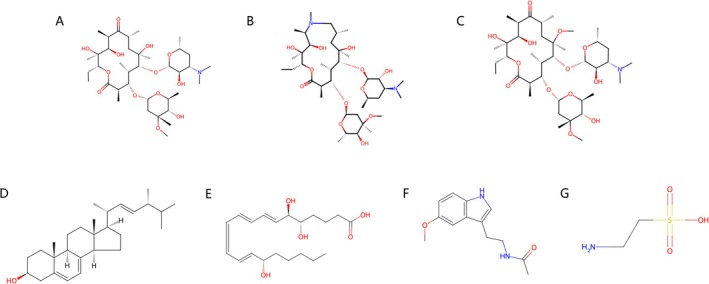
A meta‐analysis indicated that long‐term macrolide treatment for more than 6 months could safely and effectively reduce the frequency of COPD exacerbations (Yao et al. ref. 2013). Their anti‐inflammatory actions are mediated by a coordinated regulatory network rather than isolated inhibition of canonical PI3K/Akt signaling; they upregulate Nrf2 to attenuate pulmonary and systemic inflammation in COPDin vitro and in vivo (Sun, Chen, and He ref. 2019).
EM demonstrates pleiotropic aging‐intervention: KC/TNF‐α suppression, Bcl‐2/Bax apoptosis regulation, SOD enhancement, MMP‐9/TIMP‐1 balance, and P53/P21/SA‐β‐Gal senescence marker reduction (Ma, Liu, et al. ref. 2019; Mikura et al. ref. 2011; Qiu et al. ref. 2021; Xiaofei et al. ref. 2022; Zhou et al. ref. 2012). This multi‐dimension cellular protection exceeds single‐mechanism natural products. Mechanistically, EM activates PPARγ/NF‐κB and SIRT1‐NF‐κB axes (Ma, Liu, et al. ref. 2019; Qiu et al. ref. 2021), inhibits PI3K‐mTOR aging‐related signaling (Xiaofei et al. ref. 2022), and enhances cortisol sensitivity via JNK/c‐Jun blockade (Bin et al. ref. 2020). The derivative F528 specifically blocks NF‐κB for emphysema improvement (Zhang, Guo, et al. ref. 2021) (Table 5).
AZI has been shown to reduce the frequency of AECOPD (Albert et al. ref. 2011; Uzun et al. ref. 2014) and decrease the risk of failed hospital treatment (Vermeersch et al. ref. 2019). Its mechanism of action involved the inhibition of CS‐induced pro‐inflammatory factors and EMT markers (N‐cadherin, vimentin, α‐SMA), the up‐regulation of HDAC2 levels and key antioxidant proteins (Nrf2, SOD2) (Jain et al. ref. 2022); the activation of the Nrf2/GCL/GSH pathway to maintain the integrity of the airway epithelial barrier (Song et al. ref. 2023). Currently, two clinical trials are underway to evaluate the effects of AZI on COPD patients. One trial compares the preventive effects of roflumilast (Daliresp, 500 μg/day) versus AZI (250/500 μg/d, three times a week) on hospitalization or mortality events among high‐risk patients experiencing AECOPD (NCT04069312). The other focuses on stable COPD patients who have been continuously treated with AZI for at least three months; it assesses how long‐term treatment impacts disease progression in this population (NCT05772013).
CAM could preclinically inhibit macrophage accumulation and TNF‐α‐induced macrophage activation, reduce the expression of proteases such as MMP‐9 (Nakanishi et al. ref. 2009) (Table 5), down‐regulate inflammatory factors (Nakamura et al. ref. 2015), thereby preventing CS‐induced emphysema in mice and improving the inflammatory response.
Macrolides play a crucial protective role in the pathological processes associated with COPD through multi‐targeted regulatory mechanisms that engage various pathways.
Cordyceps Sinensis
Cordyceps sinensis, a traditional and valuable Chinese medicinal material, could inhibit CSE‐induced cellular senescence by blocking the ROS‐mediated PI3K/Akt/mTOR signaling pathway (Liu, Wu, et al. ref. 2016), and improve airway remodeling in COPD rats by inhibiting the TGF‐β1/Smad signaling pathway (Yang, Wen, et al. ref. 2018) (Table 5). Nucleosides, its key active constituent, exert anti‐inflammatory effects by activating SIRT1 to negatively regulate downstream inflammatory signaling, thereby alleviating CSE‐induced inflammation in RAW264.7 macrophages (Sun et al. ref. 2018; Yue et al. ref. 2013). Ergosterol, another active component, ameliorates inflammation, oxidative stress, and apoptosis in COPD models by switching macrophage polarization from pro‐inflammatory M1 to anti‐inflammatory M2 phenotype. This immunomodulatory role, together with selective suppression of downstream inflammatory cascades, accounts for its protective effects (Huan et al. ref. 2017; Sun, Feng, et al. ref. 2019; Sun et al. ref. 2020) (Table 5).
Probiotics
Probiotics are an important component of functional foods (Champagne et al. ref. 2018), and yogurt rich in probiotics and prebiotics is one of the main dietary sources (Hong and Luo ref. 2024). Clinical cross‐sectional studies demonstrated that the intake of probiotics, prebiotics, or yogurt could significantly decrease the risk of COPD by 25% (Hong and Luo ref. 2024), and the combination of budesonide and ipratropium bromide with probiotics is more conducive to controlling the pathological process of COPD (p < 0.05) (Chen, Wu, et al. ref. 2024).
Animal experimental studies showed that Lactobacillus HY2782 and Bifidobacterium HY8002 could reduce the release of pro‐inflammatory factors (MCP‐1, MIP‐2) and alleviate PM2.5‐induced lung inflammation by up‐regulating Nrf2‐mediated antioxidant levels (Nam et al. ref. 2020). Lactobacillus acidophilus TW01 could significantly inhibit ROS production, reduce CSE‐induced apoptosis of respiratory epithelial cells, and promote intestinal epithelial repair (Luo and Chen ref. 2023). Lactobacillus rhamnosus (Lr) could inhibit lung inflammation and airway remodeling in COPD mice by coordinating the NF‐κB/STAT3/SOCS3 balance, down‐regulating the expression of TLR2/4/9, and restoring the MMP/TIMP balance (Aimbire et al. ref. 2019; Miranda et al. ref. 2020) (Table 5).
Animal‐Derived Natural Products
Lipoxin A4 (LXA4)
LXA4 is an endogenous lipid mediator synthesized from arachidonic acid by lipoxygenase and is an active molecule endogenously synthesized by animal cells through enzymatic reactions (Zhou and You ref. 2022). Our recent research showed that LXA4 could mitigate the inflammatory response and ferroptosis in CS‐induced COPD mice by activating the ALX/FPR2 receptor, inhibiting the p38 MAPK signaling pathway, up‐regulating the SLC7A11/GPX4 axis and inhibiting iron metabolism (Li, Xu, et al. ref. 2025) (Table 6). In addition, the LXA4 receptor agonist BML‐111 could exert anti‐inflammatory effects by inhibiting the Notch 1 signaling pathway and promoting the transformation of macrophages from pro‐inflammatory to anti‐inflammatory types (Cao et al. ref. 2023). It could also reduce inflammation and oxidative stress in COPD mice by up‐regulating Nrf2 expression and inhibiting NLRP3 inflammasome activation (Cao et al. ref. 2018) (Table 6).
TABLE 8: Potential assessment of natural products from different sources for COPD treatment.
| Category of natural products | Main representative components | Potency assessment | Bioavailability | Clinical development stage |
|---|---|---|---|---|
| Plant‐derived phenolic compounds | Quercetin, Resveratrol, Curcumin, EGCG | High | Low‐Medium | Phase II clinical trials ongoing |
| Plant‐derived terpenoids | Eucalyptol, Ginsenoside, Astragaloside IV, Astaxanthin | High | Medium | Eucalyptol validated in Phase III clinical trials |
| Plant‐derived alkaloids | Berberine, Ephedrine | Medium | Low | Preclinical and early clinical stages |
| Other plant‐derived components | Vitamin C, Vitamin E, Sulforaphane | Medium | High | Preclinical research/Observational study stage |
| Microorganism‐derived natural products | Macrolides (Azithromycin, Erythromycin) | High | High | Phase III clinical validation |
| Animal‐derived natural products | Lipoxin A4, Melatonin, Taurine | Medium | Medium | Primarily observational clinical studies |
| Marine organism‐derived natural products | n‐3 PUFA, Phycocyanin | Medium | High | Nutritional intervention trials |
Melatonin (Mel)
The neurohormone Mel is primarily synthesized and released by the pineal gland during nighttime, playing a crucial role in regulating sleep and circadian rhythms within the brain, and has pharmacological activities such as antioxidation, anti‐cancer, anti‐inflammation, and immune regulation (Hong et al. ref. 2014; Mauriz et al. ref. 2013; Zhang and Zhang ref. 2014). Clinical studies showed that Melwas positively correlated with lung function (FEV1/FVC, FEV1% pred) and the activity of antioxidant enzymes (SOD, CAT, and GSH) (Gumral et al. ref. 2009). Exogenous supplementation of Mel could significantly improve dyspnea in COPD patients (de Matos Cavalcante et al. ref. 2012). It also enhances the exercise capacity, health status, and quality of life of patients undergoing pulmonary rehabilitation (all p < 0.01) (Viana et al. ref. 2023).
Mel integrates circadian biology with cellular stress resolution through functionally coordinated mechanisms. SIRT1 activation provides metabolic resilience (Shin et al. ref. 2020), while NLRP3 inflammasome suppression and IL‐1β production reduction dampen innate immune overactivation (Peng et al. ref. 2018). The neurohormone uniquely modulates endoplasmic reticulum stress by attenuating CHOP and caspase‐12 expression (He et al. ref. 2019), and further coordinates stress‐immune crosstalk through IL‐1β/STAT1 pathway blockade, thereby preventing M1 macrophage polarization and apoptosis (Xu, Li, et al. ref. 2024). Concurrent Nrf2‐HO‐1 axis upregulation restores cellular antioxidant capacity (Mahalanobish et al. ref. 2020), and Erk/Sp1 signaling inhibition reduces pro‐inflammatory mediators and MUC5AC‐driven mucus hypersecretion (Shin et al. ref. 2015). This multi‐level orchestration—spanning metabolic, inflammatory, proteostatic, and redox dimensions—preclinically alleviates the pathological spectrum of COPD including inflammation, oxidative stress, mucus hypersecretion, endoplasmic reticulum stress, and apoptosis (Table 6). Additionally, our recent research has found that Mel can alleviate PM2.5‐induced lung injury in COPD mice by inhibiting the ERS‐related PERK/eIF2α/ATF4/CHOP pathway (Shi et al. ref. 2025) (Table 6). This multi‐target action characteristic offers a novel strategy for precise treatment approaches for COPD.
Taurine
Taurine is a non‐essential sulfur‐containing amino acid that does not participate in protein synthesis. As one of the most abundant free amino acids in mammals, it is widely distributed throughout the heart, brain, liver, and muscles (Baliou et al. ref. 2021). In vivo experiments have shown that it could reduce the inflammatory cell infiltration induced by CS, lower levels of pro‐inflammatory cytokines such as IL‐22 and IL‐6, and simultaneously increase the activities of antioxidant enzymes such as SOD and CAT to alleviate the inflammatory response and oxidative stress (de Oliveira Ramos et al. ref. 2018). It could also improve PM‐induced emphysema in patients by comprehensively repairing the mitochondrial NADH dehydrogenase gene (Li et al. ref. 2017).
Marine Organism‐Derived Natural Products
N‐3 PUFAs
Omega‐3 fatty acids, also known as n‐3 PUFAs, are abundant in fish, especially EPA and DHA. Studies showed that a high dietary intake of n‐3 PUFA (particularly EPA and DHA) and fish could dose‐dependently reduce the risk of COPD in smokers (Shahar et al. ref. 2008), and their intake is negatively correlated with smoking behavior (Scaglia et al. ref. 2016). Clinical intervention trials demonstrated that targeted medical nutrition supplementation (approximately 230 kcal, at least 2.0 g DHA + EPA and 10 μg 25‐hydroxyvitamin D3 per 200 mL) could significantly improve blood pressure, lipid levels (p < 0.05), exercise tolerance (p = 0.022), and dyspnea symptoms (p = 0.038) in COPD cachexia patients (Calder et al. ref. 2018). Additionally, the intake of EPA, DHA, and DPA was positively correlated with FEV1 (Leng et al. ref. 2017), with DHA showing the strongest correlation with a slower decline in lung function and a reduced risk of airway obstruction (Patchen et al. ref. 2023).
Phycocyanin (PC)
Spirulina has been awarded the GRAS certification by the Food and Drug Administration (FDA) of the United States, being recognized as a safe food (Castro‐Gerónimo et al. ref. 2024). PC, the most abundant PC in spirulina, not only protected the alveolar structure of COPD mice, reduced goblet cell metaplasia and collagen deposition, but also inhibited the aggregation of inflammatory cells in BALF and regulated the expression of HO‐1 and NQO1 proteins, thereby exerting anti‐inflammatory and antioxidant effects (Li, Li, et al. ref. 2024).
Summary
NPs have few adverse reactions and can effectively alleviate the symptoms of COPD, improve lung function, and delay the progression of the disease (Krishna et al. ref. 2025). They have a significant advantage in the intervention during the stable period and can be used as an alternative or supplementary treatment option for COPD (Li, Liu, et al. ref. 2025). NPs have shown potential for intervention in COPD induced by LPS/CS/CSE/PM2.5/PPE through various biological processes, including anti‐inflammation, antioxidation, inhibition of airway fibrosis, anti‐apoptosis, autophagy inhibition, anti‐aging effects, and the improvement of mucus hypersecretion (Figures 9 and 10).
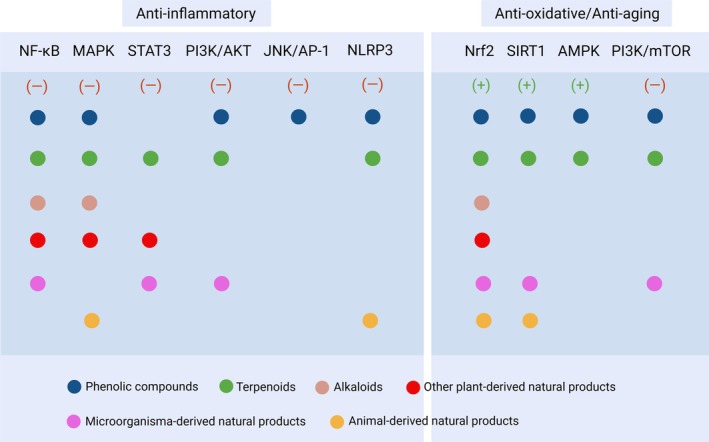
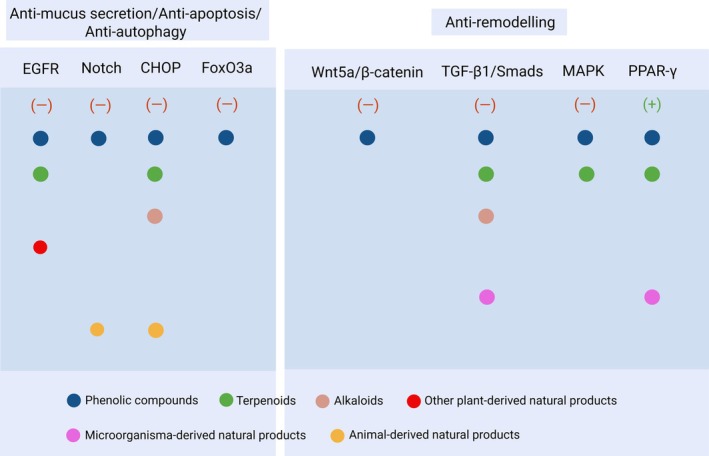
Core Signal Network: Integration of Anti‐Inflammatory and Antioxidant Pathways
The inhibition of the NF‐κB signaling pathway is the most consistently reported molecular mechanism in various NP studies (Figure 11). Polyphenols (such as EGCG, Que, resveratrol, curcumin), terpenoids (such as AGP, tanshinone), alkaloids (such as Ber), and animal‐derived Mel can all effectively block NF‐κB activation, thereby reducing the production of downstream pro‐inflammatory cytokines (TNF‐α, IL‐6, IL‐8). Notably, this mechanism convergence is not merely a phenotypic overlap but involves complementary regulatory nodes within the pathway. BIA and resveratrol achieve their inhibitory effects by enhancing HDAC2‐mediated deacetylation of NF‐κB p65 (Zhang, Liu, et al. ref. 2021), while AGP acts on the upstream PI3K/Akt/c‐Jun signaling axis (Liao et al. ref. 2020). Mel, on the other hand, reduces the production of inflammatory mediators by inhibiting the Erk/Sp1 pathway, providing a theoretical basis for combination therapy (Shin et al. ref. 2015).
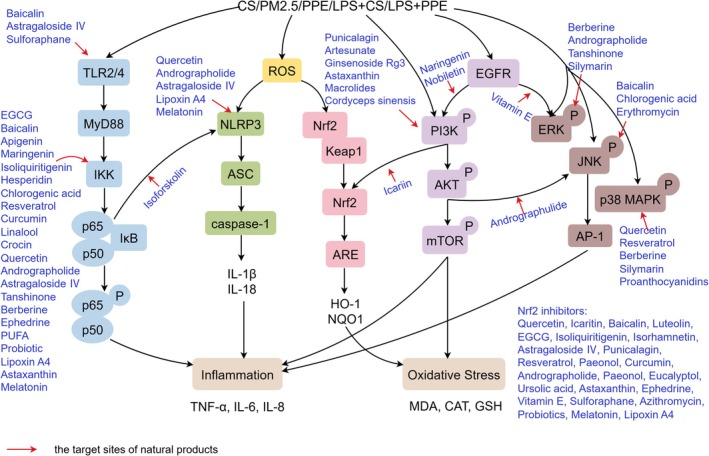
The Nrf2‐mediated antioxidant response is also widely activated in different classes of compounds, but the upstream regulatory mechanisms vary significantly (Figure 11). Polyphenols (Lut, paeonol, isoliquiritigenin) and terpenoids (EUC, AS‐IV) can consistently upregulate the expression of Nrf2 and its downstream target genes (HO‐1, NQO1, SOD), but their activation pathways are distinct. SFN activates Nrf2 by modifying Keap1 cysteine residues (Su et al. ref. 2018), and curcumin exerts its effect through HDAC inhibition (Li, Su, et al. ref. 2018). Additionally, probiotics from microbial sources (lactobacillus, bifidobacterium) alleviate PM2.5‐induced lung injury by upregulating Nrf2‐mediated antioxidant levels (Nam et al. ref. 2020), and PC from marine sources exerts antioxidant effects by regulating the expression of HO‐1 and NQO1 (Li, Li, et al. ref. 2024). This diversity of mechanisms across different categories in preclinical research suggests that designing combined intervention strategies may potentially produce synergistic antioxidant effects warranting further clinical investigation. This hypothesis is supported by experimental data on the combined application of LQ and licochalcone B (Dong et al. ref. 2024).
The NF‐κB‐driven pro‐inflammatory signal and the Nrf2‐mediated antioxidant response form an inhibitory regulatory loop. Restoring the balance of this axis is a common feature of the majority of NPs. This mechanism has been reported in polyphenols (EGCG, BIA, Que, resveratrol, curcumin), terpenoids (AS‐IV, AXT), and animal‐derived products (Mel, LXA4). Existing studies consistently show that NPs can simultaneously inhibit NF‐κB activation and enhance Nrf2 nuclear translocation, thereby synergistically alleviating the two initiating factors of COPD: oxidative stress and chronic inflammation (Peh et al. ref. 2017; Wang, Chen, and Wu ref. 2022; Yu et al. ref. 2018). However, the key issue of temporal dynamics remains unclear. The sequence of Nrf2 activation and NF‐κB inhibition is still not well defined in most studies, which limits the design of the optimal dosing regimen.
The MAPK signaling (ERK, p38, JNK) serves as a molecular bridge connecting oxidative stress and inflammatory responses (Figure 11). Its blockade is a common mechanism of action for tannic acid (Rajasekar et al. ref. 2024), THCA (Min et al. ref. 2020), paeonol (Liu, Ren, et al. ref. 2014), and Rb3 (Li, Cui, et al. ref. 2021). However, it is necessary to be vigilant that some compounds exhibit significant cell type‐specific effects. Resveratrol activates p38 MAPK in the process of improving muscle atrophy but inhibits this pathway in the airway inflammation model (Li et al. ref. 2022). This directional divergence in pathway regulation highlights the decisive role of the cellular context in the effects of NPs. It also suggests that the uniform inhibition of MAPK should not be regarded as a universal therapeutic target.
Integrate the multi‐target network pharmacology framework. Different from the traditional single‐target drug concept, we propose that the action mode of NPs should be re‐examined from the perspective of network pharmacology. Multiple NPs can converge at core signaling nodes such as NF‐κB, Nrf2, and MAPK, while retaining their unique upstream regulatory mechanisms. Combined therapies targeting different entry points of the same network are expected to produce synergistic effects. Future research should be based on the principles of network pharmacology to systematically explore such theoretically grounded combined intervention strategies.
Emerging Mechanisms: Beyond Inflammation and Oxidative Stress
Epigenetic modifications are increasingly recognized as a unified molecular framework for the common actions of various NPs, and this has been strongly supported by cross‐category research. Polyphenols (Lut, resveratrol, curcumin, apigenin) (Hosseini et al. ref. 2020; Li, Su, et al. ref. 2018; Paredes‐Gonzalez et al. ref. 2014; Zuo et al. ref. 2018) and terpenoids (tanshinone IIA, UA) (Kim et al. ref. 2016; Wang et al. ref. 2014) can effectively inhibit the activities of DNA methyltransferases (DNMTs) and histone deacetylases (HDACs), thereby reversing the hypermethylation state of the Nrf2 promoter region and enhancing the histone acetylation levels in the promoter regions of antioxidant genes. Notably, the convergent regulation of HDAC2 by compounds of different structural types is particularly worthy of attention. AGP (Liao et al. ref. 2020) and resveratrol (Huo et al. ref. 2025) can both restore HDAC2 activity and effectively counteract glucocorticoid resistance, which is a major bottleneck in current COPD clinical treatment. The significant consistency in mechanisms among structurally diverse compounds has greatly enhanced the reliability of HDAC2 as a druggable target.
Autophagy regulation and intervention in cellular senescence represent emerging directions in NP research, but the consistency of existing evidence is relatively weak. Curcumin upregulates Beclin‐1 expression to promote autophagic flux (Jin et al. ref. 2022); resveratrol delays cellular senescence by inhibiting miR‐34a and activating SIRT1 (Zeng, Yang, and Liu ref. 2022); and nobiletin activates the SIRT1/AMPK/FoxO3a signaling pathway to enhance autophagy and protect epithelial barrier function (Cheng, Yan, et al. ref. 2025). The functional effects of autophagy regulation depend on cell type and disease stage.
Ferroptosis inhibition is a recently recognized regulatory mechanism in the NP research field. DHM protects against ferroptosis by directly targeting the SLC7A11/xCT transporter (Hou et al. ref. 2025), AS‐IV through the Nrf2/SLC7A11/GPX4 signaling axis (Wang, Wu, et al. ref. 2022), and LXA4 by upregulating the SLC7A11/GPX4 pathway (Li, Xu, et al. ref. 2025). Ferroptosis, as a novel therapeutic target, has opened up new avenues for the intervention of COPD. Future research should focus on developing precise delivery systems targeting ferroptosis and further explore the interactive regulatory network between ferroptosis and other programmed cell death modalities such as apoptosis, pyroptosis, and autophagy during the progression of COPD. Additionally, the gut‐lung axis, as a highly promising but underexplored therapeutic target, deserves more attention: probiotics and their metabolites may mediate systemic anti‐inflammatory effects beyond the local pulmonary microenvironment through the systemic crosstalk mechanism of the gut‐lung axis.
Consistency and Differences Among Compound Categories
The anti‐COPD effects of NPs exhibit significant source and chemical structure dependence. Compounds of the same category show high consistency in therapeutic effects, while structural modifications or source differences lead to variations in efficacy.
As the most thoroughly studied category of NPs, plant polyphenols demonstrate the most consistent anti‐COPD effects. Flavonoids (Que, Lut) exert anti‐inflammatory, antioxidant, and anti‐mucus hypersecretion effects by targeting the NF‐κB/Nrf2 axis (Li et al. ref. 2023; Mitani et al. ref. 2017; Yang et al. ref. 2012; Zhou et al. ref. 2023). Phenolic acids (CGA, RA), in addition to the above effects, also consistently inhibit endoplasmic reticulum stress and apoptosis (Wang, Li, et al. ref. 2017; Yuan et al. ref. 2025). Terpenoids, another important plant‐derived category, generally exhibit strong anti‐airway remodeling activity. Among them, triterpenoids (UA, AS‐IV) consistently exert protective effects against airway remodeling and ferroptosis by regulating the TGF‐β1/Smad and Nrf2/SLC7A11 pathways (Lin, Hou, Han, Yin, et al. ref. 2019; Wang, Wu, et al. ref. 2022). Microbial NPs (macrolides, Cordyceps sinensis) and animal/marine NPs (Mel, PC, n‐3 PUFA) show consistent systemic regulatory features. The former mainly improve COPD comorbidities by regulating the gut‐lung axis, while the latter enhance exercise endurance and skeletal muscle function, both going beyond simple lung‐targeted interventions.
Structural modifications of NPs lead to differences in efficacy and target selectivity. For instance, ICA (a glycoside derivative of KMF) can reverse glucocorticoid resistance by upregulating HDAC2 and GR expression, while KMF lacks this activity (Hu et al. ref. 2020). DHQ (a hydrogenated derivative of Que) has the ability to inhibit ferroptosis by targeting the Nrf2 pathway, thereby expanding the therapeutic spectrum of flavonoids (Liu et al. ref. 2022). The differences in effects among NPs from different sources mainly lie in the intensity of efficacy and tissue targeting. Plant‐derived NPs show stronger lung tissue‐targeting enrichment characteristics and anti‐inflammatory/antioxidant effects. Marine‐derived NPs are more effective in systemic regulation, such as improving lipid profiles and enhancing exercise endurance, making them more suitable for the intervention of COPD‐related cachexia. Probiotics, as microbial sources, specifically regulate the gut‐lung axis and are superior to other NPs in improving intestinal barrier function and reducing systemic inflammation, demonstrating source‐determined target preferences.
It is worth noting that EGCG, Que, resveratrol, curcumin, AS‐IV, Mel, and macrolides all regulate the three core signaling pathways to improve major COPD pathological processes in preclinical models. Some of them have entered the clinical research stage and are the most promising candidates for clinical translation among COPD NPs. Table 8 provides a comprehensive comparative assessment of the therapeutic potential of seven major classes of NPs from different sources for COPD, based on three core evaluation dimensions: activity potential, bioavailability, and clinical development stage. Plant‐derived terpenoids and microbe‐derived macrolides have emerged as the most promising candidates, achieving a good balance between high efficacy, acceptable bioavailability, and advanced clinical validation.
Key Challenges in Clinical Translation: Delivery System Optimization and Quality Control Standardization
In recent years, significant progress has been made in the development of novel drug delivery systems. Advanced formulation strategies such as nanotechnology and colloidal delivery systems have provided effective solutions for improving the oral absorption and targeted delivery of NPs. For instance, the development of curcumin‐loaded liposomes (Patel et al. ref. 2024) and mPEG‐PLGA nanoparticles (Chen et al. ref. 2022) has markedly enhanced its solubility and bioavailability. Clinical studies have confirmed that nano‐curcumin can effectively improve the inflammatory state and lung function indicators of patients with severe COPD (Zare’I et al. ref. 2024). A recent study evaluating the encapsulation performance of four colloidal delivery systems for curcumin (including sodium caseinate, β‐cyclodextrin, liposome, and soy protein isolate) revealed that the sodium caseinate‐curcumin colloidal delivery system (SC‐CUR) has the best overall performance and is expected to become a high‐performance nano‐carrier in the field of functional beverages (Jin et al. ref. 2025). Similarly, Ber encapsulated in nanoparticles (Paudel et al. ref. 2022) and surface‐modified (such as PEGylation) can significantly increase intestinal mucosal permeability (Duong et al. ref. 2021), effectively alleviating inflammation and oxidative stress damage induced by CS. These advanced delivery systems effectively overcome the major limitations of conventional oral administration by protecting active ingredients from gastrointestinal degradation, prolonging systemic circulation half‐life, and enhancing tissue targeting.
The variability of natural product extracts is one of the core bottlenecks restricting their clinical transformation and therapeutic stability. The chemical composition of raw plants is influenced by multiple factors such as genetic background, growth environment, harvest season, and processing and storage conditions (Zhang et al. ref. 2012). For instance, the total flavonoid content in sea buckthorn extracts varies significantly due to different harvest latitudes and climatic conditions (Zheng et al. ref. 2016); July is the best time to harvest sea buckthorn leaves and fruits in the Xizang region for extracting flavonoids (Yang, Yang, et al. ref. 2023, ref. 2023). To ensure the consistent efficacy and safety of NPs in the prevention and treatment of COPD, a standardized quality control strategy should be adopted. Firstly, advanced analytical techniques such as high‐performance liquid chromatography and gas chromatography–mass spectrometry should be used to construct characteristic chromatographic fingerprint profiles (Vander Heyden ref. 2008), and the WHO has incorporated fingerprint technology into the guidelines for the identification and quality evaluation of medicinal plants (World Health Organization ref. 2025). Secondly, the content range of key active components should be defined, while strictly controlling the limits of harmful impurities such as heavy metals, pesticide residues, and microbial contamination (Zhang et al. ref. 2012). Finally, a quality management system covering the entire industrial chain should be established, including raw material procurement standards, optimization of extraction processes, monitoring of product stability, and standardized production procedures in compliance with good manufacturing practices (Ip et al. ref. 2010).
To overcome these limitations and advance clinical translation, future research should focus on developing nano‐delivery systems and structural modifications to improve bioavailability, utilizing multi‐omics approaches to dissect multi‐target mechanisms, and establishing standardized quality control systems. Clinically, combination therapies, gut‐lung axis interventions, and phenotype‐based precision medicine should be explored (Figure 12). Ultimately, this will facilitate the integration of NPs into full‐cycle management strategies encompassing prevention, treatment, and rehabilitation of COPD.
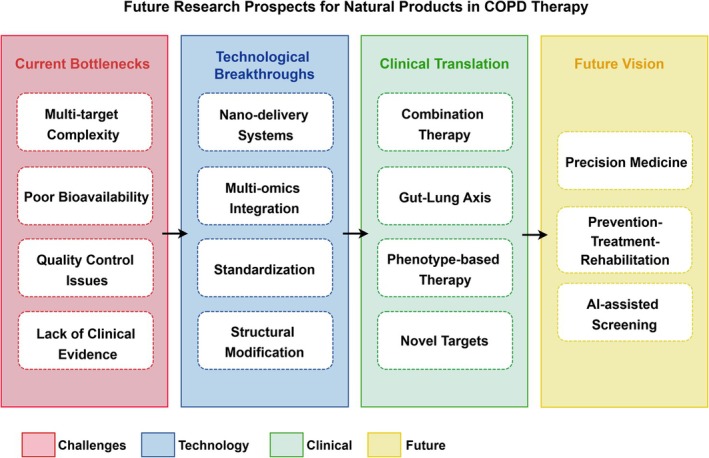
Limitations of Current Evidence
First, the majority of evidence comes from preclinical studies using animal models (CS/LPS/CSE/PM2.5/PPE‐induced COPD models), which may not fully recapitulate the complex pathophysiology and comorbidities of human COPD. Second, significant heterogeneity exists in study designs, dosing regimens, duration of treatment, and outcome measurements across different studies, making direct comparisons challenging. Third, many NPs suffer from poor bioavailability and lack standardized extraction protocols, leading to batch‐to‐batch variations in chemical composition and biological activity. Fourth, clinical trials are limited in number and sample size, with most focusing on short‐term outcomes rather than long‐term disease progression or mortality. Finally, potential publication bias favoring positive results may exist in the NP research field. Future studies should address these limitations through well‐designed randomized controlled trials with standardized formulations and clinically relevant endpoints.
Author Contributions
Xiaoju Liu: writing – review and editing. Shuna Wei: writing – original draft.
Funding
This work was supported by the National Natural Science Foundation of China (82460009) and the Gansu Province Key Research and Development Program (22YF7FA083).
Ethics Statement
The authors have nothing to report.
Consent
The authors have nothing to report.
Conflicts of Interest
The authors declare no conflicts of interest.
References
- Global and Regional Estimates of COPD Prevalence: Systematic Review and Meta‐Analysis.”. Journal of Global Health, 2015. [DOI]
- Global, Regional, and National Prevalence of, and Risk Factors for, Chronic Obstructive Pulmonary Disease (COPD) in 2019: A Systematic Review and Modelling Analysis.”. Lancet Respiratory Medicine, 2022. [DOI | PubMed]
- Coriander Essential Oil and Linalool‐Interactions With Antibiotics Against Gram‐Positive and Gram‐Negative Bacteria.”. Letters in Applied Microbiology, 2019. [DOI | PubMed]
- Potential Therapeutic Effects of Curcumin, the Anti‐Inflammatory Agent, Against Neurodegenerative, Cardiovascular, Pulmonary, Metabolic, Autoimmune and Neoplastic Diseases.”. International Journal of Biochemistry & Cell Biology, 2009. [DOI | PubMed]
- Global Initiative for Chronic Obstructive Lung Disease 2023 Report: GOLD Executive Summary.”. Journal of the Pan African Thoracic Society, 2022
- Fortified Whey Beverage for Improving Muscle Mass in Chronic Obstructive Pulmonary Disease: A Single‐Blind, Randomized Clinical Trial.”. Respiratory Research, 2020. [DOI | PubMed]
- Aimbire, F. , J. L. Carvalho , A. K. Fialho , M. Miranda , R. Albertini , and A. Keller . 2019. Role of Probiotics Bfidobacterium Breve and Lactobacillus Rhmanosus on Lung Inflammation and Airway Remodeling in an Experimental Model of Chronic Obstructive Pulmonary Disease. European Respiratory Society. 10.1183/13993003.congress-2019.PA2452.
- Phenolic Compounds in the Potato and Its Byproducts: An Overview.”. International Journal of Molecular Sciences, 2016. [DOI | PubMed]
- Apocynin Prevents Cigarette Smoke‐Induced Anxiety‐Like Behavior and Preserves Microglial Profiles in Male Mice.”. Antioxidants, 2024. [DOI | PubMed]
- Azithromycin for Prevention of Exacerbations of COPD.”. New England Journal of Medicine, 2011. [DOI | PubMed]
- Nutritional Supplementation During Pulmonary Rehabilitation in COPD: A Systematic Review.”. Chronic Respiratory Disease, 2020. [DOI | PubMed]
- Flavonoids as Potential Anti‐Inflammatory Molecules: A Review.”. Molecules, 2022. [DOI | PubMed]
- Phytantriol‐Based Berberine‐Loaded Liquid Crystalline Nanoparticles Attenuate Inflammation and Oxidative Stress in Lipopolysaccharide‐Induced RAW264. 7 Macrophages.”. Nanomaterials, 2022. [DOI | PubMed]
- Study of the Major Essential Oil Compounds of coriandrum sativum Against Acinetobacter Baumannii and the Effect of Linalool on Adhesion, Biofilms and Quorum Sensing.”. Biofouling, 2016. [DOI | PubMed]
- Possible Modulatory Effect of Tamarind Seed Coat Extract on Fluoride‐Induced Pulmonary Inflammation and Fibrosis in Rats.”. Inflammation, 2018. [DOI | PubMed]
- Repurposing Drugs as Inhaled Therapies in Asthma.”. Advanced Drug Delivery Reviews, 2018. [DOI | PubMed]
- Effects of Green Tea to Absolute Neutrophil Count, MMP‐9,% VEP1, and COPD Assessment Test Scores Stable COPD Patients.”. Jurnal Respirologi Indonesia, 2018. [DOI]
- Quercetin Improves Pulmonary Function and Prevents Emphysema Caused by Exposure to Cigarette Smoke in Male Mice.”. Antioxidants, 2022. [DOI | PubMed]
- Neuroprotection by Curcumin: A Review on Brain Delivery Strategies.”. International Journal of Pharmaceutics, 2020. [DOI | PubMed]
- Effect of Crocin of crocus sativus l. on Serum Inflammatory Markers (IL‐6 and TNF‐α) in Chronic Obstructive Pulmonary Disease Patients: A Randomised, Double‐Blind, Placebo‐Controlled Trial.”. British Journal of Nutrition, 2023. [DOI | PubMed]
- The Association of Dietary Intake and Supplementation of Specific Polyunsaturated Fatty Acids With Inflammation and Functional Capacity in Chronic Obstructive Pulmonary Disease: A Systematic Review.”. JBI Evidence Implementation, 2016. [DOI]
- Biological Effects of Essential Oils‐a Review.”. Food and Chemical Toxicology, 2008. [DOI | PubMed]
- Protective Role of Taurine Against Oxidative Stress.”. Molecular Medicine Reports, 2021. [DOI]
- Corticosteroid Resistance in Patients With Asthma and Chronic Obstructive Pulmonary Disease.”. Journal of Allergy and Clinical Immunology, 2013. [DOI | PubMed]
- Association Between ω3 and ω6 Fatty Acid Intakes and Serum Inflammatory Markers in COPD.”. Journal of Nutritional Biochemistry, 2012. [DOI | PubMed]
- Medically Useful Plant Terpenoids: Biosynthesis, Occurrence, and Mechanism of Action.”. Molecules, 2019. [DOI | PubMed]
- A Comprehensive Study on Natural Products and Their Bioactive Constituents to Cure Respiratory Diseases.”. Natural Products Journal, 2024. [DOI]
- Erythromycin Reverses Cigarette Smoke Extract‐Induced Corticosteroid Insensitivity by Inhibition of the JNK/c‐Jun Pathway.”. Free Radical Biology and Medicine, 2020. [DOI | PubMed]
- Polyphenols: Secondary Metabolites With a Biological Impression.”. Nutrients, 2024. [DOI | PubMed]
- Polyunsaturated Fatty Acids Improve Exercise Capacity in Chronic Obstructive Pulmonary Disease.”. Thorax, 2005. [DOI | PubMed]
- Targeted Medical Nutrition for Cachexia in Chronic Obstructive Pulmonary Disease: A Randomized, Controlled Trial.”. Journal of Cachexia, Sarcopenia and Muscle, 2018. [DOI | PubMed]
- Lycopene Mitigates Pulmonary Emphysema Induced by Cigarette Smoke in a Murine Model.”. Journal of Nutritional Biochemistry, 2019. [DOI | PubMed]
- Effect of the Lipoxin Receptor Agonist BML‐111 on Cigarette Smoke Extract‐Induced Macrophage Polarization and Inflammation in RAW264. 7 Cells.”. International Journal of Chronic Obstructive Pulmonary Disease, 2023. [DOI | PubMed]
- Punicalagin Prevents Inflammation in LPS‐Induced RAW264. 7 Macrophages by Inhibiting FoxO3a/Autophagy Signaling Pathway.”. Nutrients, 2019. [DOI | PubMed]
- The Anti‐Inflammatory Effect of BML‐111 on COPD May Be Mediated by Regulating NLRP3 Inflammasome Activation and ROS Production.”. Prostaglandins & Other Lipid Mediators, 2018. [DOI | PubMed]
- Diallyl Disulfide Prevents Cigarette Smoke‐Induced Emphysema in Mice.”. Pulmonary Pharmacology & Therapeutics, 2021. [DOI | PubMed]
- Oral Feeding With Probiotic Lactobacillus rhamnosus Attenuates Cigarette Smoke‐Induced COPD in C57Bl/6 Mice: Relevance to Inflammatory Markers in Human Bronchial Epithelial Cells.”. PLoS One, 2020. [DOI | PubMed]
- C‐Phycocyanin: A Phycobiliprotein From Spirulina With Metabolic Syndrome and Oxidative Stress Effects.”. Journal of Medicinal Food, 2024. [DOI | PubMed]
- Strategies to Improve the Functionality of Probiotics in Supplements and Foods.”. Current Opinion in Food Science, 2018. [DOI]
- Inhibitory effect of Chinese Green Tea on Cigarette Smoke‐Induced Up‐Regulation of Airway Neutrophil Elastase and Matrix Metalloproteinase‐12 via Antioxidant Activity.”. Free Radical Research, 2012. [DOI | PubMed]
- Inhibition of Oxidative Stress by Apocynin Attenuated Chronic Obstructive Pulmonary Disease Progression and Vascular Injury by Cigarette Smoke Exposure.”. British Journal of Pharmacology, 2023. [DOI | PubMed]
- Probiotics Combined With Budesonide and Ipratropium Bromide for Chronic Obstructive Pulmonary Disease: A Retrospective Analysis.”. Medicine (Baltimore), 2024. [DOI | PubMed]
- Studies on the Antitussive Mechanism and Antioxidative Effect of Glycyrrhizin on Post‐Infection Cough (Pulmonary Yin Deficiency Syndrome) Mice.”. Journal of Ethnopharmacology, 2020. [PubMed]
- Protective Effect of Astragaloside II Against Lung Injury in COPD Based on mTORC1/GSK‐3β Signaling Pathway.”. European Journal of Pharmacology, 2025. [DOI | PubMed]
- Rutin Ameliorates Cigarette Smoke Mediated Lung Inflammation in a Mouse Model of Chronic Obstructive Pulmonary Disease via Regulating the Levels of Tumor Necrosis Factor‐α, Interleukin‐8 and PAF.”. Medical Science, 2020. [DOI]
- Therapeutic Effects of Resveratrol in a Mouse Model of LPS and Cigarette Smoke‐Induced COPD.”. Inflammation, 2016. [DOI | PubMed]
- Cigarette Smoke Enhances β‐Defensin 2 Expression in Rat Airways via Nuclear Factor‐κb Activation.”. European Respiratory Journal, 2010. [DOI | PubMed]
- Natural Phenolic Compounds: Antimicrobial Properties, Antimicrobial Mechanisms, and Potential Utilization in the Preservation of Aquatic Products.”. Food Chemistry, 2024. [DOI | PubMed]
- Curcumin‐Loaded mPEG‐PLGA Nanoparticles Attenuates the Apoptosis and Corticosteroid Resistance Induced by Cigarette Smoke Extract.”. Frontiers in Pharmacology, 2022. [DOI | PubMed]
- The Promising Effects of Astaxanthin on Lung Diseases.”. Advances in Nutrition, 2021. [DOI | PubMed]
- Qingke Pingchuan Granules Alleviate Airway Inflammation in COPD Exacerbation by Inhibiting Neutrophil Extracellular Traps in Mice.”. Phytomedicine, 2025. [DOI | PubMed]
- Bufei Yishen Formula Alleviates Airway Epithelial Cell Senescence in COPD by Activating AMPK‐sirt1‐FoxO3a Pathway and Promoting Autophagy.”. Scientific Reports, 2025. [DOI | PubMed]
- Effects of Astragalus and Codonopsis pilosula Polysaccharides on Alveolar Macrophage Phagocytosis and Inflammation in Chronic Obstructive Pulmonary Disease Mice Exposed to PM2.5.”. Environmental Toxicology and Pharmacology, 2016. [DOI | PubMed]
- “Effect of Curcumin on Lung Inflammation.”. 2012
- “Curcumin in Management of Chronic Obstructive Pulmonary Disease.”. 2021
- “Biological Effects of Quercetin in COPD.”. 2023
- “Biological Effects of Quercetin in COPD Phase II.”. 2024a
- “Biological Evaluation of the Efficacy of Respicure® (Resveratrol/Quercetin) in the Management of Respiratory Conditions Including Asthma, COPD and Long COVID.”. 2024b
- “Biological Improving Cardiovascular Health in Patients With Chronic Obstructive Pulmonary Disease.”. 2024c
- “Optimising Azithromycin Prevention Treatment in COPD to Reduce Exacerbations (OPACE).”. 2024d
- “Roflumilast or Azithromycin to Prevent COPD Exacerbations (RELIANCE).”. 2025
- Melatonin Reduces Lung Oxidative Stress in Patients With Chronic Obstructive Pulmonary Disease: A Randomized, Double‐Blind, Placebo‐Controlled Study.”. Journal of Pineal Research, 2012. [DOI | PubMed]
- Taurine Treatment Decreases Inflammation and Oxidative Stress in Lungs of Adult Mice Exposed to Cigarette Smoke.”. Regulatory Toxicology and Pharmacology, 2018. [DOI | PubMed]
- Dietary (Poly) Phenolics in Human Health: Structures, Bioavailability, and Evidence of Protective Effects Against Chronic Diseases.”. Antioxidants & Redox Signaling, 2013. [DOI | PubMed]
- Astaxanthin Attenuates Cigarette Smoking‐Induced Oxidative Stress and Inflammation in a Sirtuin 1‐Dependent Manner.”. Biomedicine & Pharmacotherapy, 2023. [DOI | PubMed]
- Long‐Term Use of Vitamin‐c in Chronic Obstructive Pulmonary Disease: Early Pilot Observation.”. Lung India, 2021. [DOI | PubMed]
- Plant Flavonoids: Chemical Characteristics and Biological Activity.”. Molecules, 2021. [DOI | PubMed]
- Astaxanthin Attenuates Cigarette Smoke‐Induced Small Airway Remodeling via the AKT1 Signaling Pathway.”. Respiratory Research, 2024. [DOI | PubMed]
- The Therapeutic Potential of Quercetin for Cigarette Smoking‐Induced Chronic Obstructive Pulmonary Disease: A Narrative.”. Therapeutic Advances in Respiratory Disease, 2023. [DOI | PubMed]
- A Synergistic Mechanism of Liquiritin and Licochalcone b From Glycyrrhiza Uralensis Against COPD.”. Phytomedicine, 2024. [DOI | PubMed]
- Nanoformulation and Evaluation of Oral Berberine‐Loaded Liposomes.”. Molecules, 2021. [DOI | PubMed]
- DHA‐and EPA‐Derived Resolvins, Protectins, and Maresins in Airway Inflammation.”. European Journal of Pharmacology, 2016. [DOI | PubMed]
- Optimization of Aqueous Extraction of Polyphenols From cuminum cyminum Seeds Using Response Surface Methodology and Assessment of Biological Activity.”. Biotech, 2024. [DOI | PubMed]
- The Burden of Chronic Respiratory Disease and Attributable Risk Factors in North Africa and Middle East: Findings From Global Burden of Disease Study (GBD) 2019.”. Respiratory Research, 2022. [DOI | PubMed]
- Amurensin h, a Derivative From Resveratrol, Ameliorates Lipopolysaccharide/Cigarette Smoke‐Induced Airway Inflammation by Blocking the Syk/NF‐κb Pathway.”. Frontiers in Pharmacology, 2019. [DOI | PubMed]
- The Protective Effects of Crocin in the Management of Neurodegenerative Diseases: A Review.”. American Journal of Neurodegenerative Disease, 2018. [DOI | PubMed]
- Prevention of Hypotension After Spinal Anaesthesia for Caesarean Section: A Systematic Review and Network Meta‐Analysis of Randomised Controlled Trials.”. Anaesthesia, 2020. [DOI | PubMed]
- Structurally Related Monoterpenes p‐Cymene, Carvacrol and Thymol Isolated From Essential Oil From Leaves of Lippia Sidoides Cham. (Verbenaceae) Protect Mice Against Elastase‐Induced Emphysema.”. Molecules, 2016. [DOI | PubMed]
- Curcumin Modulates the Effect of Histone Modification on the Expression of Chemokines by Type II Alveolar Epithelial Cells in a Rat COPD Model.”. International Journal of Chronic Obstructive Pulmonary Disease, 2016. [DOI | PubMed]
- A Critical Review on Polyphenols and Health Benefits of Black Soybeans.”. Nutrients, 2017. [DOI | PubMed]
- Quercetin Prevents Progression of Disease in Elastase/LPS‐Exposed Mice by Negatively Regulating MMP Expression.”. Respiratory Research, 2010. [DOI | PubMed]
- Understanding the Relationships Between Environmental Factors and Exacerbations of COPD.”. Expert Review of Respiratory Medicine, 2021. [DOI | PubMed]
- Effect of Crocin From Saffron ( crocus sativus l.) Supplementation on Oxidant/Antioxidant Markers, Exercise Capacity, and Pulmonary Function Tests in COPD Patients: A Randomized, Double‐Blind, Placebo‐Controlled Trial.”. Frontiers in Pharmacology, 2022. [DOI | PubMed]
- The Effect of Conjugated Linoleic Acid Supplementation on the Nutritional Status of COPD Patients.”. International Journal of Chronic Obstructive Pulmonary Disease, 2016. [DOI | PubMed]
- Chlorogenic Acid Alleviates LPS‐Induced Inflammation and Oxidative Stress by Modulating CD36/AMPK/PGC‐1α in RAW264. 7 Macrophages.”. International Journal of Molecular Sciences, 2023. [DOI | PubMed]
- Sodium Tanshinone IIA Sulfonate Decreases Cigarette Smoke‐Induced Inflammation and Oxidative Stress via Blocking the Activation of MAPK/HIF‐1α Signaling Pathway.”. Frontiers in Pharmacology, 2018. [DOI | PubMed]
- Sodium Tanshinone IIA Sulfonate Attenuates Cigarette Smoke Extract‐Induced Mitochondrial Dysfunction, Oxidative Stress, and Apoptosis in Alveolar Epithelial Cells by Enhancing SIRT1 Pathway.”. Toxicological Sciences, 2021. [DOI | PubMed]
- Ginsenoside rg1 Ameliorates Cigarette Smoke‐Induced Airway Fibrosis by Suppressing the TGF‐β1/Smad Pathway in Vivo and in Vitro.”. BioMed Research International, 2017. [DOI | PubMed]
- Ginsenoside rg1 Attenuates Cigarette Smoke‐Induced Pulmonary Epithelial‐Mesenchymal Transition via Inhibition of the TGF‐β1/Smad Pathway.”. BioMed Research International, 2017. [DOI | PubMed]
- Ginsenoside rg1 Protects Against Cigarette Smoke‐Induced Airway Remodeling by Suppressing the TGF‐β1/smad3 Signaling Pathway.”. American Journal of Translational Research, 2020. [PubMed]
- Ginsenoside rg3 Ameliorates Acute Exacerbation of COPD by Suppressing Neutrophil Migration.”. International Immunopharmacology, 2020. [DOI | PubMed]
- Protective Effects of Liquiritin Apioside on Cigarette Smoke‐Induced Lung Epithelial Cell Injury.”. Fundamental & Clinical Pharmacology, 2012. [DOI | PubMed]
- Antioxidant Enzymes and Melatonin Levels in Patients With Bronchial Asthma and Chronic Obstructive Pulmonary Disease During Stable and Exacerbation Periods.”. Cell Biochemistry and Function, 2009. [DOI | PubMed]
- Adverse Cardiovascular and Central Nervous System Events Associated With Dietary Supplements Containing Ephedra Alkaloids.”. New England Journal of Medicine, 2000. [DOI | PubMed]
- Serum Tocopherol Levels and Vitamin e Intake Are Associated With Lung Function in the Normative Aging Study.”. Clinical Nutrition, 2016. [DOI | PubMed]
- Baicalin Alleviates Chronic Obstructive Pulmonary Disease Through Regulation of HSP72‐Mediated JNK Pathway.”. Molecular Medicine, 2021. [DOI | PubMed]
- Targeting Nrf2 Signaling Improves Bacterial Clearance by Alveolar Macrophages in Patients With COPD and in a Mouse Model.”. Science Translational Medicine, 2011. [DOI]
- Melatonin Protects Against COPD by Attenuating Apoptosis and Endoplasmic Reticulum Stress via Upregulating SIRT1 Expression in Rats.”. Canadian Journal of Physiology and Pharmacology, 2019. [DOI | PubMed]
- Curcumin Formulations for Better Bioavailability: What We Learned From Clinical Trials Thus Far?”. ACS Omega, 2023. [DOI | PubMed]
- Bioactivity of Phenolic Acids: Metabolites Versus Parent Compounds: A Review.”. Food Chemistry, 2015. [DOI | PubMed]
- The Pathology of Chronic Obstructive Pulmonary Disease.”. Annual Review of Pathology, 2009. [DOI]
- The Potential Protective Effects of Probiotics, Prebiotics, or Yogurt on Chronic Obstructive Pulmonary Disease: Results From NHANES 2007‐2012.”. Food Science & Nutrition, 2024. [DOI | PubMed]
- Melatonin Treatment Induces Interplay of Apoptosis, Autophagy, and Senescence in Human Colorectal Cancer Cells.”. Journal of Pineal Research, 2014. [DOI | PubMed]
- Resveratrol Alleviates Non‐Alcoholic Fatty Liver Disease Through Epigenetic Modification of the nrf2 Signaling Pathway.”. International Journal of Biochemistry & Cell Biology, 2020. [DOI | PubMed]
- Dihydromyricetin Alleviates Lipid Peroxidation‐Induced Pyroptosis by Inhibiting xCT Ubiquitination and Degradation in Experimental COPD Model.”. Phytomedicine, 2025. [DOI | PubMed]
- Astragaloside IV Suppresses Inflammatory Response via Suppression of NF‐κb, and MAPK Signalling in Human Bronchial Epithelial Cells.”. Archives of Physiology and Biochemistry, 2022. [DOI | PubMed]
- The Therapeutic Potential of Andrographolide in Cancer Treatment.”. Biomedicine & Pharmacotherapy, 2024. [DOI | PubMed]
- Effects of Icariin on Cell Injury and Glucocorticoid Resistance in BEAS‐2b Cells Exposed to Cigarette Smoke Extract.”. Experimental and Therapeutic Medicine, 2020. [DOI]
- Resveratrol Attenuates Left Ventricular Remodeling in Old Rats With COPD Induced by Cigarette Smoke Exposure and LPS Instillation.”. Canadian Journal of Physiology and Pharmacology, 2013. [DOI | PubMed]
- Effects of Ergosterol on COPD in Mice via JAK3/STAT3/NF‐κb Pathway.”. Inflammation, 2017. [DOI | PubMed]
- Astragaloside IV Alleviates PM2. 5‐Caused Lung Toxicity by Inhibiting Inflammasome‐Mediated Pyroptosis via NLRP3/Caspase‐1 Axis Inhibition in Mice.”. Biomedicine & Pharmacotherapy, 2022. [DOI | PubMed]
- Bioinformatics Approach to Identifying Molecular Targets of Isoliquiritigenin Affecting Chronic Obstructive Pulmonary Disease: A Machine Learning Pharmacology Study.”. International Journal of Molecular Sciences, 2025. [DOI | PubMed]
- Resveratrol Restores Glucocorticoid Receptor and HDAC2 to Overcome Corticosteroid Resistance in Cigarette Smoke‐Induced Emphysema Mice.”. Journal of Thoracic Disease, 2025. [DOI | PubMed]
- Ascorbate Attenuates Cycling Exercise‐Induced Neuromuscular Fatigue but Fails to Improve Exertional Dyspnea and Exercise Tolerance in COPD.”. Journal of Applied Physiology (1985), 2021. [DOI]
- Rosmarinic Acid and Its Derivatives: Current Insights on Anticancer Potential and Other Biomedical Applications.”. Biomedicine & Pharmacotherapy, 2023. [DOI | PubMed]
- Quality Assurance for Chinese Herbal Formulae: Standardization of IBS‐20, a 20‐Herb Preparation.”. Chinese Medicine, 2010. [DOI | PubMed]
- Effects of Intranasal Azithromycin on Features of Cigarette Smoke‐Induced Lung Inflammation.”. European Journal of Pharmacology, 2022. [DOI | PubMed]
- Bufei Yishen Formula Protects the Airway Epithelial Barrier and Ameliorates COPD by Enhancing Autophagy Through the sirt1/AMPK/foxo3 Signaling Pathway.”. Chinese Medicine, 2024. [DOI | PubMed]
- Tanshinones, Critical Pharmacological Components in salvia miltiorrhiza .”. Frontiers in Pharmacology, 2019. [DOI | PubMed]
- Curcumin Activates Autophagy and Attenuates High Glucose‐Induced Apoptosis in HUVECs Through the ROS/NF‐κb Signaling Pathway.”. Experimental and Therapeutic Medicine, 2022. [DOI | PubMed]
- Effects of Colloidal Delivery Systems for Curcumin Encapsulation and Delivery.”. Food Chemistry, 2025. [DOI | PubMed]
- Pharmacological Effects and Mechanisms of Tannic Acid.”. Biomedicine & Pharmacotherapy, 2022. [DOI | PubMed]
- Baicalin Relieves Airway Inflammation in COPD by Inhibiting Mir‐125a.”. Applied Biochemistry and Biotechnology, 2024. [DOI | PubMed]
- Baicalin Inhibits Inflammation in Rats With Chronic Obstructive Pulmonary Disease by the TLR2/MYD88/NF‐κbp65 Signaling Pathway.”. Evidence‐based Complementary and Alternative Medicine, 2022. [DOI | PubMed]
- Pharmacokinetic and Pharmacodynamic Profiles of the Antitussive Principles of Glycyrrhizae Radix (Licorice), a Main Component of the Kampo Preparation Bakumondo‐To (Mai‐Men‐Dong‐Tang).”. European Journal of Pharmacology, 2005. [DOI | PubMed]
- Eucalyptol Attenuates Cigarette Smoke‐Induced Acute Lung Inflammation and Oxidative Stress in the Mouse.”. Pulmonary Pharmacology & Therapeutics, 2016. [DOI | PubMed]
- Macrophage Polarization and Functions in Pathogenesis of Chronic Obstructive Pulmonary Disease.”. International Journal of Molecular Sciences, 2024. [DOI | PubMed]
- Epigenetic Modifications of Triterpenoid Ursolic Acid in Activating nrf2 and Blocking Cellular Transformation of Mouse Epidermal Cells.”. Journal of Nutritional Biochemistry, 2016. [DOI | PubMed]
- Isoliquiritigenin Isolated From the Roots of Glycyrrhiza Uralensis Inhibits LPS‐Induced iNOS and COX‐2 Expression via the Attenuation of NF‐κb in RAW 264.7 Macrophages.”. European Journal of Pharmacology, 2008. [DOI | PubMed]
- Astragalin Inhibits Cigarette Smoke‐Induced Pulmonary Thrombosis and Alveolar Inflammation and Disrupts PAR Activation and Oxidative Stress‐Responsive MAPK‐Signaling.”. International Journal of Molecular Sciences, 2021. [DOI | PubMed]
- Silibinin Inhibits the Fibrotic Responses Induced by Cigarette Smoke via Suppression of TGF‐β1/Smad 2/3 Signaling.”. Food and Chemical Toxicology, 2017. [DOI | PubMed]
- Antioxidant Nutrients in Plasma of Japanese Patients With Chronic Obstructive Pulmonary Disease, Asthma‐COPD Overlap Syndrome and Bronchial Asthma.”. Clinical Respiratory Journal, 2017. [DOI | PubMed]
- Resveratrol Induces Glutathione Synthesis by Activation of nrf2 and Protects Against Cigarette Smoke‐Mediated Oxidative Stress in Human Lung Epithelial Cells.”. American Journal of Physiology. Lung Cellular and Molecular Physiology, 2008. [DOI | PubMed]
- Liposomal Curcumin Inhibits Cigarette Smoke Induced Senescence and Inflammation in Human Bronchial Epithelial Cells.”. Pathology, Research and Practice, 2024. [DOI | PubMed]
- Natural Products in the 21st Century: Revolutionizing Therapeutics With Flavonoids as Key Phytometabolites.”. Phytotherapy Research, 2025. [DOI | PubMed]
- Astaxanthin Suppresses Cigarette Smoke‐Induced Emphysema Through nrf2 Activation in Mice.”. Marine Drugs, 2019. [DOI | PubMed]
- Targeting the NLRP3 Inflammasome With Natural Products for Ischemia–Reperfusion Injury Across Organs: Mechanisms, Structure–Activity Relationships, and Delivery Innovations.”. Inflammopharmacology, 2025. [DOI | PubMed]
- Epigallocatechin Gallate Diminishes Cigarette Smoke‐Induced Oxidative Stress, Lipid Peroxidation, and Inflammation in Human Bronchial Epithelial Cells.”. Life Sciences, 2020. [DOI | PubMed]
- Berberine Suppresses Inflammatory Agents‐Induced Interleukin‐1β and Tumor Necrosis Factor‐α Productions via the Inhibition of IκB Degradation in Human Lung Cells.”. Pharmacological Research, 2007. [DOI | PubMed]
- Heterogeneities and Impact Profiles of Early Chronic Obstructive Pulmonary Disease Status: Findings From the China Pulmonary Health Study.”. Lancet Regional Health ‐ Western Pacific, 2024. [DOI | PubMed]
- Efficacy of Vitamin c Supplementation on Chronic Obstructive Pulmonary Disease (COPD): A Systematic Review and Meta‐Analysis.”. International Journal of Chronic Obstructive Pulmonary Disease, 2022. [DOI | PubMed]
- Omega‐3 Fatty Acid Intake and Prevalent Respiratory Symptoms Among US Adults With COPD.”. BMC Pulmonary Medicine, 2019. [DOI | PubMed]
- Dietary Nutrients Associated With Preservation of Lung Function in Hispanic and Non‐Hispanic White Smokers From New Mexico.”. International Journal of Chronic Obstructive Pulmonary Disease, 2017. [DOI | PubMed]
- Apigenin Alleviates Oxidative Stress‐Induced Cellular Senescence via Modulation of the SIRT1‐NAD+‐CD38 Axis.”. American Journal of Chinese Medicine, 2021. [DOI | PubMed]
- Preventive Effect of Ursolic Acid Derivative on Particulate Matter 2.5‐Induced Chronic Obstructive Pulmonary Disease Involves Suppression of Lung Inflammation.”. IUBMB Life, 2020. [DOI | PubMed]
- Resveratrol Prevents Skeletal Muscle Atrophy and Senescence via Regulation of Histone Deacetylase 2 in Cigarette Smoke‐Induced Mice With Emphysema.”. Journal of Inflammation Research, 2022. [DOI | PubMed]
- Silymarin Attenuates Cigarette Smoke Extract‐Induced Inflammation via Simultaneous Inhibition of Autophagy and ERK/p38 MAPK Pathway in Human Bronchial Epithelial Cells.”. Scientific Reports, 2016. [DOI | PubMed]
- Sodium Tanshinone IIA Sulfonate Protects Against Acute Exacerbation of Cigarette Smoke‐Induced Chronic Obstructive Pulmonary Disease in Mice.”. International Immunopharmacology, 2020. [DOI | PubMed]
- Tanshinone IIA Sulfonate Protects Against Cigarette Smoke‐Induced COPD and Down‐Regulation of CFTR in Mice.”. Scientific Reports, 2018. [DOI | PubMed]
- Ginsenoside rb3 Alleviates CSE‐Induced TROP2 Upregulation Through p38 MAPK and NF‐κb Pathways in Basal Cells.”. American Journal of Respiratory Cell and Molecular Biology, 2021. [DOI | PubMed]
- Effective‐Component Compatibility of Bufei Yishen Formula II Inhibits Mucus Hypersecretion of Chronic Obstructive Pulmonary Disease Rats by Regulating EGFR/PI3k/mTOR Signaling.”. Journal of Ethnopharmacology, 2020. [DOI | PubMed]
- The Antimalarial Activity of Indole Alkaloids and Hybrids.”. Archiv der Pharmazie (Weinheim), 2020. [DOI]
- The Mechanism of Traditional Chinese Medicine and Natural Medicine in Treating Chronic Obstructive Pulmonary Disease.”. International Journal of Chronic Obstructive Pulmonary Disease, 2025. [DOI | PubMed]
- Icariin Ameliorates Cigarette Smoke Induced Inflammatory Responses via Suppression of NF‐κb and Modulation of GR in Vivo and in Vitro.”. PLoS One, 2014. [DOI | PubMed]
- Luteolin Suppresses Inflammation and Oxidative Stress in Chronic Obstructive Pulmonary Disease Through Inhibition of the NOX4‐Mediated NF‐κb Signaling Pathway.”. Immunity, Inflammation and Disease, 2023. [DOI | PubMed]
- Improvement of Lung Function by Micronutrient Supplementation in Patients With COPD: A Systematic Review and Meta‐Analysis.”. Nutrients, 2024. [DOI | PubMed]
- Therapeutic Effect of Phycocyanin on Chronic Obstructive Pulmonary Disease in Mice.”. Journal of Advanced Research, 2024. [DOI | PubMed]
- Curcumin Derivative Epigenetically Reactivates nrf2 Antioxidative Stress Signaling in Mouse Prostate Cancer TRAMP c1 Cells.”. Chemical Research in Toxicology, 2018. [DOI | PubMed]
- LXA4 Alleviates Inflammation and Ferroptosis in Cigarette Smoke Induced Chronic Obstructive Pulmonary Disease via the ALX/FPR2 Receptor.”. International Immunopharmacology, 2025. [DOI | PubMed]
- Taurine Ameliorates Particulate Matter‐Induced Emphysema by Switching on Mitochondrial NADH Dehydrogenase Genes.”. Proceedings of the National Academy of Sciences of the United States of America, 2017. [DOI | PubMed]
- Resveratrol Attenuates Endoplasmic Reticulum Stress and Alveolar Epithelial Apoptosis in a Rat Model of Chronic Obstructive Pulmonary Disease.”. Zhonghua Jie He He Hu Xi Za Zhi = Zhonghua Jiehe He Huxi Zazhi = Chinese Journal of Tuberculosis and Respiratory Diseases, 2014. [PubMed]
- Andrographolide Antagonizes Cigarette Smoke Extract‐Induced Inflammatory Response and Oxidative Stress in Human Alveolar Epithelial a549 Cells Through Induction of microRNA‐218.”. Experimental Lung Research, 2013. [DOI | PubMed]
- (−)‐epigallocatechin‐3‐Gallate Reduces Cigarette Smoke‐Induced Airway Neutrophilic Inflammation and Mucin Hypersecretion in Rats.”. Frontiers in Pharmacology, 2017. [DOI | PubMed]
- Restoration of HDAC2 and nrf2 by Andrographolide Overcomes Corticosteroid Resistance in Chronic Obstructive Pulmonary Disease.”. British Journal of Pharmacology, 2020. [DOI | PubMed]
- “Natural Products for the Management of Asthma and COPD.”. 2024. [DOI]
- The Involvement of PDE4 in the Protective Effects of Melatonin on Cigarette‐Smoke‐Induced Chronic Obstructive Pulmonary Disease.”. Molecules, 2021. [DOI | PubMed]
- Paeoniflorin Attenuated Oxidative Stress in Rat COPD Model Induced by Cigarette Smoke.”. Evidence‐Based Complementary and Alternative Medicine, 2016. [DOI | PubMed]
- Berberine Attenuates Cigarette Smoke‐Induced Acute Lung Inflammation.”. Inflammation, 2013. [DOI | PubMed]
- Ursolic Acid Protected Lung of Rats From Damage Induced by Cigarette Smoke Extract.”. Frontiers in Pharmacology, 2019. [DOI | PubMed]
- Ursolic Acid Alleviates Airway‐Vessel Remodeling and Muscle Consumption in Cigarette Smoke‐Induced Emphysema Rats.”. BMC Pulmonary Medicine, 2019. [DOI | PubMed]
- Ursolic Acid Attenuates Cigarette Smoke‐Induced Emphysema in Rats by Regulating PERK and nrf2 Pathways.”. Pulmonary Pharmacology & Therapeutics, 2017. [DOI | PubMed]
- Pharmacology, Toxicity, Bioavailability, and Formulation of Magnolol: An Update.”. Frontiers in Pharmacology, 2021. [DOI | PubMed]
- The Inhibitory Mechanism of Cordyceps Sinensis on Cigarette Smoke Extract‐Induced Senescence in Human Bronchial Epithelial Cells.”. International Journal of Chronic Obstructive Pulmonary Disease, 2016. [DOI | PubMed]
- Resveratrol Protects Against Cigarette Smoke‐Induced Oxidative Damage and Pulmonary Inflammation.”. Journal of Biochemical and Molecular Toxicology, 2014. [DOI | PubMed]
- Integrating Network Pharmacology and Molecular Docking to Explore the Pharmacological Mechanism of Tanshinone IIA in Improving Chronic Obstructive Pulmonary Disease.”. Medicine (Baltimore), 2025. [DOI | PubMed]
- The Protective Effects of Vitamin E on Lung Injury Caused by High Temperature and PM2.5 in COPD Rats.”. Zhongguo Ying Yong Sheng Li Xue Za Zhi, 2019. [DOI | PubMed]
- Naringenin Attenuates Inflammation in Chronic Obstructive Pulmonary Disease in Cigarette Smoke Induced Mouse Model and Involves Suppression of NF‐κb.”. Journal of Microbiology and Biotechnology, 2018
- Curcumin Modulates the PTEN/PI3k/AKT Pathway to Alleviate Inflammation and Oxidative Stress in PM2. 5‐Induced Chronic Obstructive Pulmonary Disease.”. Food and Chemical Toxicology, 2025. [DOI | PubMed]
- Paeonol Attenuates Cigarette Smoke‐Induced Lung Inflammation by Inhibiting ROS‐Sensitive Inflammatory Signaling.”. Mediators of Inflammation, 2014. [DOI | PubMed]
- Isoliquiritigenin Activates Nuclear Factor Erythroid‐2 Related Factor 2 to Suppress the NOD‐Like Receptor Protein 3 Inflammasome and Inhibits the NF‐κb Pathway in Macrophages and in Acute Lung Injury.”. Frontiers in Immunology, 2017. [DOI | PubMed]
- Aucubin Alleviates Chronic Obstructive Pulmonary Disease by Activating nrf2/HO‐1 Signaling Pathway.”. Cell Biochemistry and Biophysics, 2024. [DOI | PubMed]
- Ursolic Acid Inhibits Cigarette Smoke Extract‐Induced Human Bronchial Epithelial Cell Injury and Prevents Development of Lung Cancer.”. Molecules, 2012. [DOI | PubMed]
- Effects of Resveratrol and Genistein on Nuclear Factor‐κb, Tumor Necrosis Factor‐α and Matrix Metalloproteinase‐9 in Patients With Chronic Obstructive Pulmonary Disease.”. Molecular Medicine Reports, 2016. [DOI | PubMed]
- Dihydroquercetin Suppresses Cigarette Smoke Induced Ferroptosis in the Pathogenesis of Chronic Obstructive Pulmonary Disease by Activating nrf2‐Mediated Pathway.”. Phytomedicine, 2022. [DOI | PubMed]
- Dihydromyricetin Restores Mucus Hypersecretion in Air‐Liquid Interface Cultures in COPD by Targeting the SRC‐MAPK Signaling Pathway.”. European Journal of Pharmacology, 2025. [DOI | PubMed]
- Natural Polyphenols for Drug Delivery and Tissue Engineering Construction: A Review.”. European Journal of Medicinal Chemistry, 2024. [DOI | PubMed]
- Baicalin Attenuates Inflammation by Inhibiting NF‐κb Activation in Cigarette Smoke Induced Inflammatory Models.”. Pulmonary Pharmacology & Therapeutics, 2010. [DOI | PubMed]
- NMR‐Based Identification of the Major Bioactive Molecules From an Italian Cultivar of lycium barbarum .”. Phytochemistry, 2017. [DOI | PubMed]
- A Review on Preparation of Betulinic Acid and Its Biological Activities.”. Molecules, 2021. [DOI | PubMed]
- Chlorogenic Acid: A Comprehensive Review of the Dietary Sources, Processing Effects, Bioavailability, Beneficial Properties, Mechanisms of Action, and Future Directions.”. Comprehensive Reviews in Food Science and Food Safety, 2020. [DOI | PubMed]
- Effect of Oligomeric Proanthocyanidin on the Antioxidant Status and Lung Function of Patients With Chronic Obstructive Pulmonary Disease.”. In Vivo, 2018. [DOI | PubMed]
- Network Pharmacology and Experimental Validation to Reveal Effects and Mechanisms of Icariin Combined With Nobiletin Against Chronic Obstructive Pulmonary Diseases.”. Evidence‐based Complementary and Alternative Medicine, 2022. [DOI | PubMed]
- Medicinal Terpenoid UDP‐Glycosyltransferases in Plants: Recent Advances and Research Strategies.”. Journal of Experimental Botany, 2023. [DOI | PubMed]
- Effects of Artesunate on Cigarette Smoke‐Induced Lung Oxidative Damage in Mice and the Expression of nrf2 and the Possible Mechanism.”. Zhonghua Yi Xue Za Zhi, 2016. [PubMed]
- Systematic Investigation of the Effect of lactobacillus acidophilus TW01 on Potential Prevention of Particulate Matter (PM) 2.5‐Induced Damage Using a Novel in Vitro Platform.”. Food, 2023. [DOI]
- Naringin Attenuates Enhanced Cough, Airway Hyperresponsiveness and Airway Inflammation in a Guinea Pig Model of Chronic Bronchitis Induced by Cigarette Smoke.”. International Immunopharmacology, 2012. [DOI | PubMed]
- Linalool Inhibits Cigarette Smoke‐Induced Lung Inflammation by Inhibiting NF‐κb Activation.”. International Immunopharmacology, 2015. [DOI | PubMed]
- Erythromycin Regulates Cigarette Smoke‐Induced Proinflammatory Mediator Release Through Sirtuin 1‐Nuclear Factor κb Axis in Macrophages and Mice Lungs.”. Pathobiology, 2019. [DOI | PubMed]
- Cytotoxic Carbazole Alkaloid Derivatives From the Leaves and Stems of Murraya Microphylla.”. Fitoterapia, 2018. [DOI | PubMed]
- Analyze and Identify Peiminine Target EGFR Improve Lung Function and Alleviate Pulmonary Fibrosis to Prevent Exacerbation of Chronic Obstructive Pulmonary Disease by Phosphoproteomics Analysis.”. Frontiers in Pharmacology, 2019. [DOI | PubMed]
- Melatonin Induced Suppression of ER Stress and Mitochondrial Dysfunction Inhibited NLRP3 Inflammasome Activation in COPD Mice.”. Food and Chemical Toxicology, 2020. [DOI | PubMed]
- Oxidative Stress Causes Muscle Structural Alterations via p38 MAPK Signaling in COPD Mouse Model.”. Journal of Bone and Mineral Metabolism, 2022. [DOI | PubMed]
- Modulators of Cigarette Smoke‐Induced Pulmonary Emphysema in a/j Mice.”. Toxicological Sciences, 2006. [DOI | PubMed]
- Updated WHO Projection of Mortality and Causes of Death 2016–2060 extension://cdonnmffkdaoajfknoeeecmchibpmkmg/assets/pdf/web/viewer.html?file=https%3A%2F%2Fcolinmathers.com%2Fwp‐content%2Fuploads%2F2022%2F05%2Fglobal‐projection‐methods‐2016‐2060‐1.pdf.
- The Effect of Conjugated Linoleic Acid on Oxidative Stress and Matrix Metalloproteinases 2 and 9 in Patients With COPD.”. International Journal of Chronic Obstructive Pulmonary Disease, 2018. [DOI | PubMed]
- A Review of the Molecular Aspects of Melatonin’s Anti‐Inflammatory Actions: Recent Insights and New Perspectives.”. Journal of Pineal Research, 2013. [DOI | PubMed]
- Quercetin Improves Epithelial Regeneration From Airway Basal Cells of COPD Patients.”. Respiratory Research, 2024. [DOI | PubMed]
- Astragaloside IV Inhibits Cigarette Smoke‐Induced Pulmonary Inflammation in Mice.”. Inflammation, 2018. [DOI | PubMed]
- Erythromycin Prevents the Pulmonary Inflammation Induced by Exposure to Cigarette Smoke.”. Translational Research, 2011. [DOI | PubMed]
- 3, 4, 5‐Trihydroxycinnamic Acid Exerts a Protective Effect on Pulmonary Inflammation in an Experimental Animal Model of COPD.”. International Immunopharmacology, 2020. [DOI | PubMed]
- Oral Feeding With Probiotic lactobacillus rhamnosus Attenuates Cigarette Smoke‐Induced COPD in c57bl/6 Mice: Relevance to Inflammatory Markers in Human Bronchial Epithelial Cells.”. PLoS One, 2020. [DOI | PubMed]
- Quercetin Restores Corticosteroid Sensitivity in Cells From Patients With Chronic Obstructive Pulmonary Disease.”. Experimental Lung Research, 2017. [DOI | PubMed]
- Curcumin Inhibits COPD‐Like Airway Inflammation and Lung Cancer Progression in Mice.”. Carcinogenesis, 2009. [DOI | PubMed]
- Berberine Inhibits the Production of Thymic Stromal Lymphopoietin by the Blockade of Caspase‐1/NF‐κb Pathway in Mast Cells.”. International Immunopharmacology, 2011. [DOI | PubMed]
- Lycopene Inhibits Smoke‐Induced Chronic Obstructive Pulmonary Disease and Lung Carcinogenesis by Modulating Reverse Cholesterol Transport in Ferrets.”. Cancer Prevention Research, 2019. [DOI | PubMed]
- Clarithromycin Ameliorates Pulmonary Inflammation Induced by Short Term Cigarette Smoke Exposure in Mice.”. Pulmonary Pharmacology & Therapeutics, 2015. [DOI | PubMed]
- Clarithromycin Prevents Smoke‐Induced Emphysema in Mice.”. American Journal of Respiratory and Critical Care Medicine, 2009. [DOI | PubMed]
- Lactobacillus HY2782 and Bifidobacterium HY8002 Decrease Airway Hyperresponsiveness Induced by Chronic PM2. 5 Inhalation in Mice.”. Journal of Medicinal Food, 2020. [DOI | PubMed]
- FDA Issues Alert on Ephedra Supplements in the USA.”. Lancet, 2004. [DOI]
- Anti‐Malarial Drug Artesunate Protects Against Cigarette Smoke‐Induced Lung Injury in Mice.”. Phytomedicine, 2014. [DOI | PubMed]
- Anti‐Inflammatory Effects of Naringin in Chronic Pulmonary Neutrophilic Inflammation in Cigarette Smoke‐Exposed Rats.”. Journal of Medicinal Food, 2012. [DOI | PubMed]
- Associations of Serum Vitamin a and e Concentrations With Pulmonary Function Parameters and Chronic Obstructive Pulmonary Disease.”. Nutrients, 2024. [DOI | PubMed]
- Consuming Green Tea at Least Twice Each Day Is Associated With Reduced Odds of Chronic Obstructive Lung Disease in Middle‐Aged and Older Korean Adults.”. Journal of Nutrition, 2018. [DOI | PubMed]
- Systematic Appraisals of Naturally Occurring Alkaloids From Medicinal Plants.”. Naunyn‐Schmiedeberg’s Archives of Pharmacology, 2024. [DOI | PubMed]
- Artesunate Ameliorates Cigarette Smoke‐Induced Airway Remodelling via PPAR‐γ/TGF‐β1/smad2/3 Signalling Pathway.”. Respiratory Research, 2021. [DOI | PubMed]
- Apigenin Reactivates nrf2 Anti‐Oxidative Stress Signaling in Mouse Skin Epidermal JB6 p+ Cells Through Epigenetics Modifications.”. AAPS Journal, 2014. [DOI | PubMed]
- Silibinin Inhibits Neutrophilic Inflammation and Mucus Secretion Induced by Cigarette Smoke via Suppression of ERK‐SP1 Pathway.”. Phytotherapy Research, 2016. [DOI | PubMed]
- Investigating Associations of Omega‐3 Fatty Acids, Lung Function Decline, and Airway Obstruction.”. American Journal of Respiratory and Critical Care Medicine, 2023. [DOI | PubMed]
- Curcumin Liposomes Attenuate the Expression of Cigarette Smoke Extract‐Induced Inflammatory Markers IL‐8 and IL‐24 in Vitro.”. EXCLI Journal, 2024. [DOI | PubMed]
- Attenuation of Cigarette‐Smoke‐Induced Oxidative Stress, Senescence, and Inflammation by Berberine‐Loaded Liquid Crystalline Nanoparticles: In Vitro Study in 16HBE and RAW264. 7 Cells.”. Antioxidants, 2022. [DOI | PubMed]
- Vitamin e Isoform γ‐Tocotrienol Protects Against Emphysema in Cigarette Smoke‐Induced COPD.”. Free Radical Biology and Medicine, 2017. [DOI | PubMed]
- Vitamin e Therapy Beyond Cancer: Tocopherol Versus Tocotrienol.”. Pharmacology & Therapeutics, 2016. [DOI | PubMed]
- Astragaloside IV Protects From PM2. 5‐Induced Lung Injury by Regulating Autophagy via Inhibition of PI3k/Akt/mTOR Signaling in Vivo and in Vitro.”. Journal of Inflammation Research, 2021. [DOI | PubMed]
- Melatonin Attenuates Airway Inflammation via SIRT1 Dependent Inhibition of NLRP3 Inflammasome and IL‐1β in Rats With COPD.”. International Immunopharmacology, 2018. [DOI | PubMed]
- Compatibility Characteristics of Bufei Yishen Formula III in Regulating Chronic Obstructive Pulmonary Disease Mucus Hypersecretion.”. Zhonghua Wei Zhong Bing Ji Jiu Yi Xue, 2021. [PubMed]
- Erythromycin Inhibits Cigarette Smoke‐Induced Inflammation Through Regulating the PPARγ/NF‐κb Signaling Pathway in Macrophages.”. International Immunopharmacology, 2021. [DOI | PubMed]
- Dietary Tannic Acid Attenuates Elastase‐Induced Pulmonary Inflammation and Emphysema in Mice.”. Inflammopharmacology, 2024. [DOI | PubMed]
- Anti‐Inflammatory Effect of α‐Linolenic Acid and Its Mode of Action Through the Inhibition of Nitric Oxide Production and Inducible Nitric Oxide Synthase Gene Expression via NF‐κb and Mitogen‐Activated Protein Kinase Pathways.”. Journal of Agricultural and Food Chemistry, 2007. [DOI | PubMed]
- Carotenoids: Dietary Sources, Extraction, Encapsulation, Bioavailability, and Health Benefits‐a Review of Recent Advancements.”. Antioxidants, 2022. [DOI | PubMed]
- Serum Antioxidant Vitamins and Respiratory Morbidity and Mortality: A Pooled Analysis.”. Respiratory Research, 2022. [DOI | PubMed]
- The Role of Polyphenols in Abiotic Stress Response: The Influence of Molecular Structure.”. Plants, 2021. [DOI | PubMed]
- The Relationship Between Omega‐3 and Smoking Habit: A Cross‐Sectional Study.”. Lipids in Health and Disease, 2016. [DOI | PubMed]
- Apigenin Inhibits Tumor Necrosis Factor‐α‐Induced Production and Gene Expression of Mucin Through Regulating Nuclear Factor‐Kappa b Signaling Pathway in Airway Epithelial Cells.”. Biomolecules & Therapeutics, 2014. [DOI | PubMed]
- Dietary n‐3 Polyunsaturated Acids and Smoking‐Related Chronic Obstructive Pulmonary Disease.”. American Journal of Epidemiology, 2008. [DOI | PubMed]
- Chlorogenic Acid Inhibits Lipopolysaccharide‐Induced Cyclooxygenase‐2 Expression in RAW264. 7 Cells Through Suppressing NF‐κb and JNK/AP‐1 Activation.”. International Immunopharmacology, 2009. [DOI | PubMed]
- A Lactobacillus Combination Ameliorates Lung Inflammation in an Elastase/LPS—Induced Mouse Model of Chronic Obstructive Pulmonary Disease.”. Probiotics and Antimicrobial Proteins, 2024. [DOI | PubMed]
- Vam3, a Derivative of Resveratrol, Attenuates Cigarette Smoke‐Induced Autophagy.”. Acta Pharmacologica Sinica, 2012. [DOI | PubMed]
- Melatonin Ameliorates PM2. 5‐Induced Airway Inflammation and Apoptosis by PERK/eIF2α/ATF4/CHOP in Chronic Obstructive Pulmonary Disease Mice.”. Toxicology and Applied Pharmacology, 2025. [DOI | PubMed]
- Melatonin Attenuates Neutrophil Inflammation and Mucus Secretion in Cigarette Smoke‐Induced Chronic Obstructive Pulmonary Diseases via the Suppression of Erk‐sp1 Signaling.”. Journal of Pineal Research, 2015. [DOI | PubMed]
- Role of Melatonin as an SIRT1 Enhancer in Chronic Obstructive Pulmonary Disease Induced by Cigarette Smoke.”. Journal of Cellular and Molecular Medicine, 2020. [DOI | PubMed]
- Chronic Obstructive Pulmonary Disease (COPD): Developments in Pharmacological Treatments.”. Drugs, 2025. [DOI | PubMed]
- Azithromycin Ameliorated Cigarette Smoke‐Induced Airway Epithelial Barrier Dysfunction by Activating nrf2/GCL/GSH Signaling Pathway.”. Respiratory Research, 2023. [DOI | PubMed]
- Review on Natural Products Databases: Where to Find Data in 2020.”. Journal of Cheminformatics, 2020. [DOI | PubMed]
- Joint Association of Cigarette Smoking and PM 2.5 With COPD Among Urban and Rural Adults in Regional China.”. BMC Pulmonary Medicine, 2021. [DOI | PubMed]
- Anticancer Activity of Sulforaphane: The Epigenetic Mechanisms and the nrf2 Signaling Pathway.”. Oxidative Medicine and Cellular Longevity, 2018. [DOI | PubMed]
- GSPE Attenuates CSE‐Induced Lung Inflammation and Emphysema by Regulating Autophagy via the Reactive Oxygen Species/TFEB Signaling Pathway.”. Food and Chemical Toxicology, 2023. [DOI | PubMed]
- PI3k/Akt‐nrf2 and Anti‐Inflammation Effect of Macrolides in Chronic Obstructive Pulmonary Disease.”. Current Drug Metabolism, 2019. [DOI | PubMed]
- Nucleosides Isolated From Ophiocordyceps Sinensis Inhibit Cigarette Smoke Extract‐Induced Inflammation via the SIRT1‐Nuclear Factor‐κb/p65 Pathway in RAW264. 7 Macrophages and in COPD Mice.”. International Journal of Chronic Obstructive Pulmonary Disease, 2018. [DOI | PubMed]
- Ergosterol Attenuates Cigarette Smoke Extract‐Induced COPD by Modulating Inflammation, Oxidative Stress and Apoptosis in Vitro and in Vivo.”. Clinical Science (London, England), 2019. [DOI]
- The Key Role of Macrophage Depolarization in the Treatment of COPD With Ergosterol Both in Vitro and in Vivo.”. International Immunopharmacology, 2020. [DOI | PubMed]
- Curcumin Attenuates Elastase‐and Cigarette Smoke‐Induced Pulmonary Emphysema in Mice.”. American Journal of Physiology. Lung Cellular and Molecular Physiology, 2009. [DOI | PubMed]
- Green Tea Polyphenol EGCG Suppresses Cigarette Smoke Condensate‐Induced NF‐κb Activation in Normal Human Bronchial Epithelial Cells.”. Oncogene, 2007. [DOI | PubMed]
- Ginsenoside rg1 Improves Cigarette Smoke‐Induced Ferroptosis in COPD by Regulating PERK/ATF4 Axis to Inhibit Endoplasmic Reticulum Stress.”. Biochemical and Biophysical Research Communications, 2024. [DOI | PubMed]
- Andrographolide Simultaneously Augments nrf2 Antioxidant Defense and Facilitates Autophagic Flux Blockade in Cigarette Smoke‐Exposed Human Bronchial Epithelial Cells.”. Toxicology and Applied Pharmacology, 2018. [DOI | PubMed]
- Curcumin Ameliorates Chronic Obstructive Pulmonary Disease by Modulating Autophagy and Endoplasmic Reticulum Stress Through Regulation of SIRT1 in a Rat Model.”. Journal of International Medical Research, 2019. [DOI | PubMed]
- Astaxanthin Attenuated Cigarette Smoke Extract‐Induced Apoptosis via Decreasing Oxidative DNA Damage in Airway Epithelium.”. Biomedicine & Pharmacotherapy, 2023. [DOI | PubMed]
- Magnolol Preserves the Integrity of the Intestinal Epithelial Barrier and Mitigates Intestinal Injury Through Activation of PPAR γ in COPD Rat.”. Journal of Ethnopharmacology, 2025. [DOI | PubMed]
- Progress of Plant Medicine Derived Extracts and Alkaloids on Modulating Viral Infections and Inflammation.”. Drug Design Development and Therapy, 2021. [DOI | PubMed]
- Tanshinone IIA Protects Against Chronic Obstructive Pulmonary Disease via Exosome‐Shuttled Mir‐486‐5p.”. International Journal of Molecular Medicine, 2022. [DOI | PubMed]
- Astragaloside IV Inhibits Lung Injury and Fibrosis Induced by PM2. 5 by Targeting RUNX1 Through Mir‐362‐3p.”. Molecular Biotechnology, 2024. [DOI]
- Higher Vitamin E Intake Reduces Risk of All‐Cause Mortality and Chronic Lower Respiratory Disease Mortality in Chronic Obstructive Pulmonary Disease: NHANES (2008–2018).”. International Journal of Chronic Obstructive Pulmonary Disease, 2024. [DOI | PubMed]
- Silybin, a Component of Sylimarin, Exerts Anti‐Inflammatory and Anti‐Fibrogenic Effects on Human Hepatic Stellate Cells.”. Journal of Hepatology, 2009. [DOI | PubMed]
- An Outlook on Chlorogenic Acids‐Occurrence, Chemistry, Technology, and Biological Activities.”. Critical Reviews in Food Science and Nutrition, 2013. [DOI | PubMed]
- Azithromycin Maintenance Treatment in Patients With Frequent Exacerbations of Chronic Obstructive Pulmonary Disease (COLUMBUS): A Randomised, Double‐Blind, Placebo‐Controlled Trial.”. Lancet Respiratory Medicine, 2014. [DOI | PubMed]
- Nutrition as a Modifiable Factor in the Onset and Progression of Pulmonary Function Impairment in COPD: A Systematic Review.”. Nutrition Reviews, 2022. [DOI | PubMed]
- Dynamic Differences in Dietary Polyunsaturated Fatty Acid Metabolism in Sputum of COPD Patients and Controls.”. Biochimica et Biophysica Acta ‐ Molecular and Cell Biology of Lipids, 2019. [DOI | PubMed]
- “Extracting Information From Chromatographic Herbal Fingerprints.”. 2008
- Identification of Drug Candidates to Suppress Cigarette Smoke‐Induced Inflammation via Connectivity Map Analyses.”. American Journal of Respiratory Cell and Molecular Biology, 2018. [DOI | PubMed]
- Alternate Healthy Eating Index 2010 and Risk of Chronic Obstructive Pulmonary Disease Among US Women and Men: Prospective Study.”. BMJ, 2015. [DOI | PubMed]
- Azithromycin During Acute Chronic Obstructive Pulmonary Disease Exacerbations Requiring Hospitalization (BACE). A Multicenter, Randomized, Double‐Blind, Placebo‐Controlled Trial.”. American Journal of Respiratory and Critical Care Medicine, 2019. [DOI | PubMed]
- Melatonin Supplementation Enhances Pulmonary Rehabilitation Outcomes in COPD: A Randomized, Double‐Blind, Placebo‐Controlled Study.”. Respiratory Medicine, 2023. [DOI | PubMed]
- Goals of COPD Treatment: Focus on Symptoms and Exacerbations.”. Respiratory Medicine, 2020. [DOI | PubMed]
- Baicalin Exerts Anti‐Airway Inflammation and Anti‐Remodelling Effects in Severe Stage Rat Model of Chronic Obstructive Pulmonary Disease.”. Evidence‐based Complementary and Alternative Medicine, 2018. [DOI | PubMed]
- Ephedrine Ameliorates Chronic Obstructive Pulmonary Disease (COPD) Through Restraining Endoplasmic Reticulum (ER) Stress in Vitro and in Vivo.”. International Immunopharmacology, 2022. [DOI | PubMed]
- Blocking of JB6 Cell Transformation by Tanshinone IIA: Epigenetic Reactivation of nrf2 Antioxidative Stress Pathway.”. AAPS Journal, 2014. [DOI | PubMed]
- Ginsenoside rb3 Exerts Protective Properties Against Cigarette Smoke Extract‐Induced Cell Injury by Inhibiting the p38 MAPK/NF‐κb and TGF‐β1/VEGF Pathways in Fibroblasts and Epithelial Cells.”. Biomedicine & Pharmacotherapy, 2018. [DOI | PubMed]
- The Clinical Efficiency and the Mechanism of Sanzi Yangqin Decoction for Chronic Obstructive Pulmonary Disease.”. Evidence‐Based Complementary and Alternative Medicine, 2021. [DOI]
- Function of Hesperidin Alleviating Inflammation and Oxidative Stress Responses in COPD Mice Might Be Related to SIRT1/PGC‐1α/NF‐κb Signaling Axis.”. Journal of Receptors and Signal Transduction, 2020. [PubMed]
- Effect of Houttuynia on Improving Lung Injury in Chronic Obstructive Pulmonary Disease by Regulating the TLR4 Signaling Pathway.”. Food Science & Nutrition, 2021. [DOI | PubMed]
- Berberine Attenuates Cigarette Smoke Extract‐Induced Airway Inflammation in Mice: Involvement of TGF‐β1/Smads Signaling Pathway.”. Current Medical Science, 2019. [DOI | PubMed]
- The Effects of Resveratrol on Inflammation and Oxidative Stress in a Rat Model of Chronic Obstructive Pulmonary Disease.”. Molecules, 2017. [DOI | PubMed]
- Astragaloside IV Regulates the Ferroptosis Signaling Pathway via the nrf2/SLC7a11/GPX4 Axis to Inhibit PM2. 5‐Mediated Lung Injury in Mice.”. International Immunopharmacology, 2022. [DOI | PubMed]
- Amelioration of Bleomycin‐Induced Pulmonary Fibrosis by Chlorogenic Acid Through Endoplasmic Reticulum Stress Inhibition.”. Apoptosis, 2017. [DOI | PubMed]
- A New Perspective for Improving COPD: Ginsenoside rg3 Links SIRT1 to Inhibit Mitochondrial Autophagy.”. Discovery Medicine, 2024. [DOI | PubMed]
- Astragaloside IV Pre‐Treatment Attenuates PM2. 5‐Induced Lung Injury in Rats: Impact on Autophagy, Apoptosis and Inflammation.”. Phytomedicine, 2022. [DOI | PubMed]
- World Health Organization . 2025. Global Initiative for Chronic Obstructive Lung Disease. World Health Organization. https://goldcopd.org/wp‐content/uploads/2019/12/GOLD‐2020‐FINAL‐ver1.2‐03Dec19_WMV.pdf.
- Concomitant Therapy With Cineole (Eucalyptole) Reduces Exacerbations in COPD: A Placebo‐Controlled Double‐Blind Trial.”. Respiratory Research, 2009. [DOI | PubMed]
- Icaritin Attenuates Cigarette Smoke‐Mediated Oxidative Stress in Human Lung Epithelial Cells via Activation of PI3k‐AKT and nrf2 Signaling.”. Food and Chemical Toxicology, 2014. [DOI | PubMed]
- Astragaloside IV Reduces Lung Epithelial Cell Pyroptosis via TXNIP‐NLRP3‐GSDMD Pathway.”. Cell Biochemistry and Biophysics, 2024. [DOI]
- Astragaloside IV Alleviates PM2. 5‐Induced Lung Injury in Rats by Modulating TLR4/MyD88/NF‐κb Signalling Pathway.”. International Immunopharmacology, 2021. [DOI | PubMed]
- Isoforskolin Alleviates AECOPD by Improving Pulmonary Function and Attenuating Inflammation Which Involves Downregulation of Th17/IL‐17A and NF‐κB/NLRP3.”. Frontiers in Pharmacology, 2021. [DOI | PubMed]
- Erythromycin Attenuates Oxidative Stress‐Induced Cellular Senescence via the PI3k‐mTOR Signaling Pathway in Chronic Obstructive Pulmonary Disease.”. Frontiers in Pharmacology, 2022. [DOI | PubMed]
- Crocin Ameliorates Chronic Obstructive Pulmonary Disease‐Induced Depression via PI3k/Akt Mediated Suppression of Inflammation.”. European Journal of Pharmacology, 2019. [DOI | PubMed]
- Effects and Mechanism of Combination of Platycodon Grandiflorum Polysaccharides and Platycodon Saponins in the Treatment of Chronic Obstructive Pulmonary Disease Rats Through the Gut‐Lung Axis.”. Journal of Ethnopharmacology, 2025. [DOI | PubMed]
- Berberine Attenuates Cigarette Smoke‐Induced Airway Inflammation and Mucus Hypersecretion in Mice.”. International Journal of Clinical and Experimental Medicine, 2015. [PubMed]
- The Punicalagin Compound Mitigates Bronchial Epithelial Cell Senescence Induced by Cigarette Smoke Extractthrough the PAR2/mTOR Pathway.”. Current Medicinal Chemistry, 2024. [DOI]
- Effective‐Component Compatibility of Bufei Yishen Formula III Protects Lung Air‐Blood Barrier by Regulating the Oxidative Stress: Via the Nuclear Factor‐e2‐Related Factor 2 Pathway.”. International Journal of Chronic Obstructive Pulmonary Disease, 2025. [DOI | PubMed]
- Melatonin Improves Influenza Virus Infection‐Induced Acute Exacerbation of COPD by Suppressing Macrophage m1 Polarization and Apoptosis.”. Respiratory Research, 2024. [DOI | PubMed]
- Punicalagin Induces nrf2/HO‐1 Expression via Upregulation of PI3k/AKT Pathway and Inhibits LPS‐Induced Oxidative Stress in RAW264. 7 Macrophages.”. Mediators of Inflammation, 2015. [DOI | PubMed]
- Isorhamnetin Alleviates Airway Inflammation by Regulating the nrf2/keap1 Pathway in a Mouse Model of COPD.”. Frontiers in Pharmacology, 2022. [DOI | PubMed]
- Panax Ginseng CA Meyer Root Extract for Moderate Chronic Obstructive Pulmonary Disease (COPD): Study Protocol for a Randomised Controlled Trial.”. Trials, 2011. [DOI | PubMed]
- Ciliary Beating Is Depressed in Nasal Cilia From Chronic Obstructive Pulmonary Disease Subjects.”. Respiratory Medicine, 2012. [DOI | PubMed]
- Andrographolide Protects Against Cigarette Smoke‐Induced Lung Inflammation Through Activation of Heme Oxygenase‐1.”. Journal of Biochemical and Molecular Toxicology, 2013. [DOI | PubMed]
- Dynamic Changes in Flavonoid, Phenolic, and Polysaccharide Contents in Leaves and Fruits of Sea Buckthorn During the Growing Season in Southeastern Tibet Plateau.”. Scientia Horticulturae, 2023. [DOI]
- Naringenin Attenuates Mucous Hypersecretion by Modulating Reactive Oxygen Species Production and Inhibiting NF‐κb Activity via EGFR‐PI3k‐Akt/ERK MAPKinase Signaling in Human Airway Epithelial Cells.”. Molecular and Cellular Biochemistry, 2011. [DOI | PubMed]
- Cordyceps Sinensis Inhibits Airway Remodeling in Rats With Chronic Obstructive Pulmonary Disease.”. Experimental and Therapeutic Medicine, 2018. [DOI | PubMed]
- Response of Plant Secondary Metabolites to Environmental Factors.”. Molecules, 2018. [DOI | PubMed]
- Tanshinone Increases Hemopexin Expression in Lung Cells and Macrophages to Protect Against Cigarette Smoke‐Induced COPD and Enhance Antiviral Responses.”. Cell Cycle, 2023. [DOI | PubMed]
- Quercetin Attenuates Airway Inflammation and Mucus Production Induced by Cigarette Smoke in Rats.”. International Immunopharmacology, 2012. [DOI | PubMed]
- Serotonin Receptors 5‐HTR2a and 5‐HTR2b Are Involved in Cigarette Smoke‐Induced Airway Inflammation, Mucus Hypersecretion and Airway Remodeling in Mice.”. International Immunopharmacology, 2020. [DOI | PubMed]
- Macrolide Therapy Decreases Chronic Obstructive Pulmonary Disease Exacerbation: A Meta‐Analysis.”. Respiration, 2013. [DOI | PubMed]
- Mitigating Inflammation and Fibrosis: The Therapeutic Potential of Quercetin Liposomes in COPD.”. Frontiers in Pharmacology, 2024. [DOI | PubMed]
- Isoliquiritigenin Inhibits Cigarette Smoke‐Induced COPD by Attenuating Inflammation and Oxidative Stress via the Regulation of the nrf2 and NF‐κb Signaling Pathways.”. Frontiers in Pharmacology, 2018. [DOI | PubMed]
- Andrographolide Attenuates NLRP3 Inflammasome Activation and Airway Inflammation in Exacerbation of Chronic Obstructive Pulmonary Disease.”. Drug Design Development and Therapy, 2024. [DOI | PubMed]
- Rosmarinic Acid Suppresses the Progression of COPD via Syk by Modulating Airway Inflammation and Epithelial Apoptosis in Vivo and in Vitro.”. Journal of Asian Natural Products Research, 2025. [DOI | PubMed]
- Perilla Leaf Extract (PLE) Attenuates COPD Airway Inflammation via the TLR4/Syk/PKC/NF‐κb Pathway in Vivo and in Vitro.”. Frontiers in Pharmacology, 2022. [DOI | PubMed]
- Curcumin Attenuates Airway Inflammation and Airway Remolding by Inhibiting NF‐κb Signaling and COX‐2 in Cigarette Smoke‐Induced COPD Mice.”. Inflammation, 2018. [DOI | PubMed]
- The Genus Cordyceps: A Chemical and Pharmacological Review.”. Journal of Pharmacy and Pharmacology, 2013. [DOI | PubMed]
- Effects of Betulinic Acid Derivative on Lung Inflammation in a Mouse Model of Chronic Obstructive Pulmonary Disease Induced by Particulate Matter 2.5.”. Medical Science Monitor: International Medical Journal of Experimental and Clinical Research, 2021. [DOI]
- Linalool Attenuates Acquisition and Reinstatement and Accelerates the Extinction of Nicotine‐Induced Conditioned Place Preference in Male Mice.”. American Journal of Drug and Alcohol Abuse, 2021. [DOI | PubMed]
- Projecting Long‐Term Health and Economic Burden of COPD in the United States.”. Chest, 2021. [DOI | PubMed]
- Nanocurcumin Supplementation Improves Pulmonary Function in Severe COPD Patients: A Randomized, Double Blind, and Placebo‐Controlled Clinical Trial.”. Phytotherapy Research, 2024. [DOI | PubMed]
- Sulforaphane Suppresses Lipopolysaccharide‐and pam3CysSerLys4‐Mediated Inflammation in Chronic Obstructive Pulmonary Disease via Toll‐Like Receptors.”. FEBS Open Bio, 2021. [DOI]
- Resveratrol Attenuates Cigarette Smoke Extract Induced Cellular Senescence in Human Airway Epithelial Cells by Regulating the Mir‐34a/SIRT1/NF‐κb Pathway.”. Medicine (Baltimore), 2022. [DOI | PubMed]
- Lung‐Protective Effect of Punicalagin on LPS‐Induced Acute Lung Injury in Mice.”. Bioscience Reports, 2022. [DOI | PubMed]
- Salidroside Mitigates Skeletal Muscle Atrophy in Rats With Cigarette Smoke‐Induced COPD by Up‐Regulating Myogenin and Down‐Regulating Myostatin Expression.”. Bioscience Reports, 2019. [DOI | PubMed]
- Melatonin: A Well‐Documented Antioxidant With Conditional Pro‐Oxidant Actions.”. Journal of Pineal Research, 2014. [DOI | PubMed]
- Baicalin Ameliorates Cigarette Smoke‐Induced Airway Inflammation in Rats by Modulating HDAC2/NF‐κb/PAI‐1 Signalling.”. Pulmonary Pharmacology & Therapeutics, 2021. [DOI | PubMed]
- Naringin Suppressed Airway Inflammation and Ameliorated Pulmonary Endothelial Hyperpermeability by Upregulating aquaporin1 in Lipopolysaccharide/Cigarette Smoke‐Induced Mice.”. Biomedicine & Pharmacotherapy, 2022. [DOI | PubMed]
- Naringenin Attenuated Airway Cilia Structural and Functional Injury Induced by Cigarette Smoke Extract via IL‐17 and cAMP Pathways.”. Phytomedicine, 2024. [DOI | PubMed]
- Quality of Herbal Medicines: Challenges and Solutions.”. Complementary Therapies in Medicine, 2012. [DOI | PubMed]
- Paeonol: Pharmacological Effects and Mechanisms of Action.”. International Immunopharmacology, 2019. [DOI | PubMed]
- SIRT1 Attenuates Endoplasmic Reticulum Stress and Apoptosis in Rat Models of COPD.”. Growth Factors, 2020. [DOI | PubMed]
- Epigenetic Modifications and Therapy in Chronic Obstructive Pulmonary Disease (COPD): An Update Review.”. COPD: Journal of Chronic Obstructive Pulmonary Disease, 2020. [DOI | PubMed]
- Curcumin Attenuates Skeletal Muscle Mitochondrial Impairment in COPD Rats: PGC‐1α/SIRT3 Pathway Involved.”. Chemico‐Biological Interactions, 2017. [DOI | PubMed]
- Astragaloside IV Protects Against Lung Injury and Pulmonary Fibrosis in COPD by Targeting GTP‐GDP Domain of RAS and Downregulating the RAS/RAF/FoxO Signaling Pathway.”. Phytomedicine, 2023. [DOI | PubMed]
- Curcumin Ameliorates Alveolar Epithelial Injury in a Rat Model of Chronic Obstructive Pulmonary Disease.”. Life Sciences, 2016. [DOI | PubMed]
- Andrographolide Attenuates Oxidative Stress Injury in Cigarette Smoke Extract Exposed Macrophages Through Inhibiting SIRT1/ERK Signaling.”. International Immunopharmacology, 2020. [DOI | PubMed]
- A Novel Macrolide Derivative Ameliorates Smoke‐Induced Inflammation and Emphysema by Inhibiting NF‐κb Activation.”. American Journal of Translational Research, 2021. [PubMed]
- Astragaloside IV Restores th17/Treg Balance via Inhibiting CXCR4 to Improve Chronic Obstructive Pulmonary Disease.”. Immunopharmacology and Immunotoxicology, 2023. [DOI | PubMed]
- A Brief Review of Phenolic Compounds Identified From Plants: Their Extraction, Analysis, and Biological Activity.”. Natural Product Communications, 2022. [DOI]
- Supplementation of Lycopene Attenuates Oxidative Stress Induced Neuroinflammation and Cognitive Impairment via nrf2/NF‐κb Transcriptional Pathway.”. Food and Chemical Toxicology, 2017. [DOI | PubMed]
- Vitamin e Relieves Chronic Obstructive Pulmonary Disease by Inhibiting COX2‐Mediated p‐STAT3 Nuclear Translocation Through the EGFR/MAPK Signaling Pathway.”. Laboratory Investigation, 2022. [DOI | PubMed]
- Sea Buckthorn (hippophaë Rhamnoides Ssp. Rhamnoides) Berries in Nordic Environment: Compositional Response to Latitude and Weather Conditions.”. Journal of Agricultural and Food Chemistry, 2016. [DOI | PubMed]
- The Associations Between Serum Vitamins and Carotenoids With Chronic Obstructive Pulmonary Disease: Results From the NHANES.”. International Journal of Chronic Obstructive Pulmonary Disease, 2023. [DOI | PubMed]
- More Is Better: The Diversity of Terpene Metabolism in Plants.”. Current Opinion in Plant Biology, 2020. [DOI | PubMed]
- “Anti‐Endotoxin Activity Screening of Traditional Chinese Medicine by Using Zabrefish Models and Mechanism Study of Liquiritin on Attenuating Lipolysaccharide‐Induced Acute Lung Injury.” Southern Medical University.. 2020. [DOI]
- Quercetin Improves Airway Remodeling in COPD Rats by Suppressing Phenotypic Switch of ASMCs via Inhibiting the wnt5a/β‐Catenin Pathway.”. Phytomedicine, 2025. [DOI | PubMed]
- Chemistry and Biology of Natural Stilbenes: An Update.”. Natural Product Reports, 2025. [DOI | PubMed]
- Luteolin Alleviates Oxidative Stress in Chronic Obstructive Pulmonary Disease Induced by Cigarette Smoke via Modulation of the TRPV1 and CYP2a13/NRF2 Signaling Pathways.”. International Journal of Molecular Sciences, 2023. [DOI | PubMed]
- Erythromycin Ameliorates Cigarette‐Smoke‐Induced Emphysema and Inflammation in Rats.”. Translational Research, 2012. [DOI | PubMed]
- Lipoxin Alleviates Oxidative Stress: A State‐Of‐The‐Art Review.”. Inflammation Research, 2022. [DOI | PubMed]
- Sodium Tanshinone IIA Sulfonate: A Review of Pharmacological Activity and Pharmacokinetics.”. Biomedicine & Pharmacotherapy, 2019. [DOI | PubMed]
- The Dietary Flavone Luteolin Epigenetically Activates the nrf2 Pathway and Blocks Cell Transformation in Human Colorectal Cancer HCT116 Cells.”. Journal of Cellular Biochemistry, 2018. [DOI | PubMed]