
Advances in Biosensor Technology for Illicit Drug Detection Enable Effective Wastewater Surveillance
Abstract
Drug abuse has been a global public health challenge, requiring robust and timely strategies for monitoring drug consumption at the community level. Wastewater-based epidemiology (WBE) offers population-scale insights by analyzing drug biomarkers in sewage, yet conventional analytical methods can be time-consuming and resource-intensive. Biosensor technology is rapidly emerging as a promising tool for detecting illicit drugs in complex wastewater matrices, offering significant advantages in speed, specificity, and cost-effectiveness over conventional analytical methods. This review explores the emerging role of biosensor technology in enhancing WBE for illicit drug detection. We first outline the principles of WBE and discuss conventional analytical techniques used in wastewater drug surveillance, noting their limitations in cost, throughput, and real-time applicability. Next, we examine key biosensor platforms encompassing electrochemical, optical, and other transducer-based designs and highlight their capacity to rapidly and selectively detect target drugs or metabolites in complex wastewater matrics. We then address the principal challenges of biosensor deployment in WBE, including sample matrix interference, sensor fouling, and the need for calibration and standardization. Finally, we identify critical research gaps, such as further miniaturization, multiplexed detection, and integration with Internet of Things (IoT) and big data analytics. By merging biosensor innovation with WBE, this multidisciplinary approach promises more efficient, adaptable, and community-focused solutions for tracking illicit drug trends and informing public health policy.
Article type: Review Article
Keywords: illicit
drug, biosensor, public health, wastewater-based
epidemiology, real-time monitoring, point-of-need
Affiliations: † Faculty of Engineering and Applied Sciences, 2717Cranfield University, Cranfield MK43 0AL, U.K.; ‡ School of Electronic Science and Engineering, Key Laboratory of the Ministry of Education & International Center for Dielectric Research, Electronic Materials Research Laboratory, 12480Xian Jiaotong University, Xian 710049, China
License: © 2025 The Authors. Co-published by Zhejiang University and American Chemical Society CC BY 4.0 This article is licensed under CC-BY 4.0
Article links: DOI: 10.1021/cbe.4c00188 | PubMed: 41777308 | PMC: PMC12951243
Relevance: Moderate: mentioned 3+ times in text
Full text: PDF (9.3 MB)
Introduction
Illicit drugs and their metabolites are widely detected in the environment, posing significant public health and safety concerns including rising addiction rates, overdose incidents, spread of communicable diseases, and increased economic burdens. Driven by the stringent needs of drug regulators and policymakers, there is an urgent requirement for a reliable and effective detection methodology that can accurately identify and monitor illicit drugs and/or their metabolites, which should facilitate timely data to inform public health interventions and guide evidence-based policymaking. According to the United Nations World Drug Report 2021, common drugs like amphetamines (AMP), cocaine, heroin, and cannabis are widely abused globally, impacting communities and increasing the risk of overdose and death. In the US, illicit drug use among college students has steadily risen from 14% in 1998 to 18% in 2017, with a peak of 21% in 2014.ref. ref1 Even in regions with strict drug control such as China, illicit drugs and their metabolites are detected in sewage,ref. ref2 demonstrating the global reach of this issue. These drugs not only pollute the environment but also affect the activities of organisms in nature,ref. ref3 potentially entering the food chain and posing a threat to public health.ref. ref4
Wastewater-based epidemiology (WBE) has evolved into a widely acknowledged interdisciplinary approach for assessing population-level health and behaviors. Over time, advancements in analytical chemistry, particularly mass spectrometry and chromatography (both gas and liquid chromatography), have enabled more precise quantification of target analytes in wastewater. Today, WBE encompasses a broad range of applications, from viral monitoring (notably used during COVID-19)ref5−ref6ref7ref8 to evaluating prescription medication use.ref. ref9 In terms of illicit drug regulation, WBE offers near real-time insights into consumption trends and can detect surges in new psychoactive substances.ref9−ref10ref11ref12ref13ref14ref15ref16 However, current methodologies often demand centralized laboratory analyses and skilled personnel, limiting near-instantaneous response. Furthermore, challenges remain around degradation of certain drugs or metabolites in sewage, and the difficulty of accurately translating wastewater concentrations into consumption rates.ref. ref17 Thus, while WBE remains invaluable for uncovering community drug-use trends, it still faces challenges such as high analytical costs, limited sampling frequency, and the complexity of interpreting temporally and spatially variable wastewater data. In this context, biosensors offer a unique advantage by enabling low-cost, decentralized, and high-frequency detection of specific drug biomarkers, thereby enhancing temporal resolution and supporting near real-time monitoring in the field.
Biosensors, broadly defined as analytical devices that couple a biological recognition element to a transducer,ref. ref18 originated from the convergence of biochemistry and electronic engineering. A typical biosensor is mainly composed of three elements: (i) biological recognition elements (bioreceptor): this component is responsible for selectively binding the target molecule, (ii) transducers: physical or chemical interface that converts the biological binding event (e.g., a conformational change, catalytic reaction, or molecular interaction) into a measurable electrical, optical, or mass signal, (iii) signal processing system (processor): this element converts signal into readable form. Early milestones included enzyme-based sensors for glucose monitoring, laying the groundwork for what would become a diverse and expanding field.ref. ref19 Over the decades, biosensors evolved in tandem with improvements in molecular biology, nanomaterials, and microfabrication, resulting in heightened sensitivity, specificity, and portability. Nowadays, biological recognition elements used in illicit drug detection include antibodies,ref20−ref21ref22 enzymes,ref18,ref19,ref23 and aptamers,ref24−ref25ref26ref27ref28ref29 each tailored to bind specific psychoactive compounds or their metabolites. For illicit drug or other psychoactive substances monitoring, biosensors offer rapid, often label-free analyses of target molecules or metabolites, enabling a transition away from resource-heavy laboratory methods toward potentially on-site or real-time screening. Modern biosensors can detect trace levels of drugs with high selectivity, even in complex matrices such as wastewater. Their potential integration into WBE workflows could thus revolutionize how communities monitor emerging drug trends, providing near-instant insights and supporting more agile public health interventions (see Figure ).
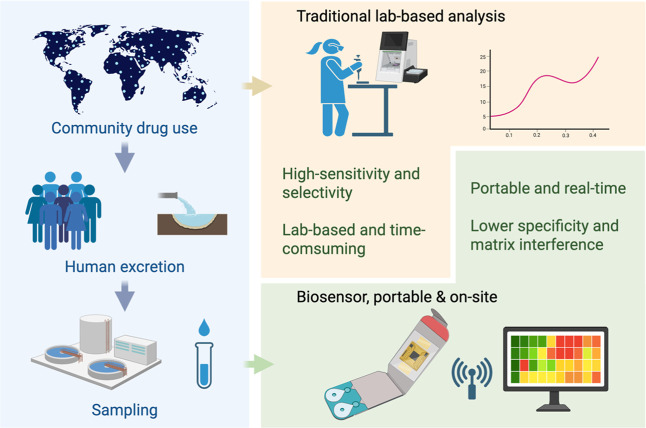
This review introduces biosensor technology for WBE, emphasizing its promise for high sensitivity, selectivity, and the potential for on-site or near real-time screening of illicit drugs. By combining WBE’s broad population coverage with biosensors’ fast, cost-efficient measurements, the article explores pathways toward a more agile approach to illicit drug monitoring, detailing challenges such as matrix interference, sensor fouling, and signal stability. This review also assesses the feasibility and future outlook for integrating biosensors into WBE workflows, setting forth a vision wherein rapid detection methods align with the field’s increasing need for timely, actionable insights in both public health interventions and environmental management.
Conventional Illicit Drug Detection Techniques
Traditional lab-based analytical methods have long been used to detect and quantify illicit drugs in various matrices (e.g., biological samples, wastewater). Although these techniques are widely recognized for their high accuracy and reliability, they often require sophisticated laboratory infrastructure and extended turnaround times.
Chromatography–Mass Spectrometry
Gas Chromatography–Mass Spectrometry
Gas chromatography–mass spectrometry (GC–MS) is an analytical technique that combines the features of gas chromatography and mass spectrometry to identify and quantify different substances within in complex samples. By comparing these spectra to reference standards and using retention time matching, analysts can reliably identify and quantify illicit drugs and their metabolites.ref30,ref31 The sensitivity and detection limits of GC–MS are highly dependent on the analyte properties and sample matrix. For instance, while some studies report limits of detection (LOD) as low as 0.06 ng L–1 for certain illicit drugs in artificial samples,ref. ref31 real-world applications often require careful method optimization and validation.
Birk et al. conducted a study of the semisynthetic cannabinoid hexahydrocannabinol in seized samples from Scottish prisons, all analytes (cannabidiol, cannabinol, Δ9-tetrahydrocannabinol, and Δ8-tetrahydrocannabinol) exhibited a lower limit of quantitation (LLOQ) of 400 ng L–1.ref. ref32 Langa et al.’s study on GC-MS-based analysis of amphetamine-like substances and synthetic cathinones in Portuguese wastewater influents reported a LODs of 5.08–9.63 ng L–1 and an LOQ of 15 ng L–1.ref. ref33
While GC–MS remains a gold standard for sensitive and reliable drug identification, several practical constraints limit its utility for WBE’s emerging needs. A critical prerequisite for GC–MS analysis is that the sample must be in a form suitable for injection into the gas chromatograph. For example, GC–MS requires analytes to be sufficiently volatile or thermally stable for gas-phase separation, often necessitating chemical derivatization (e.g., silylation) that adds complexity and time. However, raw aqueous samples (e.g., wastewater) cannot be directly injected into GC–MS without extensive pretreatment (e.g., extraction, drying, derivatization), which limits its suitability for rapid, on-site monitoring. In a surveillance context that demands rapid results, this prerequisite means GC–MS cannot easily provide immediate on-site measurements. Moreover, the instrumentation is expensive, demands specialized technicians, and occupies considerable laboratory space, making GC–MS less suitable for routine on-site or field-based detection. These constraints highlight unmet needs in WBEnamely, the need for rapid, field-deployable detection methods. This gap creates space for biosensor integration, as biosensors are being designed specifically to deliver quick, on-site analysis without the infrastructure burden of GC–MS.ref34,ref35
Liquid Chromatography–Mass Spectrometry
Liquid chromatography–mass spectrometry (LC–MS) is also an important technique for detecting and quantifying illicit drugs, particularly suited to nonvolatile or thermally labile compounds that resist GC–MS analysis. It offers high sensitivity, selectivity, and the ability to simultaneously quantify multiple target compounds and their metabolites in complex wastewater matrices, with limits of detection reaching the ng L–1 level.ref. ref34 Nevertheless, it remains an expensive, lab-bound process requiring specialized operators, and instrument maintenance, which can limit its practicality in high-throughput or real-time monitoring scenarios.
Recent studies have demonstrated that LC–MS/MS can reliably detect a wide range of commonly abused substances, including methamphetamine, MDMA, and ketamine, especially when combined with sample pretreatment methods such as solid-phase extraction (SPE) or magnetic SPE to enhance recovery and reduce matrix interference.ref14,ref34,ref35 Liu et al. developed a DES/ZIF-MGO-based MSPE-UPLC-MS/MS method that achieved LODs as low as 0.02 μg/L with over 90% recovery in WWTP influents.ref. ref35 Lin et al. (2024a, b) implemented high-resolution HPLC–MS/MS protocols across both WWTP and sewer-network samples in Taiwan. By back-calculating from the measured concentrations, they estimated community drug consumption, reporting usage levels of methamphetamine and ketamine in the range of 22–740 mg/day/1000 people.ref14,ref34
LC–MS extends detection to a broader range of drug compounds (including those not amenable to GC–MS) with high sensitivity and selectivity, but its operational demands similarly underscore a gap in the WBE. In practice, traditional LC–MS workflows involve extensive sample preparation, such as filtration, solid-phase extraction (SPE), or derivatization, that can add anywhere from 30 min to several hours of upfront work, especially for complex matrices like wastewater. For a single LC/GC–MS run once the sample is ready, 15–40 min is a typical analytical window.ref. ref36 For example, a study developed a fast LC–MS/MS screening method that detects 739 bioactive compounds in blood and urine within just 18 min per run, using minimal sample preparation.ref. ref37
Recent streamlining efforts (e.g., direct injection (DI) protocols that reduce preparation time) have not overcome the fundamental lack of portability.ref38,ref39 The capability of direct-injection LC–MS/MS for high-throughput analysis of complex environmental matrices has been successfully demonstrated in large-scale monitoring campaigns. As evidenced by a comprehensive year-long study in Ireland, a DI-LC-MS/MS method enabled the rapid quantification of over 100 contaminants of emerging concern (CECs), including pharmaceuticals, pesticides, and personal care products, in wastewater influent, effluent, and receiving waters at subng/L levels.ref. ref40 Nevertheless, a study employing a 5.5 min chromatographic method requiring only 10 μL of filtered sample successfully quantified 102 contaminants of emerging concern (CECs) at low ng/L levels across six rivers in Germany and Switzerland. This high-throughput approach enabled the collection of over 260 injections per day, facilitating a detailed mapping of CEC sources (e.g., WWTP outfalls) and their rapid dilution downstream over short distances.ref. ref41 These approaches significantly reduced sample preparation time and complexity while maintaining robust performance, providing a valuable tool for acquiring the extensive temporal and spatial data necessary for environmental risk assessment and prioritization.
In summary, GC/LC–MS and biosensors present a clear trade-off between analytical performance and practical applicability in illicit drug monitoring. GC/LC–MS is the undisputed reference technique for confirmatory analysis, offering exceptional sensitivity, selectivity, and the ability to simultaneously quantify a broad spectrum of drugs and metabolites at trace (ng/L) levels, even in complex matrices like wastewater. However, these capabilities come at the cost of high expense, lack of portability, and the need for specialized operators, rendering it impractical for real-time, on-site decision-making. Biosensors, in contrast, address the critical gaps of portability, real-time, and cost-effectiveness, enabling rapid, decentralized screening. Their limitations typically lie in lower multianalyte capability, potentially higher susceptibility to matrix effects, and generally higher limits of detection compared to GC/LC–MS. Thus, while GC/LC–MS remains essential for definitive laboratory-based quantification and large-scale retrospective studies, biosensors offer a complementary technology for high-throughput, rapid and on-site screening and early warning systems.
Raman Spectroscopy and Surface-Enhanced Raman Spectroscopy
Raman spectroscopy relies on inelastic scattering of monochromatic light, typically from a laser, to probe the vibrational modes of molecules. When photons interact with the molecular bonds, most scatter elastically (Rayleigh scattering) at the same wavelength, but a small fraction undergo inelastic scattering, referred to as the Raman effect, resulting in photons that shift in energy (and thus wavelength) relative to the incident light. Each molecule exhibits characteristic Raman shifts corresponding to specific vibrational transitions, creating a fingerprint that can be used to identify and characterize the compound.
Surface-enhanced Raman spectroscopy (SERS) is an advanced analytical technique that significantly amplifies Raman signals by exploiting localized surface plasmon resonance (LSPR) on metallic nanostructures, typically gold or silver nanoparticles, or Au/Ag-based nanostructures. This enhancement occurs due to the intense electromagnetic field generated near the nanoparticle surface when incident light interacts with the conduction electrons in the metal, creating localized surface plasmons. Molecules adsorbed onto or in close proximity to these metal surfaces experience dramatically enhanced Raman scattering, improving detection sensitivity by several orders of magnitude from 106 to 1014 as reported.ref17,ref42
Raman enhancement substrate, especially nanoparticles, play a crucial role in SERS performance. Gold and silver nanoparticles are commonly employed due to their strong plasmonic properties in the visible and near-infrared spectral ranges. Additionally, core–shell nanoparticles (e.g., Au@Ag)ref43,ref44 further improve performance by combining the chemical stability of gold with the stronger electromagnetic enhancement of silver. Factors such as nanoparticle size, shape, and surface chemistry are critical in maximizing enhancement effects.
In the context of illicit drug detection, the ability of Raman spectroscopy to produce detailed vibrational profiles with minimal sample preparation makes it an attractive alternative to more labor-intensive techniques such as GC/LC–MS.ref45,ref46 Despite its powerful detection capabilities, Raman spectroscopy faces challenges when applied in real-world samples such as wastewater. These include background interference from fluorescent contaminants, matrix complexity, and variability in nanoparticle aggregation. Consequently, combining SERS with effective sample preparation methods, such as solid-phase extraction or filtration, is often necessary to achieve optimal results in environmental monitoring scenarios.
Colorimetric Tests
Colorimetric tests are rapid chemical assays that produce characteristic color changes upon reaction with specific drug classes.ref. ref47 Common examples include the Marquis test (often used to screen for amphetamines and certain opioids), the Scott test (for cocaine), and various reagent kits tailored to particular substance groups. These assays are popular in preliminary field operations or law enforcement settings due to their portability, ease of use, and low cost, typically requiring only a small sample and a few drops of reagent. However, spot tests are inherently qualitative or semiquantitative: the resulting color shift indicates the likely presence (or class) of a drug but usually cannot confirm identity with precision. They are also prone to false positives or cross-reactivity with chemically similar compounds. Despite these limitations, colorimetric spot tests remain an essential first-line screening tool, enabling quick, on-site decisions before more rigorous laboratory analysis.
Biosensors for Illicit Drug Detection
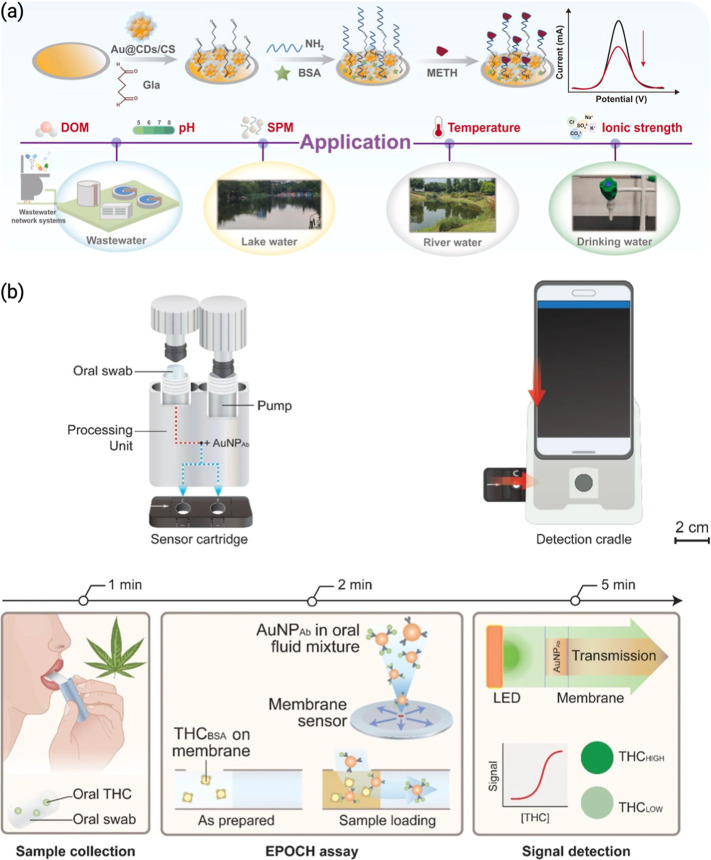
Biosensors for illicit drug detection offer a promising alternative to traditional analytical techniques, providing rapid, sensitive, and potentially field-deployable solutions for identifying drugs and their metabolites. Biosensors have demonstrated excellent capability in detecting illicit drugs in multiple matrices, reported to achieve detection limits comparable to those of traditional laboratory methods.ref28,ref48−ref49ref50ref51ref52ref53 Depending on the detection mechanism, biosensors can be classified into various types, with electrochemical and optical biosensors being the most widely explored for illicit drug monitoring. Electrochemical biosensors measure changes in electrical properties (such as current, voltage, or impedance) upon drug binding, offering high sensitivity in complex environments like wastewater or biological fluids. Optical biosensors, on the other hand, rely on light-based interactions (such as fluorescence, surface plasmon resonance, or Raman scattering) to provide label-free, highly specific drug detection. Given their potential for real-time monitoring, miniaturization, and low-cost manufacturing, biosensors are increasingly being investigated for applications ranging from forensic drug screening to WBE. Figure shows biosensor-based detection of illicit drugs in wastewater.
Biological Recognition Elements
Biosensors rely on highly sensitive and selective biological recognition elements to detect illicit drugs and their metabolites in complex matrices such as sewage.ref. ref56 The core function of a biological recognition element in a biosensor is to selectively bind to the target drug molecule and generate a detectable signal. The working principle of each recognition element depends on the nature of the binding interaction and how it is transduced into a measurable response.
An ideal biological recognition element should fulfill several essential criteria to ensure reliable performance in sensor systems. First, high selectivity is crucial that the element must be able to distinguish the target analyte from structurally similar compounds; for example, aptamers have been engineered to differentiate cocaine from its analogs with high specificity.ref. ref56 Second, chemical and thermal stability is important to maintain activity under varying environmental conditions such as changes in pH, temperature, or ionic strengththis is particularly critical for field-deployable sensors used in wastewater or environmental samples. Third, the recognition element must exhibit strong and rapid binding affinity to the target, as seen in antibody–antigen interactions which typically display nanomolar dissociation constants and fast association kinetics.ref. ref20 Fourth, compatibility with the sensor platform is essential: for instance, thiol-modified aptamers can be readily immobilized on gold nanoparticles or electrodes without compromising their recognition ability. Lastly, reproducibility and scalability are vital for practical applications; synthetic elements like molecularly imprinted polymers (MIPs) offer excellent batch-to-batch consistency and can be mass-produced more easily than biological materials such as monoclonal antibodies.ref. ref57
Enzymes
Enzymes catalyze specific biochemical reactions that involve the target drug or its metabolites, producing a detectable byproduct (e.g., electrons, protons, or colored compounds).ref. ref58 For example, glucose oxidase (GOx) specifically catalyzes the oxidation of glucose into gluconic acid, producing hydrogen peroxide as a byproduct, which can be electrochemically detected.ref19,ref59 Enzymes offer several advantages, including high reaction rates, excellent specificity, and compatibility with a wide range of analytes. However, they also present certain limitations. Enzymes are often sensitive to environmental conditions such as temperature, pH, and the presence of organic solvents, which may lead to denaturation or loss of activity.ref18,ref23,ref60 They can also be inhibited by interfering substances commonly found in real samples. To overcome these drawbacks, various strategies have been developed. Enzyme immobilization techniques help stabilize enzymes by anchoring them onto nanomaterials, electrodes, or hydrogels, enhancing their operational stability and reusability. Protein engineering and directed evolution approaches have been applied to improve enzyme stability and resistance to inhibitors.ref18,ref23 Additionally, hybrid systems combining enzymes with nanomaterials like graphene oxide or metal–organic frameworks (MOFs) have shown promise in enhancing catalytic performance, achieving a detection limit as low as 0.5 nM and a wide linear range of 8 to 500 nM for MAMP detection.ref. ref61 Modern enzyme-based biosensor research focuses on enzyme-nanoparticle hybrids and multienzyme cascade reactions to improve specificity and detection limits, but enzyme biosensors still require optimized storage and handling to maintain long-term performance.
Antibodies
Antibodies are widely used in immunosensors due to their highly specific antigen–antibody interactions, which allow selective recognition of illicit drugs and their metabolites. These biosensors typically rely on electrochemical, fluorescence, or surface plasmon resonance (SPR) transduction, where drug binding triggers a detectable signal. Immunosensors have been successfully applied in portable drug screening devices for substances such as cocaine, THC, methamphetamine, and fentanyl, with reported detection limits in the picomolar (pM) range.ref45,ref62,ref63
The main advantages of antibodies include exceptional specificity, strong binding affinity, and the ability to detect low-abundance targets in complex matrices like wastewater. However, antibodies can be sensitive to environmental conditions such as temperature, pH, and ionic strength, potentially leading to denaturation or reduced binding efficiency.ref. ref20 Moreover, their production involves biological systems (e.g., animals or cell cultures), which can be costly and time-consuming.
To improve antibody performance in biosensors, various strategies have been explored. Immobilization on stable substrates like gold nanoparticles or carbon-based materials enhances their stability and preserves binding activity. Genetic engineering has enabled the development of recombinant antibodies and fragments (e.g., single-chain variable fragments, scFvs) with improved thermal stability and reduced size for better sensor integration. Additionally, synthetic alternatives such as aptamers and molecularly imprinted polymers (MIPs) are being explored to overcome the limitations of traditional antibodies, especially for use in field-deployable, real-time biosensing systems.
Molecularly Imprinted Polymers
Molecularly imprinted polymers (MIPs) serve as synthetic receptors that mimic the binding sites of biological molecules, offering a low-cost, highly stable alternative for illicit drug detection. MIPs are fabricated by polymerizing monomers around a template drug molecule, leaving behind specific molecular cavities after template removal that selectively rebind the target drug. These synthetic recognition elements are particularly attractive for cocaine, MDMA, and THC detection, as they resist temperature, pH variations, and enzymatic degradation, making them ideal for environmental and forensic applications. However, MIPs generally have lower binding affinity than biological receptors, require precise template removal processes to prevent nonspecific binding, and may exhibit reduced selectivity in complex samples like wastewater or blood. In the literature analyzed in this study regarding biosensors for illicit drug detection, MIP-based biosensors generally exhibit higher LOD and perform poorly in complex matrices such as wastewater.ref50,ref57,ref64−ref65ref66 This is because: (i) MIPs typically have lower binding affinity than biological receptors due to their synthetic nature; (ii) MIPs suffer from nonspecific binding in complex sample matrices like wastewater, where multiple organic and inorganic contaminants can interfere with detection; (iii) MIP-based biosensors often have slower binding kinetics and require longer incubation times compared to antibody- or aptamer-based biosensors.ref. ref67 Recent advancements focus on nanoMIPs (nanoscale imprinted polymers) and electropolymerized MIPs, which enhance binding efficiency and signal transduction, paving the way for more reliable real-time illicit drug monitoring in portable sensing platforms.
Aptamers
Aptamers are single-stranded DNA or RNA molecules selected through the systematic evolution of ligands by exponential enrichment (SELEX) process, offering a synthetic alternative to antibodies for drug biosensing.ref. ref67 Aptamers bind to target drugs through their unique three-dimensional folding structures, with high specificity and better chemical stability than antibodies. They can be integrated into electrochemical, fluorescence, and surface plasmon resonance (SPR) biosensors, enabling highly sensitive detection of drugs such as cocaine, 3,4-methylenedioxymethamphetamine (MDMA), and synthetic opioids, often achieving nanomolar (nM) or lower detection limits.ref24,ref26,ref54,ref68−ref69ref70ref71ref72ref73ref74
Several studies have demonstrated the application of aptamer biosensors in detecting illicit drugs within wastewater matrices. For instance, an electrochemical aptasensor achieved an LOD of 0.87 pg L–1 for methamphetamine in real water samples (drinking water, river, lake, and wastewater), showing excellent recovery (92.4–104.6%) and stability across common environmental conditions, supporting its applicability in WBE.ref. ref54 Similarly, a fluorescent aptasensor based on UiO-66/AuNPs nanocomposites enabled cocaine detection in human serum with a detection limit of 0.178 μM and high selectivity, demonstrating applicability in real biological matrices.ref. ref75
Despite these advantages, aptamers face challenges such as lower binding affinity than antibodies, potential structural degradation in biological fluids, and the labor-intensive SELEX process required for aptamer selection. Ongoing advancements include modified aptamers with chemical stabilization and aptamer-nanoparticle conjugates to enhance signal amplification and improve real-world applicability in drug monitoring.
In addition to current aptamer-, antibody-, and MIP-based biosensors, emerging biosensor technologies are being developed with promising potential for wastewater-based drug monitoring. For instance, wearable biosensors, incorporating flexible electrochemical or optical modules, have also been proposed for decentralized environmental surveillance.ref76,ref77 Moreover, microfluidic-integrated biosensors enable automated, multiplexed analysis with minimal sample consumption, ideal for field-deployable systems.ref17,ref78,ref79 These alternative biosensor platforms, though not yet widely applied in WBE, offer scalable, real-time, and cost-effective solutions for future illicit drug monitoring in aquatic environments.
Apparent Binding Affinity (K d)
The binding affinity of biological recognition elements is a key determinant of biosensor sensitivity, often characterized by the dissociation constant (K d). The K d values between biosensor recognition elements and target analytes can be significantly altered in complex wastewater environments compared to ideal buffer conditions. For monoclonal antibodies, K d values typically range from 10–9 to 10–12 M, indicating high affinity toward their target antigens.ref20,ref80 Aptamers usually exhibit K d values in the low nanomolar to midpicomolar range (10–9 to 10–12 M), comparable to antibodies, though more variable depending on target type and sequence optimization.ref28,ref29 Enzymes demonstrate substrate affinities in the micromolar to nanomolar range (10–6 to 10–9 M) depending on their catalytic turnover rate and Michaelis–Menten constant (Km).ref18,ref23 In contrast, MIPs generally display weaker binding affinities, with reported K d values ranging from 10–6 to 10–3 M, due to their synthetic nature and less specific interaction mechanisms.ref57,ref65,ref66,ref81 Figure shows the four biological recognition elements discussed in Section sec3.1 and the reported K d ranges of the four biological recognition elements.
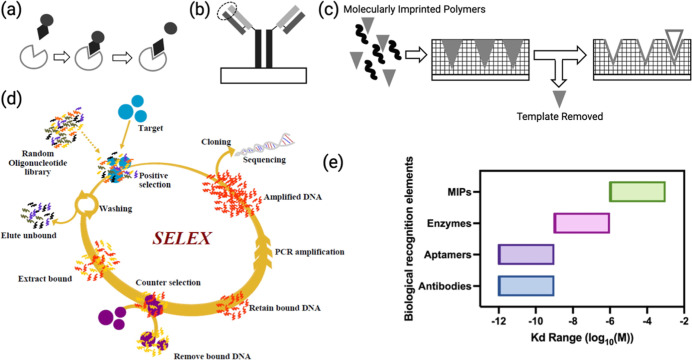
Wastewater contains a diverse array of interfering substances, such as organic matter, surfactants, heavy metals, and suspended particulates, that can interfere with the molecular recognition process. Fluctuations in pH and ionic strength can induce conformational changes in aptamers or antibodies, disrupting the integrity of their binding sites and reducing their affinity for the target molecule. Additionally, high salt concentrations may shield electrostatic interactions essential for binding, while organic contaminants or colloids may nonspecifically adsorb to the sensor surface, sterically hindering target access. These matrix effects often result in an increased apparent K d, effectively lowering sensor sensitivity and reliability. Therefore, biosensor designs for WBE must carefully account for matrix-induced affinity shifts. For example, aptamer-based cocaine sensors have shown an increase in apparent K d from 1.2 nM in buffer to over 20 nM in raw influent wastewater due to ionic strength and organic fouling.ref. ref28 To mitigate these effects, antifouling strategies such as PEGylated surfaces, zwitterionic polymer brushes, or nanocomposite coatings (e.g., graphene-oxide-PEG) have been employed to reduce nonspecific adsorption by up to 80% in simulated wastewater.ref. ref64 Furthermore, chemically stabilized recognition elements like thioether-modified aptamers and recombinant single-chain antibodies have demonstrated improved binding fidelity in pH-variable samples.ref. ref82 Real-world calibration is often achieved via matrix-matched standard curves or standard addition methods, ensuring that detection sensitivity and selectivity remain consistent when translating from lab to field conditions.
Electrochemical Biosensor for Illict Drug Detection
Electrochemical biosensors operate by converting biochemical interactions between a target drug molecule and a biological recognition element into electrical signals (such as current, voltage, or impedance). Given their analytical performance and compatibility with low-cost, decentralized monitoring platforms, electrochemical biosensors are poised to become a key enabling technology for WBE applications, potentially replacing traditional approaches in certain contexts. To achieve the sensitivity and robustness required for complex wastewater matrices, these sensors often incorporate signal amplification strategies to enhance the measurable electrical response (e.g., current, voltage, impedance) resulting from the target-recognition event, thereby lowering the detection limit and improving reliability under field conditions.
One of the most widely used approaches is enzyme-mediated amplification, where catalytic reactions generate detectable electrochemical signals. For instance, in systems using glucose oxidase (GOx) or horseradish peroxidase (HRP), target binding triggers redox reactions that produce hydrogen peroxide or reduce electroactive substrates such as TMB. Yang et al. demonstrated that a dual-enzyme cascade system using GOx and HRP on an AuNP-modified immunoelectrode improved the detection limit of methamphetamine in serum from 1 ng L–1 to 0.001 μg L–1, representing a 1000-fold enhancement compared to unmodified sensors.ref. ref80
Nanomaterial-assisted amplification is another critical strategy. Conductive nanomaterials such as gold nanoparticles (AuNPs), carbon nanotubes (CNTs), and graphene oxide (GO) increase the effective electrode surface area and facilitate electron transfer. For example, De Rycke et al. showed that capacitive sensors functionalized with AuNPs exhibited a 3.7-fold improvement in sensitivity for amphetamine detection in wastewater compared to flat electrodes.ref. ref66 El-Akaad et al. developed a capacitive MIP-Au biosensor for detecting 4-methyl-5-phenylpyrimidine (4M5PP), a forensic marker of illicit ATS synthesis (Figure a). The sensor showed a linear range of 17.0–510.6 μg/mL with a detection limit of 13.6 μg/mL and achieved 95–101% recovery in real wastewater samples, maintaining over 90% signal after 24 reuse cycles. This study demonstrates a robust strategy for indirect environmental monitoring of clandestine drug production.ref. ref57 Sengel et al. developed an electrochemical immunosensor based on an electroactive peptide-modified electrode (EDOT-BTDA-PPhe) for the detection of cocaine and its major metabolite, benzoylecgonine (BE) (Figure b). The sensor exhibited a linear response between 151.7 and 7584 μg/L with a detection limit of 124.4 μg/L (R 2 = 0.998), and achieved recovery rates between 91.9% and 98.7% in spiked urine and saliva samples.ref. ref83 Oueslati et al. developed a low-cost capacitive aptasensor enhanced by AC electroosmotic flow for the on-site detection of cocaine (Figure c). The sensor achieved an ultralow detection limit of 2.37 ng/L in buffer and 4.06 ng/L in serum within 30 s, demonstrating a wide linear range (4.4–4.4 ng/L) and excellent selectivity against structurally similar molecules.ref. ref84
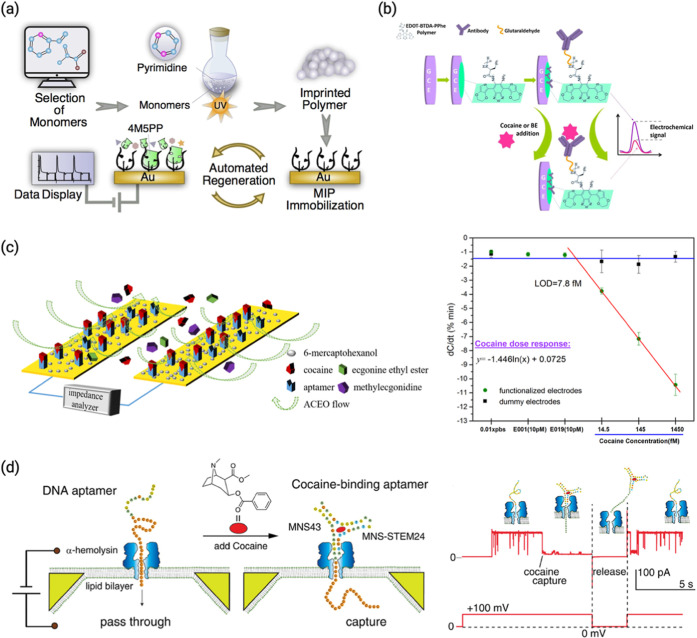
In addition, electroactive labels such as ferrocene or methylene blue are widely used to improve output signal strength. In a study by Oueslati et al., ferrocene-labeled aptamer probes for cocaine detection demonstrated a 100-fold increase in signal-to-background ratio when conjugated to AuNPs, reducing the LOD to 2.4 × 10⁻⁹ μg L–1 in serum samples.ref. ref84 These strategies are often integrated; for example, aptamer-AuNP-ferrocene constructs combine recognition, signal transduction, and amplification into a single compact system capable of subnanomolar drug detection even under variable matrix conditions. Table summarizes the recent developments in electrochemical biosensor for illicit drug detection in wastewater or biological fluids.
1: Electrochemical Biosensors for Illicit Drug Detection in Wastewater and Biological Fluids
| sensors | analytical method | sample matrix | target | LOD (μg L–1) | linear range (μg L–1) | refs |
|---|---|---|---|---|---|---|
| MIP-Au | capacitive | wastewater | AMP | ∼1.00 × 10⁴ | 1.35 × 10⁴–4.06 × 10⁵ | ref. ref57 |
| MIP-Au | capacitive | wastewater | AMP | ∼4.13 × 10³ | NR | ref. ref66 |
| NFA | ∼3.75 × 10³ | NR | ||||
| BMK | ∼6.76 × 10³ | NR | ||||
| MIP-based SPCE | SWV | blood, urine | MDMA | 1.53 × 10² | 4.83 × 10²–3.86 × 10⁴ | ref. ref50 |
| antibody-Au | EIS | serum | MAMP | 1.00 × 10⁻³ | 2.00 × 10⁻³–2.00 × 10⁻¹ | ref. ref80 |
| morphine | 3.00 × 10⁻⁴ | 4.00 × 10⁻³–8.00 × 10⁻² | ||||
| EDOT-BTDA-PPhe-antibody | EIS | saliva, urine, and human serum | cocaine and BE | ∼1.20 × 10² | 1.52 × 10²–7.58 × 10³ | ref. ref83 |
| GPH-SPE/PdNP-MIPs | SWV | river water and saliva | cocaine | ∼1.50 × 10⁴ | 3.00 × 10⁴–1.50 × 10⁵ | ref. ref49 |
| aptamer-Au | ICS | serum | cocaine | 2.37 × 10⁻⁹ | 4.40 × 10⁻⁹–4.40 × 10⁻³ | ref. ref84 |
| DNA aptamer | DPV | codeine | 1.71 × 10⁻³ | 2.19 × 10⁻³–2.19 | ref. ref86 | |
| aptamer | CV | serum | cocaine | 1.00 × 101 | 3.00 × 101–3.0 × 10² | ref. ref70 |
| aptamer | DPV | serum | Cocaine | 3.00 × 10⁻² | 3.00 × 10⁻¹–3.33 × 10³ | ref. ref69 |
| aptamer | DPV | serum | cocaine | 3.00 × 10⁻² | 3.00 × 10⁻¹–3.33 × 10³ | ref. ref87 |
| DNA | DPV | serum | ketamine | 1.28 × 10⁻¹ | 0–1.43 × 10² | ref. ref88 |
| aptamer | DPV | serum | cocaine | 7.00 × 10⁻² | 9.00 × 10⁻²–4.55 | ref. ref68 |
| aptamer | DPV | synthetic biological fluids | cocaine | 4.55 × 10⁻¹ | 7.58 × 10⁻¹–3.03 | ref. ref89 |
| DNA aptamer | DPV | codeine | 9.00 × 10⁻⁴ | 3.00 × 10⁻³–3.00 × 101 | ref. ref90 | |
| aptamer | DPV | serum | codeine | 9.00 × 10⁻⁵ | 3.00 × 10⁻⁴–3.00 × 101 | ref. ref91 |
a NFA = N-formyl amphetamine; BMK = benzyl methyl ketone; NR = not reported; SPCE = screen printed carbon electrode; SWV = square wave voltammetry; EIS = electrochemical impedance spectroscopy; BE = benzoylecgonine; ICS = interfacial capacitance sensing; DPV = differential pulse voltammetry; CV = cyclic voltammetry.
MIP-based biosensors are featured in multiple studies, often coupled with capacitive and SWV,ref50,ref57,ref66 and are the only kind of biosensor applied in wastewater detection. However, MIP-based biosensors exhibit higher LODs, making them less suitable for trace drug detection, especially in wastewater and environmental samples where ultralow concentrations are of interest. Among all the reported electro biosensors for illicit drug detection, Yang et al. reported the lowest LOD of 0.001 μg/L for MAMP and 0.0003 μg/L for morphine with a convincing linear range to quantitatively assess the concentration of illicit drugs in complex matrix.ref. ref80
Optical Biosensor for Illicit Drug Detection
Optical biosensors convert molecular interactions into optical signals, such as color changes, fluorescence, SERS, or absorbance shifts. These sensors leverage the unique interactions between drugs and biological or nanomaterial-based recognition elements to produce highly specific and sensitive detection. Compared to electrochemical biosensors, optical biosensors often exhibit higher sensitivity and multiplexing capabilities, making them particularly useful for on-site drug screening and forensic analysis.
In the context of wastewater-based epidemiology, signal amplification of optical biosensor is particularly critical due to the low abundance of analytes and high background interference. Optical biosensors utilize a wide range of amplification strategies, including nanoparticle-mediated plasmonic enhancement, catalytic color development, and resonance-based signal transduction, to improve detection performance.
Among these, colorimetric biosensors are widely adopted for their simplicity, cost-effectiveness, and compatibility with portable devices. Signal amplification in colorimetric platforms is typically achieved using the aggregation of gold or silver nanoparticles (AuNPs/AgNPs). Upon target binding, aptamer-functionalized nanoparticles undergo aggregation or dispersion, resulting in a visible color change (e.g., red-to-blue shift). Mao et al. demonstrated a duplex AuNP-based aptasensor for methamphetamine and cocaine in wastewater, achieving detection limits of 0.075 μg L–1 for MAMP and 1.0 μg L–1 for cocaine, with recovery rates above 85% in spiked wastewater samples.ref. ref28 Notably, colorimetric sensors without plasmonic amplification generally exhibit LODs in the mg/L range, underscoring the essential role of nanoparticle-enhanced signal readouts.
Surface-enhanced Raman scattering (SERS) offers one of the most powerful amplification mechanisms in optical biosensing. By leveraging the electromagnetic field enhancement near nanostructured metal surfaces, especially AuNPs, AgNPs, and Au@Ag core–shells which have been reported to successfully enhance the sensitivity of biosensors for illicit drug detection, SERS can amplify Raman signals by factors ranging from 106 to 1014, enabling ultratrace detection of analytes. For instance, Mao et al. reported a paper-based SERS nanosensor for methamphetamine in wastewater with a detection limit of 0.0072 μg L–1, covering a linear range from 0.1 to 10,000 μg L–1, suitable for both low-concentration surveillance and high-exposure events.ref. ref53 Similarly, a SERS biosensor using Au@Ag core–shell nanoparticles achieved an LOD of 0.16 μg L–1 for MAMP in urine samples, outperforming conventional fluorescence-based immunoassays.ref. ref44
In addition to SERS and colorimetry, fluorescence amplification strategies are also used. These include quantum dot labeling, fluorescence resonance energy transfer (FRET), and chemically stabilized fluorescent aptamers. Although their sensitivity is generally lower than SERS, fluorescent biosensors offer real-time kinetic monitoring and multiplexing. For example, Roncancio et al. developed an aptamer-fluorophore assembly for cocaine detection in serum, urine, and saliva, reaching LODs in the low μg L–1 range (∼3–11 mg L–1), though with limited matrix tolerance.ref. ref71 Table summarizes the recent developments in optical biosensor for illicit drug detection in wastewater or biological fluids.
2: Optical Biosensors for Illicit Drug Detection in Wastewater and Biological Fluids
| sensor matrix | analytical method | sample matrix | target | LOD (μg L–1) | linear range (μg L–1) | refs |
|---|---|---|---|---|---|---|
| AuNP-based biosensor | colorimetry | wastewater | MAMP | 7.50 × 10⁻² | NR | ref. ref28 |
| cocaine | 1.00 | NR | ||||
| AgNPs on diatomaceous earth films | SERS | wastewater | fentanyl | NR | NR | ref. ref92 |
| paper-based nanosensor | SERS | wastewater | MAMP | 7.20 × 10⁻³ | 1.00 × 10⁻¹–1.00 × 10⁴ | ref. ref51 |
| Au@Ag core–shell NP-based biosensor | colorimetry | urine | MAMP | 2.50 × 10⁻² | 7.50 × 10⁻²–3.00 × 101 | ref. ref93 |
| cocaine | 1.50 × 10⁻¹ | 3.00 × 10⁻¹–4.50 × 101 | ||||
| Au@Ag core–shell NP-based biosensor | SERS | urine | MAMP | 1.60 × 10⁻¹ | 5.00 × 10⁻¹–4.00 × 101 | ref. ref44 |
| DNAzyme MB-based biosensor | colorimetry | urine | MAMP | 7.46 × 101 | 1.19–7.46 × 101 | ref. ref94 |
| aptamer | fluorescence | urine, saliva, serum, water | cocaine | ∼5.58 × 10³ | NR | ref. ref71 |
| ∼3.15 × 10³ | NR | |||||
| ∼1.09 × 10⁴ | NR | |||||
| ∼6.07 × 101 | NR | |||||
| fluorescent-based immunoassay | fluorescence | saliva | cannabis (THC) | 2.50 × 101 | NR | ref. ref95 |
| aptamer-AuNP | colorimetry | urine | MAMP | 7.50 × 10⁻² | 1.50 × 10⁻¹–3.00 × 101 | ref. ref96 |
| aptamer and peroxidase-mimicking DNAzyme | colorimetry | spiked biologic fluid | cocaine | 1.52 × 10³ | 3.00 × 10³–3.00 × 10⁵ | ref. ref97 |
| aptamer-graphene oxide | fluorescence | spiked human plasma | cocaine | 3.00 × 10⁻² | 3.00 × 10⁻²–1.52 × 10² | ref. ref98 |
| aptamer-SiNP | fluorescence | serum | cocaine | 2.50 × 10⁻² | 1.50 × 10⁻¹–2.43 × 101 | ref. ref72 |
| aptamer-SiNP/AuNP | fluorescence | serum | cocaine | 6.00 × 10⁻² | 1.50 × 10⁻¹–6.07 | ref. ref99 |
a AuNP = gold nanoparticle; AgNP = silver nanoparticle; DNAzyme MB = G-quadruplex–hemin DNAzyme molecular beacon; SiNP = silica nanoparticle.
Overall, SERS-based biosensors demonstrate the highest sensitivity, while colorimetric sensors offer simplicity and practicality for portable testing, and fluorescence biosensors provide dynamic real-time monitoring. Notably, nanomaterials, specifically gold/silver nanoparticles, are widely used in optical biosensor fabrication for illicit drug detection.ref28,ref29,ref43,ref44,ref51,ref52,ref93,ref100 Those biosensors modified with nanomaterials hold lower LOD than those without.
Mao et al. developed a simple, label-free, and cost-effective colorimetric biosensor for MAMP detection based on a G-quadruplex–hemin DNAzyme molecular beacon (DNAzyme MB) and a MAMP-specific aptamer. The sensor achieved a low detection limit of 0.5 nM with a linear range from 8 to 500 nM, and demonstrated high selectivity against 15 other common illicit drugs. In real urine samples, the biosensor yielded recovery rates above 85% and showed good agreement with HPLC-MS/MS measurements.ref. ref94 This study developed a surface-enhanced Raman scattering (SERS) sensor based on a glass nanofibrous paper substrate decorated with gold@silver core–shell nanoparticles (Au@Ag), achieving ultrasensitive detection of methamphetamine in water with a detection limit as low as 7.2 ppt (Figure a).ref. ref53 Mao et al. reported an Au-aptamer-based biosensor for colorimetry detection of MAMP and cocaine and evaluated its ability in wastewater samples (Figure b).ref. ref28 The average recoveries of MAMP and COC in spiked effluent wastewater samples were 85.5% and 83.9%, respectively, when comparing the measured concentrations with the actual concentrations. These results demonstrate the strong potential of this biosensor for multiplexed detection of illicit drugs in wastewater, supporting its application in community-level drug consumption assessment.
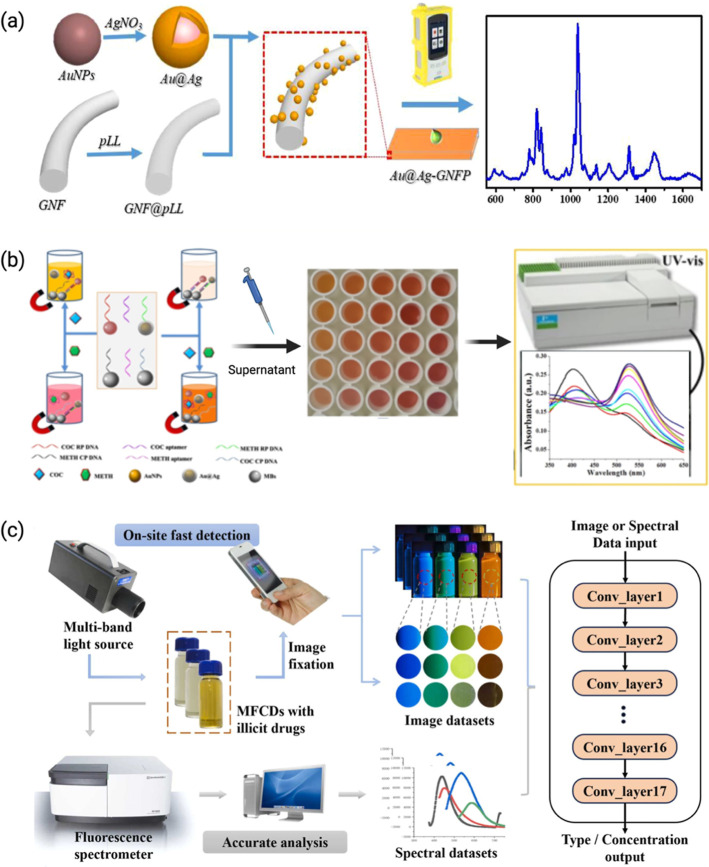
Biosensor-based techniques present a compelling alternative to traditional analytical methods for illicit drug detection in WBE. While established techniques like GC–MS and LC–MS offer exceptional sensitivity and robust identification, they require complex sample preparation, expensive instrumentation, and specialized personnel, making them less practical for large-scale or real-time surveillance.ref30,ref34,ref37,ref79,ref102,ref103 In contrast, biosensors offer a combination of high sensitivity, selectivity, and fast analysis with simplified operational procedures, making them more suitable for on-site and field applications. For instance, biosensors have achieved detection limits as low as 7.2 ng L–1 for MAMP and 1000 ng L–1 for cocaine, comparable to traditional methods yet with the added benefit of portability and lower operational costs.ref28,ref53 Despite certain limitations such as biocomponent degradation and potential interference from complex sample matrices, biosensors stand out as a practical and scalable solution for WBE. Their ability to provide near-instantaneous results without the need for extensive sample pretreatment highlights their potential in enhancing real-time surveillance of community-level drug consumption patterns.
Additionally, while some biosensors (e.g., enzymaticref18,ref23,ref60) are designed for single-use due to fouling or loss of bioactivity, other formats such as electrochemical aptasensorsref24,ref26,ref54,ref68,ref69,ref73,ref74 or MIP-based sensorsref65,ref66,ref81,ref104 can be regenerated and reused multiple times depending on surface chemistry and regeneration protocols. Certain biosensor platforms, especially those based on electrochemical arrays,ref23,ref105,ref106 or surface-enhanced Raman scattering (SERS),ref107,ref108 have demonstrated potential for simultaneous detection of multiple analytes. This offers a promising advantage over traditional LC–MS workflows, which often require multiple runs or transitions.
Biosensors for Wastewater-Based Illicit Drug Surveillance
Electrochemical and optical biosensors have been used to detect illicit drugs in wastewater samples. The general workflow includes sample collection and preparation, where wastewater is collected from sewage treatment plants or specific locations of interest (e.g., nightlife districts, music festivals, universities), followed by filtration and preconcentration if needed. Biosensors then use specific biological elements to capture illicit drugs such as cocaine, MAMP, THC, fentanyl etc., triggering a measurable signal transduced into an optical or electrochemical response. Electrochemical biosensors convert molecular binding events into current, voltage, or impedance changes, while optical biosensors detect changes in light absorption, fluorescence, or surface plasmon resonance. Finally, the detected concentrations are used to estimate per capita drug consumption, applying wastewater flow rates, drug metabolism rates, and population normalization factors.
A comparison of biosensors with conventional WBE methods shows that biosensors can achieve comparable or superior sensitivity, with SERS and electrochemical biosensors reaching fM–pM levels, while LC–MS typically operates in the ng L–1–pg L–1 range.ref29,ref30,ref45 The time-to-result for biosensors is within minutes to an hour, compared to several hours or even days for LC–MS/GC–MS, making biosensors a much faster alternative. Furthermore, biosensors are significantly cheaper, as they eliminate the need for expensive centralized laboratories and highly trained personnel. Their portability makes them highly suitable for on-site testing, unlike mass spectrometry-based techniques, which require specialized laboratory settings.
However, biosensor-based WBE faces several technical and practical challenges. First, the complex and variable composition of wastewater poses a significant challenge to the performance of biosensor-based WBE platforms. Raw sewage contains a mixture of suspended solids, humic substances, surfactants, salts, heavy metals, and microbial byproducts, all of which can interfere with biosensor signal generation through multiple mechanisms. These include nonspecific adsorption to the sensor surface, masking or denaturation of biorecognition elements, and electrochemical or optical background noise that obscures low-intensity target signals.
For example, aptamer-based electrochemical sensors may exhibit signal drift or suppression in high-salt or surfactant-rich environments, where the aptamer structure becomes destabilized or the redox tag is shielded.ref82,ref89 Similarly, SERS biosensors can suffer from hotspot fouling by organic debris, leading to signal quenching and reduced reproducibility. Moreover, fluctuations in pH and ionic strength can alter the binding affinity of recognition elements, further compromising sensor accuracy.ref. ref82
To mitigate matrix interference, several strategies are being developed (though some of them have not been applied in developing biosensors for illicit drug detection). These include prefiltration and solid-phase extraction to remove particulates and matrix modifiers;ref. ref109 surface modifications with antifouling coatings such as polyethylene glycol (PEG),ref. ref110 zwitterionic layers,ref. ref59 or molecular sieves; and ratiometric or internal reference-based signal correction. More advanced approaches involve integrating microfluidic separation modules upstream of biosensor units,ref106,ref111 or applying machine learning algorithms to distinguish analyte-specific signals from background patterns. Nevertheless, robust performance in unprocessed wastewater remains a key benchmark for future biosensor development.
Another critical barrier to translating biosensor-based WBE into actionable public health tools lies in the lack of standardization, which manifests on two levels: data comparability and protocol harmonization. On the data level, inconsistent reporting formats, including the use of different units for detection limits (e.g., mol/L vs μg/L), nonstandardized calibration models, and inconsistent approaches to peak intensity normalization, make it difficult to compare performance across studies. For example, Raman-based biosensors often report relative intensity changes without internal references, while electrochemical sensors may rely on different redox markers or electrode surface areas, hindering cross-platform comparison. These issues reduce the interpretability of biosensor data and complicate benchmarking against mass spectrometry-based standards.
On the methodological level, variations in sensor fabrication, surface modification chemistry, and sample pretreatment (e.g., filtration, dilution, or solid phase extraction enrichment) contribute to significant reproducibility challenges. Additionally, differences in how spiking and recovery tests (given the condition that few real world tests were conducted) are performed in real wastewater samples often lead to over- or underestimation of biosensor performance. Without harmonized protocols, it is difficult to assess whether a reported detection limit reflects true field applicability or lab-optimized conditions.
To address these issues, future development should align biosensor evaluation methods with existing international guideline or suggestions for WBE, such as those published by the European Union Drugs Agency (EUDA)ref. ref112 or United Nations Office on Drugs and Crime (UNODC),ref. ref113 which provide frameworks for sampling, normalization, and analyte quantification. Establishing consensus on biosensor-specific reporting metrics,ref. ref56 such as “effective LOD/LLOQ in raw wastewater”, “normalized SERS enhancement factor”, or “on-site reproducibility”, will be essential for integrating biosensors into standardized WBE workflows.
Third, translating biosensor information into meaningful, epidemiologically relevant insights remains one of the most critical challenges in WBE. Unlike traditional centralized workflows (such as LC/GC–MS), biosensor networks, especially when deployed in the spots of interest, are expected to generate high-frequency, high-volume data streams from multiple sites. Without scalable interpretation and integration frameworks, the utility of these data is severely limited. This is where Internet of Things (IoT) architectures and artificial intelligence (AI) can play transformative roles.
IoT-enabled biosensor platforms can continuously transmit sensor data, flow rates, and environmental metadata (e.g., temperature, pH, conductivity) to cloud-based servers in real time. These data streams can then be processed by AI models, such as machine learning algorithms (e.g., random forests, long short-term memory (LSTM) networks), to (1) correct for environmental variation and sensor drift; (2) identify anomalous patterns or emerging usage events; (3) fuse biosensor data with auxiliary sources (e.g., weather, flow, public holidays) for better resolution; (4) translate signal data into estimated drug usage metrics using trained regression models.
Recent studies have demonstrated the potential of hybrid sensor-AI systems to achieve automated detection, classification, and quantification of analytes in complex environmental settings.ref. ref114 As biosensors scale into smart city infrastructures, the synergy between sensing technologies, digital connectivity, and intelligent analytics will be central to realizing real-time, actionable WBE. However, these applications are still in early stages and face challenges related to training data availability, model generalizability, and data privacy governance.
Encouragingly, recent efforts have begun to bridge laboratory research and real-world implementation. For instance, Mao et al. reported the successful evaluation of community-wide illicit drug detection in Chinese cities with biosensor-based WBEref. ref53 (Figure ).
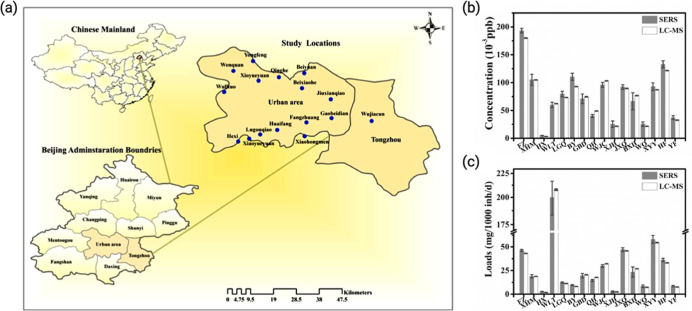
This study demonstrates that biosensor-based WBE can be effectively utilized for large-scale illicit drug monitoring, providing a cost-effective, and scalable approach to assess drug consumption trends at the community level. By integrating advanced biosensing technology with wastewater surveillance, this method offers a noninvasive and objective alternative to traditional drug monitoring strategies, enabling proactive public health interventions, policy evaluation, and environmental risk assessment.
Conclusion and Perspectives
Illicit drug use remains a persistent and growing challenge worldwide, with significant implications for public health and the environment. WBE presents a transformative approach for illicit drug monitoring, offering a rapid, cost-effective, and scalable solution to address the increasing public health and environmental concerns associated with drug abuse. By combining the broad coverage of WBE with the high sensitivity and selectivity of biosensors, this innovative method has demonstrated promising potential in providing near real-time insights into community drug consumption trends. The successful integration of biosensors into WBE systems has the potential to facilitate evidence-based policymaking, inform harm reduction strategies, and enhance public health interventions. Moreover, by monitoring drug residues and their metabolites in wastewater, biosensor-based WBE also plays a crucial role in evaluating the effectiveness of drug decriminalization policies and rehabilitation programs.
Looking ahead, biosensors are critical to supportstrategic roles in WBE by integrating with emerging digital and urban infrastructure. In particular, embedding biosensor networks into the IoT and smart city frameworks could revolutionize how drug surveillance data are collected and interpreted. As envisioned, numerous sensors deployed throughout a city’s wastewater network would continuously transmit data to cloud-based platforms, enabling real-time mapping of drug consumption patterns across neighborhoods. This convergence of biosensing technology, wireless connectivity, and intelligent analytics would create a dynamic surveillance system capable of spotting spikes or shifts in drug use as they happen. For example, multimodal models could combine live biosensor readings with wastewater flow rates, weather, and demographic insights to better contextualize the findings. Machine-learning algorithms (from random forests to LSTM networks) have already been applied to retrospectively analyze WBE data; feeding them with real-time biosensor outputs promises to enhance the temporal resolution of these models, improving event responsiveness and extending coverage into areas or timeframes where traditional sampling is impractical. The integration of biosensors with IoT and AI-driven data fusion and machine learning paves the way for an intelligent WBE system that not only detects drug trends faster, but also situates those trends in space and time.
In parallel, AI also holds promise for improving biosensor performance and data interpretion. Neural networks and other learning models can be trained to fit the environmental variability, extract patterns from noisy data, and compensate for matrix-induced distortions which is particularly important for sensors operating in raw or minimally treated wastewater. These capabilities may significantly enhance the accuracy and robustness of field-deployed biosensors.
However, the practical intelligent biosensing ecosystems will require the creation of shared, annotated biosensor data sets, standardized evaluation protocols, and cross-disciplinary collaboration. Integrating sensing hardware, cloud-based data management, and AI interpretation pipelines will be essential for moving from prototype to scalable, public health-ready systems.
Ultimately, the future of biosensor-enabled WBE depends not only on technological innovation, but also on system-level integration, data interoperability, and ethical governance. These elements, when aligned, can transform biosensor networks into real-time, adaptive platforms for evidence-based drug policy, early intervention, and public health protection.
References
- C. Kollath-Cattano, S. J. Hatteberg, A. Kooper. Illicit Drug Use among College Students: The Role of Social Norms and Risk Perceptions. Addict. Behav., 2020. [DOI | PubMed]
- W. Wang, C. Guo, L. Chen, Z. Qiu, X. Yin, J. Xu. Simultaneous Enantioselective Analysis of Illicit Drugs in Wastewater and Surface Water by Chiral LC–MS/MS: A Pilot Study on a Wastewater Treatment Plant and Its Receiving River. Environ. Pollut., 2021. [DOI | PubMed]
- G. Orive, U. Lertxundi. Mass Drug Administration: Time to Consider Drug Pollution?. Lancet, 2020. [DOI | PubMed]
- R. Pal, M. Megharaj, K. P. Kirkbride, R. Naidu. Illicit Drugs and the EnvironmentA Review. Sci. Total Environ., 2013. [DOI]
- K. Bibby, A. Bivins, Z. Y. Wu, D. North. Making Waves: Plausible Lead Time for Wastewater Based Epidemiology as an Early Warning System for COVID-19. Water Res., 2021. [DOI | PubMed]
- X. Li, J. Kulandaivelu, S. X. Zhang, J. H. Shi, M. Sivakumar, J. Mueller, S. Luby, W. Ahmed, L. Coin, G. M. Jiang. Data-Driven Estimation of COVID-19 Community Prevalence through Wastewater-Based Epidemiology. Sci. Total Environ., 2021. [DOI | PubMed]
- X. Li, H. Liu, L. Gao, S. P. Sherchan, T. Zhou, S. J. Khan, M. C. M. van Loosdrecht, Q. L. Wang. Wastewater-Based Epidemiology Predicts COVID-19-Induced Weekly New Hospital Admissions in over 150 USA Counties. Nat. Commun., 2023. [DOI | PubMed]
- Y. Pan, B. Wang, J. M. Cooper, Z. Yang. Paper Microfluidic Sentinel Sensors Enable Rapid and On-Site Wastewater Surveillance in Community Settings. Cell Rep. Phys. Sci., 2024. [DOI]
- Z. Y. Zhao, Q. D. Zheng, B. J. Tscharke, F. Ahmed, J. W. O’Brien, J. F. Gao, A. Covaci, P. K. Thai. Refining the Correction Factor for a Better Monitoring of Antidepressant Use by Wastewater-Based Epidemiology: A Case Study of Amitriptyline. Sci. Total Environ., 2024. [DOI | PubMed]
- T. Boogaerts, M. Quireyns, F. Maes, M. Laimou-Geraniou, N. Van Wichelen, E. Heath, B. Pussig, B. Aertgeerts, A. Covaci, A. L. N. van Nuijs. Optimization, Validation and Application of a High-Throughput 96-Well Elution Protocol for the Quantification of Psychoactive Substances in Influent Wastewater. Drug Test. Anal., 2023. [DOI | PubMed]
- S. Castiglioni, N. Salgueiro-González, L. Bijlsma, A. Celma, E. Gracia-Lor, M. S. Beldean-Galea, T. Mackul’ak, E. Emke, E. Heath, B. Kasprzyk-Hordern, A. Petkovic, F. Poretti, J. Rangelov, M. M. Santos, M. Sremački, K. Styszko, F. Hernández, E. Zuccato. New Psychoactive Substances in Several European Populations Assessed by Wastewater-Based Epidemiology. Water Res., 2021. [DOI | PubMed]
- N. Salgueiro-Gonzalez, F. Béen, L. Bijlsma, T. Boogaerts, A. Covaci, J. A. Baz-Lomba, B. Kasprzyk-Hordern, J. Matias, C. Ort, I. Bodik, E. Heath, K. Styszko, E. Emke, F. Hernández, A. L. N. van Nuijs, S. Castiglioni. Influent Wastewater Analysis to Investigate Emerging Trends of New Psychoactive Substances Use in Europe. Water Res., 2024. [DOI | PubMed]
- A. S. C. Löve, V. Ásgrímsson, K. Ólafsdóttir. Illicit Drug Use in Reykjavik by Wastewater-Based Epidemiology. Sci. Total Environ., 2022. [DOI | PubMed]
- H. H. H. Lin, Y. H. Wang, J. Liu, M. C. Hsieh, S. J. Huang, E. Lien, L. W. Huang, A. Y. C. Lin. Evaluation of Spatial and Temporal Changes in Illicit Drug Use in the Taipei Metropolitan Area via Wastewater-Based Epidemiology. Sci. Total Environ., 2024. [DOI | PubMed]
- Q. D. Zheng, Y. Ren, Z. Wang, J. H. Liu, Y. Zhang, W. T. Lin, J. F. Gao, K. Thomas, P. K. Thai. Assessing Patterns of Illicit Drug Use in a Chinese City by Analyzing Daily Wastewater Samples over a One-Year Period. J. Hazard. Mater., 2021. [DOI | PubMed]
- A. L. Bretteville-Jensen, E. J. Amundsen, J. Mounteney. Key Interpretation Challenges for Wastewater-Based Epidemiology of Illicit Drugs: A Norwegian Three-City Case Study. Eur. Addctn. Res., 2022. [DOI]
- S. Azimi, A. Docoslis. Recent Advances in the Use of Surface-Enhanced Raman Scattering for Illicit Drug Detection. Sensors, 2022. [DOI | PubMed]
- R. L. F. Melo, F. S. Neto, D. N. Dari, B. C. C. Fernandes, T. M. Freire, P. B. A. Fechine, J. M. Soares, J. C. S. dos Santos. A Comprehensive Review on Enzyme-Based Biosensors: Advanced Analysis and Emerging Applications in Nanomaterial-Enzyme Linkage. Int. J. Biol. Macromol., 2024. [DOI | PubMed]
- M. Zhang, C. Liao, C. H. Mak, P. You, C. L. Mak, F. Yan. Highly Sensitive Glucose Sensors Based on Enzyme-Modified Whole-Graphene Solution-Gated Transistors. Sci. Rep., 2015. [DOI | PubMed]
- S. Sharma, H. Byrne, R. J. O’Kennedy. Antibodies and Antibody-Derived Analytical Biosensors. Essays Biochem., 2016. [DOI | PubMed]
- J. Brennan, P. Dillon, R. O’Kennedy. Production, Purification and Characterisation of Genetically Derived ScFv and Bifunctional Antibody Fragments Capable of Detecting Illicit Drug Residues. J. Chromatogr. B, 2003. [DOI]
- S. Sanli, H. Moulahoum, O. Ugurlu, F. Ghorbanizamani, Z. P. Gumus, S. Evran, H. Coskunol, S. Timur. Screen Printed Electrode-Based Biosensor Functionalized with Magnetic Cobalt/Single-Chain Antibody Fragments for Cocaine Biosensing in Different Matrices. Talanta, 2020. [DOI | PubMed]
- S. Kurbanoglu, C. Erkmen, B. Uslu. Frontiers in Electrochemical Enzyme Based Biosensors for Food and Drug Analysis. TrAC, Trends Anal. Chem., 2020. [DOI]
- M. Jarczewska, Ł. Górski, E. Malinowska. Electrochemical Aptamer-Based Biosensors as Potential Tools for Clinical Diagnostics. Anal. Methods, 2016. [DOI]
- X. Han, Z. Yu, F. Li, W. Shi, C. Fu, H. Yan, G. Zhang. Two Kanamycin Electrochemical Aptamer-Based Sensors Using Different Signal Transduction Mechanisms: A Comparison of Electrochemical Behavior and Sensing Performance. Bioelectrochemistry, 2019. [DOI | PubMed]
- L. Wang, B. McCord. A Four-Channel Paper Microfluidic Device with Gold Nanoparticles and Aptamers for Seized Drugs. Anal. Biochem., 2020. [DOI | PubMed]
- Y. Zhong, J. Zhao, J. Li, X. Liao, F. Chen. Advances of Aptamers Screened by Cell-SELEX in Selection Procedure, Cancer Diagnostics and Therapeutics. Anal. Biochem., 2020. [DOI | PubMed]
- K. Mao, J. Ma, X. Li, Z. Yang. Rapid Duplexed Detection of Illicit Drugs in Wastewater Using Gold Nanoparticle Conjugated Aptamer Sensors. Sci. Total Environ., 2019. [DOI | PubMed]
- K. Mao, H. Zhang, Y. Pan, K. Zhang, H. Cao, X. Li, Z. Yang. Nanomaterial-Based Aptamer Sensors for Analysis of Illicit Drugs and Evaluation of Drugs Consumption for Wastewater-Based Epidemiology. TrAC, Trends Anal. Chem., 2020. [DOI]
- A. Żubrycka, A. Kwaśnica, M. Haczkiewicz, K. Sipa, K. Rudnicki, S. Skrzypek, L. Poltorak. Illicit Drugs Street Samples and Their Cutting Agents. The Result of the GC-MS Based Profiling Define the Guidelines for Sensors Development. Talanta, 2022. [DOI | PubMed]
- A. T. Nguyen, H. C. Nguyen, D. T. Nguyen, Q. C. Huynh, M. H. Le, H. T. Huynh, D. T. Pham. Into the Synthetic Cannabinoid 5-Fluoro-MDMB-PICA in “American Grass” Illicit Drug: Extraction, Isolation, Structure Elucidation, and GC/MS Determination. Talanta Open, 2023. [DOI]
- L. Birk, V. Marland, S. Eller, T. F. d. Oliveira, N. Nic Daéid, L. Nisbet. Detection and Quantitation of the Semi-Synthetic Cannabinoid Hexahydrocannabinol in Seized Samples from Scottish Prisons. Forensic Chem., 2025. [DOI]
- I. M. Langa, A. R. Lado Ribeiro, N. Ratola, V. M. F. Gonçalves, M. E. Tiritan, C. Ribeiro. Amphetamine-like Substances and Synthetic Cathinones in Portuguese Wastewater Influents: Enantiomeric Profiling and Role of Suspended Particulate Matter. Forensic Sci. Int., 2024. [DOI | PubMed]
- H. H.-H. Lin, M.-C. Hsieh, J. I. W. W. Liu, Y.-H. Wang, S.-J. Huang, E. Lien, L.-W. Huang, P.-T. Chiueh, H.-H. Tung, A. Y.-C. Lin. Investigating Illicit Drug Hotspots and Daily Variations Using Sewer-Network Wastewater Analysis. Chemosphere, 2024. [DOI | PubMed]
- Y. Liu, S. Cao, J. Tian, J. You, Z. Liu, Z. Chen. A Magnetic Solid Phase Extraction Based on DES/ZIF-MGO Coupled with UPLC-MS/MS for the Simultaneous Detection and Consumption Evaluation of Four Illicit Drugs. Microchem. J., 2024. [DOI]
- P. Chen, W. Wen, X. Liu, T. Zhang, H. Yang, M. Su, J. Chen. Determination of Seven Precursor Substances of 1-Phenyl-2-Propanone in Atmospheric Particulate Matter by LC-MS/MS: A Novel Strategy for Monitoring Illicit Drug Synthesis and Assessing Potential Health Risks. J. Chromatogr. B, 2025. [DOI]
- G. M. Merone, A. Tartaglia, S. Rossi, F. Santavenere, E. Bassotti, C. D’Ovidio, E. Rosato, U. de Grazia, M. Locatelli, P. D. Boccio, F. Savini. Fast LC–MS/MS Screening Method for the Evaluation of Drugs, Illicit Drugs, and Other Compounds in Biological Matrices. Talanta Open, 2022. [DOI]
- W. Tao, X. Che, P. Liu, Y. Zhang, X. Zheng, B. Di, H. Qiao. Direct Injection UPLC-MS/MS Method for Analysing 77 Compounds Including Human Biomarkers, Illicit Drugs, New Psychoactive Substances and Metabolites in Wastewater. J. Chromatogr. A, 2025. [DOI | PubMed]
- H. Ren, S. Yuan, J. Zheng, R. Luo, H. Qiang, W. Duan, Y. Zhao, P. Xiang. Direct Injection Ultra-Performance Liquid Chromatography-Tandem Mass Spectrometry for the High-Throughput Determination of 11 Illicit Drugs and Metabolites in Wastewater. J. Chromatogr. A, 2022. [DOI | PubMed]
- H. Rapp-Wright, F. Regan, B. White, L. P. Barron. A Year-Long Study of the Occurrence and Risk of over 140 Contaminants of Emerging Concern in Wastewater Influent, Effluent and Receiving Waters in the Republic of Ireland. Sci. Total Environ., 2023. [DOI | PubMed]
- M. Egli, A. Hartmann, H. Rapp Wright, K. T. Ng, F. B. Piel, L. P. Barron. Quantitative Determination and Environmental Risk Assessment of 102 Chemicals of Emerging Concern in Wastewater-Impacted Rivers Using Rapid Direct-Injection Liquid ChromatographyTandem Mass Spectrometry. Molecules, 2021. [DOI | PubMed]
- O. Prakash, T. Abhijith, G. R. Umapathy, S. Karak, U. B. Singh, S. Ghosh. Low Energy Ion Irradiation Induced Au/Ag Multilayer Nanostructured Substrates for SERS-Based Molecular Sensing. Opt. Mater., 2024. [DOI]
- K. Mao, Z. Yang, J. Li, X. Zhou, X. Li, J. Hu. A Novel Colorimetric Biosensor Based on Non-Aggregated Au@Ag Core–Shell Nanoparticles for Methamphetamine and Cocaine Detection. Talanta, 2017. [DOI | PubMed]
- K. Mao, Z. Zhou, S. Han, X. Zhou, J. Hu, X. Li, Z. Yang. A Novel Biosensor Based on Au@Ag Core-Shell Nanoparticles for Sensitive Detection of Methylamphetamine with Surface Enhanced Raman Scattering. Talanta, 2018. [DOI | PubMed]
- B. Yu, M. Ge, P. Li, Q. Xie, L. Yang. Development of Surface-Enhanced Raman Spectroscopy Application for Determination of Illicit Drugs: Towards a Practical Sensor. Talanta, 2019. [DOI | PubMed]
- S. Dogruer Erkok, R. Gallois, L. Leegwater, P. C. Gonzalez, A. van Asten, B. McCord. Combining Surface-Enhanced Raman Spectroscopy (SERS) and Paper Spray Mass Spectrometry (PS-MS) for Illicit Drug Detection. Talanta, 2024. [DOI | PubMed]
- A. Argente-García, N. Jornet-Martínez, R. Herráez-Hernández, P. Campíns-Falcó. A Passive Solid Sensor for In-Situ Colorimetric Estimation of the Presence of Ketamine in Illicit Drug Samples. Sens. Actuators, B, 2017. [DOI]
- S. Han, C. Zhang, S. Lin, X. Sha, W. Hasi. Sensitive and Reliable Identification of Fentanyl Citrate in Urine and Serum Using Chloride Ion-Treated Paper-Based SERS Substrate. Spectrochim. Acta, Part A, 2021. [DOI]
- A. Florea, T. Cowen, S. Piletsky, K. De Wael. Electrochemical Sensing of Cocaine in Real Samples Based on Electrodeposited Biomimetic Affinity Ligands. Analyst, 2019. [DOI | PubMed]
- R. A. S. Couto, S. S. Costa, B. Mounssef, J. G. Pacheco, E. Fernandes, F. Carvalho, C. M. P. Rodrigues, C. Delerue-Matos, A. A. C. Braga, L. Moreira Gonçalves, M. B. Quinaz. Electrochemical Sensing of Ecstasy with Electropolymerized Molecularly Imprinted Poly(o-Phenylenediamine) Polymer on the Surface of Disposable Screen-Printed Carbon Electrodes. Sens. Actuators, B, 2019. [DOI]
- K. Mao, Z. Yang, H. Zhang, X. Li, J. M. Cooper. Paper-Based Nanosensors to Evaluate Community-Wide Illicit Drug Use for Wastewater-Based Epidemiology. Water Res., 2021. [DOI | PubMed]
- B. Wei, K. Mao, N. Liu, M. Zhang, Z. Yang. Graphene Nanocomposites Modified Electrochemical Aptamer Sensor for Rapid and Highly Sensitive Detection of Prostate Specific Antigen. Biosens. Bioelectron., 2018. [DOI | PubMed]
- K. Mao, Z. Yang, H. Zhang, X. Li, J. M. Cooper. Paper-Based Nanosensors to Evaluate Community-Wide Illicit Drug Use for Wastewater-Based Epidemiology. Water Res., 2021. [DOI | PubMed]
- C. Yuan, M. Shu, C. Yang, D. Ding, Z. Xu, J. Wang, D. Wang. Ultrasensitive Detection of Methamphetamine in Environmental Water Bodies by an Au@carbon Dots/Chitosan Nanocomposite Modified Electrochemical Aptasensor. Anal. Chim. Acta, 2025. [DOI | PubMed]
- P. Clément, W. K. Schlage, J. Hoeng. Recent Advances in the Development of Portable Technologies and Commercial Products to Detect Δ9-Tetrahydrocannabinol in Biofluids: A Systematic Review. J. Cannabis Res., 2024. [DOI | PubMed]
- Biosensor Communication Technology and Standards. In. Handbook of Biomedical Telemetry;, 2014
- S. El-Akaad, S. De Saeger, N. Beloglazova. Molecularly Imprinted Polymer Based Capacitive Sensing of a Specific Leuckart Marker 4-Methyl-5-Phenylpyrimidine in Wastewater. Sens. Actuators, B, 2021. [DOI]
- S. Oue, A. Okamoto, T. Yano, H. Kagamiyama. Redesigning the Substrate Specificity of an Enzyme by Cumulative Effects of the Mutations of Non-Active Site Residues. J. Biol. Chem., 1999. [DOI | PubMed]
- K. Jayakumar, A. Lielpetere, D. A. Domingo-Lopez, R. E. Levey, G. P. Duffy, W. Schuhmann, D. Leech. Tethering Zwitterionic Polymer Coatings to Mediated Glucose Biosensor Enzyme Electrodes Can Decrease Sensor Foreign Body Response yet Retain Sensor Sensitivity to Glucose. Biosens. Bioelectron., 2023. [DOI | PubMed]
- C. J. Matthews, E. S. V. Andrews, W. M. Patrick. Enzyme-Based Amperometric Biosensors for Malic AcidA Review. Anal. Chim. Acta, 2021. [DOI | PubMed]
- J. Li, L.-J. Wu, S.-S. Guo, H.-E. Fu, G.-N. Chen, H.-H. Yang. Simple Colorimetric Bacterial Detection and High-Throughput Drug Screening Based on a Graphene–Enzyme Complex. Nanoscale, 2013. [DOI | PubMed]
- R. Pal, M. Megharaj, K. P. Kirkbride, R. Naidu. Illicit Drugs and the EnvironmentA Review. Sci. Total Environ., 2013. [DOI]
- A. L. N. van Nuijs, S. Castiglioni, I. Tarcomnicu, C. Postigo, M. L. de Alda, H. Neels, E. Zuccato, D. Barcelo, A. Covaci. Illicit Drug Consumption Estimations Derived from Wastewater Analysis: A Critical Review. Sci. Total Environ., 2011. [DOI | PubMed]
- A. Zamora-Gálvez, E. Morales-Narváez, C. C. Mayorga-Martinez, A. Merkoçi. Nanomaterials Connected to Antibodies and Molecularly Imprinted Polymers as Bio/Receptors for Bio/Sensor Applications. Appl. Mater. Today, 2017. [DOI]
- Z.-Y. Shang, C.-F. Han, Q.-J. Song. An Electrochemiluminescence Sensor with Molecularly Imprinted Polymer for Heroin Detection. Chin. J. Anal. Chem., 2014. [DOI]
- E. De Rycke, O. Leman, P. Dubruel, M. Hedström, M. Völker, N. Beloglazova, S. De Saeger. Novel Multiplex Capacitive Sensor Based on Molecularly Imprinted Polymers: A Promising Tool for Tracing Specific Amphetamine Synthesis Markers in Sewage Water. Biosens. Bioelectron., 2021. [DOI | PubMed]
- M. A. Morales, J. M. Halpern. Guide to Selecting a Biorecognition Element for Biosensors. Bioconjug. Chem., 2018. [DOI | PubMed]
- K. Abnous, N. M. Danesh, M. Ramezani, S. M. Taghdisi, A. S. Emrani. A Novel Electrochemical Aptasensor Based on H-Shape Structure of Aptamer-Complimentary Strands Conjugate for Ultrasensitive Detection of Cocaine. Sens. Actuators, B, 2016. [DOI]
- M. Roushani, F. Shahdost-fard. A Highly Selective and Sensitive Cocaine Aptasensor Based on Covalent Attachment of the Aptamer-Functionalized AuNPs onto Nanocomposite as the Support Platform. Anal. Chim. Acta, 2015. [DOI | PubMed]
- Y. Wen, H. Pei, Y. Wan, Y. Su, Q. Huang, S. Song, C. Fan. DNA Nanostructure-Decorated Surfaces for Enhanced Aptamer-Target Binding and Electrochemical Cocaine Sensors. Anal. Chem., 2011. [DOI | PubMed]
- D. Roncancio, H. Yu, X. Xu, S. Wu, R. Liu, J. Debord, X. Lou, Y. Xiao. A Label-Free Aptamer-Fluorophore Assembly for Rapid and Specific Detection of Cocaine in Biofluids. Anal. Chem., 2014. [DOI | PubMed]
- K. Abnous, N. M. Danesh, M. Ramezani, S. M. Taghdisi, A. S. Emrani. A Novel Amplified Double-Quenching Aptasensor for Cocaine Detection Based on Split Aptamer and Silica Nanoparticles. Anal. Methods, 2018. [DOI]
- S. Soni, U. Jain, D. H. Burke, N. Chauhan. Recent Trends and Emerging Strategies for Aptasensing Technologies for Illicit Drugs Detection. J. Electroanal. Chem., 2022. [DOI]
- L. Wang, B. McCord. A Four-Channel Paper Microfluidic Device with Gold Nanoparticles and Aptamers for Seized Drugs. Anal. Biochem., 2020. [DOI | PubMed]
- G. Anbiaee, Z. Khoshbin, J. Zamanian, A. Samie, M. Ramezani, M. Alibolandi, N. M. Danesh, S. M. Taghdisi, K. Abnous. A Fluorescent Aptasensor for Quantification of Cocaine Mediated by Signal Amplification Characteristics of UiO-66/AuNPs Nanocomposite. Anal. Biochem., 2023. [DOI | PubMed]
- S. Suleman, N. Anzar, S. Patil, Z. Azmi, S. Parvez, J. Narang. Wearable Cassette for Paper-Based Aptasensor Designed to Detection of Illicit Drug; Ketamine- a Wearable Cassette Prototype Comparison Study. Biosens. Bioelectron.: X, 2024. [DOI]
- B. Tas, W. Lawn, M. Jauncey, M. Bartlett, P. Dietze, D. O’Keefe, N. Clark, B. Henderson, C. Cowan, O. Meredith, J. Strang. Overdose Detection Among High-Risk Opioid Users Via a Wearable Chest Sensor in a Supervised Injecting Facility: Protocol for an Observational Study. JMIR Res. Protoc., 2024. [DOI | PubMed]
- B. Varghese, L. Prasad. Advances in Nanotechnology for Illicit Drug Detection: A Systematic Literature Review Using the PRISMA Framework. Forensic Sci. Int., 2025. [DOI | PubMed]
- A. Pal, K. Kaswan, S. R. Barman, Y.-Z. Lin, J.-H. Chung, M. K. Sharma, K.-L. Liu, B.-H. Chen, C.-C. Wu, S. Lee, D. Choi, Z.-H. Lin. Microfluidic Nanodevices for Drug Sensing and Screening Applications. Biosens. Bioelectron., 2023. [DOI | PubMed]
- Y. Yang, J. Pan, W. Hua, Y. Tu. An Approach for the Preparation of Highly Sensitive Electrochemical Impedimetric Immunosensors for the Detection of Illicit Drugs. J. Electroanal. Chem., 2014. [DOI]
- K. Smolinska-Kempisty, O. S. Ahmad, A. Guerreiro, K. Karim, E. Piletska, S. Piletsky. New Potentiometric Sensor Based on Molecularly Imprinted Nanoparticles for Cocaine Detection. Biosens. Bioelectron., 2017. [DOI | PubMed]
- Z. Chen, H. Luo, A. Gubu, S. Yu, H. Zhang, H. Dai, Y. Zhang, B. Zhang, Y. Ma, A. Lu, G. Zhang. Chemically Modified Aptamers for Improving Binding Affinity to the Target Proteins via Enhanced Non-Covalent Bonding. Front. Cell Dev. Biol., 2023. [DOI | PubMed]
- T. Yilmaz Sengel, E. Guler, Z. P. Gumus, E. Aldemir, H. Coskunol, H. Akbulut, D. Goen Colak, I. Cianga, S. Yamada, S. Timur, T. Endo, Y. Yagci. An Immunoelectrochemical Platform for the Biosensing of “Cocaine Use”. Sens. Actuators, B, 2017. [DOI]
- R. Oueslati, C. Cheng, J. Wu, J. Chen. Highly Sensitive and Specific On-Site Detection of Serum Cocaine by a Low Cost Aptasensor. Biosens. Bioelectron., 2018. [DOI | PubMed]
- R. Kawano, T. Osaki, H. Sasaki, M. Takinoue, S. Yoshizawa, S. Takeuchi. Rapid Detection of a Cocaine-Binding Aptamer Using Biological Nanopores on a Chip. J. Am. Chem. Soc., 2011. [DOI | PubMed]
- A Novel PbS Nanparticle Based Electrochemical Codeine Sensor. In. MATEC Web Conf.,, 2016
- M. Roushani, F. Shahdost-fard. An Aptasensor for Voltammetric and Impedimetric Determination of Cocaine Based on a Glassy Carbon Electrode Modified with Platinum Nanoparticles and Using Rutin as a Redox Probe. Microchim. Acta, 2016. [DOI]
- M. Asghary, J. B. Raoof, M. Rahimnejad, R. Ojani. Microbial Fuel Cell-Based Self-Powered Biosensing Platform for Determination of Ketamine as an Anesthesia Drug in Clinical Serum Samples. J. Iran. Chem. Soc., 2018. [DOI]
- G. Bozokalfa, H. Akbulut, B. Demir, E. Guler, Z. P. Gumus, D. Odaci Demirkol, E. Aldemir, S. Yamada, T. Endo, H. Coskunol, S. Timur, Y. Yagci. Polypeptide Functional Surface for the Aptamer Immobilization: Electrochemical Cocaine Biosensing. Anal. Chem., 2016. [DOI | PubMed]
- L. Huang, X. Yang, C. Qi, X. Niu, C. Zhao, X. Zhao, D. Shangguan, Y. Yang. A Label-Free Electrochemical Biosensor Based on a DNA Aptamer against Codeine. Anal. Chim. Acta, 2013. [DOI | PubMed]
- X. Niu, L. Huang, J. Zhao, M. Yin, D. Luo, Y. Yang. An Ultrasensitive Aptamer Biosensor for the Detection of Codeine Based on a Au Nanoparticle/Polyamidoamine Dendrimer-Modified Screen-Printed Carbon Electrode. Anal. Methods, 2016. [DOI]
- B. Zhang, X. Hou, C. Zhen, A. X. Wang. Sub-Part-Per-Billion Level Sensing of Fentanyl Residues from Wastewater Using Portable Surface-Enhanced Raman Scattering Sensing. Biosensors, 2021. [DOI | PubMed]
- K. Mao, Z. Yang, J. Li, X. Zhou, X. Li, J. Hu. A Novel Colorimetric Biosensor Based on Non-Aggregated Au@Ag Core–Shell Nanoparticles for Methamphetamine and Cocaine Detection. Talanta, 2017. [DOI | PubMed]
- K. Mao, Z. Yang, P. Du, Z. Xu, Z. Wang, X. Li. G-Quadruplex–Hemin DNAzyme Molecular Beacon Probe for the Detection of Methamphetamine. RSC Adv., 2016. [DOI]
- B. D. Plouffe, S. K. Murthy. Fluorescence-Based Lateral Flow Assays for Rapid Oral Fluid Roadside Detection of Cannabis Use. Electrophoresis, 2017. [DOI | PubMed]
- J. Sun, Y. Lu, L. He, J. Pang, F. Yang, Y. Liu. Colorimetric Sensor Array Based on Gold Nanoparticles: Design Principles and Recent Advances. TrAC, Trends Anal. Chem., 2020. [DOI]
- J. Nie, D.-W. Zhang, C. Tie, Y.-L. Zhou, X.-X. Zhang. A Label-Free DNA Hairpin Biosensor for Colorimetric Detection of Target with Suitable Functional DNA Partners. Biosens. Bioelectron., 2013. [DOI | PubMed]
- Y. Zhang, Z. Sun, L. Tang, H. Zhang, G.-J. Zhang. Aptamer Based Fluorescent Cocaine Assay Based on the Use of Graphene Oxide and Exonuclease III-Assisted Signal Amplification. Microchim. Acta, 2016. [DOI]
- A. S. Emrani, N. M. Danesh, M. Ramezani, S. M. Taghdisi, K. Abnous. A Novel Fluorescent Aptasensor Based on Hairpin Structure of Complementary Strand of Aptamer and Nanoparticles as a Signal Amplification Approach for Ultrasensitive Detection of Cocaine. Biosens. Bioelectron., 2016. [DOI | PubMed]
- K. Mao, Z. Zhou, S. Han, X. Zhou, J. Hu, X. Li, Z. Yang. A Novel Biosensor Based on Au@Ag Core-Shell Nanoparticles for Sensitive Detection of Methylamphetamine with Surface Enhanced Raman Scattering. Talanta, 2018. [DOI | PubMed]
- R. Huang, Y. Zhou, J. Hu, A. Peng, W. Hu. Deep Learning-Assisted Multicolor Fluorescent Probes for Image and Spectral Dual-Modal Identification of Illicit Drugs. Sens. Actuators, B, 2023. [DOI]
- Standardization Administration of China, GB/T29636: GC, HPLC and GC-MS examination methods for methylamphetamine in suspected drug;. 2013
- L. H. Restrepo-Vieira, F. Busetti, K. L. Linge, C. A. Joll. Development and Validation of a Direct Injection Liquid Chromatography-Tandem Mass Spectrometry Method for the Analysis of Illicit Drugs and Psychopharmaceuticals in Wastewater. J. Chromatogr. A, 2022. [DOI | PubMed]
- M. Afzali, A. Mostafavi, T. Shamspur. A Novel Electrochemical Sensor Based on Magnetic Core@shell Molecularly Imprinted Nanocomposite (Fe3O4@graphene Oxide@MIP) for Sensitive and Selective Determination of Anticancer Drug Capecitabine. Arab. J. Chem., 2020. [DOI]
- G. Maccaferri, F. Terzi, Z. Xia, F. Vulcano, A. Liscio, V. Palermo, C. Zanardi. Highly Sensitive Amperometric Sensor for Morphine Detection Based on Electrochemically Exfoliated Graphene Oxide. Application in Screening Tests of Urine Samples. Sens. Actuators, B, 2019. [DOI]
- S. Hayatu, A. A. Audu, M. Ladan. Recent Development in Drugs of Abuse Detection: From Electrochemical Sensors to Microfluidic Coupled Electrochemical Sensors. Chem. Afr., 2024. [DOI]
- X. Lu, D. R. Samuelson, Y. Xu, H. Zhang, S. Wang, B. A. Rasco, J. Xu, M. E. Konkel. Detecting and Tracking Nosocomial Methicillin-Resistant Staphylococcus Aureus Using a Microfluidic SERS Biosensor. Anal. Chem., 2013. [DOI | PubMed]
- Z. Di, J. Gao, J. Li, H. Zhou, C. Jia. Quantitative Analysis of Microplastics in Seawater Based on SERS Internal Standard Method. Anal. Methods, 2024. [DOI | PubMed]
- L. S. J. Ho, J. L. Limson, R. Fogel. Certain Methods of Electrode Pretreatment Create Misleading Responses in Impedimetric Aptamer Biosensors. ACS Omega, 2019. [DOI]
- C. Sun, J. Miao, J. Yan, K. Yang, C. Mao, J. Ju, J. Shen. Applications of Antibiofouling PEG-Coating in Electrochemical Biosensors for Determination of Glucose in Whole Blood. Electrochim. Acta, 2013. [DOI]
- X. Kong, X. Chong, K. Squire, A. X. Wang. Microfluidic Diatomite Analytical Devices for Illicit Drug Sensing with Ppb-Level Sensitivity. Sens. Actuators, B, 2018. [DOI]
- European Union Drugs Agency . Communicating Results of Wastewater-based Epidemiology Applied to Illicit Drugs: The Do’s and Don’ts. https://www.euda.europa.eu/publications/html/manuals-and-guidelines/communicating-the-results-of-wastewater-based-epidemiology_en.
- UNODC . MethodologyWorld Drug Report 2016; United Nations Office on Drugs and Crime, 2017, Vol. 1, pp 1–48.
- A. Dehghani, F. Ghalamfarsa, A. J. Bidgoly, F. Mollarasouli. Recent Advances and Challenges in Internet of Things (IoT)-Based Smartphone Biosensors for COVID-19 and Zika Viruses Detection: A Review. IEEE Sens. J., 2023. [DOI]