
Effect of Plant-Based Proteins on Recovery from Resistance Exercise-Induced Muscle Damage in Healthy Young Adults—A Systematic Review
Abstract
Background: Plant-based protein supplementation in supporting muscle recovery following resistance exercise remains an area of growing interest, particularly among vegan athletes, as a potential alternative to animal-based proteins. This systematic review aimed to evaluate the effectiveness of plant-based proteins on recovery from resistance exercise-induced muscle damage in healthy young adults. Methods: A systematic and comprehensive search was administered in eight databases up to 1 May 2025, identifying 1407 articles. Following deduplication and screening, 24 studies met the eligibility criteria, including 22 randomized controlled trials and 2 non-randomized studies, with the majority from high income western countries. Results: Interventions primarily involved soy, pea, rice, hemp, potato, and blended plant protein sources, with doses ranging from 15 to 50 g, typically administered post resistance exercise. Outcomes assessed included muscle protein synthesis (MPS), delayed-onset muscle soreness (DOMS), inflammatory biomarkers, muscle function, and fatigue. The review findings reaffirm that single-source plant proteins generally offer limited benefits compared to animal proteins such as whey, particularly in acute recovery settings, a limitation well-documented consistently in the literature. However, our synthesis highlights that well-formulated plant protein blends (e.g., combinations of pea, rice, and canola) can stimulate MPS at levels comparable to whey when consumed at adequate doses (≥30 g with ~2.5 g leucine). Some studies also reported improvements in subjective recovery outcomes and reductions in muscle damage biomarkers with soy or pea protein. However, overall evidence remains limited by small sample sizes, moderate to high risk of bias, and heterogeneity in intervention protocols, protein formulations, and outcome measures. Risk of bias assessments revealed concerns related to detection and reporting bias in nearly half the studies. Due to clinical and methodological variability, a meta-analysis was not conducted. Conclusion: plant-based proteins particularly in the form of protein blends and when dosed appropriately, may support muscle recovery in resistance-trained individuals and offer a viable alternative to animal-based proteins. However, further high-quality, long-term trials in vegan populations are needed to establish definitive recommendations for plant protein use in sports nutrition.
Article type: Review Article
Keywords: soy, hemp, plant-based protein, athletic performance, recovery, strength training
Affiliations: Department of Sports, Recreation and Wellness, Symbiosis International (Deemed University), Hyderabad Campus, Modallaguda (V), Nandigama (M), Rangareddy, Hyderabad 509217, India; Faculty of Sport and Exercise Science, UCLan University of Cyprus, Pyla 7080, Cyprus; kparpa@uclan.ac.uk; Montenegrin Sports Academy, 81000 Podgorica, Montenegro; borkokatanic@gmail.com; College of Life Sciences, Birmingham City University, Birmingham B15 3TN, UK; cain.clark@bcu.ac.uk; Department of Physical Education and Sports, Pondicherry University, Puducherry 605014, India; elaya.cricket@gmail.com (M.E.); noufalibnukv70@gmail.com (I.N.K.V.); Faculty of Physical Education and Sport, Aurel Vlaicu University of Arad, 310330 Arad, Romania; corina.dulceanu@yahoo.com; Doctoral School of Sport Science and Physical Education, Pitești University Center, National University of Science and Technology Politehnica Bucharest, 110253 Pitești, Romania; Multidisciplinary Doctoral School, “Vasile Goldis” Western University, 310419 Arad, Romania; gloria.tolan@yahoo.de; Institut International des Sciences du Sport (2I2S), 35850 Irodouer, France; Laboratoire Optimisation de la Performance Sportive (LR09SEP01), Centre National de la Médecine et des Sciences des Sports, Tunis 1004, Tunisia
License: © 2025 by the authors. CC BY 4.0 Licensee MDPI, Basel, Switzerland. This article is an open access article distributed under the terms and conditions of the Creative Commons Attribution (CC BY) license (https://creativecommons.org/licenses/by/4.0/).
Article links: DOI: 10.3390/nu17152571 | PubMed: 40806155 | PMC: PMC12348865
Relevance: Relevant: mentioned in keywords or abstract
Full text: PDF (1.6 MB)
1. Introduction
Plant-based proteins are speculated to offer potential health benefits including cardiometabolic disease risk reduction and blood glucose regulation [ref. 1]. For past decades, there is a growing interest on exploring plant-based proteins for improving the athletic performance and recovery [ref. 2]. Athletic dietary landscape is witnessing a significant shift towards plant-based eating, driven by a confluence of ethical, environmental, and health-related considerations [ref. 3]. This trend has notably increased interest in plant-based nutrition among athletic populations, including individuals engaged in regular resistance training [ref. 4]. Modeling studies suggest that adding larger amount of plant-based proteins to a routine athletic meal plan, can meet leucine and total protein requirements, potentially achieving levels comparable to those provided by typical servings of animal proteins [ref. 5]. While acute studies demonstrated that animal proteins induce greater muscle protein synthesis (MPS), chronic studies showed that plant-based proteins can yield similar adaptations if consumed in adequate amounts. Resistance exercise, a fundamental component of athletic development and general fitness, characteristically induces muscle damage, most notably through eccentric contractions [ref. 6,ref. 7]. However, it is also well-established that strenuous or unaccustomed, regardless of contraction type, cause microtears and inflammation, eliciting delayed-onset muscle soreness (DOMS) and making it a relevant model for studying recovery in both eccentric and non-eccentric resistance exercise contexts [ref. 8].
Adequate protein intake is widely recognized as critical for facilitating muscle repair and promoting recovery processes [ref. 9,ref. 10]. Traditionally, animal-derived proteins, such as whey, have been favored due to their rich profiles of essential amino acids, especially leucine, which plays a key role in stimulating MPS [ref. 11]. However, vegan athletes, who consciously avoid all animal products, must rely exclusively on plant-based protein sources [ref. 12]. These sources often present different amino acid profiles, sometimes with lower leucine content compared to their animal-based counterparts [ref. 13]. This disparity raises pertinent questions regarding the efficacy of plant-based proteins in supporting optimal recovery from exercise-induced muscle damage, particularly for the growing number of young adults adopting vegan diets while concurrently pursuing resistance training for health and performance enhancement [ref. 4,ref. 14].
Despite the escalating popularity of plant-based diets, the scientific literature examining the specific effects of plant-based proteins on muscle recovery following resistance exercise remains somewhat fragmented [ref. 2,ref. 4]. While some research suggests that appropriately dosed plant-based protein blends can rival animal proteins in stimulating MPS [ref. 13], other studies highlight potential challenges such as lower bioavailability or incomplete amino acid profiles in certain plant sources [ref. 15]. This prevailing uncertainty is especially relevant for vegan athletes who may face challenges in meeting their protein requirements without animal-derived sources, potentially impacting their recovery and athletic performance. Therefore, a systematic review is warranted to comprehensively map the existing evidence, identify knowledge gaps, and clarify whether plant-based proteins can effectively support recovery from resistance exercise-induced muscle damage in healthy young adults. By synthesizing available data on intervention protocols, outcome measures, and study designs, this review aims to build a foundation for evidence-based nutritional recommendations, particularly for vegan athletes, and to guide future research in this potentially important and interesting area. The primary aim of this systematic review is to examine the effect of plant-based protein supplementation on recovery from resistance exercise-induced muscle damage in healthy young adults, with a particular focus on understanding the implications for vegan athletes who depend solely on plant-based sources for their protein needs.
2. Materials and Methods
This systematic review was conducted and reported in adherence to the PRISMA (Preferred Reporting Items for Systematic Reviews and Meta-Analyses) guidelines, utilizing the PERSiST (Preferred Reporting Items for Systematic Reviews in Sport and Exercise Science) guidance to ensure transparent and comprehensive reporting of methods and findings [ref. 16]. The checklist is provided as a Supplementary File S1.
2.1. Research Question
The review was guided by the following research question: “What is the effect of plant-based protein supplementation on recovery from resistance exercise-induced muscle damage in healthy young adults, with specific consideration for vegan athletes?”.
2.2. Eligibility Criteria
The eligibility criteria for study inclusion were defined using the Population, Intervention, Comparison, Outcomes, and Study Type (PICOS) framework.
Population: Healthy young adults aged 18–44 years engaged in resistance training, including recreationally active individuals, resistance-trained individuals, and vegan athletes.
Intervention: Acute or chronic supplementation with quantified doses of plant-based proteins (e.g., soy, pea, rice, hemp, cocoa, or blends), consumed before, during, or after resistance training.
Comparison: Animal-based proteins (e.g., whey, casein), placebo/sham interventions, or no supplementation.
Outcomes: Primary outcomes included muscle recovery indicators such as DOMS, MPS, inflammatory biomarkers (e.g., CK, IL-6), and fatigue. Inflammatory markers such as exercise induced cytokines are key mediators for the delayed recovery and muscle damage. Secondary outcomes: Muscle function measures including strength, power, jump performance, and body composition indicators such as body mass index (BMI), which were interpreted in conjunction with other metrics (e.g., lean mass, fat mass) to contextualize changes.
Study Design: Randomized controlled trials (RCTs), crossover studies, and non-randomized trials published in peer-reviewed English-language journals. We have included non-randomized trials to ensure comprehensive coverage of the available evidence, particularly in areas where RCTs are limited allowing for a broader understanding of the current research landscape and supports the identification of emerging trends and gaps in the literature. Further recent empirical analysis on systematic reviews concluded that inclusion of non-randomized studies lead 89% of systematic reviews to gain statistical significance [ref. 17].
2.3. Information Sources and Search Strategy
A systematic search was performed across seven electronic databases: Cochrane Central Register of Controlled Trials (till 1 May 2025), Scopus (till 1 May 2025), Web of Science (till 1 May 2025), Ovid MEDLINE (1946–1 May 2025), PubMed (till 1 May 2025), ProQuest (till 1 May 2025), Cumulative Index for Nursing and Allied Health Library (till 1 May 2025), and Embase (till 1 May 2025). The search strategy was developed by an expert team under the leadership of primary author (K.G.) to ensure comprehensive coverage of the relevant literature. Key search terms and Boolean operators were utilized to capture the core concepts: plant-based proteins, resistance exercise, muscle damage, and recovery. An example search string for PubMed is: (“plant-based protein” OR “vegan protein” OR “soy protein” OR “pea protein” OR “rice protein” OR “plant protein blend”) AND (“resistance exercise” OR “resistance training” OR “strength training” OR “weight training”) AND (“muscle damage” OR “exercise-induced muscle damage” OR “delayed onset muscle soreness” OR “DOMS” OR “muscle recovery” OR “MPS”) AND (“young adults” OR “healthy adults” OR “athletes”). The search strategy administered in the other databases are displayed in Supplementary File S2. The search terms and strategy were developed as per the guidelines of PRISMA Statement for Reporting Literature Searches in Systematic Reviews [ref. 16].
The search was restricted to English language publications, with no restriction on the publication date to capture all relevant studies. Additionally, grey literature sources, including Google Scholar and backward and forward citations, were searched to identify unpublished studies. Reference lists of included studies and relevant review articles were also hand-searched to ensure comprehensive coverage. The search was conducted on 1 May 2025, with results exported to EndNote Online, https://www.myendnoteweb.com/EndNoteWeb.html) accessed on 1 May 2025, for deduplication and screening.
2.4. Study Selection
Two independent reviewers (K.G. and H.Z.) screened titles and abstracts of the retrieved records using Rayyan software online version. Subsequently, full texts of potentially eligible studies were assessed by the two reviewers (K.G. and K.P.) against the predefined eligibility criteria. Any discrepancies encountered during the screening or eligibility assessment phases were resolved through discussion or by consultation with a third reviewer (BK) if consensus could not be reached. The entire study selection process, including reasons for exclusion at each stage, was documented using a PRISMA flow diagram.
2.5. Data Extraction
The review team developed a customized data extraction form and extracted relevant information from the included studies. The data items extracted are as follows:
Study characteristics: Author(s), year of publication, country of origin, and study design. Participant characteristics: Age, sex, and training status (e.g., recreationally active, resistance-trained, vegan athletes). Resistance training characteristics: Type of exercise, intensity, duration, and specific muscle damage induction protocol. Plant-based protein characteristics: Type of protein (e.g., soy, pea, hemp), dose, timing of intake relative to exercise (pre/post), frequency, and duration of supplementation. Outcome measures: Primary outcome: Data related to DOMS, muscle function, MPS, and inflammation markers. Secondary outcome: Muscle function measures including strength, power, jump performance, and body mass index (BMI). Key findings: Principal results detailing the effect of plant-based protein on recovery outcomes compared to comparator groups.
2.6. Risk of Bias Assessment
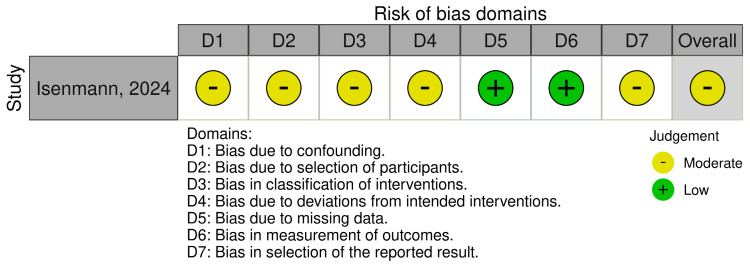
The risk of bias for RCTs included in the present review were assessed using the Cochrane Risk of Bias tool (RoB 2.0). The risk of bias was assessed based on five domains: (1) randomization and allocation process (selection bias), (2) deviations from intended interventions (performance bias), (3) missing outcome data (attrition bias), (4) outcome measurement (detection bias) and (5) selection of the reported result (reporting bias). An overall risk of bias judgment was made for each outcome and each time point as either ‘low risk’, ‘some concerns’ or ‘high risk’ of bias. For non-randomized studies, if any were to be included that met the criteria, an appropriate tool such as ROBINS-I was considered. This tool assesses bias under seven domains: (1) bias due to confounding (e.g., baseline differences in training status or dietary intake), (2) bias in selection of participants (gender, team and heterogenous training and convenient sample) into the study, (3) bias in administration of protein and resistance training interventions (e.g., misclassification of protein type or dose), (4) bias due to deviations from intended interventions, (5) bias due to missing data, (6) bias in measurement of outcomes, and (7) bias in selection of the reported result. Each domain was rated as “low”, “moderate”, “serious”, “critical”, or “no information”. Two reviewers (K.G. and H.Z.) independently conducted the risk of bias assessment with disagreements resolved by discussion or a third reviewer (C.C.T.C.).
2.7. Data Synthesis
Given the diversity in study designs, populations (e.g., sex, training status), intervention characteristics (protein source, dose, duration, timing), and outcome measures (e.g., muscle soreness, strength, myofibrillar protein synthesis), a meta-analysis was not conducted. The included studies exhibited substantial clinical and methodological heterogeneity, which the authors decided to preclude statistical pooling by mutual consensus. As a result, a narrative synthesis was conducted. This synthesis included: Descriptive comparison of study designs, interventions, and key outcomes. Thematic grouping of studies based on protein type (single source vs. blends) and outcome domain (e.g., MPS, DOMS) and potential effectiveness on recovery after resistance training. Dose–response relationships of plant-based proteins on recovery post training.
3. Results
3.1. Study Selection and Characteristics
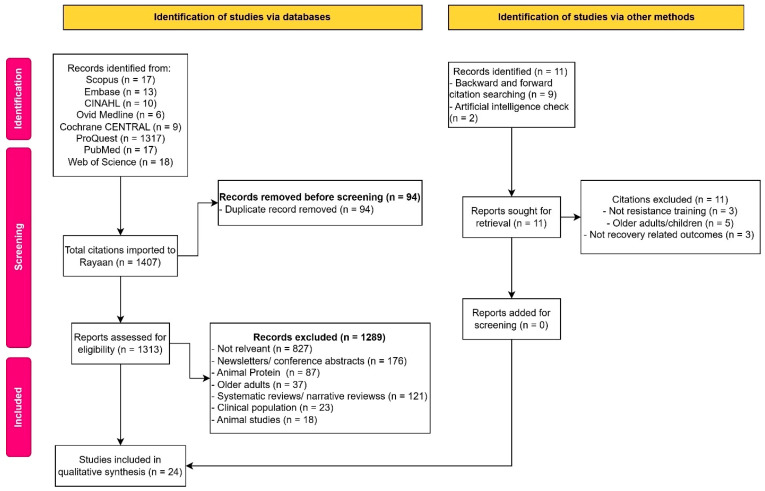
The systematic search conducted on 1 May 2025, across eight databases (EMBASE, CINAHL, Scopus, Web of Science, PubMed, Cochrane Central, ProQuest and Ovid Medline) yielded 1407 studies. After deduplication, 1313 full-text articles were assessed for eligibility. A total of 24 studies were included in the final analysis based on eligibility criteria. Figure 1 shows the PRISMA flowchart that depicted the screening and inclusion of the studies for the final analysis.
3.2. Baseline Characteristics of the Included Studies
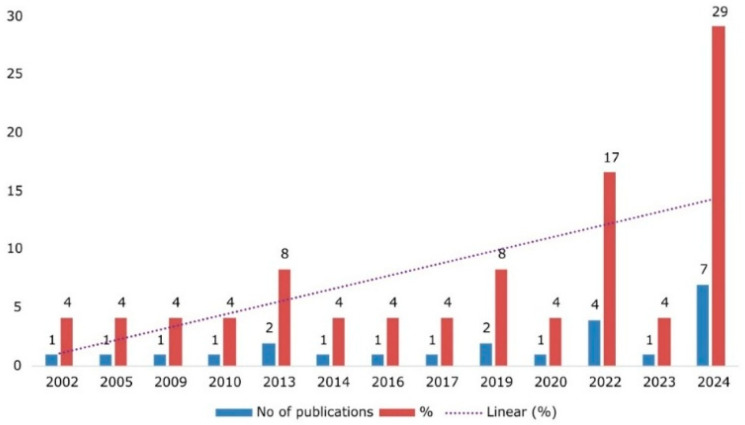
The majority of the studies (n = 23/25, 92%) were randomized controlled trials, while two studies were of non-randomized designs [ref. 5,ref. 18]. Most of the trials were assessor and participant blinded [ref. 11,ref. 19,ref. 20,ref. 21,ref. 22,ref. 23,ref. 24,ref. 25,ref. 26,ref. 27,ref. 28,ref. 29,ref. 30], while two studies employed cross over designs. These studies were conducted between 2002 and 2024 with the majority of the evidence occurred in 2024 (n =7/24, 29%). Figure 2 shows the publication trend that demonstrate the growing interest for plant-based protein for the recovery after resistance training.
Almost all the studies originated from Western countries (the United States, Canada, Europe, and the United Kingdom), with only one study conducted in India [ref. 29]. Figure 3 shows the country wise publication trends.
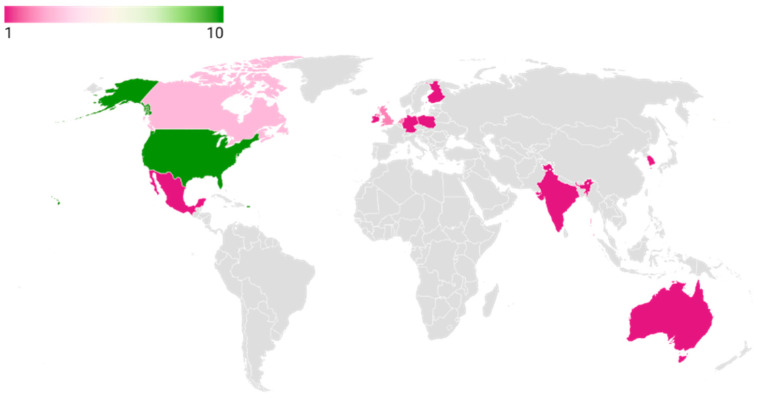
Table 1 depicts the study demographics, participants, intervention, outcomes and the key findings.
Table 1: Study characteristics and findings.
| Author | Year | Country | Study Design | Participants | Sample Size | Plant Protein Type | Frequency | Resistance Training Dose (C/A) | Muscle Recovery | Fatigue Outcome | Primary Outcome | Secondary Outcome | Key Findings |
|---|---|---|---|---|---|---|---|---|---|---|---|---|---|
| Bartholomae [ref. 31] | 2019 | United States | RCT | 37 | Mung bean protein supplement | Eighteen grams/day for 8 weeks | Not directly measured | Not directly measured | |||||
| Born [ref. 32] | 2019 | United States | RCT | 103 | Chocolate milk (CM) vs. carbohydrate (CHO) | Immediately post-exercise, 4 days per week during summer training | Not directly measured | Not assessed | |||||
| Box [ref. 19] | 2005 | United States | RCT | 18 | Soy protein isolate (Supro® Soy Isolated Soy Protein) | Forty grams/day for 4 weeks | Indirectly assessed via creatine kinase levels | Not directly measured | |||||
| Brooks Mobley [ref. 20] | 2017 | United States | RCT | 75 | Soy protein concentrate | Two servings per day (~3 g leucine per serving) for 12 weeks | Indirectly assessed via changes in skeletal muscle satellite cell number | Not directly measured | |||||
| Davies [ref. 21] | 2022 | Ireland | RCT | 16 | Fava bean protein (Vicia faba L.) | Post-exercise intake of 0.33 g/kg body mass | Not directly measured | Not directly measured | |||||
| Durkalec-Michalski [ref. 33] | 2022 | Poland | RCT | 20 | Vegan diet (VegD) vs. mixed diet (MixD) | Diet adherence for 4 weeks, monitored daily | Not directly measured | Not directly measured | |||||
| Goldman [ref. 5] | 2024 | Finland | Modeling study | Competitive male bodybuilders | 235 | Completely plant-based diet | Scaled to daily caloric intake of 4239 kcal | Not directly measured | Not measured | ||||
| Isenmann [ref. 18] | 2024 | Germany | Non-randomized trial | Young, recreationally trained women | 10 | Vegan diet (no specific protein supplementation) | Eight-week vegan phase followed by 4-week omnivorous phase | Not directly measured | Not directly measured | ||||
| Joy [ref. 22] | 2013 | United states | RCT | Twenty-four resistance-trained college-aged men | 24 | Rice protein isolate | Forty-eight grams of rice or whey protein isolate consumed post-exercise on training days for 8 weeks | soreness, perceived readiness to train, recovery scales) | Perceived readiness to train | ||||
| Kaviani [ref. 23] | 2024 | Canada | RCT | 34 | Hemp protein powder (40 g protein, 9 g oil per day) | Sixty grams per day, divided into two doses | Indirectly assessed through muscle thickness | rate of torque development after fatigue test | |||||
| Moon [ref. 24] | 2020 | United states | RCT | 24 | Rice protein concentrate | Twenty-four grams of rice protein concentrate daily for 8 weeks | Not directly assessed | Not directly assessed | |||||
| Nieman [ref. 25] | 2020 | United States | RCT | 92 | Pea protein isolate (NUTRALYS® S85 Plus) | 0.9 g protein/kg per day divided into three doses for five days post-exercise | biomarkers (creatine kinase, myoglobin, lactate dehydrogenase) | Not directly measured | |||||
| Pinckaers [ref. 26] | 2022 | Netherlands | RCT | 24 | Potato protein concentrate (Solanic 100) | Single ingestion of 30 g of potato protein post-exercise | Assessed through post-exercise MPS rates | Not directly measured | |||||
| Pinckaers [ref. 27] | 2024 | Netherlands | RCT | 24 | Pea protein concentrate (Nutralys S85F) | Single ingestion of 30 g of pea protein post-exercise | Assessed through post-exercise MPS rates | Not directly measured | |||||
| Reidy [ref. 28] | 2014 | United states | RCT | 16 | Soy-dairy protein blend (25% soy, 50% casein, 25% whey) vs. whey protein isolate | Single post-exercise ingestion (1 h after RT) | Assessed via MPS (amino acid synthesis) | Not directly measured | |||||
| Shenoy [ref. 29] | 2016 | India | RCT | 40 | Isolated Soy Protein (ISP) | Twenty-five grams of ISP twice daily (mixed with water) for 4 weeks | Inflammatory markers, Myeloperoxidase and Isometric muscle strength | Visual Analog Scale (VAS) for muscle soreness | |||||
| Ruma [ref. 34] | 2024 | Canada | RCT | 50 | Pea protein powder (NUTRALYS® S85 Plus) | Between 20 and 22.5 g per day, mixed with water and consumed post-exercise | Assessed via DOMS questionnaire at 24 h, 48 h, and 72 h post-exercise | Not directly measured | |||||
| Tang [ref. 35] | 2009 | Canada | RCT | 18 | Soy protein isolate | Single ingestion | Evaluated through MPS measurement | Not directly measured | |||||
| van der Heijden [ref. 11] | 2024 | United Kingdom and United states | RCT | 10 | Protein blend composed of pea (39.5%), brown rice (39.5%), and canola (21.0%) | Single ingestion (32 g of protein) post-exercise | Assessed via MPS | Not directly measured | |||||
| Wilkinson [ref. 30] | 2023 | United Kingdom | RCT | 19 | Pea protein fortified with methionine | A combination of 25 g protein + 2.2 g leucine daily, post-exercise for 7 days | MPS, Soreness | Not directly measured |
Abbreviations: C—Chronic effect, A—Acute effect, BMI—body mass index, CHO—carbohydrate, CM—chocolate milk, CRP—C-reactive protein, DOMS—Delayed onset of muscle soreness, DXA—dual X-ray absorptiometry, MixD—mixed diet, myoFSR—Myofibrillar fractional synthetic rate, MPS—muscle protein synthesis, RCT—randomized controlled trial, RM—repetition maximum, RT—resistance training, VegD—vegan diet, VAS—Visual Analog Scale, VO2max—maximal oxygen consumption, WBMS—Whole-body muscle strength, ↑ increased effect, ↓ decreased effect; ↔ equivocal or no difference effect.
3.3. Participant Characteristics
The data of 938 participants from 24 studies were included for the analysis. Most studies have administered interventions in healthy young to middle-aged adults (mean age: 18–55 years) [ref. 31], encompassing both recreationally active individuals [ref. 18,ref. 19,ref. 21,ref. 26,ref. 27,ref. 28] and those engaged in resistance-training [ref. 5,ref. 11,ref. 22,ref. 23,ref. 24,ref. 33,ref. 35]. However, research focusing on plant-based proteins in vegan athletes [ref. 31] and sedentary or inactive individuals [ref. 20,ref. 25,ref. 34] remains limited. While the majority of studies have evaluated the efficacy of plant-based proteins across mixed-gender cohorts, only a few have specifically investigated outcomes in men [ref. 5,ref. 20,ref. 22,ref. 24,ref. 25,ref. 26,ref. 27,ref. 28,ref. 35] and women [ref. 18,ref. 19] separately.
3.4. Intervention and Outcome Characteristics
The majority of the studies have explored Soy protein [ref. 19,ref. 20,ref. 28,ref. 29,ref. 35,ref. 36], while few studies have explored other plant-based proteins such as pea [ref. 25,ref. 27,ref. 30,ref. 34], potato [ref. 26], rice [ref. 22,ref. 24], bean [ref. 21,ref. 31], cocoa [ref. 32], hemp [ref. 23], or protein blends [ref. 11]. Few studies do not have specific plant-based protein but list a “vegan diet” [ref. 5,ref. 18,ref. 33]. Doses ranged from 15 to 40 g/day, often administered post-exercise. Control groups received whey protein, placebo, or no supplementation. The majority of the studies have explored acute effects (single session to 7 days post-exercise) [ref. 5,ref. 11,ref. 21,ref. 23,ref. 26,ref. 27,ref. 28,ref. 30,ref. 32,ref. 34,ref. 35], while few studies explored chronic effects (2–12 weeks) [ref. 18,ref. 20,ref. 22,ref. 24,ref. 29,ref. 31,ref. 33]. The majority of the studies employed supervised traditional resistance training with dose adequately elaborated [ref. 5,ref. 11,ref. 19,ref. 20,ref. 21,ref. 22,ref. 23,ref. 24,ref. 26,ref. 27,ref. 28,ref. 32,ref. 33,ref. 35] while few studies administered body weight resistance programs or not explicitly stated the training programs [ref. 18,ref. 29,ref. 31]. The primary measures often observed in most of the studies were MPS, DOMS, muscle function (isometric strength, jump performance), inflammatory markers (CK, IL-6), and recovery perceptions, while secondary measures were biomarkers of oxidative stress, amino acid bioavailability, and muscle morphology. The majority of the studies measured the muscle recovery indirectly with few measuring objectively using post-exercise MPS [ref. 11,ref. 26,ref. 27,ref. 30,ref. 35], biomarkers (CK, myoglobin and lactate dehydrogenase) [ref. 19,ref. 25,ref. 29], skeletal muscle satellite number [ref. 20], muscle thickness [ref. 23], amino acid transport rates, phenylalanine balance, and transporter expression [ref. 28]), while few measuring subjectively using self-reported perception of soreness, fatigue and readiness to train [ref. 22,ref. 29,ref. 34].
3.5. Effectiveness of Plant-Based Proteins on Muscle Recovery
Out of the 24 included studies, 9 reported positive effects of plant-based proteins on muscle recovery outcomes such as improved muscle protein synthesis, reduced muscle soreness, or enhanced strength recovery. These effects were more commonly observed in studies using blended plant protein formulations or higher doses (≥30 g with ~2.5 g leucine).
While the majority of studies concluded plant-based proteins including soy, potato, pea and cocoa offered no potential benefits including MPS, hormonal balance and biochemical indices [ref. 18,ref. 20,ref. 21,ref. 26,ref. 27,ref. 33,ref. 35] compared to whey, dairy or animal-based proteins, few studies concluded the positive effects of plant-based proteins on muscle recovery or fatigue perception when comparing to animal-based proteins [ref. 19,ref. 32]. While plant-based proteins have been associated with improvements in body mass index and muscle strength [ref. 22], their effectiveness in enhancing lean mass remains inconclusive [ref. 20,ref. 31]. Soy proteins did not offer upper hand in sex hormones responsible for muscle recovery during resistance training compared to whey proteins [ref. 24]. Similarly, pea proteins also were demonstrated to offer favorable effects on muscle recovery biomarkers than animal proteins [ref. 25,ref. 34], however its long-term adaptations remain uncertain [ref. 30]. Few studies demonstrated that soy proteins improved amino acid transporter proteins and offered positive phenyl alanine balance that should eventually leading to positive muscle recovery [ref. 28,ref. 29]. Kaviani et al. (2024) found gender differences with hemp on muscle recovery with females exhibiting muscle hypertrophy while males demonstrating fatigue resistance with hemp [ref. 23]. However, no significant difference in the muscle adaptations, lean body mass, strength outcomes, bone resorption and inflammatory markers [ref. 23].
3.6. Dose–Response Relationship of Plant-Based Proteins on Muscle Recovery
Despite the popularity of plant-based diets among resistance-trained individuals and athletes, most included studies suggest that single-source plant proteins such as soy, pea, and potato, do not possess superior benefits to animal-based proteins—particularly whey, for muscle recovery post-exercise. Studies by Tang et al. (2009) [ref. 35], Pinckaers et al. (2022, 2024) [ref. 26,ref. 27] reported that while plant proteins can stimulate MPS, their effects were often inferior or equivalent to whey, especially when leucine content or essential amino acid availability was suboptimal. However, evidence also reveals that when plant proteins are consumed in adequate doses typically in the range of 25–40 g per serving, and particularly when leucine content exceeds ≈ 2.5 g per serving, they can yield comparable outcomes to animal proteins in supporting muscle recovery [ref. 11,ref. 22,ref. 24]. For instance, Van der Heijden et al. (2024) [ref. 11] demonstrated that a plant protein blend (pea, rice, canola) matched whey in stimulating MPS rates over a 4 h post-exercise window, despite 44% lower plasma essential amino acid availability. Similarly, Joy et al. (2013) [ref. 22] and Moon et al. (2020) [ref. 24] found no significant differences in strength, lean mass, or performance gains between rice or pea proteins and whey protein when consumed post-exercise over 8 weeks. Notably, Wilkinson et al. (2023) [ref. 30] and Nieman et al. (2020) [ref. 25] found that pea protein, although beneficial in maintaining MPS, did not significantly improve recovery outcomes like DOMS or strength restoration compared to whey or placebo, indicating that acute recovery from eccentric exercise may require higher doses or multi-source formulations. Furthermore, Shenoy et al. (2016) [ref. 29] showed that soy protein, when administered at 50 g/day in trained athletes, significantly attenuated muscle damage biomarkers and improved subjective recovery, supporting a potential dose-dependent effect. While plant protein blends demonstrate promising outcomes, studies using isolated sources often show limited improvements in fatigue resistance, muscle soreness, or inflammatory biomarkers, especially in short-term interventions (e.g., 48–72 h) [ref. 37,ref. 38]. This suggests that protein quality, defined by amino acid profile, digestibility, and leucine content, plays a crucial role in the efficacy of plant proteins in muscle recovery [ref. 39]. Blended formulations (e.g., soy–dairy or pea–rice–canola) appear to overcome the amino acid limitations inherent in single-source options [ref. 40].
3.7. Risk of Bias Assessment
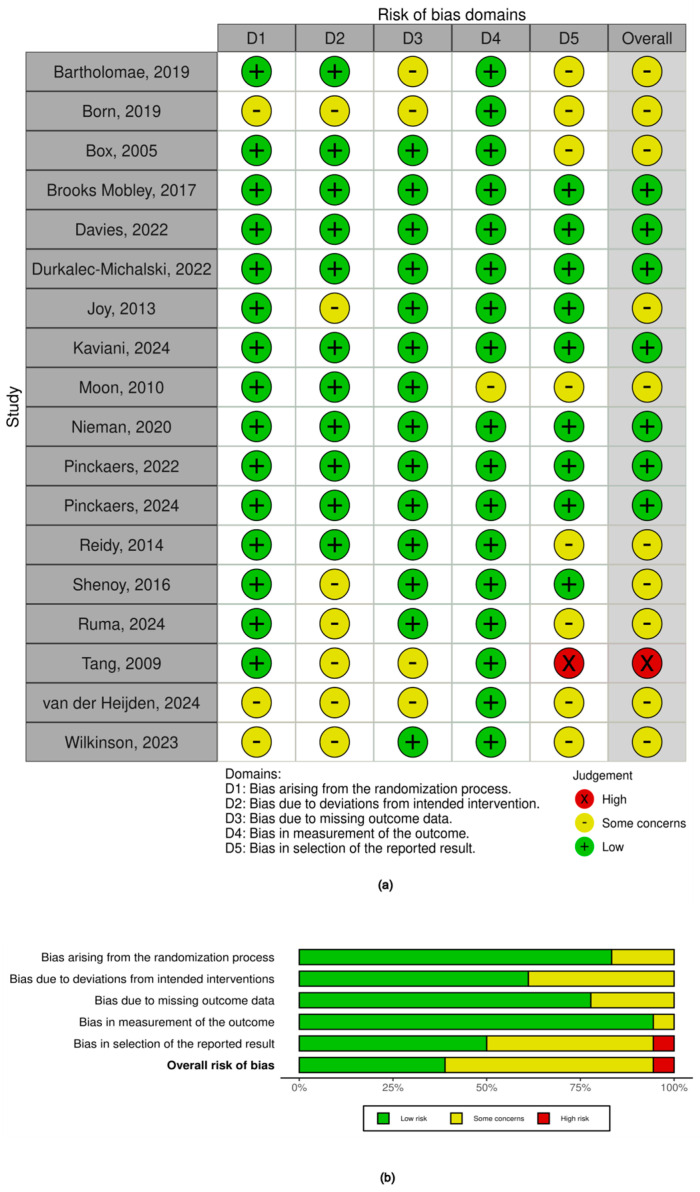
A total of 22 randomized controlled trials (RCTs) were assessed using the Revised Cochrane Risk-of-Bias Tool (RoB 2) (Figure 4a,b), while two non-randomized studies were evaluated using the ROBINS-I tool (Figure 5). Out of the 22 RCTs, 17 trials (77%) reported low risk of bias regarding the randomization process (Figure 4a). However, five trials (32%) either lacked sufficient information or had concerns due to unclear allocation procedures or baseline imbalances, indicating potential risk of selection bias [ref. 11,ref. 30,ref. 32]. In the two non-randomized studies, confounding factors were moderately controlled (Figure 5). One study adequately adjusted for key confounders such as training status and dietary intake [ref. 18], while the other study showed serious risk due to lack of statistical control for co-interventions and baseline differences. Overall, confounding was a key source of bias in the non-randomized evidence [ref. 18]. Most trials (n = 20) reported complete outcome data, with drop-out rates under 10% and balanced between groups. Outcome assessors were blinded in only 10 studies (45%), and self-reported outcomes such as delayed-onset muscle soreness (DOMS) and fatigue were often used without validation. As a result, detection bias was rated as some concerns or high in 12 RCTs, particularly those measuring subjective endpoints. Selective reporting of outcomes (e.g., omitting adverse effects or non-significant secondary outcomes) was a suspected ‘high risk’ in two studies [ref. 35], while ‘unclear risk’ in 12 studies (Figure 4a). Overall, the risk of bias across included studies was moderate, with several domains raising concerns (Figure 4b and Figure 5). Among randomized controlled trials, while the randomization procedures were generally adequate, detection bias and reporting bias were common due to limited blinding (Figure 4b). Among 22 randomized controlled trials, only few (n = 7, 32%) were classified as ‘low risk’, half (n = 12, 55%) fell under ‘some concerns’ or ‘moderate risk’ and two were ‘high risk’. Missing data and incomplete outcome reporting were infrequent but present in a minority of studies. For non-randomized studies, confounding (diet self-reported, sleep and other lifestyle factors influencing hormonal balance) and selection bias remained critical limitations (Figure 5). These methodological concerns should be considered when interpreting the effectiveness of plant-based proteins for muscle recovery.
4. Discussion
Overall, current evidence remains inconclusive regarding the efficacy of individual plant-based proteins isolates as direct alternatives to animal-based proteins for muscle recovery [ref. 22,ref. 25,ref. 26,ref. 27,ref. 30,ref. 34]. However, well-formulated plant protein blends such as those combining pea, rice, hemp and potato, have demonstrated the capacity to stimulate MPS at levels comparable to whey protein, particularly in acute post-exercise settings [ref. 5,ref. 11,ref. 28,ref. 30]. This was consistently observed in mechanistic studies using tracer methodologies [ref. 11]. However, single-source plant proteins, especially pea or soy in isolation, often failed to match whey in improving muscle function recovery or reducing DOMS within 48–72 h post-exercise [ref. 22,ref. 25,ref. 26,ref. 27,ref. 30,ref. 34]. Transitioning to a vegan diet led to challenges in maintaining protein intake and skeletal muscle mass despite dietary guidance, highlighting the difficulty of implementation without strict monitoring [ref. 18]. Our findings align with the recent systematic review and meta-analysis by Zhao et al. (2024), which concluded that while plant-based proteins confer greater benefits for MPS than no or minimal protein intake, they are still less effective than animal-based proteins [ref. 2]. Moreover, other recent systematic reviews have consistently shown that animal-based proteins are significantly more effective than plant-based proteins in enhancing muscle mass, strength, and physical performance [ref. 13,ref. 41,ref. 42,ref. 43].
Although there is increasing interest in plant-based proteins within the field of sports nutrition particularly for their potential to support MPS and recovery following resistance exercise [ref. 2,ref. 13,ref. 41,ref. 42,ref. 43], the current body of evidence remains nascent. Although vegan athletes were included in the eligibility criteria, only a limited number of studies specifically analyzed outcomes in vegan participants. As such, subgroup analyses comparing vegans to non-vegans were not feasible. This highlights a gap in the literature and underscores the need for future trials focusing on vegan populations. Many studies in our review are constrained by small sample sizes, moderate to high risk of bias, and substantial heterogeneity in the types, sources, and formulations of plant-based proteins examined [ref. 11,ref. 19,ref. 24,ref. 30,ref. 31,ref. 32,ref. 34,ref. 35]. The above limitation concurs with the recent systematic reviews [ref. 2,ref. 13,ref. 41,ref. 42,ref. 43]. These limitations hinder the ability to draw generalizable conclusions or establish definitive guidelines for their use in athletic settings. Despite these constraints, our systematic review yields several practical implications for sporting populations: (1) plant-based protein blends appear more effective than single-source plant proteins in promoting MPS and may support functional recovery; (2) adequate dosing typically 30 to 40 g per serving with approximately 2.5 to 3 g of leucine, is critical to achieving anabolic effects comparable to whey protein; and (3) nutrient timing remains essential, with immediate post-exercise intake offering potential benefits for acute recovery.
The present review findings may help athletes achieve recovery outcomes comparable to those consuming animal-based proteins, especially when using well-formulated plant protein blends [ref. 2,ref. 44]. These insights can guide coaches in designing effective post-exercise nutrition strategies. Additionally, nutritionists can use this evidence to tailor plant-based dietary plans that meet protein quality and recovery needs in resistance-trained individuals [ref. 45].
From the studies, it can be inferred that while plant-based proteins are generally safe and effective across all life stages, certain nutrients may require special attention to avoid deficiencies. These include vitamin B12, iron, calcium, vitamin D, zinc, iodine, and omega-3 fatty acids, which are either less bioavailable or present in lower amounts in plant-based sources. Athletes, especially those on vegan diets, should be advised to consume fortified foods or supplements to meet these needs. With appropriate planning and guidance, plant-based protein intake can be both nutritionally adequate and safe for supporting muscle recovery and overall health.
The potential strengths of the included studies are diverse study designs, including both acute and chronic interventions, use of objective biomarkers (e.g., CK, MPS rates) in several high-quality RCTs, comparison with gold-standard animal protein (whey) in many trials and dose–response trials in five studies clarified the role of leucine threshold (~2.5 g) for plant protein efficacy [ref. 5,ref. 20,ref. 30,ref. 35]. The general limitations of the studies included are: (1) small sample sizes (median n = 24), affecting statistical power; (2) heterogeneity in exercise protocols, recovery timelines, and protein formulations; (3) the quality and quantity of outcome measures varied across studies, with many relying on indirect or surrogate markers of muscle recovery which might limit the interpretation of the findings of the present review; (4) a substantial number of studies used self-reported measures such as perceived soreness and fatigue, which may introduce subjective bias; (5) only one trial [ref. 31] was conducted exclusively in vegan athletes, reducing external validity for that target population. These factors collectively limit the strength of the conclusions and highlight the need for more rigorously designed trials with standardized outcome measures and controlled nutritional protocols.
The recommendations for future research are: (1) vegan-specific RCTs: future studies should investigate plant proteins in habitual vegan athletes to assess real-world effectiveness; (2) the need of chronic trials, to evaluate long-term outcomes like muscle hypertrophy, performance, and injury recovery; (3) to examine the novel protein sources (e.g., fava bean, mung bean, algae) and fermented or hydrolyzed proteins for improved digestibility; (4) to analyze outcomes by sex, considering hormonal differences in protein metabolism, resistance training and digestibility; (5) to explore the effects of plant-based proteins in real-world contexts, future research should focus on whole-food sources and meal-based interventions, as the majority of included studies examined isolated protein supplements, limiting real-world applicability.
5. Conclusions
This systematic review highlights the potential of plant-based protein blends to support muscle recovery in young adults’ post-resistance exercise, as evidenced by equivalent MPS stimulation to whey in acute settings. However, single-source plant proteins like pea may not enhance functional recovery or reduce DOMS, possibly due to suboptimal leucine content or study design limitations. For vegan athletes, these findings underscore the importance of using protein blends and higher doses to meet recovery needs. Future research should focus on long-term interventions, vegan-specific populations, and optimized plant protein formulations to provide robust guidance for athletes relying on plant-based diets. By addressing these gaps, the sports nutrition field can better support the growing population of vegan athletes striving to optimize performance and recovery.
References
- T.C. Sarmento, R.D.S. Ferreira, O.L. Franco. Plant-Based Diet and Sports Performance. ACS Omega, 2024. [DOI | PubMed]
- S. Zhao, Y. Xu, J. Li, Z. Ning. The Effect of Plant-Based Protein Ingestion on Athletic Ability in Healthy People—A Bayesian Meta-Analysis with Systematic Review of Randomized Controlled Trials. Nutrients, 2024. [DOI | PubMed]
- G. Viroli, A. Kalmpourtzidou, H. Cena. Exploring Benefits and Barriers of Plant-Based Diets: Health, Environmental Impact, Food Accessibility and Acceptability. Nutrients, 2023. [DOI | PubMed]
- C.M. Kerksick, A. Jagim, A. Hagele, R. Jäger. Plant Proteins and Exercise: What Role Can Plant Proteins Have in Promoting Adaptations to Exercise?. Nutrients, 2021. [DOI | PubMed]
- D.M. Goldman, C.B. Warbeck, M.C. Karlsen. Completely Plant-Based Diets that Meet Energy Requirements for Resistance Training Can Supply Enough Protein and Leucine to Maximize Hypertrophy and Strength in Male Bodybuilders: A Modeling Study. Nutrients, 2024. [DOI | PubMed]
- N. Tumkur Anil Kumar, J.L. Oliver, R.S. Lloyd, J.S. Pedley, J.M. Radnor. The Influence of Growth, Maturation and Resistance Training on Muscle-Tendon and Neuromuscular Adaptations: A Narrative Review. Sports, 2021. [DOI | PubMed]
- J. Douglas, S. Pearson, A. Ross, M. McGuigan. Eccentric Exercise: Physiological Characteristics and Acute Responses. Sports Med., 2017. [DOI | PubMed]
- K. Mizumura, T. Taguchi. Delayed onset muscle soreness: Involvement of neurotrophic factors. J. Physiol. Sci., 2016. [DOI | PubMed]
- I. Markus, K. Constantini, J.R. Hoffman, S. Bartolomei, Y. Gepner. Exercise-induced muscle damage: Mechanism, assessment and nutritional factors to accelerate recovery. Eur. J. Appl. Physiol., 2021. [DOI | PubMed]
- A.G. Pearson, K. Hind, L.S. Macnaughton. The impact of dietary protein supplementation on recovery from resistance exercise-induced muscle damage: A systematic review with meta-analysis. Eur. J. Clin. Nutr., 2023. [DOI | PubMed]
- I.N.O. Van Der Heijden, A.J. Monteyne, S.A.M. West, J.P. Morton, C. Langan-Evans, M.A. Hearris, D.R. Abdelrahman, A.J. Murton, F.B. Stephens, B.T. Wall. Plant Protein Blend Ingestion Stimulates Postexercise Myofibrillar Protein Synthesis Rates Equivalently to Whey in Resistance-Trained Adults. Med. Sci. Sports Exerc., 2024. [DOI | PubMed]
- S. West, A.J. Monteyne, I. van der Heijden, F.B. Stephens, B.T. Wall. Nutritional Considerations for the Vegan Athlete. Adv. Nutr., 2023. [DOI | PubMed]
- I. Berrazaga, V. Micard, M. Gueugneau, S. Walrand. The Role of the Anabolic Properties of Plant- versus Animal-Based Protein Sources in Supporting Muscle Mass Maintenance: A Critical Review. Nutrients, 2019. [DOI | PubMed]
- D. Ashtary-Larky. Are plant-based and omnivorous diets the same for muscle hypertrophy? A narrative review of possible challenges of plant-based diets in resistance-trained athletes. Nutrition, 2025. [DOI | PubMed]
- S.H.M. Gorissen, J.J.R. Crombag, J.M.G. Senden, W.A.H. Waterval, J. Bierau, L.B. Verdijk, L.J.C. van Loon. Protein content and amino acid composition of commercially available plant-based protein isolates. Amino Acids, 2018. [DOI | PubMed]
- C.L. Ardern, F. Büttner, R. Andrade, A. Weir, M.C. Ashe, S. Holden, F.M. Impellizzeri, E. Delahunt, H.P. Dijkstra, S. Mathieson. Implementing the 27 PRISMA 2020 Statement items for systematic reviews in the sport and exercise medicine, musculoskeletal rehabilitation and sports science fields: The PERSiST (implementing Prisma in Exercise, Rehabilitation, Sport medicine and SporTs science) guidance. Br. J. Sports Med., 2022. [DOI | PubMed]
- M. Yao, F. Mei, Y. Ma, X. Qin, J. Huan, K. Zou, L. Li, X. Sun. Including non-randomized studies of interventions in meta-analyses of randomized controlled trials changed the estimates in more than a third of the studies: Evidence from an empirical analysis. J. Clin. Epidemiol., 2025. [DOI | PubMed]
- E. Isenmann, I. Trojak, A. Lesch, J. Schalla, T. Havers, P. Diel, S. Geisler. The influence of a vegan diet on body composition, performance and the menstrual cycle in young, recreationally trained women—A 12-week controlled trial. J. Int. Soc. Sports Nutr., 2024. [DOI | PubMed]
- W. Box, S. Hill, R.A. Disilvestro. Soy intake plus moderate weight resistance exercise: Effects on serum concentrations of lipid peroxides in young adult women. J. Sports Med. Phys. Fit., 2005
- C.B. Mobley, C.T. Haun, P.A. Roberson, P.W. Mumford, W.C. Kephart, M.A. Romero, S.C. Osburn, C.G. Vann, K.C. Young, D.T. Beck. Biomarkers associated with low, moderate, and high vastus lateralis muscle hypertrophy following 12 weeks of resistance training. PLoS ONE, 2018. [DOI | PubMed]
- R.W. Davies, M. Kozior, A.E. Lynch, J.J. Bass, P.J. Atherton, K. Smith, P.M. Jakeman. The Effect of Fava Bean (Vicia faba L.) Protein Ingestion on Myofibrillar Protein Synthesis at Rest and after Resistance Exercise in Healthy, Young Men and Women: A Randomised Control Trial. Nutrients, 2022. [DOI | PubMed]
- J.M. Joy, R.P. Lowery, J.M. Wilson, M. Purpura, E.O. De Souza, S.M. Wilson, D.S. Kalman, J.E. Dudeck, R. Jäger. The effects of 8 weeks of whey or rice protein supplementation on body composition and exercise performance. Nutr. J., 2013. [DOI | PubMed]
- M. Kaviani, K.A. Shaw, D.G. Candow, J.P. Farthing, P.D. Chilibeck. Effects of hemp supplementation during resistance training in trained young adults. Eur. J. Appl. Physiol., 2024. [DOI | PubMed]
- J.M. Moon, K.M. Ratliff, J.C. Blumkaitis, P.S. Harty, H.A. Zabriskie, R.A. Stecker, B.S. Currier, A.R. Jagim, R. Jäger, M. Purpura. Effects of daily 24-gram doses of rice or whey protein on resistance training adaptations in trained males. J. Int. Soc. Sports Nutr., 2020. [DOI | PubMed]
- D.C. Nieman, K.A. Zwetsloot, A.J. Simonson, A.T. Hoyle, X. Wang, H.K. Nelson, C. Lefranc-Millot, L. Guérin-Deremaux. Effects of Whey and Pea Protein Supplementation on Post-Eccentric Exercise Muscle Damage: A Randomized Trial. Nutrients, 2020. [DOI | PubMed]
- P.J.M. Pinckaers, F.K. Hendriks, W.J.H. Hermans, J.P.B. Goessens, J.M. Senden, J.M.X. van Kranenburg, W. Wodzig, T. Snijders, L.J.C. van Loon. Potato Protein Ingestion Increases Muscle Protein Synthesis Rates at Rest and during Recovery from Exercise in Humans. Med. Sci. Sports Exerc., 2022. [DOI | PubMed]
- P.J.M. Pinckaers, J.S.J. Smeets, I.W.K. Kouw, J.P.B. Goessens, A.P.B. Gijsen, L.C.P.G.M. de Groot, L.B. Verdijk, L.J.C. van Loon, T. Snijders. Post-prandial muscle protein synthesis rates following the ingestion of pea-derived protein do not differ from ingesting an equivalent amount of milk-derived protein in healthy, young males. Eur. J. Nutr., 2024. [DOI | PubMed]
- P.T. Reidy, D.K. Walker, J.M. Dickinson, D.M. Gundermann, M.J. Drummond, K.L. Timmerman, M.B. Cope, R. Mukherjea, K. Jennings, E. Volpi. Soy-dairy protein blend and whey protein ingestion after resistance exercise increases amino acid transport and transporter expression in human skeletal muscle. J. Appl. Physiol. (Bethesda, Md. 1985), 2014. [DOI]
- S. Shenoy, M. Dhawan, S. Jaspal Singh. Four Weeks of Supplementation with Isolated Soy Protein Attenuates Exercise-Induced Muscle Damage and Enhances Muscle Recovery in Well Trained Athletes: A Randomized Trial. Asian J. Sports Med., 2016. [DOI | PubMed]
- K. Wilkinson. The Effect of a Plant Based Protein Source on the Skeletal Muscle Metabolic and Functional Response to Eccentric Exercise. Ph.D. Thesis, 2023
- E. Bartholomae, A. Incollingo, M. Vizcaino, C. Wharton, C.S. Johnston. Mung Bean Protein Supplement Improves Muscular Strength in Healthy, Underactive Vegetarian Adults. Nutrients, 2019. [DOI | PubMed]
- K.A. Born, E.E. Dooley, P.A. Cheshire, L.E. McGill, J.M. Cosgrove, J.L. Ivy, J.B. Bartholomew. Chocolate Milk versus carbohydrate supplements in adolescent athletes: A field based study. J. Int. Soc. Sports Nutr., 2019. [DOI | PubMed]
- K. Durkalec-Michalski, A. Domagalski, N. Główka, J. Kamińska, D. Szymczak, T. Podgórski. Effect of a Four-Week Vegan Diet on Performance, Training Efficiency and Blood Biochemical Indices in CrossFit-Trained Participants. Nutrients, 2022. [DOI | PubMed]
- R.G. Singh, L. Guérin-Deremaux, C. Lefranc-Millot, C. Perreau, D.C. Crowley, E.D. Lewis, M. Evans, M. Moulin. Efficacy of Pea Protein Supplementation in Combination with a Resistance Training Program on Muscle Performance in a Sedentary Adult Population: A Randomized, Comparator-Controlled, Parallel Clinical Trial. Nutrients, 2024. [DOI | PubMed]
- J.E. Tang, D.R. Moore, G.W. Kujbida, M.A. Tarnopolsky, S.M. Phillips. Ingestion of whey hydrolysate, casein, or soy protein isolate: Effects on mixed muscle protein synthesis at rest and following resistance exercise in young men. J. Appl. Physiol., 2009. [DOI | PubMed]
- W.J. Kraemer, G. Solomon-Hill, B.M. Volk, B.R. Kupchak, D.P. Looney, C. Dunn-Lewis, B.A. Comstock, T.K. Szivak, D.R. Hooper, S.D. Flanagan. The effects of soy and whey protein supplementation on acute hormonal reponses to resistance exercise in men. J. Am. Coll. Nutr., 2013. [DOI | PubMed]
- S.R. Hertzler, J.C. Lieblein-Boff, M. Weiler, C. Allgeier. Plant Proteins: Assessing Their Nutritional Quality and Effects on Health and Physical Function. Nutrients, 2020. [DOI | PubMed]
- R. Zare, A. Devrim-Lanpir, S. Guazzotti, A. Ali Redha, K. Prokopidis, D. Spadaccini, R. Cannataro, E. Cione, M. Henselmans, A.A. Aragon. Effect of Soy Protein Supplementation on Muscle Adaptations, Metabolic and Antioxidant Status, Hormonal Response, and Exercise Performance of Active Individuals and Athletes: A Systematic Review of Randomised Controlled Trials. Sports Med., 2023. [DOI | PubMed]
- R.R. Wolfe, D.D. Church, A.A. Ferrando, P.J. Moughan. Consideration of the role of protein quality in determining dietary protein recommendations. Front. Nutr., 2024. [DOI | PubMed]
- G. Karabulut, G. Goksen, A. Khaneghah. Plant-based protein modification strategies towards challenges. J. Agric. Food Res., 2024. [DOI]
- R.J. Reid-McCann, S.F. Brennan, N.A. Ward, D. Logan, M.C. McKinley, C.T. McEvoy. Effect of Plant Versus Animal Protein on Muscle Mass, Strength, Physical Performance, and Sarcopenia: A Systematic Review and Meta-analysis of Randomized Controlled Trials. Nutr. Rev., 2025. [DOI | PubMed]
- M.T. Lim, B.J. Pan, D.W.K. Toh, C.N. Sutanto, J.E. Kim. Animal Protein versus Plant Protein in Supporting Lean Mass and Muscle Strength: A Systematic Review and Meta-Analysis of Randomized Controlled Trials. Nutrients, 2021. [DOI | PubMed]
- S. Nichele, S.M. Phillips, B.C.B. Boaventura. Plant-based food patterns to stimulate muscle protein synthesis and support muscle mass in humans: A narrative review. Appl. Physiol. Nutr. Metab., 2022. [DOI | PubMed]
- L. Wang, Q. Meng, S. Chun-Hsien. from Food Supplements to Functional Foods: Emerging Perspectives on Post-Exercise Recovery Nutrition. Nutrients, 2024. [DOI | PubMed]
- W.J. Craig, M. Ann Reed, U. Fresán, K. Marsh, F.L. Miles, A.V. Saunders, E.H. Haddad, C.E. Heskey, P. Johnston, E. Larson-Meyer. The Safe and Effective Use of Plant-Based Diets with Guidelines for Health Professionals. Nutrients, 2021. [DOI | PubMed]