
A bibliometric analysis of the cannabis and cannabinoid research literature
Abstract
Background:
Cannabis refers to a plant in the family Cannabaceae, which has been used medically, recreationally, and industrially. The last two decades, in particular, have seen a large increase in the volume of literature on this topic. The present bibliometric analysis aims to capture the characteristics of scholarly journal publications on the topic of cannabis and cannabinoid research.
Methods:
Searches were run on the Scopus database on April 02, 2021, as follows “(TITLE (cannabi* OR hashish OR marijuana OR marihuana)) AND ( LIMIT-TO ( DOCTYPE,"ar" ) OR LIMIT-TO ( DOCTYPE,"re" ) )”. Results were exported on the same day to prevent discrepancies between daily database updates. Only “article” and “review” publication types were included; no further search limits were applied. The “article” publication type includes publications featuring original research, whereas “review” includes reviews and conference papers. The following data were collected: number of publications (in total and per year), authors, and journals; open access status; publications per journal; journals publishing the highest volume of literature and their impact factors, language of publication; document type; publication country; author affiliations; funding sponsors; most highly cited publications; and most highly published authors. Trends in this subset of publications were identified and presented. Bibliometric networks were constructed using the software tool VOSviewer.
Results:
A total of 29 802 publications (10 214 open access), published by 65 109 authors, were published in 5474 journals from 1829 to 2021. The greatest number of publications was published over the last 20 years. The journal that published the largest number of publications was Drug and Alcohol Dependence (n = 705). The most productive countries included the USA (n = 12 420), the UK (n = 2236), and Canada (n = 2062); many of the most common institutional affiliations and funding sponsors originated from these countries.
Conclusions:
The number of publications published on the topic of cannabis follows an upward trend. Over the past 20 years, the volume of cannabis research has grown steeply, which can be attributed to a large amount of funding dedicated to researching this topic. Future research should continue to investigate changes in the publication characteristics of emerging research, as the volume of publications on this topic is expected to rapidly grow.
Supplementary Information:
The online version contains supplementary material available at 10.1186/s42238-022-00133-0.
Article type: Research Article
Keywords: Bibliometric analysis, Cannabis, Marijuana, Research trends, Scientometrics
Affiliations: grid.25073.330000 0004 1936 8227Michael G. DeGroote Centre for Learning and Discovery, Department of Health Research Methods, Evidence, and Impact, Faculty of Health Sciences, McMaster University, Room 2112, 1280 Main Street West, Hamilton, Ontario L8S 4K1 Canada
License: © The Author(s) 2022 CC BY 4.0 Open AccessThis article is licensed under a Creative Commons Attribution 4.0 International License, which permits use, sharing, adaptation, distribution and reproduction in any medium or format, as long as you give appropriate credit to the original author(s) and the source, provide a link to the Creative Commons licence, and indicate if changes were made. The images or other third party material in this article are included in the article’s Creative Commons licence, unless indicated otherwise in a credit line to the material. If material is not included in the article’s Creative Commons licence and your intended use is not permitted by statutory regulation or exceeds the permitted use, you will need to obtain permission directly from the copyright holder. To view a copy of this licence, visit http://creativecommons.org/licenses/by/4.0/.
Article links: DOI: 10.1186/s42238-022-00133-0 | PubMed: 35610633 | PMC: PMC9131698
Relevance: Relevant: mentioned in keywords or abstract
Full text: PDF (1.6 MB)
Background
Cannabis refers to a flowering plant in the family Cannabaceae; while the exact number of species within the genus is disputed, the following three are generally recognized: Cannabis sativa, Cannabis indica, and Cannabis ruderalis. The cannabis plant contains about 540 chemical substances (National Center for Complementary and Integrative Health (NCCIH) ref. 2019), and over 100 of them are classified as cannabinoids, of which cannabidiol (CBD) and tetrahydrocannabinol (THC) are the most prominent. THC is primarily responsible for the plant’s psychoactive effects (National Center for Complementary and Integrative Health (NCCIH) ref. 2019; Health Canada ref. 2018), while CBD is of particular interest to healthcare researchers and clinicians, as this specific compound is responsible for cannabis’ purported therapeutic value (Harvard Health Publishing ref. 2018). The term “marijuana” refers to the parts of or the products from the cannabis plant that contain THC, while industrial hemp refers to plants that have minimal THC (National Center for Complementary and Integrative Health (NCCIH) ref. 2019). Cannabis is sometimes used interchangeably with the term “hemp”; however, the latter only refers to varieties cultivated for non-drug uses. The cannabis plant is widely used for hemp fiber, hemp seeds and oils, hemp leaves for use as vegetables and juices, and as a recreational drug (Small ref. 2015). Medically, cannabis has long been considered of value as a general analgesic, anesthetic, antidepressant, antibiotic, and sedative; its history dates back to 2700 BCE when cannabis was first documented in a Chinese pharmacopeia by Chinese Emperor Shen Nung, who is widely regarded as the Father of Chinese Medicine (Touw ref. 1981; Pisanti and Bifulco ref. 2019).
The effects of cannabis are dependent on strength and quantity, the environment in which it is taken, and the experience of the individual using it. Psychological effects tend to predominate, with the user commonly experiencing mild euphoria. Individuals using cannabis often report distortions in time and space (National Academies of Sciences, Engineering, and Medicine ref. n.d.). Acute intoxication may result in the following: visual hallucinations, anxiety, depression, extreme variability of mood, paranoid reactions, and psychoses lasting up to six hours. Physical effects include reddening of the eyes, mouth and throat dryness, moderate increases in heartbeat, tightness in the chest (if smoked), drowsiness, unsteadiness, and muscular incoordination (D’Souza et al. ref. 2004; Ashton ref. 1999; Karila et al. ref. 2014). Many questions concerning the medical and social impacts of individuals using cannabis globally have been of interest to researchers since THC was first synthesized and isolated in 1969 (Mechoulam and Burstein ref. 1973). Cannabinoids are now known to affect cell receptors in the brain and body, changing how they behave and communicate (Health Canada ref. 2018), and may serve as a promising therapy in treating and/or managing epilepsy, nausea, and vomiting induced by cancer chemotherapy and weight loss, loss of appetite associated with HIV AIDS, chronic pain, and muscle spasticity associated with multiple sclerosis (National Center for Complementary and Integrative Health (NCCIH) ref. 2019).
The last few decades have seen a large increase in the volume of literature on the topic of cannabis and cannabinoids (Liu et al. ref. 2020; Matielo et al. ref. 2018), and the application of a bibliometric analysis can facilitate a stronger understanding of the field. Most recently, extensive cannabis research efforts have taken place in countries such as Canada, where on October 17, 2018, the Cannabis Act came into force, legalizing the sale and use of recreational cannabis across Canada (Government of Canada ref. 2018), also making the substance easier to study. A bibliometric analysis is a research methodology that involves the statistical assessment of scientific publications or books, to identify the characteristics and determine the impact of the literature published in a specific academic discipline (Pritchard ref. 1969; Price ref. 1976; Hicks et al. ref. 2015).
Comparative literature
To date, only a small number of bibliometric analyses on the topic of cannabis and cannabinoid research have been conducted. Liu et al. (2020) conducted a bibliometric analysis of cannabis and cannabidiol research published between 1940 and 2019, capturing the characteristics of 1167 publications. They found that the historical development of this research topic could be divided into studies that focused on the following three aspects: chemistry, pharmacology, and molecular biology (Liu et al. ref. 2020). Another bibliometric analysis conducted by Matielo et al. (2018) captured the characteristics of six decades of research on the cannabis plant totaling 1284 publications. This number does not reflect the entirety of the cannabis and cannabinoid literature given they sought to capture research conducted at the intersection of cannabis and the following six topics only: biochemical, biology, forensic genetics, genetics, molecular markers, and traceability (Matielo et al. ref. 2018). Prior to this study, the two aforementioned bibliometric analyses represented the most comprehensive ones to date with respect to cannabis and cannabinoid literature. Others have focused on more specific subsets of publications; for example, Yeung et al. (2019) analyzed the 100 most highly cited studies published on the topic of cannabis, cannabinoids, and endocannabinoids (Yeung et al. ref. 2019). Treister-Goltzman et al. (2019) identified trends in publications specific to medical cannabis; the authors found a large increase in the volume of publications on this topic over the approximate last two decades, much of which originated from the USA (Treister-Goltzman et al. ref. 2019). Lastly, three additional bibliometric analyses are worth mentioning as they all sought to characterize a subset of publications relating to substance use and addictions research, all of which included cannabis (Zurián et al. ref. 2021; Sweileh et al. ref. 2014; Bramness et al. ref. 2014).
Study objective
The objective of the present bibliometric analysis is to capture the characteristics of scholarly journal publications on the topic of cannabis and cannabinoid research, highlight potential areas of growth, and understand what new knowledge is being created.
Methods
Bibliometric analysis is a method commonly used to explore the development of research in a particular field (Donthu et al. ref. 2021). It relies on the quantitative analysis of large quantities of data to describe large scope trends, such as journal performance and the demographics of contributions.
Large datasets can be obtained through searches of databases (Donthu et al. ref. 2021), such as Scopus, as used in the present study. The ensuing analysis can benefit a variety of inquiries by analyzing the performance of research in a field using publication-based metrics, such as the number of contributions and productivity, or citation-based metrics, such as total and average citations (Donthu et al. ref. 2021). Performance-based analysis can be used to depict trends in a field, such as the productivity and impact of authors and journals (Donthu et al. ref. 2021). Bibliometric analysis may also be used to map out the interactions between contributors in a field through methods such as citation analysis and co-occurrence analysis of keywords (Donthu et al. ref. 2021). Both performance-based analysis and mapping were used in the present study to examine potential trends in the field of cannabis and cannabinoid research by analyzing the number of contributions per year, analyzing the demographics of contributions, and understanding the interactions of contributions by identifying the most influential publications. Network analysis may be used to further understand the relationships between contributors and publications (Van Eck and Waltman ref. 2014). This may reveal information about the prevalence of certain countries, authors, and journals within the field. VOSviewer is a software that generates network visualization maps, along with other types of bibliometric webs, to facilitate this form of analysis. Each network visualization web is constructed of nodes containing types of data (e.g., keywords, countries of publication, etc.) that are connected by edges to show an interaction between two given nodes (Van Eck and Waltman ref. 2014). The generated web utilizes the 2-dimensional distance between nodes to depict the strength of their interaction (McAllister et al. ref. 2021; Van Eck and Waltman ref. 2010). Additionally, highly related nodes are grouped into clusters of a specific color to facilitate the categorization of data and relationships (Van Eck and Waltman ref. 2014; McAllister et al. ref. 2021; Van Eck and Waltman ref. 2010). The present study utilizes network visualization webs to elucidate the interactions between cannabis research and other areas of research.
Publication search and characteristics
A single search was run on Scopus on April 02, 2021, as follows: “(TITLE (cannabi* OR hashish OR marijuana OR marihuana)) AND ( LIMIT-TO ( DOCTYPE,“ar” ) OR LIMIT-TO ( DOCTYPE,"re" ) )”. Search results were exported in batches due to the download limits imposed by Scopus; all downloads were completed on the same day to prevent discrepancies between daily database updates. Searches were only conducted on Scopus because it is the largest abstract and citation database of scholarly literature (Elsevier ref. n.d.); in comparison, Web of Science contains considerably fewer indexed publications, while OVID databases do not provide certain metrics such as publication citation counts (Gusenbauer and Haddaway ref. 2020). Only “article” and “review” publication types were included, and no further search limits were applied. The “article” publication type includes publications featuring original research or opinions, whereas the “review” publication type includes reviews of original research and conference papers (Elsevier ref. n.d.). The following bibliometric data were collected: number of publications (in total and per year), authors, and journals; open access status; publications per journal; journals publishing the highest volume of literature and their impact factors, language of publication; document type; publication country; author affiliations; funding sponsors; most highly cited publications; and most highly published authors. Publications counted towards an author’s total, regardless of the order of authorship. Trends associated with this subset of publications were identified and presented. Bibliometric networks were constructed and visualized using the software tool VOSviewer (version 1.6.1) (Van Eck and Waltman ref. 2010; Van Eck and Waltman ref. 2020).
Citation analysis
Citation analysis uses the number of citations a given research item receives to quantify its relative impact within a field of research (Donthu et al. ref. 2021). A citation analysis of journals that published the largest volume of cannabis and cannabinoid research was performed to identify possible trends between a journal’s volume of publication and its relative impact through the number of citations. The impact of each of the 30 highest-producing journals was quantified using the 2019 journal impact factor, calculated as the ratio between the number of citations to research published by a journal in the previous 2 years and the number of citable research (Journal impact factor (ref. 2021)). Each of the 30 journals containing the highest number of publications was hand-searched on InCites Journal Citation Reports to obtain the 2019 journal impact factor. A bibliometric network was constructed and visualized using the software tool VOSviewer (version 1.6.1) (Van Eck and Waltman ref. 2010; Van Eck and Waltman ref. 2020).
Co-occurrence analysis of keywords
Keyword co-occurrence analysis is used to identify relationships between the contents of multiple research items by examining the use of common keywords to summarize research (Donthu et al. ref. 2021). A co-occurrence analysis of the data derived from Scopus was used to find the most common author keywords used in publications. This was used to map out promising areas of study in cannabis and cannabinoid research by exploring its intersectionality with other topics and fields. A bibliometric network was constructed and visualized using the software tool VOSviewer (version 1.6.1) (Van Eck and Waltman ref. 2010; Van Eck and Waltman ref. 2020).
Co-authorship analysis
Co-authorship analysis examines formalized collaborations to understand how researchers in a specific field interact with others (Donthu et al. ref. 2021). A co-authorship analysis of the countries that published the highest volume of cannabis and cannabinoid research was used to determine patterns of collaboration between authors from two different countries. A bibliometric network was constructed and visualized using the software tool VOSviewer (version 1.6.1) (Van Eck and Waltman ref. 2010; Van Eck and Waltman ref. 2020).
Results
A total of 29 802 publications (n = 10 214, 34.27% open access), published by 65 109 authors were published in 5474 journals from 1829 to 2021. Since the 1960s, an upward trend with respect to the volume of publication can be observed, with 2020 marking the year with the most publications (Fig. 1 and Supplementary File 1). Drug And Alcohol Dependence published the largest number of publications (n = 706), followed by Addictive Behaviors (n = 419), and the British Journal of Pharmacology (n = 356) (Fig. 2 and Table 1). The 2019 journal impact factor of the 30 highest-publishing journals ranged from 1.214 to 7.730 (Table 1).
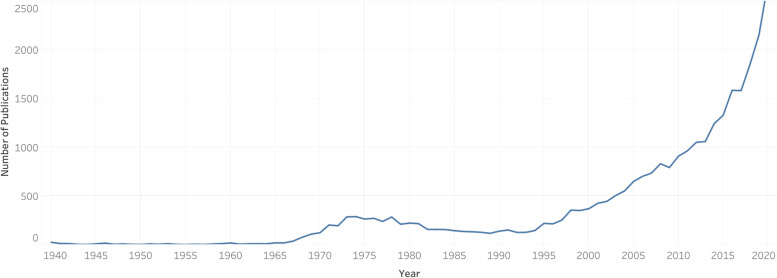
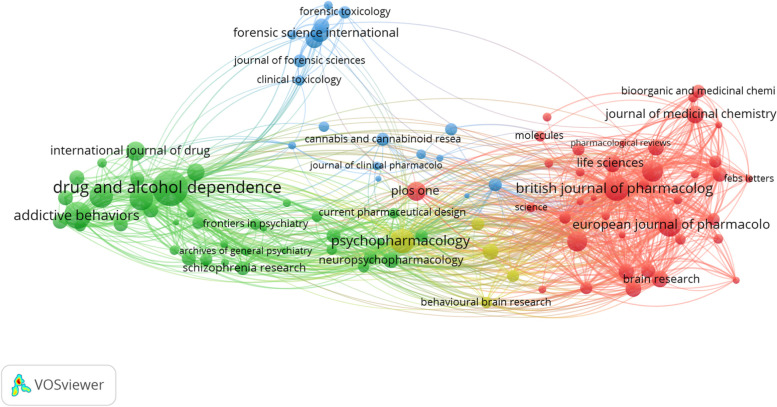
Table 1: Characteristics of the 30 journals having published the highest number of cannabis and cannabinoid publications
| Journal name | Number of publications | 2019 impact factor | Country of publication | % of total publications (n = 29 802) |
|---|---|---|---|---|
| Drug and Alcohol Dependence | 706 | 3.951 | Ireland | 2.37% |
| Addictive Behaviors | 419 | 3.645 | UK | 1.41% |
| British Journal of Pharmacology | 356 | 7.730 | USA | 1.20% |
| Psychopharmacology | 343 | 3.130 | Germany | 1.15% |
| Addiction | 313 | 6.343 | UK | 1.05% |
| Substance Use and Misuse | 308 | 1.497 | UK | 1.03% |
| European Journal of Pharmacology | 306 | 3.263 | Netherlands | 1.03% |
| Pharmacology Biochemistry and Behavior | 246 | 2.519 | USA | 0.83% |
| Journal of Pharmacology and Experimental Therapeutics | 243 | 3.561 | USA | 0.82% |
| Neuropharmacology | 222 | 4.431 | UK | 0.75% |
| PLOS One | 217 | 2.740 | USA | 0.73% |
| International Journal of Drug Policy | 202 | 4.444 | Netherlands | 0.68% |
| Forensic Science International | 183 | 2.108 | Ireland | 0.61% |
| Journal of Medicinal Chemistry | 181 | 6.205 | USA | 0.61% |
| Journal of Psychoactive Drugs | 181 | 1.859 | UK | 0.61% |
| Life Sciences | 170 | 3.647 | USA | 0.57% |
| Journal of Analytical Toxicology | 166 | 3.513 | USA | 0.56% |
| Brain Research | 153 | 2.733 | Netherlands | 0.51% |
| Neuroscience | 148 | 3.056 | UK | 0.50% |
| Journal of Neuroscience | 142 | 5.674 | USA | 0.48% |
| Neuropsychopharmacology | 139 | 6.751 | UK | 0.47% |
| Biochemical Pharmacology | 137 | 4.960 | USA | 0.46% |
| Drug Testing and Analysis | 133 | 2.903 | UK | 0.45% |
| American Journal of Drug and Alcohol Abuse | 129 | 2.925 | USA | 0.43% |
| Journal of Studies on Alcohol and Drugs | 123 | 2.448 | USA | 0.41% |
| Psychology of Addictive Behaviors | 121 | 2.780 | USA | 0.41% |
| Journal of Drug Issues | 120 | 1.214 | USA | 0.40% |
| Journal of Psychopharmacology | 118 | 3.121 | UK | 0.40% |
| American Journal on Addictions | 113 | 2.371 | USA | 0.38% |
| Drug and Alcohol Review | 112 | 2.472 | USA | 0.38% |
The journal name and number of publications were derived from the single search on Scopus conducted for the bibliometric analysis. The journal impact factor is a ratio of the citations to the number of publications a journal publishes over a given time period. The demographic information of each journal was found using the Scimago Journal & Country Rank
The subject area containing the largest number of publications was “medicine” (n = 17 124, 57.46%), followed by “pharmacology, toxicology and pharmaceutics” (n = 8604, 28.87%), then “biochemistry, genetics and molecular biology” (n = 5827, 19.55%). Publications were primarily published in English (n = 27,715, 93.00%), followed by German (n = 658, 2.21%), then French (n = 490, 1.64%). The breakdown by document type was article (n = 26 296, 83.24%) and review (n = 3506, 11.76%). The most common publication countries included the USA (n = 12,420, 41.68%), the UK (n = 2236, 7.50%), and Canada (n = 2062, 6.92%) (Fig. 3). The most common affiliations were the University of Toronto (n = 455, 1.53%), King’s College London (n = 428, 1.44%), and the National Institutes of Health (n = 426, 1.43%); the most common funding sponsors were the National Institutes of Health (n = 5848, 19.62%), the US Department of Health and Human Services (n = 5778, 19.39%), and the National Institute on Drug Abuse (n = 4371, 14.67%) (Table 2). In addition, the 10 most highly-published authors are provided in Table 3, and the 10 most highly-cited publications are provided in Table 4.
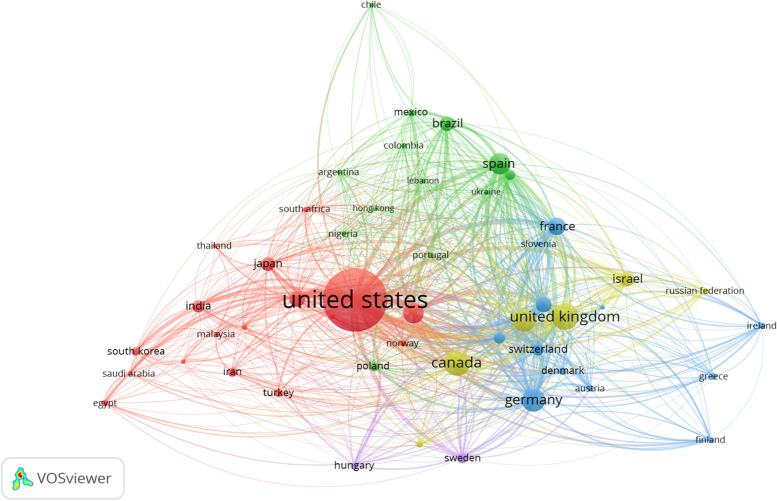
Table 2: General characteristics of cannabis and cannabinoid publications
| Publication volume | |||
| Number of total publications (n = 29 802) | |||
| Number of open access publications (n = 10 214) | (% of publications) | 34.27% | |
| Document type (# of publications) | Article (n = 26 296) | 88.24% | |
| Review (n = 3506) | 11.76% | ||
| Source titles (journals) across all publications (n = 5474) | |||
| Unique authors across all publications (n = 65 109) | |||
| Subject area of publication (10 highest) | |||
| (# of publications) | Medicine (n = 17 124) | (% of publications) | 57.46% |
| Pharmacology, Toxicology and Pharmaceutics (n = 8604) | 28.87% | ||
| Biochemistry, Genetics and Molecular Biology (n = 5827) | 19.55% | ||
| Neuroscience (n = 4266) | 14.31% | ||
| Psychology (n = 2542) | 8.53% | ||
| Social Sciences (n = 2188) | 7.34% | ||
| Chemistry (n = 2167) | 7.27% | ||
| Agricultural and Biological Sciences (n = 1578) | 5.30% | ||
| Environmental Science (n = 864) | 2.90% | ||
| Nursing (n = 676) | 2.27% | ||
| Language of publication (10 highest) | |||
| (# of publications) | English (n = 27 715) | (% of publications) | 93.00% |
| German (n = 658) | 2.21% | ||
| French (n = 490) | 1.64% | ||
| Spanish (n = 362) | 1.22% | ||
| Chinese (n = 133) | 0.45% | ||
| Dutch (n = 91) | 0.31% | ||
| Italian (n = 78) | 0.26% | ||
| Portuguese (n = 76) | 0.26% | ||
| Japanese (n = 63) | 0.21% | ||
| Norwegian (n = 52) | 0.17% | ||
| Country of publication (10 highest) | |||
| (# of publications) | USA (n = 12 420) | (% of publications) | 41.68% |
| UK (n = 2236) | 7.50% | ||
| Canada (n = 2062) | 6.92% | ||
| Germany (n = 1694) | 5.68% | ||
| Italy (n = 1663) | 5.58% | ||
| Spain (n = 1384) | 4.64% | ||
| Australia (n = 1325) | 4.45% | ||
| France (n = 1030) | 3.46% | ||
| Netherlands (n = 795) | 2.67% | ||
| China (n = 755) | 2.53% | ||
| Institutional affiliation (10 highest) | |||
| (# of publications) | University of Toronto (n = 455) | (% of publications) | 1.53% |
| King’s College London (n = 428) | 1.44% | ||
| National Institutes of Health (n = 426) | 1.43% | ||
| Virginia Commonwealth University (n = 386) | 1.30% | ||
| Universidad Complutense de Madrid (n = 372) | 1.25% | ||
| University of Washington, Seattle (n = 354) | 1.19% | ||
| National Institute on Drug Abuse (n = 348) | 1.17% | ||
| Harvard Medical School (n = 341) | 1.14% | ||
| Inserm (n = 335) | 1.12% | ||
| Universidade de Sao Paulo (n = 328) | 1.10% | ||
| Funding sponsor (10 highest) | |||
| (# of publications) | National Institutes of Health (USA) (n = 5848) | (% of publications) | 19.62% |
| Department of Health and Human Services (USA) (n = 5778) | 19.39% | ||
| National Institute on Drug Abuse (USA) (n = 4371) | 14.67% | ||
| National Institute on Alcohol Abuse and Alcoholism (USA) (n = 1007) | 3.38% | ||
| National Institute of Mental Health (USA) (n = 647) | 2.17% | ||
| European Commission (n = 434) | 1.46% | ||
| Government of Canada (n = 394) | 1.32% | ||
| National Cancer Institute (USA) (n = 317) | 1.06% | ||
| Canadian Institutes of Health Research (n = 314) | 1.05% | ||
| UK Research and Innovation (n = 299) | 1.00% | ||
VOSviewer was used to find the number of unique authors across all publications and all other data was collected from Scopus. The Department of Health and Human Services, National Institute on Drug Abuse, National Institute on Alcohol Abuse and Alcoholism, National Institute of Mental Health, and National Cancer Institute (all based in the USA) are associated with the US National Institutes of Health. The Canadian Institutes of Health Research is associated with the Government of Canada
Table 3: Ten most productive authors across cannabis and cannabinoid publications
| Author name | Number of publications | % of total publications (n = 29 802) |
|---|---|---|
| Mechoulam, R. | 228 | 0.77% |
| Makriyannis, A. | 225 | 0.76% |
| Huestis, M.A. | 180 | 0.60% |
| Di Marzo, V. | 172 | 0.58% |
| Martin, B.R. | 162 | 0.54% |
| Mackie, K. | 142 | 0.48% |
| Pertwee, R.G. | 140 | 0.47% |
| Lutz, B. | 96 | 0.32% |
| Zuardi, A.W. | 92 | 0.31% |
| Guimarães, F.S. | 87 | 0.29% |
All data was collected from Scopus
Table 4: Ten highest cited cannabis and cannabinoid publications
| Title | Authors | Year | Source title | Cited by |
|---|---|---|---|---|
| Isolation and structure of a brain constituent that binds to the cannabinoid receptor | Devane W.A., Hanuš L., Breuer A., Pertwee R.G., Stevenson L.A., Griffin G., Gibson D., Mandelbaum A., Etinger A., Mechoulam R. | 1992 | Science | 4340 |
| Structure of a cannabinoid receptor and functional expression of the cloned cDNA | Matsuda L.A., Lolait S.J., Brownstein M.J., Young A.C., Bonner T.I. | 1990 | Nature | 3923 |
| Molecular characterization of a peripheral receptor for cannabinoids | Munro S., Thomas K.L., Abu-Shaar M. | 1993 | Nature | 3788 |
| Identification of an endogenous 2-monoglyceride, present in canine gut, that binds to cannabinoid receptors | Mechoulam R., Ben-Shabat S., Hanus L., Ligumsky M., Kaminski N.E., Schatz A.R., Gopher A., Almog S., Martin B.R., Compton D.R., Pertwee R.G., Griffin G., Bayewitch M., Barg J., Vogel Z. | 1995 | Biochemical Pharmacology | 2166 |
| International Union of Pharmacology. XXVII. Classification of cannabinoid receptors | Howlett A.C., Barth F., Bonner T.I., Cabral G., Casellas P., Devane W.A., Felder C.C., Herkenham M., Mackie K., Martin B.R., Mechoulam R., Pertwee R.G. | 2002 | Pharmacological Reviews | 2092 |
| Determination and characterization of a cannabinoid receptor in rat brain | Devane W.A., Dysarz III F.A., Johnson M.R., Melvin L.S., Howlett A.C. | 1988 | Molecular Pharmacology | 1875 |
| Cannabinoid receptor localization in brain | Herkenham M., Lynn A.B., Little M.D., Johnson M.R., Melvin L.S., De Costa B.R., Rice K.C. | 1990 | Proceedings of the National Academy of Sciences of the United States of America | 1771 |
| Characterization and localization of cannabinoid receptors in rat brain: A quantitative in vitro autoradiographic study | Herkenham M., Lynn A.B., Johnson M.R., Melvin L.S., De Costa B.R., Rice K.C. | 1991 | Journal of Neuroscience | 1674 |
| 2-arachidonoylglycerol: A possible endogenous cannabinoid receptor ligand in brain | Sugiura T., Kondo S., Sukagawa A., Nakane S., Shinoda A., Itoh K., Yamashita A., Waku K. | 1995 | Biochemical and Biophysical Research Communications | 1670 |
| Isolation, structure, and partial synthesis of an active constituent of hashish | Gaoni Y., Mechoulam R. | 1964 | Journal of the American Chemical Society | 1583 |
All data was collected from Scopus
Landscape of cannabis and cannabinoid research over decades
Since the 1980s, an increase in the volume of open access publications was observed, with the 2010s marking the decade with the highest percentage of open access versus subscription publications (n = 6745, 48.92%). Between the 1960s and 2010s, a steady increase in the number of publications published in the areas of “immunology and microbiology,” “neuroscience,” “nursing,” “psychology,” and “social sciences” was observed. The subject area that consistently contributed to the highest proportion of cannabis publications was “medicine,” with the 2010s marking the decade with the highest percentage of all cannabis publications (n = 8460, 61.36%). The “biochemistry, genetics and molecular biology” and “pharmacology, toxicology, and pharmaceutics” reflect the subject areas with the second and third highest proportion of publications across the six decades. The number of publications pertaining to the former has ranged from 16.27 to 30.81%, while the latter between 20.93 and 34.67% of the published literature, across these six decades.
Multiple journals have consistently ranked as a top ten publisher of cannabis and cannabinoid literature across all multiple decades. Examples include the journals “Drug and Alcohol Dependence” (top ten from 1980 to 2019), “Psychopharmacology” (top ten from 1980 to 2019), and the “British Journal of Pharmacology” (top ten from 1990 to 2019). With respect to regional productivity, the USA has consistently generated the highest percentage of publications across each decade, with a notable increase between the decades of 1970-1979 (n = 979, 41.68%) and 1960–1969 (n = 33, 10.96%). This is supported by the shift in the top 10 funding sponsors of research beginning in the 1970s, where it is observed that an increasing number of publications have been supported by US funders; this includes the National Institutes of Health, the US Department of Human and Health Services, and the National Institute of Drug Abuse from 1970 to 1979 (n = 45, 1.92%; n = 46, 1.96%; n = 25, 1.06% respectively) to 1980–1989 (n = 208, 13.38%; n = 200, 12.86%; n = 167, 10.74%; respectively). In more recent years, additional US funders have supported cannabis and cannabinoid research, including the National Institute of Mental Health and the National Institute of Alcohol Abuse and Alcoholism.
Another country that has consistently remained one of the top ten most productive countries includes the UK, which rose to the top three from the 1970s onwards. This rise to the top three coincides with the Presbyterian Historical Society and UK Research and Innovation, both UK institutions, as tied for the highest-ranking non-US funding sponsors in the 1970s. Similarly, Germany, another country that has remained in the top ten highest producing countries, entered the top three in the 2000s for the first time with Deutsche Forschungsgemeinschaft as the highest-ranking non-US funding sponsor. This is also observed in Canada, which re-entered the top three in 2010s with the Canadian Institutes of Health as the highest-ranking non-US funding sponsor. Despite the top ten funding sponsors across each decade being occupied by institutions from the top producing countries, the top ten affiliations of authors are from a more diverse group of countries. For example, the top author affiliation in the 2000s was the Universidad Complutense de Madrid, an institution in Spain, which was the fifth-highest producing country of the decade. Similarly, the Universidade de São Paulo was ranked fourth in the 2010s, while Brazil was not in the top ten highest producing countries. Lastly, with respect to language, most publications have been written in English across all decades, with the 2010s marking the greatest disparity between publications in English (n = 13 078, 94.85%); other most common languages of publication included German, Spanish, and French, albeit proportionately far less than English.
Raw cannabis and cannabinoid research bibliometric data collected on a decade-by-decade basis between the 1960s and the 2010s, including and beyond that described here, are found in Supplementary File 1.
Intersecting topics
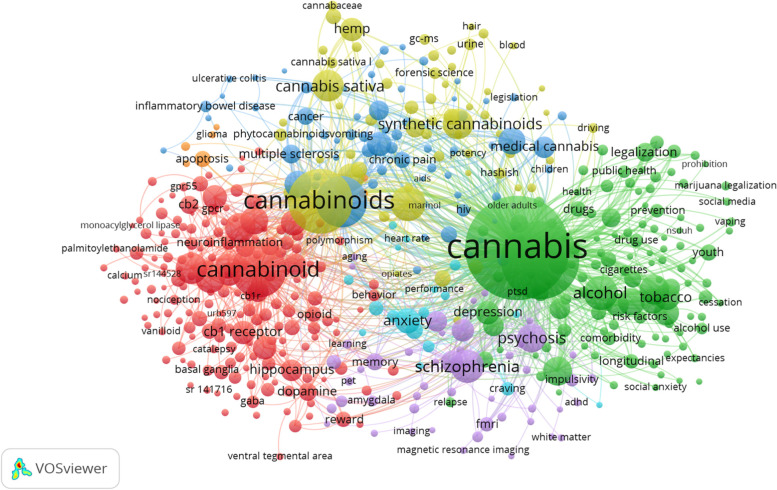
Cannabis and cannabinoid publications were found to intersect with a wide variety of topics, including mental health disorders, disease, and the usage of other substances. Within the cluster of mental health-related topics, it was found that many publications included the keywords “psychosis” (n = 395), “depression” (n = 256), “schizophrenia” (n = 529), and “anxiety” (n = 313) (Table 5). Within the realm of disease, publications were written at the intersection of cannabis and chronic diseases, such as multiple sclerosis (n = 178) and cancer (n = 144). Additionally, it was found publications were also written at the intersection of the usage of cannabis/cannabinoids and that of other substances, as shown by the cluster of substance-related keywords (Fig. 4) including “alcohol” (n = 571) and “tobacco” (n = 327).
Table 5: Sixty most frequent author keywords across the titles of cannabis and cannabinoid publications
| Author keyword | Frequency | % |
|---|---|---|
| Cannabis | 5171 | 17.35% |
| Marijuana | 2876 | 9.65% |
| Cannabinoids | 1998 | 6.70% |
| Cannabinoid | 1417 | 4.75% |
| Cannabidiol | 1237 | 4.15% |
| THC | 604 | 2.03% |
| Alcohol | 571 | 1.92% |
| Schizophrenia | 529 | 1.78% |
| Cannabis Sativa | 486 | 1.63% |
| Anandamide | 467 | 1.57% |
| Synthetic Cannabinoids | 448 | 1.50% |
| Adolescents | 436 | 1.46% |
| Cannabinoid Receptors | 434 | 1.46% |
| Cannabinoid Receptor | 419 | 1.41% |
| Adolescence | 409 | 1.37% |
| Psychosis | 395 | 1.33% |
| Endocannabinoids | 383 | 1.29% |
| Medical Marijuana | 356 | 1.19% |
| Tetrahydrocannabinol | 350 | 1.17% |
| Cannabis Use | 348 | 1.17% |
| Pain | 343 | 1.15% |
| Tobacco | 327 | 1.10% |
| Anxiety | 313 | 1.05% |
| Endocannabinoid System | 311 | 1.04% |
| Endocannabinoid | 307 | 1.03% |
| Substance Use | 304 | 1.02% |
| Marijuana Use | 299 | 1.00% |
| Inflammation | 292 | 0.98% |
| CBD | 280 | 0.94% |
| CB1 Receptor | 275 | 0.92% |
| Hemp | 275 | 0.92% |
| CB1 | 272 | 0.91% |
| Rat | 268 | 0.90% |
| Depression | 256 | 0.86% |
| Adolescent | 248 | 0.83% |
| Cognition | 244 | 0.82% |
| Addiction | 242 | 0.81% |
| Medical Cannabis | 236 | 0.79% |
| Hippocampus | 226 | 0.76% |
| Δ9-Tetrahydrocannabinol | 223 | 0.75% |
| Dependence | 214 | 0.72% |
| Rimonabant | 212 | 0.71% |
| Cannabis Use Disorder | 211 | 0.71% |
| Cocaine | 207 | 0.69% |
| Epilepsy | 191 | 0.64% |
| Treatment | 191 | 0.64% |
| Synthetic Cannabinoid | 179 | 0.60% |
| Epidemiology | 178 | 0.60% |
| Multiple Sclerosis | 178 | 0.60% |
| Legalization | 177 | 0.59% |
| Neuroprotection | 170 | 0.57% |
| Dopamine | 163 | 0.55% |
| Young Adults | 160 | 0.54% |
| CB2 | 158 | 0.53% |
| Obesity | 158 | 0.53% |
| Pregnancy | 156 | 0.52% |
| Memory | 150 | 0.50% |
| Smoking | 149 | 0.50% |
| Cancer | 144 | 0.48% |
| Withdrawal | 139 | 0.47% |
The most common author keywords for this subset of publications (n = 29 802). All data was downloaded from Scopus and analyzed in VOSviewer
Discussion
The objective of the present bibliometric analysis is to capture the characteristics of scholarly journal publications on the topic of cannabis research. The search conducted on Scopus yielded nearly 30 000 publications, representing the largest bibliometric analysis of cannabis literature to date to the authors’ knowledge. An increase in the volume of literature was observed beginning in the 1960s; however, the most recent 20 years have represented the largest increase in the volume of research published on the topic of cannabis. This can largely be attributed to the fact that more than $1.5 billion in funding has been allocated to cannabis research just between 2000 and 2018 (Hellth ref. n.d.-a). One analysis provided a breakdown of this collective funding by country, finding that more than $1.4 billion funded researchers in the USA; the UK at $39.9 million, and Canada at $36.1 million represented a distant second and third respectively (Hellth ref. n.d.-a). In the present study, it was found that the USA was by far the most productive country with respect to cannabis research (n = 12 420) publications, followed by the UK (n = 2236) and Canada (n = 2062), matching the order and approximate proportions as found by the aforementioned analysis. The data also suggests that the presence of funding may contribute to an increase in the productivity of a country, as shown by the first-time appearance of Germany and Canada in the top 3 most productive countries in decades where German and Canadian institutions were included in the top 10 funding sponsors. It is also unsurprising that out of the top 10 institutional affiliations responsible for publishing this cannabis research, five originate from the USA, one from the UK, and one from Canada. Additionally, with respect to funding sponsors, six are based in the USA, two in Canada, and one in the UK (excluding the European Commission). It has also been found that more cannabis research has focused on the harms associated with the substance, as opposed to its medical uses, especially in the USA (Science ref. n.d.; Hellth ref. n.d.-b). This is also reflected in the present study’s findings, as nearly half (n = 14) of the 30 journals have published the highest number of cannabis publications containing harm-associated words in their titles such as “dependence,” “addictive/addiction,” “forensic,” “drug,” and “abuse.” In contrast, only a single journal—the Journal of Medicinal Chemistry—exclusively publishes medical cannabis research, while the remaining journals have titles indicating that they publish a mixture of cannabis research relating both to harms and medical properties (e.g., pharmacology journals).
Intersectionality with mental health conditions
Cannabis is a topic of interest when investigating the onset and treatment of mental health conditions, as indicated by the prevalence of the author keywords “psychosis” (n = 395), “schizophrenia” (n = 529), and “anxiety” (n = 313) as shown in Fig. 4. Prior systematic reviews, such as Crippa et al. (2009) and Walsh et al. (2017) analyzed cannabis as an anxiolytic and its use among patients suffering from anxiety. They found that recent studies supported (Walsh et al. ref. 2017) the application of cannabis as an anxiolytic (Bonn-Miller et al. ref. 2014; Grella et al. ref. 2014; Walsh et al. ref. 2013; Webb and Webb ref. 2014) for patients living with anxiety and suggested a need for further research to clarify the mechanism by which cannabis relieves anxiety (Crippa et al. ref. 2009). Although a few studies, such as that by Kedzior and Laeber (2014) suggested a positive correlation between anxiety and cannabis use, others suggested this correlation may be caused by other underlying associations with factors that influence anxiety susceptibility or the non-medical use of cannabis (Walsh et al. ref. 2017; Johnson et al. ref. 2010; Zvolensky et al. ref. 2009).
Systematic reviews and meta-analyses have generally found a consistent association between cannabis use and psychosis or other mental health conditions that cause psychotic symptoms (Matheson et al. ref. 2011; Minozzi et al. ref. 2010; Moore et al. ref. 2007). Johnson et al. (2010) and Minozzi et al. (2010) argued that a further need for research into the longitudinal effects of cannabis use with respect to psychosis. Malone et al. (2010) and Shapiro et al. (2010) have investigated the long-term effects of cannabis use on brain development and susceptibility to psychosis (Malone et al. ref. 2010; Shapiro and Buckley-Hunter ref. 2010). Meta-analyses also suggest an earlier onset of psychotic symptoms in individuals who used cannabis compared to non-users (Large et al. ref. 2011), which is further supported by findings indicating an increased susceptibility in individuals with a genetic vulnerability to psychosis (McLaren et al. ref. 2010; Proal et al. ref. 2014).
Intersectionality with chronic illness
Considerable research has explored the potential of cannabis as a treatment for managing pain associated with chronic conditions; in Fig. 4, we can see that author keywords for a number of chronic conditions are depicted by large nodes, including multiple sclerosis (n = 178), cancer (n = 144), and pain (n = 343). One systematic review conducted by Belendiuk et al. (2015) provides a review of the literature exploring the use of cannabis as a treatment for cancer and multiple sclerosis. It was found that there were conflicting results associated with the efficacy of cannabinoids when used to relieve symptoms of cancer treatment (Belendiuk et al. ref. 2015). Other studies have described a reduction in local tumor growth in patients prescribed drugs derived from cannabinoids (Abrams and Guzman ref. 2015; Bowles et al. ref. 2012), whereas others report that tumor growth is increased in patients due to the suppression of immune system components (McKallip et al. ref. 2005). Such contradictions in the available evidence may be a reason why others have further suggested that there is insufficient evidence to accurately describe the potential of cannabis and cannabinoids as treatments for cancer (Belendiuk et al. ref. 2015).
Belendiuk et al. (2015) also explored the use of cannabis as a treatment for multiple sclerosis. Studies have reported that cannabis administered orally or sublingually may relieve common symptoms of MS, such as muscle spasticity (Lakhan and Rowland ref. 2009; Novotna et al. ref. 2011; Wade et al. ref. 2010) and lead to improvement in the long term (Notcutt et al. ref. 2012; Serpell et al. ref. 2013). However, there is also evidence of a decrease in cognitive function in patients with multiple sclerosis who use cannabis compared to their non-using counterparts (Corey-Bloom et al. ref. 2012; Honarmand et al. ref. 2011; Pavisian et al. ref. 2014). Such inconsistencies may be associated with the reliance on self-reporting as a component of the study methodology and that more studies are required to evaluate the potential of cannabis as a treatment for multiple sclerosis (Belendiuk et al. ref. 2015). Nugent et al. (2017) conducted a systematic review to investigate current research into the application of cannabis as a treatment for chronic pain. It was found that although many studies suggest the efficacy of cannabis as a treatment for neuropathic pain (Lynch et al. ref. 2014; Serpell et al. ref. 2014; Wallace et al. ref. 2015; Wilsey et al. ref. 2013; Wilsey et al. ref. 2016), there is insufficient evidence to definitively suggest its efficacy as a treatment for other chronic pain conditions, such as arthritis and fibromyalgia (Nugent et al. ref. 2017).
Intersectionality with other substances
There is a significant volume of research investigating the intersectionality of cannabis and other substances, particularly alcohol (n = 571) and tobacco (n = 327), as evidenced by the author keywords presented in Fig. 4. Several systematic reviews have explored the relationship between cannabis use and other substances, such as tobacco and alcohol (Karoly et al. ref. 2020; Peters et al. ref. 2012). There is evidence suggesting an association between tobacco and cannabis co-use and a greater likelihood of both lifetime and current cannabis use disorders (Agrawal et al. ref. 2009; Agrawal and Lynskey ref. 2009; Timberlake ref. 2009), as well as greater symptoms of withdrawal when ceasing to use cannabis (Vandrey et al. ref. 2008). To further understand the interaction between alcohol and cannabis use, it was recommended that future studies incorporate methods to accurately assess the frequency of cannabis use (Karoly et al. ref. 2020).
With respect to alcohol, some research has suggested that co-use is associated with an increase in the frequency of consumption of both substances (Hayaki et al. ref. 2016; Norberg et al. ref. 2012; Patrick et al. ref. 2018) and increased psychological distress (Kelly et al. ref. 2015a). Researchers have drawn mixed conclusions on the effect of alcohol and cannabis co-use on neurological development. Some evidence has been found that co-use may result in more positive physiological effects, compared to alcohol consumption alone (Ewing et al. ref. 2014; Infante et al. ref. 2018), whereas others have reported further negative effects, such as poor academic performance (Kelly et al. ref. 2015b). As such, further large-scale longitudinal studies are needed for a more comprehensive understanding of how cannabis and its intersection with alcohol impact neurological development (Karoly et al. ref. 2020; Brown et al. ref. 2015; Scholes-Balog et al. ref. 2016). The large sample size of this experimental design would allow for a more thorough assessment of the intersection of cannabis and other environmental factors (Karoly et al. ref. 2020).
Strengths and limitations
This bibliometric study contained several notable strengths including the fact that the characteristics of 29 802 publications published in 5474 journals were captured, representing the largest of all bibliometric analyses on this topic to date. Searches were conducted on Scopus as this academic database has a larger coverage in comparison to other databases such as Web of Science; this decision was also justified by the fact that one study conducted cannabis-specific searches on Scopus in addition to other databases, finding that no search results were lost when compared to searching only the former (Matielo et al. ref. 2018). Despite this, it is always possible that some literature may not have been captured by not searching other databases, however, this would have introduced considerable complexities with respect to the ability to analyze search results efficiently (e.g., deduplication of such a large volume of publications). One additional limitation includes the fact that search results were not screened manually, even though this is not typically done for bibliometric analyses that include more than a couple of thousand publications, as such a step is neither practical nor efficient. This was mitigated by the search strategy selected; fortunately, publications on the topic of cannabis and cannabinoid almost always include one of the following search strings inclusive of cannabi*, hashish, marijuana, or marihuana in their title, in combination with the fact that these same search strings very infrequently refer to a non-cannabis/cannabinoid topic. Despite the existence of many slang terms used to refer to cannabis, it is extremely uncommon for authors to use such a term in the title of their article. Lastly, the methodology is further limited by the search being restricted to the title of the published research. This restriction prevents the recognition of recurring trends in other areas, such as recurring methodology and common descriptors included in the publication abstract, though given the topic area it can be assumed that the vast majority of the published literature with a primary focus on cannabis would include this term (or an appropriate synonym we captured) in the article title.
Conclusions
The present study captured the characteristics of scholarly journal publications on the topic of cannabis and cannabinoid research literature, yielding nearly 30 000 publications, representing the largest bibliometric analysis conducted on this topic to date. The most productive countries included the USA, the UK, and Canada; unsurprisingly, a large proportion of institutional affiliations and funding sponsors associated with this subset of publications also originated from these three countries. Over the past 20 years, the volume of cannabis research has grown steeply, which can be largely attributed to the existence of a large amount of funding recently dedicated to research on this topic.
Supplementary Materials
References
- DI Abrams, M Guzman. Cannabis in cancer care. Clin Pharmacol Ther, 2015. [DOI | PubMed]
- A Agrawal, MT Lynskey. Tobacco and cannabis co-occurrence: does route of administration matter?. Drug Alcohol Depend, 2009. [DOI | PubMed]
- A Agrawal, MT Lynskey, PA Madden, ML Pergadia, KK Bucholz, AC Heath. Simultaneous cannabis and tobacco use and cannabis-related outcomes in young women. Drug Alcohol Depend, 2009. [DOI | PubMed]
- CH Ashton. Adverse effects of cannabis and cannabinoids. Br J Anaesth, 1999. [DOI | PubMed]
- KA Belendiuk, LL Baldini, MO Bonn-Miller. Narrative review of the safety and efficacy of marijuana for the treatment of commonly state-approved medical and psychiatric disorders. Addict Sci Clin Pract, 2015. [DOI]
- MO Bonn-Miller, KA Babson, R Vandrey. Using cannabis to help you sleep: heightened frequency of medical cannabis use among those with PTSD. Drug Alcohol Depend, 2014. [DOI | PubMed]
- DW Bowles, CL O’Bryant, DR Camidge, A Jimeno. The intersection between cannabis and cancer in the United States. Crit Rev Oncol Hematol, 2012. [DOI | PubMed]
- JG Bramness, B Henriksen, O Person, K Mann. A bibliometric analysis of European versus USA research in the field of addiction. Research on alcohol, narcotics, prescription drug abuse, tobacco and steroids 2001-2011. Eur Addict Res, 2014. [DOI | PubMed]
- SA Brown, TY Brumback, K Tomlinson, K Cummins, WK Thompson, BJ Nagel. The National Consortium on Alcohol and NeuroDevelopment in Adolescence (NCANDA): a multisite study of adolescent development and substance use. J Stud Alcohol Drugs, 2015. [DOI | PubMed]
- J Corey-Bloom, T Wolfson, A Gamst, S Jin, TD Marcotte, H Bentley. Smoked cannabis for spasticity in multiple sclerosis: a randomized, placebo-controlled trial. Cmaj., 2012. [DOI | PubMed]
- JA Crippa, AW Zuardi, R Martín-Santos, S Bhattacharyya, Z Atakan, P McGuire. Cannabis and anxiety: a critical review of the evidence. Hum Psychopharmacol Clin Exp, 2009. [DOI]
- DC D’Souza, E Perry, L MacDougall, Y Ammerman, T Cooper, YT Wu. The psychotomimetic effects of intravenous delta-9-tetrahydrocannabinol in healthy individuals: implications for psychosis. Neuropsychopharmacology., 2004. [DOI | PubMed]
- N Donthu, S Kumar, D Mukherjee, N Pandey, WM Lim. How to conduct a bibliometric analysis: an overview and guidelines. J Bus Res, 2021. [DOI]
- Elsevier. Scopus. [cited 2021 Apr 07]. Available from: https://www.elsevier.com/solutions/scopus.
- SW Ewing, A Sakhardande, SJ Blakemore. The effect of alcohol consumption on the adolescent brain: a systematic review of MRI and fMRI studies of alcohol-using youth. NeuroImage Clin, 2014. [DOI | PubMed]
- Government of Canada. Cannabis Act; 2018 [cited 2021 Apr 07]. Available from: https://laws-lois.justice.gc.ca/eng/acts/c-24.5/.
- CE Grella, L Rodriguez, T Kim. Patterns of medical marijuana use among individuals sampled from medical marijuana dispensaries in Los Angeles. J Psychoactive Drugs, 2014. [DOI]
- M Gusenbauer, NR Haddaway. Which academic search systems are suitable for systematic reviews or meta-analyses? Evaluating retrieval qualities of Google Scholar, PubMed, and 26 other resources. Res Synth Methods, 2020. [DOI | PubMed]
- Harvard Health Publishing. Cannabidiol (CBD) – what we know and what we don’t; 2018 [cited 2021 Apr 07]. Available from: https://www.health.harvard.edu/blog/cannabidiol-cbd-what-we-know-and-what-we-dont-2018082414476.
- J Hayaki, BJ Anderson, MD Stein. Dual cannabis and alcohol use disorders in young adults: Problems magnified. Subst Abus, 2016. [DOI | PubMed]
- Health Canada. About Cannabis; 2018 [cited 2021 Apr 07]. Available from: https://www.canada.ca/en/health-canada/services/drugs-medication/cannabis/about.html.
- Hellth. Results – a billion dollars for cannabis research. [cited 2021 Apr 07]. Available from: https://hellth.com/#/cannabis/initial-results.
- Hellth. Results – funding by research area – United States. [cited 2021 Apr 07]. Available from: https://hellth.com/#/cannabis/classification-results-us.
- D Hicks, P Wouters, L Waltman, S De Rijcke, I Rafols. Bibliometrics: the Leiden Manifesto for research metrics. Nature News, 2015. [DOI]
- K Honarmand, MC Tierney, P O’Connor, A Feinstein. Effects of cannabis on cognitive function in patients with multiple sclerosis. Neurology., 2011. [DOI | PubMed]
- Journal impact factor (JIF). [cited 2021 Apr 07]. Available from: https://incites.help.clarivate.com/Content/Indicators-Handbook/ih-journal-impact-factor.htm.
- Research intelligence – Elsevier. Available from: https://www.elsevier.com/__data/assets/pdf_file/0007/69451/Scopus_ContentCoverage_Guide_WEB.pdf.
- MA Infante, KE Courtney, N Castro, LM Squeglia, J Jacobus. Adolescent brain surface area pre-and post-cannabis and alcohol initiation. J Stud Alcohol Drugs, 2018. [DOI | PubMed]
- K Johnson, JL Mullin, EC Marshall, MO Bonn-Miller, M Zvolensky. Exploring the mediational role of coping motives for marijuana use in terms of the relation between anxiety sensitivity and marijuana dependence. Am J Addict, 2010. [DOI | PubMed]
- L Karila, P Roux, B Rolland, A Benyamina, M Reynaud, HJ Aubin. Acute and long-term effects of cannabis use: a review. Curr Pharm Des, 2014. [DOI | PubMed]
- HC Karoly, JM Ross, JM Ellingson, SW Feldstein Ewing. Exploring cannabis and alcohol co-use in adolescents: a narrative review of the evidence. J Dual Diagn, 2020. [DOI | PubMed]
- AB Kelly, GC Chan, WA Mason, JW Williams. The relationship between psychological distress and adolescent polydrug use. Psychol Addict Behav, 2015. [DOI | PubMed]
- AB Kelly, TJ Evans-Whipp, R Smith, GC Chan, JW Toumbourou, GC Patton. A longitudinal study of the association of adolescent polydrug use, alcohol use and high school non-completion. Addiction., 2015. [DOI | PubMed]
- SE Lakhan, M Rowland. Whole plant cannabis extracts in the treatment of spasticity in multiple sclerosis: a systematic review. BMC Neurol, 2009. [DOI | PubMed]
- M Large, S Sharma, MT Compton, T Slade, O Nielssen. Cannabis use and earlier onset of psychosis: a systematic meta-analysis. Arch Gen Psychiatry, 2011. [DOI | PubMed]
- Liu J, Chen H, Newmaster S, Wang S, Liu C. Global trends in cannabis and cannabidiol research from the year 1940 to 2019. Curr Pharm Biotechnol. 2021;22(5):579–91.
- ME Lynch, P Cesar-Rittenberg, AG Hohmann. A double-blind, placebo-controlled, crossover pilot trial with extension using an oral mucosal cannabinoid extract for treatment of chemotherapy-induced neuropathic pain. J Pain Symptom Manag, 2014. [DOI]
- DT Malone, MN Hill, T Rubino. Adolescent cannabis use and psychosis: epidemiology and neurodevelopmental models. Br J Pharmacol, 2010. [DOI | PubMed]
- SL Matheson, AM Shepherd, KR Laurens, VJ Carr. A systematic meta-review grading the evidence for non-genetic risk factors and putative antecedents of schizophrenia. Schizophr Res, 2011. [DOI | PubMed]
- CB Matielo, DS Sarzi, B Justolin, RP Lemos, FA Camargo, VM Stefenon. A bibliometric analysis of Cannabis publications: six decades of research and a gap on studies with the plant. Publications., 2018. [DOI]
- McAllister JT, Lennertz L, Atencio MZ. Mapping a discipline: a guide to using VOSviewer for bibliometric and visual analysis. Sci Technol Libr. 2021:1–30. 10.1080/0194262X.2021.1991547.
- RJ McKallip, M Nagarkatti, PS Nagarkatti. Δ-9-tetrahydrocannabinol enhances breast cancer growth and metastasis by suppression of the antitumor immune response. J Immunol, 2005. [DOI | PubMed]
- JA McLaren, E Silins, D Hutchinson, RP Mattick, W Hall. Assessing evidence for a causal link between cannabis and psychosis: a review of cohort studies. Int J Drug Policy, 2010. [DOI | PubMed]
- R Mechoulam, SH Burstein. Marijuana: chemistry, pharmacology, metabolism and clinical effects, 1973
- S Minozzi, M Davoli, AM Bargagli, L Amato, S Vecchi, CA Perucci. An overview of systematic reviews on cannabis and psychosis: discussing apparently conflicting results. Drug Alcohol Rev, 2010. [DOI | PubMed]
- TH Moore, S Zammit, A Lingford-Hughes, TR Barnes, PB Jones, M Burke. Cannabis use and risk of psychotic or affective mental health outcomes: a systematic review. Lancet, 2007. [DOI | PubMed]
- National Academies of Sciences, Engineering, and Medicine. The health effects of cannabis and cannabinoids: the current state of evidence and recommendations for research. Washington, DC: The National Academies Press; 2017. 10.17226/24625.
- National Center for Complementary and Integrative Health (NCCIH). Cannabis (marijuana) and cannabinoids: what you need to know; 2019 [cited 2021 Apr 07]. Available from: https://www.nccih.nih.gov/health/cannabis-marijuana-and-cannabinoids-what-you-need-to-know.
- MM Norberg, J Mackenzie, J Copeland. Quantifying cannabis use with the timeline followback approach: a psychometric evaluation. Drug Alcohol Depend, 2012. [DOI | PubMed]
- W Notcutt, R Langford, P Davies, S Ratcliffe, R Potts. A placebo-controlled, parallel-group, randomized withdrawal study of subjects with symptoms of spasticity due to multiple sclerosis who are receiving long-term Sativex®(nabiximols). Mult Scler J, 2012. [DOI]
- A Novotna, J Mares, S Ratcliffe, I Novakova, M Vachova, O Zapletalova. A randomized, double-blind, placebo-controlled, parallel-group, enriched-design study of nabiximols*(Sativex®), as add-on therapy, in subjects with refractory spasticity caused by multiple sclerosis. Eur J Neurol, 2011. [DOI | PubMed]
- SM Nugent, BJ Morasco, ME O’Neil, M Freeman, A Low, K Kondo. The effects of cannabis among adults with chronic pain and an overview of general harms: a systematic review. Ann Intern Med, 2017. [DOI | PubMed]
- ME Patrick, DD Kloska, YM Terry-McElrath, CM Lee, PM O’Malley, LD Johnston. Patterns of simultaneous and concurrent alcohol and marijuana use among adolescents. Am J Drug Alcohol Abuse, 2018. [DOI | PubMed]
- B Pavisian, BJ MacIntosh, G Szilagyi, RW Staines, P O’Connor, A Feinstein. Effects of cannabis on cognition in patients with MS: a psychometric and MRI study. Neurology., 2014. [DOI | PubMed]
- EN Peters, AJ Budney, KM Carroll. Clinical correlates of co-occurring cannabis and tobacco use: a systematic review. Addiction., 2012. [DOI | PubMed]
- S Pisanti, M Bifulco. Medical cannabis: a plurimillennial history of an evergreen. J Cell Physiol, 2019. [DOI | PubMed]
- DD Price. A general theory of bibliometric and other cumulative advantage processes. J Am Soc Inf Sci, 1976. [DOI]
- A Pritchard. Statistical bibliography or bibliometrics. J Doc, 1969
- AC Proal, J Fleming, JA Galvez-Buccollini, LE DeLisi. A controlled family study of cannabis users with and without psychosis. Schizophr Res, 2014. [DOI | PubMed]
- KE Scholes-Balog, SA Hemphill, TJ Evans-Whipp, JW Toumbourou, GC Patton. Developmental trajectories of adolescent cannabis use and their relationship to young adult social and behavioural adjustment: a longitudinal study of Australian youth. Addict Behav, 2016. [DOI | PubMed]
- Science. Cannabis research database shows how U.S. funding focuses on harms of the drug. [cited 2021 Apr 07]. Available from: https://www.sciencemag.org/news/2020/08/cannabis-research-database-shows-how-us-funding-focuses-harms-drug.
- M Serpell, S Ratcliffe, J Hovorka, M Schofield, L Taylor, H Lauder. A double-blind, randomized, placebo-controlled, parallel group study of THC/CBD spray in peripheral neuropathic pain treatment. Eur J Pain, 2014. [DOI | PubMed]
- MG Serpell, W Notcutt, C Collin. Sativex long-term use: an open-label trial in patients with spasticity due to multiple sclerosis. J Neurol, 2013. [DOI | PubMed]
- GK Shapiro, L Buckley-Hunter. What every adolescent needs to know: cannabis can cause psychosis. J Psychosom Res, 2010. [DOI | PubMed]
- E Small. Evolution and classification of Cannabis sativa (marijuana, hemp) in relation to human utilization. Bot Rev, 2015. [DOI]
- WM Sweileh, HZ Sàed, SW Al-Jabi, AF Sawalha. Substance use disorders in Arab countries: research activity and bibliometric analysis. Subst Abuse Treat Prev Policy, 2014. [DOI | PubMed]
- DS Timberlake. A comparison of drug use and dependence between blunt smokers and other cannabis users. Subst Use Misuse, 2009. [DOI | PubMed]
- M Touw. The religious and medicinal uses of Cannabis in China, India and Tibet. J Psychoactive Drugs, 1981. [DOI | PubMed]
- Y Treister-Goltzman, T Freud, Y Press, R Peleg. Trends in publications on medical cannabis from the year 2000. Popul Health Manag, 2019. [DOI | PubMed]
- N Van Eck, L Waltman. Software survey: VOSviewer, a computer program for bibliometric mapping. scientometrics., 2010. [DOI | PubMed]
- NJ Van Eck, L Waltman. Visualizing bibliometric networks. Measuring scholarly impact, 2014
- NJ Van Eck, L Waltman. VOSviewer manual, 2020
- RG Vandrey, AJ Budney, JR Hughes, A Liguori. A within-subject comparison of withdrawal symptoms during abstinence from cannabis, tobacco, and both substances. Drug Alcohol Depend, 2008. [DOI | PubMed]
- DT Wade, C Collin, C Stott, P Duncombe. Meta-analysis of the efficacy and safety of Sativex (nabiximols), on spasticity in people with multiple sclerosis. Mult Scler J, 2010. [DOI]
- MS Wallace, TD Marcotte, A Umlauf, B Gouaux, JH Atkinson. Efficacy of inhaled cannabis on painful diabetic neuropathy. J Pain, 2015. [DOI | PubMed]
- Z Walsh, R Callaway, L Belle-Isle, R Capler, R Kay, P Lucas. Cannabis for therapeutic purposes: patient characteristics, access, and reasons for use. Int J Drug Policy, 2013. [DOI | PubMed]
- Z Walsh, R Gonzalez, K Crosby, MS Thiessen, C Carroll, MO Bonn-Miller. Medical cannabis and mental health: a guided systematic review. Clin Psychol Rev, 2017. [DOI | PubMed]
- CW Webb, SM Webb. Therapeutic benefits of cannabis: a patient survey. Hawai’i J Med Publ Health, 2014
- B Wilsey, T Marcotte, R Deutsch, B Gouaux, S Sakai, H Donaghe. Low-dose vaporized cannabis significantly improves neuropathic pain. J Pain, 2013. [DOI | PubMed]
- B Wilsey, TD Marcotte, R Deutsch, H Zhao, H Prasad, A Phan. An exploratory human laboratory experiment evaluating vaporized cannabis in the treatment of neuropathic pain from spinal cord injury and disease. J Pain, 2016. [DOI | PubMed]
- AW Yeung, NT Tzvetkov, N Arkells, L Milella, AM Stankiewicz, Ł Huminiecki. Molecular neuroscience at its “high”: bibliometric analysis of the most cited papers on endocannabinoid system, cannabis and cannabinoids. J Cannabis Res, 2019. [DOI | PubMed]
- JC Zurián, FJ Cañigral, LC Cogollos, R Aleixandre-Benavent. The most 100 cited papers in addiction research on cannabis, heroin, cocaine and psychostimulants. A bibliometric cross-sectional analysis. Drug Alcohol Depend, 2021. [DOI | PubMed]
- MJ Zvolensky, EC Marshall, K Johnson, J Hogan, A Bernstein, MO Bonn-Miller. Relations between anxiety sensitivity, distress tolerance, and fear reactivity to bodily sensations to coping and conformity marijuana use motives among young adult marijuana users. Exp Clin Psychopharmacol, 2009. [DOI | PubMed]