
The important role of cuproptosis and cuproptosis-related genes in the development of thyroid carcinoma revealed by transcriptomic analysis and experiments
Abstract
Cuproptosis was the most enriched type of Programmed Cell Death (PCD) processes in THCA.
Cuproptosis was associated with tumor malignancy of THCA.
A cuproptosis-related gene, CDKN2A, was upregulated in THCA sample.
CDKN2A was associated with poor prognosis and TME in THCA.
Article type: Research Article
Keywords: Thyroid carcinoma, Programmed cell death, Cuproptosis, CDKN2A, Tumor microenvironment, Immunosuppression
Affiliations: Wuhan No. 1 Hospital, Department of Otolaryngology and Head and Neck Surgery, Wuhan, China; Shengjing Hospital of China Medical University, Department of Otolaryngology and Head and Neck Surgery, Shenyang, China; Wuhan No. 1 Hospital, Department of Ophthalmology, Wuhan, China
License: © 2025 Associação Brasileira de Otorrinolaringologia e Cirurgia Cérvico-Facial. Published by Elsevier España, S.L.U. CC BY 4.0 This is an open access article under the CC BY license (http://creativecommons.org/licenses/by/4.0/).
Article links: DOI: 10.1016/j.bjorl.2025.101560 | PubMed: 39914044 | PMC: PMC11848474
Relevance: Relevant: mentioned in keywords or abstract
Full text: PDF (10.4 MB)
Introduction
Thyroid Carcinoma (THCA), derived from follicular epithelial cells or parafollicular epithelial cells of thyroid, has an increasing worldwide incidence and prevalence.ref. 1, ref. 2 There were 586,202 newly diagnosed THCA cases in 2020, ranking 11th among all malignancies in terms of severity and accounting for 3.0% of all cancer patients.ref. bib0015 Although the death rate of THCA is relatively low, a small proportion of patients still suffer from an aggressive type with tumor progression and recurrence.ref. bib0010
The formation and maintenance of tissues, as well as the general health of multicellular organisms, depend on the essential and highly regulated process of cell death. It orchestrates both cell proliferation and elimination, ensuring a physiological balance in adult organisms. This intricate mechanism operates during critical stages such as metamorphosis, embryogenesis, and tissue turnover and in response to pathogenic threats.ref. bib0020 Programmed Cell Death (PCD) processes are highly regulated mechanisms of cellular self-destruction, which are the response to stimuli and controlled by multiple proteins and signaling cascades.ref. bib0025 There are six common and well-documented PCD types, including apoptosis, autophagy, ferroptosis, necroptosis, pyroptosis, and cuproptosis.ref. bib0025 Apoptosis, governed by signals, involves self-destruction in response to environmental or internal cues, playing a pivotal role in maintaining tissue homeostasis by eliminating unnecessary or damaged cells.ref. bib0030 Autophagy is a core molecular pathway for the preservation of cellular and organismal homeostasis. However, under stress and pathological conditions, excessive and uncontrolled autophagy can lead to over destruction of cell structure and finally cause autophagy-PCD.ref. bib0035 Ferroptosis refers to the non-apoptotic death of cells that accumulate lethal levels of iron-dependent, phospholipid peroxides in cell membranes.ref. bib0040 The necroptosis pathway is largely triggered by extracellular ligands that engage death receptors such as FAS Ligand (FASL) and FAS on the cell surface, which is a lytic form of cell death.ref. bib0045 Pyroptosis refers to cell death that is induced by gasdermin pores in the plasma membrane.ref. bib0050 Among them, cuproptosis is a newly discovered type of PCD, which is induced by disruptions in copper homeostasisref. bib0055 and has been associated with the development of cancers.ref. bib0060 Dysregulation of these PCD processes has been correlated with tumors malignant features such as metastasis, recurrence, and mortality of patients.ref. 13, ref. 14 However, our knowledge about PCD status and their clinical significance in THCA is still limited. Hence, exploring the effects of PCD is with great significance for understanding the mechanisms underlying the development of THCA.
In this study, we investigated the enrichment status of PCD processes in THCA and thus to identify important PCD process and PCD-related genes in THCA progression. As a result, cuproptosis was identified as the most enriched PCD process in THCA and a cuproptosis-related gene, CDKN2A, was associated with worse prognosis of patients with THCA. Immunohistochemistry (IHC) experiment confirmed the higher expression of CDKN2A in THCA samples than para-tumor samples. Collectively, our findings indicated the important role of cuproptosis and a cuproptosis-related gene, CDKN2A, in the development and progression of THCA.
Methods
Data acquisition of THCA samples
The transcriptomic data of THCA samples was obtained from the Cancer Genome Atlas (TCGA) database, which contains THCA (n = 493) and normal thyroid samples (n = 58). The gene expression data of samples was normalized by using the limmaref. bib0075 R package. Furthermore, we used the sva and limma R packages to remove the potential batch effect. The clinical information of these THCA samples was also obtained and used in further analysis.
Enrichment analysis for PCD processes in THCA
Single-sample Gene Set Enrichment Analysis (ssGSEA)ref. bib0080 was performed to calculate the enrichment scores of the PCD and other well-known tumor progression-associated processes in each THCA samples. The PCD-related gene sets were obtained from Gene Ontology (GO)ref. bib0085 and Kyoto Encyclopedia of Genes and Genomes (KEGG)ref. bib0090 databases (Supplementary Table 1). Tumor progression-associated gene sets were also obtained from GO and KEGG databases, including Cell cycle, DNA damage, Epithelial-Mesenchymal Transition (EMT), Invasion, Stemness, and T-cell exhaustion (Supplementary Table 2).
Cuproptosis and clinical characteristics in THCA
The clinical characteristics of THCA samples were visualized via ‘pheatmap’ R package, including tumor focus type, tumor width, tumor length, tumor depth, clinical stage, age at diagnosis, and gender.
Expression of important cuproptosis-related genes across cancers
TIMER (Tumor IMmune Estimation Resource) databaseref. bib0095 was used to obtain the expression of genes in cancers and GEPIA (Gene Expression Profiling Interactive Analysis) database was used to explore the association between gene expression and prognosis of patients with various cancers.
Immunohistochemistry (IHC) experiment
Formalin-fixed, paraffin-embedded THCA and para-tumor tissues were collected from 40 patients with THCA diagnosed at our institution, from February 2023 to June 2024. Written informed consent was attained from patients before surgery. Three-micrometer-thick thyroid sections were prepared and deparaffinized, and then went through gradient alcohol hydration. According to the results of transcriptomic analysis and relative previous publications about cuproptosis and tumors,ref. 20, ref. 21 we further validated the expression of a cuproptosis-related gene, CDKN2A, in THCA and para-tumor tissues by IHC experiments. The IHC experiment was conducted as the directions of the UltraSensitive IHC kit (cat. nº KIT-9710; Maixin, Fujian, China). The used primary antibody was polyclonal rabbit anti-CDKN2A (cat. nº 10883-1-AP; 1:500 dilution; proteintech, China). IHC results for CDKN2A expression were judged by the immunoreactive score, which was combined with the staining extent and intensity.
Relevance of CDKN2A expression with TME characteristics in UM
TISIDB database provided the correlation of gene expression with TME characteristics in cancers, which was used to explore the relevance of CDKN2A expression with the expression of immune inhibitors and the infiltration of immune cells in THCA.
Statistical analysis
The association between gene expression and patients’ prognosis was evaluated by univariate Cox regression analysis. Students’ t-test was used to examine the differences between groups.ref. bib0110 Spearman analysis was applied for correlation analysis. Analyses were mainly performed using the R and R Bioconductor packages.
Results
Cuproptosis was the most enriched PCD in THCA
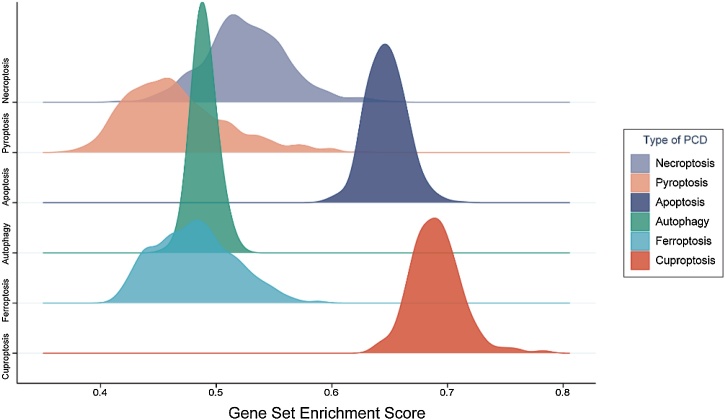
The ssGSEA analysis showed that cuproptosis had the highest enrichment score than other PCD types (Fig. 1, Supplementary Table 3), indicating that cuproptosis was the most enriched type of PCD process in THCA. Therefore, this study subsequently focused on cuproptosis and cuproptosis-related genes in THCA.
Cuproptosis was associated with higher clinical stage and tumor progression in THCA
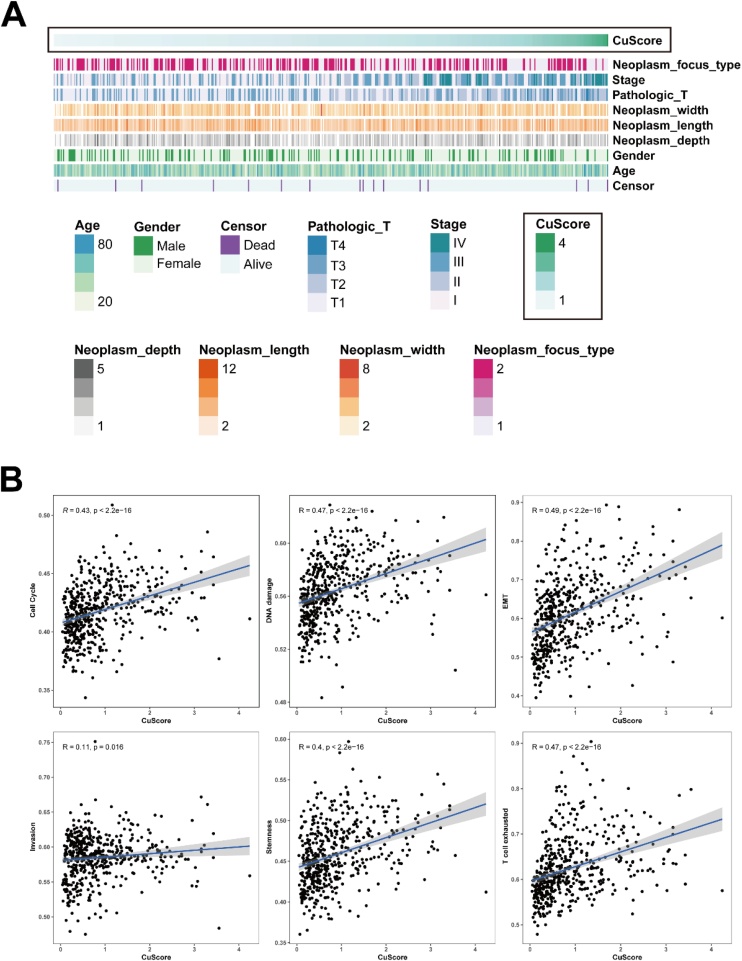
The visualization of clinical information and cuproptosis enrichment score (CuScore) calculated by ssGSEA algorithm in 493 THCA samples indicated that CuScore was associated with higher stages of THCA (Fig. 2A). Additionally, correlation analysis showed that CuScore was significantly correlated with well-known tumor progression-associated processes (Fig. 2B).
Identification of important cuproptosis-related genes in THCA
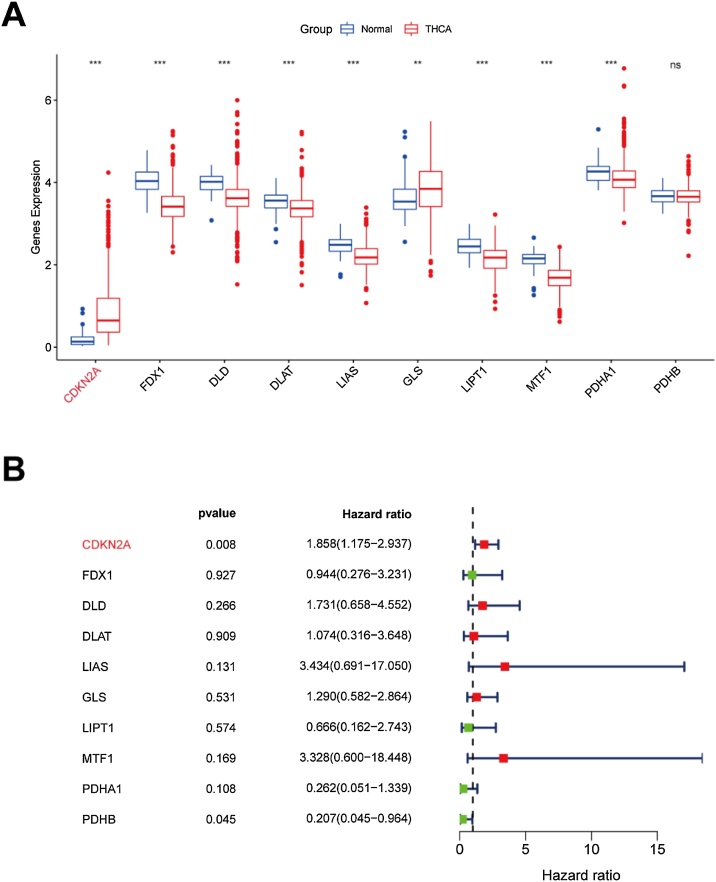
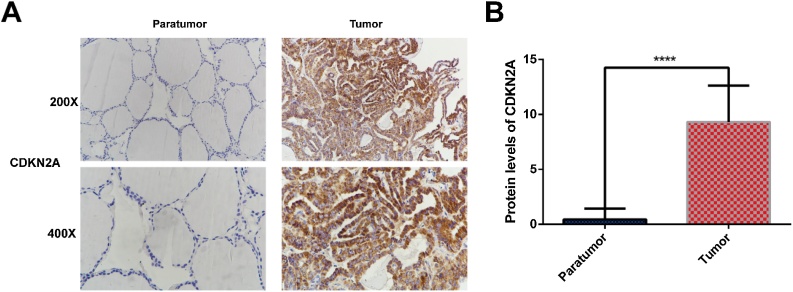
The expression of a cuproptosis-related gene, CDKN2A, was significantly higher in THCA than normal samples (Fig. 3A) and associated with poor outcomes of patients with THCA (Fig. 3B). Moreover, results of IHC experiment also supported the higher expression of CDKN2A in THCA samples (Fig. 4).
CDKN2A expression in cancers
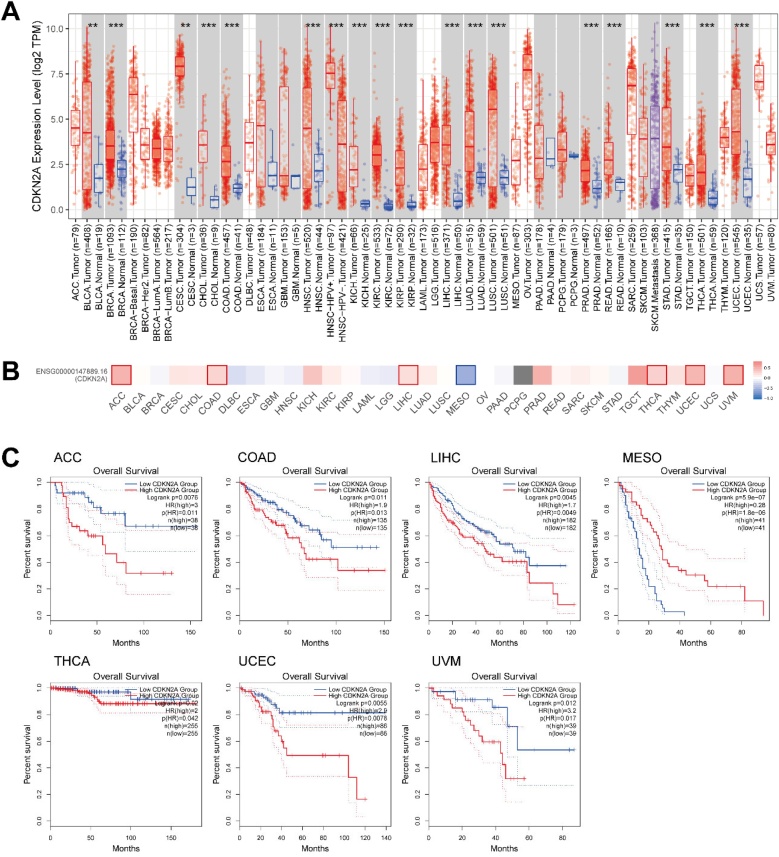
Expression profile of CDKN2A in cancers from TIMER database supported the higher expression of CDKN2A in THCA samples than normal thyroid tissues (Fig. 5A) and the association between CDKN2A expression and worse prognosis of patients with THCA (Fig. 5B‒C). Interestingly, CDKN2A expression was correlated with worse prognosis of patients with other cancers, including Adrenocortical Carcinoma (ACC), Colon Adenocarcinoma (COAD), Liver Hepatocellular Carcinoma (LIHC), Uterine Corpus Endometrial Carcinoma (UCEC), and Uveal melanoma (UVM) (Fig. 5C).
CDKN2A expression was tightly associated with immunosuppressive TME in THCA
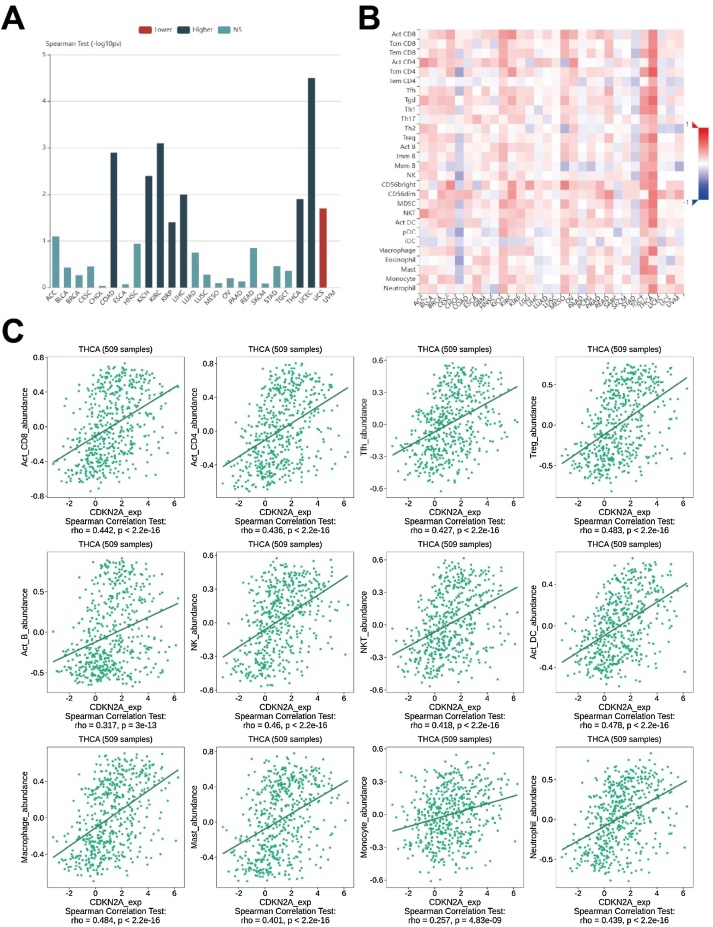
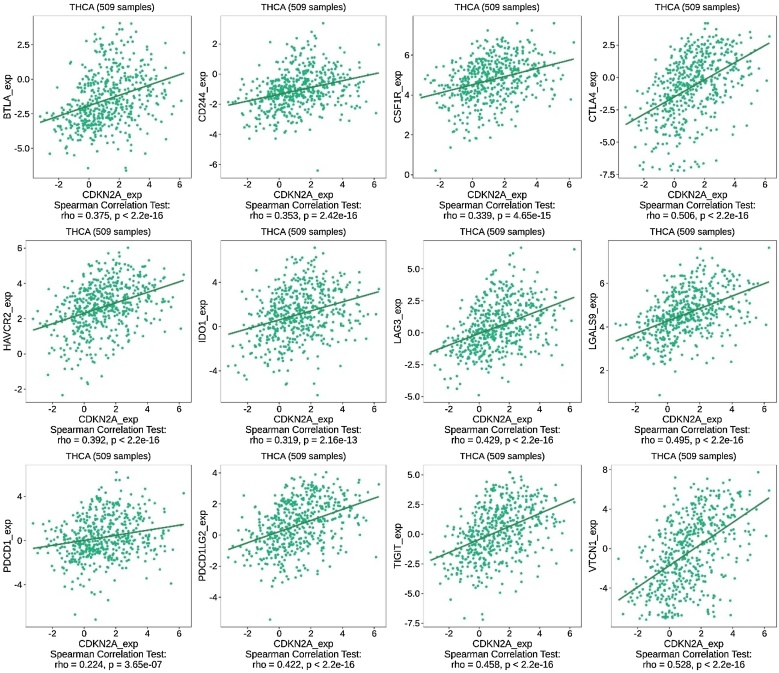
Firstly, results from TISIDB supported the correlation between CDKN2A expression and higher stage of THCA (Fig. 6A). Furthermore, results from TISIDB indicated that CDKN2A expression was positively correlated with the abundance of tumor-infiltrating immune cells including Activated CD8 T-cell (Act CD8), Activated CD4 T-cell (Act CD4), T-follicular helper cell (Tfh), Regulatory T-cell (Treg), Activated B cell (Act B), Natural Killer cell (NK), Natural Killer T-cell (NKT), Activated Dendritic Cell (Act DC), Macrophage, Mast cell, Monocyte, and Neutrophil in THCA (Fig. 6B‒C). Importantly, CDKN2A expression was significantly positively associated with the expression of immune inhibitors, including VTCN1, TIGIT, PD1LG2, PD1, LGALS9, LAG3, IDO1, HAVCR2, CTLA4, CSF1R, CD244, and BTLA (Fig. 7).
Discussion
Dysregulation of PCD processes has been implicated in the malignant features and progression of tumors.ref. 13, ref. 14 Notably, the important role of cuproptosis in cancer development has been identified.ref. bib0060 However, the role of cuproptosis and cuproptosis-related genes in THCA microenvironment and development is still unclear. Here in this study, we found that cuproptosis was the most enrich PCD process in THCA and identified the potential role of cuproptosis in the progression of THCA.
Copper is a microelement essential for organisms including human beings and vital in various biological processes.ref. bib0115 Copper homeostasis disruption can cause cellular toxicity and cell death, which is named as cuproptosisref. 24, ref. 25, ref. 26 and has been implicated in the development and progression of cancers.ref. bib0060 Excessive copper can influence tricarboxylic acid cycle, leading to stress-inducing proteins accumulation and causing cell death.ref. bib0135 Considering the function of copper as an inducer of cellular toxicity, copper accumulation can be the target for eliminating tumor cells and show potential as a therapeutic target for cancers. In fact, based on this mechanism, various agents with the ability to influence copper metabolism such as Disulfiram and Sanchoishi have been used in cancer treatment.ref. 28, ref. 29, ref. 30 Notably, copper can also promote angiogenesis and subsequent tumor growth, by stimulating pro-angiogenic signals.ref. 31, ref. 32 In addition, copper can activate the BRAF signaling pathway in cancers, thereby promoting tumor cell proliferation and migration.ref. bib0160 Notably, here in this study, Cuproptosis enrichment Score (CuScore) was found to be positively correlated with well-known tumor progression-associated processes, including Cell cycle, DNA damage, EMT, Invasion, Stemness, and T-cell exhaustion. Given the dual role of copper in cancer development reported by previous studies and the findings in this study, further exploring the effects and underlying mechanisms of cuproptosis in THCA is of great significance in understanding the mechanisms underlying its progression.
We evaluated the prognostic value of cuproptosis-related genes and found that CDKN2A was significantly associated with worse prognosis of patients with THCA. Higher CDKN2A expression was identified and confirmed by IHC experiment in THCA than normal thyroid tissues. Moreover, CDKN2A expression was significantly associated with higher clinical stages of THCA. CDKN2A is an unstable gene, whose alterations are frequently observed in cancers, such as head and neck cancer, melanoma, and lung cancers.ref. bib0165 The epigenetic or genetic changes of CDKN2A has also been associated with the initiation of ovarian cancer and melanoma.ref. 34, ref. 35 It has been reported that CDKN2A alteration is related to immunotherapy resistance in cancers.ref. 21, ref. 36, ref. 37 In addition, previous studies have speculated on an association between CDKN2A and copper homeostasis in cuproptosis.ref. 38, ref. 39 Moreover, Cheng et al. found that CDKN2A mediates cuproptosis resistance through regulating glycolysis and copper homeostasis and is associated with the progression of colorectal cancer.ref. bib0100
Tumor Microenvironment (TME) is crucial to tumor progression and immunotherapy efficacy and resistance in cancers.ref. 40, ref. 41 Importantly, CDKN2A was significantly correlated with TME characteristics in THCA. Although CDKN2A expression was positively associated with the infiltration of tumor-killing CD8 T-cells, it was also positively correlated with immunosuppressive cells such as regulatory T-cells (Treg) and immunoinhibiting factors such as PD1 and LAG3, indicating that higher CDKN2A expression has the potential to induce immunosuppressive TME and T-cell allergy, thereby leading to the malignant features and poor prognosis of patients with THCA.
Conclusion
In conclusion, our findings suggested the important role of cuproptosis and a cuproptosis-related gene, CDKN2A, in the development and progression of THCA, which might be bridged by their influence on TME characteristics. However, the exact mechanisms underlying their effects in THCA are still required to be elucidated by further studies.
Ethics
This study was approved by the Ethics Committee of Wuhan No. 1 Hospital. Our research adhered to the tenets of the Declaration of Helsinki.
Funding
This study was supported by The Funding for Scientific Research Projects from Wuhan Municipal Health Commission (WX23Z33).
Declaration of competing interest
The authors declare no conflicts of interest.
References
- K.D. Miller, L. Nogueira, T. Devasia. Cancer treatment and survivorship statistics, 2022. CA Cancer J Clin., 2022. [PubMed]
- M.E. Cabanillas, D.G. McFadden, C. Durante. Thyroid cancer. Lancet., 2016. [PubMed]
- H. Sung, J. Ferlay, R.L. Siegel. Global cancer statistics 2020: GLOBOCAN estimates of incidence and mortality worldwide for 36 cancers in 185 countries. CA Cancer J Clin., 2021. [PubMed]
- D. Wlodkowic, W. Telford, J. Skommer, Z. Darzynkiewicz. Apoptosis and beyond: cytometry in studies of programmed cell death. Methods Cell Biol., 2011. [PubMed]
- M. Kulkarni, J.M. Hardwick. Programmed cell death in unicellular versus multicellular organisms. Annu Rev Genet., 2023. [PubMed]
- K. Newton, A. Strasser, N. Kayagaki, V.M. Dixit. Cell death. Cell., 2024. [PubMed]
- D.J. Klionsky, G. Petroni, R.K. Amaravadi. Autophagy in major human diseases. EMBO J., 2021
- B.R. Stockwell. Ferroptosis turns 10: emerging mechanisms, physiological functions, and therapeutic applications. Cell., 2022. [PubMed]
- A. Degterev, Z. Huang, M. Boyce. Chemical inhibitor of nonapoptotic cell death with therapeutic potential for ischemic brain injury. Nat Chem Biol., 2005. [PubMed]
- L. Galluzzi, I. Vitale, S.A. Aaronson. Molecular mechanisms of cell death: recommendations of the Nomenclature Committee on Cell Death 2018. Cell Death Differ., 2018. [PubMed]
- P. Tsvetkov, S. Coy, B. Petrova. Copper induces cell death by targeting lipoylated TCA cycle proteins. Science., 2022. [PubMed]
- M.V. Babak, D. Ahn. Modulation of Intracellular copper levels as the mechanism of action of anticancer copper complexes: clinical relevance. Biomedicines., 2021. [PubMed]
- X. Li, Z. Jing, X. Li. The role of exosomes in cancer-related programmed cell death. Immunol Rev., 2024. [PubMed]
- M. Shi, C. Tang, J.X. Wu. Mass spectrometry detects sphingolipid metabolites for discovery of new strategy for cancer therapy from the aspect of programmed cell death. Metabolites, 2023. [PubMed]
- M.E. Ritchie, B. Phipson, D. Wu. Limma powers differential expression analyses for RNA-sequencing and microarray studies. Nucleic Acids Res., 2015. [PubMed]
- A. Subramanian, P. Tamayo, V.K. Mootha. Gene set enrichment analysis: a knowledge-based approach for interpreting genome-wide expression profiles. Proc Natl Acad Sci USA., 2005. [PubMed]
- M. Ashburner, C.A. Ball, J.A. Blake. Gene ontology: tool for the unification of biology. The Gene Ontology Consortium. Nat Genet., 2000. [PubMed]
- M. Kanehisa, S. Goto. KEGG: kyoto encyclopedia of genes and genomes. Nucleic Acids Res., 2000. [PubMed]
- B. Li, E. Severson, J.-C. Pignon. Comprehensive analyses of tumor immunity: implications for cancer immunotherapy. Genome Biol., 2016. [PubMed]
- X. Cheng, F. Yang, Y. Li. The crosstalk role of CDKN2A between tumor progression and cuproptosis resistance in colorectal cancer. Aging., 2024. [PubMed]
- T. Cheng, Y. Wu, Z. Liu. CDKN2A-mediated molecular subtypes characterize the hallmarks of tumor microenvironment and guide precision medicine in triple-negative breast cancer. Front Immunol., 2022
- A. Hazra, N. Gogtay. Biostatistics series module 3: comparing groups: numerical variables. Indian J Dermatol., 2016. [PubMed]
- M. Arredondo, M.T. Núñez. Iron and copper metabolism. Mol Aspects Med., 2005. [PubMed]
- Y. Wang, L. Zhang, F. Zhou. Cuproptosis: a new form of programmed cell death. Cell. Mol Immunol., 2022. [PubMed]
- P.A. Cobine, D.C. Brady. Cuproptosis: cellular and molecular mechanisms underlying copper-induced cell death. Mol Cell, 2022. [PubMed]
- D. Tang, X. Chen, G. Kroemer. Cuproptosis: a copper-triggered modality of mitochondrial cell death. Cell Res., 2022. [PubMed]
- S.R. Li, L.L. Bu, L. Cai. Cuproptosis: lipoylated TCA cycle proteins-mediated novel cell death pathway. Signal Transduct Targeted Ther., 2022
- D.C. Brady, M.S. Crowe, D.N. Greenberg, C.M. Counter. Copper Chelation Inhibits BRAF(V600E)-Driven Melanomagenesis and Counters Resistance to BRAF(V600E) and MEK1/2 Inhibitors. Cancer Res., 2017. [PubMed]
- C.I. Davis, X. Gu, R.M. Kiefer, M. Ralle, T.P. Gade, D.C. Brady. Altered copper homeostasis underlies sensitivity of hepatocellular carcinoma to copper chelation. Metallomics., 2020. [PubMed]
- D. Chen, Q.C. Cui, H. Yang, Q.P. Dou. Disulfiram, a clinically used anti-alcoholism drug and copper-binding agent, induces apoptotic cell death in breast cancer cultures and xenografts via inhibition of the proteasome activity. Cancer Res., 2006. [PubMed]
- V. Barresi, A. Trovato-Salinaro, G. Spampinato. Transcriptome analysis of copper homeostasis genes reveals coordinated upregulation of SLC31A1, SCO1, and COX11 in colorectal cancer. FEBS Open Bio., 2016
- L. Finney, S. Vogt, T. Fukai, D. Glesne. Copper and angiogenesis: unravelling a relationship key to cancer progression. Clin Exp Pharmacol Physiol., 2009. [PubMed]
- E. Adib, A.H. Nassar, E.W. Akl. CDKN2A alterations and response to immunotherapy in solid tumors. Clin Cancer Res., 2021. [PubMed]
- M.C. Todd, R.A. Sclafani, T.A. Langan. Ovarian cancer cells that coexpress endogenous Rb and p16 are insensitive to overexpression of functional p16 protein. Oncogene., 2000. [PubMed]
- H. Zeng, A. Jorapur, A.H. Shain. Bi-allelic loss of CDKN2A initiates melanoma invasion via BRN2 activation. Cancer Cell., 2018. [PubMed]
- S.I. Gutiontov, W.T. Turchan, L.F. Spurr. CDKN2A loss-of-function predicts immunotherapy resistance in non-small cell lung cancer. Sci Reports., 2021
- S. Horn, S. Leonardelli, A. Sucker, D. Schadendorf, K.G. Griewank, A. Paschen. Tumor CDKN2A-Associated JAK2 loss and susceptibility to immunotherapy resistance. J Natl Cancer Inst., 2018. [PubMed]
- K. Fan, Y. Dong, T. Li, Y. Li. Cuproptosis-associated CDKN2A is targeted by plicamycin to regulate the microenvironment in patients with head and neck squamous cell carcinoma. Front Genet., 2022
- D. Zhang, T. Wang, Y. Zhou, X. Zhang. Comprehensive analyses of cuproptosis-related gene CDKN2A on prognosis and immunologic therapy in human tumors. Medicine (Baltim.)., 2023
- V. Thorsson, D.L. Gibbs, S.D. Brown. The immune landscape of cancer. Immunity., 2018
- A. Cesano, S. Warren. Bringing the next generation of immuno-oncology biomarkers to the clinic. Biomedicines., 2018. [PubMed]