
On the edge of the social media landscape: associations with adolescent substance use and moderation by parental rules
Abstract
Background:
Adolescent problematic social media use (PSMU) has been increasing. Digital engagement has been associated with substance use, but little is known about the potential protective role of parents. We investigated whether screen and substance-related parental rules moderated the associations between (problematic) SMU and intake of tobacco, alcohol, hashish/marijuana, and laughing gas.
Methods:
We used data from the Amsterdam Born Children and Development study (N = 1787; Mage = 15.86 years; SD = 0.36). Both frequent and problematic SMU in relation to tobacco, alcohol, hashish/marijuana, and laughing gas intake levels; and moderation by perceived parental rules (screen/substances), was tested with ordinal logistic regression models.
Results:
PSMU was associated with higher chances of higher substance use levels. Hashish/marijuana use and heavy drinking were less prevalent in adolescents reporting the presence of parental rules on alcohol/drugs, compared to adolescents reporting no rules. Although parental rules on alcohol/drugs, but not screen time, moderated the relationship between PSMU and both hashish/marijuana use and heavy drinking, the moderation effect was modest, especially in mitigating substance use at higher PSMU-scores.
Conclusion:
PSMU was positively associated with a wide range of substance use behaviours. The potential significant role of parental rules (alcohol/drugs) mitigating these associations are highlighted.
Article type: Research Article
Keywords: adolescents, parental rules, social media, substance use
Affiliations: Department of Public and Occupational Health, Amsterdam Public Health Research Institute, Amsterdam University Medical Centers, University of Amsterdam, Van der Boechorststraat 7, 1081 BT Amsterdam, The Netherlands; Centre for Urban Mental Health, Institute for Advanced Study, University of Amsterdam, Oude Turfmarkt 147, 1012 GC Amsterdam, The Netherlands; Department of Epidemiology and Data Science, Amsterdam University Medical Centers, University of Amsterdam, 1105 AZ Amsterdam, The Netherlands; Amsterdam Public Health research institute, Aging & Later life, Health Behaviors & Chronic Diseases, 1081 BT Amsterdam, The Netherlands; Amsterdam Reproduction and Development Research Institute, 1105 AZ Amsterdam, The Netherlands; Department of Psychiatry, Amsterdam University Medical Centers, University of Amsterdam, 1105 AZ Amsterdam, The Netherlands; Amsterdam Public Health Research Institute, 1081 BT Amsterdam, The Netherlands; Department of Psychology, University of Amsterdam, 1018 WS Amsterdam, The Netherlands
License: © The Author(s) 2024. Published by Oxford University Press on behalf of Faculty of Public Health. CC BY 4.0 This is an Open Access article distributed under the terms of the Creative Commons Attribution License (https://creativecommons.org/licenses/by/4.0/), which permits unrestricted reuse, distribution, and reproduction in any medium, provided the original work is properly cited.
Article links: DOI: 10.1093/pubmed/fdae290 | PubMed: 39562152 | PMC: PMC11879007
Relevance: Relevant: mentioned in keywords or abstract
Full text: PDF (371 KB)
Introduction
Worldwide, alcohol, cannabis, and tobacco/nicotine products are popular substances among adolescents. Although substance use onset decreased during the COVID-19 pandemic, heavy substance use increased and the high levels of adolescent substance intake have stagnated in the period 2021–2022 in the United States.ref. ref1 In 2021, half of Dutch adolescents reported to have consumed alcohol on at least one occasion, and among those consuming alcohol in the past month, 75% had been drinking heavily.ref. ref2 About a quarter of the 16-year-olds had experience with smoking and cannabis. There are concerns among Dutch paediatricians regarding the high alcohol and drug abuse in adolescents which, sometimes even lead to hospitalization.ref. ref3
Making irrational decisions and risk-taking behaviour increase during adolescence.ref. ref4,ref. ref5 The influence of peers has a prominent place in experimenting with substances which may lead to continuation of this behaviour.ref. ref6 Moreover, the social–emotional changes in the brain during adolescence often enhance reward-seeking behaviour.ref. ref4 This may explain adolescents’ desire and sensitivity to imitate behaviour that is perceived as normative or valued by others, as previous neurological studies for instance have demonstrated that being socially accepted activates the reward system in the brain.ref. ref7
Nowadays such peer norms are also shared on social media, which is acting as a powerful driver for maintaining social connectedness.ref. ref6 The use of various newly emerged social media platforms (e.g. TikTok, Instagram, Snapchat) has increased immensely among adolescents.ref. ref8 Adolescents spend on average three hours a day on social media and use about three or more different social network sites.ref. ref9 Social media provides adolescents with an anonymous environment for exploration of risky behaviour.ref. ref10 This has raised concerns about the role of social media in the positive portrayal of substance use by online peers for instance.ref. ref11,ref. ref12 We need more insight in potential protective factors for adolescent risky substance use, as the availability of various substances and rapid evolvement of the online landscape continues.ref. ref13
The frequency of social media use (SMU) has been positively linked to substance use.ref. ref6,ref. ref13,ref. ref14 However, to the best of our knowledge, no studies have investigated the relationship between problematic SMU (PSMU) and the use of a broad spectrum of substances. Most studies investigated the relationship between SMU-frequency and for instance alcohol consumption onlyref. ref15,ref. ref16 or focused on digital media use per seref. ref6,ref. ref17,ref. ref18 and not its problematic form, as assessed with the Social Media Disorder Scale.ref. ref19 Social media use can be beneficial for development and social interactions,ref. ref20 however when social media use becomes problematic it can be related to anxiety and depressive symptoms.ref. ref21 PSMU resembles ‘addiction like’ symptoms as adolescents’ experience of pre-occupation and compulsive behaviour (i.e. difficulties with regulating social media use).ref. ref20,ref. ref22,ref. ref23
Studies on the potential protective role of parental rules regarding both substances and especially digital media use on substance use behaviour among adolescents are scarce. Strict parental rules on alcohol-use have been found to be effective in minimizing use of multiple substances.ref. ref24 Setting clear boundaries might prevent adolescents from approaching specific social hotspots in which substance use is common, mitigating the exposure to positive social norms related to substance use.ref. ref25 Research on Internet-specific rules in preventing deviant online behaviour, such as timing and application restrictions, are limited and results are inconclusive.ref. ref26 For instance, strict parental rules about internet did not appear to prevent sleep problems due to digital media for adolescents who were highly engaged in SMU.ref. ref27 Screen-related rules could help limit overall exposure to online environments where substance use is normalized, thereby potentially reducing the likelihood of adolescents engaging in similar behaviours.ref. ref28 Screen-related parental rules may not only limit overall media exposure but also reflect broader parental monitoring and control, which may shape how adolescents engage with social media content. Hence, we apply a broader approach, including both screen and substance-related rules. We hereby recognize that SMU and substance use behaviours might be interconnected and consequently their relationship may be impacted by both types of parental rules.
Therefore, the primary objective was to investigate whether screen and substance-related parental rules moderated the associations between SMU-frequency as well as PSMU and intake levels of tobacco, alcohol, hashish/marijuana, and laughing gas use. We explored whether the presence of either of these types of parental rules decreases the positive relationships between (problematic) SMU and intensity of substance use in adolescents (See online supplementary material for a colour version of this figure, Fig. S1). We controlled for demographic factors, peer problems, and parental substance.
Methods
Study population
We used data from the Amsterdam Born Children and their Development Study (ABCD).ref. ref29 The ABCD study is a large-scale longitudinal study, which started in 2003 when 12 373 pregnant women living in Amsterdam were invited during prenatal consultation to complete a questionnaire (See online supplementary material for a colour version of this figure, Fig. S2). About 8000 children born in Amsterdam enrolled in this cohort-study among which physical and mental health were examined over time. During Phase-5 (2019–2020), in total 2291 adolescents aged 15–16 years and their parents (2189 mothers/1418 fathers) participated. Participants completed a digital questionnaire covering multiple topics including lifestyle, substance use behaviours, and digital media. We excluded participants (N = 504) with missing values on frequency of SMU and PSMU. Values on all other measures were complete. We performed analyses on a final sample of N = 1787.
Measures
Social media use
The frequency of SMU was assessed asking adolescents about their daily use (viewing, responding, sharing/posting) of social network sites (0 = never to 6 = 40+ times). Problematic SMU was measured on the 9-item Social Media Disorder-Scale (SMDS) to indicate the level of addiction to social media with a yes/no response on each item (i.e. conflict with family due to SMU; escape negative feelings through SMU).ref. ref19,ref. ref30 We used the total sum score of all items (range = 0–9). Given the dichotomous nature of the data, we used polychoric correlation matrix to calculate ordinal alpha’s for reliability.ref. ref31 The internal consistency for the SMDS-scale was good (ordinal α = 0.81). To visualize PSMU in figures, we used a recoded SMDS-score containing three categories (0–1; 2–3; 4–9) due to small frequencies of the higher scores.
Substance use behaviours
Tobacco use was assessed by asking participants how often they had ever smoked cigarettes/cut tobacco and water pipe. Heavy alcohol use was measured by asking how often they had consumed five or more units of alcohol on one occasion in the last month. Additionally, participants were asked how often they had ever used hashish/marijuana and laughing gas. Quantity of substance use was indicated based on the number of consumed alcohol units and smoked cigarettes per week. We considered the lowest categories, indicating ‘less than one unit or one time of usage’, as none use (Table 1).
Table 1: Descriptions of the utilization of social media and substances, and adolescents’ perceptions of rules (N = 1787)
| Variable | N (%) | Mean (SD) |
|---|---|---|
| SMU/day ≥1 time | 1615 (90.4) | |
| Problematic SMU (0-9) | 1.33 (1.44) | |
| Cigarette smoking ≥1 time | 364 (20.4) | |
| Smoking/week ≥1 cigarette | 169 (9.5) | |
| Water pipe smoking ≥1 time | 179 (10.0) | |
| Alcohol units/week ≥1 unit | 569 (31.8) | |
| Heavy alcohol use ≥1 time | 379 (21.2) | |
| Hashish/marijuana use ≥1 time | 547 (30.6) | |
| Laughing gas use ≥ time | 133 (7.4) | |
| Smoking allowed by parents | ||
| No | 1379 (77.2) | |
| Yes or don’t know | 408 (22.8) | |
| Alcohol allowed by parents | ||
| No | 887 (49.6) | |
| Yes or don’t know | 900 (50.4) | |
| Drugs allowed by parents | ||
| No | 1522 (85.2) | |
| Yes or don’t know | 265 (14.8) | |
| Screen time rules present | ||
| Yes | 413 (23.1) | |
| No | 1374 (76.9) |
Note: Alcohol use was reported over the prior month. SMU = social media use.
Parental rules
We assessed perceived rules by asking adolescents: Do your parents allow you to smoke? (yes/no/I don’t know); Do your parents allow you to drink alcohol? (yes/no/I don’t know); Do your parents allow you to use drugs? (yes/no/I don’t know). We dichotomized the responses on these three items to reflect the perceived strictness of parental oversight (1= ‘not allowed by parents’ and 0= ‘allowed by parents’ or ‘I don’t know’). The inclusion of ‘I don’t know’ in the ‘allowed by parents’ category was based on the assumption that a lack of clear rules or communication from parents is functionally equivalent to allowing the behaviour. Additionally, adolescents were asked whether their parents have rules about how many hours a day they can watch TV, play (online) games, and use a laptop/tablet or mobile phone (1 = yes; 0 = no).
Peer problems
Peer problems were measured on a 5-item subscale of the Strengths and Difficulties Questionnaire (SDQ).ref. ref32 We included the total sum score (range = 0–10; ordinal α = 0.72).
Socio-demographics
Socio-demographic factors were assessed and included participants’ sex (boy/girl), physiological ethnicity based on grandmother’s country of birth (1 = Dutch; 2 = Western other; 3 = Non-western), and secondary educational level (1 = Vocational; 2 = Senior general; 3 = Pre-university).
Parental factors
Parents were asked about the number of cigarettes smoked per day; the number of alcohol units consumed per week; and how often they used cannabis. We also included highest attained educational level (low/medium/high).
Statistical analysis
To assess substance use behaviours of adolescents according to their SMU, we used multivariable ordinal logistic regression analysis conducted separately for: cigarette smoking, weekly cigarette smoking, and water pipe smoking (3 models); weekly alcohol consumption and heavy drinking (2 models); and ever use of hashish/marijuana and laughing gas use (2 models). All analyses were controlled for potential confounders: age, sex, educational level, ethnicity, and peer problems.
To test the moderating role of parental rules, we included interaction terms between both SMU-frequency and PSMU predictors, as well as screen and substance-related parental rules, as predictors for each substance separately (smoking/alcohol/drugs) using ordinal logistic regression, while controlling for all covariates and main effects (P-value ≤0.013 after Bonferroni correction). All analyses were performed with IBM SPSS Statistics 26.
Results
Demographics
Participants were on average 15.86 years of age (SD = 0.36; range = 15.14–16.87 years) of which 762 boys (42.6%) and 1025 girls (57.4%). Majority was native Dutch (N = 1346; 75.3%), while 12.5% and 12.2% had non-Western or other Western backgrounds, respectively. Pre-university attendance was highest (N = 1092; 61.1%), followed by senior-general (23.9%) and vocational levels (14.9%). Peer problem experience level was quite low within the sample (M = 1.32; SD = 1.40). Participants actively used social network sites on average 6-10 times a day. The average SMDS-score indicating PSMU was 1.33 (SD = 1.44). A SMDS-score of at least five indicates a problematic user.ref. ref19 The proportion of problematic-users in the current sample was 3.4%. See Table 1 for further sample details. Most parents were highly educated and did not use cannabis. Mothers and fathers smoked, on average, less than one cigarette per day; and consumed 6 and 9 units of alcohol per week, respectively (Table S1).
Substance use behaviours
Both more frequent and problematic SMU were associated with an increased likelihood of cigarette smoking, heavy drinking, hashish/marijuana use, and laughing gas use at higher frequency levels. Similarly, adolescents with higher SMU-frequency and PSMU were more likely to smoke a larger number of cigarettes and drink more alcohol units per week. Water pipe smoking at higher frequency levels was more likely among adolescents with higher PSMU (Table 2).
Table 2: Substance use by daily and problematic SMU adjusted for covariates
| Smoking behaviour | Alcohol consumption (last month) | Drug use | |||||
|---|---|---|---|---|---|---|---|
| Cigarette smoking (times)OR (95% CI) | Smoking/week(X cigarettes)OR (95% CI) | Water pipe smoking (times)OR (95% CI) | Heavy alcohol use(times)OR (95% CI) | Alcohol/week(X units)OR (95% CI) | Hashish/marijuana use (times)OR (95% CI) | Laughing gas use(times)OR (95% CI) | |
| SMU/day (times) | 1.17* (1.09-1.26) | 1.22* (1.10-1.35) | 1.10 (1.00-1.21) | 1.24* (1.15-1.34) | 1.21* (1.14-1.29) | 1.18* (1.11-1.26) | 1.15* (1.03-1.29) |
| Problematic SMU | 1.20* (1.10-1.30) | 1.16* (1.04-1.29) | 1.17* (1.05-1.30) | 1.11* (1.02-1.20) | 1.10* (1.02-1.18) | 1.10* (1.02-1.19) | 1.15* (1.03-1.30) |
| Sex | |||||||
| Boys | 0.87 (0.68-1.12) | 0.89 (0.63-1.25) | 1.68* (1.22-2.32) | 0.82 (0.65-1.05) | 0.77* (0.63-0.95) | 1.63* (1.32-2.01) | 1.34 (0.93-1.94) |
| Girls (ref.) | |||||||
| Age | 1.70* (1.23-2.37) | 2.32* (1.47-3.65) | 0.981 (0.64-1.51) | 2.11* (1.52-2.92) | 2.24* (1.69-2.98) | 1.79* (1.35-2.38) | 2.16* (1.31-3.55) |
| Education | |||||||
| Pre-university | 1.06 (0.71-1.58) | 0.79 (0.47-1.32) | 0.40* (0.26-0.61) | 1.19 (0.80-1.75) | 0.98 (0.70-1.35) | 1.34 (0.95-1.89) | 0.67 (0.40-1.11) |
| Sr. general | 1.51 (0.99-2.32) | 1.31 (0.76-2.24) | 0.70 (0.45-1.10) | 1.11 (0.72-1.71) | 1.04 (0.72-1.50) | 1.75* (1.20-2.54) | 1.01 (0.59-1.72) |
| Vocational (ref.) | |||||||
| Ethnicity | |||||||
| Non-Western | 0.25* (0.15-0.44) | 0.36* (0.18-0.72) | 1.06 (0.66-1.71) | 0.24* (0.14-0.43) | 0.19* (0.12-0.30) | 0.27* (0.17-0.43) | 1.21 (0.72-2.05) |
| Western other | 1.03 (0.73-1.47) | 1.01 (0.62-1.64) | 1.22 (0.76-1.95) | 0.87 (0.61-1.24) | 0.79 (0.58-1.08) | 1.10 (0.81-1.49) | 0.16 (0.68-1.98) |
| Dutch (ref.) | |||||||
| Peer problems | 0.82* (0.74-0.90) | 0.87* (0.76-0.99) | 0.90 (0.80-1.02) | 0.78* (0.70-0.86) | 0.78* (0.72-0.85) | 0.85* (0.78-0.92) | 0.97 (0.85-1.10) |
Note: *P < 0.05
–Frequency of daily SMU activities (0 = never; 1 = 1–2 times a day; 2 = 3–5 times a day; 3 = 6–10 times a day; 4 = 11–20 times a day; 5 = 21–40 times a day; 6 = more than 40 times a day).
–Frequency of smoking cigarettes/cut tobacco (0 = never; 1 = number of times per year; 2 = approximately once a month; 3 = number of times per month; 4 = once a week; 5 = number of times per week; 6 = daily).
–Number of cigarettes per week (0 = none; 1 = 1 to 4 per week; 2 = 5 to 7 per week (approximately 1 per day); 3 = 6 to 10 per week (about half a pack); 4 = 11 to 20 per week (about a pack); 5 = 21 to 40 per week (about 2 packages); 6 = 40 to 60 per week (about 3 packages); 7 = more than 60 per week (>3 packages)).
–Frequency of smoking water pipe (0 = never; 1 = 1–3 times; 2 = 4–10 times; 3 = 11–19 times; 4 = more than 19 times).
–Number of alcohol units per week during the last month (glasses, bottles or cans of alcohol): 0 = 0; 1 = 1–2; 2 = 3–5; 3 = 6–10; 4 = 11–15; 5 = 16–20; 6 = 21–30; 7 = more than 30.
–Frequency of heavy alcohol use during the last month (5+ units per occasion): 0 = not; 1 = 1–2 times; 2 = 3–5 times; 3 = 6–9 times; 4 = 10 times or more.
–Frequency of hashish/marijuana use: 0 = never; 1 = 1–3 times; 2 = 4–10 times; 3 = 11–19 times; 4 = more than 19 times.
–Frequency of laughing gas use (nitrous oxide): 0 = never; 1 = 1–3 times; 2 = 4–10 times; 3 = 11–19 times; 4 = more than 19 times.
To rule out the potential role of parental substance use and educational level, we conducted the main analyses controlling for these factors (tobacco/alcohol/cannabis separately) in addition to the other potential confounders and we found similar patterns of findings regarding the associations between adolescent (problematic) SMU and substance use behaviours.
Moderation by parental rules
Adolescents reporting the presence of rules regarding drugs and alcohol showed overall less hashish/marijuana use and less heavy drinking compared to adolescents reporting no rules (Fig. 1a and b). The results showed small moderating effects of these rules on the relationship between PSMU and both hashish/marijuana use and heavy drinking (Table 3). Specifically, parental rules appeared not to mitigate hashish/marijuana use (B = 0.302; P = 0.002) and heavy alcohol use (B = 0.214; P = 0.010) in adolescents with higher PSMU-scores. The effect sizes indicate that while parental rules do moderate these associations, the strength of their impact is modest. Screen-related parental rules did not moderate any of the associations between SMU overall and substance use behaviours.
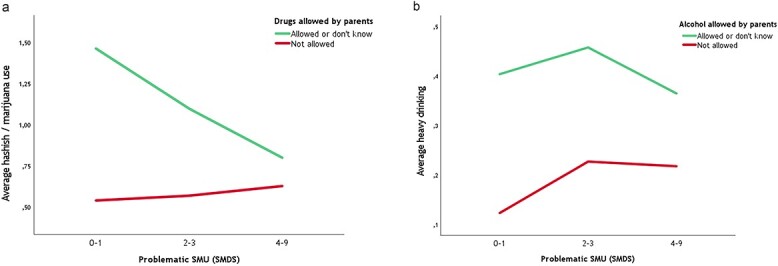
Table 3: Moderation by parental rules
| Smoking behaviour | Cigarette smoking (times) | Smoking/week (X cigarettes) | Water pipe smoking (times) | ||||
|---|---|---|---|---|---|---|---|
| Beta | P-value | Beta | P-value | Beta | P-value | ||
| Times SMU/day x Rules screen time | −0.008 | 0.942 | −0.068 | 0.658 | 0.108 | 0.395 | |
| Times SMU/day x Rule smoking | 0.035 | 0.680 | 0.088 | 0.419 | 0.181 | 0.091 | |
| Problematic SMU x Rule screen time | 0.008 | 0.929 | −0.014 | 0.911 | −0.063 | 0.578 | |
| Problematic SMU x Rule smoking | −0.012 | 0.892 | 0.009 | 0.937 | −0.022 | 0.841 | |
| Alcohol consumption (last month) | Heavy alcohol use(times) | Alcohol/week(X units) | |||||
| Beta | P-value | Beta | P-value | ||||
| Times SMU/day x Rule screen time | 0.001 | 0.990 | −0.008 | 0.928 | |||
| Times SMU/day x Rule alcohol | 0.014 | 0.870 | 0.006 | 0.931 | |||
| Problematic SMU x Rule screen time | −0.047 | 0.630 | −0.113 | 0.181 | |||
| Problematic SMU x Rule alcohol | 0.214* | 0.010 | 0.142 | 0.051 | |||
| Drug use | Hashish/marijuana use (times) | Laughing gas use(times) | |||||
| Beta | P-value | Beta | P-value | ||||
| Times SMU/day x Rule screen time | 0.003 | 0.971 | −0.080 | 0.724 | |||
| Times SMU/day x Rule drugs | 0.031 | 0.686 | 0.023 | 0.866 | |||
| Problematic SMU x Rule screen time | 0.008 | 0.923 | −0.433 | 0.108 | |||
| Problematic SMU x Rule drugs | 0.302* | 0.002 | 0.321 | 0.058 | |||
Note: *P ≤ 0.013 after Bonferroni correction (0.05/4). Moderation analyses adjusted for: age, sex, educational level, ethnicity, and peer problems.
Discussion
Main findings of this study
The present study advanced our understanding of SMU in relation to adolescent use of various substances and the potential protective role of parental rules.
Overall, the findings suggest that both SMU-frequency as well as PSMU is positively associated with using various substances at higher intake levels. It appears that parental rules on drugs and alcohol may have a reduced likelihood of influence when adolescents experience PSMU-related behaviour. Notably, these findings should be interpreted with caution due to the small effect sizes. Nonetheless, our results suggest that hashish/marijuana use and heavy drinking remains lower overall when parental rules on substances are present. None of the other investigated interactions between (problematic) SMU and screen and substance-related parental rules were found to significantly moderate substance use behaviours.
What is already known on this topic
Our study confirms prior findings linking increased digital engagement with higher alcohol use likelihood,ref. ref6,ref. ref14 and initiation of cannabis and tobacco intake.ref. ref17 Online glorification and normalization of substance use might put adolescents at higher risk to engage in (long-term) substance use behaviours. Miller et al.ref. ref33 underline the role of online peer groups and the increased risk for adolescents to progress towards more problematic habits of substance use offline. The dynamic evolving landscape of online interaction and the rise in popularity of various social platforms acts as the ideal market for substance supply and demand due to its free and anonymous nature.ref. ref34 The absence or lack of regulations on social media makes advertisements/content glorifying substances easily accessible for a larger public, including minors.ref. ref35 This may underscore the relevance of the parental role in adolescent online behaviour, awareness of associated risks, and clear rule-setting regarding alcohol and drug use.
The use of digital media plays an important role in adolescent identity-formation.ref. ref36 Strict parental monitoring in this case may lead to adverse behaviour of adolescents trying to bypass their parents’ restrictions in order to stay socially active and autonomous.ref. ref37 Sensitive parenting and attuned communication can protect adolescents against behavioural problems and deviant influence.ref. ref38 What is considered normative by adolescents is likely to be identified by using peer online behaviour (posting/sharing content) as a valuable source of information to establish a behavioural pattern that aligns with the mainstream.ref. ref35 Parents however can provide a different perspective on those social peer norms.
What this study adds
Our findings extend prior research by demonstrating that PSMU predicts increased likelihood of multi-substance use at higher rates. Compared to SMU-frequency, PSMU captures adolescents’ experience of compulsive behaviour and personal feelings toward social media.
Parental substance rules moderated associations between PSMU and hashish/marijuana use and heavy drinking, aligning with prior research on alcohol-specific rules’ efficacy in mitigating adolescent substance use.ref. ref39 However, we did not find moderation by screen-related parental rules. In contrast to rule-setting related to alcohol use, there is rather inconsistent and less evidence of internet-related rules, including screen time restrictions, mitigating adolescents’ PSMU.ref. ref20 Social media-specific monitoring by parents was previously found to slightly moderate the association between SMU and alcohol use negatively.ref. ref40 In the present study, we did not measure screen-related rules regarding the use of specific social media platforms or viewing certain content, but rather generally asked whether their parents imposed time restrictions regarding various digital practices (TV, gaming, laptop/tablet/phone use). This could explain the absence of a significant moderation effect of screen-related rules in the relationships between (problematic) SMU and substance use behaviours. Moreover, the ongoing debate on screen-related mental health issues and comorbid substance use behaviours highlights the need to look beyond mere screen exposure.ref. ref28 It is essential to consider the complex process of identity formation that adolescents undergo in the digital age, where the integration of online and offline experiences can significantly influence behavioural patterns.ref. ref28 Exploring both substance and screen-related rules as indicator of broader parental supervision remain important to understand the potential role of these rules.
Compared to the substance-related rules (whether using substances is allowed or not), the screen-related rule is less restrictive and specific by nature which might also impact the effectiveness depending on the parenting strategy that is appliedref. ref26 (e.g. enforcement of rules). It is unclear to what extent screen time restrictions might protect against specific online content-exposure and substance use. If we hypothesize that (problematic) SMU influences offline substance use behaviours, we need to consider a potential time interval. It has been suggested that the benefit of parental rules is limited to the moment and context if they are simultaneously sanctioned.ref. ref40 Hence, adolescents might not translate screen-related rules directly into a behavioural change regarding their substance intake.
While the moderating effect of screen-related rules was not significant in our study, including this variable offers important insights into the broader parental supervision framework, which may play a role in adolescents’ interaction with both online environments and substance use behaviours. By investigating this, we aim to provide a more comprehensive understanding of the complex role parental rules play in adolescent development.
When it comes to educating children about the risks of social media and substances, parental involvement may be essential. Weak or absent parental rule-setting has been found to be associated with increased substance use among adolescents.ref. ref41 In the present study it appeared that parental rules on drugs and alcohol might be slightly less effective in mitigating hashish/marijuana use and heavy alcohol use among adolescents with higher PSMU. A longitudinal study suggests that intervening is mostly relevant prior to an already existing pattern of substance use and engagement with (co-) using friends, as one year after follow-up parental monitoring was no longer effective.ref. ref25 Hence, parental rule-setting and monitoring might be particularly effective at an early stage when structural problem behaviour is still absent.
According to developmental theories, the environment in which adolescents thrive is proposed to reciprocally interact with their behaviour, such that a nurturing atmosphere in the social circle can enhance adolescents’ personal growth and resilience.ref. ref42,ref. ref43 Higher PSMU could indicate a stronger susceptibility to social approval and adherence to online peer behaviour (expected norms) resulting in parental rules regarding substances being less effective, and peer values taking primacy. Although the overall influence of parents on adolescent SMU is moderate, it is essential to set appropriate rules resonating with the adolescent life-stage in a context of positive parenting.ref. ref20 Open parent–child communication, characterized by an affectionate and mindful relationship, has been found to be most effective in preventing PSMU overall.ref. ref20
Strict parental rules on phone use, for instance, have been found to be only effective in adolescents with lower SMU.ref. ref27 Additionally, adolescents strive for more autonomy in their decision-making which could explain the distancing from parental perspectives and rules.ref. ref44 Parents themselves also tend to lower their supervision when their children reach late adolescence, which can make already vulnerable adolescents even more at risk for deviant influence.ref. ref44 Hence, a sustainable approach of appropriate rule-setting prior to transitioning into a problematic state of both social media and substance use seems desirable.
Limitations of this study
The present study has several limitations. The findings are not generalizable to broader geographic and demographic contexts, as our study sample predominantly consisted of Caucasian, higher educated adolescents from a particular region in the Netherlands. Additionally, the use of cross-sectional data restricts the ability to investigate longitudinal relationships and rule out causal or reciprocal effects.
The absence of content-based data makes it difficult to determine whether adolescents are exposed to substance-related content and whether it translates to offline behaviour as we only had self-reported measures available. Moreover, the prevalence of PSMU and intense substance use was low in our study population. Parental rules as measured in this study provided limited insight into the extent of strictness of, enforcement and adherence to these rules. This study only considered the presence of rather generic restriction rules. More detailed data was unfortunately not available. This also applies to the quantification of tobacco, alcohol, hashish/marijuana, and laughing gas use where adolescents had to choose between rather wide ranges of use divided over multiple categories. This could have limited the ability to get a more thorough indication of actual amount and recurrence of substance use, which may have limited the accuracy of the findings.
We recommend future research to further investigate the role of parental rules regarding screen and social media engagement by using more fine-grained data on parental rules as well as analysing longitudinal content-based data, including the patterns of use and what adolescents do and are exposed to on social network sites. Especially, the use of objectively measured data, indicating for instance actual engagement on specific social media platforms or interest for certain content, could enhance our understanding of adolescent online behaviour.
Supplementary Materials
References
- 1. Miech RA, Johnston LD, Patrick ME. et al. Monitoring the Future National Survey Results on Drug Use, 1975–2022: Secondary School Students. Ann Arbor: Institute for Social Research, The University of Michigan, 2023. http://monitoringthefuture.org/pubs.html#monographs
- 2. Boer M, Stevens GWJM, Looze de M. et al. HBSC 2021: gezondheid en welzijn van jongeren in Nederland. Utrecht: Universiteit Utrecht, 2022.
- Acute alcohol intoxication in Dutch adolescents before, during, and after the first COVID-19 lockdown.. J Adolesc Health, 2021. [PubMed]
- A social neuroscience perspective on adolescent risk-taking.. Dev Rev, 2008. [PubMed]
- The effect of peer influence and selection processes on adolescent alcohol use: a systematic review of longitudinal studies.. Health Psychol Rev, 2014. [PubMed]
- Associations between digital technology and substance use among U.S. adolescents: results from the 2018 monitoring the future survey.. Drug Alcohol Depend, 2020. [PubMed]
- Media use and brain development during adolescence.. Nat Commun, 2018. [PubMed]
- Social media use intensity, social media use problems, and mental health among adolescents: investigating directionality and mediating processes.. Comput Hum Behav, 2021
- Adolescent social media use and mental health from adolescent and parent perspectives.. J Adolesc, 2017. [PubMed]
- Transformation of adolescent peer relations in the social media context: part 2-application to peer group processes and future directions for research.. Clin Child Fam Psychol Rev, 2018. [PubMed]
- Social media use and risky behaviors in adolescents: a meta-analysis.. J Adolesc, 2020. [PubMed]
- Social media use and alcohol consumption: a 10-year systematic review.. Int J Environ Res Public Health, 2022. [PubMed]
- Social media use and substance use during emerging adulthood.. Emerg Adulthood, 2017
- Social media use and episodic heavy drinking among adolescents.. Psychol Rep, 2017. [PubMed]
- Friends’ alcohol-related social networking site activity predicts escalations in adolescent drinking: mediation by peer norms.. J Adolesc Health, 2017. [PubMed]
- The role of online social identity in the relationship between alcohol-related content on social networking sites and adolescent alcohol use.. Cyberpsych Beh Soc N, 2018
- Digital media use and subsequent cannabis and tobacco product use initiation among adolescents.. Drug Alcohol Depend, 2020. [PubMed]
- Relationship of media exposure to substance use among adolescents in Saudi Arabia: results from a national study.. Drug Alcohol Depend, 2018. [PubMed]
- The social media disorder scale.. Comput Hum Behav, 2016
- Parenting and problematic social media use: a systematic review.. Curr Addict Rep, 2024
- Problematic social media use in adolescents and young adults: systematic review and meta-analysis.. JMIR Ment Health, 2022. [PubMed]
- 22. Griffiths MD, Kuss DJ, Demetrovics Z. Chapter 6 – Social Networking Addiction: An Overview of Preliminary Findings. In: Rosenberg KP, Feder LC (eds). Behavioral Addictions. Cambridge Massachusetts, US: Academic Press, 2014: 119–141. Accessed April, 2024. 10.1016/B978-0-12-407724-9.00006-9
- Problematic social media use in childhood and adolescence.. Addict Behav, 2024. [PubMed]
- Long-term effects of a parent and student intervention on alcohol use in adolescents: a cluster randomized controlled trial.. Am J Prev Med, 2011. [PubMed]
- Adolescent substance use with friends moderating and mediating effects of parental monitoring and peer activity contexts.. Merrill Palmer Quart, 2010
- Bidirectional effects of internet-specific parenting practices and compulsive social media and internet game use.. J Behav Addict, 2018. [PubMed]
- Social media use and adolescents’ sleep: a longitudinal study on the protective role of parental rules regarding internet use before sleep.. Int J Environ Res Public Health, 2021. [PubMed]
- Beyond screen time: identity development in the digital age.. Psychol Inq, 2020
- Cohort profile: the Amsterdam born children and their development (ABCD) study.. Int J Epidemiol, 2011. [PubMed]
- Validation of the social media disorder scale in adolescents: findings from a large-scale nationally representative sample.. Assessment, 2022. [PubMed]
- Estimating ordinal reliability for Likert-type and ordinal item response data: a conceptual, empirical, and practical guide.. Pract Assess Res Eval, 2012
- The strengths and difficulties questionnaire: a pilot study on the validity of the self-report version.. Eur Child Adoles Psy, 1998
- Online peers and offline highs: an examination of online peer groups, social media homophily, and substance use.. J Psychoactive Drugs, 2021. [PubMed]
- Social media and substance use: what should we be recommending to teens and their parents?. J Adolesc Health, 2017. [PubMed]
- Influence of social media on alcohol use in adolescents and young adults.. Alcohol Res-Curr Rev, 2014
- Adolescent room culture – studying media in the context of everyday life.. J Youth Adolesc, 1995
- Parental mediation, peer norms and risky online behavior among adolescents.. Comput Hum Behav, 2014
- Adapting to the changing needs of adolescents: parenting practices and challenges to sensitive attunement.. Curr Opin Psychol, 2017. [PubMed]
- Parental alcohol-specific rules effectively reduce adolescents’ tobacco and cannabis use: a longitudinal study.. Drug Alcohol Depend, 2020. [PubMed]
- It’s the content that counts: longitudinal associations between social media use, parental monitoring, and alcohol use in an Australian sample of adolescents aged 13 to 16 years.. Int J Environ Res Public Health, 2021. [PubMed]
- Parent-based interventions for preventing or reducing adolescent substance use – a systematic literature review.. Clin Psychol Rev, 2016. [PubMed]
- 42. Bronfenbrenner U, Morris PA. The bioecological model of human development. In:Lerner RM, Damon W (eds.), Handbook of child psychology: Vol 1 Theoretical models of human development, 6th edn. Hoboken New Jersey, US: Wiley, 2006, 793–828.
- Relational developmental systems-based theories and the study of children and families: Lerner and Spanier (1978) revisited.. J Fam Theor Rev, 2015
- Differential effects of parental controls on adolescent substance use: for whom is the family Most important?. J Quant Criminol, 2013. [PubMed]