
Changes in Prescribed Opioid Dosages Among Patients Receiving Medical Cannabis for Chronic Pain, New York State, 2017-2019
Abstract
Question:
Is receiving medical cannabis for a longer duration associated with reducing prescription opioid dosages among patients receiving long-term opioid therapy?
Findings:
In this cohort study among 8165 patients with chronic pain receiving long-term opioid therapy, receiving medical cannabis for a longer duration was associated with prescription opioid dosage reduction. Higher opioid dosages were associated with larger reductions.
Meaning:
These findings contribute evidence toward potential clinical benefits of medical cannabis in reducing prescription opioid intake, which may decrease patients’ risk of opioid overdose.
Affiliations: New York State Department of Health, Albany; Department of Epidemiology and Biostatistics, University at Albany School of Public Health, Rensselaer, New York; City University of New York Graduate School of Public Health and Health Policy, New York, New York; New York State Office of Cannabis Management, Albany
License: Copyright 2023 Nguyen T et al. JAMA Network Open. CC BY 4.0 This is an open access article distributed under the terms of the CC-BY License.
Article links: DOI: 10.1001/jamanetworkopen.2022.54573 | PubMed: 36716026 | PMC: PMC9887491
Relevance: Moderate: mentioned 3+ times in text
Full text: PDF (13 KB)
Introduction
The US has been experiencing an opioid crisis with multiple waves, starting with increased prescribing of opioids in the 1990s.1 Recently, opioid-involved overdose deaths in 2021 were the highest in US history, with more than 80 000 deaths.2 Opioid prescriptions decreased 47% by 2020, after a peak in 2012 with 255 million prescriptions.3,4 Despite significant reductions, many people are continuing to use opioids for chronic pain. In 2019, 1 in 5 adults had chronic pain5 and 22.1% of these had recently used prescription opioids for relief.6
National guidelines for prescribing opioids for chronic pain7 and states’ opioid regulations have resulted in discontinuation and reduced initiation of opioid prescriptions.8 Nonopioid medication options are limited for many individuals with pain; for example, nonsteroidal anti-inflammatory drugs (NSAIDs) are contraindicated for many patients experiencing chronic pain, particularly among older patients, who often experience a higher burden of pain.9 Without humane tapering of opioids and effective alternatives for patients receiving long-term opioid therapy (LOT), many of them are at high risk of overdose (through turning to the illicit market) and of suicide.8,10
Cannabis has gained popularity as a potential pain management modality.11,12,13 However, its role in reducing the need for prescription opioids or the dosage of opioids remains controversial due to limited research.14 Most studies relied on survey data or small samples of individuals who used cannabis in combination with opioids for pain management.15 Results showed individuals self-reported reduction in opioid use and improvement in pain management. A meta-analysis on the association of cannabinoids with reduced opioid use for analgesia found some support in observational studies but little evidence from clinical trials.16 Several trials used cannabis-derived products for a short time, which may not reflect how patients actually use cannabis as an alternative therapy.16
Medical cannabis (MC) programs present opportunities to investigate the potential therapeutic benefits of MC for pain management and its possible adjunctive use with opioid analgesics. Most MC programs regulate the licensure, cultivation, distribution, and sale of products and require patients to be authorized or certified by a health care practitioner to participate in the program. A 2021 study of patients receiving LOT in Canada by Lee et al17 found that MC authorization was associated with a significant weekly oral morphine equivalent reduction among individuals receiving high dosage of opioids (ie, oral morphine equivalent >100).17 However, among individuals receiving lower dosages, a weekly increase was observed. These findings provide direct evidence for the association between MC authorization and changes in opioid dosages. However, Lee et al17 measured exposure by authorization to receive MC rather than the actual receipt of MC and the length of exposure.
New York state implemented a MC program18 in January 2016 under the authority of the 2014 Compassionate Care Act.19 Chronic pain was added in regulation as a qualifying medical condition for receiving MC in March 2017.20 This study aims to assess the association between receiving MC for chronic pain and opioid dosage. Specifically, we examined the changes in opioid dosages among individuals receiving LOT who received MC for longer duration compared with shorter duration.
Methods
Study Design
This cohort study was approved by the New York State Department of Health’s institutional review board. This study used deidentified secondary data and individual patients’ identity could not be determined through the aggregated results. Per the Common Rule, informed consent was waived. The study was conducted by monitoring opioid dosage of 2 groups (receiving MC for a longer duration, ie, exposure group, and receiving MC for a shorter duration, ie, nonexposure group) for 240 days or 8 months (intervention period). This cohort study adhered to the Strengthening the Reporting of Observational Studies in Epidemiology (STROBE) reporting guideline for cohort studies.
Data Source
The New York State Medical Cannabis Program (eAppendix 1 in Supplement 1) provides access to MC products to patients with qualifying medical conditions (eAppendix 2 in Supplement 1) who receive a certification from their health care practitioner and register with the program.20 No regulations prohibit the use of opioids and MC at the same time. The decision of appropriate therapy was at the discretion of the health care practitioner certifying the patient. The Medical Marijuana Data Management System (MMDMS) collects records of MC certifications, which include patients’ qualifying medical conditions. Records of dispensed MC and opioid prescriptions, reported to the New York state Prescription Monitoring Program registry (PMP), for these individuals were linked via unique identifiers.21
Study Population
We examined MMDMS and PMP records from March 2017 through the end of 2019. We selected adults with at least 1 MC dispensed for chronic pain and 1 opioid prescription at the starting date of the first MC dispensing (index date). Patient were considered to be receiving LOT if they had a minimum of 120 cumulative days of opioid prescriptions or 10 or more prescriptions within the 12 months prior to the index date.17
Exposure Definition
The exposure group included adults with more than 30 days of MC during the first 90-day intervention period. Patients in the nonexposure group received no more than 30 days of MC in the first 90 days and subsequently did not receive MC for the rest of the follow-up period.
Outcome Definition
The study outcome, opioid dosage, was measured by 30-day (monthly) mean daily morphine milligram equivalent (MME). For each month, prescribed opioid amounts were used in combination with strength conversion factors to calculate the total MME. Subsequently, the total MME was divided by the supply days in that month to calculate the mean daily MME. Each patient was measured for 12 monthly MMEs during the preintervention period and 8 monthly MMEs for the intervention period.
Covariates
The known factors associated with opioid dosages, such as age, sex, source of payment, and baseline MME prior to receiving MC, were included as covariates for analyses. Since payments for MC dispensing are typically not covered by third-party payers, we used the source of payment for the most recent opioid prescription prior to receiving MC to classify insurance type.
Exclusion Criteria
Exclusion criteria were individuals aged younger than 18 years, identified as terminally ill on their MC certification, living out of New York state, received opioids for treatment of opioid use disorder, or received extremely high dosages of opioids (480 MME daily, sign of outliers or diversion),22 more than the NYS limit of 90 supply days,23 opioids that are not typically used in outpatient settings, cold formulations containing opioids, or opioids from veterinarians for animals. To ensure consistent exposure to MC,24 patients with a large gap (≥30 days) in receiving MC in the first 90 days were excluded.
Statistical Analysis
We conducted χ2 and Fisher exact tests and examined medians and IQRs to check for equivalency in the distributions of age, sex, insurance type, and baseline MME between groups. Since baseline MME was shown to be associated with changes in follow-up opioid dosages,17 analyses were conducted for 3 strata of MME: less than 50, 50 to less than 90, and 90 or greater.
To adjust for confounders at baseline, a propensity score (PS) method was used to estimate the average treatment effect on treated (ATT) weights.25,26,27 For each stratum, the ATT weights were used in the PS-based controlled interrupted time series (CITS) model27,28,29 to assess the differences in the MME trends between the exposure and nonexposure groups during the preintervention period. The same models also provided the association between the length of receiving MC and opioid dosages after the intervention started. All results were set at a statistical significance level of 2-sided P = .05. Statistical analyses were conducted using SAS software version 9.4 (SAS Institute). Data were analyzed from November 2021 to February 2022.
Results
Figure 1 shows the selection of the study population. Between 2017 and 2019, there were 8165 patients receiving LOT who also received MC for chronic pain. Of those, 4041 patients (median [IQR] age, 57 [47-65] years; 2376 [58.8%] female) received MC for a longer duration and 4124 patients (median [IQR] age, 54 [44-62] years; 2370 [57.5%] female) received MC for a shorter duration.
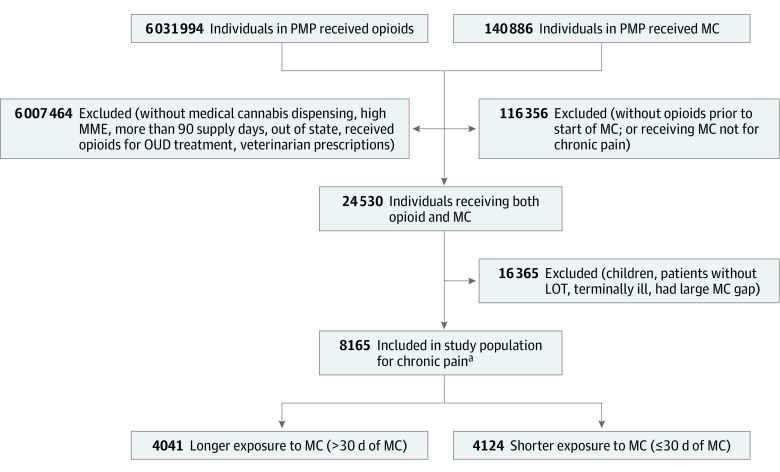
Table 1 provides distributions for age, sex, insurance, and MME at baseline for all patients and stratified by baseline MME. Approximately half of all patients were prescribed less than 50 MME, a third were prescribed 90 MME or greater, and the remainder were receiving 50 to less than 90 MME at baseline. Overall, there were statistically significant differences in the distributions of age and source of payments between the exposure and nonexposure groups. (Table 1) The exposure group included more patients aged 65 years and older (1083 patients [26.8%] vs 845 patients [20.5%]), and fewer patients aged 18 to 44 years (827 patients [20.5%] vs 1063 patients [25.8%]) than the nonexposure group. More than half of patients in each group had private insurance (2548 patients [63.1%] in the exposure group and 2542 patients [61.6%] in the nonexposure group). The exposure group had fewer patients with Medicaid insurance (123 patients [3.0%] vs 230 patients [5.6%]) than the nonexposure group. Daily MME at baseline was similar for exposure and nonexposure groups (Table 1). There was no missing information for these variables.
Table 1. : Characteristics of Individuals With Chronic Pain by Baseline MME and Duration of MC Exposure, New York State, 2017-2019
| Characteristic | Overall | MME <50 | MME 50 to <90 | MME ≥90 | ||||||||
|---|---|---|---|---|---|---|---|---|---|---|---|---|
| MC use, No. (%) | P value | MC use, No. (%) | P value | MC Use, No. (%) | P value | MC use, No. (%) | P value | |||||
| Longer (n = 4041) | Shorter (n = 4124) | Longer (n = 2009) | Shorter (n = 2002) | Longer (n = 701) | Shorter (n = 757) | Longer (n = 1331) | Shorter (n = 1365) | |||||
| Age, y | ||||||||||||
| Median (IQR) | 57 (47-65) | 54 (44-62) | NA | 58 (47-67) | 54 (44-64) | NA | 56 (47-65) | 54 (46-62) | NA | 56 (46-63) | 53 (43-60) | NA |
| 18-44 | 827 (20.5) | 1063 (25.8) | <.001zoi221543t1n1 | 402 (20.0) | 529 (26.4) | <.001zoi221543t1n1 | 139 (19.8) | 167 (22.1) | .11zoi221543t1n1 | 286 (21.5) | 367 (26.9) | .001zoi221543t1n1 |
| 45-64 | 2131 (52.7) | 2216 (53.7) | 994 (49.5) | 1014 (50.7) | 380 (54.2) | 428 (56.5) | 757 (56.9) | 774 (56.7) | ||||
| ≥65 | 1083 (26.8) | 845 (20.5) | 613 (30.5) | 459 (22.9) | 182 (26.0) | 162 (21.4) | 288 (21.6) | 224 (16.4) | ||||
| Sex | ||||||||||||
| Male | 1665 (41.2) | 1754 (42.5) | .22zoi221543t1n1 | 786 (39.1) | 773 (38.6) | .74zoi221543t1n1 | 280 (39.9) | 324 (42.8) | .27zoi221543t1n1 | 599 (45.0) | 657 (48.1) | .10zoi221543t1n1 |
| Female | 2376 (58.8) | 2370 (57.5) | 1223 (60.9) | 1229 (61.4) | 421 (60.1) | 433 (57.2) | 732 (55.0) | 708 (51.9) | ||||
| Payment | ||||||||||||
| Medicare | 878 (21.7) | 870 (21.1) | <.001zoi221543t1n1 | 464 (23.1) | 416 (20.8) | <.001zoi221543t1n2 | 149 (21.3) | 166 (21.9) | .11zoi221543t1n2 | 265 (19.9) | 288 (21.1) | .004zoi221543t1n2 |
| Medicaid | 123 (3.0) | 230 (5.6) | 76 (3.8) | 136 (6.8) | 20 (2.8) | 35 (4.6) | 27 (2.0) | 59 (4.3) | ||||
| Private insurance | 2548 (63.1) | 2542 (61.6) | 1220 (60.7) | 1219 (60.9) | 462 (65.9) | 463 (61.2) | 866 (65.1) | 860 (63.0) | ||||
| Others | 492 (12.2) | 482 (11.7) | 249 (12.4) | 231 (11.5) | 70 (10.0) | 93 (12.3) | 173 (13.0) | 158 (11.6) | ||||
| Daily MME at baseline, median (IQR) | 50.0 (30.0-97.5) | 55.3 (30.0-98.5) | NA | 30.0 (20.0-40.0) | 30.0 (20.0-40.0) | NA | 60.0 (60.0-70.0) | 60.0 (60.0-69.0) | NA | 150.0 (100.0-216.2) | 135.0 (100.0-218.0) | NA |
χ2 Test.
Fisher exact test.
Abbreviations: MC, medical cannabis; MME, morphine milligram equivalent; NA, not applicable.
Figure 2 shows the observed and model-estimated 30-day mean daily MME trends for the exposure and nonexposure groups, stratified by baseline MME. The mean MMEs for the exposure group generally started higher than the nonexposure group across strata. In the 2 strata with lower MME (Figure 2A and B), both groups showed small downward trends during the preintervention period. However, statistically significant trends were found only in the lowest MME stratum: a −0.20 (95% CI, −0.31 to −0.09) MME monthly reduction was observed in the nonexposure group, while the exposure group experienced a −0.27 (−0.43 to −0.11) MME reduction (Table 2). Before the intervention started, no significant MME changes were observed in either group for patients with a baseline dosage of 50 MME or greater.
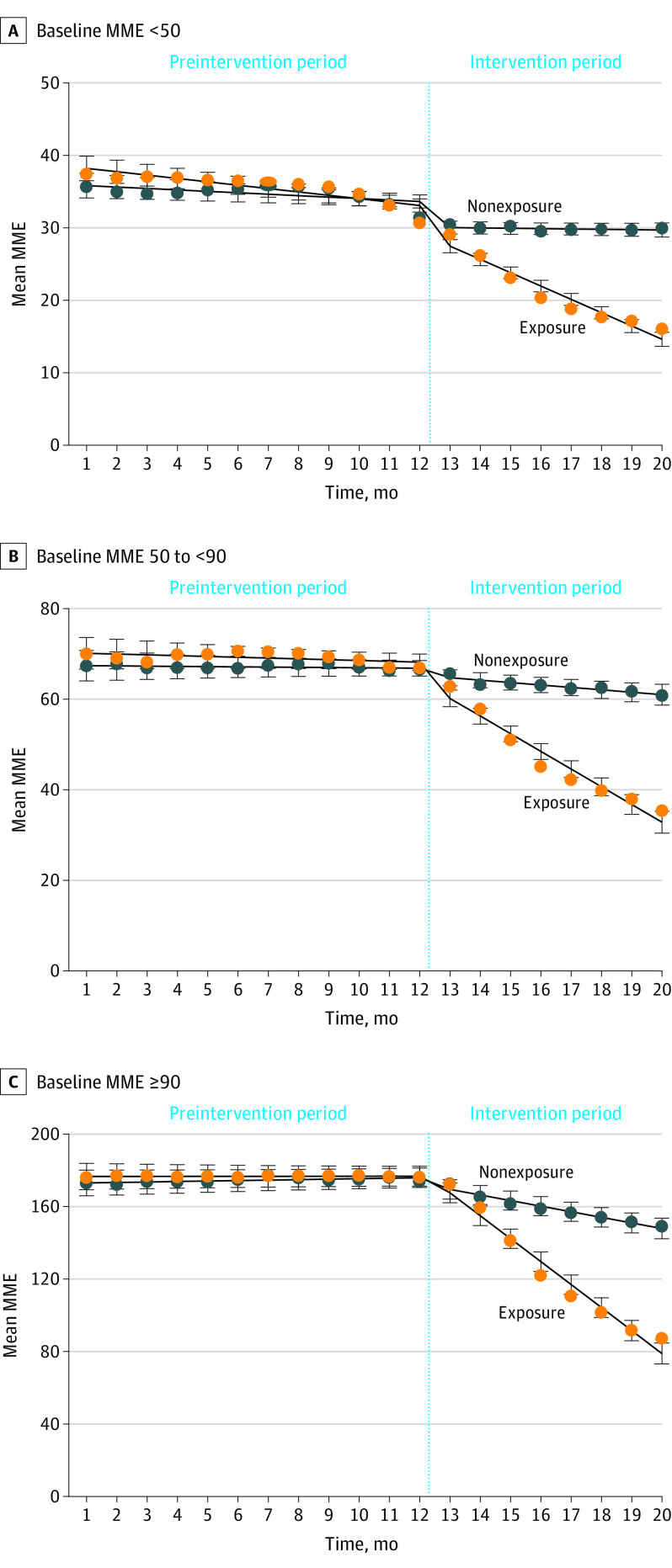
Table 2. : Monthly Mean Daily MME for Individuals With Chronic Pain Receiving Medical Cannabis for Longer vs Shorter Duration, by Baseline MME, New York State, 2017-2019a
| Measure | MME <50 | MME 50 to <90 | MME ≥90 |
|---|---|---|---|
| Preintervention period (95% CI) | |||
| Starting MME for nonexposure | 36.02 (34.23 to 37.82) | 67.43 (63.84 to 71.01) | 172.74 (165.34 to 180.14) |
| Difference in starting MMEzoi221543t2n2 | 2.64 (0.11 to 5.18) | 2.88 (−2.29 to 8.05) | 3.82 (−6.71 to 14.36) |
| Daily MME trend for nonexposure group each 30 d | −0.20 (−0.31 to −0.09) | −0.05 (−0.31 to 0.21) | 0.26 (−0.13 to 0.66) |
| Difference in daily MME trend each 30 dzoi221543t2n2 | −0.27 (−0.43 to −0.11) | −0.13 (−0.51 to 0.25) | −0.25 (−0.81 to 0.32) |
| Intervention period difference (95% CI)zoi221543t2n2 | |||
| Daily MME trends each 30 d | −1.52 (−1.67 to −1.37) | −3.24 (−3.61 to −2.87) | −9.33 (−9.89 to −8.77) |
| Total MME over full intervention period | −14.53 (−17.45 to −11.61) | −29.49 (−35.94 to −23.04) | −69.81 (−87.09 to −52.53) |
Estimates based on the propensity score–based weighted control interrupted time series models, adjusted for age, sex, and source of payment. The exposure group was patients who received medical cannabis for more than 30 days, and the nonexposure group was patients who received medical cannabis for 30 days or fewer.
Differences calculated as exposure − nonexposure.
Abbreviation: MME, morphine milligram equivalent.
At baseline, the observed mean (SD) MMEs for the exposure vs nonexposure groups were 30.7 (17.3) vs 31.4 (18.5) in the lowest stratum, 66.9 (19.9) vs 66.6 (17.9) for the middle stratum, and 176.2 (106.9) vs 174.0 (106.1) for the highest stratum (Figure 2). After the intervention started, larger reductions in the daily MME were observed in the exposure group compared with the nonexposure group (Figure 2).
Among the lowest MME stratum (Figure 2A), mean (SD) daily MME at the end of the intervention period for the exposure group was 16.0 (22.2), a 48% reduction from 30.7 MME at the baseline, compared with 30.0 (25.4) for the nonexposure group, a 4% reduction from a baseline MME of 31.4. The adjusted analyses found the exposure group had a larger monthly MME reduction compared with the nonexposure group, with a difference of −1.52 (95% CI, −1.67 to −1.37) MME (Table 2). This resulted in a total MME net reduction of −14.53 (95% CI, −17.45 to −11.61) MME over 8 months for the exposure group compared with the MME changes in the nonexposure group.
Among patients with a baseline MME of 50 to less than 90 (Figure 2B), the mean (SD) daily MME at the end of the intervention period was 35.4 (37.6) for the exposure group (a 47% reduction) vs 60.8 (35.7) for the nonexposure group (a 9% reduction). The adjusted analysis showed a significant difference of −3.24 (95% CI, −3.61 to −2.87) MME in monthly MME reduction between the exposure group and the nonexposure group (Table 2). After 8 months, a total MME reduction of −29.49 (95% CI, −35.94 to −23.04) MME was observed for the exposure group compared with the nonexposure group.
For adults with a baseline MME of 90 or greater, by the end of the intervention period, the mean (SD) daily MME was 87.2 (106.6) for the exposure group (a 51% reduction from 176.2 MME at the baseline) vs 149.0 (114.0) for the nonexposure group (a 14% reduction from 174 MME at baseline) (Figure 2C). The adjusted analyses showed a monthly reduction difference of −9.33 (95% CI, −9.89 to −8.77) MME between groups. A large MME net reduction of −69.81 (95% CI, −87.09 to −52.53) was observed for the exposure group over the 8-month intervention.
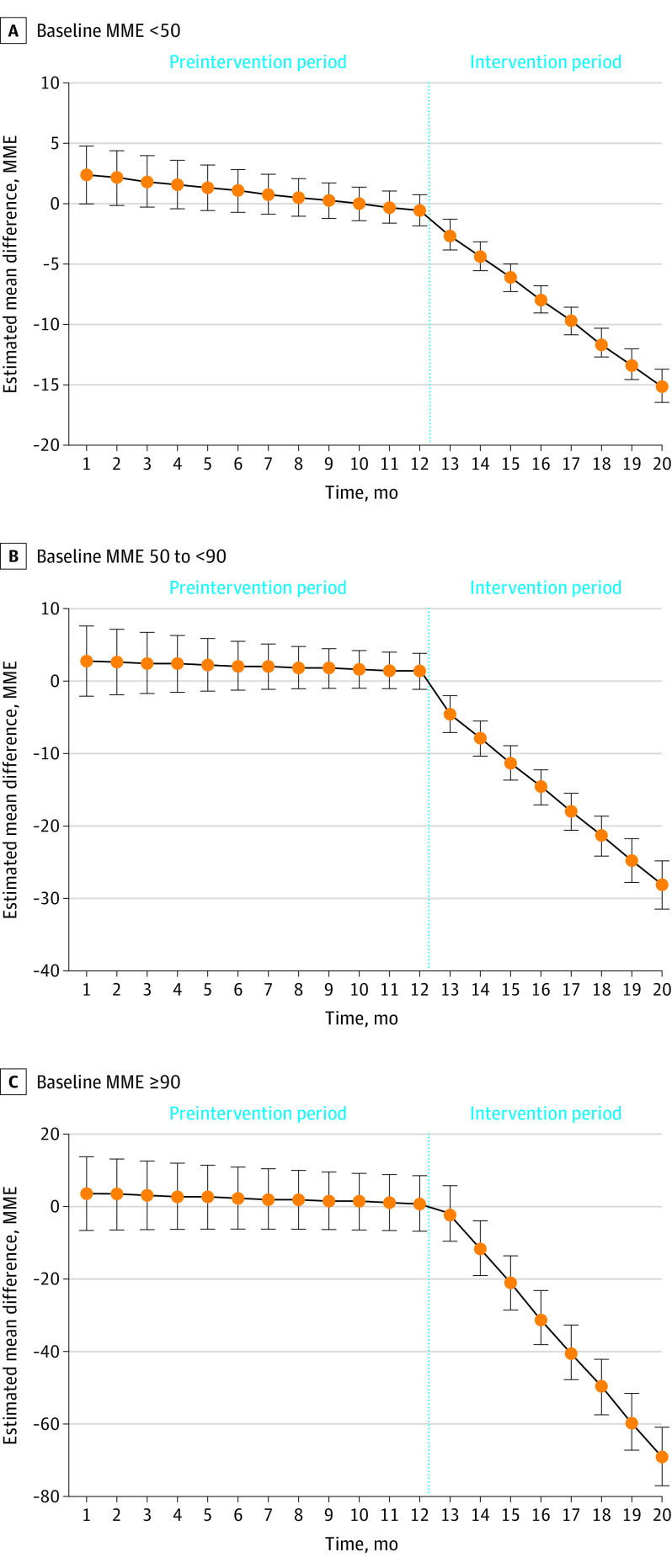
Additional analyses for daily MME differences between the exposure and nonexposure groups found no statistically significant differences before the intervention. After the intervention started, the differences between groups significantly widened over time (Figure 3).
Discussion
This cohort study of patients in New York state receiving LOT found that receiving MC for chronic pain for a longer duration was associated with significant reductions in opioid dosages. Larger reductions were observed for patients receiving higher opioid dosages at the baseline. Among patients with a baseline dosage of less than 50 MME, a significant monthly reduction in the daily opioid dosages (−1.52 MME) was observed among adults receiving long-term MC compared with those with a shorter MC duration. This reduction was 5.6 times larger than the difference between groups prior to receiving MC (−0.27 MME). The higher the patients’ opioid dosage at baseline, the larger the monthly reduction: −3.24 MME for patients receiving 50 to less than 90 MME and −9.33 MME for patients receiving 90 MME or greater. These reductions were 24.9 times larger in the middle stratum and 37.3 times larger in the highest stratum than the differences prior to receiving MC.
Among patients receiving MC for longer, the mean daily dosage for the group with baseline dosage of 90 MME or greater was reduced to less than 90 MME (87.2), and the mean dosage among those in the 50 to less than 90 MME stratum was reduced to less than 50 MME (35.4 MME). If replicable, such reductions might impact future morbidity and mortality of this population.
In the month immediately after the intervention started, both groups receiving MC experienced a reduction in prescribed opioid dosages; patients in the nonexposure group stopped receiving MC after a maximum of 30 supply days, while patients in the exposure group continued to receive MC longer. This could explain the larger and sharper reductions in MME for adults with longer MC. Even after taking the reductions among adults with shorter MC into the calculation, the estimated total MME net reductions for patients with longer MC over the 8-month intervention were 14.53 MME in the lowest baseline stratum, 29.49 in the middle baseline stratum, and 69.81 in the highest baseline stratum. Among patients receiving MC for longer, daily MME was reduced by 47% to 51% of the baseline dosages after the 8-month intervention. Adults receiving MC for less time reduced their baseline dosages by just 4% to 14%.
We did not have information to determine whether patients chose MC as an adjunct therapy to decrease opioid dosages or in response to clinician pressure to decrease opioid dosages. However, no regulations prohibited the use of opioids and MC simultaneously. The clinical significance of the opioid reductions associated with MC is illustrated by the Centers for Disease Control and Prevention guideline on prescribing opioids for chronic pain,7 which highlights the escalation of overdose risk as prescribed MME increases. Clinicians caring for patients receiving LOT should discuss the role MC may play in pain management and information on risks and benefits. When patients wish to use MC and their current clinician is unable or unwilling to certify patients, they should be referred to practitioner who could certify patients for MC.
Patients with chronic pain who are insured by Medicaid receive opioids at a higher rate than privately insured individuals and are more likely to be receiving LOT.30 Few patients in the study population were insured by Medicaid, and of those, many who initiated MC did not continue. This may be because MC is typically not covered by insurance and was thus unaffordable. The lack of affordability of a medication that may reduce the need for opioids for pain management and perhaps risk of opioid use disorder and overdose is a health inequity deserving further examination.
MC is documented to have side effects: among the most common are psychoactive effects, dizziness, and dry mouth. Other concerns include cannabis use disorder and withdrawal symptoms.31 New York state regulations allowed MC products with THC to be sold by dispensaries; however, THC was limited at a low dose of 10 mg. Therefore, the risk of adverse events and cannabis use disorder is low if patients use MC as directed. A previous study of MC found that while 37.3% of patients experienced 1 or more adverse events, most were mild, and less than 2% of patients required dose adjustment or cessation, suggesting that MC is far safer than opioids.32 However, caution is still urged in certifying patients with some comorbidities, including coronary artery disease, arrhythmias, or a history of psychosis, or patients who are pregnant.33
This study had several strengths. To our knowledge, this is the first population-based study with a large sample size that evaluated the association between the length of receiving MC and reduction in daily opioid dosages. The length of receiving MC was used to rigorously measure exposure status and concurrent opioids. Using the CITS model methods on patient-level data allowed us to assess preintervention trends and generate the net differences in the daily MME between exposure and nonexposure groups after the intervention started. Even though not all confounders were controlled for, it is highly unlikely that the greater and sharper reductions right after the intervention started and the continuing reductions in the exposure groups are due to factors other than the receiving MC for longer in patients from the 3 baseline MME levels. Future studies should further examine the specific effects of different types or combinations of MC products and dosages on prescribed opioid dosages.
Limitations
This study has some limitations. First, our study included no assessment of MC dosages, product type, or ratio of THC to CBD among products received to determine whether there would be any difference by these variables. However, we were able to confirm receipt of MC and used the lengths of MC supply to measure exposure. This is an observational study, which could be subject to selection bias. However, as patients in both exposure and nonexposure groups actively sought and initially received MC, this could only impact the generalizability of the results. There was a lack of race and ethnicity information and clinical information, such as comorbidities or the causes of chronic pain. However, exposure and nonexposure groups in each stratum were comparable regarding several known confounders. Furthermore, the PS-based CITS models (used to control for confounders and selection bias) are advanced techniques to improve the validity and accuracy, such that the results may comparable with randomized clinical trial results.34,35 We do not know whether any patients who stopped using prescribed opioids switched to illicit opioids or whether those who stopped using MC switched to the unregulated market. Additionally, we did not have data on patients’ pain level; therefore, we were unable to assess pain management improvement.
Conclusions
This cohort study found that receiving MC for longer was associated with opioid dosage reductions. The reductions were larger among individuals who were prescribed higher dosages of opioids at baseline. These findings contribute robust evidence for clinicians regarding the potential benefits of MC in reducing the opioid burden for patients receiving LOT and possibly reduce their risk for overdose. Further research is needed to confirm the causal effect of MC and conduct benefit-risk assessment of MC as opioid alternative or companion treatments to address management of chronic pain and the opioid crisis.
References
- 1National Center for Injury Prevention and Control. Understanding the Opioid Epidemic. Centers for Disease Control and Prevention. Accessed May 1, 2022. https://www.cdc.gov/opioids/basics/epidemic.html
- 2Centers for Disease Control and Prevention. CDC WONDER: about provisional mortality statistics, 2018 through last month. Accessed May 1, 2022. https://wonder.cdc.gov/mcd-icd10-provisional.html
- 3Centers for Disease Control and Prevention. US opioid dispensing rate maps. Accessed May 1, 2022. https://www.cdc.gov/drugoverdose/rxrate-maps/index.html
- The United States opioid epidemic: a review of the surgeon’s contribution to it and health policy initiatives.. BJU Int., 2018. [DOI | PubMed]
- Chronic pain and high-impact chronic pain among U.S. adults, 2019.. NCHS Data Brief., 2020. [PubMed]
- Prescription opioid use among adults with chronic pain: United States, 2019.. Natl Health Stat Report., 2021. [DOI | PubMed]
- CDC guideline for prescribing opioids for chronic pain—United States, 2016.. MMWR Recomm Rep., 2016. [DOI | PubMed]
- Opioid and non-opioid analgesic prescribing before and after the CDC’s 2016 opioid guideline.. Int J Health Econ Manag., 2022. [DOI | PubMed]
- Safety of oral non-selective non-steroidal anti-inflammatory drugs in osteoarthritis: what does the literature say?. Drugs Aging., 2019. [DOI | PubMed]
- Long-term Risk of Overdose or Mental Health Crisis After Opioid Dose Tapering.. JAMA Netw Open., 2022. [DOI | PubMed]
- Cannabis use motivations among adults prescribed opioids for pain versus opioid addiction.. Pain Manag Nurs., 2020. [DOI | PubMed]
- Effect of cannabis use in people with chronic non-cancer pain prescribed opioids: findings from a 4-year prospective cohort study.. Lancet Public Health., 2018. [DOI | PubMed]
- 13Agency for Healthcare Research and Quality. Systematic review: living systematic review on cannabis and other plant-based treatments for chronic pain. Updated September 2022. Accessed December 1, 2022. https://effectivehealthcare.ahrq.gov/products/plant-based-chronic-pain-treatment/living-review
- Challenges for clinical cannabis and cannabinoid research in the United States.. J Natl Cancer Inst Monogr., 2021. [DOI | PubMed]
- Medical cannabis for the reduction of opioid dosage in the treatment of non-cancer chronic pain: a systematic review.. Syst Rev., 2020. [DOI | PubMed]
- Opioid-sparing effect of cannabinoids for analgesia: an updated systematic review and meta-analysis of preclinical and clinical studies.. Neuropsychopharmacology., 2022. [DOI | PubMed]
- Opioid use in medical cannabis authorization adult patients from 2013 to 2018: Alberta, Canada.. BMC Public Health., 2021. [DOI | PubMed]
- 18New York State Medical Cannabis Program. Accessed May 1, 2022. https://cannabis.ny.gov/medical-cannabis
- 19S7923. 2013-2014 Session (NY 2014). Accessed May 1, 2022. https://www.nysenate.gov/legislation/bills/2013/S7923
- 20Section 1004.2—Practitioner issuance of certification. NY Pub Health Law, §3360 and 3369-a (2019). Accessed May 1, 2022. https://regs.health.ny.gov/content/section-10042-practitioner-issuance-certification
- 21New York State Department of Health; Bureau of Narcotic Enforcement. I-STOP/PMP: Internet System for Tracking Over-Prescribing—Prescription Monitoring Program. Accessed May 1, 2022. https://www.health.ny.gov/professionals/narcotic/prescription_monitoring/
- Associations between medical cannabis and prescription opioid use in chronic pain patients: A preliminary cohort study.. PLoS One., 2017. [DOI | PubMed]
- 23Part 80—rules and regulations on controlled substances. NY Pub Health Law §338, 3300, 3305, 3307, 3308, 3309, 3381, 3701(1), (6), art. 33. Accessed May 1, 2022. https://regs.health.ny.gov/content/section-8067-schedule-ii-and-certain-other-substances
- Patient adherence and medical treatment outcomes: a meta-analysis.. Med Care., 2002. [DOI | PubMed]
- An introduction to propensity score methods for reducing the effects of confounding in observational studies.. Multivariate Behav Res., 2011. [DOI | PubMed]
- Erratum and discussion of propensity-score reweighting.. Stata J., 2008. [DOI]
- Applying a propensity score-based weighting model to interrupted time series data: improving causal inference in programme evaluation.. J Eval Clin Pract., 2011. [DOI | PubMed]
- Segmented regression analysis of interrupted time series studies in medication use research.. J Clin Pharm Ther., 2002. [DOI | PubMed]
- Use of interrupted time series methods in the evaluation of health system quality improvement interventions: a methodological systematic review.. BMJ Glob Health., 2020. [DOI | PubMed]
- Indication-specific opioid prescribing for US patients with Medicaid or private insurance, 2017.. JAMA Netw Open., 2020. [DOI | PubMed]
- 31Chou R, Wagner J, Ahmed AY, . Living Systematic Review on Cannabis and Other Plant-Based Treatments for Chronic Pain. Updated September 2022. Accessed December 1, 2022. https://effectivehealthcare.ahrq.gov/products/plant-based-chronic-pain-treatment/living-review
- Long-term and serious harms of medical cannabis and cannabinoids for chronic pain: a systematic review of non-randomised studies.. BMJ Open., 2022. [DOI | PubMed]
- Safety considerations in cannabinoid-based medicine.. Int J Gen Med., 2020. [DOI | PubMed]
- Examining the internal validity and statistical precision of the comparative interrupted time series design by comparison with a randomized experiment.. Am J Eval., 2014. [DOI]
- The validity and precision of the comparative interrupted time-series design: three within-study comparisons.. J Educ Behav Stat., 2016. [DOI]